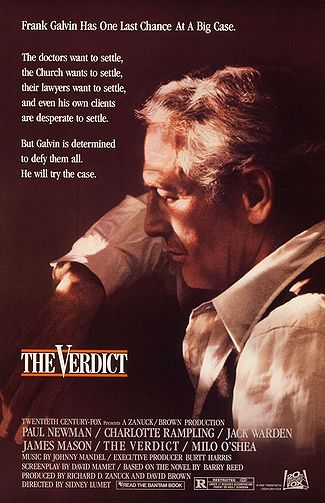
Retro Television Review: The American Short Story #11: Paul’s Case


Welcome to Retro Television Reviews, a feature where we review some of our favorite and least favorite shows of the past!  On Saturdays, Lisa will be reviewing The American Short Story, which ran semi-regularly on PBS in 1974 to 1981.  The entire show can be purchased on Prime and found on YouTube and Tubi.
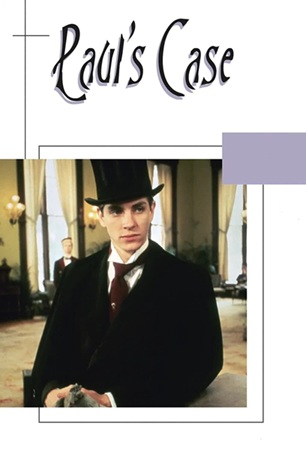
This week, Eric Roberts appears in an adaptation of a Willa Cather short story.

Episode #11: “Paul’s Case”

(Dir by Lamont Johnson, originally aired in 1980)

At the turn of the century, Paul (Eric Roberts) is a young man from Philadelphia who struggles academically and who just doesn’t seem to fit in anywhere.  He comes from a poor family but he wants people to think of him as being rich and worry-free.  He gets a job working at a theater and finally experiences a life other than the dreary one forced on him by his father.  But eventually, Paul steals money from his job and uses it to go to New York.  In New York, he lives out his fantasy of being rich and free but, after a few days, he realizes that the fantasy is only temporary.  With his father coming to the city to claim him, Paul throws himself in front of train.

Based on a story by Willa Cather, Paul’s Case is an effective and heart-breaking entry in The American Short Story series.  It feature a very early performance from Eric Roberts.  Roberts was only 24 years old when he played Paul and he gives a poignantly vulnerable performance as a young man who simply does not fit in with the world in which he’s been born.  He’s too delicate, too much of a “dandy,” for his father’s unimaginative (and homophobic) world but he’s also not rich enough to truly be a part of the exciting world that he discovers in the theater and in New York.

Perfectly capturing the tone of the source material and featuring an excellent turn from Eric Roberts, Paul’s Case is The American Short Story at its best.

Previous Eric Roberts Films That We Have Reviewed:

  1. Star 80 (1983)
  2. Runaway Train (1985)
  3. To Heal A Nation (1988)
  4. Best of the Best (1989)
  5. Blood Red (1989)
  6. The Ambulance (1990)
  7. The Lost Capone (1990)
  8. Best of the Best II (1993)
  9. Love, Cheat, & Steal (1993)
  10. Voyage (1993)
  11. Love Is A Gun (1994)
  12. Sensation (1994)
  13. Dark Angel (1996)
  14. Doctor Who (1996)
  15. Most Wanted (1997)
  16. Mercy Streets (2000)
  17. Raptor (2001)
  18. Rough Air: Danger on Flight 534 (2001)
  19. Strange Frequency (2001)
  20. Wolves of Wall Street (2002)
  21. Border Blues (2004)
  22. Mr. Brightside (2004)
  23. Six: The Mark Unleased (2004)
  24. We Belong Together (2005)
  25. Hey You (2006)
  26. Depth Charge (2008)
  27. Amazing Racer (2009)
  28. The Chaos Experiment (2009)
  29. In The Blink of an Eye (2009)
  30. Bed & Breakfast (2010)
  31. Enemies Among Us (2010)
  32. The Expendables (2010) 
  33. Sharktopus (2010)
  34. Beyond The Trophy (2012)
  35. The Dead Want Women (2012)
  36. Deadline (2012)
  37. The Mark (2012)
  38. Miss Atomic Bomb (2012)
  39. Assault on Wall Street (2013)
  40. Bonnie And Clyde: Justified (2013)
  41. Lovelace (2013)
  42. The Mark: Redemption (2013)
  43. The Perfect Summer (2013)
  44. Self-Storage (2013)
  45. Sink Hole (2013)
  46. A Talking Cat!?! (2013)
  47. This Is Our Time (2013)
  48. Bigfoot vs DB Cooper (2014)
  49. Doc Holliday’s Revenge (2014)
  50. Inherent Vice (2014)
  51. Road to the Open (2014)
  52. Rumors of War (2014)
  53. Amityville Death House (2015)
  54. Deadly Sanctuary (2015)
  55. A Fatal Obsession (2015)
  56. Las Vegas Story (2015)
  57. Stalked By My Doctor (2015)
  58. Enemy Within (2016)
  59. Hunting Season (2016)
  60. Joker’s Poltergeist (2016)
  61. Prayer Never Fails (2016)
  62. Stalked By My Doctor: The Return (2016)
  63. The Wrong Roommate (2016)
  64. Dark Image (2017)
  65. The Demonic Dead (2017)
  66. Black Wake (2018)
  67. Frank and Ava (2018)
  68. Stalked By My Doctor: Patient’s Revenge (2018)
  69. Clinton Island (2019)
  70. Monster Island (2019)
  71. The Reliant (2019)
  72. The Savant (2019)
  73. Seven Deadly Sins (2019)
  74. Stalked By My Doctor: A Sleepwalker’s Nightmare (2019)
  75. The Wrong Mommy (2019)
  76. Exodus of a Prodigal Son (2020)
  77. Free Lunch Express (2020)
  78. Her Deadly Groom (2020)
  79. Top Gunner (2020)
  80. Deadly Nightshade (2021)
  81. The Elevator (2021)
  82. Just What The Doctor Ordered (2021)
  83. Killer Advice (2021)
  84. Megaboa (2021)
  85. Night Night (2021)
  86. The Poltergeist Diaries (2021)
  87. The Rebels of PT-218 (2021)
  88. Red Prophecies (2021)
  89. A Town Called Parable (2021)
  90. Bleach (2022)
  91. Dawn (2022)
  92. My Dinner With Eric (2022)
  93. 69 Parts (2022)
  94. The Rideshare Killer (2022)
  95. D.C. Down (2023)
  96. Aftermath (2024)
  97. Bad Substitute (2024)
  98. Devil’s Knight (2024)
  99. The Wrong Life Coach (2024)
  100. When It Rains In L.A. (2025

Lisa Marie Reviews An Oscar Nominee: The Insider (dir by Michael Mann)


In the 1999 Best Picture Nominee, The Insider, the American media takes a beating.

Al Pacino plays Lowell Bergman.  Bergman is a veteran newsman who, for several years, has been employed as a producer at 60 Minutes.  He is a strong believer in the importance of the free press and he’s proud to be associated with both 60 Minutes and CBS News.  He’s one of the few people who can manage the famously prickly correspondent, Mike Wallace (Christopher Plummer).  When we first see Bergman, he and Wallace are in the Middle East and arranging a tense interview with the head of Hezbollah.  It’s easy to see that Bergman is someone who will go anywhere and take any risk to get a story.  It’s also apparent that Bergman thinks that the people that he works with feel the same way.

That all changes when Bergman meets Jeffery Wigand (Russell Crowe), a recently fired tobacco company executive who initially agrees to serve as a consultant for one of Bergman’s story but who leaves Bergman intrigued when he reveals that, due to a strict confidentiality agreement, he’s not allowed to discuss anything about his time as an executive.  As the tobacco companies are currently being sued by ambitious state attorney generals like Mississippi’s Mike Moore (who plays himself in the film), Bergman suspects that Wigand knows something that the companies don’t want revealed.

And, of course, Bergman is right.  Wigand was fired for specifically objecting to his company’s effort to make cigarettes more addictive, something that the tobacco industry had long claimed it wasn’t doing.  Wigand’s pride was hurt when he was fired but he knows that breaking the confidentiality agreement will mean losing his severance package and also possibly losing his marriage to Liane (Diane Venora) as well.  However, Wigand is angered by the heavy-handed techniques that his former employer uses to try to intimidate him.  He suspects that he’s being followed and he can’t even work out his frustrations by hitting a few golf balls without someone watching him.  When Wigand starts to get threats and even receives a bullet in the mail, he decides to both testify in court and give an interview to Wallace and 60 Minutes.

The only problem is that CBS, after being pressured by their lawyers and facing the risk of taking a financial loss in an upcoming sell, decides not to run the interview.  Bergman is outraged and assumes that both Mike Wallace and veteran 60 Minutes producer Don Hewitt (Philip Baker Hall) will support him.  Instead, both Wallace and Hewitt side with CBS.  Left out in the cold is Jeffrey Wigand, who has sacrificed almost everything and now finds himself being attacked as merely a disgruntled employee.

Directed by Michael Mann and based on a true story, The Insider is what is usually described as being “a movie for adults.”  Instead of dealing with car chases and super villains and huge action set pieces, The Insider is a film about ethics and what happens when a major media outlet like CBS News fails to live up to those ethics.  (No one is surprised when the tobacco company tries to intimidate and silence Wigand but the film makes clear that people — or at least people in the 90s — expected and hoped for more from the American press.)  Wigand puts his trust in Bergman and 60 Minutes largely because he believed Bergman’s promise that he would be allowed to tell his story.  It’s a promise that Bergman made in good faith but, in the end, everyone from the CBS executives to the tobacco companies is more interested in protecting their own financial future than actually telling the truth.  Wigand loses his family and his comfortable lifestyle and Bergman loses his faith in the network of Edward R. Murrow.  It’s not a particularly happy film but it is a well-made and thought-provoking one.

Pacino and Crowe both give excellent performances in the two lead roles.  Pacino, because he spends most of the film outraged, has the flashier role while Crowe plays Wigand as a rather mild-mannered man who suddenly finds himself in the middle of a national news story.  (Crowe’s performance here is one of his best, precisely because it really is the opposite of what most people expect from him.)  Crowe does not play Wigand as being a crusader but instead, as an ordinary guy who at times resents being put in the position of a whistleblower.  (Director Mann does not shy away from showing how Bergman manipulates, the reluctant Wigand into finally testifying, even if Bergman’s motives were ultimately not malicious.)  That said, the strongest performance comes from Christopher Plummer, who at first seems to be playing Mike Wallace as being the epitome of the pompous television newsman but who eventually reveals the truth underneath Wallace’s sometimes fearsome exterior.

The Insider was nominated for Best Picture.  Somehow, it lost to American Beauty.

Iceman (1984, directed by Fred Schepisi)


Scientists at an arctic base make an amazing discovery when they find the body of a prehistoric man that has been perfectly preserved in the ice.  Dr. Stanley Shepherd (Timothy Hutton) and his fellow scientists suspect that the Iceman (John Lone) might be in a state of suspended animation.  Instead of performing an autopsy when the body thaws it, the scientists attempt to resuscitate him.

And somehow, it works.

The Iceman, who is eventually named Charlie, is stunned to be in the modern world and does not know how to react to the scientists studying him.  Only Dr. Shepherd treats Charlie as a human being instead of a laboratory specimen.  Despite not speaking the same language, Charlie and Shepherd bond.  Shepherd realizes that Charlie misses his family and eventually, he figures out that, when he was frozen, Charlie was attempting to stop the Ice Age by offering himself up as a sacrifice to a bird god.  When Charlie sees a helicopter, he mistakes it for his god and starts tying to escape from the base.  Realizing that Charlie will eventually be killed and experimented upon, Shepherd tries to help him escape.

If, and it’s a big “if,” you can overlook the implausibility of Charlie being in suspended animation for over 40,000 years, Iceman is actually a really good film with intelligent performances from both Timothy Hutton and John Lone.  Lone is especially good as Charlie, capturing his confusion, fear, and eventually his heart.  Even though he’s in a strange place and time, Charlie never stops thinking of his family and trying to get back to them.  The film works because, like Shepherd, it understands Charlie is too good for the modern world.

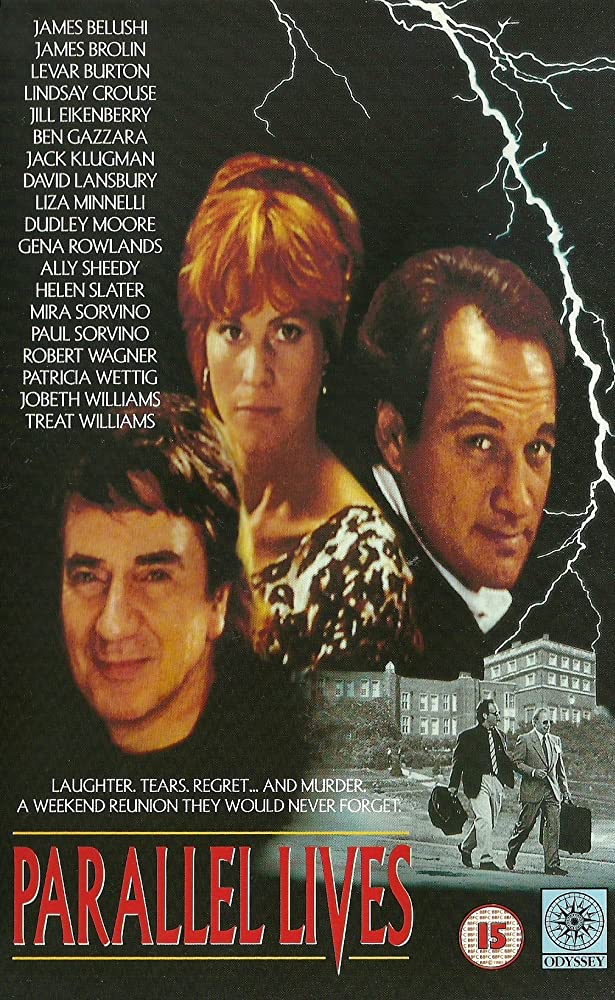
Parallel Lives (1994, directed by Linda Yellen)


A large group of people gather together one weekend for a fraternity/sorority reunion.  Since college, some of them have become rich and powerful.  Some of them are now famous.  Some of them are now seedy and disreputable.  They all have college memories, though there’s such a wide variety of age groups represented that it’s hard to believe that any of them actually went to college together.  After the men spend the day playing practical jokes and touch football and the women spend the night talking about their hopes and dreams, they wake up the next morning to discover the someone has murdered Treat Williams.  A pony-tailed sheriff (Robert Wagner) shows up to question everyone.

Parallel Lives was made for Showtime with the help of the Sundance Institute.  Today, it’s a forgotten film but, for some reason, it was very popular with American Airlines during the summer of 1997.  That summer, when I flew to the UK, Parallel Lives was one of the movies that we were shown.  (It was the second feature.  The first feature was Down Periscope, a submarine comedy starring Kelsey Grammar.  Fourteen year-old me enjoyed Down Periscope but, in retrospect, it wasn’t much of a flight.)  A month and a half later, when I flew back to the U.S., Parallel Lives was again one of the films shown on the flight!  For that reason, I may be the only person on the planet who has not forgotten that a film called Parallel Lives exists.

Parallel Lives, I later learned, was an entirely improvised film.  The huge cast were all given their characters and a brief outline of the film’s story and they were then allowed to come up with their own dialogue.  Unfortunately, no one did a very good job of it and the men were reduced to bro-ing it up while the women spent most of the movie having extended group therapy.  The story doesn’t add up too much and, even when I rewatched it from an adult’s perspective, I wasn’t sure what I was supposed to get out of everyone talking about how different the real world was from college.  Technically, the film’s a murder mystery but you can’t improvise a successful murder mystery.  This film proves that point.

Of course, it doesn’t help that there are 26 characters, all trying to get a word in at the same time.  Some of the roles don’t make much sense.  Dudley Moore shows up, playing an imaginary friend.  (How do you improvise being a figment of someone’s imagination?)  James Brolin introduces himself to everyone as being, “Professor Doctor Spencer Jones” and that appears to be as far as he got with his improv.  Ben Gazzara is a gambler and Mira Sorvino is the prostitute that he brings to the reunion while Mira’s father, Paul Sorvino, moons the camera several times.  Jack Klugman is a senator with Alzheimer’s and Patricia Wettig is his daughter.  The majority of the movie centers around Jim Belushi, playing a reporter and falling in love with JoBeth Williams.  Liza Minnelli, Helen Slater, Levar Burton, Lindsay Crouse, Matthew Perry, Ally Sheedy, and Gena Rowlands all have small roles.  How did so many talented people come together to make such a forgettable movie and why did American Airlines decide it was the movie to show people on their way to another country?  That’s the true mystery of Parallel Lives.

Lisa Cleans Out Her DVR: The Arrival (dir by David Twohy)


I recorded The Arrival off of Cinemax on March 3rd.  Having just watched it, I am 95% sure that it is not the same movie as the Arrival that I saw in theaters last fall.

It’s true that both films deal with the arrival of aliens and feature scenes that take place in space ships.  And it’s also true that both films involve scientists trying to figure out what the aliens want.  However, The Arrival that I recorded featured far more of Charlie Sheen than I remembered being in the Arrival that I saw in theaters.  Amy Adams and Jeremy Renner were nowhere to be seen but Charlie Sheen was all over the freaking place.

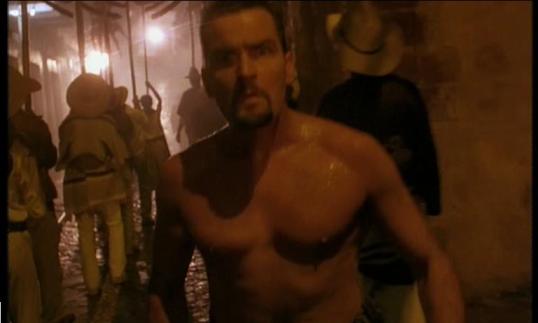
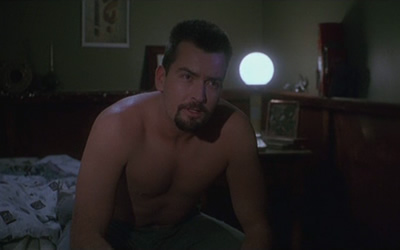
And I mean all of Charlie Sheen.  The Arrival was made back in 1996 and I guess that Charlie Sheen was still working out back then because, seriously, he is either naked or, at the very least, shirtless for the majority of the movie.  What’s funny is that, with a few minor exceptions, there’s rarely a reason for him to be naked.  I guess someone just said, “We might as well record Charlie Sheen looking fit and healthy while we still can…”

The Arrival is a relatively serious movie.  Oh, it has moments of humor but it’s all Hollywood blockbuster humor.  It’s not a comedy by any means.  It’s always strange seeing Charlie Sheen in a serious role because … well, he’s Charlie Sheen.  Plus, he was never a particularly good dramatic actor.  He walks through The Arrival with this grim look frozen on his face and that, combined with his muscular chest, makes him look like a killer robot from the future.  You keep waiting for Charlie to say, “I’ll be back.”

Of course, Charlie Sheen isn’t playing a killer robot.  He’s playing Zane Zaminsky, an astronomer who works for the government.  Or, at least, he did work for the government until he detected an alien signal coming from a nearby star.  He’s fired and blackballed by his boss, Phil (Ron Silver).  Unable to get work, Zane does what anyone would do.  He and Kiki (Tony T. Johnson), the streetwise neighbor kid, set up a DIY astronomy lab in his basement.

At least, that’s what I think he did.  I kind of had a hard time following The Arrival‘s plot.  It all seemed a little bit overcomplicated, especially when savvy viewers will have already guessed that 1) the aliens are real, 2) Phil is an alien, 3) there’s a big government conspiracy involved, 4) and Zane has stumbled across it.

What are the aliens doing on the planet?  To figure that out, Zane’s going to have to go to Mexico and meet with climatologist Illana Green (Lindsay Crouse).  However, we already know what the aliens are  doing.  They’re attempting to destroy the environment so that they can wipe out humanity.  We know this because that’s what aliens are always trying to do!  They’re always either trying to save the environment or destroy it.  My personal theory is that Bill Nye, The Science Guy is actually an alien.  It explains a lot.

Anyway, it may sound like I’m criticizing The Arrival but it was actually kind of a fun movie in its dumb way.  It’s a serious movie but it’s also kind of a silly movie.  Any film that features Charlie Sheen as anyone other than Charlie Sheen is going to be watchable just on a WTF sort of level.  Beyond that, Ron Silver makes for a rather convincing alien and director David Twohy keeps the action moving quickly.  Several of Twohy’s shots are memorably atmospheric, even if they often do feature a bearded and naked Charlie Sheen.

Is The Arrival as good as Arrival?  HELL NO!  Arrival is one of the greatest science fiction films ever made.  The Arrival is a rather minor sci-fi melodrama but it’s fun nonetheless.  Just don’t expect it to make any sense.  To quote the bard, John Lennon, “Turn off your mind, relax, and float downstream.”

A Movie A Day #30: Prince of the City (1981, directed by Sidney Lumet)


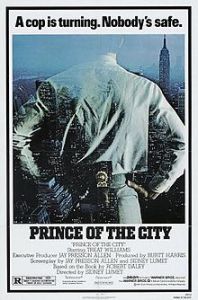
220px-prince_of_the_city_foldedIn 1970s New York City, Danny Ciello (Treat Williams) is a self-described “prince of the city.”  A narcotics detective, Ciello is the youngest member of the Special Investigations Unit.  Because of their constant success, the SIU is given wide latitude by their superiors at the police department.  The SIU puts mobsters and drug dealers behind bars.  They get results.  If they sometimes cut corners or skim a little money for themselves, who cares?
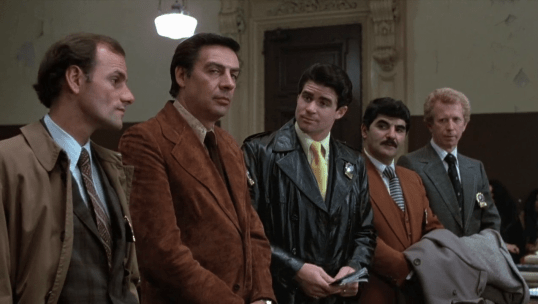
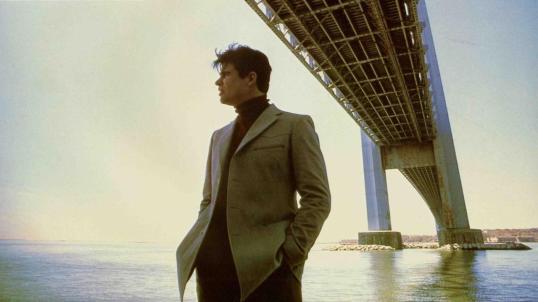
It turns out that a lot of people care.  When a federal prosecutor, Rick Cappalino (Norman Parker), first approaches Ciello and asks him if he knows anything about police corruption, Ciello refuses to speak to him.  As Ciello puts it, “I sleep with my wife but I live with my partners.”  But Ciello already has doubts.  His drug addict brother calls him out on his hypocrisy. Ciello spends one harrowing night with one of his informants, a pathetic addict who Ciello keeps supplied with heroin in return for information.  Ciello finally agrees to help the investigation but with one condition: he will not testify against anyone in the SIU.  Before accepting Ciello’s help, Cappalino asks him one question.  Has Ciello ever done anything illegal while a cop?  Ciello says that he has only broken the law three times and each time, it was a minor infraction.

For the next two years, Ciello wears a wire nearly every day and helps to build cases against other cops, some of which are more corrupt than others.  It turns out that being an informant is not as easy as it looks.  Along with getting burned by malfunctioning wires and having to deal with incompetent backup, Ciello struggles with his own guilt.  When Cappalino is assigned to another case, Ciello finds himself working with two prosecutors (Bob Balaban and James Tolkan) who are less sympathetic to him and his desire to protect the SIU.  When evidence comes to light that Ciello may have lied about the extent of his own corruption, Ciello may become the investigation’s newest target.

prince-of-the-city

Prince of the City is one of the best of Sidney Lumet’s many films but it is not as well-known as 12 Angry Men, Dog Day Afternoon, Network, Serpico, The Verdict, or even The Wiz.  Why is it such an underrated film?  As good as it is, Prince of the City is not always an easy movie to watch.  It’s nearly three hours long and almost every minute is spent with Danny Ciello, who is not always likable and often seems to be on the verge of having a nervous breakdown.  Treat Williams gives an intense and powerful performance but he is such a raw nerve that sometimes it is a relief when Lumet cuts away to Jerry Orbach (as one of Ciello’s partners) telling off a district attorney or to a meeting where a group of prosecutors debate where a group of prosecutors debate whether or not to charge Ciello with perjury.

Prince of the City may be about the police but there’s very little of the typical cop movie clichés.  The most exciting scenes in the movie are the ones, like that scene with all the prosecutors arguing, where the characters debate what “corruption” actually means.  Throughout Prince of the City, Lumet contrasts the moral ambiguity of otherwise effective cops with the self-righteous certitude of the federal prosecutors.  Unlike Lumet’s other films about police corruption (Serpico, Q&A), Prince of the City doesn’t come down firmly on either side.

(Though the names have been changed, Prince of the City was based on a true story.  Ciello’s biggest ally among the investigators, Rick Cappalino, was based on a young federal prosecutor named Rudy Giuliani.)

Prince of the City is dominated by Treat Williams but the entire cast is full of great New York character actors.  It would not surprise me if Jerry Orbach’s performance here was in the back of someone’s mind when he was cast as Law & Order‘s Lenny Briscoe.  Keep an eye out for familiar actors like Lance Henriksen, Lane Smith, Lee Richardson, Carmine Caridi, and Cynthia Nixon, all appearing in small roles.

Prince of the City is a very long movie but it needs to be.  Much as David Simon would later do with The Wire, Lumet uses this police story as a way to present a sprawling portrait of New York City.  In fact, if Prince of the City were made today, it probably would be a David Simon-penned miniseries for HBO.

image-w1280

Embracing the Melodrama Part II #55: The Tenth Level (dir by Charles S. Dubin)


10thlevelI first found out about the 1976 made-for-tv movie The Tenth Level while I was doing some research on the Milgram experiment.  The Milgram experiment was a psychological experiment that was conducted, under the direction of Prof. Stanley Milgram, in 1961.  Two test subjects were placed in two separate room.  One test subject was known as the “Learner” and he was hooked up to a machine that could deliver electric shocks.  The other subject was the “Teacher.”  His job was to ask the Lerner questions and, whenever the Learner gave an incorrect answer, the Teacher was supposed to correct the error by pushing a button and delivering the electric shock.  With each incorrect answer, the shock would get worse.

Of course, what the Teacher did not know was that the Lerner was an associate of Prof. Milgram’s and that pushing the button did not actually deliver a shock.  The Lerner would intentionally give wrong answers and, after the Teacher pushed each subsequent button, the Lerner would groan in pain and eventually beg the Teacher to stop.  The test was to see how long the Teacher would continue to push the buttons.

The study found that 65% of the Teachers, even when the Lerner stopped responding, continued to push the buttons until delivering the experiment’s final 450-volt shock.  It was a surprising result, one that is often cited as proof that ordinary people will do terrible things if they’re ordered to do so by an authority figure.

The Tenth Level is loosely based on the Milgram experiment.  Prof. Stephen Turner (William Shatner) is a psychology professor who conducts a similar experiment.  Turner claims that he’s looking for insight into the nature of blind obedience but some of his colleagues are skeptical.  His best friend (Ossie Davis) thinks that Turner is mostly trying to deal with the guilt of being a WASP who has never had to deal with discrimination.  His ex-wife, Barbara (Lynn Carlin), thinks that the experiment is cruel and could potentially traumatize anyone who takes part in it.  Turner, meanwhile, is fascinated by how random people react to being ordered to essentially murder someone.

Eventually, a good-natured carpenter/grad student, Dahlquist (Stephen Macht), volunteers.  At first, Turner refuses to allow Dahlquist to take part because he’s previously met Dahlquist and Dahlquist is a friend of one of Tuner’s assistants.  However, Dahlquist literally begs to be allowed to take part in the experiment and Turner relents.

Unfortunately, the pressure of administering shocks proves to be too much for Dahlquist and he has a 70s style freak-out, which essentially means that the screen changes colors and everything moves in slow motion as he smashes up the room.  As a result of Dalquist’s violent reaction, Turner is called before a disciplinary committee and basically put on trial.

The Tenth Level is an interesting film.  On the one hand, the subject matter is fascinating and, if nothing else, the film deserves some credit for trying to seriously explore the ethics of psychological experimentation.  On the other hand, this is a film from 1976 that features William Shatner giving numerous monologues about the nature of man.  And, let us not forget, this is William Shatner before he apparently developed a sense of humor about himself.  That means that, in this film, we get the Shatner that inspired a thousand impersonations.  We get the Shatner who speaks precisely and who enunciates every single syllable.  And let’s not forget that Shatner is paired up with Ossie Davis, an actor who was never exactly subtle himself.

The end result is a film that is both thought-provoking and undeniably silly.  This is a film that will make you think even while it inspires you to be totally snarky.

(Also of note, John Travolta supposedly makes his film debut in the Tenth Level.  Apparently, he plays a student.  I have yet to spot him.)

You can watch it below!

Lisa Watches An Oscar Nominee: The Verdict (dir by Sidney Lumet)


Verdict1

Speaking of the good, old-fashioned star power of Paul Newman, The Hustler and Butch Cassidy and the Sundance Kid were not the only films to receive an oscar nomination as the result of his charisma.  There’s also The Verdict, a 1982 best picture nominee that would probably be forgotten if not for Paul Newman’s performance.  However, since Paul Newman did play the lead role in The Verdict and he did give an amazing lead performance, The Verdict was nominated for best picture and, 33 years later, it ended up on TCM where I just watched it.

That’s the power of good acting.

Paul Newman plays Frank Galvin, a Boston-based attorney.  At one time, Frank was a lawyer at an elite firm.  But he has since fallen on hard times.  Now, he’s the type of attorney who crashes funerals and hands out his card.  He spends his spare time at his favorite bar, playing pinball and telling long jokes while stumbling about in a drunken haze.  In many ways, Frank represents everything that people hate about personal injury attorneys but, since he’s played by Paul Newman, you know that he’s going to turn out to be a good guy.

Frank only has one friend left in the world, his former mentor Mickey (Jack Warden).  Looking to help Frank out, Mickey sends Frank a medical malpractice suit.  A woman at a Catholic Hospital was given an anesthetic during child birth that has led to her now being brain dead.  Both the woman’s family and the Archdiocese are looking for a settlement.  The family needs the money to pay for her medical care.  The Archdiocese just wants the case to go away.  All Frank has to do is accept whatever settlement deal is offered…

However, something has changed for Frank.  He’s visited the comatose woman and, looking at her trapped in a vegetative state, he’s decided that the hospital needs to be held responsible for its mistake.  He rejects the settlement and takes the case to court, looking for both justice for the victim and redemption for himself.

That’s easier said than done, of course.  The Archdiocese has hired Ed Concannon (James Mason, perfectly cast), one of the best and most powerful attorneys in Boston.  Ed has a huge legal team working on the case.  Frank has Mickey.  As well, the Judge (Milo O’Shea) makes little effort to hide his contempt for Frank.

Probably the only bright spot in Frank’s life is that he’s met a woman.  Laura (Charlotte Rampling) meets him in a bar and soon, they’re lovers and Frank is confiding in her about the case.  What he doesn’t suspect is that Laura herself is a spy, hired by Concannon.

It looks like all is lost but then Frank discovers that there is one nurse (Lindsay Crouse) who might be willing to tell the truth about what happened at the hospital…

In many ways, The Verdict is a predictable film.  From the minute we first meet him, we know that Frank is going to be redeemed.  From the minutes that we hear about the case, we know who we’re supposed to root for and who we’re supposed to hiss.  Just about every courtroom cliché is present, right down to a surprise witness or two…

But no matter!  The Verdict may be predictable but it works.  As he proved with 12 Angry Men, Director Sidney Lumet knew how to make legal deliberations compelling and the entire film is full of small but memorable details that elevate it above its simplistic storyline.  As a director, Lumet gets good performances from his cast and, as a result, this is a film where the hero is flawed and the antagonists aren’t necessarily evil.  Even the Bishop of the Archdiocese of Boston (who, in most films, would have been a cardboard villain) is given a scene where he’s allowed to show some humanity.

And, of course, Paul Newman is great in the role of Frank.  When we first meet Frank, he looks and sounds terrible.  Indeed, it’s strange to see Paul Newman playing a character who is essentially such a loser.  (Even Eddie Felson in The Hustler had an appealing swagger about him.)  It’s during the scenes where Frank considers the woman in a coma that Newman starts to reveal that there’s more to Frank than what’s on the rough surface.  By the end of the film, Frank may be a hero but Newman doesn’t play him as such.  He’s still has that alcoholic rasp in his voice and his eyes still betray hints of insecurity and a fear that, at any minute, he’s going to screw up and mess everything up.  It’s a great performance, one for which Newman received a nomination for best actor.

Speaking of star power, Bruce Willis also shows up in The Verdict.  He’s an extra who appears as an observer in the courtroom.  He’s sitting a few rows behind Paul Newman.  (He’s also sitting beside Tobin Bell, the Jigsaw Killer from the Saw films).  It’s probably easiest to spot Willis towards the end of the film, when the verdict is read.  Bruce breaks out into a huge grin and almost looks like he’s about to start clapping.  Bruce only gets about 10 second of screen time but he acts the Hell out of them!

Thanks to Paul Newman, The Verdict is a memorable and entertaining film.  Be sure to watch it the next time it shows up on TCM.