October True Crime: My Father’s Shadow: The Sam Sheppard Story (dir by Peter Levin)


On July 3rd, 1954, Marilyn Sheppard was murdered in her bedroom.

The wife of a prominent neurosurgeon, Marilyn Sheppard was bludgeoned to death in her own bedroom.  Her husband, Sam Sheppard, claimed that he had fallen asleep on a downstairs couch and was woken up by the sound of his wife screaming.  Sheppard said that, when he ran upstairs to the bedroom, he saw a bushy-haired man in the shadows.  The man hit Sheppard, knocking him out.  When Sheppard came to, he saw the man fleeing the house and chased after him.  The two fought outside and again, Sheppard was knocked out.

The police did not believe Sam Sheppard’s story and, after days of headlines that flat out accused him of being the murderer, he was arrested and charged with murdering his pregnant wife.  The press had a field day with the story and the trial was frequently described as being a circus.  Sheppard’s case was damaged by the revelation that he had cheated on his wife multiple times.  Contemporary accounts of the trial portrayed Sheppard as being cocky and arrogant.  As the jury was not sequestered, they saw every tabloid headline about Sheppard.  After deliberating for four days, the jury found Dr. Sam Sheppard guilty of murdering his wife.  He was sentenced to prison.

Sheppard would stay in prison until 1966.  During that time, his mother committed suicide, his father died of an ulcer, and his former father-in-law also chose to end his own life.  Sheppard’s original attorney died in 1961 and his appeals were taken over by a young lawyer named F. Lee Bailey.  In 1966, Bailey argued before the U.S. Supreme Court that Sheppard was denied due process due to the jury not being sequestered.  The Supreme Court agreed and granted Sheppard a new trial.  This time, with the flamboyant Bailey defending him, Sheppard did not testify and the defense focused on the lack of any real evidence that would suggest Sheppard had lied about the Bushy-haired Man.  Sheppard was acquitted.

Today, if Sam Sheppard is remembered, it’s for inspiring The Fugitive, a show about a doctor wrongly accused of murder.  (The show aired while Sheppard was still in prison.)  The majority of online posts and articles that I’ve read about Sam Sheppard have always focused on the retrial and usually end with Sheppard leaving prison.  It’s rare that Sheppard’s life after prison is discussed,  That’s probably because it’s a very sad story.

Sheppard may have been acquitted but he had also just spent 12 years in prison and he came out a changed man.  Sheppard tried to return to practicing medicine but his surgical skills had deteriorated to the extent that two of his patient died after he nicked an artery.  Facing multiple wrong death suits, he resigned from the only hospital that had been willing to give him a job.  He became a professional wrestler and was known as “Killer” Sam Sheppard at some of his matches.  He was also an alcoholic.  Less than four years after getting out of prison, he was dead at the age of 46.

1998’s My Father’s Shadow: The Sam Sheppard Story features Peter Strauss as Dr. Sheppard and Henry Czerny as his namesake son.  The film alternates between flashbacks to Dr. Sheppard’s life and scenes set in the 90s that focus on his son’s attempts to definitively clear his father’s name.  The film suggests that the murder was actually committed by Richard Eberling (John Colicos), who worked as a handyman and a window washer at the Sheppard home and who, when he was arrested for burglary several years after the murder, was discovered to have some of Marilyn Sheppard’s jewelry in his possession.  In the 80s, Eberling was convicted of murdering another one of his clients.  Eberling himself died in prison, the same year that this movie aired.

It’s a big story and My Father’s Shadow tries to do a lot in just 90 minutes.  Sometimes, it tries to do too much.  The flashbacks are occasionally a bit difficult to keep track of.  Sam Sheppard’s son goes from being a military school brat to a long-haired hippy so suddenly that, from a narrative point of view, it’s a bit distracting.  Overall, though, this is an effective look at an interesting story and it features two excellent performances from Strauss and Czerny.  It may not be the definitive telling of Sam Sheppard’s story but it’s a good place to start.

TV Review: Night Gallery 1.5 “Pamela’s Voice/Lone Survivor/The Doll”


The fifth episode of Night Gallery originally aired on January 13th, 1971.  It featured three stories, each one of which was introduced by Rod Serling walking through a darkened museum.

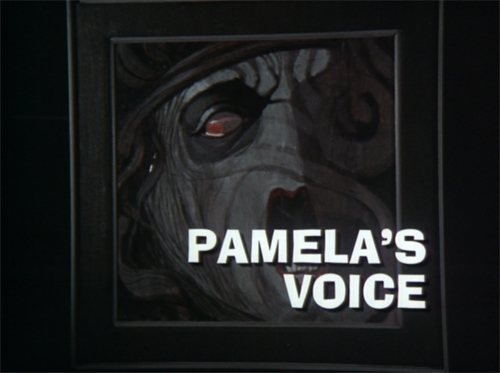
Pamela’s Voice (dir by Richard Benedict, written by Rod Serling)

Jonathan (John Astin) kills his wife, Pamela (Phyllis Diller), because he’s sick of listening to her shrill voice.  However, it turns out that not even death can stop Pamela.  While Jonathan is staring at a coffin, he starts to hear Pamela’s voice.

At first, you might think that this is going to be one of those stories where it’s going to turn out that the murderer has been driven made by his crimes and he’s imagining being taunted by his victim.  But then Pamela makes an post-death appearance herself and the story reveals it’s final twist.

For the most part, Pamela’s Voice is entertaining.  Both John Astin and Phyllis Diller give such eccentric performances that their fun to watch even if the majority of the audience will be able to guess this segment’s big twist.

Lone Survivor (dir by Gene Levitt, written by Rod Serling)

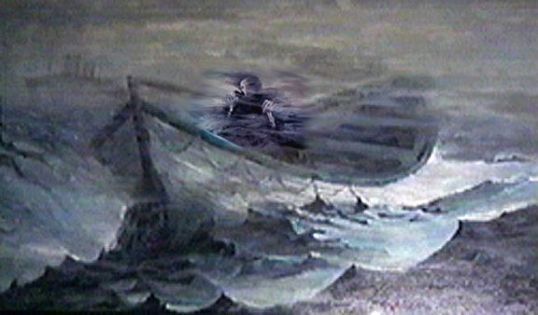
This wonderfully atmospheric story opens in 1915, with the crew of the Lusitania discovering a man (John Colicos) floating in a lifeboat.  The lifeboat is from the Titanic and the man, who claims to be a crewmember of that doomed ship, is wearing a dress, leading the ship’s doctor to assume that the man survived the sinking of the Titanic by pretending to be a woman and stealing someone else’s rightful spot in the lifeboat.

At first, his rescuers are skeptical.  If the man was indeed a survivor of the Titanic, that would mean that he had spent the past three years floating in that lifeboat?  How could the man have survived?  And, assuming that he is telling the truth about the ship that he came from, what has now brought him to the Lusitania?  Could the man possibly be a German spy?  After all, World War I has just broken out and the sea is no longer as safe as it once was….

Lone Survivor is an example of this often uneven show at its best.  It’s a genuinely creepy short film, one that ends on a frightening and rather sad note.  Lone Survivor is the tale of man trying to escape both his own guilt and the whims of fate and discovering that neither can be easily conquered.  In the main role, John Colicos gives a wonderfully intense and haunted performance.

The Doll (dir by Rudi Dorn, written by Rod Serling)

“Our painting is called The Doll,” Rod Serling says as he introduces this one, “and it’s one that you better not play with.”  Truer words were never spoken!

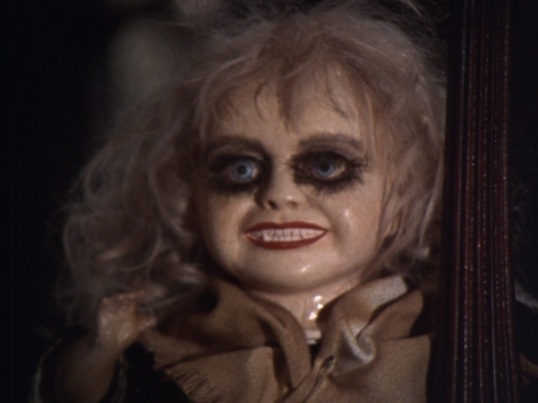
In this one, British Col. Hymber Masters (John Williams) returns home from India and discovers that his niece (Jewel Branch) has a new doll.  Someone mailed the doll to her.  Everyone assumed that Col. Masters sent the doll but he actually had nothing to do with it.  Masters is not happy to see his niece carrying around that doll and it makes sense when you consider just how ugly the doll is.  I mean, this is one creepy doll!

It turns out that the Masters was correct to be concerned because the doll was sent by Pandit Chola (Henry Silva), who holds Masters responsible for the death of his brother.  The doll has been sent to take revenge….

The Doll is another triumph, largely because the doll itself is so creepy that it looks like something that sprung straight out of a nightmare.  John Williams does a good job playing the well-meaning if somewhat stuffy colonel and Henry Silva is well-cast as the villain of the piece.  This segment deserves a lot of credit for taking a fanciful story and playing it totally straight.

The fifth episode of Night Gallery is a triumph.  After a run of uneven episodes, this episode is consistently creepy and entertaining.  For this episode, at least, Night Gallery lived up to its potential.

Previous Night Gallery Reviews:

  1. The Pilot
  2. The Dead Man/The Housekeeper
  3. Room With A View/The Little Black Bag/The Nature of the Enemy
  4. The House/Certain Shadows on the Wall
  5. Make Me Laugh/Clean Kills And Other Trophies

Lisa Cleans Out Her DVR: Scorpio (dir by Michael Winner)


(Lisa is currently in the process of cleaning out her DVR!  Having recorded over 150 movies since last January, she understands that this might be an impossible task but she’s going to try anyway!  She recorded the 1973 spy thriller, Scorpio, off of Retroplex way back on January 24th!)

On the surface, Jean Laurier (Alain Delon) would appear to be the perfect man.

He’s handsome.  He looks really good in a suit.  He’s wealthy.  He’s French.  And — get this — he loves cats!  He’s the type of guy who, when he discovers a stray cat in his hotel room, immediately starts to pet it and then gives it a saucer of warm milk.  He and his girlfriend (Gayle Hunnicutt) spend their spare time looking at cats and talking about how cute they are.  At one point, even though he’s just killed a man, Jean pauses when he sees a stray cat watching…

Oh, did I mention that Jean kills people for a living?  Well, he does but I’m sure they’re all bad guys.  Seriously, he’s just so charming (and he really, really loves cats) that you really can’t hold it against him that he’s an independent contract killer.  Add to that, his code name is Scorpio.

I have to admit that the film’s title — Scorpio — is the main reason that I chose to record this movie.  I’m a scorpio myself.  In fact, I’m such a scorpio that if I believed in astrology, I would point to my existence as proof that the stars actually do determine our fate.  Seriously, you don’t want to mess with us scorpios.  We’re scorpions.  We sting.

But anyway, back to the movie.

When Scorpio is busted on a trumped-up narcotics charge (or maybe it was a legitimate narcotics charge, it was kind of hard to keep track), the CIA gives him a choice.  He can either go to prison or he can do a job for them.  Apparently, the CIA believes that Scorpio’s friend and mentor, Cross (Burt Lancaster), is a double agent who has been selling information to the Russians.  They want Cross eliminated.

Scorpio takes the job but it’s not going to be easy.  Cross is a veteran spy.  He has connections all across the world and he’s a ruthless killer, the type who forces a man to swallow a cyanide pill and then says, “You’ve got 30 seconds to live.”  In fact, the only person that Cross seems to care about is his wife (Joanne Linville) but he still doesn’t hesitate to abandon her when he realizes that their house is being watched

Cross taught Scorpio everything that he knows but there’s one lesson that Scorpio is still learning and that is to trust no one.  Is Cross actually a spy or is he being set up?  And, if Cross is being set up, what’s to prevent the same thing from happening to Scorpio?

Scorpio is probably one of the most cynical films that I’ve ever seen.  If Scorpio was a political protest, it would be full of people carrying cardboard signs reading, “Nothing Matters” and “All Is Darkness.”  Remember that annoying as Hell scene in SPECTRE where James Bond got drunk and demanded to know who a rodent was working for?  Well, imagine the disillusionment of that scene stretched out for two hours.

Fortunately, no one in Scorpio is as whiny as Daniel Craig was in SPECTRE.  In many ways, Scorpio is a triumph of old-fashioned movie star charisma.  Burt Lancaster is perfectly cast as the world-weary Cross while Alain Delon makes for a compelling Scorpio.  Both of them are believable killers and the film becomes as much about the competition between Lancaster’s old school Hollywood style of acting and Delon’s more refined (and very French) style of cool as it is about the competition between Scorpio and Cross.

Scorpio‘s a good little spy thriller, more than worth keeping an eye out for.


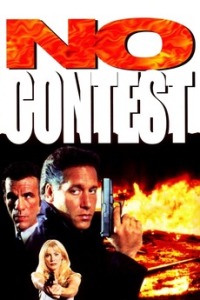
A Movie A Day #41: No Contest (1995, directed by Paul Lynch)


8348-no-contest-0-230-0-345-cropUnder the direction of their leaders, Oz (Andrew “Dice” Cay) and his second-in-command, Ice (Roddy Piper), a diverse group of terrorists have taken the Miss Galaxy contest hostage.  If they don’t receive a ransom of diamonds, they will kill the Miss Galaxy contestants, including the daughter of a powerful senator.  What the terrorists didn’t count on was that the show would be hosted by actress and kick boxer Sharon Bell (Shannon Tweed).  Now, it’s up to Sharon to sneak through a locked-down hotel, killing the terrorists one-by-one.  Her only help comes from a battle-scarred but supportive security officer (Robert Davi) locked outside of the hotel.
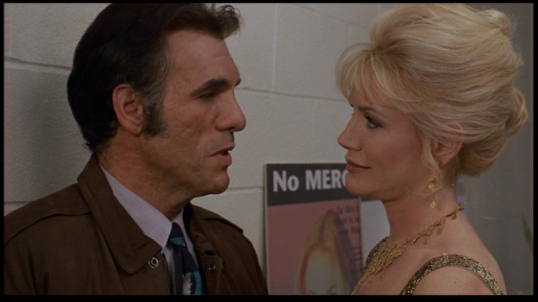
No Contest is so much of a rip-off of Die Hard that it almost qualifies as a remake.  (It is probably not a coincidence that Robert Davi appears in both movies.)  Despite being such a blatant rip-off, No Contest is redeemed by the combination of Andrew “Dice” Clay’s Broolyn-accented villainy and a surprisingly convincing performance from Shannon Tweed.  Toss in Roddy Piper and Robert Davi and the end result is one entertaining direct-to-video thriller.

Shannon Tweed’s best film?  No contest.  It’s No Contest.

vlcsnap-2011-08-02-15h19m14s75

Cleaning Out The DVR, Again #8: Anne of the Thousand Days (dir by Charles Jarrott)


Anne

After I finished writing my review of Rolling Thunder, I continued the process of cleaning out my DVR by watching the 1969 film, Anne of the Thousand Days.  How does a film like Anne of the Thousand Days compare to a film like Rolling Thunder?

They might as well have been conceived, written, directed, and released on different planets.

I recorded Anne of The Thousand Days off of TCM on March 26th.  The main reason that I set the DVR to record it was because Anne was a best picture nominee.  It may seem strange to think that this rather conventional film was nominated the same year as Butch Cassidy and the Sundance Kid, Z, and Midnight Cowboy.  It gets even stranger when you consider what wasn’t nominated that year: Medium Cool, If…, Last Summer, They Shoot Horses, Don’t They?, Alice’s Restaurant, The Wild Bunch, Once Upon A Time In The West, and a long list of other films.  In fact, if I wanted to, I could probably spend this entire review listing all of the 1969 films that feel like a more appropriate best picture nominee than Anne of the Thousand Days.

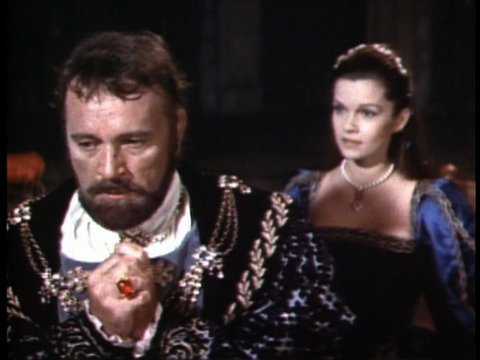
And yet, Anne was nominated for best picture.  In fact, it received a total of 10 Oscar nominations, the most of any film that year.  Tellingly most of the nominations were in the technical categories and the only Oscar that it won was for its costumes.  Genevieve Bujold received a nomination for playing the title character and Richard Burton became the third actor to receive a nomination for playing King Henry VIII.

As for the film, Anne of the Thousand Days tells the oft-told story of King Henry VIII and his marriage to Anne Boleyn.  Told in flashback as both Henry and Anne wait for her to be executed on charges of adultery, the film shows us how middle-aged Henry VIII first met and fell in love with 18 year-old Anne Boleyn.  Standing in the way of Henry’s pursuit of Anne was the fact that 1) Anne intensely disliked him, 2) Anne was already engaged, 3) Anne’s sister was already Henry’s mistress, and 4) Henry was already married to Catherine of Aragon (Irene Papas).

Fortunately, Henry happens to be king and being king comes with its perks.

For instance, as king, he can order Anne and her fiancée to break up.  As king, he can casually dismiss his former mistress.  And, as king, Henry has the power that Anne finds to be the ultimate aphrodisiac.  At first, Anne merely loves the fact that Henry is obsessed with her.  But slowly, she comes to love Henry as a man as well…

The only problem is that Henry is still married and Catherine is still popular with the people.  Even after Henry divorces her and marries Anne, the common people refuse to accept Anne as their queen.  When Sir Thomas More (William Squire) refuses to recognize Anne as queen, Anne demands that More be executed.  When Henry initially shows reluctance, Anne announces that she will not sleep with him until More is dead.

Needless to say, Thomas More is quickly executed.

However, Henry’s attention has already moved on to Jane Seymour (Lesley Paterson) and, desperate to get Anne out of his life, he arranges for Cardinal Cromwell (John Colicos) to frame Anne on charges of adultery and incest.  With Anne facing a humiliating trial and the possibility of execution, Henry makes her an offer.  If she agrees to an annulment, he’ll free her.  However, their daughter — Elizabeth — will lose her claim to the throne…

It’s telling that Charles Jarrott did not receive an Oscar nomination for his work as Anne of the Thousand Day‘s director.  There are a lot of technically good things about Anne of the Thousand Days but, despite all of the melodrama and sex and historical detail to be found in Anne, it never comes to life as a movie.  The costumes are to die for, the sets are impressive, and the cast is full of talented British character actors but the whole movie just feels oddly flat.  Try as it may, it can never convince us that either Henry VIII or Anne Boleyn is worth all the trouble.

Anne of the Thousand Days was obviously a big production, which probably explains all the Oscar nominations.  But otherwise, it’s one of the more forgettable best picture nominees.

Shattered Politics #45: The Changeling (dir by Peter Medak)


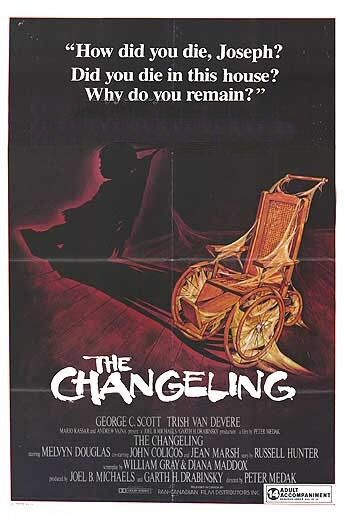
Changeling_ver1If you love horror movies, you have to track down and see The Changeling.

First released in 1980, The Changeling stars George C. Scott as John Russell, a composer.  At the start of the film, he watches helplessly as both his wife and his daughter are killed in a horrific auto accident.  The grieving John leaves his New York home and relocates to Seattle, Washington.  With the help of a sympathetic realtor, Claire Norman (Trish Van Devere), John finds and rents a previously abandoned Victorian mansion.

At first, it seems that John is alone with his grief.  But, as you can probably guess, it quickly becomes apparent that John isn’t alone in his house.  Windows shatter.  Doors slam.  And, most dramatically, every night a mysterious banging sound echoes through the house.  Slowly, John comes to suspect that his house might be haunted…

And, of course, it is!  It’s no spoiler to tell you that because the film is admirably straight forward about being a ghost story.  And what a clever ghost story it is.  I don’t want to give too much away so I’ll just say that the story behind the ghost involves a powerful family, an age-old scandal, and a powerful U.S. Senator (played, with a mixture of poignant sadness and menace, by Melvyn Douglas).

The Changeling is a very well-done and effective ghost story.  For the most part, director Peter Medak emphasizes atmosphere over easy shocks, the end result being a film that maintains a steady feeling of dread and sticks with you long after the final credit rolls up the screen.  George C. Scott is well-cast as John Russell, capturing both the character’s grief and his curiosity.  (There’s actually a very interesting subtext to the film, in that investigating death actually gives John a reason to live.)  At the time the film was made, he was married to Trish Van Devere and the two of them have a very likable chemistry.  And, as previously stated, Melvyn Douglas makes for a great quasi-villain.

(It’s interesting to compare Douglas’s intimidating work here with the far more sympathetic performances that he gave, around the same time, in Being There and The Seduction of Joe Tynan.)

My favorite scene in The Changeling comes when John and Claire hold a séance in order to try to discover what the ghost wants.  The séance team is made up one woman who asks questions, one woman who channels the spirit and writes down his answers, and one man who reads the answers after they’re written.  It’s a wonderfully effective scene, dominated by the eerie sounds of questions being asked, answers being scribbled, and then being shakily read aloud.  It’s probably one of the best cinematic séances that I’ve ever seen.

The Changeling is a wonderful mix of political intrigue and paranormal horror. It was also the first film ever to win a Genie award for Best Canadian Film, which just goes to prove the 90% of all good things come from Canada.