44 Days of Paranoia #3: Winter Kills (dir by William Richert)


MPW-39279Yesterday, I took a look at Executive Action, a 1973 docudrama about the assassination of John F. Kennedy.  Today, I want to take a look at another film inspired by the Kennedys, the 1979 satire Winter Kills.

As the film opens, it’s been 16 years since a popular and dynamic President named Tim Kegan was assassinated in Philadelphia.  Despite constant rumors of conspiracy, the official story is that Kegan was killed by a lone gunman and that gunman was subsequently killed by another lone assassin.  The President’s half-brother, Nick (played by Jeff Bridges, who looks so impossibly young and handsome in this film), has disappointed his father (John Huston) by declining to follow his brother into politics.  Instead, he spends most of his time sailing on corporate oil tankers and dating fashion editor Yvette (Belinda Bauer).  This all changes when a dying man named Fletcher (and played, underneath a lot of bandages, by Joe Spinell) asks for a chance to speak to Nick.  Fletcher reveals that he was the 2nd gunman and that he was hired by to kill President Kegan.  Before dying, Fletcher tells Nick where he can find the rifle that was used to kill the President.

Following Fletcher’s directions, Nick finds both the rifle and proof that his brother’s death was the result of a conspiracy.  Determined to find out who was truly behind the conspiracy, Nick goes to see his father, the flamboyant tycoon Pa Kegan (John Huston) who, we discover, is only alive because he frequently gets blood transfusions from young women.  With Pa’s encouragement, Nick is sent on an increasingly bizarre odyssey into the darkest shadows of America, a world that is populated by militaristic businessmen, sinister gangsters, and an unemotional man named John Cerutti (Anthony Perkins) who very well may be the most powerful man in the world.

The martyred President might be named Tim Kegan, his accused assassin might be named Willie Abbott, and the man who shot Abbott might be named Joe Diamond (and might be played by Eli Wallach) but make no mistake about it — Winter Kills is a thinly disguised look at both the Kennedy assassination and the Kennedy family.  Based on a novel by Richard Condon (who also wrote the conspiracy classic, The Manchurian Candidate), Winter Kills takes all of the various Kennedy conspiracy theories and intentionally pushes them to their most ludicrous extremes.  The end result is a film that tries (and occasionally manages) to be both absurd and sincere, a portrait of a world where paranoia is the only logical reaction.

As I discovered from listening to director William Richert’s commentary on the Anchor Bay DVD, Winter Kills had a long and complicated production history.  The film was produced by two marijuana dealers, one of whom was murdered by the Mafia shortly after the film premiered while the other would later be sentenced to 40 years in prison on federal drug charges.  The production actually went bankrupt more than a few times, which led to Richert, Bridges, and Bauer making and releasing another film specifically so they could raise the money to finish Winter Kills.

When Winter Kills was finally released, it got a good deal of attention because of its spectacular cast.  Along with Bridges, Huston, Perkins, and Wallach, the film also features cameo appearances by Tomas Milian, Elizabeth Taylor, Ralph Meeker, Richard Boone, Sterling Hayden, Dorothy Malone, Toshiro Mifune, and a host of other actors who will be familiar to those of us who enjoy watching old movies on TCM.  And yet, according to Richert, the film itself was barely released in to theaters, the implication being that Winter Kills was a film about conspiracies that fell victim to a conspiracy itself.

Given the film’s history and the subject matter, I was really hoping that Winter Kills would turn out to be a great movie.  Unfortunately, it really doesn’t work.  The film struggles to maintain a balance between suspense and satire and, as a result, the suspense is never convincing and the satire is ultimately so obvious that it ends up being more annoying than thought-provoking.  The cast may be impressive but they’re used in such a way that film ultimately feels like it’s just a collection of showy celebrity cameos as opposed to being an actual story.

That said, Winter Kills remains an interesting misfire.  Jeff Bridges is a likable and compelling lead (and he gives the film much-needed focus) and, playing a role that has a lot in common with his better known work in Chinatown, John Huston is a always watchable if not necessaily likable.  Best of all is Anthony Perkins, who plays a role that, in light of what we now know about the NSA, seems oddly prophetic.

Finally, best of all, Winter Kills remains an interesting time capsule.  If nothing else, it reminds us that mistrust and paranoia are not unique to this century.

3260389_l1

A Guilty Pleasure – Tron:Legacy


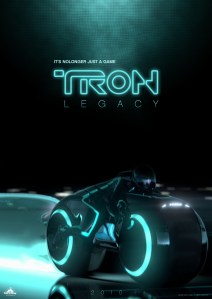
For January, one of the themes for this month were “Guilty Pleasures”- those films that you simply can’t get enough of, despite how good or bad they may actually be. My first contribution for this is 2010’s Tron: Legacy.

When I look at Tron:Legacy, I see two things. I see a missed opportunity in trying to break new ground for the story, and a hint of promise from it’s director, Joseph Kosinski. I attended the premiere for the movie at the IMAX with a friend and his son, and was totally with it for the first half of the film. However, in it’s second half, it slowed down just like the film before it and admittedly, I almost fell asleep. Let’s face it, Tron as an overall universe was never really that strong.

And yet, I watch it just about every time it’s on, if only for the Lightcycle Race and Clu’s speech. Seeing the grid in an updated view and the new look of the light cycles always brings a smile to my face. Granted, it could be listed just as a Scene I Love, but I find I can tolerate most of the film.

Let’s go with the Missed Opportunities first.

Tron: Legacy’s biggest problem is it really only gave the audience a rehash of the original tale. While the angle with Sam and Kevin Flynn were interesting, along with Clu being a villain this time around, I feel the writers really could have taken the story places. Instead, they went the lazy route and decided to go with what anyone who saw the original film could remember – a problem that I feel plagues many sequels / remakes of old films. I figure if you’re going to do a sequel to film that’s more than 5 years old, be seriously prepared to throw something (at least one thing) new on the table.

When James Cameron made Aliens back in 1986, he took Ridley Scott’s tale and built on it, expanding on the Aliens universe with the addition of the Colonial Marines and the Alien Queen, giving the creatures themselves a sense of heirarchy. For Tron: Legacy, the only real new element would be the ISO’s, but then we’re never really shown just what they’re capable of, within or outside of the grid. It’s an empty element that only serves the purpose for bring Sam and Kevin together.

Tron: Legacy also suffers from a Video Game Tie-In Syndrome, something I’ve hated ever since The Matrix Reloaded. Back when that movie was due to come out, Warner Bros. And Atari came up with the idea of making a Video Game that would bridge the gap between certain elements in the story. If you play Enter the Matrix, you’ll actually have a slightly more complete story than you would by just seeing the film. That robs the audience of content. Granted, they don’t need to know everything, but Tron: Legacy has a few elements that are only really understood in the story for it’s video game, Tron: Evolution.

Then there’s the sense of promise.

Joseph Kosinski was originally a commercial director, his most famous being one for the game Gears of War that featured the Gary Jules version of “Mad World”. Between this and his Halo commercials, it made sense that for the visual style that Tron: Legacy needed, he’d make a perfect fit. Tron needed something new, wasn’t that critical of a franchise to play with and gave Kosinski the freedom to take it wherever he wanted to go (within the constraints of what the writers gave him, of course). For a first time film director, I think he did very well, but that’s just me. It should also be noted that it was his idea to bring on Daft Punk for the soundtrack. If the movie is remembered for anything over time, it’ll be for the music, because that score is just cool.

Tron:Legacy on a visual scale is really beautiful, and it’s cool to see the design updates in the machines, by way of Digital Domain and other F/X companies. That alone is enough for me to watch this repeatedly (it’s on as I’m writing this). I haven’t found myself compelled to pick up the Blu-Ray, but Starz and Netflix have it available to watch.

If he’s lucky, Kosinski may end up getting a project that he’ll really take off with. Maybe it’ll be something of his own making or another remake, but for me it’ll be interesting to see where he goes.

A Quickie With Lisa Marie: True Grit (directed by Joel and Ethan Coen)


True Grit is probably the most straight-forward film that has ever come from the irony-laced imaginations of Joel and Ethan Coen.  Perhaps that’s appropriate since the movie is essentially an homage to that most All-American of all movie genres, the western.

Taking place in 1878, True Grit tells the story of Mattie Ross, a 14 year-old girl (Hailee Stienfeld) whose father is killed by a drifter named Tom Chaney (Josh Brolin).  Tom flees into Oklahoma so Mattie goes to Ft. Smith, Arkansas and hires alcoholic, one-eyed U.S. Marshal Rooster Cogburn (Jeff Bridges) to track Chaney down.  Cogburn agrees and teams up with a Texas ranger named LeBouef (Matt Damon) who is also looking to capture Chaney for an unrelated crime (and to pick an equally unrelated reward).  The three of them form an unlikely and uneasy alliance as they search the harsh wilderness for Chaney, who has hooked up with outlaw Ned Pepper (Barry Pepper).  Along the way, reality proves itself to be far less prosaic and ideal and justice turns out to be far less straight forward than Mattie had originally assumed.

As you might expect from a Coen Brothers film, there’s a lot of moral ambiguity on display.  Cogburn is a former outlaw who is mainly motivated by his own greed while LeBouef is an arrogant blowhard.  Meanwhile, the nominal villains often show more humanity than our “heroes.”  Even Tom Chaney appears to be more overwhelmed than evil.  This is a western where the “good guys” ambush their enemies and shoot them in the back.  Throughout the film, the Coens contrast the beautiful cinematography of Roger Deakins and Carter Burwell’s traditional score with the brutality and violence on-screen.

True Grit is a remake of a 1969 film and Jeff Bridges is getting a lot of attention for taking on a role that was originally played by John Wayne.  I haven’t seen the original film so I can’t say if Bridges gives a better performance than Wayne.  However, to be honest, Bridges probably gives the least interesting performance in the entire film.  I know that a lot of people are raving about his work here but I think those raves are more about the actor and less about the performance itself.  When people look back on this movie, they won’t remember Rooster Cogburn as much as they’ll remember Jeff Bridges wearing an eyepatch and slurring his words like your alcoholic cousin on the 4th of July.  Bridges gives a good enough performance but there’s nothing here that couldn’t have been done just as well (or better) by either Tommy Lee Jones or Joe Don Baker.

If anything, the movie belongs to Steinfeld who gives a wonderfully focused performance as Mattie and who serves as the perfect audience surrogate.  As the two main villains, Brolin and Pepper both give excellent performances and the fact that both of them are almost likable only serves to make them all the more effective as “bad” guys.

True Grit is a good movie because the Coen Brothers aren’t capable of doing any less.  Technically, it’s probably one of the best films of 2010.  Still, the movie left me vaguely disappointed.  For what it is — a straight genre piece — it’s a superior work of craftsmanship.  However, from the Coens, I’ve come to expect a bit more. 


Film Review: Tron: Legacy (directed by Joseph Kosinski)


As we were sitting in one of the theaters at the AMC Valley View, waiting for Tron: Legacy, I leaned over to Jeff, placed my head on his shoulder, and told him that he should feel very special.

“Why’s that?” he asked.

“Because there’s like a hundred guys in this theater and you’re the only one here with a girl.”

And it was true!  The theater was full of guys who all looked like Jesse Eisenberg but there were literally only three or four other girls in the audience and I think they were all together.

Now, one thing I’ve always wondered — why are guys so scared to sit next to each other in the movies?  Seriously, there were all these little Jesse Eisenberg-looking guys out in the audience but each one had to have an empty seat on either side of him.  Yet, it was obvious that they all knew each other because they were loudly shouting comments to each other through the entire film and, once the movie was over, they all left together.  So, guys, sorry but it was a group date regardless of how many empty seats there were between you.

So, that’s one of two things I learned from seeing Tron: Legacy: boys who look like Jesse Eisenberg are homophobic.

What else did I learn?  Well, whenever the hero of Tron: Legacy started fighting or talking about fighting or driving too fast, Jeff would go, “Let’s do this — LEROY JENKINS!”  And I was like, “Who the frickin frack is Leroy Jenkins!?”  Anyway, after the movie, Jeff showed me this video on Youtube.  So, now I kinda know who Leroy Jenkins is.

Anyway, if I seem like I’m talking about everything but Tron: Legacy that’s because Tron: Legacy really didn’t make much of an impression on me. 

Tron: Legacy is a sequel.  The original film was called Tron and I’ve never seen it but I have seen the You Have 0 Friends episode of South Park and Jeff says that’s close enough. 

Tron: Legacy is one of those movies that are mostly made to show off what can be done with CGI and the CGI is impressive in this film for about fifteen minutes.  Then, after those 15 minutes, the CGI starts to get repetitive (I mean, there’s only so many times I can be impressed by the big orange space ships coming up over the horizon) and now you’re going to have to pay attention to things like plot and acting and that’s when everything pretty much falls apart.

Anyway, the plot of Tron: Legacy goes something like this: Sam Flynn (Garrett Hedlund) is the son of Kevin Flynn (Jeff Bridges) who is apparently some sort of video game guru who vanishes when Sam is 7.  20 years later, Sam is an angry young man who rides a motorcycle and posts silly Youtube videos of his dog and somehow he ends up getting sucked into a really old computer where he discovers the Matrix.

And wow, is the Matrix boring.  There’s like these gladiator style games going on and all the citizens are actually computer programs and they’re ruled over by CLU (also played by Jeff Bridges) and everyone keeps calling Sam a “user” and then there’s this club that’s ruled over by a Castor (Michael Sheen) who is portrayed as being extremely fey and treacherous which I guess is meant to show that even computer programs can be homophobic. 

Anyway, Sam is tossed into one of the gladiator games and then he’s rescued by a program named Quorra (Olivia Wilde) and it turns out that Quorra lives offgrid with Sam’s father!  It seems that Kevin has been trapped in this world for the past 20 years and now Sam only has a few hours left to get out and Kevin wants to make sure Quorra gets out as well and this is important because Quorra has some sort of digital DNA that’ll end all world suffering but CLU wants to kills Quorra because she’s “an imperfection” and…

Oh, who cares?  Well, the filmmakers apparently because this is an amazingly talky film.  For all the emphasis put on the CGI and the endless stream of action sequences (Sam gets into either a fight or a chase every 10 minutes or so), this is a really verbose film.  Once Sam finds his father, all of the action suddenly halts as the audience is subjected to a seemingly endless monologue that is designed to explain how CLU was created, why CLU looks like a young, sexy Jeff Bridges, and how Quorra can synthesize religion and science and philosophy.  The dialogue brings up all these intellectual and philosophical questions but why?  It’s all very shallow, like listening to someone who just finished an Intro. To Philosophy class trying to explain the work of Jean-Paul Sartre.  (“Hell is other people!  Shit, man…”)  I mean, the explanations make little to no sense yet they keep going on and on!  It’s one thing to make a movie with a nonsensical plot.  It’s another thing to not only continually call attention to that fact but do so in a way that is so humorless and so lacking in any self-awareness that the plot goes from being silly to stupid to borderline offensive.

Anyway, I know this review has been pretty negative so far so instead of dwelling on everything that didn’t work in this movie, I’m going to mention some good things about Tron: Legacy.

Let’s see — well,  I think I may have a girlcrush on Olivia Wilde now.  She kicks ass with style and bring a sly sense of humor to her role.  Unfortunately, she has next to no chemistry with either Bridges or Hedlund.

As CLU, Jeff Bridges is made up to look young and sexy and is obviously being filmed through a lens that has been coated with vaseline.

It’s always nice to see one of my favorite actors, Michael Sheen.  Even though his role here is kind of a waste of his talents, at least he’s not playing Tony Blair again.

Speaking of Michael Sheen, Tron: Legacy might not be a good film but it’s still more entertaining than Frost/Nixon.

Some of the CGI is cool in a “Hey!  Look!  CGI!” sorta way.

However, the best thing about Tron: Legacy is the original score by Daft Punk.  Seriously, this might be the best film score of the year.  The score is a mixture of electronic and orchestral music and it has a perfect sort of other worldliness to it.  To a large extent, the music provides the emotional highs and lows that the rest of the film fails to supply. 

My final verdict on Tron: Legacy: Skip the film, buy the soundtrack.

Hey SAG! Where’s Jacki?


Is there any organization out there right now that isn’t handing out either awards or nominations?  Earlier today, The members of the Screen Actors Guild became the latest organization to join in the fun when they announced their nominations for the best film performances of 2010.

Here’s the nominees.  I apologize, in advance, for the lack of sarcastic commentary but I have a headache and, as a result, my wit is sleeping on the couch for now.

Ensemble:
Black Swan
The Fighter
The Kids Are All Right
The King’s Speech
The Social Network

Actress, Lead:
Annette Bening, The Kids Are All Right
Nicole Kidman, Rabbit Hole
Jennifer Lawrence, Winter’s Bone
Natalie Portman, Black Swan
Hilary Swank, Conviction

Actor, Motion Picture
Jeff Bridges, True Grit
Robert Duvall, Get Low
Jesse Eisenberg, The Social Network
Colin Firth, The King’s Speech
James Franco, 127 Hours

Supporting Actor
Christian Bale, The Fighter
John Hawkes, Winter’s Bone
Jeremy Renner, The Town
Mark Ruffalo, The Kids Are All Right
Geoffrey Rush, The King’s Speech

Actress, Supporting
Amy Adams, The Fighter
Helena Bonham Carter, The King’s Speech
Mila Kunis, Black Swan
Melissa Leo, The Fighter
Hailee Steinfeld, True Grit

Well, okay, maybe I’ll make a few comments along the lines of “Yay for the love shown to Natalie Portman, John Hawkes, James Franco, Jennifer Lawrence, and Mila Kunis!”

But seriously, SAG, where’s Animal Kingdom’s Jacki Weaver?  I mean, I can understand why Noomi Rapace was snubbed.  The Mainstream doesn’t want to remind people that there was a perfect Lisbeth Salander before Rooney Mara.  That’s how the game is played.  That’s why the people over at awardsdaily.com are already trying to claim David Fincher’s remake of The Girl With The Dragon Tattoo as the film to beat for best picture next year.

But nobody’s remaking Animal Kingdom.  There’s nothing wrong with admitting that, in a year of excellent female performances, few were as a note perfect and unexpected as Jacki Weaver’s.