Horror On TV: The Halloween That Almost Wasn’t (dir by Bruce Bilson)


Oh no!  Halloween might be canceled because people just aren’t scared of the old monsters!  Dracula (Judd Hirsch) calls all of the classic creatures to a meeting in his castle (where they all happen to be freeloading) and give them an ultimatum.  Be more scary!  It turns out to be easier said than done.

This originally aired in 1979 but, for people of a certain age, it achieved a certain immortality thanks to regular airings on the Disney Channel.  It’s a cute show.  It might seem a little bit corny today but that’s a large part of its appeal.  It’s a reminder of a more innocent time.

Warren the Werewolf, by the way, was named after Warren “Werewolves of London” Zevon.

Guilty Pleasure #85: Attack of the Killer Tomatoes (dir by John DeBello)


The 1978 film, Attack of the Killer Tomatoes, opens with a title card that would make James Nguyen proud.  It informs us that people laughed when they first watched a film called The Birds.  Then, years later, a flock of birds went mad and started attacking people.  No one is laughing now.

As for the rest of the film, it opens with a housewife being menaced by a giant tomato and then it just keeps rolling on from there.  Something is causing normal, everyday tomatoes to go on a rampage and no one can figure out what.  The government is powerless.  (The government’s competence is best exemplified by a scene where a helicopter crashes.  Reportedly, the helicopter crash was not scripted but the film’s director decided to keep the scene anyway.)  The president puts Mason Dixon (David Miller) in charge of defeating the tomatoes.

The film is one gag and one song after another.  Mason has a group of eccentric people working for him, including a superstar gymnast and a man who is always dragging a parachute behind him.  The streets are soon running red with tomato juice while clueless teenagers continue to listen to absolutely terrible song called Puberty Love….

In the past, I’ve struggled to define how a pleasure can be guilty but I think Attack of the Killer Tomatoes is actually one of the rare films that truly can live up to the label.  It’s a pleasure because it’s just so silly and cheerfully stupid that it’s hard not to smile at it.  It’s guilty because, premise aide, the film itself is never really as funny as you want it to be.  Comedy — even when its something as silly as this film — is all about timing and Attack of the Killer Tomatoes never nails the timing of its gags.  Instead, it plays out like a stoned daydream, amusing to talk about but a bit boring to actually witness.

That said, the film deserves some sort of award for its title and also for going on to inspire not only a few sequels but also a cartoon series.  Producer Stephen Peace went on to have a successful career in California politics.  Good for him.

Previous Guilty Pleasures

  1. Half-Baked
  2. Save The Last Dance
  3. Every Rose Has Its Thorns
  4. The Jeremy Kyle Show
  5. Invasion USA
  6. The Golden Child
  7. Final Destination 2
  8. Paparazzi
  9. The Principal
  10. The Substitute
  11. Terror In The Family
  12. Pandorum
  13. Lambada
  14. Fear
  15. Cocktail
  16. Keep Off The Grass
  17. Girls, Girls, Girls
  18. Class
  19. Tart
  20. King Kong vs. Godzilla
  21. Hawk the Slayer
  22. Battle Beyond the Stars
  23. Meridian
  24. Walk of Shame
  25. From Justin To Kelly
  26. Project Greenlight
  27. Sex Decoy: Love Stings
  28. Swimfan
  29. On the Line
  30. Wolfen
  31. Hail Caesar!
  32. It’s So Cold In The D
  33. In the Mix
  34. Healed By Grace
  35. Valley of the Dolls
  36. The Legend of Billie Jean
  37. Death Wish
  38. Shipping Wars
  39. Ghost Whisperer
  40. Parking Wars
  41. The Dead Are After Me
  42. Harper’s Island
  43. The Resurrection of Gavin Stone
  44. Paranormal State
  45. Utopia
  46. Bar Rescue
  47. The Powers of Matthew Star
  48. Spiker
  49. Heavenly Bodies
  50. Maid in Manhattan
  51. Rage and Honor
  52. Saved By The Bell 3. 21 “No Hope With Dope”
  53. Happy Gilmore
  54. Solarbabies
  55. The Dawn of Correction
  56. Once You Understand
  57. The Voyeurs 
  58. Robot Jox
  59. Teen Wolf
  60. The Running Man
  61. Double Dragon
  62. Backtrack
  63. Julie and Jack
  64. Karate Warrior
  65. Invaders From Mars
  66. Cloverfield
  67. Aerobicide 
  68. Blood Harvest
  69. Shocking Dark
  70. Face The Truth
  71. Submerged
  72. The Canyons
  73. Days of Thunder
  74. Van Helsing
  75. The Night Comes for Us
  76. Code of Silence
  77. Captain Ron
  78. Armageddon
  79. Kate’s Secret
  80. Point Break
  81. The Replacements
  82. The Shadow
  83. Meteor
  84. Last Action Hero

The Unnominated #10: The Long Goodbye (dir by Robert Altman)


Though the Academy of Motion Picture Arts and Sciences claim that the Oscars honor the best of the year, we all know that there are always worthy films and performances that end up getting overlooked.  Sometimes, it’s because the competition too fierce.  Sometimes, it’s because the film itself was too controversial.  Often, it’s just a case of a film’s quality not being fully recognized until years after its initial released.  This series of reviews takes a look at the films and performances that should have been nominated but were, for whatever reason, overlooked.  These are the Unnominated.

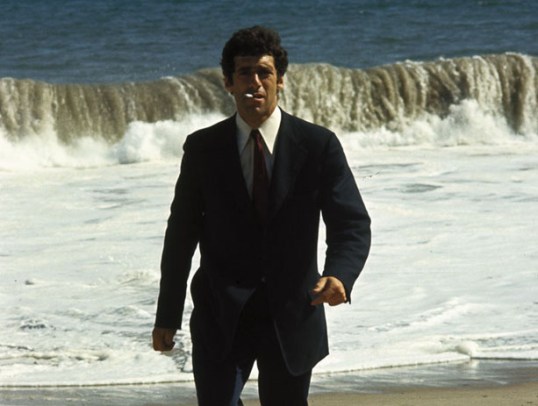
Elliott Gould is Phillip Marlowe!

If I had to pick one sentence to describe the plot of 1973’s The Long Goodbye, that would be it.  Robert Altman’s adaptation of the Raymond Chandler detective novel loosely follows Chandler’s original plot, though Altman did definitely make a few important changes.  Altman moved the story from the 50s to the then-modern 70s, replacing Chandler’s hard-boiled Los Angeles with a satirical portrait of a self-obsessed California, populated by gurus and hippies.  And Altman did change the ending of the book, taking what one could argue is a firmer stand than Chandler did in the novel.  In the end, though, the film really is about the idea of Chandler’s tough detective being reimagined as Elliott Gould.

Rumpled, mumbling, and with a permanent five o’clock shadow, Gould plays Marlowe as being an outsider.  He lives in a shabby apartment.  His only companion is a cat who randomly abandons him (as cats tend to do).  With his wardrobe that seems to consist of only one dark suit, Marlowe seems out-of-place in the California of the 70s.  When Marlowe’s friend, Terry Lennox (Jim Bouton), asks Marlowe to drive him to Mexico, one gets the feeling that Lennox isn’t just asking because Marlowe’s a friend.  He’s asking because he suspects Marlowe would never be a good enough detective to figure out what he’s actually doing.

After Terry’s wife is murdered, Marlowe is informed that 1) Terry has committed suicide and 2) Marlowe is now a suspect.  Convinced that Terry would have never killed himself, Marlowe investigates on his own.  He meets Marty Augustine (Mark Rydell), a gangster who demands that Marlowe recover some money that he claims Terry stole.  Marty seems like an almost reasonable criminal until he smashes a coke bottle across his girlfriend’s face.  (One of Marty’s bodyguards is played by a silent Arnold Schwarzenegger.)  Meanwhile, Terry’s neighbors include an alcoholic writer named Roger Wade (Sterling Hayden) and his wife, Eileen (Nina van Pallandt).  Like Marlowe, Roger is a man out-of-time, a Hemingwayesque writer who has found himself in a world that he is not capable of understanding.  Henry Gibson, who would later memorably play Haven Hamilton in Altman’s Nashville, appears as Wade’s “doctor.”

Marlowe, with his shabby suits and a cigarette perpetually dangling from his mouth, gets next to no respect throughout the film.  No one takes him seriously but Marlowe proves himself to be far more clever than anyone realizes.  Elliott Gould gives one of his best performances as Marlowe, playing him as a man whose befuddled exterior hides a clear sense of right and wrong.  Gould convinces us that Marlowe is a man who can solve the most complex of mysteries, even if he can’t figure out where his cat goes to in the middle of the night.  His code makes him a hero but it also makes him an outsider in what was then the modern world.  The film asks if there’s still a place for a man like Phillip Marlowe in a changing world and it leaves it to us to determine the answer.

Frequently funny but ultimately very serious, The Long Goodbye is one of the best detective films ever made.  Just as Altman did with McCabe & Mrs. Miller, he uses the past to comment on what was then the present.  And, just as with McCabe & Mrs. Miller, The Long Goodbye is a film that was initially released to mixed reviews, though it would later be acclaimed by future viewers and critics.  Whereas McCabe & Mrs. Miller received an Oscar nomination for Julie Christie’s performance as Mrs. Miller, The Long Goodbye was thoroughly snubbed by the Academy.  Altman, Gould, Hayden, and the film itself were all worthy of consideration but none received a nomination.  Instead, that year, the Oscar for Best Picture went to The Sting, a far less cynical homage to the crime films of the past.

The Long Goodbye (1973, directed by Robert Altman)

Previous entries in The Unnominated:

  1. Auto Focus 
  2. Star 80
  3. Monty Python and The Holy Grail
  4. Johnny Got His Gun
  5. Saint Jack
  6. Office Space
  7. Play Misty For Me
  8. The Long Riders
  9. Mean Streets

Film Review: McCabe & Mrs. Miller (dir by Robert Altman)


First released in 1971, McCabe & Mrs. Miller takes place in the town of Presbyterian Church at the turn of the 19th Century.

Presbyterian Church is a mining town in Washington State.  When we first see the town, there’s not much to it.  The town is actually named after its only substantial building and the residents refer to the various parts of the town as either being on the right side or the left side of the church.  The rest of the town is half-constructed and appears to be covered in a permanent layer of grime.  This is perhaps the least romantic town to ever appear in a western and it is populated largely by lazy and bored men who pass the time gambling and waiting for something better to come along.

When a gambler who says that he is named McCabe (Warren Beatty) rides into town, it causes a flurry of excitement.  The man is well-dressed and well-spoken and it’s assumed that he must be someone important.  Soon a rumor spreads that McCabe is an infamous gunfighter named Pudgy McCabe.  Pudgy McCabe is famous for having used a derringer to shoot a man named Atwater.  No one is really sure who Atwater was or why he was shot but everyone agrees that it was impressive.

McCabe proves himself to be an entrepreneur.  He settles down in Presbyterian Church and establishes himself as the town’s pimp.  Soon, he is joined by a cockney madam names Mrs. Miller (Julie Christie).  The two of them go into business together and soon, Presbyterian Church has its own very popular bordello.  Sex sells and Presbyterian Church becomes a boomtown.  It attracts enough attention that two agents of a robber baron approach McCabe and offer to buy him out.  McCabe refuses, thinking that he’ll get more money if he holds out.  Mrs. Miller informs him that the men that he’s dealing with don’t offer to pay more money.  Instead, they just kill anyone who refuses their initial offer.

Three gunmen do eventually show up at Presbyterian Church and we do eventually get an answer to the question of whether or not McCabe killed Atwater or if he’s just someone who has borrowed someone else’s legend.  The final gunfight occurs as snow falls on the town and the townspeople desperately try to put out a fire at the church.  No one really notices the fact that McCabe is fighting for his life at the time and, as befits a revisionist western, there’s nothing romantic or dignified about the film’s violence.  McCabe is not above shooting a man in the back.  The killers are not above tricking an innocent cowboy (poor Keith Carradine) into reaching for his gun so that they’ll have an excuse so gun him down.  McCabe may be responsible for making Presbyterian Church into a boomtown but no one is willing to come to his aid.  The lawyer (William Devane) that McCabe approaches is more interested in promoting his political career than actually getting personally involved in the situation.  Mrs. Miller, a businesswoman first, smokes in an opium den with an air of detachment while the snow falls outside.

It’s a dark story with moments of sardonic humor.  It’s also one of director Robert Altman’s best.  The story of McCabe and Mrs. Miller and the three gunmen is far less important than the film’s portrayal of community growing and changing.  Featuring an ensemble cast and Altman’s trademark overlapping dialogue, McCabe & Mrs. Miller puts the viewer right in the heart of Presbyterian Church.  There are usually several stories playing out at once and it’s often up to the viewer to decide which one that they want to follow.  Yes, the film is about Warren Beatty’s slick but somewhat befuddled McCabe and Julie Christie’s cynical Mrs. Miller.  But it’s just as much about Keith Carradine’s Cowboy and Rene Auberjonois’s innkeeper.  Corey Fischer, Michael Murphy, John Schuck, Shelley Duvall, Bert Remsen, and a host of other Altman mainstays all have roles as the people who briefly come into the orbit of either McCabe or Mrs. Miller.  Every character has a life and a story of their own.  McCabe & Mrs. Miller is a film that feels as if it is truly alive.

As with many of Altman’s films, McCabe & Mrs. Miller was not fully appreciated when initially released.  The intentionally muddy look and the overlapping dialogue left some critics confused and the film’s status as a western that refused to play by the rules of the genre presented a challenge to audience members who may have just wanted to see Warren Beatty fall in love with Julie Christie and save the town.  But the film has endured and is now recognized as one of the best of the 70s.

Bonus Horror On TV: The Halloween That Almost Wasn’t (dir by Bruce Bilson)


Oh no!  Halloween might be canceled because people just aren’t scared of the old monsters!  Dracula (Judd Hirsch) calls all of the classic creatures to a meeting in his castle (where they all happen to be freeloading) and give them an ultimatum.  Be more scary!  It turns out to be easier said than done.

This originally aired in 1979 but, for people of a certain age, it achieved a certain immortality thanks to regular airings on the Disney Channel.  It’s a cute show.  It might seem a little bit corny today but that’s a large part of its appeal.  It’s a reminder of a more innocent time.

Warren the Werewolf, by the way, was named after Warren “Werewolves of London” Zevon.

Retro Television Review: Fantasy Island 5.6 “Druids/A Night In A Harem”


Welcome to Retro Television Reviews, a feature where we review some of our favorite and least favorite shows of the past!  On Tuesdays, I will be reviewing the original Fantasy Island, which ran on ABC from 1977 to 1984.  Almost the entire show is currently streaming on Daily Motion, YouTube, Plex, and a host of other sites.

Let’s see what’s happening on Fantasy Island this week!

Episode 5.6 “Druids/A Night In A Harem”

(Dir by Don Weis, originally aired on November 14th, 1981)

Hey, Tattoo is back!

Now, interestingly enough, Tattoo is in this episode but Julie only appears for a few seconds, just long enough to tell Roarke that she will be too busy babysitting to help out with any of the fantasies this week.  Considering that she’s screwed up almost everything she’s been entrusted with, I’m sure Roarke was relieved to hear this.  Still, you have to wonder if there was some rule that Julie and Tattoo couldn’t be equally featured in the same episode.

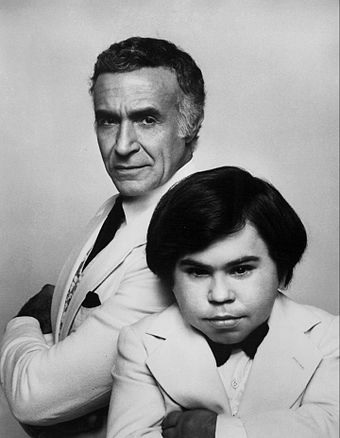
Tattoo is enthused about one of the fantasies this week.  Shy and nerdy Herbie Snyder (Paul Williams) wants to have a harem for the weekend so that he can build up his confidence.  Tattoo offers to accompany Herbie on his fantasy but Roarke says that won’t be necessary.  It turns out Herbie screwed up when he requested his fantasy and asked to be a part of a harem.

Soon, Herbie finds himself surrounded by a bunch of oily body builders as he becomes a member of an all-male harem that belongs to the Contessa (Jayne Meadows)!  Herbie is not comfortable being a sex toy but he is happy to meet and fall in love with Lisa (Pat Klous), the daughter of the Contessa.  Fortunately, it turns out that the Contessa has a fantasy of her own and that’s for Lisa (hey, great name!) to meet and fall in love with a good man.  Herbie and Lisa even get married on Fantasy Island!

This whole fantasy was silly, with Jayne Meadows devouring the scenery as only a veteran guest star can.  That said, Paul Williams and Pat Klous were a cute couple.

As for the other fantasy, Lauren Fandell (Joan Prather) wants to be the center of attention.  Roarke informs her that she’s a descendant of Druid queen.  It turns out that there’s some druids living on a nearby island!  Lauren heads over to Druid Island and is promptly proclaimed Queen of the Druids.  “Are you married? she is asked.  When she says she’s not, she is proclaimed the Virgin Queen.  Uhmmm, okay.  Maybe that’s a druid thing but that just seems like a huge assumption to me….

Unfortunately, being the Virgin Queen means that she’s due to be sacrificed to their God, the evil Pan.  Roarke shows up briefly and gives her a magic acorn necklace, which she does eventually use to distract Pan and escape with her new boyfriend, Paul (Dennis Cole).

(And yes, it does turn out that Paul was another guest whose fantasy was to study the druids.)

This was a good episode.  The fantasies were entertainingly silly and Tattoo was back.  We even got a little of the old Roarke/Tattoo banter, which used to be a highlight of the show.  This episode, with all of its silliness and melodrama, felt like what Fantasy Island was meant to be.
Spaceballs (1987, directed by Mel Brooks)


°ëØ

A long time ago, in a galaxy far far away…

President Skroob (Mel Brooks), the evil and incompetent leader of Planet Spaceball, has squandered all of the air on his planet and is planning on stealing the atmosphere of the planet Druida.  To pull this off, he arranges for the idiotic Prince Valium (Jim J. Bullock) to marry Vespa (Daphne Zuniga), the princess of Druida.  (All together now: “She doesn’t look Druish.”)  Vespa and her droid, Dot Matrix (voice by Joan Rivers), flee Druida with Lord Dark Helmet (Rick Moranis) and Colonel Sandurz (George Wyner) in pursuit.

In debt to the intergalactic gangster, Pizza the Hut (voiced by Dom DeLuise), a mercenary named Lone Star (Bill Pullman) and his associate, the man-dog hypbrid Barf (John Candy), accept a contract from Vespa’s father (Dick Van Patten) to track down his daughter.  They take off in their space Winnebago to bring Vespa home.  Though they start only interested in money, Lone Star and Barf come to learn about love, freedom, and a mystical power known as the Schwartz.  (“No, the Schwartz!”)

Back when I was growing up and just being able to have HBO made you the coolest guy on the block, Spaceballs was one of my favorite movies.  I watched it every time that it came on cable.  As usual with Mel Brooks, there were a lot of double entendres that went over my young head but there was also enough goofy humor that I could laugh at what was going on.  I could quote all the lines.  I laughed whenever Rick Moranis showed up in his Darth Vader-costume.  I laughed at John Candy’s facial expressions.  I laughed when Mel Brooks showed up as Yogurt, the Spaceballs version of Yoda.  Pizza the Hut?  That’s hilarious when you’re a kid!

I recently rewatched the film.  Revisiting it was a lesson in how your memory can trick you.  I could still quote most of the lines with reasonable accuracy but nothing was quite the way I remembered it.  Rick Moranis and John Candy were still hilarious and, being older, I could better appreciated the frustration felt by George Wyner’s Colonel Sandurz.  I also realized what a good performance Bill Pullman gave as Lone Star.  While everyone else mugged for the camera, Pullman played his role straight.

I also discovered that a lot of the scenes that I remembered as being hilarious were actually just mildly amusing.  Mel Brooks was always hit-and-miss as a director, the type who would toss everything and the kitchen sink into his films.  Spaceballs has a lot of hilarious scenes but it’s obvious that Brooks didn’t have the same affection for the source material as he did with Young Frankenstein or Blazing Saddles or even High Anxiety.  Brooks is poking fun at Star Wars because it’s popular but he doesn’t seem to have any strong feelings, one way or the other, about George Lucas’s space epic.

I still laughed, though.  Even if Spaceballs wasn’t the masterpiece that I remembered it being, I still enjoyed rewatching it.  The jokes that hit were funny enough to make up for the ones that missed.  Even with his weaker films, Mel Brooks is a national treasure.

Retro Television Review: In Broad Daylight (dir by Robert Day)


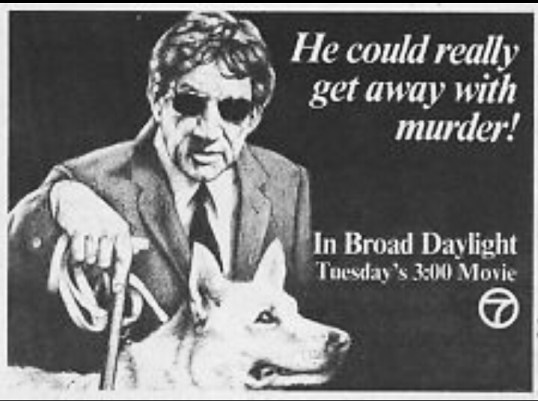
Welcome to Retro Television Reviews, a feature where we review some of our favorite and least favorite shows of the past!  On Sundays, I will be reviewing the made-for-television movies that used to be a primetime mainstay.  Today’s film is 1971’s In Broad Daylight!  It  can be viewed on YouTube.

Tony Chappel (Richard Boone) is an actor who has just recently lost his sight as a result of an accident.  Released from the hospital, Tony struggles to adjust to living in a world without his vision.  When one cab driver says to him, “Didn’t you used to be Tony Chappel?,” he flinches as he realizes that his career as a famous actor is now considered to be over.  One day, he comes home early and overhears his wife (Stella Stevens) fooling around with his lawyer and “best friend” (Fred Beir).  Tony promptly decides to murder his wife and frame his friend for the crime.

Tony decides to use his acting skills to his advantage.  He memorizes the the area around him so that he can make his way through it by memory.  He puts on a fake beard, speaks with Greek accent, and makes a point of carrying a camera with him.  He starts taking public transportation and going out of his way to be talkative and social  Everyone that he meets, he tells them about how he’s been taking pictures of the city and how he can’t wait to see how they come out.  When his wife is eventually murdered, the police receive a reports of a mysterious Greek man, one who was definitely not blind, in the area.  However, Lt. Bergman (John Marley) has his doubts and comes to suspect that Tony is the killer.

In Broad Daylight was made from an early script written by Larry Cohen, who would later go on to direct films like God Told Me To.  It’s a clever script, one that sets up an intriguing premise and which ends on a properly twisty and satisfactory note.  The film works because it is as much of a character study as a thriller.  Tony’s wife not only cheats on him but also betrays him at the moment when he needs her and his friends the most.  Tony has gone from being a movie star to being a man who can barely walk from one room to another.  He’s already angry.  Discovering that his wife is laughing at him behind his back is the last straw.

Larry Cohen reportedly felt that Richard Boone was miscast as Tony.  I felt that Boone did a pretty good job, even if he did overact a bit while Tony was trying to convince everyone that he was a Greek tourist.  Stella Stevens is perfectly cast as his wife and Suzanne Pleshette is sympathetic as his nurse.  Godfather fans will be happy to see John Marley not having to deal with a horse’s head but instead playing the clever detective who attempts to solve the murder.

In Broad Daylight is a clever and entertaining thriller and character study.

Horror On TV: The Halloween That Almost Wasn’t (dir by Bruce Bilson)


Oh no!  Halloween might be canceled because people just aren’t scared of the old monsters!  Dracula (Judd Hirsch) calls all of the classic creatures to a meeting in his castle (where they all happen to be freeloading) and give them an ultimatum.  Be more scary!  It turns out to be easier said than done.

This originally aired in 1979 but, for people of a certain age, it achieved a certain immortality thanks to regular airings on the Disney Channel.  It’s a cute show.  It might seem a little bit corny today but that’s a large part of its appeal.  It’s a reminder of a more innocent time.

Warren the Werewolf, by the way, was named after Warren “Werewolves of London” Zevon.