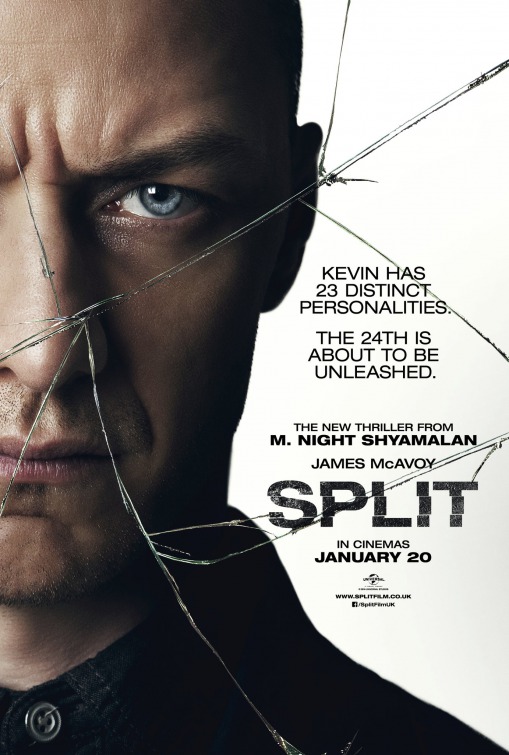
Horror Film Review: Split (dir by M. Night Shyamalan)


There are a lot of negative things that you can say about 2017.  In the future, when historians look back of the second decade of the 21st century, I imagine that they will point to 2017 as being one of the worst years in American history.  The country is divided.  The world seems like a scary and dangerous place.  The outlook for the future feels bleak.  It’s not so much that people are angry.  Instead, it’s that there doesn’t seem to be any end in sight for all the anger.  It’s difficult to imagine that the differences that currently divide the world are ever going to be resolved.

However, there is one thing that can be said about 2017.  It’s been a very good year for horror cinema.

Sure, there have been a few less-than-perfect films.  Rings left most people disappointed.  Does anyone remember The Bye Bye Man or have we said farewell to the memories of that unfortunate film?  While The Dark Tower was never specifically a horror movie, it’s still not easy to think of any other Stephen King adaptation that has been greeted with such indifference.  The less said about Tom Cruise’s The Mummy, the better.

But even with all that in mind, there have been some truly outstanding horror movies released this year.  Movies like Get Out, It, and The Belko Experiment will be well-remembered long after the more “traditional” films of 2017 have faded from the collective memory.  I would go as far as to argue that David Lynch’s revival of Twin Peaks should itself be considered an 18-hour horror movie.  Maybe it is because the world seems like such a dark place right now.  Maybe, at this point, horror movies are the only movies that accurately reflect the way many people are feeling about the present and the future.  For whatever reason, 2017 has been a great year for horror.

Really, we wouldn’t be surprised.  Way back in January, things got off to a good start with the release of Split.  Split was a film that not many people were expecting to be impressive.  Just consider: the film was coming out in January, which is when the worst films are usually released.  (The theory is that everyone’s too busy with the Oscars to notice that studios are desperately trying to write off all of the losers that they misguidedly greenlit for production the previous year.)  Split was directed by M. Night Shyamalan, a formerly respected director whose last few films had been disappointing.  Finally, the film’s plot just didn’t sound that good: James McAvoy plays a man with multiple personalities who kidnaps three teenage girls (Anya Taylor-Joy, Haley Lu Richardson, and Jessica Sula) and holds them captive.  Throughout the film, McAvoy cycles through his different personalities and the girls try to find a way to escape before McAvoy turns into the Beast.

And yet somehow, Split works.  It’s a genuinely scary and unsettling film, one that left me feeling paranoid for days after I watched it.  From the minute that the film started, it grabbed hold of me and it did not let go for two hours.  I watched the movie and I wondered what would happen if I ever found myself in the same situation as the kidnapped girls.  Would I be able to survive?  Would I be able to escape?  Or would I just be another victim of the Beast?  It’s a deeply frightening film, one that feels like a waking nightmare at its most intense.

Obviously, a lot of credit has to go to James McAvoy, who is brilliant in a role that would have brought out the worst instincts in a lesser actor.  It’s a showy role and there had to be considerable temptation to go overboard.  And there are a few times when McAvoy embraces the more theatrical possibilities of the role.  However, in his best scenes, McAvoy is surprisingly subtle.  Yes, he does a lot of different voices.  Yes, his body language alters from personality to personality.  But McAvoy is at his best when he just allows his facial expression to subtly suggest that he has turned into someone else.  McAvoy is frightening but, at times, he’s also rather pathetic.  Whenever McAvoy shows up, you never know what he’s going to do.  He keeps you off-balance.

As good as McAvoy is, M. Night Shyamalan also deserves a lot of credit for Split.  For a film about a man with 23 warring personalities, Split is refreshingly direct and straight forward.  There’s none of the cloying cleverness that cheapened some of Shyamalan’s other films.  Instead, Split is simply a good, scary film for a really scary world.

Jedadiah Leland’s Horrific Adventures In The Internet Archive #3: Hugo’s House of Horrors (1990, Gray Designs Associates)


During today’s exploration of the horrific corners of the Internet Archive, I played Hugo’s House of Horrors (1990, Gray Designs Associates.)

In Hugo’s House of Horrors, you control Hugo.  Hugo’s girlfriend went to a haunted house to babysit and never returned.  When the game starts, you have just arrived at the house to try to find her.

First impression: I’m really digging the graphics.  That house sure does look haunted.  The spooky music that playing in the background is also pretty cool.

I guess it’s time for Hugo to enter the house.  This turned out to be more difficult then I was expecting.

Why not?  That’s a great idea!

Locked?  But look at all those eyes watching Hugo.  Maybe someone inside the house can help.

Hello?

Son of a bitch!  Maybe there’s something I’m missing.

I just tried that!

OPEN THIS DOOR!

OPEN UP!

OPEN THE DOOR, I SEE YOU STARING AT ME!

Eventually, I noticed the pumpkin at Hugo’s feet.  The key was hidden in the pumpkin so Hugo was finally able to open the door and enter the house.

Nice house.  I especially like the painting of the bat.  I sent Hugo went upstairs and had him go through that open doorway at the end of the hall.

Get in the box?  Why not?

Maybe this wasn’t such a good idea.

Oh, this is bullsh–

After the professor left, I realized that Hugo was now much smaller.  After the professor left, I decided that Hugo should leave the room too.  I don’t trust Igor.

The lesson here is don’t get into strange boxes.

This is as far as I have gotten on Hugo’s House of Horrors.  Hugo may be in trouble because it doesn’t seem that I’m very good at this game.  Maybe he will have better luck with you controlling his actions than me.

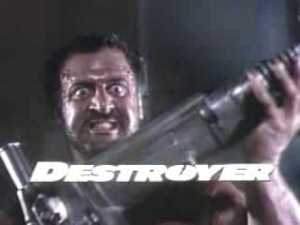
A Movie A Day #268: Destroyer (1988, directed by Robert Kirk)


A year and a half ago, serial killer Ivan Mosser (Lyle Alzado) was sent to the electric chair for murdering 23 people.  On the night that he was electrocuted, the worst prison riot in American history broke out.  The prison was closed and abandoned.  A year and a half later, a film crew has entered the prison to make a women in prison film.  Robert Edwards (Anthony Perkins) is the sleazy director.  David Harris (Clayton Rohner) is the screenwriter who fights to maintain the integrity of his script and who is an expert on the prison’s history.  Susan Malone (Deborah Foreman) is a stuntwoman and David’s girlfriend.  And Ivan is the murderer who is still half-alive and full of electricity.

Watching a forgettable, direct-to-video movie like Destroyer, it is impossible not to feel sorry for Anthony Perkins, who went from getting nominated from Oscars and working with Hitchcock to appearing in films like this.  According to the Perkins biography, Split Image, Perkins was brought in at the last minute to replace Roddy McDowall and was miserable during most of the shoot.  Since Perkins spent a good deal of his later career working with directors like the one he plays in Destroyer, it’s not surprising that he gives one of the two good performances in Destroyer and he also gets the movie’s only memorable death scene.  The other good performance comes from Lyle Alzado, a former football player who had exactly the right look for his role and who plays Ivan like a ghost who is in the throes of roid rage.  Unfortunately, both Alzado and Perkins would die within months of each other in 1992, four years after co-starring in Destroyer.

Horror Scenes That I Love: Thomas Edison’s Production of Frankenstein


Today’s horror scene that I love is, much like The Haunted Castle and The Monster, less a scene and more an entire movie.

In 1910, Thomas Edison produced what is thought to be the first ever film version of Mary Shelley’s Frankenstein!  Clocking in at 12 minutes and 41 seconds, this film was directed by J. Searle Dawley and stars Charles Ogle as the monster.

Admittedly, the surviving prints of this 107 year-old movie are not in the greatest condition.  But I still think it’s effectively surreal and, in its way, quite creepy.  While it always takes a while for modern audiences to get used to the more theatrical acting styles of the silent films, Charles Ogle still makes for a very memorable monster.  I especially enjoy the tinted scenes where the monster comes to life.  In the video below, it start around the 2:18 mark and it’s truly a scene that I love!

Enjoy this piece of film history!

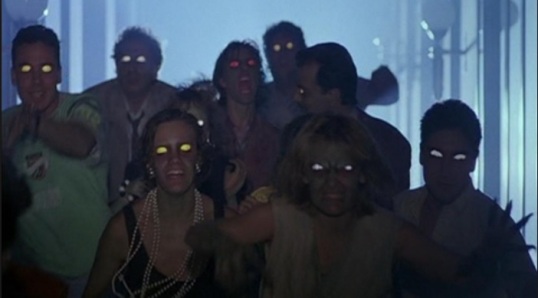
4 Shots From 4 Films: Special Lamberto Bava Edition


4 Shots From 4 Films is just what it says it is, 4 shots from 4 of our favorite films. As opposed to the reviews and recaps that we usually post, 4 Shots From 4 Films is all about letting the visuals do the talking.

This October, I am going to be using our 4 Shots From 4 Films feature to pay tribute to some of my favorite horror directors, in alphabetical order!  That’s right, we’re going from Argento to Zombie in one month!

Today’s director in Lamberto Bava, one of the most underrated directors in the history of Italian horror cinema.

4 Shots From 4 Films

A Blade in the Dark (1983, directed by Lamberto Bava)

Demons (1985, dir by Lamberto Bava)

Demons 2 (1986, dir by Lamberto Bava)

Delirium (1987, dir by Lamberto Bava)

Horror On The Lens: The Dead Don’t Die (dir by Curtis Harrington)


For today’s horror on the lens, we have a 1975 made-for-television movie called The Dead Don’t Die!

The Dead Don’t Die takes place in Chicago during the 1930s.  George Hamilton is a sailor who comes home just in time to witness his brother being executed for a crime that he swears he didn’t commit.  Hamilton is convinced that his brother was innocent so he decides to launch an investigation of his own.  This eventually leads to Hamilton not only being attacked by dead people but also discovering a plot involving a mysterious voodoo priest!

Featuring atmospheric direction for Curtis Harrington and a witty script by Robert Bloch, The Dead Don’t Die is an enjoyable horror mystery.  Along with George Hamilton, the cast includes such luminaries of “old” Hollywood as Ray Milland, Ralph Meeker, Reggie Nalder, and Joan Blondell.  (Admittedly, George Hamilton is not the most convincing sailor to ever appear in a movie but even his miscasting seems to work in a strange way.)

And you can watch it below!

Enjoy!

Horror on TV: The Twilight Zone 3.24 “To Serve Man”


On this day, 58 years ago, one of the most influential shows in the history of television, The Twilight Zone, premiered on CBS.  Created by Rod Serling, this anthology show not only featured some of the best actors and writers in the business but it also used tales of the unexpected to address some of the most pressing issues of the day.  (Many, if not all, of those issues remain relevant today.)  The Twilight Zone inspired a countless number of future filmmakers and writers and it remains popular today.  The annual New Year’s Eve and 4th of July marathons on SyFy continue to delight viewers both new and old.

When we first started doing our annual October horrorthon here at the Shattered Lens, every single episode of the original, black-and-white Twilight Zone was available on YouTube.  Sadly, that’s no longer the case.  As I sit here writing this, while several episodes from the show’s later (and largely unsuccessful) revivals have been uploaded,  there is exactly one episode of the original Twilight Zone on YouTube.

Fortunately, that episode is a classic.  In 1962’s To Serve Man, an alien (Richard Kiel) comes to Earth and invites people to return to his home planet with him.  He leaves behind a book.  When everyone learns that the title of the book is To Serve Man, they excitedly decide that the book must be an instruction manual on how to help mankind.  The truth, as we learn in the episode’s classic finale, is something a little bit different.

Here’s the episode!  Watch it before YouTube yanks it down.

Enjoy!

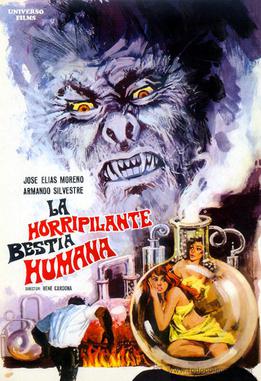
The TSL’s Horror Grindhouse: Night of the Bloody Apes (dir by Rene Cardona)


Okay, so this is a very weird movie.

Before I tell you too much about it, I do need to provide a few caveats.  In 1969, Mexican director Rene Cardona released a film called La Horripilante bestia humana.  When that film was released in the United States in 1972, it was retitled Night of the Bloody Apes.  The film was also badly dubbed into English.  The version that I watched was Night of the Bloody Apes, the dubbed version.  This editing in this version was notably ragged.  I don’t know if that was the result of the American distributors cutting scenes or if the Mexican version was just as bad.  American distributors were notorious for roughly editing foreign-language films but then again, director Rene Cardona was notorious for not exactly being the world’s most competent filmmaker.

I guess what I’m saying is that, for all I know, La Horripilante bestia humana could have been the greatest monster movie ever made before it was transformed into Night of the Bloody Apes.  However, I kind of doubt it.

Night of the Bloody Apes opens, like so many of Rene Cardona’s films, with a wrestling match.  Lucy Osorio (Norma Lazareno) is a famous wrestler who, during a match, seriously injures her opponent.  This leads to Lucy having a crisis of conscience.  Her boyfriend, Lt. Martinez (Armando Silvestre) tells her not to worry about it.  Her opponent will be fine and everyone understands that injuries are just a part of wrestling.  But Lucy isn’t so sure.  Is the fame worth it if it means hurting other people?

WELL, IS IT!?

Don’t worry too much about Lucy, though.  Immediately after providing Lucy with a huge subplot, the film pretty much abandons her.  Once Lt. Martienz encourages her not to give up, Lucy only appears occasionally throughout film, usually while naked in her dressing room.  Whatever inner conflicts she was dealing with, she apparently resolved them while no one was looking.  (This is one reason why I suspect that the film was re-edited by its American distributor.)

The film moves on to another plot.  Dr. Krallman (José Elías Moreno) is desperately trying to save his son’s life.  His angelic and kind of annoying son, who never says an unkind word about anything, is dying of leukemia.  Dr. Krallman thinks that he can save him by removing his defective heart and replacing it with the strong, healthy heart of gorilla.

Sure, why not?

Working in secret with the help of his deformed assistant, Dr. Krallman performs the operation.  (Cardona splices in footage of actual open heart surgery.)  His son survives but at what cost?  As a result of having a gorilla’s heart, Dr. Krallman’s son transforms into a body builder wearing a caveman mask.  His son is no longer a sweet, angelic, and dying.  Now, he’s a monosyllabic brute who runs around the city at night, attacking and killing women.  Lt. Martinez is assigned to the case but that doesn’t mean much because Lt. Matinez is kind of an idiot.

So, yes, Night of the Bloody Apes is one strange movie.  Actually, it’s more of a random collection of scenes than a movie.  It’s a mix of totally gratuitous nudity, over-the-top gore, random wrestling footage, actual open heart surgery footage, and scenes of the man-ape running through the city.  The film never seems to be quite sure whether the monster is actually an ape or some sort of hybrid.  Sometimes, he runs like an ape.  Sometimes, he staggers like Lon Chaney, Jr. playing the Wolfman after having had a drink or two.  It’s a very odd film.

And it’s the oddness of it all that makes the film watchable.  Some things are so weird that you just have to watch them once and that’s a fairly accurate description of Night of the Bloody Apes.  You probably won’t watch it a second time though.  It may be weird enough to sit through once but it’s never as compulsively rewatchable as an Ed Wood film or something like The Horror of Party Beach.  Once is enough.

Jedadiah Leland’s Horrific Adventures In The Internet Archive #2: Knightmare (1992, Konami)


For my second day of exploring the horror section of the Internet Archive, I played Knightmare (1992, Konami). 

Knightmare is basically a top-down shooter.  You are a knight and your girlfriend has been kidnapped by an evil sorcerer.  To rescue her, you must make your way across the grounds of his castle, while avoiding the monsters and guards.

That’s you, in the white armor.  The bat and the gray balloons may look harmless but if they touch you, you explode.  Fortunately, you have an unlimited supply of arrows that you can shoot at them.  You can also use the arrows to destroy obstacles, like those boxes with the question marks.  If you shoot an arrow into a black circle and then retrieve it, you get a weapons upgrade.

You will need that weapons upgrade because eventually, these people show up:

The blue knights are considerably faster than the bats and the balloons.  It takes more than one arrow to kill them and they have arrows of their own.

It took me a while to get the hang of it.

At the end of each level, there is a boss who must be destroyed.  At the end of stage 1, the boss appears to be Medusa.

I have not had much luck against Medusa.

I liked Knightmare.  Like all of the best shooters, it is simple but also challenging and extremely addictive.  It is a game that you can go back and play again and again, which is what I am going to go down right now.

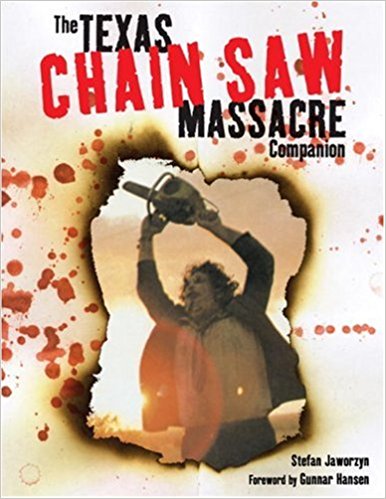
Horror Book Review: The Texas Chainsaw Massacre Companion by Stefan Jaworzyn


Originally released way back in 1974, The Texas Chainsaw Massacre continues to be one of the most iconic and influential horror films of all time.

Not only did the film terrify generations of filmgoers, it also undoubtedly inspired many people who lived up north to swear that they would never visit Texas.  (Speaking as a Texan, I appreciate it!)  So powerful was the impact of The Texas Chainsaw Massacre that it is regularly cited as being one of the first “gore” films, despite the fact that barely a drop of blood is seen throughout the entire film.  Instead, what is seen is Sally (played by Marilyn Burns) screaming while running and Leatherface (Gunnar Hansen) dancing with that chainsaw.

So, how did a group of hippies in Austin come to make one of the most famous movies of all time?  That is the question that is answered in the 2004 book, The Texas Chainsaw Massacre Companion.  Written by Stefan Jaworzyn and featuring a foreword by Gunnar Hansen, this breezy and entertaining book contains almost everything you could possibly want to know about this film.  The book is largely an oral history, featuring lengthy quotes from the film’s cast and crew.  (For the most part, Jaworzyn allows the interviews speak for themselves and only occasionally interjects any editorial commentary.)  Along with detailing the film’s infamously difficult production (with Marilyn Burns nearly being driven to the point of an actual breakdown and Hansen, an otherwise sensitive poet, coming close to being possessed by his murderous character at one point), the companion also deals with crimes of Ed Gein and Tobe Hooper’s career both before and after his best known film.

Most interesting, to me, were the sections that dealt with how the head of the Texas Film Commission helped to secure The Texas Chainsaw Massacre a national distribution deal.  Considering that The Texas Chainsaw Massacre basically portrayed Texas as being a place where you could get killed if you made a wrong turn, the involvement of the Texas Film Commission may seem strange at first.  Some of the interviews in the book seem to suggest that the head of the Commission had a crush on Marilyn Burns.

It’s an entertaining book, even if I don’t agree with everything that Jaworzyn says.  (He calls Psycho overrated at one point.)  With the recent deaths of Marilyn Burns, Gunnar Hansen, and Tobe Hooper, The Texas Chainsaw Massacre Companion now serves as something of a tribute to these three artists and the film that, to the surprise of everyone, changed cinema forever.