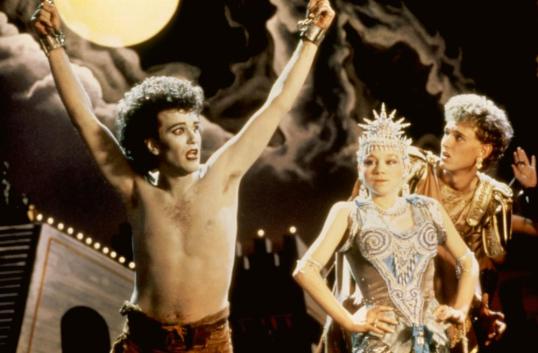
Horror on TV: Friday the 13th: The Series 1.1 “The Inheritance” (dir by William Fruet)


During the month of October, we like to share classic episodes of horror-themed television.  That was easier to do when we first started doing our annual October horrorthon here at the Shattered Lens because every single episode of the original, black-and-white Twilight Zone was available on YouTube.  Sadly, that’s no longer the case.

However, there is some good news!  Twilight Zone may be gone but there are other horror shows on YouTube!  For instance, I’ve discovered that every episode of Friday the 13th: The Series is available.  Though I had never seen an episode of this show before coming across it on YouTube, I had read about it in Crystal Lake Memories, an excellent oral history about the Friday the 13th franchise, and it just seems like the right show for October!

Friday the 13th: The Series was a syndicated horror show that ran from 1987 to 1990.  It followed the adventures of two cousins who inherited an antique shop.  Their uncle, it turned out, was in league with the devil and he used the shop to sell cursed antiques.  So, the cousins and a mysterious friend of their late uncle worked together to try to track those antiques down.  Personally, I love antique shopping and Erin and I inherited about half of our mother’s doll collection.  We’ve got over a 1,000 antique dolls here in the house.  Some of them may be cursed, who knows?

This show was filmed in Canada and produced by Frank Mancuso.  Mancuso also produced the original Friday the 13th films, starting with the second one.  Beyond the title, though, the show didn’t have much to do with the films.  John D. LeMay, who played one of the cousins, did go on to star in Jason Goes to Hell but that was actually the first Friday the 13th film (other than the first installment) to not be produced by Mancuso so that may have just been a coincidence.

Here’s the first episode of Friday the 13th: The Series, which aired on October 3rd, 1987.  The episode was directed by exploitation vet William Fruet and stars Sarah Polley, in one of her first roles, as a child who uses a doll to kill people.  Fortunately, I’ve been around dolls my entire life so I don’t have a fear of them.  As for the rest of you …. enjoy Friday the 13th!
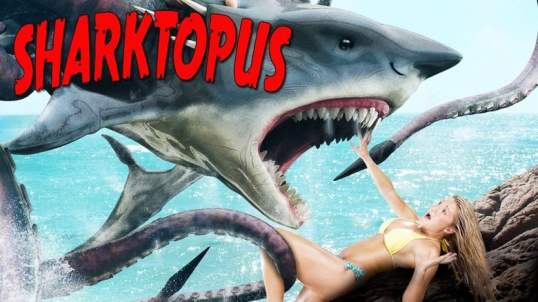


The TSL’s Horror Grindhouse: Sharktopus (dir by Declan O’Brien)


Half Shark….

Half Octopus….

All Man!

No, wait a minute.  That’s not right.  Let’s try that again.

Half Shark….

Half Octopus….

All Killer!

There, that’s it!  That’s our Sharktopus!

Produced by the legendary Roger Corman, Sharktopus originally aired on the SyFy channel in 2010.  It tells the story of S-11, a creature that is half-shark and half-octopus.  How exactly did S-11 come to exist?  Well, blame the government!  The government wanted a new weapon and apparently, it didn’t bother them that the weapon would have no practical use beyond going rogue and killing civilians.  Dr. Nathan Sands (Eric Roberts, the one and only) created the sharktopus with the help of his daughter, Nicole (Sara Malakul Lane).  When S-11 swims off on its own and starts eating human beachgoers, Nicole teams up with mercenary Andy Flynn (Kerem Bursin).  Nicole and Andy think that they’ve been sent to destroy S-11 but it turns out that Nathan has other plans.

Let’s just state the obvious.  This is the greatest film ever made.  Okay, well …. maybe it’s not the greatest.  Some people would probably say that it’s not even that good but I think they’re overthinking things.  What it comes down to is that there really aren’t as many films out there about shark/octopus hybrids as you might think.  When it comes to this very specific genre of horror films, Sharktopus is the best.

This is a film that understands why the audience is watching.  We’re watching because we want to see Sharktopus action!  So, while the film does contain its fair share of scenes of Nicole and Andy searching the ocean, the majority of the film is still made up of Sharktopus attacks.  You don’t really get to know any of the victims, though I did feel bad for the gentleman who shouted, “Oh no!  Not like this!” as he was pulled down to the ocean by S-11’s tentacles, but that’s okay.  It’s all about the Sharktopus, a creature that is so ludicrous that it’s impossible not to like it.

Another thing that’s impossible not to like is the fact that Eric Roberts is in this film.  The last time I checked, Roberts had a total of 641 acting credits listed on the imdb.  He’s appeared in every type of films — from Oscar-nominated prestige films to low-budget faith-based films to Lifetime films to …. well, films like Sharktopus.  But regardless of the film, Roberts always seems to be trying his best or, at the very least, he comes across like he’s genuinely amused by the absurdity of it all.  Roberts has a lot of fun in Sharktopus, playing his mad scientist character with a twinkle in his eye and a barely suppressed evil smile.  Dr. Sands takes genuine pride in his creation and it’s kind of hard not to get caught up in his enthusiasm.

Sharktopus is a fun movie.  It’s a low-budget and deeply silly epic and it you can’t enjoy the sight of shark/octopus hybrid creeping across the beach than I don’t know what to tell you.  In fact, Sharktopus was popular enough with SyFy audiences that it would return for a whole series of films in which it battled hybrid monsters.  Go Sharktopus!

On a final note, keep an eye out for Roger Corman while watching this film.  He plays a man on the beach who watches as a treasure seeker is dragged off to the ocean.  When he realizes that she dropped a valuable coin while being taken away, Corman walks out on the beach and grabs it for himself.  Hopefully, he sold that coin and used the money to go on a nice vacation.  If anyone’s earned it, it’s Roger Corman!


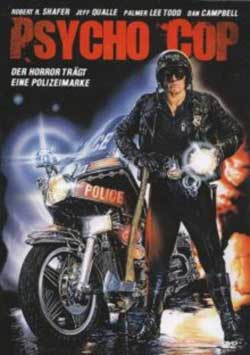
Psycho Cop (1989, directed by Wallace Potts)


When six interchangeable college students spend the weekend at an abandoned mansion, strange things start to happen. First, the caretaker disappears. Then, the students start to disappear, one-by-one. “We should call the police!” Sarah (Linda West) says, once it becomes apparent that more than half of the cast has vanished without a trace.

However, there’s already a cop on the scene.

Unfortunately, that cop is Joe Vickers (Robert R. Shafer), an escapee from the local mental institution who subsequently became a member of the California Highway Patrol. He drives a squad car and sometimes a motorcycle. He wears a uniform. He carries handcuffs and he uses cop lingo. He’s a CHiP with an attitude and no one would ever mistake him for Ponch or Jon Baker. He’s also a Satanist, who likes to draw pentagrams in the dirt and kill anyone who comes across his path. We may see six interchangeable college students but Joe Vickers sees six blood sacrifices and, while the students search for each other, Vickers hunts them down.

Psycho Cop was one of the many, low-budget slashers to come out in the 80s. It attempts to mix the wilderness mayhem of Friday the 13th with the quippy villainy of A Nightmare on Elm Street but the movie never comes anywhere close to being as memorable as either one of those films. The main problem is that Joe Vickers is not a very interesting killer. His one-liners are forgettable and, in this film at least, Robert R. Shafer is one of the least intimidating killers in the history of the genre. He has the right build to be menacing but, whenever he speaks, his weak voice ruins whatever element of danger may have been present. Even his attempt at an evil smile comes across as being more goofy than creepy. As opposed to the Maniac Cop films, Psycho Cop also doesn’t do much with the idea of Vickers being a cop. It’s just a uniform that he happens to be wearing, much like the masks worn by Jason Voorhees and Michael Myers. A film like this is only as strong as its villain and Vickers, to put it gently, is not Freddy Krueger.

Psycho Cop was followed by a sequel called Psycho Cop Returns, which not only made Vickers being a cop a key part of the film’s plot but which also featured Shafer returning in the lead role and giving a much stronger performance. (It helps that Vickers doesn’t speak much in Psycho Cop Returns.) Because the sequel had all of the nudity and the blood that was missing from the tame first film, it was frequently aired on Cinemax and Showtime in the 90s, developed a cult following, and was released on DVD and blu-ray by Vinegar Sydrome in 2017. The first film, on the other hand, has never been released on anything other than VHS and it’s so obscure that several reviewers assumed that the title of Psycho Cop Returns was meant as a joke, a play on how every slasher film released in the early 90s was a sequel.

No, it’s no joke. Psycho Cop does exist. It’s just not every good. If you’re dying to see a killer cop film, Maniac Cop is still the one to go with.

Game Review: Zox The Zombie: Neighborhood Mayhem (2021, Joanne Sylver)


Oh no! Zox has turned into a zombie and he’s already on the run! Can you stop him before he turns his family and then the entire neighborhood into zombies?

That’s the challenge behind this simple but entertaining text adventure. You chase Zox around his house and the neighborhood and, along the way, you run into the people who Zox has already turned into a zombie and you react accordingly. (For instance, you can shake your finger at Zox’s little brother because he was a brat who got what was coming to him.) You can also grab items that you can later use to fight the zombies.

This is a horror game, solely because it involved zombies. Otherwise, there’s not really anything scary about it but it’s not supposed to scary. Instead, it’s a clever throw-back to the type of crude but addictive text adventures that people played on some of the first computers. Trust me, back in the early 90s, something like Zox the Zombie would have been considered the height of computerized adventure! Zox the Zombie definitely has a strong nostalgic appeal to it, with everything from the simple zombie drawings to the enthusiastic text descriptions bringing a nice retro feel to the game.

Zox the Zombie was programmed with Twine and it can be played online.

Horror Scenes That I Love: “Oh No! Not Like This!” from Sharktopus


Today’s horror scene that I love (and the inaugural entry in this year’s collection of Horrothon scenes) comes from the 2010 film, Sharktopus!  And here it is:

A lot of people have made fun of this scene over the years but put yourself in the shoes of this unfortunate painter.  Here you are.  You’re just doing your job.  You’re painting the side of a boat.  It’s not glamorous work.  It probably doesn’t pay very well.  But you’re doing your best and you’re collecting a paycheck and you’re taking care of your family.  It hasn’t always been easy.  When you first got out of prison, you never thought you’d be able to find a job.  Everyone wanted to do a background check.  Your parole officer kept busting your ass.  You were tempted to go back into a life of crime.  You kept thinking about the old crew and wondering if they were still hanging out on the street corners, murking and doing time.  But then the boat painting people said, “We know you’ve had some problems.  But you’re damn good with a paint brush.”

And then suddenly, this happens.  You wanted to die surrounded by your family.  You want your last words to be, “I did okay, didn’t I?”  Instead, you’re getting grabbed by an shark/octopus hybrid.  Who wants to die that way?  “Oh no!  Not like this!” is one of the most honest lines in the history of horror cinema.  It perfectly captures the existential dread that one undoubtedly feels while being pulled into the ocean by a sharktopus.

Bravo, Sharktopus.  Bravo.

Horror Book Review: Who Killed The Homecoming Queen? by R.L. Stine


This 1997 YA novel from R.L. Stine tells the story Tania, Eva, and all of their friends at Shadyside High!

Tania, as we learn in the book’s opening pages, is having the best year of her life! She’s got a hunky stepbrother. She’s got a football player boyfriend. Her movie career is about to be launched because she’s been cast in a high school student film. (Yeah, that didn’t make sense to me either but just go with it.) And, at the big pep rally that starts the book, it’s announced that she’s going to be the homecoming queen! Meanwhile, Eva apparently has psychic abilities that allow her to know if something bad is going to happen. That may sound impressive but the book doesn’t really do much with it.

Of course, life is never as perfect as it seems. Tania may be the most popular girl in school but that doesn’t mean that everyone likes her. In fact, Leslie, one of the defeated homecoming queen finalists, even attempts to push Tania down some stairs! OH MY GOD! Leslie says it was an accident but was it? Later on, when Tania mysteriously disappears, Eva and her friends wonder …. who killed the homecoming queen!? (Of course, that’s assuming Tania is dead. She’s actually just missing so it could be that Eva is getting ahead of herself.) Leslie seems like the obvious suspect but …. OH MY GOD AGAIN, is that Cherise Colby making out with Tania’s boyfriend!? And seriously, why would anyone trust their boyfriend with someone named Cherise Colby?

I love the old R.L. Stine and Christopher Pike books and I’m planning on reading and reviewing a lot of them for October. The main reason I read this particular book was because of the title. I mean, Who Killed The Homecoming Queen is the type of title that you would come up with if you were challenged to come up with the perfect R.L. Stine title. That said, the book itself is pretty anti-climatic. There’s only one death in the book and — surprise! (and spoiler alert, I suppose) — it’s not the homecoming queen! So, as perfect as the title is, it’s kind of a lie. Stine used the title but he didn’t actually use it as the plot of the book, which is strange.

To be honest, though, this book feels like R.L. Stine on autopilot. This is one of the last of the original Fear Street books (though Fear Street itself is not really mentioned in the book) so one gets the feeling that Stine was a bit bored when he wrote it. I was a bit bored when I read it, though I did have to laugh at the obnoxious student filmmakers who insisted on making Eva’s life awkward. Never have a group of supporting characters felt more true to life.

Anyway, fear not! This particular R.L. Stine book may be disappointing but he wrote a lot of books and I’m planning on reading and reviewing a few of the better ones this October!

I mean, who can resist a trip to Fear Street, right?

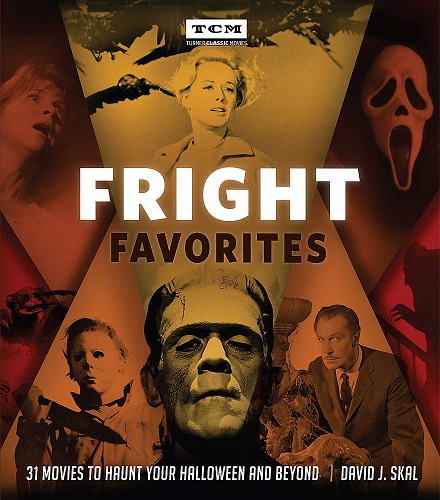
Horror Book Review: Fright Favorites by David J. Skal


Happy October!

Now, if you’re like those of us here at the Shattered Lens, you’ve already got your list of movies set up to go. You know exactly which horror movies you’re going to watch this year and you’re ready for a great Halloween! Good for you! However, for everyone else, David J. Skal’s Fright Favorites is a good place to start when it comes to making out your list.

The book is subtitled 31 Movies To Haunt Your Halloween and Beyond and that’s pretty much the perfect description. Skal writes about 31 classic horror films, analyzing both their content and discussing their historical importance and making a pretty good case why these should be the films that you watch this Halloween. (Actually, since there’s 31 films, you could easily watch a film a day.) Going in chronological order, Skal starts with silent classics like Nosferatu and The Phantom of the Opera and then goes all the way to modern classics like Get Out. Along the way, Skal discusses Universal classics like Dracula and Frankenstein, the Hammer films, the Corman Poe films, and, of course, films like The Exorcist, The Shining, Halloween, Beetlejucie, Scream, A Nightmare on Elm Street, and many more. He also recommends Hocus Pocus but we won’t hold that against him. He also devotes a chapter to Black Sunday (with a little mini-section about Surpiria) so Italian horror does not go unmentioned!

It’s a fun read, for both horror and non-horror fans. It’s a good starter for those who might not know much about the genre but, at the same time, there’s a lot here for those of us who already love the films. Skal’s appreciation of the genre comes through and, even if you’ve already seen the films that he recommends, it’s still interesting to consider his thoughts on them. This is one of those books that will remind you of why you fell in love with the horror genre in the first place.

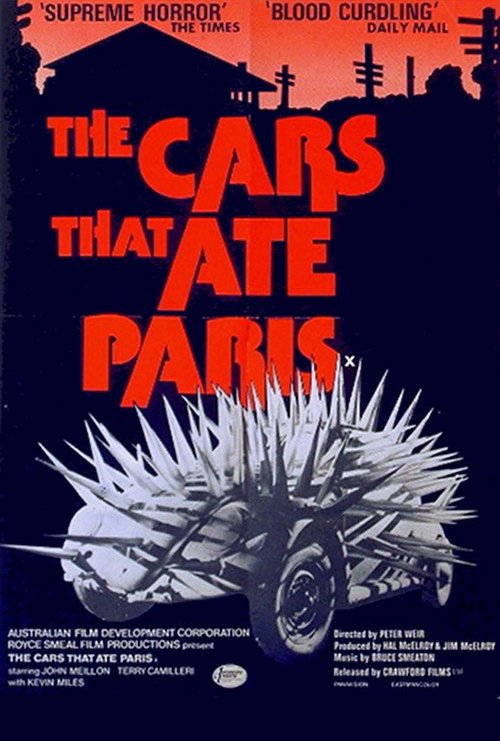
International Horror: The Cars That Ate Paris (dir by Peter Weir)


Taking place in a vaguely futuristic world, the 1974 Australian film, The Cars That Ate Paris, opens with an attractive and impossibly happy couple going for a drive in the countryside and getting killed in a truly horrific car accident, one that apparently was deliberately set up.

Meanwhile, two brothers — Arthur (Terry Camilleri) and George (Rick Scully) — are traveling across Australia, in search of work.  Everywhere they go, they see long lines of desperate people looking for a way to make money, suggesting that the economy has basically collapsed.  George does the driving, largely because Arthur’s license was taken away after he accidentally killed a pedestrian.  Arthur is struggling with both the guilt and a phobia of cars in general.

That phobia only gets worse after Arthur and George are involved in a automotive accident of their own.  George is killed but Arthur survives.  Taken to the small, rural town of Paris, Arthur is adopted as a bit of a mascot by the town’s seemingly friendly mayor, Len Kelly (John Mellion).  At first, Arthur is relieved to have survived but he soon comes to realize that the residents of Paris have no intention of ever letting him leave.

Paris, it turns out, is a bit of a strange place.  The entire economy is based on collecting scrap metal from the many cars that crash within the city limits.  The local hospital is full of car crash victims, the majority of whom end up getting lobotomized and used as test subjects for the local doctor.  Indeed, the only thing that kept Arthur from a similar fate was that the mayor assured everyone that Arthur’s phobia of driving has rendered him “harmless.”  (And just to make sure that Arthur doesn’t lose that phobia, he’s sent to a psychologist who spends nearly the entire session showing him grotesque pictures of car accident victims.)  Though the mayor continually talks about how Paris represents the “pioneer spirit” that made Australia great, the town’s teenagers don’t seem to be too impressed with the place.  They spend all of their time driving around in cars that they’ve modified into small tanks.  (Their leader drives a compact car that has been covered in metal spikes, transforming it into a motorized porcupine.)  Arthur wants to escape the town but can he conquer not only his own fears but also avoid being killed by the citizens who have adopted him?

The Cars That Ate Paris is a rather uneven film.  It gets off to a good start and the town is memorably creepy but, once Arthur had been adopted by the mayor, it starts to drag and not much happens until the teens finally get around to turning on their elders during the final fifteen minutes of the film.  Arthur is a frustratingly passive character and his car phobia never really feels credible.  The film attempts to mix horror, science fiction, and satire but it comes across as being rather disjointed.  Thematically, it’s probably most interesting as a precursor to the Mad Max films, having been inspired by the same Australian car culture that inspired George Miller.  In fact, The Cars That Ate Paris almost feels like a prequel to the Mad Max films.  One half expects a young Mel Gibson to pop up at the end, wearing Max’s patrolman uniform and shaking his head at the madness of it all.

That said, the film features a few striking images and Paris is a memorably desolate town.  This really isn’t that surprising, given that The Cars That Ate Paris was directed by Peter Weir.  This was Weir’s first feature film, though he had previously directed several shorts, and the film very much comes across as being the work of a talented artist who was still learning how to use those talents to tell a compelling story.  In the end, Peter Weir’s involvement is the main reason to watch The Cars That Ate Paris.  The film doesn’t really work but it does provide a chance to see an early effort from someone who would eventually become one of the most interesting directors of his time.

Beware The Tentacles Of October!


by John Newton Howitt

Are you scared of tentacles?

Whether they’re reaching down from the sky or coming out of the water, the idea of being grabbed and, even worse, squeezed by several slimy tentacles is a scary one!  Perhaps that’s why it was such a popular image during the pulp age.  Below is just a sampling of some of the era’s tentacle horror, courtesy of some of the best artists to work in the pulps!

by Earle Bergey

by Alexander Leydenfrost

by Edmund Emshwiller

by Hugh Joseph Ward

by L.B. Cole

by Lou Fine

by Rafael DeSoto

by Robert Bonfils

by Ron Embleton

by Rudolph Belarski

6 Shots From 6 Ken Russell Films


4 (or more) Shots From 4 (or more) Films is just what it says it is, 4 (or more) shots from 4 (or more) of our favorite films. As opposed to the reviews and recaps that we usually post, 4 (or more) Shots From 4 (or more) Films lets the visuals do the talking.

This October, we’re using this feature to highlight some of our favorite actors and directors, all of whom have made invaluable contributions to the horror genre!  Today, we pay tribute to the iconoclastic British director Ken Russell with….

6 Shots From 6 Ken Russell Films

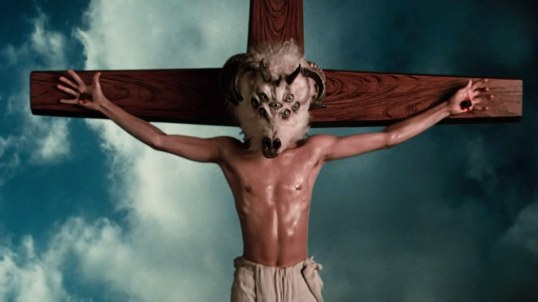
The Devils (1971, directed by Ken Russell, DP: David Watkin)

Altered States (1980, dir by Ken Russell, DP: Jordan S. Croneweth)

Crimes of Passion (1984, dir by Ken Russell, DP: Dick Bush)

Gothic (1986, dir by Ken Russell, DP: Mike Southon)

Salome’s Last Dance (1988, dir by Ken Russell, DP: Harvey Harrison)

The Lair of the White Worm (1988, dir by Ken Russell, DP: Dick Bush)