Horror Film Review: The Devils (dir by Ken Russell)


In 17th Century France, Louis XIII (Graham Armitage) may be king but it’s the devious Cardinal Richelieu (Christopher Logue) who holds the power. Richelieu has convinced that king that every walled city in France should have its walls blown up, the better to keep track of what’s actually happening within the city. Unfortunately, for Richelieu, Louis XIII promised the Governor of Louden that he would never harm any structure in the city, leaving its walls untouchable. While Louis XIII concentrates on throwing outdoor parties where murdering protestant is the main source of entertainment, Richelieu searches for an excuse to destroy the walls of Loudon.

Along with being frustrated by the fact that Loudon retains its walls, Richelieu is also upset that the unofficial leader of the city is Ubrain Grandier (Oliver Reed), a decadent priest who has not only criticized the discipline of clerical celibacy but who has also publicly opposed the Cardinal’s efforts to increase his own political power. Grandier has made it clear that, as long as he’s in control, the walls of Loudon will never came down and the people of Loudon, fearful of the plague that is ravaging the world outside of the walls, support him.

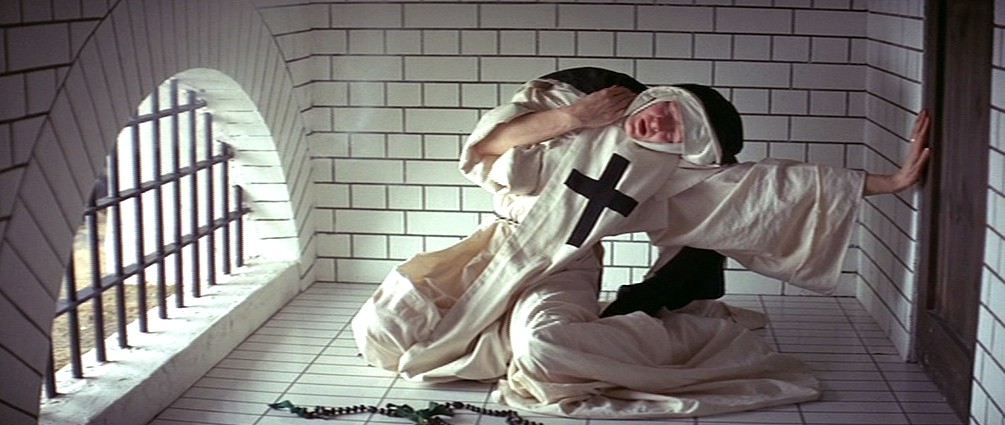
Among Grandier’s many admirers is Sister Jeanne des Agnes (Vanessa Redgrave), a hunchback who is also the abbess of the local convent. Having become sexually obsessed with Grandier, Agnes requests that he become the confessor of the convent. When Grandier refuses, it sets off a chain reaction that eventually leads to Grandier being accused of worshipping the Devil and “bewitching” Sister Agnes and several other nuns. With the arrival of Father Barre (Michael Gothard), a fanatical witch hunter, the city of Loudon descends into darkness and decadence.

Directed by the infamous (and, let’s just admit it, brilliant) Ken Russell and first released in 1971, The Devils is not an easy film to see. When the film was originally released in Britain, it was controversial for its uncompromising depiction of 17th century torture and its combination of religion and sexual imagery. (This, of course, was a recurring theme in almost all of Russell’s work.) The British censors demanded a few minor cuts before agreeing to approve the film for release. While the British censors focused on the scenes of violence, Warner Bros. also removed several sexually explicit scenes, the most infamous of which was a sequence in which a group of naked nuns sexually defiled a statue of Christ. Also removed was a scene of a priest masturbating while watching the nuns and finally, a scene in which Sister Jeanne masturbated with a charred femur bone. Russell was not happy with the changes and, needless to say, he was even more upset when Warner Bros. removed an additional three minutes before releasing the film in the United States.

In the U.S., The Devils was even more controversial than it had been in the United Kingdom and, while many critics praised it as being a powerful attack on hypocrisy, others described it as merely being pornographic. Despite the cuts that were made, the American version of The Devils was slapped with an X rating and Warner Bros. attempted to distance itself from the controversy that had developed around the film. As of this writing, The Devils has never been given a proper Region 1 DVD or Blu-ray release. It’s rare that ever shows up on any streaming platforms. Even YouTube has only a handful of scenes. If you want to watch The Devils in America, you’re going to have to track down a VCR player and watch it on VHS. And, even then, you’ll only be seeing the version that was cut for the U.S.

Will Ken Russell’s original, uncut version ever be seen in America? It’s a question that many film students have asked themselves. In 2002, a 117-minute edition of The Devils played in London, featuring some of the footage that was cut from the film’s original release. However, that version is still considered to be incomplete and it’s certainly not available here in the United States. The Devils does occasionally show up on Shudder, which is how I saw it earlier this year. Of course, the Shudder version was the cut American version, which Russell repeatedly disowned.

Watching the film, I could understand Russell’s anger. It wasn’t just that scenes had been cut out of the film. It was that the scenes were often edited out with such a lack of finesse that it made the film seem disjointed. Russell was a director known for his hallucinatory and deliberately over-the-top style. When the film abruptly cuts away from showing us its most shocking images, it feels antethical to everything that Russell was about as a filmmaker. On the one hand, it’s easy to say, “Who cares if a scene of Vanessa Redgrave masturbating with a charred femur bone has been removed from the film? Who wants to see that?” But if you watch The Devils, it becomes apparent that it’s not about what would be pleasant to see. Indeed, in many ways, The Devils is meant as a deliberate attack on the senses, one in which shocking imagery is used to awaken the audience from their complacency. As such, the controversy about how the film was cut is not about what’s acceptable. Instead, it’s about the fact that Russell has created a world where it somehow makes total sense that Sister Jeanne would pick up the femur and make use of it. By editing the scene so that it abruptly ends with Jeanne merely looking at the bone, Warner Bros. forced The Devils to not be true to itself.

And yet, despite all of that, The Devils remains a powerful and disturbing film, a hallucinatory collection of nightmarish images and haunting scenes. The excessive stylization that was Ken Russell’s trademark is perfect for this story of an entire community caught up in a frenzy of paranoia and repression. Though a period film (and based on a true story), Russell’s Loudon resembles an alien landscape, an almost expressionistic city of pristine walls and dirty streets. Vanessa Redgrave’s twisted nun stalks through the film like an ominous spirit, both wanting and hating Grandier at the same time. When the “possessions” begin, the possessed finally have the excuse to do what they truly want and to live just as wantonly as the men who previously controlled their lives. Because they’ve come to believe that they’re no longer responsible for their own actions, they can indulge in every depravity. But with Louis XIII casually murdering protestants for sport at his estate and Richelieu manipulating church policy to his own ends, the film asks why the people’s actions are more worthy of condemnation than the actions of the people who rule them.
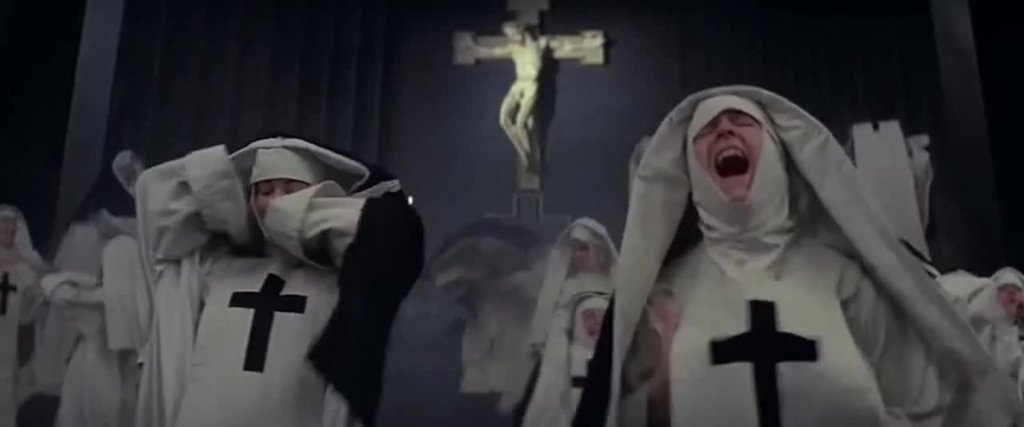
The Devils has reputation for being blasphemous. It is, of course, nothing of the sort. After I watched the film, I did a little research and I was not surprised to discover that Ken Russell was a practicing Catholic because only a Catholic could make a film that both celebrated what the Church could be while also condemning it for so often falling short. While Richelieu represents the people who use religion as a vehicle for their own drive for power and Sister Jeanne and the witch-hunter Father Barre represents the fanatics who use church doctrine to justify their own madness, it is the sinner Father Grandier who represents what the Church should be. It is Grandier who is ultimately forced to put his own life at risk to protect the people of Loudon.

Is The Devils are horror film? Some would probably argue with my claim that it is. They would probably claim that it’s a historical drama with a heavy political subtext, However, for me, the imagery itself is disturbing enough to justify calling The Devils a horror film. The possessed of Loudon eventually prove themselves to be as mad as any of the infected people from George Romero’s The Crazies and the torture that Grandier suffers is frightening specifically because it’s all based on fact. There really was a town named Loudon that had walls. There really was a priest named Grandier who was accused of practicing witchcraft and who suffered the most vile torture as a result.. The Devils is a film about people driven made by a combination of repression and fanaticsm. It’s a horror film because it’s true and, needless to say, the madness that possessed Loudon didn’t die out in the 17th Century. It’s continued into the present day.

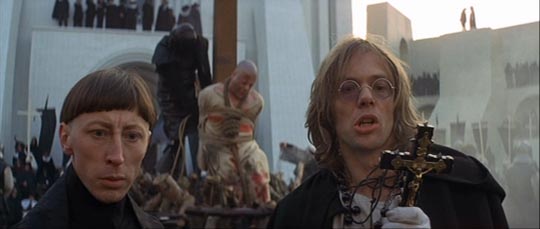
Oliver Reed may seem like an odd choice to play a priest but he gives one of his best performances as the charismatic but foolishly cocky Grandier. Vanessa Redgrave is frightening as the disturbed Sister Jeanne and British actor Murray Melvin is alternatively sympathetic and pathetic as a priest who comes to believe in Grandier’s innocence. For me, though, the film is stolen by Michael Gothard, who plays the fanatical witch hunter, Father Barre. With his long hair and his glasses, Father Barre bears a definite resemblance to John Lennon and the film portrays him as being the 17th century equivalent of a rock star, an arrogant and sensual man who encourages people to indulge in their most secret desires so that he can then declare them to be possessed and in need of an exorcism. Gothard had a magnetic screen presence, allowing him to steal scenes from even formidable talents like Oliver Reed and Vanessa Redgrave. Gothard would go on to play the silent assassin in the James Bond film, For Your Eyes Only and was, again, memorably threatening. Sadly, Gothard took his own life in 1992.
Someday, perhaps the full unedited version of The Devils will be available. Until then, even the edited version retains its power to shock, disturb, and make you think. Today, more than ever, its portrait of hypocrisy and mass madness feels relevant. The modern age is still ruled by hysteria and paranoia and our leaders are still looking for any excuse to take down any walls that might protect us from having to submit to their will. How different is Sister Jeanne from the people who are currently hurling accusations on social media? How different is Father Barre from the the people who were are currently told have all the answers? We may no longer burn people at the stake but we’ve found new ways to silence voices of dissent. The film may have been set in 17th Century France and first released in 1971 but Ken Russell’s masterpiece is all about the modern age. The Devils in not an easy film to watch or find but it is more than worth the effort to track down.
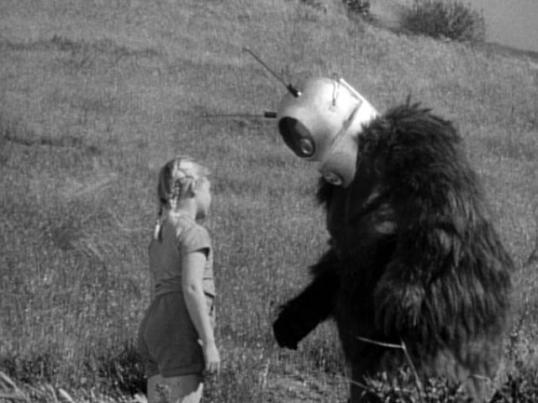


Horror on the Lens: Robot Monster (dir by Phil Tucker)


Hi there and welcome to October!  This is our favorite time of the year here at the Shattered Lens because October is our annual horrorthon!  For the past several years (seriously, we’ve been doing this for a while), we have celebrated every October by reviewing and showing some of our favorite horror movies, shows, books, and music.  That’s a tradition that I’m looking forward to helping to continue this year.

Today’s horror film is a true classic of its kind, the 1953 science fiction epic Robot Monster.

Now, I should admit that this is not the first time that I’ve shared Robot Monster in October.  I share it every year and, every year, YouTube seems to pull the video down in November.  That sucks because Robot Monster is one of those weird films that everyone should see.  So, I’m going to share it again.  And, hopefully, YouTube will let the video stay up for a while.

As for what Robot Monster is about…

What happens with the Earth is attacked by aliens?  Well, first off, dinosaurs come back to life.  All of humanity is killed, except for one annoying family.  Finally, the fearsome Ro-Man is sent down to the planet to make sure that it’s ready for colonization.  (Or something like that.  To be honest, Ro-Man’s exact goal remains a bit vague.)

Why is Ro-Man so fearsome?  Well, he lives in a cave for one thing.  He also owns a bubble machine.  And finally, perhaps most horrifically, he’s a gorilla wearing a diver’s helmet.  However, Ro-Man is not just a one-dimensional bad guy.  No, he actually gets to have a monologue about halfway through the film in which he considers the existential issues inherent in being a gorilla wearing a diver’s helmet.

Can humanity defeat Ro-Man?  Will Ro-Man ever get his intergalactic supervisor to appreciate him?  And finally, why are the dinosaurs there?

Despite the film’s reputation for being borderline incoherent, most of those above questions actually are answered if you pay attention to the first few scenes of Robot Monster.  In fact, one could even argue that Robot Monster is maybe a little bit more clever than it’s often given credit for.  Of course, it’s still a zero-budget mess of a film but it’s also undeniably fun and, in some sections, unexpectedly dark.  If you’ve never seen it before, you owe it to yourself to set aside an hour and two minutes in order to watch it.  You’ve never see anything like it before.

Finally, I should note that Robot Monster’s hero was played by George Nader, who actually did go on to appear in several mainstream films.  Despite his good looks and talent (which may not be obvious in this film but which he did have), George Nader struggled to get starring roles in Hollywood, where he was often dismissed as just being a member of Rock Hudson’s entourage.  (It’s been theorized that Nader struggled because the studios feared that giving him too big of a role would lead to the gossip magazines writing about Nader’s relationship with Hudson, though the two were just friends.  Nader was in a relationship with Hudson’s private secretary, Mark Miller, from 1947 until Nader’s death in 2001.)  Nader finally left Hollywood and went on to have a pretty successful career in Europe.  He was perhaps best known for playing secret agent Jerry Cotton in a series of films in the 60s.

Happy October and enjoy Robot Monster!

(On another note, this movie was a favorite of TSL Contributor Gary Loggins.  Gary passed away a year ago today so this showing is dedicated to his memory.  We miss you, Gary!)

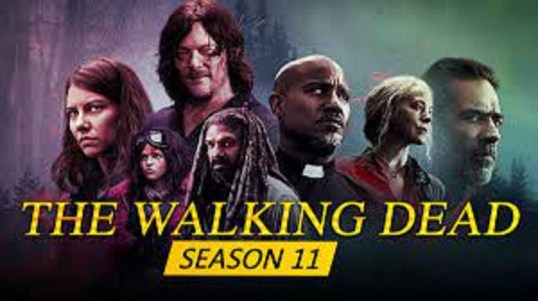
Horror TV Review: The Walking Dead 11.6 “On the Inside” (dir by Greg Nicotero)


Who is Connie?

I have to admit that, when I started watching the latest episode of The Walking Dead a few days ago, I had absolutely no idea who Connie was.  As I’ve stated before, I actually stopped watching the show after Carl Grimes shot himself during season 8.  With Carl dead, it really didn’t seem like it was going to be worth following the show to whatever bleak destination it was heading towards.  So, I sat out two and a half seasons.  I missed the final appearance of characters like Rick Grimes and Michonne.  I missed the death of Jesus during season 9, which was unfortunate since that was one character who really got on my nerves.  And, most importantly, as far as this week’s show was concerned, I missed the introduction of Connie.

And yet, despite not really knowing who she was, I was enthralled by her storyline.  Connie (played by Lauren Ridloff) and Virgil (Kevin Carroll) spent the majority of this week’s episode trapped in a house.  On the outside of the house, there were Walkers.  On the inside was something even more frightening, a group of feral human beings who, though still living, had reverted to mindless cannibalism.  For the first time in a long time, The Walking Dead was genuinely scary.  The Walkers, who are far too often treated as an afterthought on this show, were a legitimate threat and the feral people made me jump every time they emerged from the shadows.  I was frightened for Connie and Virgil, despite not being totally sure who they were.  For once, I cared about whether or not the film’s human characters would survive and it’s been a while since I’ve been able to say that about The Walking Dead or, for that matter, any other zombie-themed show or movie.

Director Greg Nicotero deserves a lot of credit for this episode.  He did a wonderful job maintaining suspense and an atmosphere of impending doom.  The scenes of Connie and Virgil in the house felt a bit like an homage to the Dead films of George Romero.  Beyond the location, the twin threats of the Walkers and the Ferals brought to mind one of the main themes of Romero’s work — i.e., there’s not that big of a difference between the dead and the living.  One could argue that the Ferals are just getting an early start on their eventual fate.

The Connie/Virgil storyline was so intense that I was actually happy for the somewhat more subdued scenes involving Darryl and the Reapers.  They have me a chance to catch my breath, even if the Reapers themselves still haven’t really established themselves as anything more than just this season’s group of misdirected bad guys.  Naturally, I felt bad for Frost but, at this point, I can’t really say that I’m surprised by his fate.  There’s been many Frosts over the past few years of The Walking Dead.

On The Inside was definitely a triumph.  It reminded me of why, way back in 2010, people were so excited about this show in the first place.  Hopefully, this will bode well for the rest of season 11.

Artwork of the Day: A Morning In October


by Erin Nicole

I took this picture a few years ago, on a foggy October morning.  Usually, this is a normal-looking neighborhood but, on that morning, it looked creepy so I had to get out there with my camera and get some pictures of it all.  We had many mornings like this that October.  We’ll probably have even more this October.

Music Video of the Day: Wuthering Heights (1978, directed by Keith MacMillan)


On August 1st, 1981, MTV premiered. Over the course of 24 hours, 166 unique music videos were played on MTV. Yes, there was a time when the M actually did stand for music.

The 67th video to make its MTV premiere on August 1st was one of the videos that Kate Bush did for Wuthering Heights.  There’s actually two videos for this song, each featuring similar choreography.  One version features Kate dressed in a white dress and dancing in a mist-filled room.  The other version features Kate in a red dress and dancing in a grassy area.  In both videos, the suggestion is that Kate Bush is playing a ghost, which makes either version of Wuthering Heights a good video to start October with.

Both videos have their fans and I’m not sure which one was first played on MTV.  But I’m going to go with the video of Kate dressed in white because it was the first of the two videos to be released and it was specifically made for the UK.  Produced three years before the premiere of MTV, this video is considered to be one of the most influential ever made and it helped to show that music videos could be more than just simple performance clips.

Enjoy!

The First Videos Shown on MTV:

  1. Video Killed the Radio Star by the Buggles
  2. You Better Run by Pat Benatar
  3. She Won’t Dance With Me by Rod Stewart
  4. You Better You Bet By The Who
  5. Little Suzi’s On The Up by PH.D
  6. We Don’t Talk Anymore by Cliff Richard
  7. Brass in Pocket by Pretenders
  8. Time Heals by Todd Rundgren
  9. Take It On The Run by REO Speedwagon
  10. Rockin’ in Paradise by Styx
  11. When Things Go Wrong by Robin Lane & The Chartbusters
  12. History Never Repeats by Split Enz
  13. Hold On Loosely by .38 Special
  14. Just Between You And Me by April Wine
  15. Sailing by Rod Stewart
  16. Iron Maiden by Iron Maiden
  17. Keep On Loving You by REO Speedwagon
  18. Better Than Blue by Michael Johnson
  19. Message of Love by The Pretenders
  20. Mr. Briefcase by Lee Ritenour
  21. Double Life by The Cars
  22. In The Air Tonight by Phil Collins
  23. Looking for Clues by Robert Palmer
  24. Too Late by Shoes
  25. Stop Draggin’ My Heart Around by Stevie Nicks and Tom Petty and the Heartbreakers
  26. Do Ya Think I’m Sexy by Rod Stewart
  27. Surface Tension by Rupert Hine
  28. One Step Ahead by Split Enz
  29. Baker Street by Gerry Rafferty
  30. I’m Gonna Follow You by Pat Benatar
  31. Savannah Nights by Tom Johnston
  32. Lucille by Rockestra
  33. The Best of Times by Styx
  34. Vengeance by Carly Simon
  35. Wrathchild by Iron Maiden
  36. I Wanna Be a Lifeguard by Blotto
  37. Passion by Rod Stewart
  38. Oliver’s Army by Elvis Costello
  39. Don’t Let Me Go by REO Speedwagon
  40. Remote Control and Illegal by The Silencers
  41. Angel of the Morning by Juice Newton
  42. Little Sister by Rockpile with Robert Plant
  43. Hold On To The Night by Bootcamp
  44. Dreamin’ by Cliff Richard
  45. Is It You? by Lee Ritenour 
  46. Tusk by Fleetwood Mac
  47. He Can’t Love You by Michael Stanley Band
  48. Tough Guys by REO Speedwagon
  49. Rapture by Blondie
  50. Don’t Let Go The Coat by The Who
  51. Ain’t Love A Bitch by Rod Stewart
  52. Talk of the Town by The Pretenders
  53. Can’t Happen Here by Rainbow
  54. Thank You For Being A Friend by Andrew Gold
  55. Bring It All Home by Gerry Rafferty
  56. Sign of the Gypsy Queen by April Wine
  57. The Man With The Child In His Eyes by Kate Bush
  58. All Night Long by Raindow
  59. Boys Keep Swinging by David Bowie
  60. Rat Race by The Specials
  61. Once in a Lifetime by Talking Heads
  62. Victim by Bootcamp
  63. Tonight’s the Night (Gonna be Alright) by Rod Stewart
  64. Cruel to be Kind by Nick Lowe
  65. A Little In Love by Cliff Richard
  66. Wild-Eyed Southern Boys by 38 Special


Horror on TV: FreakyLinks 1.13 “The Final Word” (dir by David Straiton)


Well, Halloween is nearly over and so is Horrorthon.  Here’s is our final episode of televised horror for 2020.  It’s also the final episode of FreakyLinks!

In this episode, Ethan Embry and the team try to prove that a murder was actually a supernatural occurrence.  Their efforts are recorded for a true crime television show.  The mockumentary approach is reminiscent of The Blair With Project, which was done by the same people who were behind FreakyLinks.  So, there you go!

It’s too bad that there was never a Baywatch Nights/FreakyLinks cross-over.

Oh well.  This episode aired on June 22nd, 2001 and it brought to an end the story of Derek Barnes.  Enjoy the show, everyone!  Happy Halloween!

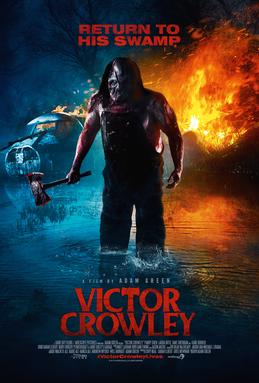
The TSL’s Horror Grindhouse: Victor Crowley (dir by Adam Green)


“Hey, did I mention that I recently watched Victor Crowley as a part of the Last Drive-In on Shudder?”

“Who’s Victor Crowley?”

“It’s a movie! About a killer named …. well, Victor Crowley. He’s played by Kane Hodder and he kills people in the swamp in various gruesome ways.”

“Oh, is that the guy from the Hatchet films?”

“Yes, the same.”

“And aren’t those the slasher films that are really bad but you’re not supposed to care because they wink at the audience and acknowledge that the suck?”

“Yep, exactly. Victor Crowley is the latest installment in the Hatchet series. It came out in 2017. An airplane crashes in a swamp. All of the passengers are in some way connected to the previous Hatchet films. Victor kills them all one-by-one.”

“Was it any good?”

“I personally didn’t care much for it.”

“What as wrong with it?”

“It took forever for the action to actually get going and the humor often felt forced, even by the standards of the Hatchet films. Some of the deaths were creative but since the characters were all pretty much just cardboard figures, it was hard to really care about it. Kane Hodder was an imposing killer, though. He’s definitely the best thing about the film.”

“I like Kane Hodder.”

“Me too. It’s funny. He’s always killing people but he seems like such a nice guy in real life. To be honet, the best thing about watching Victor Crowley on The Last Drive-In was that Joe Bob Briggs would interrupt every few minutes and share his thoughts on the film. Joe Bob, I should mention, liked the film far more than I did.”

“So, do you or do you not recommend Victor Crowley?”

“Well, it’s funny. I didn’t like it but I can understand why some people do like it. Because it’s over-the-top and intentionally silly and it doesn’t make any apologies for being what it is. It’s kind of like the slasher version of a good Lifetime film. So, I can’t really sit here and totally trash the film. It wasn’t for me but if you’re a fan of the Hatchet movies, it’ll give you exactly what you’re expecting — i.e., blood, humor, and Kane Hodder ripping off Felissa Rose’s arm.”

“So, you’re recommending the film?”

“To fans of the Hatchet series, yes.”

“I hope they enjoy it.”

“Me too. Isn’t that what life’s all about?”

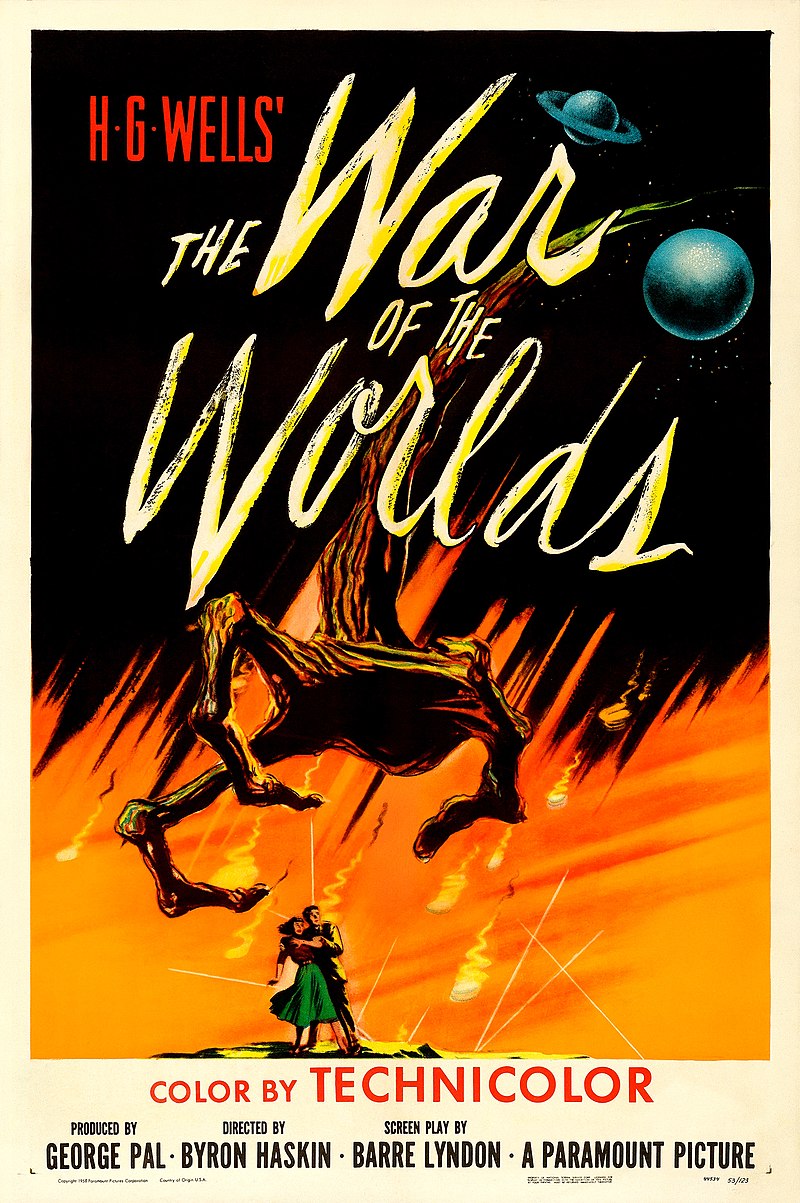
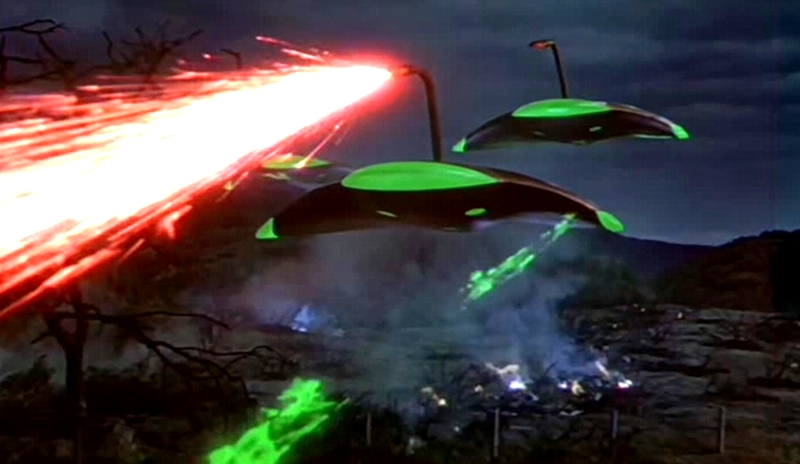
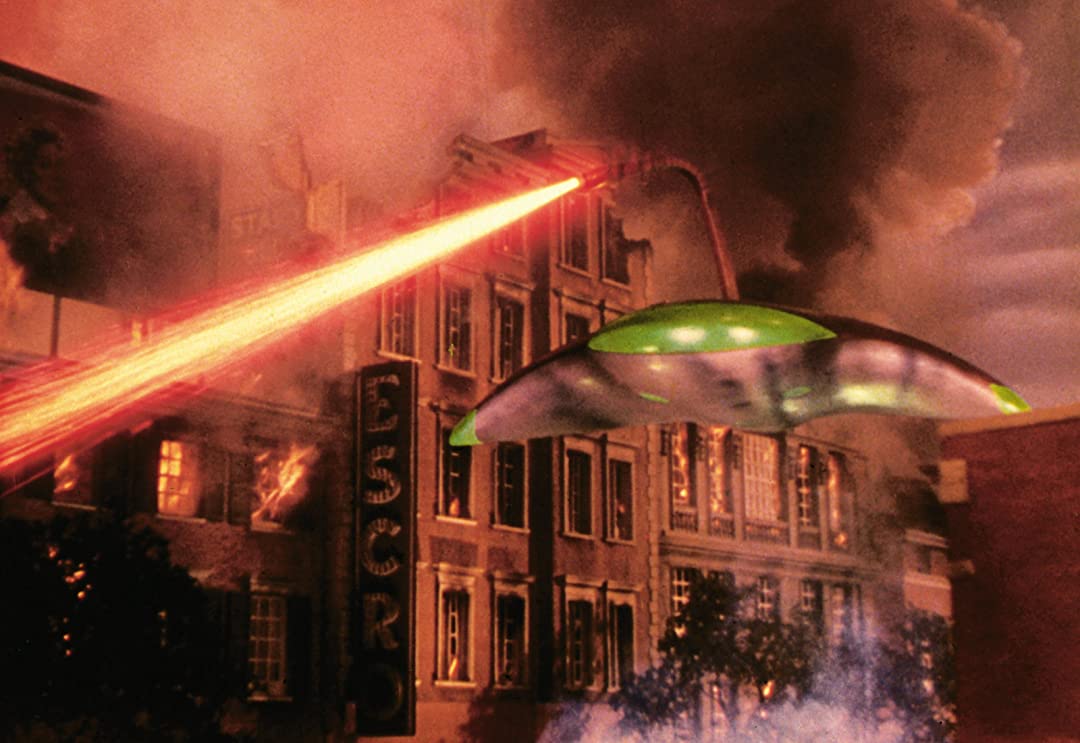
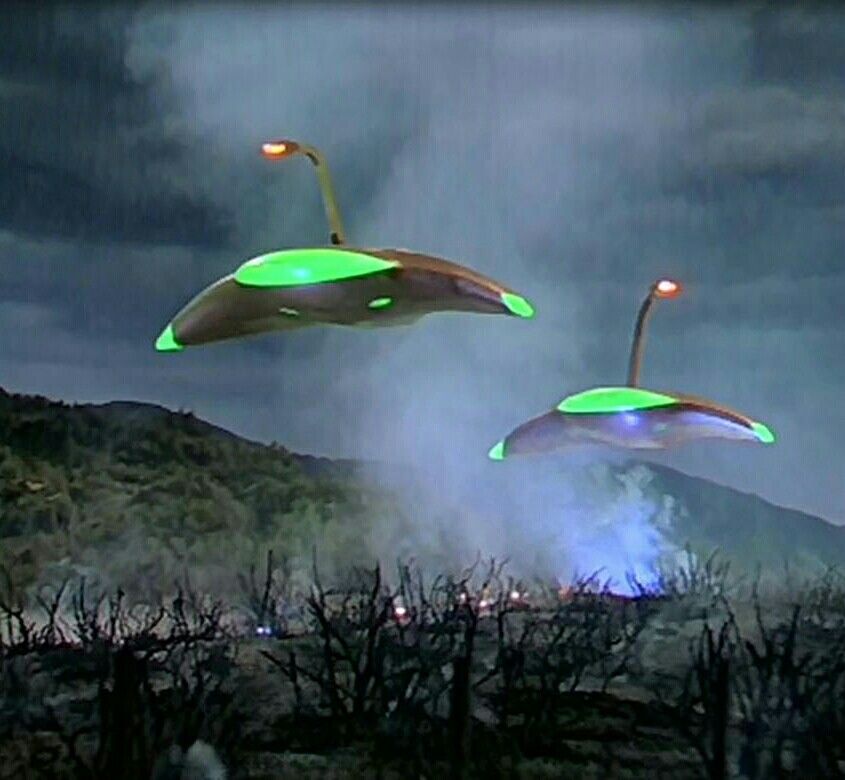
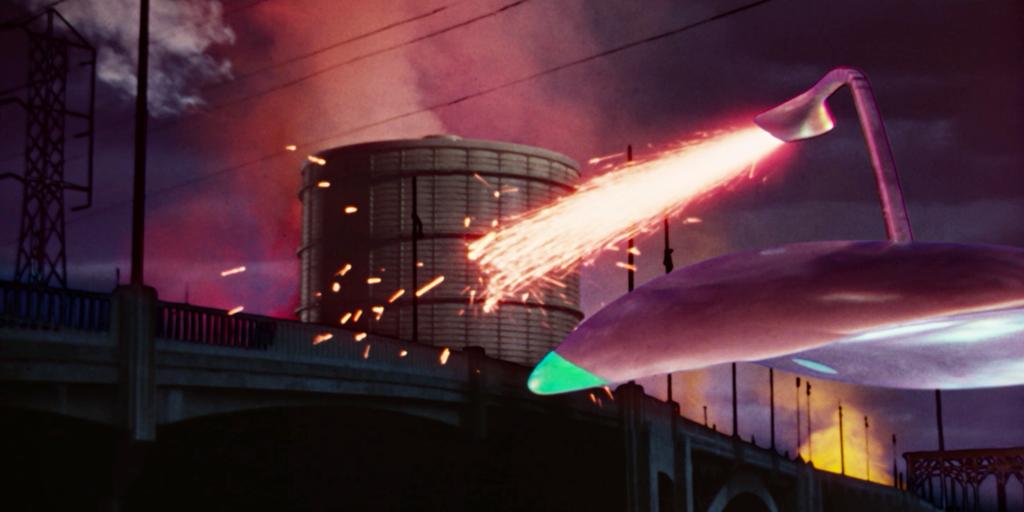
War of the Worlds (1953, directed by Byron Haskin)


Earlier today, when I saw that Lisa had posted a video of the infamous 1938 radio version of The War of the Worlds, it brought back memories of how much the first film version of War of the Worlds freaked me out.

I can’t remember how old I was when I first saw the 1953 version of War of the Worlds.  I think I must have been 10 or maybe 11.  I could have even been 9, I’m not sure.  I came across the original War of the Worlds at Blockbuster and begged my Dad to rent it for me because, back then, I was into anything that looked like it involved an alien invasion.  I watched it that night and I have no shame in admitting that it totally freaked me out.

I knew that the aliens were the bad guys but nothing prepared me for the scene where the three men approached the alien ship while waving a white flag and shouting that they came in peace.  The Martians took one look at them and…

And then there was the scene where the priest approached the aliens while reciting the Lord’s Prayer.  The Martians took one look at him and…

Today, everyone makes jokes about the scene where the military tries to nuke the aliens and then casually brushes the nuclear fallout off of their jackets.  Yes, that’s definitely not something that you want to try in real life but, when I first saw the movie, the only thing registered with me was that they dropped the greatest weapon known to man on the aliens and…

IT DIDN’T WORK!

When the Martians attacked all of the great cities of the world, they destroyed every famous landmark that they saw and they set the template for every Roland Emmerich film that would follow.  But for me, all that mattered was that they destroyed London, the city that I was looking forward to visiting in the summer.

Another scene that people tend to poke fun at is everyone gathering in the church and praying.  H.G. Wells was a noted skeptic when it came to religion so he probably would not have cared for that scene.  But when I first watched the movie, that didn’t matter.  What mattered was that the world was on fire and the only thing that could stop the aliens were germs.  Mankind’s weapons were useless.  We were doomed.  In the end, only nature could save the world.

I’ve rewatched War of the Worlds several times since then and it holds up well.  It may no longer freak me out but it still gets to me every time.  It’s still one of the best alien invasion films ever made and it still gets to me whenever I hear, “Everyone knows what a white flag means!”  No, they don’t.

Actually, I might have to watch it again, tonight.

Happy Halloween, readers!