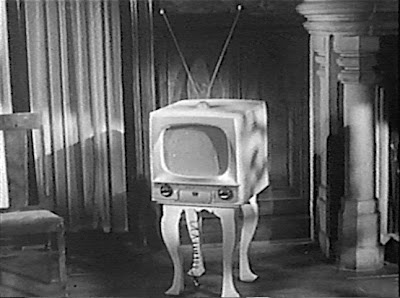
Horror On TV: Raggedy Ann and Raggedy Andy in The Pumpkin That Wouldn’t Smile (dir by Chuck Jones)


Awwww, that poor pumpkin!  Well, hopefully, he’s smiling now!

This animated special originally aired on Halloween night in 1979.  I would imagine that the crying pumpkin probably traumatized children across America.  Hopefully, all the kids were out trick or treating when this aired.  Myself, I remember that when I was a kid, I would help my mom carve a pumpkin every year.  And then I would get so depressed when we later had to throw it out.  Seriously, I would get really attached to those jack o’lanterns.

Anyway, this cartoon is before my time but I have a feeling that, if I had been around to watch it, I would have been depressed for a whole year afterwards.

Enjoy!

Doctor Who — Horror of Fang Rock (1977, directed by Paddy Russell)


The first serial of the 15th season of Doctor Who finally allowed viewers a glimpse of an alien race that they had previously only heard about.

The Rutans are the mortal enemies of the Sontarans.  Their war has gone on for centuries, with neither race getting the upper hand (or tentacle, as the case may be).  Nearly every episode in which the Sontarans appeared involved an attempt to turn Earth into an outpost against the Rutans.  In Horror of Fang Rock, a Rutan travels to Earth and tries to do the same thing against the Sontarans.  Luckily, the Doctor (Tom Baker) and Leela (Louise Jameson) are there to stop it but not before every other character in the serial has been killed.

Horror of Fang Rock takes place early in the 20th Century, at an isolated lighthouse on an island in the English channel.  Other than The Doctor, Leela, and the Rutan, the characters consist of two lighthouse keepers and the four survivors of a shipwreck.  They’re all noble English stereotypes, with names like Lord Palmerdale, Colonel Skinsale, and Adelaide Lessage and none of them survive the horror of Fang Rock.

When I first saw this serial as a kid, it actually left me feeling rather depressed.  It certainly didn’t seem like everyone deserved to die.  Even my mom, who rarely watched the show with my dad and me but who did sit through the first 25 minutes of Horror of Fang Rock before finding something better to do, was surprised when I told her that no one had survived.

When I recently rewatched this serial, I better appreciated just how efficiently Horror of Fang Rock is put together.  It mixes traditional gothic imagery (like the fog-covered island and the dark lighthouse) with aliens and it does a good job of it.  The Rutan itself turns out to be a glowing green mass.  It looks convincingly evil and extraterrestrial.  As soon as it appeared, I understood why the dull-witted Sontarans never seemed to be sure how to defeat the Rutans.  The Rutan was a creature totally unlike the usual humanoid aliens that populated Doctor Who.  It also made sense that only the Doctor and Leela would be able to survive a confrontation with the Rutan because the Rutan was so alien that rest of the inhabitants of the lighthouse had no idea how to respond to it.

At the end of this serial, the Doctor causes the Rutan mothership to explode.  Leela looks straight at the explosion and, as a result, her brown eye turn blue.  Louise Jameson’s eyes were always blue but they weren’t considered to be the right color for the savage character she was playing so, for her first few serial, she had to wear extremely uncomfortable contact lenses.  One of her conditions for returning for Season 15 was that she would no longer have to wear them.  The show’s producers gave in and that was the right decision.  By the time Horror of Fang Rock came along, Baker and Jameson had moved pass their initial awkwardness and were now a strong team.

holds up well as one of the few Doctor Who stories to actually be as scary as the show’s critics claimed.  Tom Baker and Louise Jameson are at their best and the Rutan proves to be the rare Doctor Who alien to live up to the hype.

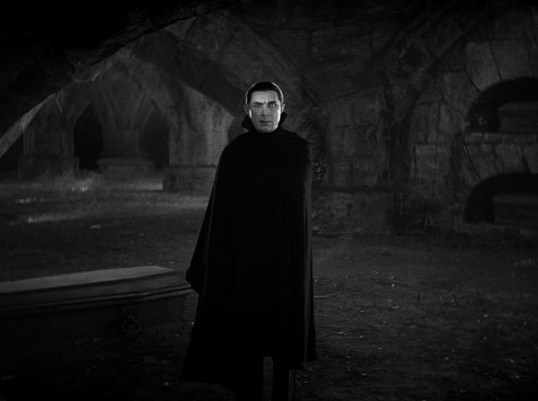
Horror Scenes That I Love: Bela Lugosi in Dracula


Dracula (1931, starring Bela Lugosi as the Count, Dir by Tod Browning, DP: Karl Freund)

On this day, 143 years ago Bela Lugosi was born in what is now Romania.  Lugosi began his career in his native country, appearing on stage.  After serving as an infantryman in World War I, Lugosi moved into the movie industry and appeared in silent Hungarian films.  The young Lugosi was an activist, involved in labor issues and trying to unionize the Hungarian film industry.  When a new government came to power in Hungary in 1920, the politically-active Lugosi moved first to Germany and then eventually ended up in the United States.  After a period of working as a merchant seaman, Lugosi returned to acting.

He first played Dracula on stage in New York City.  In 1928, while touring in the role of Dracula, he moved out to California and quickly became a part of the Hollywood community.  When Universal produced a film adaptation of Dracula in 1931, Lugosi was the obvious choice for the lead role.  The film made Lugosi a star and it also typecast him.  Lugosi never stopped acting, though the films varied widely in quality.  By the end of his career, Lugosi was a member of the Ed Wood stock company.  Even appearing in something like Bride of the Monster, Lugosi still made an impression.

In the scene below, from 1931’s Dracula, Lugosi suggests that Edward van Sloan’s Van Helsing should perhaps leave the country.

A Blast From The Past: The Man With Wax Faces (dir by Maurice Tourneur)


For today’s horrific blast from the past, we have a French horror film called The Man With Wax Faces.  Filmed in 1914 by Maurice Tourneur, this 11-minute film was the first horror movie to be set in a wax museum.  Based on a play that had earlier been performed at the infamous Grand Guignol,  The Man With Wax Faces was technically very advanced for 1914.  This film is not just a horror story.  It was also a chance for Tourneur to experiment with and explore what could be done on film.

The story is a simple one and one that viewers should be able to follow, even if they can’t read the French title cards.  An arrogant man who claims that nothing has ever frightened him accepts a bet to spend the night in a wax museum.  Secretly, his friend also stays in the museum to make sure that all of the conditions of the bet are honored.  Madness and tragedy follow.

Director Maurice Tourneur also made some films in Hollywood during the silent era, before eventually returning to France.  His son, Jacques Tourneur, follows in his footsteps and directed several memorable horror films, including Cat People, I Walked With A Zombie. and Night of the Demon.

October True Crime: Swearing Allegiance (dir by Richard Colla)


“Greenish brown female sheep,” the two lovers at the center of 1997’s Swearing Allegiance often tell each other.

It’s their code and only they understand what it means.  It’s not that hard to figure out.

Greenish Brown = Olive

Female Sheep = Ewe

Olive Ewe.

Say it out loud.

I love you.

That seems cute until you really think about it.  David Graham (David Lipper) and Diane Zamora (Holly Marie Combs) are high school sweethearts in Texas.  They go to different high schools but they’re totally in love (or they say).  David is planning on attending the Air Force Academy in Colorado.  Diane is entering the Naval Academy and she hopes to someday be an astronaut.  Diane is so convinced that she and David are going to be together forever that she loses her virginity to him.  David, for his part, seems to be a bit of a lunkhead but he leads the ROTC with an intense determination.  They’ll tell anyone who asks that they’re going to get married and be together forever.

And yet, neither one ever really tells the other, “I love you.”  Instead, they speak through code.  It’s cute.  It’s the sort of thing that I used to do when I was like 12.  But when you’re nearly an adult and you’re still saying, “Greenish Brown Female Sheep,” it suggests that you might not be as ready for life outside of high school as you think you are.

One night, after a teary David confesses to Diane that he cheated on her with one of his teammates on the school’s track team, Adrianne “A.J.” Jones (Cassidy Rae), Diane snaps.  Instead of dumping David, she tells him that the only way they can make things right is by murdering Adrianne, which is what they proceed to do.  They almost get away with it.  With the police focusing their attention on the wrong guy, David and Diane leave town for their respective colleges.  David and Diane swear to themselves that, from now on, they are going to live with honor and loyalty….

This made-for-TV movie was based on an actual crime that happened outside of Mansfield, Texas in 1995.  For years, the crime itself lived on as a cautionary tale that was told to teenage girls (including myself) in order to keep us from sneaking out and sneaking around.  Interestingly enough, in 2005, Zamora’s attorney said that the prosecution deliberately withheld evidence that David Graham had been lying about having sex with Adrianne Jones as a part of twisted scheme to keep Diane from breaking up with him.  I don’t know if that’s true or not but I do know that, whatever may have happened between Adrianne and David Graham, she deserved better than to be murdered and then turned into a cautionary tale.

One thing I do like about the film is that it is clearly on Adrianne’s side.  Cassidy Rae gives a sympathetic performance as Adrianne, playing her as a genuinely nice person who fell victim to David and Diane’s toxic relationship.  David Lipper is a bit blank-faced as David but Holly Marie Combs is appropriately intense as the obsessive Diane Zamora.  The film actually aired before the case went to trial, which shows that, even in the 90s, there was always a thin line between tragedy and entertainment.

Zamora and Graham are currently both in prison.  Zamora took a polygraph in 2007 but the results were tossed out when it was determined that she was trying to alter her breathing to fool the machine.  As Zamora now claims that Graham alone was responsible for killing Adrianne, I imagine they’re no longer speaking about greenish brown female sheep.

4 Shots From 4 Horror Films: The 1970s Part 3


This October, I’m going to be doing something a little bit different with my contribution to 4 Shots From 4 Films.  I’m going to be taking a little chronological tour of the history of horror cinema, moving from decade to decade.

Today, we close out the 70s!

4 Shots From 4 Films

Suspiria (1977, dir by Dario Argento)

Suspiria (1977, dir by Dario Argento)

Halloween (1978, dir by John Carpenter)

Halloween (1978, dir by John Carpenter)

Zombi 2 (1979, dir by Lucio Fulci)

Zombi 2 (1979, dir by Lucio Fulci)

Guilty Horror Pleasure #87: The ‘Burbs (dir by Joe Dante)


1989’s The ‘Burbs takes place in …. well, it’s right there in the title.

Welcome to the suburbs!  It’s place with big houses, green lawns, and neighbors who often don’t have much to do other than watch each other and gossip.  Ray Peterson (Tom Hanks) lives with his wife, Carol (Carrie Fisher), and is friends with Art Weingartner (Rick Ducommun) and Mark Rumsfield (Bruce Dern).  Ricky Butler (Corey Feldman) is the local teenager.  It’s a nice neighborhood …. at least, until the Klopeks move in.

The Klopeks are viewed with suspicion from the minute they show up.  They’re from a different country, they always seem to be burying something in their backyard, and Dr. Werner Klopek (Henry Gibson) is oddly stand-offish.  When Walter Seznick (Gale Gordon) disappears and the the Klopeks are seen around Walter’s house and with Walter’s dog, Ray and his friends start to suspect that their new neighbors might be ritualistic murderers!

Oh, how I love The ‘Burbs.  The film’s portrait of the suburbs as being a hotbed of paranoia may be a familiar one but it doesn’t matter when you’ve got actors like Tom Hanks and Bruce Dern throwing themselves into their roles.  As always, Hanks is the glue that holds the film and its disparate parts together, giving a likable performance as a man who goes from being the voice of reason to being convinced that his neighbors are cannibals.  Bruce Dern gleefully sends up his own image as a paranoid Vietnam vet but there’s also a sweetness to Dern’s performance that really makes it stand out.  Dern’s character might be a little crazy but he does truly care about his neighbors.

Just as he did with Piranha and The Howling, Dante balances humor with suspense.  He does such a good job of telling the story and getting good performances from his cast, that even the film’s big twist works far better than one might expect.  It’s an 80s film so, of course, a few things explode towards the end of it.  The film’s character-based humor is replaced with some broader jokes but no matter.  The Burbs is an entertaining trip to the heart of suburban paranoia.

As the saying goes, just because you’re paranoid, that doesn’t mean that they aren’t out to get you.

Previous Guilty Pleasures

  1. Half-Baked
  2. Save The Last Dance
  3. Every Rose Has Its Thorns
  4. The Jeremy Kyle Show
  5. Invasion USA
  6. The Golden Child
  7. Final Destination 2
  8. Paparazzi
  9. The Principal
  10. The Substitute
  11. Terror In The Family
  12. Pandorum
  13. Lambada
  14. Fear
  15. Cocktail
  16. Keep Off The Grass
  17. Girls, Girls, Girls
  18. Class
  19. Tart
  20. King Kong vs. Godzilla
  21. Hawk the Slayer
  22. Battle Beyond the Stars
  23. Meridian
  24. Walk of Shame
  25. From Justin To Kelly
  26. Project Greenlight
  27. Sex Decoy: Love Stings
  28. Swimfan
  29. On the Line
  30. Wolfen
  31. Hail Caesar!
  32. It’s So Cold In The D
  33. In the Mix
  34. Healed By Grace
  35. Valley of the Dolls
  36. The Legend of Billie Jean
  37. Death Wish
  38. Shipping Wars
  39. Ghost Whisperer
  40. Parking Wars
  41. The Dead Are After Me
  42. Harper’s Island
  43. The Resurrection of Gavin Stone
  44. Paranormal State
  45. Utopia
  46. Bar Rescue
  47. The Powers of Matthew Star
  48. Spiker
  49. Heavenly Bodies
  50. Maid in Manhattan
  51. Rage and Honor
  52. Saved By The Bell 3. 21 “No Hope With Dope”
  53. Happy Gilmore
  54. Solarbabies
  55. The Dawn of Correction
  56. Once You Understand
  57. The Voyeurs 
  58. Robot Jox
  59. Teen Wolf
  60. The Running Man
  61. Double Dragon
  62. Backtrack
  63. Julie and Jack
  64. Karate Warrior
  65. Invaders From Mars
  66. Cloverfield
  67. Aerobicide 
  68. Blood Harvest
  69. Shocking Dark
  70. Face The Truth
  71. Submerged
  72. The Canyons
  73. Days of Thunder
  74. Van Helsing
  75. The Night Comes for Us
  76. Code of Silence
  77. Captain Ron
  78. Armageddon
  79. Kate’s Secret
  80. Point Break
  81. The Replacements
  82. The Shadow
  83. Meteor
  84. Last Action Hero
  85. Attack of the Killer Tomatoes
  86. The Horror At 37,000 Feet

Horror Film Review: Love At First Bite (dir by Stan Dargoti)


Disco Dracula!

In 1979’s Love At First Bite, George Hamilton plays Dracula, who goes from living in Transylvania to trying to make it in New York City.  Even when you’re the King of the Vampires, it turns out that New York can be a difficult place to live.  No one has much respect for the tanned man in the cape, even after he shows off his powers.  He falls in love with a model, Cindy Sondheim (Susan Saint James), but she doesn’t buy into the idea that he’s a vampire.  She’s a New Yorker and she’s in therapy.  Her therapist, Dr. Jeffrey Rosenberg (Richard Benjamin), is a direct descendant of Prof. Van Helsing and he does believes that “Vladimir” is a vampire but he can’t get anyone to believe him.  When he takes his concerns to the NYPD, Lt. Ferguson (Dick Shawn) dismisses him as being insane.  Which, to an extent, he is but only because no one will believe him….

Meanwhile, Dracula’s faithful servant, Renfield (Arte Johnson), starts every morning by leaning out of his apartment window and pretending to be a rooster.  It’s his signal to let Dracula know that it’s time to come home.  Dracula is so in love with Cindy that he sometimes forgets to keep track of time.  It’s a New York love story….

Love At First Sight is a comedy that essentially gets a lot of mileage out of a handful of jokes.  The main joke is the idea of George Hamilton, with his perpetual tan, playing Dracula and speaking with a Bela Lugosi-style accent.  Hamilton plays Dracula as being very confident and very smooth but also rather befuddled by 1979.  He’s a gentleman of the “old world” after all.  The other big joke is that Dracula is in New York, a city where no one is impressed by anything.  This is very much a “New Yorkers Will Be Rude To Anyone” movie, a genre that was very popular in the 70s.  Some films, like Taxi Driver, used the rudeness of New York as a metaphor for paranoia and detachment.  Love At First Bite uses it for laughs.

(For the record, my favorite “New Yorkers Will Be Rude To Anyone” movie is the original The Taking of Pelham One Two Three.  Also, the last time I briefly visited New York, everyone was very nice and polite to me.  Only once did someone yell, “Look out, lady!” and I’m still not really sure what I was supposed to be looking out for.)

There’s a lot to like about Love At First Sight.  Susan Saint James and George Hamilton don’t exactly have a ton of chemistry but Hamilton himself is fun to watch.  “Children of the night — shut up!” he yells at the wolves and it’s hard not to smile.  It’s just so goofy.  Hamilton and Arte Johnson are a good comedic team and, for that matter, so are Richard Benjamin and Dick Shawn.  It’s a film of set pieces.  Dracula and Renfield rob a blood bank.  Jeffrey confronts Dracula at dinner.  Dracula pops out of his coffin at a church.  Some of the set pieces work better than others and this is very much a film of its time but overall, it’s a genial and amusing send-up of the vampire genre.

And it features Dracula at a disco!  It’s a 70s movie and it stars George Hamilton so it’s not really surprising that the action moves to a disco.  Still, if you can’t appreciate the sight of a caped Dracula showing off his best moves, I don’t know what to tell you.

Love At First Sight is a reminder that not every Halloween movie has to be terrifying.  Some of them can just make you laugh.

Horror Film Review: The Black Sleep (dir by Reginald Le Borg)


1956’s The Black Sleep opens in a London prison cell.  The year is 1872 and Dr. Gordon Ramsay (Herbert Radley) awaits execution.  He’s accused of murdering a chef who twice sent rubbery scallops to the pass …. wait, a minute, sorry.  Wrong Gordon Ramsay!  This Gordon Ramsay is accused of murdering a man named Curry and he’s considerably more whiny than the modern-day Gordon Ramsay.

Ramsay is visited by Sir Joel Cadman (Basil Rathbone) and Cadman’s associate, Odo the Gypsy (Akim Tamiroff).  Cadman explains that he has developed a potion called “The Black Sleep.”  Drinking it will put the drinker in a state of suspended animation that can pass for death.  And, indeed, it will turn into death unless Cadman administers the antidote.  Cadman offers to give the potion to Ramsay, in return for Ramsay helping Cadman out with his own experiments.  Ramsay agrees.

Ramsay is found “dead” in his cell.  His body is claimed by Cadman and Odo.  (Odo mentions that, in a past life, he was a grave robber and that he died as a result of the guillotine.)  Ramsay is revived and goes to work with Cadman.  As soon as Ramsay enters Cadman’s mansion, he finds himself surrounded by several familiar faces.  For instance, Lon Chaney, Jr. plays the twisted Mungo, who stumbles through the hallways of the mansion and can only be controlled by Daphnae (Phyllis Stanley).  Bela Lugosi plays Casimir, the mute butler.  Bohemud (John Carradine) is a bearded man who rants and raves and calls for Biblical vengeance.  And finally, in the basement, there’s Mr. Curry (Tor Johnson), the man who Ramsay was convicted of murdering!  It turns out that Cadman isn’t quite as benevolent as he presented himself as being.

The Black Sleep may feature an incoherent story but it has a great cast and it is entertaining to see Carradine, Chaney, Tor Johnson, Akim Tamiroff, Bela Lugosi, and Basil Rathbone all living under the same roof and trying to outdo each other as far as the scenery chewing is concerned.  Admittedly, some members of the cast look healthier than others.  Rathbone is as imperiously dashing as always and John Carradine appears to be having a lot of fun with his role.  Akim Tamiroff gets all of the best lines as Odo and he delivers them with just the right amount of wit.  Unfortunately, neither Chaney and Lugosi were in good shape when they appeared in this film.  Lugosi was ill when he did the film.  Chaney, meanwhile, had seen his one-promising career sabotaged by his own alcoholism and, by the time the 50s rolled around, his once handsome features were now ravaged by his drinking.  It transformed him from being a somewhat dull leading man to a craggly character actor.  (Producer/director Stanley Kramer considered Chaney to be one of the best character actors in Hollywood and cast him in both High Noon and The Defiant Ones.)  In The Black Sheep, Chaney’s face is twisted and almost ravaged.  It works for the film but it’s still sad to see.  As for Tor Johnson …. hey, he’s Tor Johnson.  He growls and he tosses things around and he does so convincingly.

(In an interview shortly before his death, Tor said he was offered the role of Oddjob in Goldfinger.  It’s sad to think the world was robbed of the Sean Connery/Tor Johnson team-up it needed.)

This was Bela Lugosi’s final film performance before his death in 1956.  (The footage that appears in Plan 9 From Outer Space was filmed before The Black Sleep.)  It’s a shame that Lugosi wasn’t given more to do in his final film.  Lugosi, with that famous voice, ending his career playing a mute just doesn’t seem right.

Horror Film Review: The Corpse Vanishes (dir by Wallace Fox)


1942’s The Corpse Vanishes opens with a young bride collapsing at her wedding.  A doctor runs over to her and says that she’s died.  A hearse — or a “stiff wagon,” as one witness puts it — pulls up and takes the body.  However, the body never reaches the morgue!

It turns out that this is not the first time this has happened.  In fact, there’s an epidemic of brides dying on their wedding day and their bodies disappearing.  One would think that this would cause a citywide panic or, at the very least, it would cause some people to maybe get married out-of-town.  Considering that the most recent victim was the daughter of one of the richest families in the community, you would think solving this mystery would be the police’s number one priority.

However, the police are useless.  And when the police can’t get the job done, it falls to journalists.  At least, that’s the way it worked in movies from the 1930s and the 40s.  While the cops were busy saying, “Scram!” and “Beat it, buster!,” it fell to the cynical and quick-witted journalist to find out what was going on.  In this case, Patricia Hunter (Luana Walters) investigates and discovers that all of the brides received an orchid on their wedding day.  (How the police didn’t notice this, I don’t know.)  Patricia tracks down the eccentric Dr. Lorenz (Bela Lugosi), who was once quite renowned for his orchids.

Dr. Lorenz now lives in a secluded mansion.  He’s polite when Patricia comes to speak to him but it’s obvious that he’s hiding something.  A sudden thunderstorm leads to Patricia and Dr. Foster (Tristram Coffin) getting stranded at Lorenz’s mansion.  Foster was visiting the mansion to examine Lorenz’s wife, the Countess (Elizabeth Russell).

Lorenz, as you probably already guessed, is behind the corpse abductions.  Except, of course, the brides aren’t dead.  Instead, the orchid has put them into a state of suspended animation.  Lorenz is extracting their blood and using it to keep his wife young.  Helping him out are his servants, a dwarf named Toby (Angelo Rossitto), Toby’s hulking half-brother, Angel (Frank Moran), and their mother, Fagah (Minerva Urecal).  Patricia figures out what is going on but will she be able to convince anyone else!?

From what I read about the film online, it would appear that The Corpse Vanishes has got a terrible reputation but, when I watched it, I actually found it to be entertaining when taken on its own Poverty Row terms.  No, the plot doesn’t make any sense.  But Bela Lugosi’s smile manages to be both sinister and inviting and Toby and Angel make for good henchmen.  The movie only has a 64-minute runtime and, as a result, the plot has to keep moving fairly quickly.  The film also features a lot of snappy “newsroom” dialogue between Patricia and her easily-annoyed editor (Kenneth Harlan), all delivered at a fast pace and with the the casually cynical outlook that makes 1940s newspaper movies so entertaining.  The Corpse Vanishes is a thoroughly ludicrous film that epitomizes an era and, as such, it’s far more diverting than one might otherwise expect.