Scenes I Love: Salem’s Lot (Part 1)


Stephen King’s novels and short stories were mined relentlessly during the late 70’s and through the 80’s and the early 90’s. For the most part the film and tv adaptations of his work were adequate and passable. Some were downright awful and made one wonder if King was just trying to cash as many of his work for licensing paychecks or if he really thought the studios who purchased the rights would actually do a good job adapting them. One such studio which seemed to have done a very good job adapting one of King’s greatest works, Salem’s Lot, was Warner Brothers who adapted the classic vampire novel to become a mini-series for CBS.

I never saw the mini-series when it first aired in 1979, but I did see it a few years later when it re-aired on TV and then many more times on VHS and then on DVD. Tobe Hooper directed the hell out of this mini-series and turned what was a very complex modern retelling of Bram Stoker’s Dracula into a 3-hour mini-series that was both gothic and downright terrifying despite the restraints of TV.

While the mini-series does seem dated now it still retains that creepiness, foreboding atmosphere and scares which made Hooper’s Salem’s Lot one of the better King adaptations. The scene which will always stick with me and still gives me the chills whenever I watch it is when Danny Glick’s younger brother visits him in the hospital. This scene is just downright scary whether watching it as a 9 year-old or one in their 30’s.

SDCC 2011: The Walking Dead Season 2 Trailer


The day before AMC released new production photos from the set of the second season of The Walking Dead series. Another bonus was their reveal of the Comic-Con exclusive poster for the show painted by comic book illustrator and cover artist extraordinaire Tim Bradstreet. Today was the big panel for the show’s season 2 at San Diego Comic-Con. Robert Kirkman was in attendance as was showrunner Frank Darabont and producer Gale Anne Hurd. The cast was also in attendance. Questions about their initial experience on the truncated first season were asked and answered. But the one thing people wanted to see the panel showed quite early and again as the panel concluded.

The Walking Dead season 2 has been given a definitely premiere date of October 16, 2011 just in time for AMC’s Fear Fest leading up to Halloween. It was the unveiling of the new season’s trailer which got the audience cheering loudly and from reactions to the trailer one thing is set to be sure and that’s this season looks to be even more bleak and with more forward momentum than the first season.

The show is less than 3 months away and it cannot come any sooner.

SDCC 2011: The Walking Dead Season 2 Comic-Con Tim Bradstreet Poster


The first official day of San Diego Comic-Con 2011 saw the release of an exclusive Season 2 poster for AMC’s The Walking Dead series. Last year at this same comic-con saw this series release a first season exclusive poster painted by Drew Struzan which was a hit with fans of the comic book and the show. This time around another fan favorite artist was tapped to paint the second season poster for Comic-Con.

Tim Bradstreet is one of the well-known comic book illustrators whose comic book covers have become favorite of comic book fans everywhere. Whether they were covers for Vertigo’s Hellblazer series or for Steve Niles’ wildly popular Cal McDonald series his covers had a unique horror-noir look to them. This Bradstreet style really lends itself well to the Season 2 poster for The Walking Dead.

Today also saw a couple new production stills from Season 2 which looks to have Rick and the gang breaking down on an interstate full of wrecked and abandoned vehicles and most likely attracting all sort of zombies to their presence.

Source: AMC

Quickie Review: Witchfinder General (dir. by Michael Reeves)


The late 1960’s saw a major shift in horror films. There have always been horror films which had an inordinate amount of gore and violence, but were always relegated to the niche cinemas which catered to horror exploitation films. In 1968 it all changed with the release of George A. Romero’s Night of the Living Dead. Not only did this film graphically show gore and violence on the screen it also paired it with a well-told story. Another film which became infamous the very same year for it’s portrayal of torture, rape and sadism on the screen was British filmmaker Michael Reeves’ horror film, Witchfinder General.

Witchfinder General starred horror icon Vincent Price in the title role as Matthew Hopkins who was tasked as the Witchfinder General by the Cromwell government during the English Civil War of the 17th-century. His Hopkins would travel the region of East Anglia (Cromwell-controlled territory) rooting out witchcraft and sorcery wherever they might be found. Assisting him in this task is the thuggish, brute Stearne (played by Robert Russell) who relished in torturing suspected witches in towns the two visit. It’s during one such visit to the town of Brandeston, Suffolk that Hopkins and Stearne begin a sequence of events which would pit them against the soldier Richard Marshall (who also happens to fight on the same side as Hopkins and Stearne) whose fiancee and her uncle became the latest victims of the Witchfinder General’s sadistic methods of rooting out confessions.

The film as a horror has less to do with the supernatural, but more of the hypocritical horror which begets a political environment where powerful men contest for more power and uses fear and the superstitious ignorance of a populace to cement their power. In this amoral vacuum comes in the opportunistic Matthew Hopkins who uses the power given to him by his government to not just do his duty to eradicate witchcraft but also abuse it for his own personal (and as seen in the film a way to sate his own personal lusts) gain. It’s this hypocritical nature of who was suppose to be a Puritanical and righteous agent of God which emphasizes the true historical horror of religion and politics becoming one and the same.

Vincent Price as Matthew Hopkins was at the top of his game in Witchfinder General. He gives his role not just an air of superiority over everyone he meets and deals with, but he also makes Hopkins’ truly an amoral character who sees nothing wrong in taking advantage of his position and actually feels like he deserves the desperate attentions of those willing to do anything to save their loved ones from his machinations. Robert Russell as his licentious and sadistic assistant Stearne also does a great job in portraying an individual who might seem brutish and thuggish, but who was also more honest with is situation than his master. It makes for an interesting pair despite their roles being the film’s prime antagonists.

The film more than truly earned the outcry it received upon it’s release in 1968 as scenes of torture and sadism was extreme for a British horror film industry so used to the Gothic sensibilities of the Hammer Films of the era. Graphic depictions of burnings, torture and drowning were done not to seem gratuitious or to cater to the burgeoning gorehound crowd of the era, but done so matter-of-factly that they seem even more horrific.

The Witchfinder General really helped usher in the death of gothic horror which dominated the genre with the Hammer Films in the UK and the Edgar Allan Poe films of Roger Corman in the US. The film continues to impress new generations of horror fans and is still considered by older fans of the genre as one of the best horror films ever made. For some the film might look dated due to the acting (most of the actors of the era were stage actors first and film ones second) and the effects work, but they also fail to look at the film in context of the era and how even by today’s standard it would still shock those not well-versed in the genre of horror. They definitely don’t make horror films like this anymore and that’s a shame on many levels.

Review: Vanishing On 7th Street (dir. by Brad Anderson)


In the genre world of horror and thrillers there’s been one name who always seem to be on the verge of breaking out. He has done some exceptionally well-crafted horror and thrillers which never could get a mainstream audience to commit to but always gathering a cult-following upon their release. He has done some wonderful work as a TV director for such acclaimed shows as Fringe, Treme, Boardwalk Empire and The Wire. His best known work was a thriller collaboration with Christian Bale in The Machinist. While it’s a film more well-known for the extremes an actor was willing to go for to make their performance as authentic as possible it was also a film which showed style and talent in it’s filmmaker. The person I speak of is Canadian filmmaker Brad Anderson whose latest film was another low-budget horror-thriller which looks to be gaining a cult-following once again despite not being well-received by the mainstream critics. Vanishing On 7th Street was a film using the screenplay of Anthony Jaswinski which puts an interesting, claustrophobic and, at times, entertaining twist on the oft-used and well-ridden post-apocalyptic genre.

The film begins with film projectionist Paul in his projection booth reading up on the lost colony of Roanoke and the mysterious word left behind: CROATOAN. It’s through his point of view that we first see the beginning of what could be the end of the world as lights begin to flicker then go out throughout the theater and the mall it’s located in. Paul investigates this event only to discover sets of clothing and accessories where theater patrons and employees used to be in. With each passing moment the darkness — punctuated by just the flashlights of Paul and a lone mall security guard — becomes to take on an ominous tone before the film sudden moves ahead three days into what would become the major setting for the film: a lit bar on a deserted and darkened stretch of 7th Street in Detroit, Michigan.

We meet the rest of the main cast in this bar. There’s Luke who used to be a TV anchorman who discovers to his horror just what might have been the cause of the disappearance of most everyone in the world as he tries to find his girlfriend at the TV station they both worked at. It’s in these flashbacks to Luke’s early experience with the dark apocalypse that we see some of the most perfectly shot scenes of a major city devoid of life. An urban setting where the sudden disappearance of people during the power outage the night before has caused an eerie detritus of crashed vehicles, empty clothing and, in a sudden and violent sequence, a lone airline crashing in the background. It’s through Luke and the lone survivor in the bar, a 12-year old boy named James (Jacob Latimore), that we begin to try and piece together just what might have caused the event which continues to plague those left behind for the last three days.

The film posits the basic concept that darkness itself was the culprit for the disappearance of everyone and what continues to stalk those still left behind, alive and desperate for answers. While the film never really give definite answers as to the cause the two other characters in the back outside of Luke and James bring their own theories. There’s Rosemary (Thandie Newton), the distraught mother searching for her infant son, who thinks what’s going on around them is the the prophecized Rapture and those left behind were those who have sinned and were now being tormented for whatever sins they might have committed. On the other side is Paul from the beginning of the film who Luke rescues from an illuminated bus stop shelter who believes the very thing which caused the disappearance of the Roanoke colony during the 16th-century has now returned on a global-scale. His reasonings run the gamut of scientific causes from wormholes, black holes, gamma ray burst, nanotech gone amok and even an accident from a particle collider.

The audience are left to decide amongst themselves which explanation holds merit since neither one has enough backing to be the true answer. Vanishing On 7th Street leaves much of the questions raised by the dark apocalypse around these surviving characters to be left ambiguous and unanswered which at times becomes a detriment to the narrative as a whole. It’s a testament to Brad Anderson’s direction that the film was able to move past the apparent weaknesses in Anthony Jaswinski’s script and deliver a taut thriller (the film never truly gets to the level of horror) that just builds and builds with tension from beginning to an end that seemed almost too rushed.

With a low-budget and minimal cast the film tries to create some of the tension in the film be a construction of the differences between the four main characters. The actors were pretty game to try and make their characters more complex than what the script have provided, but in the end they still seem too basic for anyone of them to become sympathetic for the audience to truly care for their well-being. The film has to finally rely on just them as the last people on the planet as the main crux for the audience to latch onto. All the actors involved never become too cartoonish or stereotypical in their performance, but some of their decision-making in the middle and latter section of the film were too horror-typical, but they do add to the film’s many scenes of mounting terror as characters drop flashlights, lose light sources and other such problems with the living shadows in the darkness creeping up to try and take those still left. These scenes do look to be too stereotypical of other horror films but under Anderson’s direction there’s a palpable sense of claustrophobia and menace in these shadows.

What truly sells the film despite these flaws outside of Anderson’s direction would be the minimalist score by first-time film composer Lucas Vidal. His composition for the film were at once ominous and haunting. At times his score shows off hints of influences from the more doom-laden scores of Philip Glass. The other component of the film which definitely added to the atmosphere of inevitable doom to the film was Uta Briesewitz cinematography which made great use of darkness and solitary light sources to create islands of safety in a sea of encroaching terror we never truly comprehend. It’s the trifecta of Anderson’s directing, Vidal’s minimalist doom orchestration of a score and Briesewitz’s cinematography which gives Vanishing On 7th Street enough reasons to be a film which stands out as a fine piece of genre filmmaking despite weaknesses in the script.

Brad Anderson truly seem to be a filmmaker destined to remain in the fringes of mainstream cinema. His Vanishing On 7th Street continues to be another example of his great work in the horror-thriller genre. Despite same flaws which could turn off some of those who see this film it doesn’t diminish the fact that even at it’s worst this film was still an entertaining piece of post-apocalyptic work which brings some new ideas into the genre. Maybe a stronger treatment of the script would’ve made for a near-perfect thriller and one which could’ve had more horror to it, but Anderson was able to make a good enough film with an average script that I think deserves for this film to be seen by more people. For every horror remakes we get from Michael Bay’s Platinum Dunes to the latest in the Saw-like torture porn horror it’s good to see that such films as Vanishing On 7th Street exist to be the solitary beacon of light in a sea of cookie-cutter, by-the-numbers horror films that seem to dominate each film year after the other.

Quickie Review: Phantoms (dir. by Joe Chappelle)


If there was ever an actor in the last twenty years who has suffered ridicule regarding his body of work it would be Ben Affleck. Nevermind the fact that he has actually done very good work as an actor. People tend to view his acting work through some very bad film projects which the online film bloggers (and trolls) have lambasted year after year. One such film which has gained a cult following for all the reasons is the 1998 horror film Phantoms which was adapted from the Dean Koontz horror novel of the same name. This was a film which came out of nowhere and which no one really saw when it first hit the theaters. There’s a reason for this and the main reason for this being that the film was really awful though not without some entertaining bits.

Phantoms starred Ben Affleck in a role that really seemed more suited for an older actor. His Sheriff Hammond in the novel was much older and fit the backstory told in both novel and film that never truly fit Affleck’s youthful appearance and mannerism. He’s joined in this Joe Chappelle production by classically-trained veteran actor Peter O’Toole (who must’ve really needed the money to sign up for this film) in the role of Dr. Exposition dump aka Timothy Flyte who ends up explaining to the surviving cast of characters the very danger facing them in the abandoned town of Snowfield. Rounding out the cast is  Liev Schrieber as the creepy Deputy Stu Wargle who becomes a sort of plot device as the film moves forward. To add to this mix are Joanna Going and Rose McGowan as sisters who first discover that their town has just gone through a terrible event.

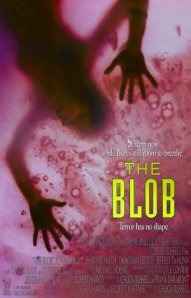
The novel this film was based on was pure scifi-horror pulp which stressed one’s suspension of disbelief, but was quite entertaining from beginning to end. Dean Koontz is like the generic fast-food version of Stephen King. This film adaptation borrows heavily from films such as Carpenter’s The Thing and the remake of The Blob. This wouldn’t have been a bad thing since the film’s story does bring into it an interesting concept of an ancient enemy which might or might not have been responsible for unexplained mass disappearances of people and animals throughout history going back to prehistoric times.

What Phantoms ends up doing which ruins the film as a whole was to rush through the narrative it was adapting it. The film pretty much goings through a checklist of all the major scenes in the novel, takes those scenes and truncates them to fit uncomfortably into a 90+ minute film. Some of these scenes could’ve been extended a few more minutes to add to a sense of grandiose to a film that needed it despite it’s B-movie foundation. One such scenes would be the arrival of a special Army unit designed to combat unexplained events, but the film treats this sequence from their arrival right up to their untimely demise in less than 15 minutes. I think in the hands of a much more capable filmmaker these scenes would’ve made the film much more entertaining.

Phantoms was a horror film that could’ve become a 90’s cult-classic if it had been given the proper time and effort from it’s producers, but seeing that it was the Weinsteins of Miramax and Dimension Films this final product was probably the best Joe Chappelle could’ve come up with. Weinsteins during the 1990’s were more concerned of pushing their Oscar-baiting film productions than actually giving time and effort to all their films. If there was any reason to see Phantoms it would be to see just why it kept being mentioned in Kevin Smith’s Jay and Silent Bob Strike Back. Other than that there’s really no reason to see it unless there’s nothing else on.

Review: La Horde (dir. by Benjamin Rocher and Yannick Dahan)


“When the dead come for you, there’s no place left to run.”

Most zombie films tend to be average at best, often falling into outright mediocrity. Because this subgenre is relatively easy to create, many aspiring filmmakers believe they can produce the next standout hit with just an HD camera, a modest budget, and a cast drawn from friends and family. Naturally, this formula has led most zombie movies to occupy the low end of the horror genre in terms of quality. However, every so often, a truly exceptional film emerges. Edgar Wright’s Shaun of the Dead became an instant classic by blending horror with comedy, and Zack Snyder’s remake of Romero’s Dawn of the Dead delivered intense, action-packed thrills.

The 2009 French horror film La Horde—directed by Benjamin Rocher and Yannick Dahan—leans toward Snyder’s style. It strips away societal commentary, opting instead for raw action and relentless gore. This might suggest a mindless movie, but La Horde proves to be as engaging and nihilistic as Snyder’s film, perhaps even more so by its conclusion.

The directors spare no time on exposition, diving straight into the plot. The story follows a group of French police officers—most likely narcotics agents—who plan to take revenge on a Nigerian crime lord responsible for killing one of their own. Their chosen battlefield is a dilapidated high-rise apartment complex in a crime-infested district of Paris. However, their operation quickly unravels when the ambush goes disastrously wrong. What begins as a gritty crime thriller transforms abruptly into an apocalyptic battle for survival, as the police and rival gang members are forced to join forces against a sudden zombie outbreak sweeping through Paris and possibly beyond.

Once the zombies arrive, the film shifts into high gear. The action and gore come fast and furious, skillfully choreographed and unflinching. Secondary characters are swiftly dispatched, leaving only the most capable to fight their way through a tenement overrun by fast, aggressive zombies akin to those in Snyder’s Dawn of the Dead or Boyle’s 28 Days Later. Though some purists might balk at sprinting zombies, they fit perfectly with the film’s frantic pace. Notably, the film does not attempt to explain the outbreak’s origin, leaving audiences as disoriented as the characters, glimpsing only fragmented news reports for context.

The remainder of the film is an intense descent through the building, with the survivors battling floor by floor in search of an exit and safety at a nearby military base. Choosing characters familiar with violence—cops, criminals, and a hardened local survivor—grounds their fierce will to survive in realism. Even the lone resident they encounter brings useful skills born from a violent past.

While La Horde does not offer complex character development, its finely tuned action scenes keep the audience fully engaged, masking the story’s simplicity. By the film’s end, viewers are likely to forgive any flaws, having been thoroughly entertained. A few characters, such as the composed officer Oussme (Jean-Pierre Martins) and the crime lord Markudi (Eriq Ebouaney), achieve extra depth, but most are archetypes serving the survival narrative. Still, this works well given the film’s focus on high-stakes survival.

Though La Horde never secured a major U.S. release, it gained attention on the international genre festival circuit starting in 2010. While it may primarily appeal to zombie and horror aficionados, it also offers plenty for action fans. Its brutal, relentless energy earns it a strong recommendation as an exhilarating experience from start to finish.

Quick Review: John Carpenter’s The Thing


When I was little, my family used to have this cable service called WHT. I can’t remember what it stood for, but recall that it was a one channel station that would constantly show movies. It was like Starz for anyone who didn’t want to pony up the extra money for actual HBO at the time. Since it was set up at my Grandparents house (where I lived), sometimes we’d all gather around for a Movie Night on Saturdays. This is something my family’s done often during the years, and the current part of my family does this on Sundays now, premiering films we haven’t seen yet.

It was one of these Saturday nights that I first witnessed John Carpenter’s The Thing. I had to go to bed for it, being as young as I was for the film, but with the door open I could hear the music and sounds from my bed. At one point, I climbed out of the top bunk and snuck to the stairs, watching the film in my PJ’s. My family would get pretty engrossed with movies, so they never bothered to glance in my direction. After all, this was the first time any of them were seeing this film, and they all loved the original.

I was doing fine until that Husky’s head split open. If I just kept my mouth shut, I could have seen the whole film. After that, I couldn’t stop screaming, “Omigod! The doggie!!” I was met with cries of “Go to Bed!!” from just about everyone. Even though I climbed back into bed, there was no way I was able to fall asleep. Every gunshot, every yell caused me to bundle myself under my blankets with my eyes wide open.

Since then, The Thing has become a family favorite, a reliable go to film for any time it’s cold or rainy or dark. I even showcased it for my friends in Oregon who hadn’t seen it before and they also had almost the same reaction to that poor dog.

So, what is The Thing?

Other than maybe being John Carpenter’s strongest film (which many will argue, because there’s always a place for Big Trouble in Little China for me), it’s a great example of a work in progress that was just done and put to print. Like Jaws, the film ran into some problems. Special FX member Rob Bottin suffered from exhaustion from working so hard on the film. They had some issues with coming up with the final representation of The Thing that wouldn’t appear too cartoon-like or animatronic. There was even a fire during the taping of a huge effect shot involving a body ripping open because of the chemicals that were put into the latex workup. Even though the movie takes place in Antarctica (which I believe roughly 6 months of night), the film actually has a day and night cycle, having filmed in Juneau, Alaska. On top of that, with all of the money thrown at the film, it pretty much tanked at the box office. As quirky as all those elements are, the movie just works because of both the isolation of the characters, the trust issues that occur as a result of the events, and the claustrophobic space they live in. In some ways, it’s very similar to Ridley Scott’s Alien to me (sans the trust issues), but with much better lighting. The Thing is pretty much a cult classic at this point.

The story of The Thing is boosted if you’ve seen the original The Thing From Another World with the late James Arness, but it’s not a requirement. It starts off with a dog being chased by a helicopter, who manages to reach a Research Outpost in Antarctica, occupied by Twelve members. The crew soon discovers that that things aren’t exactly what they seem, but neither are they. Unlike the original movie, the creature in this film has the ability to absorb and mimic whatever organism comes into contact with (which actually is pretty creepy in its own right, that sense of violation). Trust plays a huge part in the story as the crew fight to save themselves while still trying to keep a close eye on who’s walking among them.

The atmosphere of the film is really augmented by the sound. As old as the film is, the sound quality holds up incredibly well on a surround system. The wind from the snow, bullets ricocheting, the panting of dogs and of course the dripping of blood all sound like someone put a microphone right up to all of them to capture it as best they could. The outpost, as big as it is, actually has a lot of narrow hallways with canisters stacked to the sides in many places, giving the place a cramped feel. Add to that Ennio Morricone’s haunting theme and you’ve got a recipe for horror. I mean, for someone who’s scored fantastic Westerns, one would think that Morricone and a Carpenter film might not gel well, but it really does.

Visually, compared to films today, The Thing is pretty tame for it’s effects, and some (the final rendering of the Thing itself, in particular) can be a little dated, but not so much that you should groan about it. At the time, however, it was considered gory (and I guess when you’re in shock on seeing a dog’s face split open, there’s someone smiling somewhere saying to themselves..”Yeah, that worked right there”).

The Thing marks another John Carpenter / Kurt Russell pairing. Russell’s R.J. MacReady is the figure we follow through the film. It’s through him that we try to make sense of everything going on. In one scene that involves him huddled in a corner with a flamethower and some dynamite, defending himself from his friends, you get the notion that you want to be on that guy’s side. Even if following him means getting blown up to a million pieces, because it really becomes difficult to trust anyone in this film. Paranoia plays a huge role.

The cast is rounded out by a few other notable members. Richard Dysart (L.A. Law, Prophecy) plays Doc Copper, and is actually pretty good here. Keith David (Requiem for a Dream, They Live) plays Childs, who really doesn’t believe in any of that “voodoo bullshit”. Thomas Waites (The Warriors) is Windows, who for me, represents the scared kid of the group. He’s not sure what’s up, he just wants to be away from it. Then, of course, you have Wilford Brimley, who seems to realize the problem but takes measures in his own hands rather telling the others just how bad things could get.

Overall, The Thing is highly recommended. I know there’s a remake in the works, and part of me is a little excited for it, hoping that it’s done well. I can’t imagine the filmmakers today running into half of the issues they had in the original.

The Thing also marks one of the best Director commentaries I’ve heard. If you have a chance to watch the film with the Director track on (which I believe Russell also has a hand in with Carpenter in talking about the film), it’s pretty interesting what they elaborate on. Also noteworthy (and funny) is Rob Bottin’s story on the effect sequence that started a fire.  That’s definitely worth a listen.

Trailer: Don’t Be Afraid of the Dark


I love films, all films, in general but if there’s one particular film genre that really floats my boat then it would be in the horror category. This summer will see the release of a title that I’ve been anticipating since I heard about it at last year’s San Diego Comic-Con. The film I speak of is the remake of the 1973 tv horror film of the same name: Don’t Be Afraid of the Dark.

While Troy Nixey takes the director’s chair for this film he’s working on a story written by Guillermo Del Toro who’s been known to dabble in the horror genre (Cronos, The Devil’s Backbone). Del Toro promised a horror film that would bring back horror the way it’s meant to be and that’s with genuine scares and not horror predicated on torture and extreme use of gore. Don’t Be Afraid of the Dark will be a throwback to the atmospheric, almost gothic horror, that reached it’s peak during the late 70’s before the slasher boom hit.

The film has been delayed several times as Miramax Films was sold by Disney and the restructuring of the studio after it’s owners finalized it’s purchase put the film on the backburner. It now has an official August 26, 2011 release and it looks like the film got an R-rating from the MPAA for “pervasive scariness”. While Del Toro, Nixey and the rest of the film crew were hoping for a PG-13 rating the one given by the MPAA who seemed to really enjoy said “pervasive scariness” recommended it go out as an R-rated horror (one with little to no gore).

So, we have an upcoming horror film by an upcoming filmmaker handpicked by Del Toro. A film written by Del Toro himself and one which just got an R-rating which made Del Toro as happy as a clam. Plus, it’s a horror film that relies on genuine scares and not gore. My answer to that is August 26, 2011 cannot come sooner.

Review: The Midnight Meat Train (dir. by Kitamura Ryuhei)


There’s a certain number of books when I was much younger that I thought would’ve made for some great horror films. They were the early works by Clive Barker. Short stories collected into several volumes aptly dubbed his Books of Blood. While several short stories from these volumes were adapted to film in the intervening years most were not worth the time to watch them. So, lo and behold that when I finally saw the latest short story adapted from these collections I was genuinely surprised at how well-made and entertaining it turned out to be. The Midnight Meat Train by Japanese filmmaker Kitamura Ryuhei was a fine piece of horror filmmaking that dripped in atmosphere and a growing sense of existential dread right up to it’s very surprising end.

The Midnight Meat Train is quite a simple story when one really breaks it down to it’s component parts. It’s a crime thriller wrapped in the bloody layers of an extreme horror film. There’s a certain noirish quality to it’s storytelling as we see the film’s protagonist in Leon (Bradley Cooper). He’s a photographer struggling to find the inspiration for his next set of photographs and decides to wander the train stations at midnight to find that inspiration. It’s during one visit at night that he begins to suspect that he might’ve come across one of the latest missing persons who might’ve become a victim of the so-called “Subway Butcher”. The film shows his growing obsession in finding out if the urban legend of this so-called serial killer is actually true.

His mental state only deteriorates as the reality about the “Subway Butcher” (Vinnie Jones in one of his best roles to date) catches up to the truth on one midnight ride on the subway train. His witnessing of the killer at work brings him into a hidden world the rest of the city seems unaware or incapable of acknowledging despite the hundreds of people who go missing year in and year out for almost a hundred years. His girlfriend Maya (Leslie Bibb) and best friend Jurgis (Roger Bart) soon become drawn into Leon’s nightmarish situation and must confront the very boogeyman who has begun to haunt Leon’s waking life.

The film is Kitamura Ryuhei’s first Hollywood film and it doesn’t diminish the talent for some creative visuals he earned while directing horror and genre films in his native Japan. He makes great use of the nighttime setting and the stark environs of the subway trains at midnight to give The Midnight Meat Train an almost black and white look punctuated by vivid splashes of visceral red during the many inventive killings by Vinnie Jones’ mute Mahogany character. Kitamura showed that he was able to squeeze as much as was possible from a script that was average at best. Especially considering that the script had to adapt one of Barker’s shorter tales.

The performances by the ensemble group led by Bradley Cooper ranged from good to excellent with the aforementioned Vinnie Jones leading the pack. Even Bradley Cooper as the tormented protagonist Leon handled the role well. I’ve never warmed to Cooper as an actor as he always came across as a smirking douchebag in almost every role he played prior to this one. He quickly shed some of that reputation for me with his performance in this film and continues to do so with every one since this film. The smirk is still there but he has managed to drop the douchebag aspect of it. I also must point out a nice turn by veteran genre actor Tony Curran as the train conductor who exuded a sense of the otherworldly and a character who held the answers to the questions brought up by the film.

Since this is a horror film one must mention it’s horrofic aspects and this film fills it’s quota of horror. The scenes where Jones’ Mahogany dispatches the unwary last riders of the train at midnight were shot extremely well and with some visual flairs Kitamura has gained a reputation for. There’s nothing cartoony about these kills unlike other slasher films of it’s type. The kills are done in a brutal fashion as meat tenderizers smash into skulls and backs. Then there are the dressing of the kills which gives meaning to the film’s title. The only part of this film which seemed so out of place, but was necessary in the film’s overall narrative was the make-up effects in the end of the dead-end tunnel where Leon finally sees the truth of why Mahogany has been killing passengers on the subway train. It’s here that the film’s budget shows. At least Kitamura was smart enough to film these scenes in very low light to hide some of the zippers and laces on the costuming.

Overall, The Midnight Meat Train was one horror film in 2008 that deserved to have been seen by more people. It’s a shame that the handling of this film’s distribution by Lionsgate bordered on the criminal as it failed to be screened  by many theaters which led to it’s failure in the box-office. This was a horror film that delivered on the goods without pandering to the torture porn crowd who had begun to dominate the scene due to the popularity of the Saw franchise. Kitamura’s first work in America showed that he brings a fresh new voice to Western horror. The film also ends up becoming the best of all the Books of Blood short story adaptations and shows that Barker’s earlier grand guignol writing phase could be adapted well to the bigscreen.

Here’s to hoping that the failure of this film in the box-office (Again, I say fuck you Lionsgate) doesn’t keep other up-and-coming horror filmmakers from tapping into Barker’s volumes of short stories for their projects. There’s horror gold to be found there and Kitamura’s The Midnight Meat Train was one gleaming example of it.