The good thing about AMC’s The Walking Dead is that it puts zombies on the forefront of the public’s cultural consciousness. They’ve become the monster that still remains scary. The show has also allowed for new fans of the genre to seek out other classic zombie films and stories that they wouldn’t have bothered to check out if it hadn’t been for this show. One such classic zombie film would be another of Lucio Fulci’s gorefests from the early 80’s. It is a film which also has my latest “Scenes I Love” and one that continues this month’s horror theme.
Lucio Fulci’s The Beyond (aka Seven Doors of Death) has one of my favorite scenes in horror. It wouldn’t be too much of a stretch to say that I love pretty much everything Fulci has done and each of those films always have several memorable scenes that would imprint themselves on fans. My favorite scene from The Beyond has to be when the film’s two protagonists (played by regular Fulci actors in Catriona McColl and David Warbeck) find themselves under siege by zombies in a hospital. Warbeck’s character tries to fend them off with his trusty six-shooter, but seems to have forgotten to read the memo about shooting them in the head.
Every miss lessens their chance and when the creepy little red-haired girl suddenly makes her appearance as she attacks McColl’s Liza then the payoff in the scene finally happens. It looks like Warbeck’s character suddenly remembered what will kill them undead and decides to test it out on the little red-haired girl. To say that this scene was shocking when seen by a 9 year-old boy would be an understatement. I think even now that soon to turn 38 years of age young boy would still react with utter shock at this scene.
Hi! Do you know what today is? That’s right, it’s October 24th! That means only one more week to go until Halloween. And what better way to observe this important date than with an old, low-budget B-movie that’s fallen into the public domain?
I first discovered The Brain That Wouldn’t Die through the Drive-In Mob on twitter. It first came out in 1962 and it’s 82 minutes of medical malpractice, bitchy disembodied heads, and a scary monster hiding in a closet. Well, not really that scary. However, the monster does rip-off of one guy’s arm. Luckily, the guy has another arm obviously tucked away underneath his lab coat.
As a sidenote, this is a low-budget film and you can tell just by looking at it. However, I kinda think that the harsh lighting and the stark sets add a little something to the film, the key word being little.
Anyway, if you’ve got 82 minutes to kill and a strong tolerance for bossy heads, check out The Brain That Wouldn’t Die…
When me and my sister first moved into our house last year, I was so excited to see that we had a loft. In fact, the day we moved in, I told her, “The loft is mine.” Yes, I had it all worked out. The loft would be my little office/art studio. I would sit up there with a little candle going and I’d write my poetry and read my books and compose my thoughts. Whenever the real world got to be too much for my poor little head, I would go up to the loft and I would find peace and quiet. That loft would be my sanctuary, my little world of fantasy where everything was fine.
That night, I lowered down the ladder that led up into the loft and I started to climb. If you know how terrified I am of both heights and ladder then you’ll understand just how difficult that was for me to do. Seriously, with each step up the ladder, my heart beat just a little faster and I could hear my own breathing growing more and more ragged. My feet felt so heavy and I had to stop several times so I could rest on the ladder and catch my breath. At one point, Erin came out of her room and stared at me clinging onto the 7-step ladder.
“Lisa Marie,” she asked, “what the Hell are you doing?”
“The loft will be mine!” I snapped back.
Summoning up all of my courage and determination, I forced myself to move up the remaining two steps of the ladder and popped my head up into the loft.
“YAY!” I declared.
That’s when I saw the world’s biggest, most evil-looking spider hanging about two inches from the tip of my nose.
“AGCK!” I shouted as I fell backward from the ladder and ended up falling flat on my ass on the floor below.
I haven’t been back in the loft since. Erin’s been up there a few times and she swears to me that she’s sprayed all sorts of sprays and cleaned out all sorts of dust but I don’t care. I may not be the smartest girl out there but I do know that when you find something really scary in a room, you lock up that and never enter it again.
I found myself thinking about that loft and the spider within earlier today while I was sitting through Paranormal Activity 3.
Paranormal Activity 3 is the latest installment in the franchise of films about dumb men who, once they discover that there’s an evil ghost stalking the women in their lives, respond by not leaving the house but instead sitting up video cameras so they can record their eventual deaths. This time the action is set up as a prequel to the first film but essentially, it’s the exact same film that you’ve seen twice before (though, this time, the filmmakers rip-off the end of the Last Exorcism as well).
Still, as far as the Paranormal Activity franchise goes, the third is probably the best of the series, if just because Micah’s not in this installment. Instead, Micah’s role is taken by Dennis (Christopher Nicholas Smith), who is the somewhat goofy but well-meaning stepfather of Katie and Kristi (who, of course, will eventually grow up to the focus of the first and second Paranormal Activity films). It turns out that Dennis is something of an aspiring filmmaker and hence, it makes a little bit more sense why he insists on setting up cameras once it becomes apparent that his house is haunted. Anyway, the movie pretty much recycles all of the shocks and scares that you expect from a Paranormal Activity film. There’s countless shots of people sleeping, dark shadows appearing in corners, and the whole thing where one person stands perfectly still for 5 hours. The scares are effective because, quite frankly, mysterious shadows are always going to be scary and at their rare best, the Paranormal Activity films manage to tap into that very primal, basic fear. Unfortunately, the Paranormal Activity films also have a tendency to drag in-between scares and this third installment is no different. That said, the film’s finale is well-done, if predictable.
However, in the end, it’s simply impossible to watch Paranormal Activity 3 and not wonder what I’ve wondered during every Paranormal Activity film: why doesn’t anyone ever just leave the damn house? Seriously, if you think I overreacted to seeing a spider up in the loft, you should see me when I run into a ghost hanging out in the kitchen.
Lisa Marie Bowman had chosen her favorite scene from Dario Argento’s Suspiria as her latest “Scenes I Love” post and it’s quite the scene. I will match her choice with a horror scene which remains one of my favorite scenes in film history. It is also a scene from one of the best scifi-horror films ever made and, I would dare to even say, one of the best films ever created. The scene I speak of comes from Ridley Scott’s classic and iconic film Alien.
Anyone who has ever watched this classic scifi-horror will always gravitate towards talking about one particular scene. The scene is the first time the crew of the space tug Nostromo gets together to a meal as a group after the crisis which saw one of their own crew members attacked by an alien creature. This scene started off quite normal. Professionals enjoying food and good company. It’s through Ridley Scott’s direction and the exceptional performances of all involved which elevates the scene to one of the greatest. Through the scene’s depiction of normalcy we start to get a sense that something may not be right even before Kane begins to cough and have convulsions. For me it was a prolonged shot of crew member Ash during the banter around the table. His expression is all subdued smile then for just a split second we see him glance at Kane eating and being merry but he knows something is wrong and about to happen.
Even if people didn’t pick up that moment from Ash it still created a subconscious effect on the audience so that when Kane did begin to cough and convulse uncontrollably the audience was already on the razor’s edge. When the climactic event which punctuates this scene finally occurs the surprise on all the actors, especially that of actress Veronica Cartwright, has gone done as in film history as a classic. It helped that their reactions were quite genuine. Even knowing that the chestburster alien would pop out it was not being told that fake blood would squirt out that made their reaction of surprise and disgust so real. The extended version of this scene even had Cartwright slipping and falling as she screamed in horror at all the blood which had splashed on her.
One last thing which made this scene one I love and also one which I think makes it one of the greatest scenes in film history is that it was done in one take and that single take came out perfectly. This is a scene that has influenced many filmmakers since but its effect has never been fully replicated.
As I’ve mentioned before, Dario Argento’s Suspiria is one of my favorite horror films and any quick search around the Internet will reveal that I’m hardly alone in that. There’s a lot of reasons why Suspiria remains so popular: there’s Goblin’s iconic score, Jessica Harper’s performance in the lead role, and Dario Argento at the peak of his powers.
While most critics and fans always cite the film’s infamous “window scene” as its most effective set piece, I happen to think that the scene below is actually a bit more effective. While it’s certainly more low-key than some of the film’s other death scenes, this scene is the one that still leaves me uneasy no matter how many times I see it. Maybe it’s the way that Argento isolates the blind pianist in the middle of the square or perhaps it’s the way that he positions the camera in order to keep the audience uncertain of where exactly the true threat is coming from.
Then again, it could just be because I’m scared of dogs in general…
So, last night, we finally got a proper storm here in Texas and wow, was I happy! Quite frankly, it’s not October unless you’ve got thunder, lightening, and howling wind. Of course, I also ended up getting caught out in the middle of it all and ended up getting soaked just from running from my car to the front door of my house. Seriously, it’s amazing how quickly your life can turn into a wet t-shirt contest. (Once I got inside, I did what anyone would do and jumped on twitter so I could tell everyone I was soaked. “OMG, I’m so wet!” I tweeted, with the most innocent of intentions.) Anyway, as I dried off, I watched The Boogeymanoff of Fearnet. No, I’m not talking about The Boogeyman that starred the oldest son from Seventh Heaven. No, The Boogeyman I watched is a genuinely weird little artifact from 1980 and it was directed by the infamous Ulli Lommel.
A hybrid of Halloween, the Exorcist, and probably every other horror film that had been released up to 1980, The Boogeyman opens up with siblings Willy and Lacey spying on their mother having sex with her creepy boyfriend who is wearing a nylon stocking over his face. So, naturally, Willy grabs a butcher knife and stabs the man to death. This act of violence is reflected in the bedroom mirror and, not surprisingly, this leads to the dead boyfriend’s evil spirit getting trapped in the mirror. Or maybe it’s just the evil of the act itself. Or maybe it’s … well, there’s a lot of possibilities and it’s hard not to consider them all because the film considers none of them, beyond the fact that the dead boyfriend is still in the mirror (which, let’s give credit where credit is due, is actually a pretty neat idea for a horror film).
Anyway, we jump forward 20 years and now, the brother and sister have grown up. They both live on a farm with their judgmental, self-righteous, ballet-hating aunt and uncle. (Okay, I’m projecting a little here because I have relatives who remind me of both of these characters and I always hated having to spend any time with them over the summer because I always knew they’d be all like, “Look at us, we’re farm folk, we’re better than you and who needs books or ballet when you got foul-smelling chickens and cows that’ll kick you in the face just because they feel like it…” Seriously.) Willy (now played by Nicholas Love) has been mute since the day he brutally butchered his mother’s boyfriend and oddly enough, no one seems to be disturbed by the fact that he’s a murderer. (“He’s a good boy,” his uncle says at one point, “I just wish he could talk.”) Lacey (played by Suzanna Love) is married to Jake Scully (Ron James) and they have a son. Judging from the uniform he’s wearing when he’s first introduced, Jake is apparently some sort of law enforcement guy. He’s also a total and complete chauvinistic toadsucker who (though it’s never acknowledged in the film) is pretty much responsible for every terrible thing that’s about to happen.
Lacey is suffering from intense nightmares (the nightmare sequence, by the way, is one of the film’s genuinely disturbing moments) and she keeps waking everyone up at night with her screams. Well, of course, Jake can’t have this because they’re farm folk, after all! So, Jake has to act like a man about it and chastises Lacey for not suppressing her feelings. When that doesn’t work, he drags her off to a therapist. This would seem like a good idea except for the fact that the only therapist in their little rural community appears to be John Carradine. Carradine grimaces through his three scenes, tells Lacey that she should go back to her childhood home and see that it’s just a normal house despite its history of brutal murder, and then leaves to collect his paycheck.
Lacey says she doesn’t want to go back to the house where the most Hellish thing ever occurred. Jake tells her that she’s being silly and that she’s going to go relive the worst event of her life whether she wants to or not. Seriously, Jake sucks.
So, Jake drags Lacey back to her childhood home. The house is now inhabited by two teenage sisters and their obnoxious little brother who spends his time running around and screaming, “Boogeyman!” at random. He’s kind of a brat but don’t worry — he eventually yells “Boogeyman!” one too many times and ends up getting his neck crushed by a falling window. That scene, by the way, genuinely shocked me because you just don’t expect to see little kids dispatched so graphically. But he really kinda deserved it, if just to keep him from growing up to be like Jake.
But before the little boy gets killed, we get to watch Lacey and Jake wander through the house. It turns out that, even though the house has changed owners, the exact same mirror is still hanging in the bedroom. Lacey looks at the mirror, sees her mother’s dead boyfriend’s reflection, and proceeds to shatter the mirror into a hundred pieces. Jake replies that she’s being silly and proceeds to put almost all the broken shards of the evil mirror into a paper bag so he can take them back to the farm with him. Why? Well, because he’s Jake so anything he does must be right…
Of course, by bringing the mirror to the farm (and then deciding to put it back together — really, Jake?), Jake has also brought the evil spirit of the dead boyfriend with him as well. Once again, Jake sucks. Though, in his defense, Lacey was having nightmares and Willy nearly strangled a neighbor girl, before John Carradine even suggested going to the house. And mom’s dead boyfriend liked to wear a stocking over his head but was he really evil? After all, he’s the one who ended up getting stabbed to death…well, regardless, now people start dying and eventually a priest has to come up to the house and try to remember the final scene of the Exorcist. So, thanks a lot, Jake!
The Boogeyman is one of those odd films that always seems to pop up on TV and hidden away in various DVD horror compilations. Through no fault of my own, I’ve actually seen it a handful of times and every time, I’ve discovered something else that doesn’t really work. The last time I watched it, I found myself concentrating on just how unconvincing all the actors (with the exception of Suzanna and Nicholas Love) were.* Slowly but surely, I found myself growing obsessed with actor Ron James, who played Lacey’s husband with all the style and charisma of a cardboard cut-out. (Of course, it doesn’t help that James was playing a character who, to put it charitably, is kind of a sexist pig. “C’mon, Lacey, cheer up!” he says as he forces her to visit the house where the most traumatic event of her childhood occurred.) Whenever the movie hit one of its many slow spots, I asked myself, “I wonder if Ron James gave up during the first day of shooting or the second?”
And yet, oddly, this is a film that’s stuck with me. The film has an effectively Southern gothic atmosphere to it and even the stiff performances and unnatural dialogue help to give the film a certain dream-like atmosphere. I know quite a few people who argue that Ulli Lommel is the worst director of all time** but he actually comes up with some effectively surreal and disturbing images. The sight of the dead boyfriend, with a nylon stocking pulled down of her face, suddenly staring at Lacey from the mirror is genuinely frightening, as is Lacey’s nightmare in which she’s bound and gagged by a knife-wielding assailant. The idea of mirrors storing everything that they witness is an intriguing one and there’s a nicely surreal sequence in which poor, mute Willy paints over every reflective surface he can find. Whether by intentional design or not, these flashes of genuine fright and oddness are all the more effective because they’re surrounded by such mundane material. The end result is a film that’s either brilliant or terrible depending on which point you actually start watching it.
————————–
* Actually, the Loves were pretty bad too.
**By the way, the worst director of all time is Rod “Straw Dogs” Lurie.
It is hard to categorize John Landis’ contribution to the Showtime horror anthology series, The Masters of Horror. Landis made a name for himself in the horror genre as the director of the classic early 80’s werewolf film, An American Werewolf In London, and the cult classic vampire-noir film, Innocent Blood. With his “Deer Woman” episode, John Landis reaches back to his past work and comes up with an episode that mixes horror, absurd situations and a healthy dose of black comedy.
“Deer Woman” has something in common with An American Werewolf In London in that this episode deals with a creature born out of folklore and myth. This time around its a creature from Native American folklore. The creature in question is the Deer Woman. A legendary creature who takes the form of a beautiful woman from the waist up and that of a deer from the waist down. The Deer Woman will then go on a spree of seducing random men then trampling them to mincemeat. In this respect she has a bit of the mythical succubus mixed in with the shapeshifting. It is during the aftermath of one of her killings that we’re introduced to the main player in this horrifically absurd little tale. Detective Faraday (masterfully played with a dry wit and comedic timing by Brian Benben) gets called in to the scene thinking it is an animal attack, but the crime scene leaves him confused, perplexed and a tad more than intrigued by the case after it’s unceremoniously taken away from him.
We learn through the length of the hour-long episode that Faraday is a disgraced cop due to an incident in the past that’s made him a pariah in his own department. Faraday’s sidekick in his hunt to solving the murders and thus finding the Deer Woman is a beat cop played by Anthony Griffin. Former Brazilian, and still smoking hot and stunning, Cinthia Moura does duty as the abovementioned Deer Woman. She goes through the entire episode without uttering one line. Her eyes, expressions and body language conveying whatever motivations and thoughts may be in her head. She did pretty well and it didn’t hurt she looked very natural baring it all on the screen.
The dialogue in the episode was where the absurdity of the moments in the story shone through to give “Deer Woman” its black-comedy. The characters in the film react to murders and the clues leading to what might be their only suspect with incredulity, denial and dismissal. Yet, no matter how much the characters of Faraday and his partner try to deny what they know in their mind is the real killer, they inevitably see the truth of the matter dangerously up close and personal. The teleplay for the episode was primarily written by Max Landis (the director’s son) with some brief rewrites and treatments by John himself. They both run with a very absurd situation and run with it fult-tilt and non-stop. They both know how silly the story sounds and its that silliness that makes this episode memorable. In fact, if I really had to categorize this episode I would call it a comedy with small bits of horror slipped in (horror and gore effectively done — once again — by the master effects people from KNB EFX.
Despite “Deer Woman” being closer to a comedy-horror than a straight-up horror tale, I found the episode to be very entertaining and worth the viewing. John Landis stuck to his guns in crafting an absurd tale and making it believable to his audience. With shades and hints of An American Werewolf In London, Landis’ contribution to The Masters of Horror marks a bright spot in the an uneven series, so far. Landis’ has once again shown that horror and comedy are more intertwined than most people would think.
Tonight, as I watched the premiere of The Walking Dead’s 2nd season, I found myself thinking about some of my favorite zombie films. One which came to mind immediately was Ken Wiederhorn’s low-budget but effectively disturbing 1977 film, Shock Waves.
In Shock Waves, a group of tourists find themselves shipwrecked off the Florida coast. As they wander through the isolated, swampy terrain, they happen to come across a decaying mansion that is inhabited by one very mad scientist (Peter Cushing). It turns out that Cushing is a Nazi war criminal who, during World War II, created the Death Corps., an elite unit of zombie super soldiers. As World War II came to an end, Cushing somehow ended up in Florida and, unfortunately for the living, he brought the Death Corps. with him. And now, with the arrival of the castaways, the Death Corps. has reawakened…
Shock Waves is considered by many (like me, for instance) to be the best example of the small genre of film known as the Nazi Zombie film. (Though I have to admit that it’s not my favorite Nazi zombie film. That honor would have to go to Jean Rollin’s delightfully weird Zombie Lake. For another example of the genre, check out Arleigh’s review of Dead Snow.) Admittedly, once you get past the idea of underwater zombies, the film is pretty predictable plot-wise. But a certain predictability goes along with any zombie film. One reason why zombies are so scary is the very fact that they are very simple and predictable. Zombies exist solely to destroy and, beyond running and hiding, there’s not a whole lot of options available for dealing with them. Vampires and werewolves are almost ludicrously vulnerable to all sorts of defensive moves (seriously, people, how difficult is it to wear a crucifix around your neck?) but zombies are pretty much an unstoppable force and for a zombie film to succeed, the zombies must truly seem unstoppable. This is where Shock Waves truly succeeds because seriously, these zombies are brutal. There’s a lengthy montage where the zombies literally tear apart a building, searching for the castaways and it’s probably one of the most chilling sequences of destruction ever caught on film. It helps that these Nazi zombies are truly frightening to look at, with their hair plastered to the sides of emotionless faces and their eyes hidden behind dark goggles. Add to that, they’re Nazis. Seriously, nothing’s scarier than Nazis. Perhaps the most enduring image from this film is of the members of the Death Corp. emerging from the water, one after another. It’s a remarkable sequence and probably one of the most striking “zombie mob” scenes ever.
The Shock Waves DVD also features an audio commentary with director Ken Wiederhorn and a few other crew members. It’s actually probably one of the more interesting DVD commentaries I’ve ever heard, as Wiederhorn is very honest about not being happy with how the final film turned out. And certainly, this is one of those low budget B-films that you can pick to death. As Wiederhorn himself points out, lead actress Brooke Adams often seems to just be going through the motions and, as effective as the Nazi zombies are, the film never explains how 1) they ended up off the coast of Florida or 2) how they haven’t been discovered before this. But so what? Shock Waves is one of those films that manages to be quite a bit more than the sum of its parts. Wiederhorn might not be happy with the film but that doesn’t change the fact that he manages to create a true sense of menace and danger during the film’s first half and the second half features some of the scariest zombies ever. Ultimately, Shock Waves is a genuinely scary and effective zombie film and one that the director has every right to be proud of.
One final note — Shock Waves opens up with one of those “This film might be based on a true story” narrations and it’s all the better for it. I’m including a clip of it below because 1) it’s just so grindhouse that I can’t help but love it and 2) it also features a bit of the film’s brutally effective score.
Tamara was a good entertaining horror/teenage angst movie in the same vein as De Palma’s Carrie and pretty much most of the teenage revenge/slasher flicks of the late 70’s and early 80’s. Such horror films involved the high school jocks and popular cliques getting their comeuppance by way of the nerdy student who has had enough. This time around the nerd in question is one Tamara whose shy, bookish and frumpy nature makes her an easy mark for every other kid in school.
Newcomer and extremely hot Jenna Dewan plays the title role and she does a very good job pulling off the dual personality role the film requires from her. The first half of the film has Dewan as very believable as the mousy and nerdy student whose low self-esteem adds to keeping her ostracized from the rest of the student population. It doesn’t help that she begins to misread one of her teacher’s (played by Matthew Marsden) attempts to help her as some sort of loving attention she so craves. There’s a small bit of a bright side to her daily existence in the form Chloe (played by Katie Stuart), she of the popular girl with a heart-of-gold role. Tamara’s life soon turns for the worst as her attempts to show her love for her helpful teacher gets rebuffed and her published article about drug-use in athletics puts her in the crosshairs of a couple of jocks with much to lose.
Typical of such teenage revenge horror films, the cruel jocks and popular kids concoct a plan to humiliate and embarrass Tamara, but just like those past films their plans backfire and the target of their plans gets killed during the the prank. The filmmaker really don’t add something new to this tried and tested formula. Instead of calling for the authorities to report the accidental death of their schoolmate, the kids decide, through the bullying by the alpha-male in the group, to bury Tamra instead and forget anything ever happened. This plan probably would’ve worked if Tamara wasn’t dabbling in witchcraft as ostracized teenagers are wont to do. Tamara’s spell prior to the prank to spellbind her teacher backfires as its activated by the spilling of her blood and to the surprise of the students who did her harm she returns alive, healthy and completely different the start of the new school week.
To say that Tamara returns utterly different in more ways than one would be an understatement. Ms. Dewan does a vampy, sometimes campy, job portraying the new and improved Tamara. Dewan goes from nerdy, plain-jane Tamara to ultra-sexy, barely there skirt wearing teen seductress whose touch does more than seduce those she has targeted for revenge. Jenna Dewan as the reborn Tamara steams up the screen with her overt sexuality and she practically saves the film from just being an ok, by-the-numbers horror film. Tamara was Ms. Dewan’s film from beginning to end and she does a very good job of keeping the story interesting even if it meant just being on the screen.
This film doesn’t break new ground in the realm of teen horror. In fact, it’s a mish-mash of alot of past teen horror flicks of the past that one could see the many influences in its story. Tamara was part Carrie, Black Christmas, The Craft and, more recently, Diablo Cody’s Jennifer’s Body. The direction was adequate at best and that’s really all one could hope for in a genre film like Tamara. What makes this film entertaining and worth watching was the joy of discovering the new scream queen talent in Jenna Dewan. Tamara might not be a great horror film, but Ms. Dewan sure more than tries to make it more than it’s B-movie pedigree.
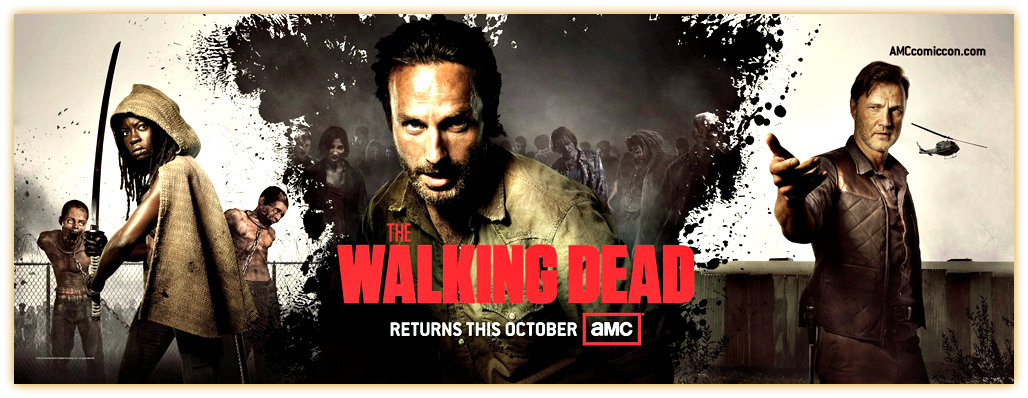
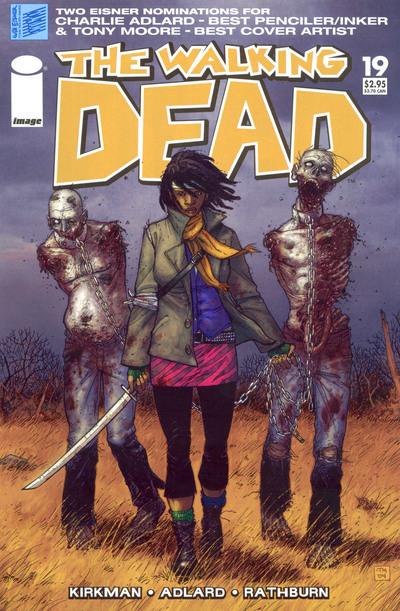
The first season of AMC’s The Walking Dead was a runaway hit for the network. Despite the inaugural season being a a truncated 6-episode long one the series gained a huge following that included long-time fans of the Robert Kirkman long-running zombie comic book series, but also new ones. The Walking Dead would have it’s showrunner and tv series creator Frank Darabont to thank for bringing it to a wider audience which is why this second season premiere brings with it a sense of bittersweet to the proceedings. This past summer saw Darabont fired from the very show he had helped create due to creative and financial differences with the show’s parent network in AMC.
Does this mean the show will suffer as it moves forward without it’s leader at the helm? If the premiere episode of season two is any clue then the show has hit the ground running and doesn’t seem to be in a hurry to stop to mourn the firing of it’s leader.
“What Lies Ahead” begins with the survivors soon after their narrow escape from the destruction of the CDC in Atlanta. The group’s number is now one less and any chances of a cure to what has caused the zombie apocalypse and a hopeful future seems slim at best and a hopeless exercise in futility at it’s worst. Rick (Andrew Lincoln) continues to be the group’s de facto leader which seems to wear on him now that he doesn’t just have his wife and son to think about but others as well. The episode does show that Rick’s acceptance of leadership in the group might be more out of necessity and less about him wanting to lead. No one, from his partner Shane (Jon Bernthal) to the wise, old Dale (Jeffrey DeMunn) seem to want the job and everyone seems willing to blame Rick for every instance of danger the group finds itself in.
Just like the pilot episode of the first season this new season doesn’t skimp on the tension. Frank Darabont wrote this first episode and his handling of the group’s first encounter with a moving “herd” of zombies show’s that he hasn’t lost the ability to create tension and just build it past the point of unbearable. This entire sequence with the group hiding beneath abandoned cars on the interstate with countless zombies walking past just inches away has to be one of the signature scenes of this season and more than a match for Rick’s solitary walk through the empty hospital in the pilot episode.
The bulk of the episode doesn’t come down too much from the tension and dread built up during this “herd” scene. It continues to keep the tension level at a fever pitch as the group must now search for one of their own who has gone missing during the “herd” march. The tension doesn’t just come from the situation Rick and the group find themselves in, but from the cracks and fractures that has begun to appear within the collective group. It’s these fractures which becomes the impetus for some character building that the first season rarely seem to have time for.
We still see repercussions from decisions made in the last season continue to make itself known. Whether it’s Shane wallowing in self-pity for losing what he thought was a ready-made family he had created for himself once Rick reappeared right up to Andrea’s bitterness towards Dale for having saved her from her choice to commit suicide in the last episode of the first season. It’s through the interaction between some of the factions being created through these particular characters that we begin to see the stress of this new world beginning to wear on them. Not to mention how they all seem to blame Rick for the situation they find themselves in. Which made it a suprising turn of events when was left to Lori to defend her husband and put everyone in their place. Her little speech near the end of the episode went a long way in establishing her character as one who sought redemption not in self-pity but in supporting the one person she understand to be the most qualified to see them through alive.
The episode wasn’t all positive. What hampered the first season was still quite evident in this season two premiere. While most of the writing was much improved from the first season there was still some parts in the episode when the dialogue seemed forced and not something which came about organically. It’s a testament to the performances by the whole cast that most people watching the show wouldn’t notice it much. Some stand out performances has to be the husband and wife team of Andrew Lincoln and Sarah Wayne Callies. Then there’s Norman Reedus as Daryl who continues to grow as a character beyond the typical redneck many thought him to be during the first season. With Reedus’s portrayal of Daryl one could see that he might not agree with some of Rick’s moral choices and decisions but he respects the man for actually making a decision instead of being wishy-washy. Daryl knows and understand, just as Lori does, that Rick is their best chance at surviving.
“What Lies Ahead” is a great start to a new season of The Walking Dead. While the firing of Darabont as showrunner from the show (replaced by a more than qualified Glen Mazzara) does hang like a dark cloud over the premiere that still shouldn’t detract from this episode’s quality. It’s an episode that really doesn’t dwell on allowing the rest of the world to catch it’s breath from start to finish while at the same time still allowing for characters to grow. This episode even ends in a cliffhanger that should be quite familiar for fans of the comic book, but should be quite a shock to the system for those who haven’t read a page of Kirkman’s comic.
Rick said in the beginning of the episode, after seeing the destruction of the CDC and getting the news that there’s really no more way to turn back the clock on this apocalypse, that it was all about “slim chances” now and from what this episode showed even slim might be too hopeful a word. These are people living on borrowed time and one can say that they’re already the walking dead. Time to see if Rick’s word’s will be rewarded with safety and salvation or just new levels of hell they must navigate through.
Notes
Chandler Riggs as Carl looks to be getting more and more comfortable in the role. His line delivery don’t seem as flat as they were in the first season.
Steven Yeun didn’t get as much time on the screen, but his gleeful reaction at being handed one of the bladed weapons was priceless. Like a kid in a candy store.
I noticed that while Frank Darabont wrote this episode the name shown during the beginning of the film was the name Ardeth Bay. For genre geek fans that name should sound familiar. It was a nice touch and better than just using the usual Alan Smithee.
We see more clues as to zombie behavior in this episode as Daryl once again proves that the stink of the dead bodies will hide living humans from zombies as he drapes corpses over himself and T-Dog during the “herd” march.
Love the line reading by Norman Reedus as his Daryl looks up at the large crucifix in the abandoned chapel and says “Hey J.C….taking requests”.
Gore content in this episode still continues the series trademark of being quite high for a network tv series. I’m still surprised at how much the show has gotten away with. Tonight’s signature gore scene has to be the impromptu zombie autopsy and trying to find out if their missing group member is in its stomach.
This episode deviated very much from the comic book, but when it mattered most it used one of the early shockers in the comic book series to end the episode on a huge note.