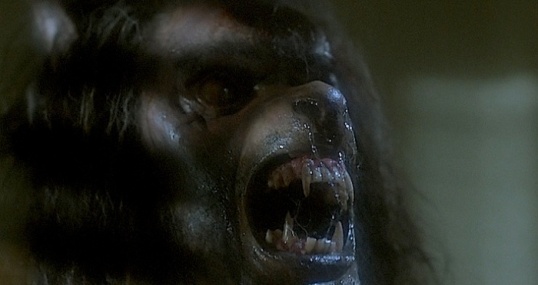
I always thought that Joe Dante’s 1981 horror film, The Howling, has been overlooked just a little bit due to it’s release being the same year as John Landis’ own horror film, An American Werewolf In London. Both were werewolf films and both were good in their own right.
Dante’s film has been called silly by some critics, but it was the more serious of the two with Landis’ own film mixing in more black humor in the narrative than Dante’s which took on a more traditional approach to the werewolf horror. Even the transformation scene from both films took on opposite sides in terms of mood and tone. Where Landis’ film treated the scene with both a mixture of horror and camp (due to the music playing in the background) in The Howling the scene went for full-on horror.
This has been one of my favorite horror scenes and it’s all due to the work of the very person who made John Carpenter’s The Thingsuch a memorable piece of horror filmmaking: Rob Bottin.
This man should be handed every award for every effects work he has ever done and will continue to do. It’s a shame that he hasn’t done anything of note since 2002’s Serving Sara, but until Hollywood decides that if they want great practical effects paired with advancing CG ones and hire Bottin once again we can always fall back on his past work such as the one’s he did for The Howling.
With all the hoopla over this weekend’s release of Iron Man 3 one shouldn’t overlook the release the following weekend of a little horror film coming in under the radar called Aftershock.
The film has Eli Roth producing and starring in it with Nicolás López directing it. The film is a fictional account of a group of Americans with their Chilean friend trying to survive the aftermath of the real-life massive 2010 earthquake in Chile.
From the look of this official red band trailer the film looks like it’s going to be quite bloody and gory. If there’s anything that Roth seems to know it’s blood and gore. Whether this film and its director will bring something else to the table will be determined upon the film’s release.
Aftershock is set for a North American release date of May 10, 2013.
It’s not hyperbole to say that one of the best horror novels to come out in the past 20 years was written by Mel Brook’s son. A son who wrote comedy scripts for Saturday Night Live. Max Brooks before 2003 was relatively unknown to genre fans. This changed post-2003 with the release of his tongue-in-cheek how-to book, The Zombie Survival Guide. It was a book that was slow to succeed in terms of sales but grew in popularity as more and more fans of the zombie genre heard about it and recommended it to like-minded friends. Just like the subject matter Brooks worte about this guide spread in a geometric pattern and more and more people began to know.
In 2006, Brooks released the companion piece to his best-selling guide with the fictional oral history account of the aftermath of a zombie apocalyptic war and how humanity fought back from the brink of extinction. This novel was World War Z and even before one could say “this book could be made into a film…” the film rights to the book became a hot commodity in Hollywood. In the end, Brad Pitt’s Plan B production company won the right to adapt the novel into a feature-length film.
After several years of trying to create a screenplay from the documentary-style and sprawling narrative of the novel the film finally went into production in mid-2011 with a screenplay that took some of the important events from the novel and set the film during the war itself as it unfolded instead of flashbacks as recounted by those who survived. This change has angered fans of the book and their anger and frustration went up another notch when some leaked on-the-set footage showing the zombies as more of the running-style zombies than the slower ones in the novel.
Another stumbling block pushed the film from a holiday 2012 release date to a summer 2013 release as Paramount looked to having World War Z as part of their 2013 summer blockbuster slate of films. This film has had so much issues and problems that it took to Brad Pitt finally agreeing to headline the cast to get the film finally made. So, instead of a film the chronicles the stories of the war’s survivors a decade after the war ended we now have a film that skews more towards a film that’s heavy on action set-pieces and globe-trotting. Someone on IGN.com has called World War Z (after seeing the attached official trailer) as 2012 with zombies. The first official trailer does seem to make it look like that.
As a fan of the novel I’m saddened by the changes, but I will say that the trailer does make this film look very epic. I’m more than willing to watch this film (who am I kidding I will watch this film and probably more than once or twice.) and look at it as the filmmakers’ own take on the novel. I mean if it turns out to be great on it’s own then hooray. If it sucks then I still have my novel to go back to. Plus, this is the first zombie film that will show the pandemic in global settings and proportions. This will be the first time we get to see this on film and not just on the written page.
My own review of the novel gives an idea just how different the film will be from the source material.
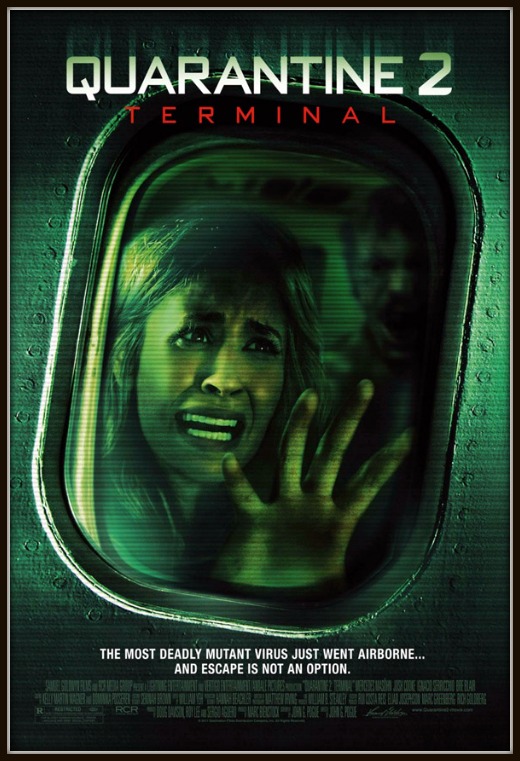
Quarantine 2: Terminalis the 2011 horror sequel to 2008’s Quarantinewhich was a remake of the much better Spanish horror film [Rec]. This sequel goes off on it’s own different path instead of just remaking the sequel which followed the Spanish film. As directed by John Pogue this sequel dumps the “found footage” style of the first film and instead just goes for a traditional film style. The film also goes it’s own way in explaining how it ties into the previous film.
Where the Spanish sequel had it’s events set at the same place this time around we find our new cast of characters on-board a red-eye flight from Los Angeles to Nashville that soon gets diverted to Las Vegas when one of the passengers suddenly becomes violently ill. Once they land the film mirrors the first film in that the surviving passengers, crew and a lone airport maintenance crewmember get locked in the terminal they’re at. The very bio-weapon that was unwittingly unleashed in the apartment complex in the first film has made it onto the flight and one by one the cast succumbs to it’s “rage zombie”-like symptoms.
Quarantine 2is not an awful as some would like to tell people, but it is also not a good film. It’s pretty average with little to no tension or scary surprises. It’s a horror film almost done by check-list. We also don’t get fully realized individuals to root for so that when one becomes infected there’s no sense of loss. In fact, there’s not even a character to root against. That’s how bland the characters ended being in this film. The story itself has built on the details presented about the virus in the first film and it’s an interesting premise that deserved a better film. Maybe a couple years from now the series will get rebooted and remade Bollywood-style and get some energy into it.
Moving onto a much better film that also share’s the above film’s fast-moving “zombie”-like infected is 2010’s Devil’s Playgroundby British horror filmmaker Mark McQueen. It is set in present-day London where it begins in medias res a hard-looking man all bloodied going by the name of Cole (played by Craig Fairbass) who uses a computer’s webcam to record the events which has transpired to bring him to his current state.
We soon go back to the beginning of the crisis which starts from the human-testing of a new drug by the pharmaceutical company N-Gen. Of the 30,000 test-subjects only one doesn’t succumb to the deadly side-effects of the drug which causes those injected to transform into ravening, cannibalistic killers who also happen to have had their agility amplified that they’re able to parkour their way towards the uninfected.
Yes, you heard right, parkour zombies. That gimmick alone attached to the current trend of fast-moving zombies gives this film an edge over most fast-running zombie films.
Devil’s Playgrounddoesn’t just try to make things interesting with a new brand of zombie-infected killers, but manages to create a story around the usual “man on a mission” plot. Cole has to find the only test subject who didn’t succumb to the experimental drug’s side-effects in hopes that this person carries the means to help end the spread of the virus. The cast itself helps in making this horror film rise above the usual dreck that gets released on video. While I’ve never been a fan of British “tough guy” actor Danny Dyer he wasn’t as annoying in this film as he is in others and it’s due to the performance by Craig Fairbass as the hardened mercenary Cole which makes Dyer’s dishonored cop Joe from chewing everything in the scene he appears in.
Director Mark McQueen does a good job in keeping the story moving forward even as he juggles subplot involving a couple of London river cops trying to find a safe haven in a city that’s going through a deadly crisis of apocalyptic proportion. Even the free-running zombies don’t come across as laughable and at times even come across as quite horrifying when Cole and his small band of survivors try to move from haven to haven in the hopes of getting the one who may be the key to solving the crisis to the right people.
Devil’s Playgroundmay not join the ranks of the classic zombie films since Romero’s Night of the Living Deadchanged the world of horror in 1968, but it manages to be both entertaining and scary despite the parkour zombies.
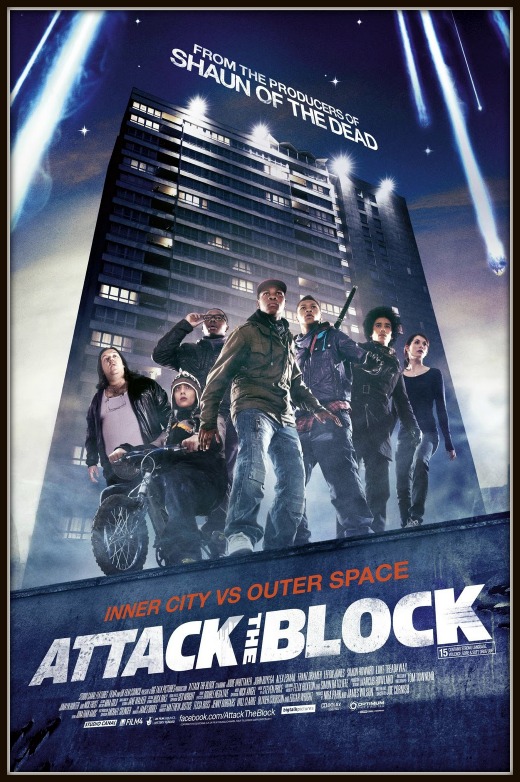
The best of this triple-bill of horror comes courtesy of one of 2011’s festival darlings. Attack the Blockby writer-director Joe Cornish was able mash together scifi, horror and comedy and do so seemlessly. It’s a genre-busting film that doesn’t lean too heavily on either three but allows the great script written by Cornish to dictate when the horror begins and when it transitions to some sharp comedic scenes and dialogue.
This is a film that could’ve sunk under the weight of it’s cast of British teen and child actors, but instead gains much of it’s appeal from these fresh, young faces. Even for those across the Atlantic in the US the British slang used by the kids in the film doesn’t confuse as much as it could. The writing and performances by these kids (especially by John Boyega as the teen gang leader Moses) don’t come across as forced, but flow naturally from scene to scene. Their reactions to finding and killing what turns out to be an alien looks and sound exactly how any group of young hoodlums and ragamuffins would have. In fact, some of the film’s funnier scenes was due to how each of them arm themselves in their attempt to protect the block of apartments they all live in.
It wouldn’t be an alien invasion film of any quality if we didn’t get some memorable aliens. Fortunately we do get aliens that come across not just menacing, but also not fake looking. Nothing takes an audience away from suspending their disbelief and enjoying a film than a badly pulled off visual effect. Cornish and his effects crew use a combination of practical and CG effects to bring to life a horde of alien invaders who look like a cross between apes and the ball of fur and teeth from the 80’s cheesetastic scifi-horror film series Critters.
Attack the Blockdoesn’t skimp on the death and destruction. The film doesn’t treat the young characters with kid’s gloves either as they’re not exempt from the mortal danger posed by the aliens who have invaded their Block. The fact that each character (both young and old) were written to be rounded characters with distinct personalities that we feel each death no matter how minor the role. It’s a rare horror film that actually made great use of character development in-between scenes of action and terror. Even during those particular scenes each character on the screen adds a new layer of complexity to the role. This is a testament to director Joe Cornish who also wrote the excellent screenplay. The fact that this was his feature film debut as a director also makes Attack the Blocksuch a surprise wonder.
So, our tally for today when it comes to the three films mentioned above would come down to….
Quarantine 2: Terminal– Pass (watch on Netflix Instant if there’s nothing else to watch)
Devil’s Playground– Definite Watch (can be seen through Netflix Instant)
Attack the Block– Must-See (buy the blu-ray to add to your collection or rent if you’re not into that)
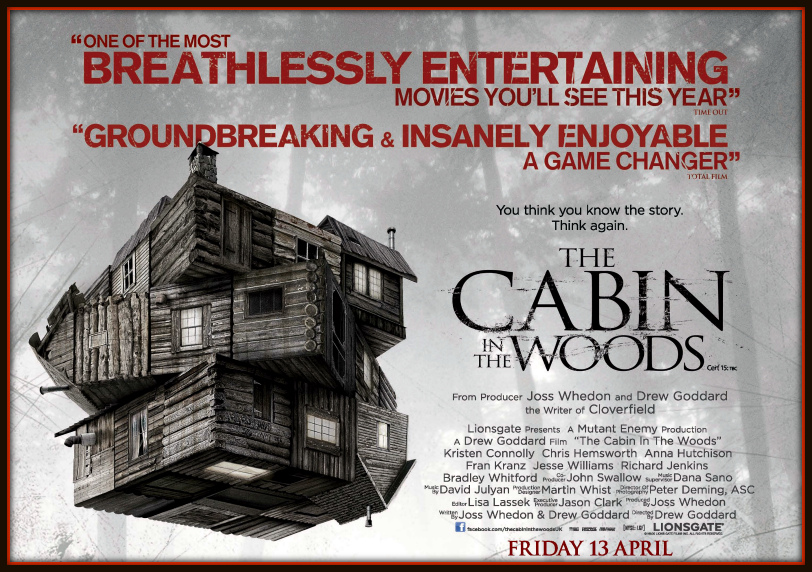
If there was one thing the meltdown and subsequent bankruptcy of MGM ended doing it was shelving the Drew Goddard and Joss Whedon horror film The Cabin in The Woodsfor almost three years. The film was directed by Goddard who also helped co-write the screenplay with Joss Whedon and what we get is one of the smartest and most innovative horror films to come in over a decade. For fans of the tv shows Buffy: The Vampire Slayer and Angel (not to mention Dollhouse) this horror film just reinforces the notion that Joss Whedon knows how to write smart dialogue and premises without ever getting too self-referential and deconstructionist (I’m looking at you Kevin Williamson) or too smart-talky (a stank-eye at you Aaron Sorkin).
There’s really no way to properly review The Cabin in The Woods without spoiling the films many different surprises and twists and turns. I will say that the film does a peculiar opening that focuses not on the five college students headed to the cabin in the woods of the film’s title, but on two men (Richard Jenkins and Bradley Whitford) in your typical office attire doing the walk and talk about family home life and the like. We see that they’re technicians in an unnamed industrial facility that wouldn’t look out of place in one of the many governmental facilities we often see in film. The film will return to these two men and their facilities and other people working within often in addition to telling the story of the five college students and the growing danger they find themselves in as night falls in the woods.
To say anymore would definitely be a spoiler.
I will continue on and say that for a horror film written to self-reference other horror film conventions and tropes what Goddard and Whedon have ultimately done was celebrate the genre itself and how much of an impact it has had in society. Unlike films like the Screamfranchise, The Cabin in the Woodsdoesn’t knowingly wink at the audience about how cool it is for pointing out all the horror cliches and stereotypes we’ve come to expect in the horror genre. Instead the film actually treats its audience to be smart enough to see the homage to past horror films both good and bad without ever drawing attention to the fact that they’re pointed out.
Another thing which makes this film so fun to watch is how much every character in the film comes across as fully realized individuals. Even the college students who we first think of as your typical horror film stereotypes (the jock, the slut, the virgin, the brain and the stoner) end up being more than we’re led to believe. All of this actually occurs right in the beginning and this helps the audience join in on the fun that both Goddard and Whedon are having in turning the horror genre on its head right up to it’s surprising conclusion. It helps that the cast did quite a great job realizing their characters. As the film progresses we even begin to get a sense that who the villains in the film may or may not be who we think.
There’s a sense of fun and the darkly comic to the film as well. Every one-liner and comedic beats we get throughout the film doesn’t have a sense of the cynical to them. It comes across through dialogue and actions by both groups in the film in such a natural way that they never make those saying the lines break the fourth wall. Most films that try to deconstruct genre films tend to get too cutesy with the breaking the fourth wall gimmick that the audience can’t help but be pulled out of the suspension of disbelief they’ve put themselves in. This has a way of making such genre films less fun and celebratory and more of making fun of the people who enjoy such things.
The Cabin in The Woodsmanages that rare accomplishment of being a horror film that retains not just the horrific aspect of the genre but also add such a darkly comic sense to the whole proceeding with such a deft touch from Goddard and Whedon that we don’t know whether to call it straight horror or a horror-comedy. Some might even see the film as an entertaining treatise on the nature of the horror film genre of the last quarter-century. Both Goddard and Whedon have already called this film as their answer to the current trend of the “torture porn” that was popularized with the help of such recent horror franchises like Hostel, Sawand those made by Rob Zombie. Where those films celebrated the concept of inflicting pain not just on the characters on the screen but those who watch them with The Cabin in The Woodswe finally get a reminder why we love the horror films of the past. It’s through the sense of that adrenaline rush that a tension build-up leading to a horror money shot but without becoming overly gratuitious and reveling in the pain of the horror.
Some have said that The Cabin in The Woodsis the best horror film of 2012. I won’t even argue with that statement since it is true. I will put it out there that Cabin in The Woodsmight just be one of the best films of 2012. The film is just that fun, smart and, overall, just plain awesome.
[I usually attach a trailer to reviews but this time doing it could spoil some of the surprises in the film]
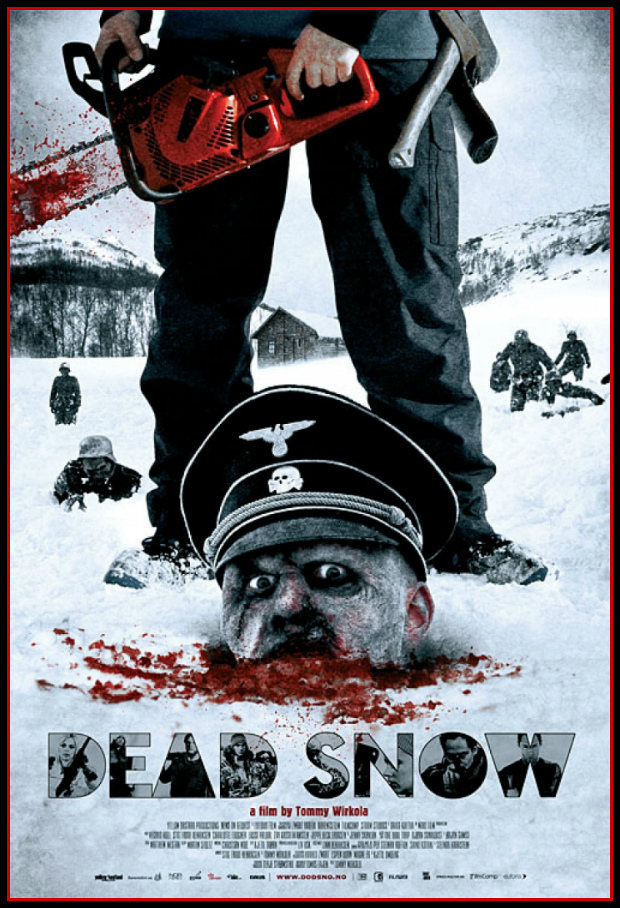
One thing about the zombie monster is that they’re pretty much a blank slate and anyone with an idea on how to use them can add their own spin to this undead staple in horror. Some have made zombies be undead Templar knights who hunted by sound. Some have even been made in combination with Egyptian mummies. There has even been zombies underwater fighting and trying to feed on sharks. In 2009, Norwegian Tommy Wirkola filmmaker took the zombie and combined it with that other icon of evil in entertainment, the Nazi. What he was able to create with this combo is the horror film Dead Snow.
The film begins with a lone woman running frantically through the snows somewhere in the mountain fjords of Norway with unknown figures chasing her. Like most horror films which begins like this her fate looks to be predetermined and how she finally buys it shows the audience that this is not going to be the usual zombie film as undead figures tear her apart and devour her while wearing the typical Nazi regalia. This gory start segues into the unfortunate group who will end up having to experience and deal with the sudden problem of WWII-era Nazis who had occupied Norway during the war and had ended up being buried (and presumed killed by the Norwegians near the end of the war) for decades in the snows of the Norwegian mountainside.
There’s really nothing too special about the seven students who decided to spend their Easter vacationing in the mountain cabin owned by the young woman killed earlier in the film. They’re not one-dimensional characters, but they’re also not the smartest tools in the shed as they make the usual mistakes young people make while staying at an isolated cabin high up in the mountain with a reputation for being haunted and cursed. The film’s director also co-wrote this script with screenwriter Stig Frode Henriksen and one could almost sense they were trying to emulate the group dynamics of the group in Edgar Wright’s instant zombie-comedy classic Shaun of the Dead. While Wirkola and Henriksen never reach the same level of creativity in their characters the actors playing them do a good enough job that we root for them to survive the siege of the suddenly hungry Nazi zombies outside their cabin.
Dead Snow does have something which raises the film from being dull and predictable into something very entertaining and thrilling through it’s many gory set-pieces. These scenes as the survivors try to fight their way and escape the Nazi zombies (or are they zombie Nazis) doesn’t skimp on the blood and gore. Wirkola may have known that the story of his film was very thin on plot with charactersa step or two above cardboard so decided to just let the grue fly. It’s here that Dead Snow suddenly becomes jet-fueled rollercoaster ride as bodies (both living and undead) get mutilated, decapitated, blasted, shot-up and everything in-between. The final stand-off with the final survivors and an increasing number of Nazi zombies makes this film worth watching.
Tommy Wirkola’s Dead Snow doesn’t bring too many new things to the zombie genre (Nazi zombies having been done decades earlier in films such as Shock Waves and Oasis of the Zombies), but he does add some dark humor and a healthy dose of over-the-top zombie mayhem that makes the film quite entertaining despite it’s flaws. Plus, how can one go wrong with picking something to watch that has Nazi zombies gallivanting their bloody way through Norwegian mountainsides with a hankering for Norwegian students.
For decades, the zombie film genre has been defined by the rules established by the grandfather of the modern zombie story, George A. Romero. His 1968 landmark horror film Night of the Living Dead transformed what had once been a gothic creature rooted in the voodoo folklore of Haiti and the Caribbean into an apocalyptic force symbolizing social collapse and human weakness. The film not only terrified audiences but also laid the foundational blueprint for every zombie movie that followed. Romero’s zombies weren’t merely monsters — they were a reflection of humanity’s fears, prejudices, and inner decay. His influence has remained so pervasive that, even today, filmmakers working in horror are inevitably responding to his legacy, whether they realize it or not.
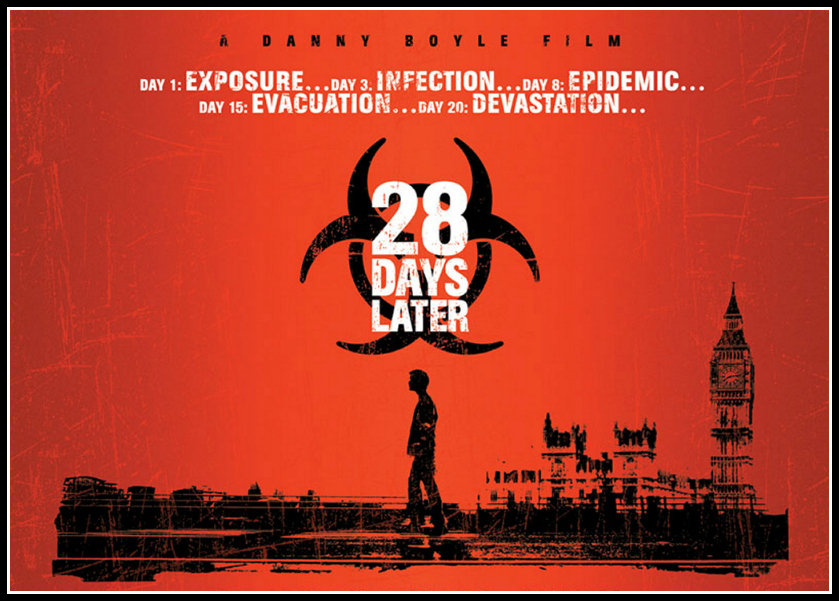
Through the years, there have been numerous attempts to deviate from Romero’s formula. The most prominent early success came in the 1980s with the Return of the Living Dead series — a clever horror-comedy franchise that infused dark humor and punk aesthetics into the genre. Yet even that beloved cult entry eventually lost steam. True reinvention did not arrive until 2002, when British filmmaker Danny Boyle and screenwriter Alex Garland collaborated on 28 Days Later, a project that both revitalized the zombie genre and split its devoted fan base down the middle. Was it truly a “zombie” film, or something else entirely? That very debate remains unresolved more than twenty years later.
Boyle’s film begins not with a supernatural curse or the reanimation of the dead, but with a catastrophic act of human arrogance. A group of naïve animal-rights activists break into a research laboratory to rescue chimpanzees subjected to bureaucratic cruelty. However, they find that these animals have been injected with a rage-inducing virus — the product of bioengineering rather than black magic. One of the activists, horrified by what she witnesses, ignores the pleas of a desperate scientist and frees a chimp, unleashing a pandemic that will decimate Britain within weeks. This opening sequence is both economical and horrifying: the origins of the apocalypse come from compassion twisted into recklessness. Boyle establishes his tone immediately — quick editing, grainy digital video, and an oppressive sense of realism create a world that feels disturbingly possible.
The narrative then leaps forward twenty-eight days. In a now-iconic sequence, the protagonist Jim (played by Cillian Murphy) awakens from a coma in an abandoned London hospital. His disorientation mirrors that of the audience: sterile hallways littered with trash, flickering lights, a haunting silence broken only by the hum of wind through the empty city. When Jim emerges into the sunlight, the camera captures a London entirely devoid of people, its majestic landmarks standing as hollow monuments to civilization’s sudden collapse. This is one of cinema’s most unforgettable depictions of isolation. The haunting score by John Murphy and the use of Godspeed You! Black Emperor’s instrumental “East Hastings” heighten the apocalyptic stillness, transforming London into a ghost metropolis.
Jim’s bewilderment only deepens when he seeks refuge in a church — a setting traditionally associated with salvation — only to find it desecrated by carnage. His presence awakens a horde of infected individuals who charge at him with terrifying speed. Unlike Romero’s slow, lumbering undead, Boyle’s infected are human beings transformed by a virus that amplifies their aggression to animalistic extremes. They move like predators, sprinting at prey with berserk fury. Jim narrowly escapes thanks to two survivors, Selena (Naomie Harris) and Mark (Noah Huntley), who introduce him to the brutal new rules of existence: infection spreads through blood contact, turning victims within seconds, and hesitation means death.
The trio’s uneasy alliance soon crumbles after Mark becomes infected, forcing Selena to kill him without hesitation. This harrowing moment establishes her as one of the film’s strongest and most pragmatic characters — a refreshing departure from the damsel archetype that has long haunted horror cinema. Jim and Selena later encounter Frank (Brendan Gleeson), a good-natured taxi driver, and his teenage daughter Hannah (Megan Burns), who have been surviving in a fortified apartment building. Together they form a fragile surrogate family and travel in search of a military broadcast promising safety and a potential cure.
Boyle deftly blends moments of human warmth amid horror. Scenes like the group’s scavenging trip through an abandoned grocery store — a darkly comic echo of Dawn of the Dead’s consumer satire — offer glimpses of joy and normalcy. The countryside sequences, shot with a painterly eye, contrast the urban decay of London with the serene beauty of a world reclaiming itself from human control. Nature, the film quietly suggests, endures long after people have vanished.
Their journey leads them to a fortified mansion commanded by Major Henry West (Christopher Eccleston), a British officer whose soldiers claim to have “the answer to infection.” The supposed sanctuary quickly reveals a darker truth. West’s band of men have descended into moral depravity, promising their commander that the promise of “women” will restore morale. The film shifts from survival horror to psychological thriller as the real threat emerges — not the infected outside, but the monstrousness within human beings when order collapses. In this descent into militaristic patriarchy and madness, Boyle channels the spirit of Romero’s Day of the Dead, where the military’s illusion of control becomes the true source of terror.
Boyle and Garland’s reinvention of the zombie mythos was revolutionary. Longtime fans of Romero’s shambling undead initially resisted the notion that 28 Days Later even qualified as a zombie movie. After all, its creatures weren’t reanimated corpses but living people overtaken by an uncontrollable virus. Yet their function within the story — relentless, dehumanized embodiments of contagion and rage — served the same thematic role as zombies always had: mirrors for society’s breakdown. The debate over whether the infected “count” as zombies is less important than the fact that Boyle redefined the genre’s emotional and kinetic language. His infected didn’t just pursue victims; they hunted them. Their blistering speed and screams injected pure chaos into what had once been slow, creeping dread.
The technical and artistic choices heightened the film’s intensity. Shot largely on digital video with handheld cameras, 28 Days Later looked raw and immediate, more like found footage than polished fiction. This realism bridged the gap between old-school horror and the new century’s fixation on viral outbreaks and global instability. Coming in the post-9/11 era, its images of deserted cities and military lockdowns felt eerily prescient, foreshadowing later fears of pandemics and authoritarian control.
The performances ground the film emotionally. Cillian Murphy’s portrayal of Jim evolves from bewildered innocence to hardened survivor, serving as the audience’s emotional compass. Naomie Harris delivers one of the genre’s most capable female performances, blending vulnerability with ferocity. Brendan Gleeson, always magnetic, brings compassion and tragedy to Frank — a man whose paternal instincts ultimately lead to heartbreak. Christopher Eccleston’s Major West stands as a chilling embodiment of human corruption in crisis: the soldier who insists he is saving civilization while replicating its worst impulses.
Despite being produced on a modest budget of roughly eight million dollars, Boyle’s film achieved a scale and impact far greater than its resources suggested. The empty London shots — achieved by closing key streets at dawn for only minutes at a time — remain astonishing feats of logistical precision and cinematic audacity. More importantly, the film’s minimalist production enhanced its believability. Everything about 28 Days Later feels lived-in, grimy, and plausible.
Two decades on, 28 Days Later continues to stand as one of the most influential horror films of the 21st century. Its success reinvigorated a genre that had grown stale and inspired a wave of imitators across film, television, and video games, from Zack Snyder’s Dawn of the Dead remake to AMC’s The Walking Dead. Beyond its cultural impact, it remains a haunting meditation on rage — personal, societal, and political. Boyle and Garland transformed horror into a canvas for existential dread, exploring how quickly civility unravels when survival becomes the only law.
Whether one calls it a zombie film or not hardly matters anymore. 28 Days Later breathed new life into the undead myth, shattering old rules and redefining what modern horror could be. The debate it sparked continues, but one truth is undeniable: the genre has never been the same since Jim first walked through that silent, ruined London — a world devoured not by the dead, but by the terrifying rage of the living.
“Say goodbye to classical reality, because our logic collapses on the subatomic level… into ghosts and shadows.”
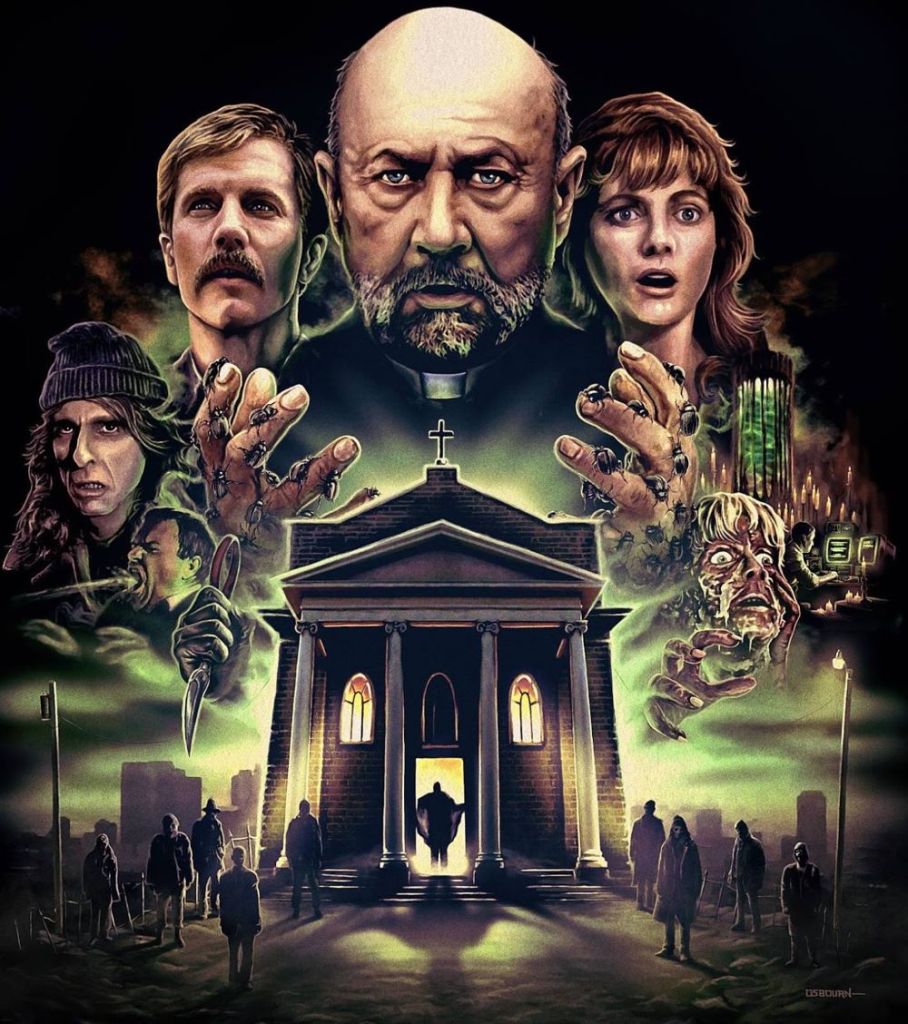
John Carpenter’s Prince of Darkness is a criminally underrated entry in his canon—a blend of philosophical, apocalyptic horror and supernatural mystery that’s as unsettling as it is deliberately strange. Released in 1987, the film often gets eclipsed by Carpenter classics like The Thing and In the Mouth of Madness. Even so, it stands out as a unique organic link between science-driven paranoia and cosmic horror—the sort of film that grows on you as you unravel its layers.
The setup is simple but immediately offbeat: In a derelict Los Angeles church, Father Loomis (Donald Pleasence, always at his nervous best) stumbles on a swirling green cylinder hidden away in the basement. Loneliness and age hang over Loomis as he realizes this is no mere relic but possibly the essence of absolute evil—the literal embodiment of Satan. Sensing he’s in over his head, the priest reaches out to Professor Birack (Victor Wong), a physicist whose rational mindset is quickly tested by the uncanny. Birack arrives with a diverse team of grad students and lab techs, each bringing curiosity, skepticism, and just enough personality to keep things lively.
What starts as an academic investigation quickly goes off the rails. Strange, shared dreams trouble the researchers—fragmented transmissions from the future, warning of disaster in unsettling, VHS-glitch style. Meanwhile, the area outside the church transforms into a kind of urban wasteland: homeless people, gripped by an unseen force, stumble with zombie-like intent, trapping the group inside. Inside, members fall prey to unsettling phenomena, from unexplained possession to increasingly grotesque violence. There’s a sense that the evil in the cylinder isn’t content to simply stay put—and the combination of supernatural implication and scientific uncertainty gives everything a persistent, gnawing tension.
Carpenter directs the film with measured, stifling precision. His color palette—rotting yellows, bruised greens, washed-out sunlight—creates a perpetually uneasy mood. He uses slow tracking shots and carefully composed frames to ratchet up suspense, and the score (co-composed with Alan Howarth) pulses with ominous synths that buzz beneath all the dialogue, making even the film’s quieter moments feel restless and charged with threat. Compared to the gooey spectacle of The Thing, the terror in Prince of Darkness is more metaphysical—less visible monsters, more eroding reality.
Sound and image work together to keep the audience on edge: moments of unsettling silence are punctuated by visual oddities, like swarms of bugs or the warped geometry of the church’s shadows. The group’s scientific attempts to decode the evil—a jumble of quantum theory, apocalyptic Christian lore, and unsettling mathematics—do more to ramp up anxiety than offer answers. Carpenter seems to delight in ambiguity; the revelations never clarify so much as deepen the void, giving shape to a primordial kind of fear.
The film’s most iconic device is its recurring nightmare sequence, where the group—cut off from the world—witnesses a cryptic, shadowy figure emerging from the church, broadcast as a tachyon transmission from the future. It’s classic Carpenter: deeply unsettling, oddly hypnotic, and open to any number of interpretations. The blending of science fiction and theological horror feels fresh and ambitious, and it’s fair to say these sequences alone have ironically kept the film alive in horror culture discussions and remixes.
The cast, featuring Pleasence and Wong, manages the film’s shifts in tone—moving from banter about theoretical physics to genuine terror with surprising ease. The grad students are likable enough for you to root for, especially Lisa Blount and Jameson Parker, who carry the emotional brunt as things collapse. Alice Cooper’s cameo as a silent, menacing street dweller further anchors the film’s reputation for “unexpected creepy” in the best way possible.
While there are flashes of gore—possessions, injuries, even some memorable stabbings—Carpenter resists making violence the centerpiece. The real horror here is psychological: paranoia, loss of agency, and the collapse of foundational beliefs. Where The Thing was about trusting (or not trusting) your friends, Prince of Darkness is about grappling with a world where even faith and science seem powerless and interchangeable in the face of the unknown.
Thematically, this is Carpenter at his most cerebral and bleak. The notion that neither faith nor science can adequately tackle the unfathomable echoes Lovecraft, yet Carpenter grounds it all in urban decay and deadpan dialogue rather than Gothic flourish. The questions get bigger—what good is faith if truth is poisonous, and what does science matter against a force older than logic? Dialogue about quantum uncertainty and theological paradoxes isn’t there to solve anything, but to make everything less secure.
If the film has a flaw, it’s that its pacing feels deliberately patient—some might say slow. Tension accumulates gradually, and you’re invited to sit in the discomfort as the group loses sleep, loses one another, and loses touch with reality. As the stakes escalate, the line between dream and waking life shreds, leading to an ending that’s haunting, ambiguous, and deeply open-ended. There’s no neat wrap-up or cathartic victory—only trauma, unsolved terror, and a lingering sense that evil never really left, just waited.
It’s this refusal to explain or comfort that gives Prince of Darkness its lasting cult appeal. Carpenter puts cosmic pessimism front and center: knowledge itself stands as a kind of curse, and both faith and reason bend beneath the weight of mystery. Rather than offer solutions, the movie warns about the dangers of peeling back reality’s surface—a theme that’s only grown more unsettling in the years since it was made.
Watching Prince of Darkness now, the film may not fit everyone’s idea of a fun Friday-night scarefest. But if you want horror that’s slow, dense, and sticks with you, this is essential viewing. Carpenter delivers a bleak, hypnotic nightmare about what happens when explanations fail—when the universe itself seems ready to swallow us whole. Whether you’re a die-hard genre fan or someone looking for something different, Prince of Darkness is cult horror at its most unshakable—proof that the scariest stories are often those that leave their deepest secrets unexplained.
A new horror film called Insidious is due to open on the 1st of April and, as a result, I’ve been inundated with the trailer lately.
This trailer leaves me curious. I have a feeling that the movie’s going to be a big disappointment (for one thing, it’s rated PG-13 which is usually not a good sign when it comes to horror films) but the trailer has its moments. So, unless Insidious is just an elaborate April Fool’s joke, I’ll be there to see it when it opens.
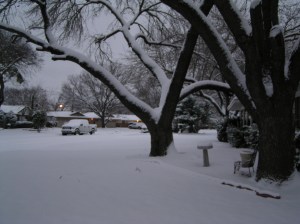
If you’re following the news then you probably heard that Dallas got hit with like a 100 inches of snow yesterday. Seriously, more snow fell yesterday than has even fallen in recorded history (or, at the very least, in my recorded history). You want to talk about Snowmageddon? Well, we had a Snowpocalypse.
The neighborhood on Friday morning (picture taken by Erin Nicole Bowman)
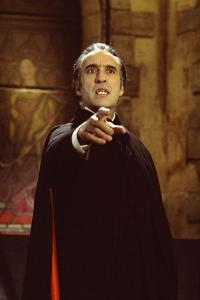
So, I spent most of yesterday cooped up inside with my sister and our cat and once we got over the whole fun of being able to go outside and scream, “SNOW DAY!” at the top of our lungs, there really wasn’t much to do. So, in an attempt to fight off cabin fever, I raided my DVD collection and we ended up watching one of the old Christopher Lee-as-Dracula-films from Hammer Studios. Specifically, we ended up watching Dracula A.D. 1972.
The film opens in 1872 with a genuinely exciting fight on a runaway carriage that ends with the death of both Count Dracula (Christopher Lee) and his nemesis, Prof. Van Helsing (Peter Cushing). However, as Van Helsing is buried, we see one of Dracula’s disciples (played by Christopher Neame, who had an appealingly off-kilter smile) burying Dracula’s ashes nearby. The camera pans up to the clear Victorian sky and, in a sudden and genuinely effective jumpcut, we suddenly see an airplane screeching across the sky.
Well, it’s all pretty much downhill from there. Suddenly, we discover that a hundred years have passed and we are now in “swinging” London. The city is full of red tourist buses, hippies wearing love beads, and upright policemen who always appear to be on the verge of saying, “What’s all this, then?” We are introduced to a group of hippies that are led by a creepy guy named Johnny Alculard (also played — quite well, actually — by Christopher Neame). One of those hippies (Stephanie Beacham) just happens to be the great-great-granddaughter of Prof. Van Helsing. Apparently, she’s not really big on the family history because she doesn’t notice that Alculard spells Dracula backwards. Then again, her father (played by Peter Cushing, of course) doesn’t either until he actually writes the name down a few times on a piece of a paper.
Anyway, the film meanders about a bit until finally, Alculard convinces all of his hippie friends to come take part in a black mass. “Sure, why not?” everyone replies. Well, I don’t have to tell you how things can sometimes get out-of-hand at black mass. In this case, Dracula comes back to life, kills a young Caroline Munro, and eventually turns Johnny into a vampire before then setting his sights on the modern-day Van Helsings.
Dracula A.D. 1972 was Hammer’s attempt to breathe some new life into one of its oldest franchises and, as usually happens with a reboot, its critical and (especially) commercial failure ended up helping to end the series. Among even the most devoted and forgiving of Hammer fans, Dracula A.D. 1972 has a terrible reputation. Christopher Lee is on record as regarding it as his least favorite Dracula film. And the film definitely has some serious flaws. Once you get past the relatively exciting pre-credits sequence, the movie seriously drags. There’s a hippie party sequence that, honest to God, seems to last for about 5 hours. As for the hippies themselves, they are some of the least convincing middle-aged hippies in the history of fake hippies. You find yourself eagerly awaiting their demise, especially the awkward-looking one who — for some reason — is always dressed like a monk. (Those crazy hippies!) But yet…nothing happens. All the fake hippies simply vanish from the film. Yet, they’re so annoying in just a limited amount of screen time that the viewer is left demanding blood. Add to that, just how difficult is it to notice that Alculard is Dracula spelled backwards? I mean, seriously…
To a large extent, the charm of the old school Hammer films comes from the fact that they’re essentially very naughty but never truly decadent. At their heart, they were always very old-fashioned and actually quite conservative. The Hammer films — erudite yet campy, risqué yet repressed — mirrors the view that many of my fellow Americans have of the English. For some reason, however, that Hammer naughtiness only works when there’s the sound of hooves on cobblestone streets and when the screen is populated by actors in three-piece suits and actresses spilling out of corsets. Dracula A.D. 1972 did away with the support of the corset and as a result, the film is revealed as a formless mess with all the flab revealed to the world.
Still, the film isn’t quite as bad as you may have heard. First off, the film — with its middle-aged hippies — has a lot of camp appeal. It’s the type of film that, once its over, you’re convinced that the term “groovy” was uttered in every other scene even though it wasn’t. As with even the worst Hammer films, the film features a handful of striking images and Christopher Neame is surprisingly charismatic as Alculard.
As with the majority of the Hammer Dracula films, the film is enjoyable if just to watch the chemistry between Christopher Lee and Peter Cushing. Both of these actors — so very different in image but also so very stereotypically English — obviously loved acting opposite of each other and whenever you see them on-screen together, it’s difficult not to enjoy watching as each one tried to top the other with a smoldering glare or a melodramatic line reading. As actors, they brought out the best in each other, even when they were doing it in a film like Dracula A.D. 1972. In this film, Cushing is like the father you always you wished you had — the stern but loving one who protected you from all the world’s monsters (both real and cinematic).
As for Lee, he’s only in six or seven scenes and he has even fewer lines but, since you spend the entire film wondering where he is, he actually dominates the entire movie. Lee apparently was quite contemptuous of the later Hammer Dracula films and, oddly enough, that obvious contempt is probably why, of all the Draculas there have been over the years, Lee’s version is the only one who was and is actually scary. F0rget all of that tortured soul and reluctant bloodsucker crap. Christopher Lee’s Dracula is obviously pissed off from the minute he first appears on-screen, the embodiment of pure destructive evil. And, for whatever odd reason, the purity of his evil brings a sexual jolt to his interpretation of Dracula that those little Twilight vampires can only dream about. Even in a lesser films like Dracula A.D. 1972, Christopher Lee kicks some serious ass.
So, in conclusion, I really can’t call Dracula A.D. 1972 a good film nor can I really suggest that you should track down a copy of the DVD. I mean, I love this stuff and I still frequently found my mind wandering whenever Cushing or Lee wasn’t on-screen. However, it’s not a terrible movie to watch if you happen to find yourself trapped in the house by a mountain of snow.
 I always thought that Joe Dante’s 1981 horror film, The Howling, has been overlooked just a little bit due to it’s release being the same year as John Landis’ own horror film, An American Werewolf In London. Both were werewolf films and both were good in their own right.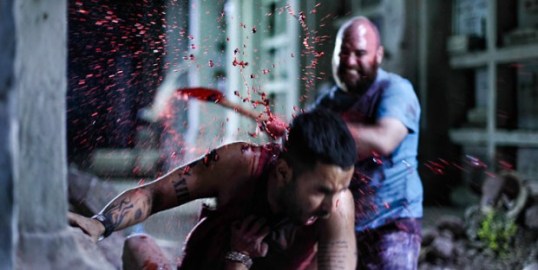


 Through the Shattered Lens