Retro Television Review: The Love Boat 5.11 “He’s My Brother/Zeke and Zelda/Teach Me Tonight”


Welcome to Retro Television Reviews, a feature where we review some of our favorite and least favorite shows of the past!  On Wednesdays, I will be reviewing the original Love Boat, which aired on ABC from 1977 to 1986!  The series can be streamed on Paramount Plus!
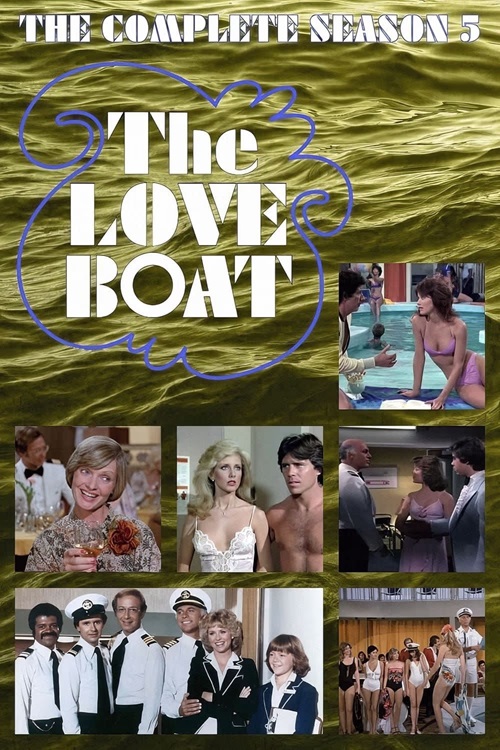
The Love Boat is back for a new year of reviews!

Episode 5.11 “He’s My Brother/Zeke and Zelda/Teach Me Tonight”

(Dir by Bruce Bilson, originally aired on December 5th, 1981)

This week, Doc Bricker’s brother boards the Love Boat and boy, does he turn out to be a jerk!  Fred Bricker (Jack Bannon) is bitter because their father paid for Doc to go to medical school while Fred had to stay behind on the farm.  Now, Fred is married to Nancy (Elaine Joyce) and worried about how he’s going to afford to send his own son to college.  Convinced that Doc is rich, Fred thinks that Doc should pay for his nephew’s college tuition.  Doc agrees.  Fred still acts like an ungrateful jackass but, when he learns that Doc has actually taken out a loan to pay the tuition, Fred realizes that Doc may not be rich but he is a good man.

The weird thing about this storyline is that Fred didn’t have enough money to send his kid to college but apparently, he did have enough money to take an expensive cruise on a luxury liner.  The other strange thing is that Fred didn’t know that Doc worked on the ship until he saw him in the lobby.  Fred just happened to buy a ticket for the same ship that his brother worked on.  Every episode of The Love Boat featured its share of implausible coincidences but this episode really pushes suspension of disbelief to its breaking point.  On a positive note, this story did allow us to see another side of Doc.  Bernie Kopell is always more believable when he gets to play Doc as being a nice guy as opposed to playing him as being an irredeemable lech.

Speaking of money, two old vaudevillians (played by Milton Berle and Martha Raye) haven’t had much of it ever since their style of performing went out of fashion.  Berle and Raye stowaway on the ship and then attempt to freeload their way through the cruise by pretending to be another set of passengers, Zeke and Zelda Van Buren (played by Herb Edelman and Elinor Donahue).  The captain is not amused when he finds out that someone is breaking the law on his boat but then Milton and Martha sing a duet of For Me And My Gal and all is forgiven.  The Captain arranges for them to get a job as entertainers on another ship.  I’ve noticed that the Captain never really seems to punish any of the many stowaways who have taken a trip on The Love Boat.  And you know what?  Good for him!  There’s a place for mercy in this cold world of ours.

Finally, romance novelist Michael Scott (Daryl Anderson) has a one night stand with teacher Emily Parker (Susan Richardson).  Michael — and yes, it’s impossible not to think of The Office whenever anyone mentions the character’s name — is stunned when Emily gets emotional after their night together.  “You’re acting like you’ve never done this before….” Michael says and, of course, it turns out that she hasn’t.  This was a pretty bleh storyline but it did lead to a funny scene where Michael attempts to have a conversation with Emily while two old ladies eavesdrop and freak out every time they hear the word “virgin.”

I enjoyed this cruise, mostly because it gave Bernie Kopell a chance to actually do some real acting for once.  I always like it when Doc turns out to be a nice guy.  Milton Berle and Martha Raye are, to put it lightly, an acquired taste but both of them give good performances in this episode and even manage to pull off their duet without making it too cringey.  As for the third storyline, it was defeated by the lack of chemistry between Daryl Anderson and Susan Richardson.  Still, two out of three is not bad.
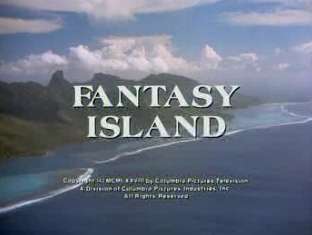
Retro Television Review: Fantasy Island 5.5 “Mr. Nobody/La Liberatora”


Welcome to Retro Television Reviews, a feature where we review some of our favorite and least favorite shows of the past!  On Tuesdays, I will be reviewing the original Fantasy Island, which ran on ABC from 1977 to 1984.  Almost the entire show is currently streaming on Daily Motion, YouTube, Plex, and a host of other sites.

This week, Charo shows up but Tattoo doesn’t.

Episode 5.5 “Mr. Nobody/La Liberatora”

(Dir by Cliff Bole, originally aired on November 7th, 1981)

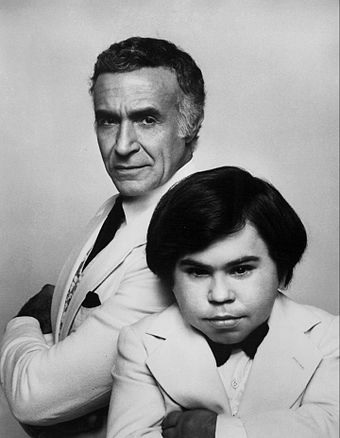
Once again, we have an episode the features only stock footage of Tattoo shouting, “The plane, the plane!”  Otherwise, Herve Villechaize is not in this episode.

What excuse does Mr. Roarke come up with this week to explain Tattoo’s absence?

He’s hung over.

Seriously, that’s what Mr. Roarke goes with!  He explains to Julie that Tattoo was up very late, helping another guest celebrate a drunken fantasy.  It must be said that Ricardo Montalban seems to be quite amused to be labeling his sidekick a drunk.  Apparently, Herve Villechaize was holding out for more money when this episode was shot and I’m guessing Tattoo being hung over was a “take that” on the part of the show’s producers.  To be honest, it feels a bit petty.

It falls to Julie to help Charles Atkins (Sherman Hemsley) fulfill his fantasy.  Charles is a short man who has been picked on by bullies all his life.  He wants to feel strong and confident.  Julie gives him a potion that she thinks will give him “inner strength” but — whoops! — instead it turns Charles into the world’s strongest man.  As Roarke admonishes Julie for not being specific when she ordered her potion, Charles embarks on a wrestling career.  Can Charles defeat Sampson Smith (H.B. Haggerty), the most savage wrestler in the world?  Or will he instead fall in love with Sampson’s publicist, Carrie Wilson (Vernee Watson) and realize that true strength comes from inside?  We all know the answer.  A more important question is whether Mr. Roarke will ever be foolish enough to let Julie handle a fantasy again?

This fantasy was nothing special.  The comedy was a bit too broad, though I did like the heartfelt performances of both Sherman Hemsley and Vernee Watson.  The main problem is that the whole thing hinged on Julie screwing up in a way that really didn’t make any sense.  Surely, she would have been smart enough to make sure she had the right potion before giving it to Charles.  I mean, not being careful with your potions sounds like a lawsuit waiting to happen.  Surely, Mr. Roarke would have kept a closer eye on his goddaughter as she handled her first fantasy ever.  Poor bumbling Julie doesn’t really work as a sidekick.  The show suffers without Villechaize’s snarky attitude.

Villechaize’s absence means that we also miss the chance to see him acting opposite Charo and that just seems like a crime against pop culture.  I have to admit that I was a little worried when I saw Charo’s name in the opening credits, largely because I thought she would be playing her silly Love Boat character.  Instead, Charo plays a world-famous guitarist named Dolores DeMurica, whose fantasy is to go back to the days of Spanish California and meet her ancestor, the famous El Lobo Rojo.  (El Lobo Rojo is basically Zorro but if Fantasy Island’s producers weren’t going to give Herve Villechaize a raise, they certainly weren’t going to pay for the rights to Zorro.)

I have to say that I was pleasantly surprised by Charo’s fantasy.  There was a lot of swashbuckling action, Cesare Danova and Alex Cord both gave good supporting performances, and Charo seemed to be energized by playing a character who, while comedic, was not quite as silly as The Love Boat‘s April.  Charo actually gave a pretty good performance here and the entire fantasy was fast-paced and fun to watch.  It would have been even more fun if Tattoo had shown up but it was not to be.

This episode was a mixed bag, with one forgettable fantasy and one entertaining fantasy.  In the end, both fantasies would have been better with Tattoo.

Late Night Retro Television Review: CHiPs 1.20 “Rainy Day”


Welcome to Late Night Retro Television Reviews, a feature where we review some of our favorite and least favorite shows of the past!  On Mondays, I will be reviewing CHiPs, which ran on NBC from 1977 to 1983.  The entire show is currently streaming on Freevee!

What would CHiPs be like without motorcycles?  We’re about to find out.

Episode 1.20 “Rainy Day”

(Dir by Gordon Hessler, originally aired on March 2nd, 1978)

While riding his motorcycle on the California highway, Baker groans as he feels a drop of water.  He tells Ponch that it’s going to rain and the two of them are going to end up getting stuck in a patrol car.

“It’s only sprinkling!” Ponch replies.

One jump cut later and Ponch and Baker are trapped in the middle of a downpour.  Despite the heavy rain and the fact that they’re getting soaked, they still manage to save a teacher after a car swerves on the slick road and hits her school bus.  (Apparently, in 1978, teachers also had to drive the school buses.)  The teacher is young and attractive so, of course, Ponch tells her that she and her students can drop by the station and see him any time that they want.

As for the rain, it turns out that Baker was right.  After giving them a hard time about their wet uniforms (and not even bothering to acknowledge that those uniforms got wet while Baker and Ponch were saving someone’s life), Getraer assigns them to a patrol car for the day.  It’s a new patrol car so Getraer warns them not to get a scratch on it.  Usually, I can kind of understand why Getraer is a bit weary of Ponch but, in this episode, the guy’s just a jerk about everything.

You can probably already guess what the main problem with this episode is.  The appeal of CHiPs, at least from what I’ve seen so far, is that it features a lot of exciting motorcycle stunts.  Chase scenes involving motorcycles are fun to watch because motorcycles can go extremely fast and they can weave in-and-out of traffic.  The show works best when Ponch and Baker are on their motorcycles.  This episodes put them in a bulky, slow-moving squad car.  Even stuck in the car, Ponch and Baker manage to catch a car thief and they put an end to an illegal gambling casino that’s been hidden inside of an RV.  But it really doesn’t matter because they’re in a squad car.  There’s nothing exciting about a squad car.

And yes, the squad car does get trashed, specifically while Ponch and Baker are chasing a degenerate gambler (Herb Edelman) who was seeking revenge against the RV casino.  Getraer is not happy about the damage to the car, despite the fact that there really wasn’t any way to avoid it and Ponch and Baker managed to prevent a lot of people from getting injured.  Fortunately, Officer Grossman (Paul Linke) accidentally backs into the squad car, leaving it ambiguous as to who is responsible for what damage.  Getraer will just have to get mad at everyone, I guess.

I love the rain so I did appreciate the fact that this episode featured a lot of it.  But otherwise, the whole thing just felt off.  I don’t care how wet it is outside.  Baker and Ponch just do not belong in a car.

Late Night Retro Television Review: Highway to Heaven 2.1 and 2.2 “A Song For Jason”


Welcome to Late Night Retro Television Reviews, a feature where we review some of our favorite and least favorite shows of the past!  On Thursdays, I will be reviewing Highway to Heaven, which aired on NBC from 1984 to 1989.  The entire show is currently streaming on Freevee and several other services!

This week, Highway to Heaven begins its second season with a two-part episode.

Episodes 2.1 and 2.2 “A Song For Jason”

(Dir by Michael Landon, originally aired on September 18th and September 25th, 1985)

Well, this is certainly a tear jerker.

The two-part second season opener of Highway to Heaven finds Jonathan and Mark assigned to work at Camp Good Times, an actual summer camp for children who have cancer.  And while Jonathan is, as usual, enthusiastic about the assignment, Mark responds by begging to be allowed to sit this one out.  Jonathan’s response is to tell Mark to stop feeling sorry for himself and to help the kids.  Mark starts to walk away from his friendship with Jonathan until he runs into one of the kids, Jason (Joshua John Miller, whose best-known work as an actor might be as the scary child vampire in Near Dark).  Jason basically repeats the same thing that Jonathan said, telling Mark that he needs to stop feeling sorry for himself.  Mark realizes that if a kid like Jason can be brave in the face of cancer then the least Mark can do is spend a summer as a camp counselor.

(Adding a bit of poignance to all this is that both Victor French and Michael Landon would die of cancer five years after this episode aired.)

Jason is the son of rock star Miki Winner (Barry Williams — yes, Greg Brady).  Miki is always finding excuse not to spend any time with his sick son.  Maybe Jonathan can change his mind.

But that’s not all!

Curtis (played by a ten year-old Giovanni Ribisi in his acting debut) is scared to death to go outside, a result of his overprotective mother (Robin Riker) constantly harping on the fact that he could die at any minute.  Can Jonathan help Curtis have fun while encouraging his mom to let Curtis be a kid?

Teenage jock Gary (Brian Lane Green) has bone cancer and might lose his leg.  Can he got over his bitterness and get a date with camp counselor Trish (Jill Carroll)?

And will Mark finally realize that there is hope to be found in even the most dire of situations?

(The answer to all of that is yes but you probably already guessed that.)

Even by the standards of Highway to Heaven, this episode was a bit heavy-handed, without a subtle moment to be found.  Barry Williams is as unconvincing a rock star here as he was on The Brady Bunch Variety Hour.  Some of the kids were better actors than others.  It’s also hard not to feel that the story could have been told in just one episode.  The first part, especially, feels a bit padded.  That said, it all still brought tears to my mismatched eyes because, seriously, how couldn’t it?  This is one of those episodes where the show’s earnestness and sincerity really worked to its advantage.  The episode is so heartfelt that it feels rather churlish to be too nit-picky about it.  In the end, flaws and all, the episode works.

Add to that, if you can’t enjoy the scene where Jonathan disguises himself as a barber and shaves a bully’s head, I don’t know what to tell you.

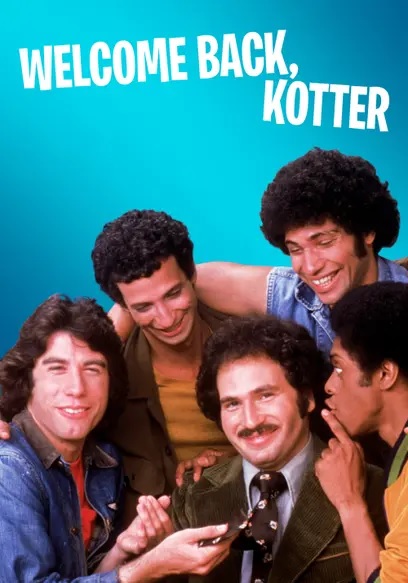
Retro Television Reviews: Welcome Back, Kotter 3.8 “What A Move”


Welcome to Retro Television Reviews, a feature where we review some of our favorite and least favorite shows of the past!  On Saturdays, I will be reviewing Welcome Back Kotter, which ran on ABC  from 1975 to 1979.  The entire show is currently streaming on Tubi!

This week, the Kotters find a new apartment!  Say goodbye to that iconic closet.

Episode 3.8 “What a Move”

(Dir by Nick Havinga, originally aired on October 20th, 1977)

At school, Gabe asks Mr. Woodman if he ever told him about his uncle who went to a psychiatrist because he thought he was a radiator and he needed help to stop hissing.

“I can hiss too, Kotter!” Woodman snaps.

Why is Gabe telling his joke to Mr. Woodman?  Well, Julie hates his jokes and she’s also busy trying to find a new apartment.  The babies cannot grow up in a one-room apartment, especially one that is continually being broken into by the Sweathogs.  But this is New York in the 70s and a rent-controlled place is not easy to find.  Thanks a lot, Mayor Beame!

Fortunately, Epstein has a solution.  His uncle Mo owns a building and has a place to rent.

“You don’t want to move to Puerto Rico!” Woodman exclaims but Epstein explains that Mo is from “the other side” of the family.

It’s a nice apartment and with the help of the Sweathogs (because apparently, neither Julie nor Gabe know anyone outside of those four students), Julie and Gabe pack up and leave their old place.  They nearly leave the babies behind but, after Julie yells at Gabe, they go back and get them.

The new apartment seems like a great place except Uncle Mo (Herb Edelman) has a strict no baby policy and no sooner have the Kotters moved in than Mo is telling them to get out.  Epstein is so upset about his uncle’s behavior that he uses it as an excuse to start skipping school.  This is a crisis!  However, when an offended Julie and Gabe inform Mo that they will be leaving immediately, Mo asks if they wouldn’t rather threaten to sue him.  It turns out that Mo fights with his tenants for fun and he doesn’t mean half the stuff he says.  Gabe obliges by pretending to yell at him and Mo allows Julie, Gabe, and the babies to all stay.  Personally, I’m not sure I would want to live with a landlord who threatens to illegally evict me for snots and giggles but whatever.  I guess in Mayor Beame’s New York, you took what you could find.  Damn you, Mayor Beame!

Having taken care of all that, Gabe tells Julie about his Uncle Ellwood.  Julie dramatically rolls her eyes as the new apartment is christened with Gabe’s sense of humor.

Weird episode.  Watching it, one gets the feeling that the producers were trying desperately to find a way to renew the spark of Julie and Gabe’s marriage.  Marcia Strassman was notoriously unhappy with the the first two seasons of the show, going so far as to speak publicly about her dissatisfaction.  Season 3 seems to feature a lot more of Julie and Gabe’s marriage and Julie is getting to do a lot more than she did in the previous seasons but there’s such a visible hostility between Gabe Kaplan and Strassman that it’s a bit awkward to watch.  It makes one wish that the show could just return to Gabe telling the Sweathogs not to steal or fight other gangs.  The new apartment is nice but it takes more than moving to save a marriage!

Retro Television Reviews: The Feminist and the Fuzz (dir by Jerry Paris)


Welcome to Retro Television Reviews, a feature where we review some of our favorite and least favorite shows of the past!  On Sundays, I will be reviewing the made-for-television movies that used to be a primetime mainstay.  Today’s film is 1971’s The Feminist and The Fuzz!  It  can be viewed on YouTube!

At first glance, Jane Bowers (Barbara Eden) and Jerry Frazer (David Hartman) don’t have much in common.

Jerry is a cop, though he’s attending night school with the hope of someday becoming a lawyer.  Jerry is an old-fashioned law and order man.  He expects the law to be followed.  He’s also the type who definitely believes that there are clear differences between men and women.  As he explains it, there are some thing that men are just better at.  Jerry is dating Kitty (Farrah Fawcett), who works as a waitress at the local Playboy Club.

Dr. Jane Bowers is a pediatrician and a proud feminist, one who takes it personally when a cop like Jerry refuses to give her a parking ticket just because she’s a woman.  She wants to be treated as an equal in all matters.  She’s dating Wyatt Foley (Herb Edelman), an attorney who still lives with his mother and who constantly goes out of his way to let everyone know that he’s an ally.  Jane’s best friend is Dr. Debby Inglefinger (Jo Anne Worley), who has decided that it’s time to lead a protest at the Playboy Club.

The only thing that Jerry and Jane have in common is that they both desperately need an apartment but apparently, apartments were not easy to find in San Francisco in the early 70s.  Fortunately, a hippie (Howard Hesseman) has just been evicted from his apartment because the landlord (John McGiver) didn’t like the fact that he was constantly having overnight guests.  Jane and Jerry both end up at the apartment at the same time, with Jane getting offended by Jerry’s refusal to give her a traffic ticket.  (Jerry makes the mistake of saying that he’s going to let her off “with a warning.”  He wouldn’t give a warning to a man!  Seriously, though, who in their right mind would actually demand a ticket?  Those things cost money.)  Even though they take an instant dislike to each other, Jane and Jerry still decide to pretend to be husband and wife so that they can rent the apartment together.  With their busy schedules, they figure that they’ll never have to see each other.  They won’t even know the other is around.

Of course, it doesn’t work out like that.  Jane allows Debby to hold a consciousness raising meeting at the apartment.  (Future director Penny Marshall appears as a participant.)  Meanwhile, Jerry lets a prostitute (Julie Newmar) stay at the apartment, just to keep her off of the streets for the night.  The landlord is getting suspicious.  So, for that matter, is Jane’s father (Harry Morgan).  And, as you probably already guessed, Jerry and Jane are falling in love.

With its hippies and its militant feminists and its jokes about the Playboy Club, The Feminist and the Fuzz is a film that practically yells, “1971!”  Unfortunately, script’s attempt to turn the film’s rather predictable plot into a Neil Simon-style jokefest never quite works.  The “humorous” dialogue feels forced and the film’s 75-minute run time doesn’t do it any favors, as we never really have the time to get to know Jerry or Jane as human beings.  Instead, they just remain “The Fuzz” and “The Feminist.”  As a result, it’s not that easy to care about whether or not they actually get together.  Some of the supporting performances are amusing.  Barbara Eden manages to avoid turning Jane into a caricature of a humorless activist but poor David Hartman is stiff as a board and in no way convincing as a veteran cop.

The main thing I took away from this movie is that the Playboy Clubs were exceptionally tacky.  Way back in 2011, NBC actually tried to air a drama series that took place at a Playboy Club in the 60s.  (This was when every network was trying to come up with the next Mad Men.)  The pilot started with creepy old Hugh Hefner assuring the viewers that, “Everybody who was anybody wanted to be a member of the club.”  I mean, seriously?  What a strange world.

Retro Television Reviews: Fantasy Island 1.10 “The Over-The-Hill-Gang/Poof, You’re A Movie Star!”


Welcome to Retro Television Reviews, a feature where we review some of our favorite and least favorite shows of the past!  On Tuesdays, I will be reviewing the original Fantasy Island, which ran on ABC from 1977 to 1986.  The entire show is currently streaming on Tubi!

Smiles, everyone!  Smiles!

Episode 1.10 “The Over-The-Hill-Gang/Poof, You’re A Movie Star!”

(Dir by Earl Bellamy, originally aired on April 15th, 1978)

Uh-oh, Tattoo has a new money-making scheme!  It involves a parrot.  While the exact details of Tattoo’s schemes are a bit vague, it all involves teaching the parrot how to speak.  Again, I’m not sure how exactly that’s going to make Tattoo a lot of money but whatever.  I like parrots.

Still, it’s hard not to notice that Tattoo seems to spend a lot of time trying to figure out ways to make extra money.  Tattoo is the second-in-command at the world’s most prestigious resort so you have to wonder why he always seems to be so desperate to bring in some extra cash.  It’s not like Tattoo is paying rent or even buying his own food.  That’s all provided by Mr. Roarke and the island.  Add to that, it has been implied that Tattoo is in charge of the island’s finances and that’s not a job that you give to someone who can’t handle his own money.  Maybe Tattoo isn’t looking to make money for himself.  Maybe Fantasy Island is on the verge of bankruptcy due to Roarke’s habit of giving people free fantasies.  Maybe the talking parrot is Tattoo’s latest scheme to save the Island.  If that’s the case, then Tattoo really is the secret hero of this series.

I actually wish this episode has spent more time with the parrot because that little throw-away story was still more interesting than the two main stories.  Don’t get me wrong.  This isn’t a bad episode.  It’s just a bit bland.

Shirley Russell (Barbi Benton) comes to the Island with dreams of becoming a movie star.  Mr. Roarke simply snaps his fingers and suddenly, Shirley has not only an agent but also hundreds of fans following her everywhere that she goes.  She also has a role in a big movie that will be filming on the Island!  When the film’s producer (played by a veteran sleazy guy Herb Edelman) tells Shirley that she’ll have to film a nude scene for the movie, Shirley abandons her fantasy and happily reunites with her earnest fiancé.  Barbi Benton was likable as Shirley but the fantasy itself was predictable and on the blah side.  Shirley’s shock over the proposed nude scene made me wonder if she had actually watched any movies other than The Sound of Music.

The other fantasy dealt with Spencer Randolph (Ray Bolger), an aging bank robber who wanted to pull off one last job with his old gang before marrying a wealthy businesswoman.  Bolger’s old gang was made up of familiar Hollywood character actors like Tom Ewell, Foster Brooks, and Phil Foster.  Along with getting the old gang back together again, Spencer was also able to foil a blackmail scheme.  Again, the storyline was a bit bland but the chemistry between all of the Hollywood veterans was enjoyable.  Ray Bolger was just as spry and likable here as he was when he played the Scarecrow in The Wizard of Oz.  Interestingly enough, 39 years passed between The Wizard of Oz and this episode of Fantasy Island and Bolger was still younger than Joe Biden is today when he played Spencer Randolph, the leader of the over-the-hill gang.

Love on the Shattered Lens: Barefoot In The Park (dir by Gene Saks)


The 1967 film, Barefoot in the Park, tells the story of two newlyweds.

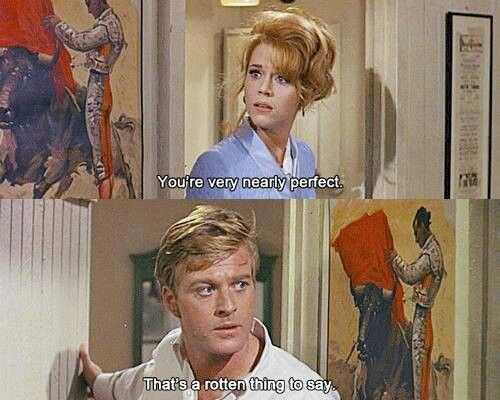
Paul Bratter (Robert Redford) may have a terrible last name (seriously, Bratter?) but he’s an up-and-coming lawyer with a bright future.  He’s a little bit uptight and doesn’t seem to have the greatest understanding of human nature but he’s handsome and he’s charming and he means well.  Paul has just recently married Corie (Jane Fonda).  Corie is a free spirit who cringes at the idea of conformity.  Having been raised by a judgmental mother who has always told her that she will never be good enough to make it on her own, Corie has decided to murder Paul and steal all of his money by insisting that they live in a drafty apartment that’s on the fifth floor of an New York apartment building that doesn’t have an elevator.  If climbing up the stairs doesn’t kill Paul, the fact that the skylight has hole in it probably will.  Helping Corie with her plan is her eccentric neighbor, Victor Velasco (Charles Boyer).  When Paul comes home one day to discover Victor lifting up his lingerie-clad wife, Victor says, “We are heating up the apartment.”  Corie assures Paul that they’re just trying to get the radiator to start working but we know the truth….

Okay, that’s actually the Lifetime version of Barefoot in the Park.  The real Barefoot in the Park is a charming, lighter-than-light adaptation of Neil Simon’s famous play.  (If I’m biased towards the play, it’s because I once played Corie in a heavily edited version of the play that we put on in high school.  I was the perfect Corie, if I may say so myself.)  As played by Robert Redford, Paul is charming but uptight and, as played by Jane Fonda, Corie is a free spirit who doesn’t really seem to have much common sense about the realities of living in New York City.  (Running barefoot in Central Park?  Probably not a good idea in 1967.)  They do end up living on the fifth floor and there are a lot of jokes (in fact, there’s probably too many jokes) about people getting out of breath from having to climb all of the stairs.  There’s also a broken skylight, which is a problem since it snows in New York.  However, Corie never deliberately plots to kill Paul.  Instead, she tries to set her mom (played, in an Oscar-nominated performance, by Mildred Natwick) up with Victor.

Barefoot in the Park is probably one of those films that seemed semi-daring when it was originally released in 1967 (“Look!  A honeymoon sex joke!  Look!  Corie’s walking around in Paul’s shirt!  Look!  Paul looks like he’s about to say a forbidden word!”) but today, it seems like an old-fashioned but likable fantasy about what’s like to be a newlywed in New York.  The city’s beautiful and full of romance.  The dialogue is witty and zippy.  (Zippy’s a word, isn’t it?)  Charles Boyer overacts in the most charming way possible and Mildred Natwick has some good moments as Corie’s mom.  (To appreciate Natwick’s peformance, it helps to imagine what the film would have been like if Shelley Winters had played the role.)  Most importantly, Robert Redford and Jane Fonda have got an amazing chemistry and, as they were both young in 1967 and considerably less weather-beaten than they are today, it’s hard to imagine a more beautiful couple.  Though Gene Saks’s direction is visually flat and, cinematically, the film never quite breaks out of its stage-bound origins, the chemistry of Redford and Fonda and Boyer and Natwick carry you through the occasional rough patch.

Seriously, I kind of love this movie!