Retro Television Review: The American Short Story Episode 5: Bernice Bobs Her Hair


Welcome to Retro Television Reviews, a feature where we review some of our favorite and least favorite shows of the past!  On Saturdays, I will be reviewing The American Short Story, which ran semi-regularly on PBS in 1974 to 1981.  The entire show can be purchased on Prime and found on YouTube and Tubi.
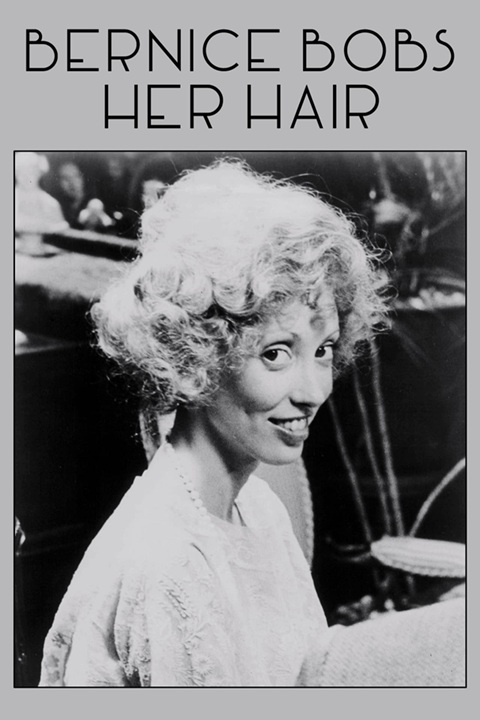
This week, we have an adaptation of the short story that brought F. Scott Fitzgerald his first great literary success.

Episode #5 “Bernice Bobs Her Hair”

(Dir by Joan Micklin Silver, originally aired in 1976)

In this adaptation of a short story by F. Scott Fitzgerald, Shelley Duvall plays Bernice.  Bernice is a socially awkward young woman from the country who, at the start of the glorious 1920s, spends the summer in the city with aunt (Polly Holliday) and her popular cousin, Marjorie (Veronica Cartwright).  Though initially annoyed with having to watch over her cousin, Marjorie eventually decides to teach Bernice how to be a “society girl.”  Marjorie teachers her how to flirt and, even more importantly, Marjorie spreads a rumor that Bernice is not only going to get her hair bobbed (which, at that time, was associated with being a flapper) but she’s going to let all the boys watch.  Bernice goes from being seen as someone who is boring to being someone who is daring and rebellious.  The rumor of her bobbing her hair gives Bernice a mystique, one that will only last as long as there’s a possibility of it happening.

Soon, all of the boys are interested in Bernice and Bernice becomes even more popular than Marjorie.  Marjorie, with her long braids and her cultivated manners, watches in jealousy and horror as the boy across the street, Warren (Bud Cort), suddenly goes from liking Marjorie to liking Bernice.  Marjorie is herself in love with Warren, though one gets the feeling that the love was more about the idea of Warren pining for her than any real desire to be with him.  Realizing that the key to Bernice’s popularity is due to her unfulfilled promise to get hair bobbed, Marjorie tricks Bernice into actually doing it.  Suddenly, Bernice is no longer as popular and her aunt is no longer comfortable with her being seen as a member of the family.  The party invitations dry up and Marjorie once again claims her place as the long-haired society queen.  Bernice prepares to return home but she has one more trick up her sleeve before she leaves.

I liked this one.  Joan Micklin Silver gets wonderful performances from her cast and shows that she, more than even Robert Altman, understood how to best utilize Shelley Duvall’s quirky screen presence.  While this adaptation is dominated by Duvall, I also really enjoyed Bud Cort’s earnest eccentricity as Warren.  (“I’m getting old.” — 19 year-old Warren.)  Finally, Veronica Cartwright gave an intelligent performance, one that kept Majorie from just becoming a one-dimensional villain.  A look at the mystique of popularity and the way that social standards are casually accepted and rarely questioned, Bernice Bobs Her Hair works as both a wonderful short story and a witty short film.
Retro Television Review: The American Short Story #3 “The Jolly Corner”


Welcome to Retro Television Reviews, a feature where we review some of our favorite and least favorite shows of the past!  On Saturdays, I will be reviewing The American Short Story, which ran semi-regularly on PBS in 1974 to 1981.  The entire show can be purchased on Prime and found on YouTube and Tubi.

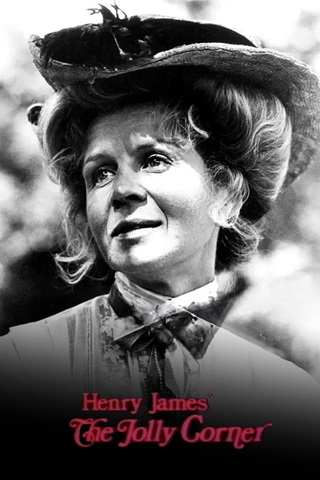
This week, we have an adaptation of a Henry James short story.

Episode #3 “The Jolly Corner”

(Dir by Arthur Barron, originally aired in 1975)

In 1906, Spencer Brydon (Fritz Weaver) returns to America from Europe, where he’s spent the majority of his adult life.  Brydon has specifically returned to oversee some properties that he has inherited, including his childhood home and an adjacent building that’s going to be turned into an apartment complex.  The middle-aged Brydon reconnects with his old friend, Alice Shaverton (Salome Jens), and finds himself wondering what type of man he would have come if he had stayed and worked in America as opposed to living a life of leisure in Europe.

Soon, Spencer comes to feel that his alternate “American” self is actually haunting his childhood home, his so-called “Jolly Corner.”  His American self haunts him like a ghost, a menacing shadow that continually forces him to ask “what if?”  He becomes obsessed with both his former home and his shadowy alter ego.  But is this American version of Spencer Brydon real?  And if it is real, what does it want from the Spencer Brydon who went to Europe?

This was a really well-done adaptation of a Henry James short story, one that was full of gothic atmosphere and which featured a compelling lead performance from Fritz Weaver.  As directed by Arthur Barron, this episode did a good job of portraying the story’s horror elements while also reminding us that James’s story, for all of its talk of ghosts and alternate realities, is ultimately a portrait of a really bad midlife crisis.  Spencer did what a lot of rich Americans do.  He went to Europe to escape the responsibilities of his home country.  And now, in middle-age, he’s asking himself, “Is this all there is?”

If nothing else, watching this episode might inspire the viewer to read more Henry James.  That’s a good thing.


Quick Review: The Longest Day (dir. by Ken Annakin, Andrew Marton, and Bernhard Wicki)


Hey hey!! Before you read this, know that this isn’t the only review for The Longest Day. Lisa Marie also wrote about it. Read that first, and then double back here if you like.

With June 6th being the 81st Anniversary of D-Day, I decided to write about 1962’s The Longest Day, a film often discussed in my family, but surprisingly, I don’t recall ever fully watching it until today. I’ll try to get a hold of a hard copy of this in the future. The film is currently available to watch (with ads) on YouTube. This was a film my Aunt adored, as she liked seeing the Military come to the rescue in any situation (which happened often in most classic sci-fi films). This, They Died With Their Boots On, and All Quiet on the Western Front were films she raved about.

According to the National WWII Museum, “The Allies suffered over 10,300 total casualties (killed, wounded, or missing), of which approximately 2,400 were on Omaha Beach.” it was also an incredible offensive achievement, with nations gathering together to take the fight to a common enemy. 

I don’t have a whole lot to say about this. As this is a film based on actual events (which takes some movie related liberties), I can’t complain or state I loved the “story”. As my boss at my Dayjob sometimes says, “It is what it is.” In terms of presentation, however, I highly recommend it. The film never really falters, nor does it give you too much time to relax. There’s a quiet tension with all of the characters you meet (all of the Allied ones, anyway), wondering if they may make it through by the end. If nothing else, watching it reminds one of the sacrifices made and the courage of anyone deciding to run head first into battle like that. 

The film is epic in scope, with a runtime of 3 hours and an all star cast that includes Robert Mitchum (Cape Fear), Eddie Albert (Dreamscape), John Wayne (The Quiet Man), Henry Fonda (Once Upon a Time in the West) Curt Jurgens (The Spy Who Loved Me), Red Buttons and Roddy McDowall (who would later work together in The Poseidon Adventure), Richard Beymer (West Side Story), Frank Findlay (Lifeforce), Gert Frobe and Sean Connery (both two years shy of working together in Goldfinger), Richard Burton (Cleopatra) and Robert Ryan (The Wild Bunch) among others.

Much like 1970’s Tora!Tora!Tora! (which my Dad often talked about), there were multiple directors for The Longest Day. Bernhard Wiki captured the German scenes, Andrew Marton handled the American ones, and Ken Annakin handled both the English and French sequences. This is all brought together in a seamless and pretty amazing tapestry. Unlike Steven Spielberg’s Saving Private Ryan, The Longest Day only covers the time leading up to and through the Omaha Beach assault, using the bulk of the film’s 3rd hour for the event. The entire film makes wonderful use of the time with all the alternate views, and by the time the first combat starts near the start of the 2nd hour, it continues to flow from interaction to interaction. There are also some wonderful arial shots over the battles, including an classic one shot that’s pretty marvelous given the time period.

The film takes place just before the invasion. American troops are already in the water on boats. Others are ready to parachute in. The French are ready to fight, waiting for the right phrase to hit the radio to put them into action. all are waiting to hear from the Britians on when the Allied Assault should begin. The weather isn’t optimal, but with the operation already delayed once before, President Eisenhower (Henry Grace) decides the 6th is the drop date. The Germans assume nothing will happen assaults are supposedly not done in harsh weather, but this proves to be quite the mistake.

It was wonderful to see everything come together. From the French sabotaging communications, to the strange comedy of soldier toting bagpipes to lead the Scottish into battle, or the Nuns who walked right through battle to save lives, it’s quite a sight to behold. 

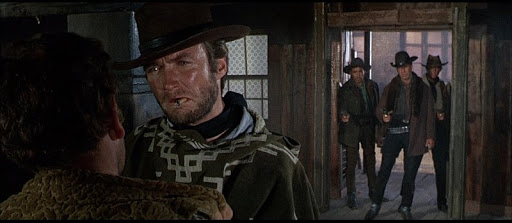
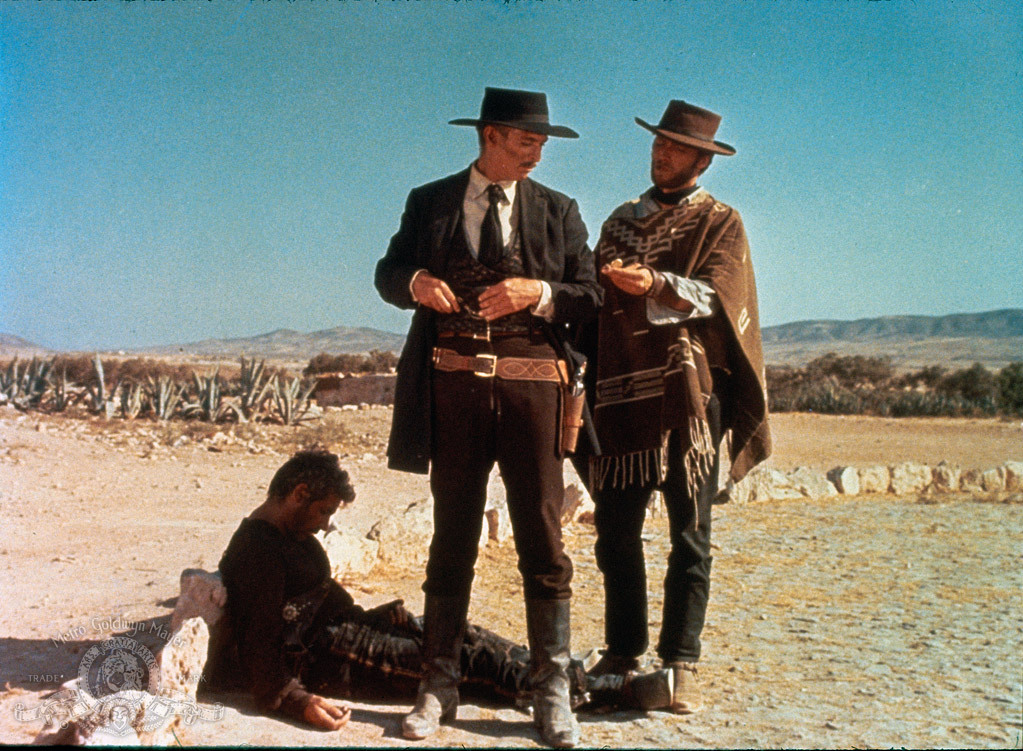
The Adventures of the Man With No Name: A Fistful Of Dollars, For A Few Dollars, The Good, The Bad, and the Ugly


Originally, Sergio Leone envisioned none other than Henry Fond as The Man With No Name.

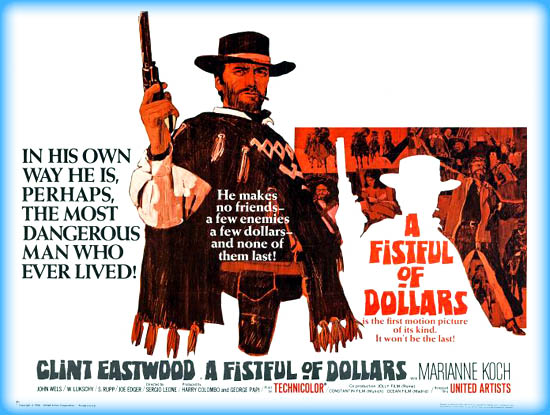
The year was 1964 and Sergio Leone was searching for the right actor to star in the movie that would become A Fistful Of Dollars.  The film, which reimagined Akira Kurosawas’s Yojimbo as a western, centered around a mysterious, amoral gunslinger whose name was unknown.  Leone needed an American or a British name to star in the film so that it could get distribution outside of Italy.  Leone had grown up watching Henry Fonda movies, all dubbed into Italian.  He later said he wanted to cast Fonda because he always wondered what Fonda’s voice actually sounded like.

After realizing that a major Hollywood star would never agree to star in a low-budget Italian western, Leone then offered the role to Charles Bronson.  Bronson read the script and said it didn’t make sense to him.  Leone went on to offer the role to Henry Silva, Rory Calhoun, Tony Russel, Steve Reeves, Ty Hardin, and James Coburn.  Everyone was either too expensive or just not interested.  Finally, it was actor Richard Harrison who, after tuning down the part himself, suggested that Leone offer the role to Clint Eastwood.  Eastwood, then starring on the American western Rawhide, could play a convincing cowboy.  Leone followed Harrison’s advice and Eastwood, eager to break free of his nice guy typecasting and hoping to restart his film career, accepted.  The rest is history.

Eastwood would only play The Man With No Name in three films but, in doing so, he changed the movies and the popular conception of the action hero forever.

All three of the Man With No Name movies have been reviewed on this site.  But, since today is Clint’s birthday, I thought I’d take a look at how these classic films are holding up, over 60 years since the Man With No Name made his first appearance.

A Fistful Of Dollars (1964)

Having now seen both this film and Yojimbo, it’s remarkable how closely A Fistful of Dollars sticks to Kurosawa’s original film.  Interestingly, it’s clear that Eastwood patterned his performance of Toshiro Mifune’s in Yojimbo and yet, at the same time, he still managed to make the role his own.  The Man With No Name rides into a western town, discovers that there are two groups fighting for control of the area, and he coolly plays everyone against each other.  Whether it’s planting the seeds of distrust, exploiting an enemy’s greed, or being the quickest on the draw, the Man With No Name instinctively knows everything that he has to do.  Even when he’s getting beaten up by the bad guys, The Man With No Name always seems to be one step ahead.  Today, a western in which everyone is greedy and looking out for themselves isn’t going to take anyone by surprise.  But if you’ve watched enough westerns from the 40s and 50s, you’ll understand how unique of a viewpoint Leone brought to the genre.  Eastwood’s amoral gunslinger was such a surprise that, when the film aired on television, a scene was shot by the network in which Harry Dean Stanton played a prison warden who released The Man With No Name (seen only from behind) on the condition that he clean up the town.

For A Few Dollars More (1965)

For A Few Dollars More finds The Man With No Name working as a bounty hunter and teaming up with Colonel Mortimer (Lee Van Cleef) to take down El Indio (Gian Maria Volonte) and his gang (including Klaus Kinski as a hunchback.)  This is my least favorite of the trilogy but that doesn’t mean that For A Few Dollars More is a bad film.  Being the least of three masterpieces is nothing to be ashamed of.  Eastwood and Van Cleef were two of the best and it’s interesting to see them working together.  El Indo is a truly loathsome villain and the members of his gang are all memorably horrid.  If it’s my least favorite, it’s just because I prefer the wit of A Fistful of Dollars and the epic storytelling of The Good, The Bad, and The Ugly.  Speaking of which…

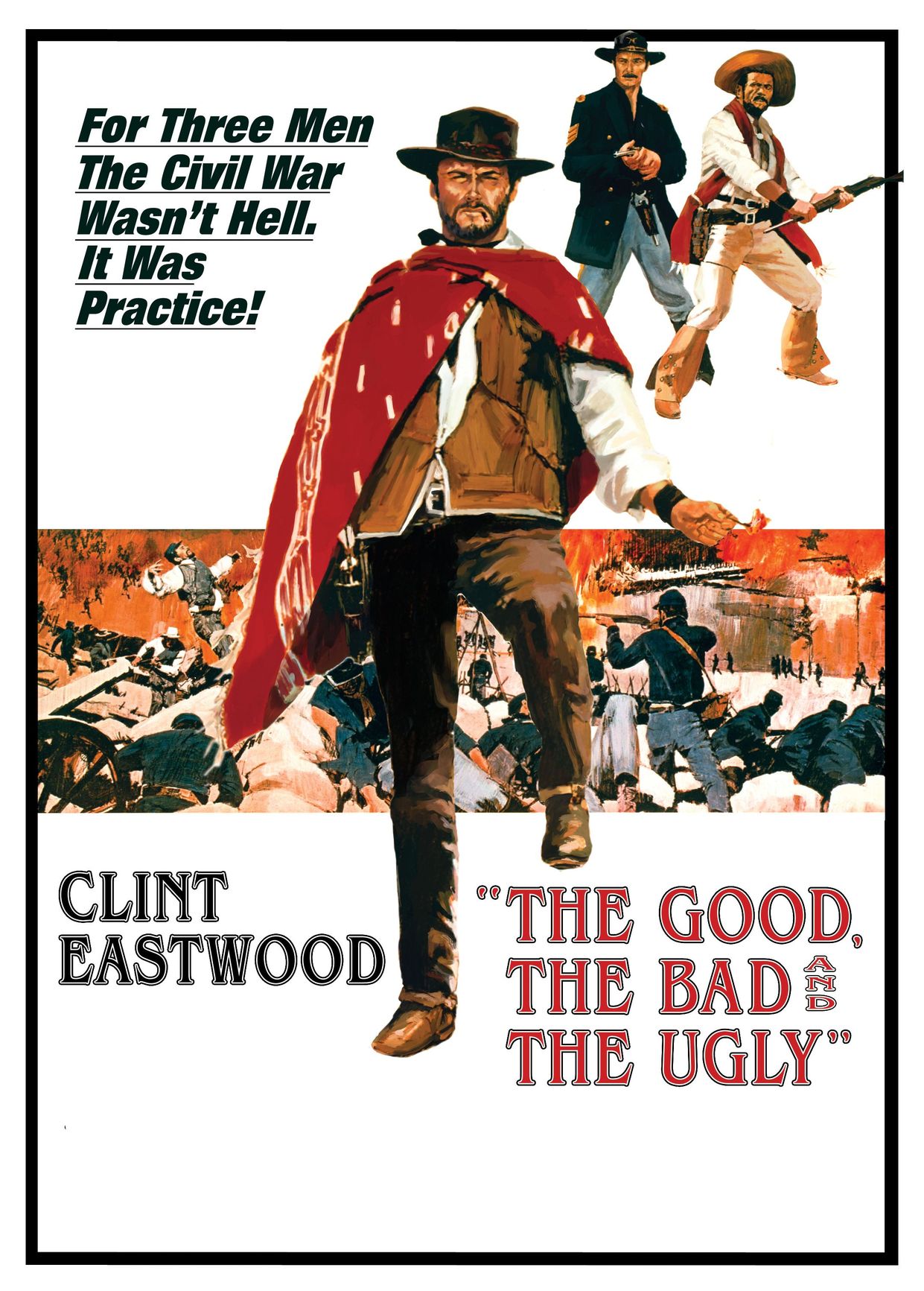
The Good, The Bad, and The Ugly (1966)

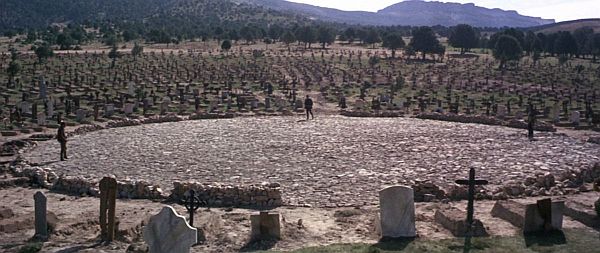
This is it.  The greatest western ever made, an epic film that features Leone’s best direction, Ennio Morricone’s greatest score, and brilliant performances from Eastwood, Van Cleef, and especially Eli Wallach.  It’s hard to know where to start when it comes to praising The Good, The Bad, and The Ugly.  It’s a nearly three-hour film that doesn’t have a single slow spot and it has some of the most iconic gunfights ever filmed.  Leone truly found his aesthetic voice in this film and that it still works, after countless parodies, is evidence of how great it is.  I appreciate that this film added a historical context to the adventures of The Man With No Name.  (Personally, I think this film is meant to be a prequel to A Fistful of Dollars, just because The Man With No Name is considerably kinder in this film than he was in the first two movies.  The Man With No Name that we meet in A Fistful of Dollars would never have gotten Tuco off that tombstone.)  The Good, The Bad, and The Ugly takes place during the Civil War and, along with everything else, it’s an epic war film.  While America fights to determine its future, three men search for gold.  The cemetery scene will never be topped.

American critics did not initially appreciate these films but audiences did.  Clint Eastwood may have been a television actor when he left for Italy but he returned as an international star.  And, to think, it all started with Sergio Leone not being able to afford Henry Fonda.

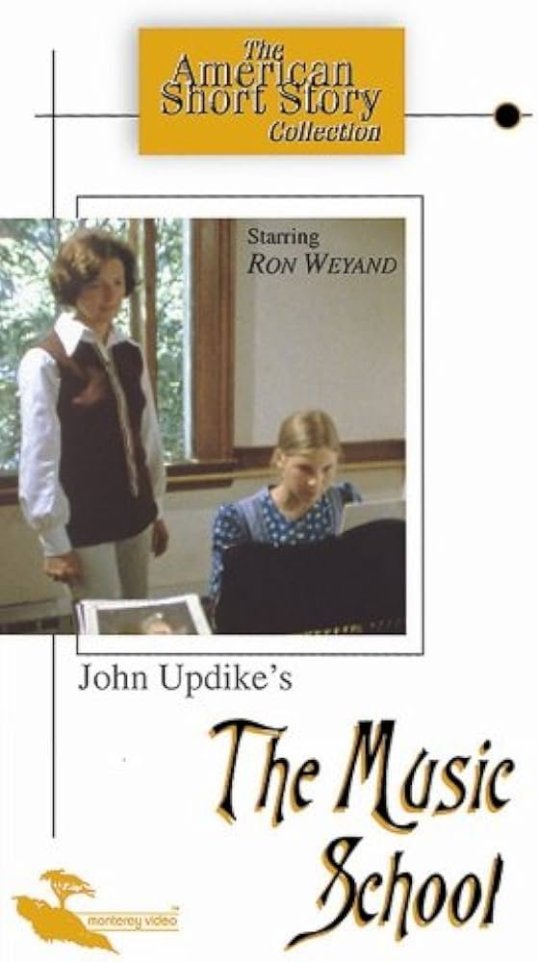
Retro Television Review: The American Short Story 1.1 “The Music School”


Welcome to Retro Television Reviews, a feature where we review some of our favorite and least favorite shows of the past!  On Saturdays, I will be reviewing The American Short Story, which ran semi-regularly on PBS in 1974 to 1981.  The entire show can be purchased on Prime and found on YouTube and Tubi.

Today, we start a new series of reviews with an adaptation of a John Updike short story!

Episode 1.1 “The Music School”

(Dir by John Korty, originally aired on January 1st, 1974)

The first episode of The American Short Story is based on a story by John Updike.  Alfred Schweigen (Ron Weyand) is a writer who sits at his typewriter and who occasionally looks out the window of his office.  His wife playfully sprays the window with a garden hose and the writer thinks about how she’s in therapy because of his affairs.  He remembers taking his daughter to her music school and thinks about the sounds of music floating through the building like ghostly memories.  He thinks about a priest who, while talking to a bunch of “Protestants and non-believers,” explained that it was now permissible to chew the Eucharist wafer instead of waiting for it to dissolve.  He thinks about a friend of his, a computer programmer, who was apparently assassinated by a random sniper while his family watched.  In his mind, Alfred takes the random thoughts and occurrences and builds a story around them.

It’s an interesting episode, even if it doesn’t quite work.  Tasked with bringing Updike’s words to visual life, this episode far too often falls back onto cliche and Ron Weyand often looks more annoyed that sincerely perplexed by life’s mysteries.  (The writer’s narration is provided by Henry Fonda, whose middle-American voice doesn’t quite match Weyand’s petulant performance.)  It’s a midlife crisis type of story, one in which the writer tries to deal with his own ennui and infidelities by turning them into fiction.  Unfortunately, this is a case of what was compelling on the page falling flat when it’s adapted for film.  I appreciated this episode’s ambition, even if it didn’t work in the end.

Next week, the American Short Story interprets a story by Ambrose Bierce!

Guilty Pleasure No. 83: Meteor (dir by Ronald Neame)


1979’s Meteor is about a big rock that is tumbling through space.  Earth is directly in its path and, if it hits the planet, it could be an extinction-level event.  Unfortunately, little bits of the rock keep breaking off and crashing into Earth, destroying cities and fleeing extras.  Goodbye, Hong Kong.  Goodbye, Switzerland, which is destroyed via stock footage lifted from Avalanche.  Goodbye, New York, which blows up in such spectacular fashion that the scene was later re-used in The Day After.

It might seem like the planet is doomed.  The meteor is unstoppable.  Bruce Willis hasn’t become a star yet.  But fear not!  Some of the brightest faces of the 70s have been recruited to stop the meteor.  Natalie Wood, in one of her final films, plays a translator and gets covered in muddy river water.  Sean Connery wears a turtleneck and curses in that Scottish way of his.  Karl Malden wears a hat and tells people to calm down while he calls the President.  Brian Keith plays a Russian with all the grace and skill of a cat trying to rip open a bag of treats.  Martin Landau is the military official who doesn’t think that the scientist know what they’re talking about.  Henry Fonda is the president.  That’s a lot of balding men for one movie and it’s hard not to notice that both Malden and Keith often seem to be wearing a hat whenever they share a scene with Connery.  My personal theory is that the production, having spent all of their money on blowing up New York, couldn’t afford more than two toupees so everyone had to take turns wearing them.  (The few scenes where Malden is hatless while in Connery’s presence are often oddly filmed, with either Connery on Malden standing with their back to the camera, almost as if the scenes were actually done with a stand-in.)

We’re supposed to breathe a sigh of relief when we see that Henry Fonda is playing the President but I’ve seen Fail Safe and I remember him allowing the Russian to nuke New York City.  Interestingly enough, New York gets destroyed in this film too.  Why didn’t President Fonda care about New York City?  Of course, the scientists and the military folks are all located in a control center that’s located under the city.  Malden mentions that they’re right next to the Hudson River.  It doesn’t seem to occur to anyone that this is a bad idea but, then again, they also elected Henry Fonda president again.

My late friend and colleague Gary Loggins described Meteor as being a “crashing bore.”  I have to admit that this is one of the few times that I have ever disagreed with Gary.  Meteor is a tremendous amount of fun, as long as you’re watching it with a group of people and nobody takes it seriously.  (The first time I saw it was at one in the morning while I was in college.  Jeff and I watched it in the lounge of one of the dorms.  We may be the only two people to have romantic memories of Meteor.)  Meteor features a cast of champion scenery chewers.  Karl Malden, Sean Connery, Martin Landau, Brian Keith, none of them were exactly subtle actors and giving them an excuse to argue about how to deal with a meteor allows for a lot of very enjoyable overacting.  As well, the special effects are so cheap and obviously fake that it’s hard not to laugh out loud whenever the film cuts to that shot of the meteor rolling through space or the incredibly shiny American and Russian missiles slowly heading towards it.

Meteor’s a lot of fun, even if it is one of those movies where no one points out that our heroes inevitably seem to make every situation worse with their own stupidity.  It’s very much at the tail-end of the 70s disaster boom.  Watch it for the stars.  Watch it for the rock.  And watch it for the hairpieces.

Previous Guilty Pleasures

  1. Half-Baked
  2. Save The Last Dance
  3. Every Rose Has Its Thorns
  4. The Jeremy Kyle Show
  5. Invasion USA
  6. The Golden Child
  7. Final Destination 2
  8. Paparazzi
  9. The Principal
  10. The Substitute
  11. Terror In The Family
  12. Pandorum
  13. Lambada
  14. Fear
  15. Cocktail
  16. Keep Off The Grass
  17. Girls, Girls, Girls
  18. Class
  19. Tart
  20. King Kong vs. Godzilla
  21. Hawk the Slayer
  22. Battle Beyond the Stars
  23. Meridian
  24. Walk of Shame
  25. From Justin To Kelly
  26. Project Greenlight
  27. Sex Decoy: Love Stings
  28. Swimfan
  29. On the Line
  30. Wolfen
  31. Hail Caesar!
  32. It’s So Cold In The D
  33. In the Mix
  34. Healed By Grace
  35. Valley of the Dolls
  36. The Legend of Billie Jean
  37. Death Wish
  38. Shipping Wars
  39. Ghost Whisperer
  40. Parking Wars
  41. The Dead Are After Me
  42. Harper’s Island
  43. The Resurrection of Gavin Stone
  44. Paranormal State
  45. Utopia
  46. Bar Rescue
  47. The Powers of Matthew Star
  48. Spiker
  49. Heavenly Bodies
  50. Maid in Manhattan
  51. Rage and Honor
  52. Saved By The Bell 3. 21 “No Hope With Dope”
  53. Happy Gilmore
  54. Solarbabies
  55. The Dawn of Correction
  56. Once You Understand
  57. The Voyeurs 
  58. Robot Jox
  59. Teen Wolf
  60. The Running Man
  61. Double Dragon
  62. Backtrack
  63. Julie and Jack
  64. Karate Warrior
  65. Invaders From Mars
  66. Cloverfield
  67. Aerobicide 
  68. Blood Harvest
  69. Shocking Dark
  70. Face The Truth
  71. Submerged
  72. The Canyons
  73. Days of Thunder
  74. Van Helsing
  75. The Night Comes for Us
  76. Code of Silence
  77. Captain Ron
  78. Armageddon
  79. Kate’s Secret
  80. Point Break
  81. The Replacements
  82. The Shadow

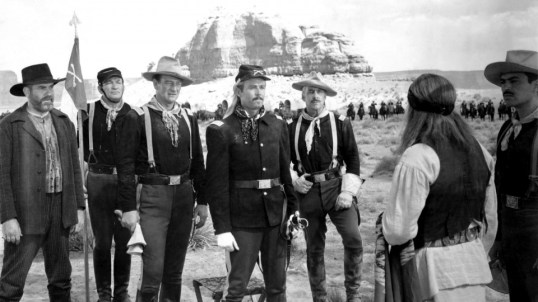
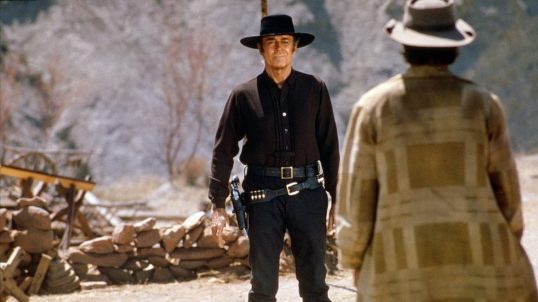
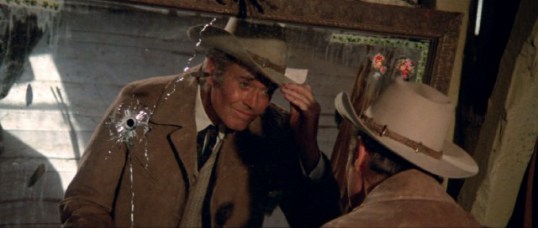
4 Shots From 4 Films: Special Henry Fonda Edition


4 Shots From 4 Films is just what it says it is, 4 shots from 4 of our favorite films. As opposed to the reviews and recaps that we usually post, 4 Shots From 4 Films lets the visuals do the talking!

Today, we celebrate the birthday of Henry Fonda!  Fonda was born 120 years ago today and, over the course of his long career, he was often cast in role the epitomized everything great about America.  It’s rare to find a Henry Fonda film in which he played an out-and-out villain, though he did just that in Sergio Leone’s Once Upon A Time In The West.  (Leone, in fact, cast Fonda as the evil Frank because he knew audiences would be shocked to see Fonda coldly gunning down settlers and their families.)

In honor Henry Fonda’s legacy, here are….

4 Shots From 4 Films

My Darling Clementine (1946, dir by John Ford)

Fort Apache (1948, dir by John Ford)

Once Upon A Time In The West (1968, dir by Sergio Leone)

My Name Is Nobody (1973, dir by Tonino Valerii)

Film Review: The Great Smokey Roadblock (dir by John Leone)


First released in 1977, The Great Smokey Roadblock tells the story of Elegant John Howard (Henry Fonda).

Elegant is not really his first name.  It’s a nickname, one to let us know that, in the world of independent truckers, John Howard was one of the good guys.  He never crashed his rig.  He never overcharged for a job.  He always arrived on time and in good shape.  John Howard was a good man but then he turned 60 and he got sick.  He spent months in the hospital, unable to work.  His truck was repossessed.  The movie starts with John sneaking out of his hospital room, stealing back his truck, and hitting the road in search of one final job.  Though John says he just wants to make enough money to get his truck back, the truth is that John is terminally ill.  If he’s going to die, he wants to die doing what he loves.  Of course, dying while driving could lead to some trouble for anyone else who happens to be on the road at the time but still, you have to respect John’s determination.  He’s a true American, independent to his core.

(My Dad occasionally made a living driving a truck so perhaps that’s why I’m partial to films like this one.)

John picks up a hitchhiker, a religious young man named Beebo Crozier (Robert Englund).  John picks Beebo up because Beebo was walking through the desert in a suit.  Beebo claims that he’s walking to Florida but John tells him that he can’t do that.  John will drive Beebo to Florida.  Of course, John also expects Beebo to pay for the gas that his truck uses because it’s not like John has any money.  At first, Beebo accuses John of cheating him.  (Henry Fonda cheating someone!?  Perish the thought!)  Soon, however, John has become Beebo’s mentor.

Everyone respects John but no one wants to hire him.  The only offer that John gets is from sleazy Charlie Le Pere (Gary Sandy), who has an agenda of his own.  Finally, John visits his old friend, Penelope (Eileen Brennan).  Penelope is a madam whose brothel has just been closed down.  John agrees to transport Penelope and her girls (including Susan Sarandon) to a new location on the East Coast.  Penelope offers to help John pay the bills.  Elegant John’s a pimp now!  (I was about to say that this seemed like an odd turn-of-events for Henry Fonda but then I remembered that he starred in The Cheyenne Social Club with Jimmy Stewart.)

There’s not really much of a plot to The Great Smokey Roadblock.  John, Beebo, Penelope, and the girls travel from one location to another.  They get thrown in jail by a notoriously corrupt deputy named Harley Davidson (Dub Taylor).  After they escape, they become minor celebrities.  Two counterculture journalists (played by Austin Pendleton and John Byner) show up and help them broadcast their story and the film comes to a halt while Pendleton and Byner exchange what sounds like improvised dialogue.  The police attempt to set up a roadblock to stop Elegant John and his Six Mystery Women.  I guess that’s the Great Smokey Roadblock of the title.

It’s a weird movie, in that the humor is extremely broad and often crude but Henry Fonda is playing a man who is not only terminally ill but who actually looks like he’s terminally ill.  (Henry Fonda himself was reportedly very ill during the filming of The Great Smokey Roadblock.)  As such, it’s a rather melancholy comedy, one in which every joke seems like it might be the last one that Elegant John will ever hear.  In the 70s, not even a trucker comedy could have a happy ending and, as such, The Great Smokey Roadblock feels like a drive-in film for the existential set.  The film’s plot doesn’t really add up to much and is full of plot holes that serve as evidence of a troubled production.  That said, there’s something rather charming about seeing a pre-Nightmare On Elm Street Robert Englund playing a gentle guy who ends up as Henry Fonda’s protegee.  Fonda and Englund play off each other well and their scenes together are the best thing about The Great Smokey Roadblock.

Scenes That I Love: Henry Fonda in The Ox-Bow Incident


Today, we celebrate the birthday of Henry Fonda!

Fonda was born 119 years ago today and, over the course of his long career, he was often cast in role the epitomized everything great about America.  It’s rare to find a Henry Fonda film in which he played an out-and-out villain, though he did just that in Sergio Leone’s Once Upon A Time In The West.  (Leone, in fact, cast Fonda as the evil Frank because he knew audiences would be shocked to see Fonda coldly gunning down settlers and their families.)

One of Fonda’s finest films was 1943’s The Ox-Bow Incident, in which he played a cowboy who finds himself drafted into joining a posse that ends up hanging three men for the crime of murder and cattle rustling.  The members of the posse (including seven of whom voted against hanging the men) later learn that the men were innocent.  In today’s scene that I love, Henry Fonda reads aloud the letter that one of the men wrote to his wife shortly before he was hung.  This was one of Fonda’s most heartfelt and powerful performances.

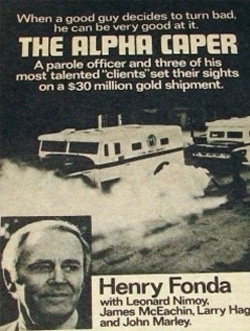
Retro Television Reviews: The Alpha Caper (dir by Robert Michael Lewis)


Welcome to Retro Television Reviews, a feature where we review some of our favorite and least favorite shows of the past!  On Sundays, I will be reviewing the made-for-television movies that used to be a primetime mainstay.  Today’s film is 1973’s The Alpha Caper!  It  can be viewed on YouTube!

After years of faithful service and hard work, parole officer Mark Forbes (Henry Fonda) is on the verge of mandatory retirement.  He’s spent his entire career playing by the rules and taking orders and helping recently released criminals go straight.  For all of his service, all he’s gets is a small party and a cheap retirement gift.

Still, Mark is on the job when he gets a call that one of his parolees, Harry (Noah Beery, Jr.), is currently in the middle of a stand-off with the cops.  Mark goes to the crime scene, where he discovers that Harry was trying to rob a warehouse full of weapons.  He also discovers that Harry is dying, as the result of being shot by the police.  Before Harry passes, he tells Mark that he and three other ex-cons were plotting to steal a shipment of gold bars.

Mark decides to carry out Harry’s plan.  Working with Mitch (Leonard Nimoy), Tudor (Larry Hagman), and Scat (James McEachin), Mark comes up with a plan to rob the armored cars that are going to be transporting the gold.  While Tudor and Scat are quick to join up with Mark, Mitch is a bit more hesitant.  In the end, though, they all decide to work together.  The plan they come up with is a clever one but its main strength is that it’s being spearheaded by Mark, a man who no one would ever expect to commit a crime.  No one but his colleague and friend, Lee (John Marley), that is.

I watched The Alpha Caper last night, with my friend Phil, Janeen, and Spiro.  To be honest, I selected the film because the title led me to suspect that it would be a science fiction film of some sort.  I was a little surprised when it turned out to be a crime thriller but I was even more surprised by just how good the film itself turned out to be.  Cleverly plotted and well-acted by the entire cast (and featuring a scruffy Leonard Nimoy playing a role that’s about as far from the coldly logical Mr. Spock as one can get), The Alpha Caper is an entertaining crime film but it’s also surprisingly poignant.  Mark is someone who feels that he’s lived his entire life without taking a single risk and, as a result, he has nothing to show for it.  He compares his situation to the mythical Kilroy of “Kilroy was Here” graffiti fame.  Kilroy will always be remembered, even though no one is really sure who he was.  Mark fears that he’s destined to be forgotten.  The robbery is Mark’s way of announcing that “Mark Forbes was here.”  The film ends on a surprisingly touching, if rather bittersweet, note.

The Alpha Caper originally aired on ABC on October 6th, 1973.  It was apparently meant to be a pilot for an anthology show that would be called Crime.  The series wasn’t picked up but, two years later, The Alpha Caper was theatrically released in Italy.  Today, it can be seen on YouTube.  Like Mark Forbes and Kilroy, the film has not been forgotten.