The TSL’s Grindhouse: No Way Back (dir by Fred Williamson)


Jesse Crowder’s back!

You may remember Jesse Crowder as the super cool and unflappable private detective from Death Journey.  Jesse was a Los Angeles cop but now he works independently.  There’s literally nothing that Jesse can’t do.  Ride a horse?  Ride a motorcycle?  Slow motion kung fu?  Jesse can do it all and he usually do it without bothering to button up his shirt.  Jesse is such a badass that he can kill more people in the time it takes for him to light a cigar than most people will kill in their entire lifetime.

The 1976 film No Way Back is the second Jesse Crowder film.  Once again, Fred Williamson both directs and stars as Jesse.  Williamson is in almost every scene of the film and when he’s not killing bad guys or having sex or just posing with his shirt off, he’s listening to people talk about what a badass he is.  In short, No Way Back is a vanity project but it’s a vanity project with a sense of humor.  Watching the film, you get the feeling that Williamson knows that No Way Back is kind of silly but, at the same time, he’s having fun and he wants everyone watching to have fun too.

No Way Back‘s plot involves a missing man and a lot of money.  Henry Pickens (Charles Woolf) worked at a bank but, one day, he grabbed a briefcase full of money, jumped in a car driven by his girlfriend (Tracy Reed), and disappeared.  Everyone was shocked but you know who was really shocked?  His wife!  Mildred Pickens (Virginia Gregg) and Henry’s brother both want to know to where Henry has vanished.  They hire Jesse, perhaps finding solace in his catch phrase: “You pay the bill, I’ll deliver it.  Legal, illegal, moral or otherwise.”

Not surprisingly, it doesn’t take long for Jesse to figure out that Perkins is in San Francisco.  Jesse lights his cigar and heads for the Bay City.  However, Jesse isn’t the only one looking for Henry Pickens.  There’s also a gangster named Bernie (Stack Pierce) who is determined to get the money for himself.  Much as in Death Journey, it doesn’t matter where Jesse goes or how he gets there.  As soon as he arrives, he people are trying to kill him.  Unfortunately, for them, no one can kill Jesse Crowder.

It all leads to a savage gun battle in the desert.  Fred Williamson jumps up on a horse, unbuttons his shirt, and rides across the screen.  People are betrayed.  People get shot.  Fortunately, no one can touch Jesse Crowder…

Anyway, No Way Back doesn’t really make any sense.  If you happen to watch this film (and I saw it on YouTube), just try to keep track of why Henry stole all of that money in the first place.  However, the plot isn’t really that important.  This film is all about Fred Williamson beating up gangsters and walking around without a shirt on.  It’s a dumb action movie but it never pretends to be anything different and the film’s total lack of pretension is enjoyable.  That’s always a good thing.
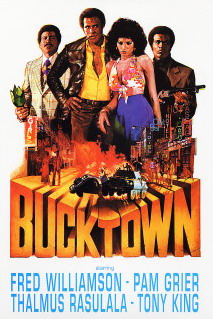
The TSL’s Grindhouse: Bucktown (dir by Arthur Marks)


Welcome to the town of Buchanan!

It’s a small Southern town, popularly known as Bucktown.  It’s a town where you can literally get anything, as long as you know who to pay off.  Upon arriving, don’t be surprised if a little kid approaches you and asks you what you’re looking for.  He can get it for you.  That kid had connections!

The population of Buchanan is almost entirely African-American but all of the cops are white.  Under the leadership of the redneck police chief (Art Lund), the cops have turned Buchanan into their own private kingdom.  If you want to do anything in Buchanan, you have to be ready to pay the cops for protection.  Refuse and you’ll get arrested.  Continue to refuse and you’ll probably end up getting shot.

Obviously, someone needs to clean up Buchanan?  But who!?

How about Duke Johnson (Fred Williamson)?  Duke’s brother owned the hottest nightclub in Bucktown, Club Alabama.  Or, at least he did until he announced he wasn’t going to pay anymore protection and he ended up getting gunned down by the cops.  When Duke arrives in town, he thinks that he’s just going to stay long enough to attend the funeral and sell his brother’s bar.  However, when Duke find out that he has to wait 60 days until he can sell the bar, he decides to stick around.  Not only does he move in with his brother’s former lover, Aretha (Pam Grier), but also reopens the Club Alabama.

Soon, the cops are coming around and demanding their share.  However, they quickly discover that no one tells Duke Johnson what to do.  Like all good action heroes, Duke has friends all over the country.  He places a call to Roy (Thalmus Rasulala) and soon, Roy, TJ (Tony King), and Hambone (Carl Weathers) show up in Bucktown.  They quickly wipe out the corrupt police force.  The local citizens are so happy that they make Roy the new police chief and his men the new police force.

Unfortunately, that turns out to be a mistake.  Apparently, giving some totally random dude complete and total authority to enforce the law in whatever he sees fit isn’t always the best way to handle things.  Roy and his men quickly become just as corrupt as the old redneck policemen.  The only thing protecting Duke is his friendship with Roy but even that is endangered when T.J. decides that he wants Aretha for himself.  T.J. decides to turn Roy and Duke against each other.  It all eventually leads to an epic fist fight, with the winner earning the right to remain in Bucktown…

(Of course, you may be wondering why anyone would want to remain in Bucktown as the place is kind of a dump, regardless of who’s in charge.)

Released in 1975, Bucktown is a pretty basic action film but I liked it because it appealed to all of my anti-authoritarian impulses.  There have been so many movies about what it takes to clean up a town but there haven’t been many made about what actually happens after all of the corrupt cops and greedy businessmen have been kicked out.  Thalmus Rusulala was great as the charismatic but dangerous Roy and Tony King, a favorite of Italian exploitation fans everywhere, was an effective villain.  Pam Grier doesn’t get to do much but she does the best with what she’s provided.  Of course, the entire film is dominated by Fred Williamson, who may not have been a great actor but who had an undeniable screen presence.  Williamson struts through the film like the hero of stylish Spaghetti western.

Bucktown is an entertaining 70s action film.  Though it doesn’t deeply explore any of the issues that it raises, it still deserves some credit for raising them.  If nothing else, it’s a film that shows why Fred Williamson retains a cult following to this day.

The TSL’s Grindhouse: Death Journey (dir by Fred Williamson)


Imagine being caught up in the following situation.

You’re the district attorney of Manhattan.  You’ve got a chance to convict the city’s most powerful mob boss on some pretty serious charges.  In fact, you’ve got three eye witnesses who are willing to testify against him.  Sounds pretty good so far, right?

But wait a minute!  One of your eyewitnesses just died.  Oh well.  You’ve still got two left and surely, the police can protect two… oh wait.  Hold on.  Okay, you know that second witness that you had?  Well, he just got blown up or something.  Now, you’ve only got one witness left.  He’s a weaselly little mob accountant named Finley (Bernard Kirby).  He’s really not a bad guy, once you get past all of the Hawaiian shirts and his obsession with candy.  The only problem is that Finley is in California and you’re in New York.  How are you going to get Finley across the country without him getting blown up by the mob?

Well, let’s see.  You could ask the government for help but when was the last time government managed to do anything without screwing it up.  You could reach out to the FBI or something like that.  Maybe Finley could go into witness protection.  I mean, it’s worked for a countless number of other mob associates…

But no.  There’s no way Finley could survive in witness protection.  He’d probably give himself away as soon as someone offered him a candy bar.  Seriously, Finley is really obsessed with chocolate.

No, what you’re going to do is you’re going to call up Jesse Crowder (Fred Williamson).  Crowder used to be a cop but now he’s a private eye.  He’s a lot like Shaft, except he doesn’t ever get political.  There’s really nothing that Jesse Crowder can’t do.  He’s a marksman.  He’s a fighter.  He’s a lover.  When we first see him, he’s doing kung fu in slow motion.  If you really needed proof that Jesse Crowder is the ultimate badass, consider this: he smokes cigars.  You read that correctly.

Now, you may be asking yourself: why would the Manhattan district attorney know a Los Angeles private eye?  Because everyone knows Jesse Crowder, that’s why.

Anyway, Jesse agrees to take the case.  He’ll escort Finley to New York, on the condition that he get paid $25,000 upon arrival.  Of course, if he has to kill a lot of people, Jesse expects to be paid $50,000.

Needless to say, Jesse does end up having to kill a lot of people.  It’s not really his fault, of course.  They just keep popping up and getting in his way.  Jesse tries all sorts of ways to get Finley to New York.  He tries to drive him.  He tries to take the train.  No matter what he does, the mob shows up.  Is it possible that the mob had someone inside the district attorney’s office?

Fred Williamson not only starred in 1976’s Death Journey but he directed it as well.  Though it’s obvious that Williamson didn’t have much of a budget to work with, he still did a fairly good job with Death Journey.  Certainly, his direction here feels stronger than it did in Mean Johnny Barrows.  In its own undeniably dumb way, Death Journey‘s a fun action movie.  Williamson may not have been a great actor but he had a strong screen presence and it’s impossible not to be amused by the fact that, no matter what he does or where he goes, somewhat inevitably pops out of the shadows and tries to kill him.  With the exception of that opening kung fu sequence that goes on forever, Death Journey is a fast-paced action film.  The film only last 74 minutes so, right when you start to wonder if Williamson’s ever going to show any personality beyond being a cocky badass, the movie ends.

If you’re a fan of low-budget 70s action films, you’ll probably enjoy Death Journey.  If you don’t enjoy it, just make sure Jesse Crowder doesn’t find out.  After all, he knows karate.

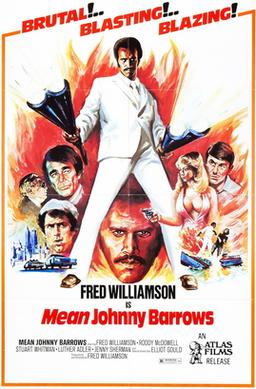
Film Review: Mean Johnny Barrows (dir by Fred Williamson)


“Dedicated to the veteran who traded his place on the front line for a place on the unemployment line. Peace is Hell.”

— the end credits of Mean Johnny Barrows (1976)

“He’s not that mean.”

— Me, while watch Mean Johnny Barrows

Who is Johnny Barrows?  As played by blaxploitation star Fred Williamson, Johnny Barrows is a former football great who later served in Vietnam and won several silver stars.  As a soldier, he killed an untold number of people but he is always quick to explain that he wouldn’t do the same thing as a civilian.  Even after the war ended, Johnny remained in the army, teaching new recruits.  He was good at his job but, one day, a racist officer decided to play a stupid trick on Johnny.  During a training exercise, that officer put a live landmine out on the training grounds.  After defusing the mine, Johnny promptly punched the officer.  The result?  A dishonorable discharge and the lesson that peace is Hell.

Johnny returns to Los Angeles and discovers that the country he fought for isn’t willing to fight for him.  Because of his dishonorable discharge, Johnny can’t find a good job.  Because he can’t find a job, he can’t afford a place to live.  Johnny stays on the streets.  His only friend is a self-described philosophy professor (Elliott Gould, in an amusing cameo) who teaches Johnny all about soup kitchens.

When Johnny steps into an Italian restaurant and asks for food, he is shocked to discover that the owner, Mario Racconi (Stuart Whitman), knows who he is.  Mario says that he played against Johnny in a high school football game.  (Perhaps Johnny’s shock is due to the fact that Mario appears to be at least ten years older than him.)  Mario gives Johnny something to eat and even offers him a job.  Realizing that the work is mob-related, Johnny says that he’s not interested.  He’s not going to break the law…

And here’s where we run into a problem with the film’s title.  The film is entitled Mean Johnny Barrows but, so far, he’s been almost painfully nice.  Then again, Mild Johnny Barrows doesn’t have much of a ring to it.

Anyway, Johnny does try to stay out of trouble.  He even manages to land a demeaning job cleaning the toilets at a gas station.  But his boss (R.G. Armstrong) is a real jerk and Johnny has his dignity, no matter how much the world wants to take it away from him.  Finally, Johnny agrees to work with the Racconi Family.  Not only does he become friends with Mario but he also falls for Mario’s girlfriend, Nancy (Jenny Sherman).

Unfortunately, not all Mafia families are as kind-hearted and generous as the Racconi Family.  The Da Vinci family wants to flood Los Angles with drugs.  It’s all the master plan of Tony Da Vinci (Roddy McDowall).  Tony is eager to prove himself to his father and what better way to do that than to smuggle heroin?  Tony also loves flowers because … well, why not?  Anyway, when the Racconis object to Tony’s scheme, a mob war erupts.  Nearly all of the Racconis are killed.  It looks like it’s time for Johnny Barrows to put on his white suit, pick up a gun, and get vengeance for his surrogate family.

There are some pretty obvious problems with Mean Johnny Barrows, not the least of which is the casting of Roddy McDowall — perhaps the least Italian actor in the history of cinema — as a ruthless mafioso.  After having starred in several successful blaxploitation films, Fred Williamson made his directorial debut with Mean Johnny Barrows.  Williamson’s inexperience as director shines through almost every minute of Mean Johnny Barrows.  Though he does well with the action scenes, there are other parts of the film where Williamson doesn’t even seem to be sure where he should point the camera.  With almost every role miscast, the performances are pretty inconsistent but Williamson gives a good performance (it’s obvious that he understood his strengths and weaknesses as an actor) and Elliott Gould is an entertaining oddity as the Professor.

If anything saves the film, it’s that Williamson’s anger at the way America treats its veterans feels sincere.  The heart of the film is in the first half, which details Johnny’s struggle to simply survive from one day to the next.  Even if Williamson’s direction is often shaky, the film’s rage is so authentic that you do get caught up in Johnny’s story.  The film ends on a properly down note, suggesting that, for men like Johnny Barrows, there is no hope to be found in America.

To quote the film’s theme song: Peace is Hell.

That’s Blaxploitation! 10: HELL UP IN HARLEM (AIP 1973)


gary loggins's avatarcracked rear viewer

I’ve covered producer/writer/director Larry Cohen’s marvelously manic work in the horror genre ( IT’S ALIVE! , GOD TOLD ME TO ), but did you know the low-budget auteur also contributed some solid entries to the Blaxploitation field? Cohen’s gangster epic BLACK CAESAR starred Fred “The Hammer” Williamson and was such a smash a sequel was rushed into production and released ten months later. HELL UP IN HARLEM picks up right where the original left off, as ‘Black Caesar’ Tommy Gibbs is set up by corrupt DA DiAngelo and shot on the streets of New York City. Tommy has possession of some ledgers with the names of all the crooked politicians and cops on his payroll, and DiAngelo and his Mafioso friends want to put him out of circulation for good. Escaping via a wild taxi ride, Tommy is back in business and out for revenge.

This enables Cohen to serve up a series of crazy/cool set pieces that…

View original post 360 more words

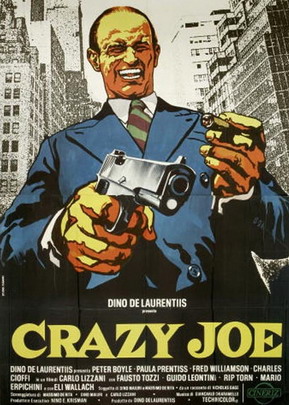
A Movie A Day #147: Crazy Joe (1974, directed by Carlo Lizzani)


Crazy Joe (Peter Boyle) is a gangster with a chip on his shoulder and a self-taught intellectual who can (misquote) Sartre and Camus with the best of them.  Sick of being taken for granted, Joe and his brother, Richie (Rip Torn), attempt to challenge the Mafia establishment.  The mob sets Joe up and gets him sent to prison.  While doing time, Joe befriends a Harlem gangster named Willy (Fred Williamson).  Refusing to associate with the other Italian prisoners, Joe allies himself with the black inmates and even helps to start a riot over the prison’s inhumane conditions.  When he is released, Joe hits the streets of New York with a vengeance, now backed up by Willy and his criminal organization.
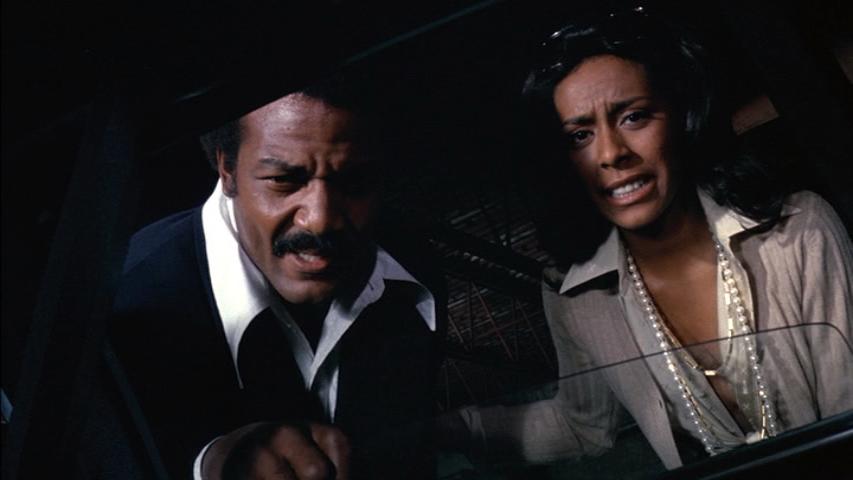
Crazy Joe is based on the life of Joey Gallo, who was briefly a New York celebrity, hobnobbing with actors like Jerry Orbach and writers like Norman Mailer before he was gunned down at Umberto’s Clam Shop in Little Italy.  Though the names were changed to protect the guilty, Eli Wallach plays Vito Genovese, Charles Cioffi plays Joe Columbo, and Luther Adler is Joe Profaci.  Fred Williamson’s character is based on the infamous Nicky Barnes.

Crazy Joe is a good and violent mix of the gangster, prison, and blaxploitation genres.  Despite wearing an unfortunate toupee, Peter Boyle is great at putting the crazy in Crazy Joe and Fred Williamson ups the coolness factor of any movie he appears in.  Keep an eye out for Henry Winkler, giving a very un-Fonzie performance as Joe’s right-hand man.

That’s Blaxploitation! 9: THREE THE HARD WAY (Allied Artists 1974)


gary loggins's avatarcracked rear viewer

tthw1

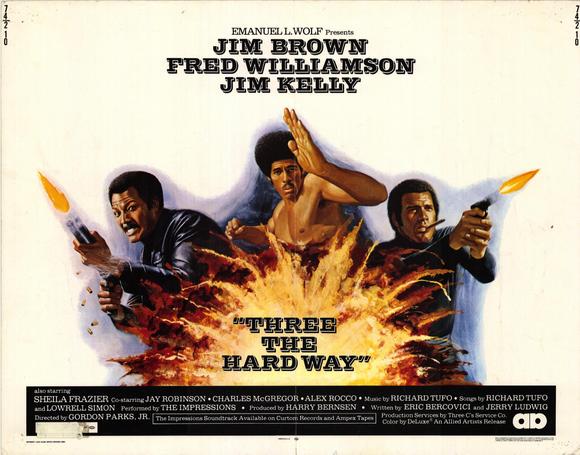
An All-Star Blaxploitation cast barrels their way through THREE THE HARD WAY, director Gordon Parks Jr.’s ultra-violent classic that dives into action from jump street and rarely lets up on the gas pedal straight through til the end. It’s the quintessential 70’s action flick whose thin plot only serves to weave a tapestry of wild action set pieces and well-staged stunt work courtesy of stunt coordinator Hal Needham and his stellar stunt gang.

tthw2

We’re lured into the action right from the get-go in a pre-credits scene of a desperate young black man escaping from a concentration-camp-like compound. He makes it to L.A. and contacts his friend, the BMW-driving, hot-shot record producer Jimmy Lait, played by NFL great Jim Brown . The kid is then assassinated in his hospital bed and Jimmy’s girl Wendy (Sheila Fraser) is kidnapped. A scene change lets us in on the plot, as white supremacist Monroe Feather and evil scientist…

View original post 387 more words

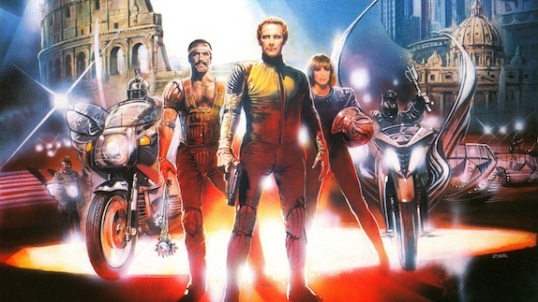
Sci-Fi Film Review: Warriors of The Year 2072 (dir by Lucio Fulci)


New Gladiators

Before The Hunger Games…

Before The Purge…

There was…oh wait, does this sound familiar?  Did you just read those two lines and get hit by a sudden feeling of déjà vu?  Well, that might be because I used those exact same lines to start my review of the 1965 Italian sci-fi film, The Tenth Victim.

They’re still applicable for this review though.  In many ways, the 1984 film Warriors of the Year 2072 (a.k.a. The New Gladiators) is a loose remake of The Tenth Victim.  (I imagine some critics would say it’s more of a rip-off than a remake.  What you label it will probably depend on how much tolerance you have for Italian exploitation films in general.)  Of course, Warriors of the Year 2072 draws inspiration from more than just The Tenth Victim.  A Clockwork Orange, Escape From New York, the Mad Max films, Blade Runner; bits and pieces from all of them show up here.

Even if you didn’t already know it, you might be able to guess that this film was directed by Lucio Fulci.  The film features Fulci regulars Al Cliver (of Zombi 2 fame) and Howard Ross (of New York Ripper fame) in supporting roles.  Cinzia Monreale, who had her throat ripped apart in Fulci’s The Beyond, appears in a cameo in which she again has her throat ripped apart.  (Actually, she just hallucinates having her throat ripped apart and is seen alive afterward, as if Fulci himself is saying, “See, it’s all just film trickery.  Nobody really gets hurt in my movies.”)    Finally, and most obviously, a character graphically loses an eye.  It’s simply not a Fulci film without some sort of graphic ocular trauma.

The film also features a theme that would show up in a lot of Fulci’s post-New York Ripper works.  Warriors of the Year 2072 is about the role of violent entertainment in both maintaining and destroying society.  Which is not to say that the film really has that much to say about it.  Thematically, Warriors of the Year 2072 is all surface level but those themes are still present.

As for the film itself, it takes place in the year 2072, so at least the title is being honest with us.  The world is now run by competing television networks.  The American television network has the highest rated show: Kill Bike, in which men on motorcycles battle to the death.  Cortez (Claudio Cassinelli), the program director for Rome-based WBS-TV, is ordered by the station’s owner, the mysterious Sam, to come up with a program that will be more popular than Kill Bike.  At first, Cortez tries to put on a show called The Danger Game, where people are forced to hallucinate dying in violent ways.  When that show fails to beat Kill Bike, Cortez decided to just rip-off Kill Bike…

And let’s just stop a moment to point out the obvious.  Neither The Danger Game nor Kill Bike would feel at all out-of-place on television today.  Remember Fear Factor?  How different is The Danger Game from that old show?

Anyway, Cortez’s new show is basically Kill Bike with a twist.  The motorcycle combat will now take place in the Roman coliseum and the contestants will all be convicted murderers awaiting execution.  Fortunately, the very popular star of Kill Bike — Drake (Jared Martin) — has recently been convicted of murder!  It’s convenient how that worked out…

As we discover through the magic of slow motion flashbacks, Drake was returning home one night when he discovered that his wife had been murdered by three young men who all appeared to be doing a bad impersonation of Malcolm McDowell in A Clockwork Orange.  The three men were then murdered and Drake was convicted.  However, Drake insists that he’s innocent and, even when confronted by laughing hallucinations of the three men, he refuses to attack them.

Could it be that someone is framing Drake?  Of course!  But why…

Well, before we find out the answer to that, we watch as Drake is brought to the coliseum and is trained in gladiatorial battle.  He immediately makes an enemy out of the head guard, the sadistic Raven (Howard Ross, who is hilariously over-the-top).  He also bonds with the other gladiators, one of whom is named Abdul.  Abdul is played by Fred Williamson, largely because it’s not a mid-80s Italian sci-fi dystopia without Fred Williamson.

Warriors of The Year 2072 cannot compare to Fulci at his best.  This is no Zombi 2 or The House By The Cemetery.  At the same time, it’s definitely better than most of the films that Fulci made after The New York Ripper.  Fulci was a supreme stylist and, as a result, Warriors of the Year 2072 is always watchable.  Even when you don’t have the slightest idea what’s going on, you still can’t quite bring yourself to look away.  Yes, the special effects are nothing special.  And yes, it’s obvious that futuristic Rome was just a miniature set.  But the cheapness of the film gives it an odd charm.  It’s the cheapest future imaginable and somehow, it actually feels appropriate.  Why do we always assume the future will be sleek and shiny?  Maybe it’ll look like cardboard, like in Warriors Of The Year 2072!

Warriors of the Year 2072 is a campy, frequently silly, and oddly entertaining look at the future of the human race.  If you’re a Fulci fan or a lover of Italian exploitation cinema, track it down.

Poll: Tell Lisa Marie What To Watch Next Sunday


So, guess what I did earlier today?  That’s right — I put on a blindfold, a stumbled over to my ever-growing DVD, Blu-ray. and even VHS collection and I randomly selected 12 films!

Why did I do this?

I did it so you, the beloved readers of Through the Shattered Lens, could once again have a chance to tell me what to do.  At the end of this post, you’ll find a poll.  Hopefully, between now and next Sunday (that’s August 21st), a few of you will take the time to vote for which of these 12 films I should watch and review.  I will then watch the winner on Sunday and post my review on Monday night.  In short, I’m putting the power to dominate in your hands.  Just remember: with great power comes great … well, you know how it goes.

Here are the 12 films that I randomly selected this afternoon:

Abduction — From 1975, this soft-core grindhouse film is based on the real-life abduction of Patty Hearst and was made while Hearst was still missing.  Supposedly, the FBI ended up investigating director Joseph Zito to make sure he wasn’t involved in the actual kidnapping.

Aguirre, The Wrath of God — From director Werner Herzog and star Klaus Kinski comes this story about a Spanish conquistador who fights a losing battle against the Amazon.

Black Caesar — In one of the most succesful of the 70s blaxploitation films, Fred Williamson takes over the Harlem drug trade and battles the mafia.

Don’t Look Now — Donald Sutherland and Julie Christie are a married couple who attempt to deal with the death of their daughter by going to Venice, Italy.  Christie quickly falls in with two blind psychics while Sutherland pursues a ghostly figure in a red raincoat through Venice.  Directed by Nicolas Roeg.

The Lion In Winter — From 1968, this best picture nominee stars Peter O’Toole and Katharine Hepburn as King Henry II and his wife, Eleanor of Aquitaine.  Taking place on Christmas Eve, Henry and Eleanor debate which one of their useless sons will take over a king of England.  This film is also the feature debut of both Anthony Hopkins and Timothy Dalton.

Logan’s Run — From 1976, this sci-fi film features Michael York and Jenny Agutter as two future hedonists seeking Sanctuary and instead finding Peter Ustinov and a bunch of cats.  Filmed in my hometown of Dallas.

Lost Highway — From director David Lynch comes this 1997 film about … well, who knows for sure what it’s about?  Bill Pullman may or may not have killed Patricia Arquette and he may or may not end up changing into Balthazar Getty.

Mystic River — From director Clint Eastwood comes this film about murder, guilt, redemption, and suspicion in working-class Boston.  Starring Sean Penn, Kevin Bacon, and Tim Robbins.

Naked Massacre — From 1976, this stark film is something a grindhouse art film.  It takes the true life story of Chicago mass murderer Richard Speck and transfers the action to Belfast.  Also known as Born for Hell.

Night of the Creeps — From 1986, this film features alien slugs that turn an entire college campus into a breeding ground for frat boy zombies.  Tom Atkins gets to deliver the classic line: “Well don’t go out there…”

Petulia — Considered by many to be one of the best American films ever made and one of the definitive films of the 60s, Petulia tells the story of a divorced doctor (George C. Scott) who enters into an odd relationship with Julie Christie.  Directed by Richard Lester, this film also stars Joseph Cotten, Richard Chamberlain, and the Grateful Dead.

What Have You Done To Solange? — From 1975, What Have You Done To Solange is a classic giallo that  features dream-like murders, disturbing subtext, and one of the best musical scores of all time.

So, there’s your 12 films.  Vote once, vote often, have fun, and I await your decision.

Voting will be open until Sunday, August 21st.

A Spawn of 6 More Trailers


It’s Saturday and that can only mean that it’s time for 6 more deadly trailers in this latest edition of Lisa Marie’s Favorite Grindhouse and Exploitation Trailers.

1) Liz (197?)

Oh my God, I cannot begin to put into words how much I love this trailer.  It is just so shameless and obvious in its intentions and it typifies everything I love about grindhouse advertising.  I’ve never seen Liz or, to be honest, even heard of it before I came across this trailer.  However, just from watching the trailer, I get the feeling about a woman named Liz who has sex.

(By the way, did you know that the name Lisa originally started as a shortened version of the name Elizabeth?  So, this is yet another film that appears to be named after me.  I’m not saying that’s necessarily a good thing since it appears to be about a self-destructive nymphomaniac — yes, yes, I know — but I’m just saying.)

2) God Told Me To (1976)

Directed by Larry Cohen, God Told Me To is one of the best sci-fi/horror/urban thriller hybrids of all time.  Unfortunately, I don’t think this trailer quite does it justice but I’m including it here because this is a rare case where I love the movie more than the trailer.

3) Vigilante Force (1976)

“They were hired to clean up the town … instead, they cleaned it out!”  Actually, I take that back, my favorite line from this trailer is the one about “loving not wisely…but very well indeed.”

4) Mean Johnny Barrows (1976)

This is yet another 1970s Fred Williamson blaxploitation film.  This one not only features Williamson killing a lot of people but Roddy McDowall and Elliot Gould as well!

5) Blastfighter (1985)

From director Lamberto Bava comes this love story between a man and his gun.

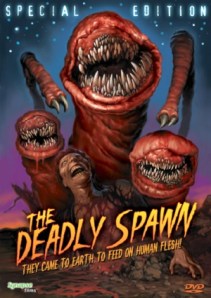
6) The Deadly Spawn (1983)

I actually really love this trailer.  It’s got this likable “We got together one weekend and made a cheap sci-fi film” sort of vibe to it.