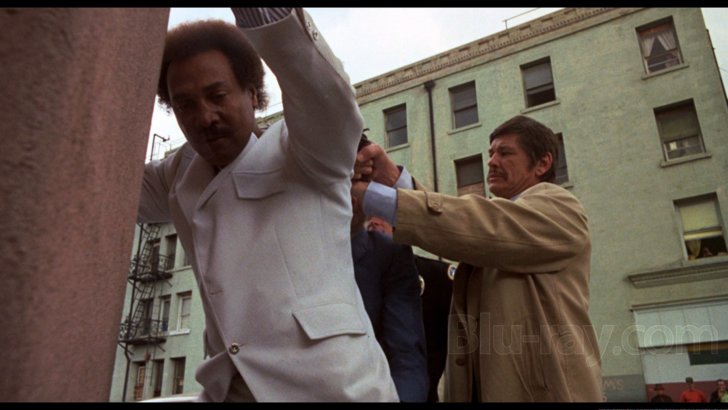
Brad reviews THE STONE KILLER (1973), starring Charles Bronson!


THE STONE KILLER opens in Spanish Harlem with detective Lou Torrey (Charles Bronson) following a young man, who had just shot a cop, into an abandoned building. When the young man refuses to turn himself in, and even tries to shoot Torrey, he gets blown away. In trouble with his superiors on the force, and being dragged in the press for the shooting, Torrey decides to change locations and continue his law enforcement career under his friend Les Daniels (Norman Fell) in Los Angeles. Soon after he arrives in Los Angeles, Torrey and his partner Mathews (Ralph Waite) are working a case against a drug dealer, when they arrest “Bootlace” Armitage (Eddie Firestone), a drug addict, but also a well-known hitman from New York. Torrey is delivering the “mechanic” back to New York for outstanding warrants when Armitage says that he is willing to give up some big information on “Wexton” in exchange for a reduced sentence. When Armitage is gunned down in what is obviously a professional hit, it’s clear that there is something going on that involves the name Wexton. We soon learn more as we meet mafia leader Al Vescari (Martin Balsam). As Vescari walks through a cemetery, he tells the leader of his operation, Lawrence (Stuart Margolin), of his plans to get revenge for a string of mafia killings that occurred 42 years earlier by using “stone killers,” in this case, former military men with no connection to the mob. As the film moves forward, Detective Lou Torrey and his fellow cops will eventually put the pieces together and find themselves taking on these “stone killers” and the mob! 

I’ll just go ahead and say up front that I’m a big fan of THE STONE KILLER these days, but that’s because the movie has grown on me over the years with repeat viewings. When I first watched the film as a teenager in the 1980’s, I enjoyed it as a tough cop film, but it wasn’t one of my favorites. I think that part of the reason I didn’t appreciate it as much back then is the more convoluted plot of the film. Most Bronson films have simple and easy to follow plot lines, but THE STONE KILLER includes a somewhat complicated mafia assassination plan, and it also sends the cops on wild goose chases that have nothing to do with the actual story. Watching the film as an adult, I appreciate Director Michael Winner taking us with him on some of those 1970’s flavored tangents that include getting to hang out with some hippies at an ashram, as well as some unjustly accused black militants. 

Even though the plot is more complicated than the average Charles Bronson film, director Michael Winner gives us some of the best action sequences of Charles Bronson’s career. There are two sequences in particular that stand out to me. After the impressive opening scenes where Torrey blows away the gun wielding young man in Spanish Harlem, it takes a while to get to the next extended action sequence, but it’s definitely worth the wait. The scene involves Detective Torrey in a car chase where he’s after one of the stone killers, Albert Langley (Paul Koslo), who’s on a motorcycle. In an era of great car chases, this is a doozy that features many amazing and dangerous stunts. The late 60’s and early 70’s are an embarrassment of riches for cinematic car chases and this one stands the test of time. The next great action sequence occurs later in the film when Detective Torrey and the cops bust the home and facility where the killers have trained for the planned massacre. Bronson is still in his physical prime in 1973, and his athletic prowess is clearly on display as he slides across floors, jumps on tables, and does anything else that is required to take down the bad guys. The film is not wall to wall action, but what’s here is as badass as it gets. 

Detective Lou Torrey is a really good role for Charles Bronson. In his best roles, Bronson is tough, but you can also tell that he cares about other people. That’s definitely the case here as he consistently shows empathy for some of the people he’s after. For example, at the beginning of the film, he has to shoot the young man in Spanish Harlem in self-defense, but he later explains to his sister that he didn’t want to do it, even expressing some understanding of how the young man may have found himself in that situation. A little later while arresting a drug dealer with his partner Mathews, Torrey is clearly disgusted when his partner uses racial slurs during the arrest. Torrey then talks to the man with respect and gets the needed information to arrest the man buying the drugs. There are further examples later in the film as he deals with other drug addicts and militants. I say none of this to insinuate that Bronson’s character is weak in any way. Rather, he seems to want to do his job and arrest criminals in a professional manner. He’s also a complex character in some ways as he will bend the rules to get what he needs if he has to. He does end up punching the car thief, Jumper (Jack Colvin), a couple of times during an interview. While this is definitely not legal, in the context of this film, it’s required in order to get to the facts of the case. Bronson is actually quite great in the film. 

Besides international superstar Charles Bronson, Michael Winner put together an amazing cast for THE STONE KILLER. Martin Balsam had won an Oscar a few years earlier, and he’s good here as the mafia boss with four decades worth of patience for revenge. Ralph Waite is also excellent as Bronson’s incompetent, racist partner Mathews. It’s hard to believe the guy would go on to play Papa Walton based on the ignorance he shows in both this film and in the Bronson/Winner collaboration CHATO’S LAND from the prior year. It’s fun watching both Norman Fell and John Ritter work together in this film, especially knowing that they would be making television history a few years later on the classic TV sitcom “Three’s Company.” The last two actors I want to mention are Stuart Margolin as the leader of the stone killers, Lawrence, and Paul Koslo as the bi-sexual badass musician Albert Langley. Both actors, especially Koslo, are good here and would have important roles with Bronson the next year as well. Margolin was an important character in DEATH WISH, and Koslo may have even outdone his work here the next year as a particularly slimy weasel in MR. MAJESTYK. Oh yeah, be sure to look for a short, uncredited cameo from B-movie queen Roberta Collins! I also want to shout out the musical score from Roy Budd, who also did the score for GET CARTER (1971). Thanks to Budd’s work, the opening credits are very cool and memorable. 

THE STONE KILLER was marketed as Charles Bronson’s “Dirty Harry” and meant to be his breakout hit in America. Unfortunately, while the film was an international hit, the actual grosses in the United States were respectable but not as much as the filmmakers had hoped for. As such, we didn’t get any more entries in the case log of Detective Lou Torrey and Bronson would have to wait another year for his American box office breakout with DEATH WISH. But that’s okay because THE STONE KILLER has stood the test of time as an excellent 1970’s cop film, emerging in my personal rankings as a major feather in the cap of Charles Bronson’s career. 
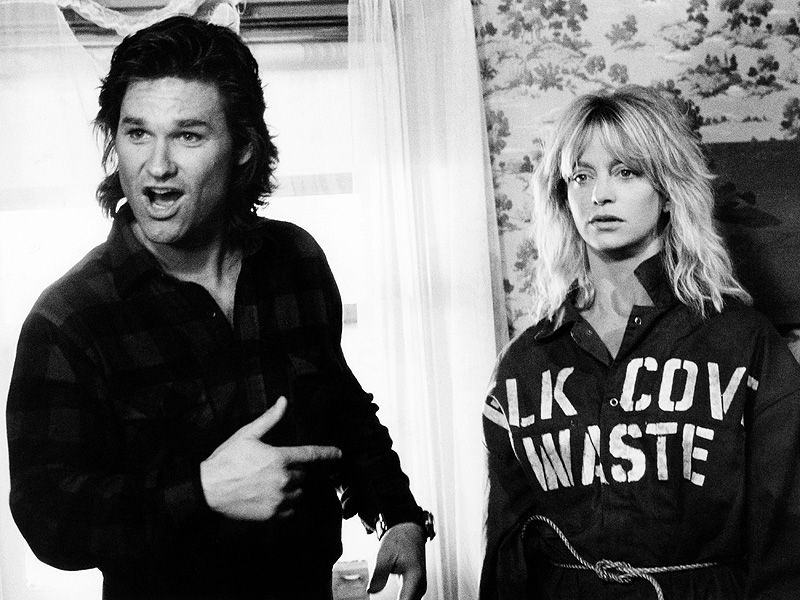
Brad reviews OVERBOARD (1987), starring Kurt Russell and Goldie Hawn!


Spoiled heiress Joanna Stayton (Goldie Hawn) hires carpenter Dean Proffitt (Kurt Russell) to remodel a closet on her yacht. Unsatisfied with his work and completely unreasonable about everything, she refuses to pay him and when he presses her for the $600, she pushes him and all of his tools overboard. Needless to say, the lady’s a “bitch” (Dean’s word) and nobody can stand her, including her husband, Grant Stayton III (Edward Herrman), and their butler Andrew (Roddy McDowell). And then something interesting happens a few days later… Joanna accidentally falls off her yacht, and when she’s fished out of the ocean, she’s still difficult to deal with, but she doesn’t have a clue who she is. Unable to identity her, the hospital puts the “amnesia lady” on the news hoping someone will recognize her. Sensing a chance to get rid of the anchor around his neck, Grant Stayton III pretends he doesn’t know her and heads out of town. This is where Dean hatches up his own plot to get revenge. He heads to the hospital and through a series of happenstances and coincidences, he’s able to convince everyone, including Joanna, now dubbed as “Annie,” that she’s his wife. He takes her home with him and makes her take care of his four wild boys, cook their food, and clean his house. Dean figures she owes it to him. But wouldn’t you know it, even though “Annie” hates it at first, over time she begins to soften towards her new life, bonds with the boys, and some sparks of love start flying between her and Dean. When she unexpectedly gets her memory back, she has to decide whether to return to her life as a spoiled heiress or stay with the man and boys she’s grown to love.

I have a soft spot in my heart for OVERBOARD, because this is a movie that my mom and I both loved, and we watched it together many times in the late 80’s and early 90’s. My mom and I didn’t often have the same taste in movies, so this was kind of “our movie.” There are a couple of other notable favorites for both me and mom, and those movies are RUTHLESS PEOPLE (1986) and LETHAL WEAPON (1987). I guarantee if I called my mom right now, interrupted her Hallmark Christmas movies, and told her I was coming over with OVERBOARD, she’d say “Come on! I’ll get something together for you to eat!” That actually sounds like a pretty good idea!

Another reason I love OVERBOARD is the fact that it stars Kurt Russell. I became a big fan of Kurt Russell during my teenage years, as I was 14 when this movie came out. A couple of years earlier, Russell starred in the films THE BEST OF TIMES (1986) and BIG TROUBLE IN LITTLE CHINA (1986), and a couple of years later he would make movies like TEQUILA SUNRISE (1988), TANGO & CASH (1989), and BACKDRAFT (1991). I wanted to watch every movie that Russell was in, and all of these films are staples of my VHS years and nostalgic favorites. In OVERBOARD, Russell starts off as a gruff, grudge-holder, but as he begins to fall for “Annie,” his natural charm and likability emerge, but so does a newfound guilt for lying to her and possibly even kidnapping her. One question for the lawyers out there, is it kidnapping when her husband had a chance to claim her and chose to abandon her instead? I’m not sure if it’s a felony or not, but I’m guessing there has to be something on the law books that doesn’t jive with what happens here. Anyway, I’ll just say that it’s best not to think of these types of pesky realities when judging this fairy tale and just go along for the ride.

Along with the Russell’s fun performance, Goldie Hawn is so perfect as the horrifically spoiled snob of an heiress who transforms into a caring substitute mother and the woman of Dean’s dreams. I know she’s great in the movie, because I can’t stand her at the beginning, but I find myself falling for her too as the movie progresses. I would not really call myself a fan of Goldie Hawn, because I haven’t spent much of my life revisiting her films, but I love her here. A couple in real life, the natural chemistry between Russell and Hawn sparkles as they fall in love on screen and only the most cold-hearted cynic isn’t pulling for them to live happily ever after as the movie closes in on its ending. As far as the supporting cast, Edward Herrmann, Katherine Helmond, Mike Hagerty, and Roddy McDowall all have good moments sprinkled throughout the film.

I do have one complaint about OVERBOARD, and that’s the “Wonders of the World Miniature Golf Course,” which is the dream business of Dean and his best friend Bad Billy Pratt (Mike Hagerty). As someone who grew up in the 70’s and 80’s playing miniature golf on the courses in Branson, MO, I would never want to play their course. Its design appears over-the-top and cheesy to me, the type of course where the scores on the holes would be determined as much by luck as by skill, which is something I find offensive. However, just like the potential kidnapping storyline, I’ve had to let my disdain for the quality of the course design go as well so I could enjoy that section of the film. I will admit this one is harder for me personally, and I still struggle with it.

Overall, OVERBOARD is not high art, and its premise is about as silly as it gets, but through a magical combination of personal 1980’s nostalgia, an appreciation for the chemistry of its stars, and a complete willingness to suspend my disbelief as we head towards an irresistibly happy ending, I still love this film. I watch it just about every year, especially if I need a pick me up as I hammer away at tax returns!

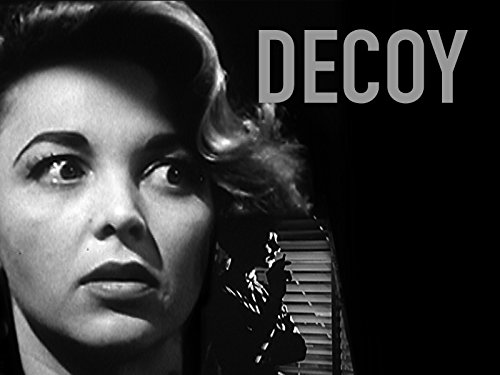
Retro Television Review: Decoy 1.13 “My Brother’s Killer”


Welcome to Retro Television Reviews, a feature where we review some of our favorite and least favorite shows of the past!  On Thursdays, I will be reviewing Decoy, which aired in Syndication in 1957 and 1958.  The show can be viewed on Tubi!

Episode 1.13 “My Brother’s Killer”

(Dir by Stuart Rosenberg, originally aired on January 6th, 1958)

Anne (Barbara Barrie) goes to the police because her boyfriend, Victor Bernard (Bernard Kates), has been acting strangely and refuses to let her into his apartment.  At first, the police point out that there’s nothing they can do about this but then Casey, in what can only be described as a miraculous feat of deductive reasoning, guesses that Victor Bernard’s last name might have originally been Bernardino and he might be the brother of wanted robber, Frank Bernardino.

A look at a picture of Victor reveals that he does look a lot like Frank.  However, as Casey discovers when she goes over to Victor’s apartment, Frank is dead.  But his partner, Hal Bishop (Sy Travers), is still alive.  Hal promptly takes Casey and Victor hostage and heads for the Canadian border.

Once you accept that Casey’s miracle hunch (and, seriously, it takes some effort), this is an intense episode.  I’m not really a fan of shows in which people are held hostage — the confined narrative tends to get tedious pretty quickly — but this episode featured a typically good performance from Beverly Garland and an absolutely terrifying one from Sy Travers.  It also features what seems like a surprising amount of violence for a 1950s television show.  Imagine gathering the family in front of the television in 1958 and being immediately confronted by Sy Travers as Hal Bishop pointing a gun at an innocent man’s head and pulling the trigger.  A lot of people get shot over the course of this episode, including Hal Bishop himself.  Casey survives but there are no smiles or celebrations.  There’s just the weary look of someone who has been confronted with the worst that humanity has to offer.

Retro Television Review: Decoy 1.3 “The Phoner”


Welcome to Retro Television Reviews, a feature where we review some of our favorite and least favorite shows of the past!  On Thursdays, I will be reviewing Decoy, which aired in Syndication in 1957 and 1958.  The show can be viewed on Tubi!

This week, Casey help to stop an obscene phone caller.

Episode 1.3 “The Phoner”

(Dir by Teddy Sills, originally aired on October 28th, 1957)

Betty Hodges (Pat Englund) has been getting obscene phone calls.  It’s the 1950s.  That means there’s no caller ID, there’s no cell towers to ping signals off of, there’s no way to block a number, the phone rings until its answered, and every call is made and taken on a landline phone.  This is the era when most calls were still connected by an operator.  Terrified of the calls but determined not to be chased out of the city like so many other young women who have targeted by the so-called Phoner, Betty calls the police.  Casey (Beverly Garland) moves in with Betty, pretending to be her sister.  When the phone rings, it’s Casey who will answer and it’s Casey who will have to keep the guy talking for five minutes while the phone company traces the call.

We don’t ever learn the name of the man making the calls.  In the credits, he’s listed as the Phoner.  Played by Frank Sutton, the Phoner is a sweaty man who makes his calls from a phone booth and who brags about how many girlfriends he claims to have  had.  (He’s the 50s version of an incel.)  We’re told that he says disturbingly obscene things over the phone but, this being a 50s show, we don’t hear any of them.  Of course, we don’t have to hear them.  Betty’s terrified reactions are all we need to see.

Eventually, Betty is attacked leaving work.  She stumbles out of an alley, her face beaten and her clothes torn.  And again, it’s the 50s.  So all we hear is that Betty has been attacked but anyone watching would understand what had happened.  In the hospital, Betty whispers to Casey.  When Casey is asked what Betty said, Casey replies, “She wishes she was dead.”

Eventually, the Phoner calls Casey back.  They set up a date in the park.  The Phoner doesn’t show up at the park but he does show up at the apartment later.  After a struggle, he’s subdued by Casey and the other cops watching the apartment.  Even though common sense tells the viewer that nothing too bad is going to happen to the show’s lead character, it’s still a tense scene, largely because of Frank Sutton’s feral performance as the Phoner.

This is a poignant episode, even if it did obviously have to hold back due to the censorship rules of the time.  Just as frightening as Sutton was as the Phoner, Garland was equally impressive as the determined Casey.  If I did have any problem with this episode, it’s that when she’s initially confronted by the Phoner, Casey doesn’t recognize his voice.  When a man threatens you, you never forget the voice.

This was a good episode.  Hopefully, the Phoner died in prison.

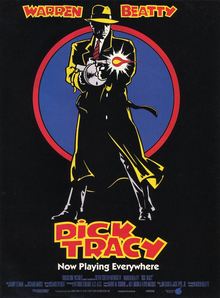
Dick Tracy (1990, directed by Warren Beatty)


The year is 1937 and “Big Boy” Caprice (Al Pacino) and his gang of flamboyant and often disfigured criminals are trying to take over the rackets.  Standing in their way is ace detective Dick Tracy (Warren Beatty), the yellow trench-wearing defender of the law.  Tracy is not only looking to take down Caprice but he and Tess Trueheart (Glenne Headly) are currently the guardians of The Kid (Charlie Korsmo), a young street kid who witnessed one of Caprice’s worst crimes.  Tracy’s investigation leads him through a rogue’s gallery of criminals and also involves Breathless Mahoney (Madonna), who has witnessed many of Caprice’s crimes but who also wants to steal Tracy’s heart from Tess.

Based on the long-running comic strip, Dick Tracy was a labor of love on the part of Warren Beatty.  Not only starring but also directing, Tracy made a film that stayed true to the look and the feel of the original comic strip (the film’s visual palette was limited to just seven colors) while also including an all-star cast the featured Madonna is an attempt to appeal to a younger audience who had probably never even heard of Dick Tracy.  When Dick Tracy was released, the majority of the publicity centered around Madonna’s participation in the film and the fact that she was dating Beatty at the time.  Madonna is actually probably the weakest element of the film.  More of a personality than an actress, Madonna is always Madonna no matter who she is playing and, in a film full of famous actors managing to be convincing as the members of Dick Tracy’s rogue gallery, Madonna feels out of place.  Michelle Pfeiffer would have been the ideal Breathless Mahoney.

It doesn’t matter, though, because the rest of the film is great.  It’s one of the few comic book films of the 90s to really hold up, mostly due to Beatty’s obvious enthusiasm for the material and the performances of everyone in the supporting cast who was not named Madonna.  Al Pacino received an Oscar nomination for playing Big Boy Caprice but equally good are Dustin Hoffman as Mumbles, William Forsythe as Flaptop, R.G. Armstong as Pruneface, and Henry Silva as Influence.  These actors all create memorable characters, even while acting under a ton of very convincing makeup.  I also liked Dick Van Dyke as the corrupt District Attorney.  Beatty knew audience would be shocked to see Van Dyke not playing a hero and both he and Van Dyke play it up for all its worth.  Beatty embraces the comic strip’s campiness while still remaining respectful to its style and the combination of Danny Elfman’s music and Stephen Sondheim’s songs provide just the right score for Dick Tracy’s adventures.  The film can be surprisingly violent at times but the same was often said about the Dick Tracy comic strip.  It wasn’t two-way wrist radios and trips to the Moon.  Dick Tracy also dealt with the most ruthless and bloodthirsty gangsters his city had to offer.

Dick Tracy was considered to be a box office disappointment when it was originally released.  (Again, you have to wonder if Beatty overestimated how many fans Dick Tracy had in 1990.)  But it holds up well and is still more entertaining than several of the more recent comic book movies that have been released.

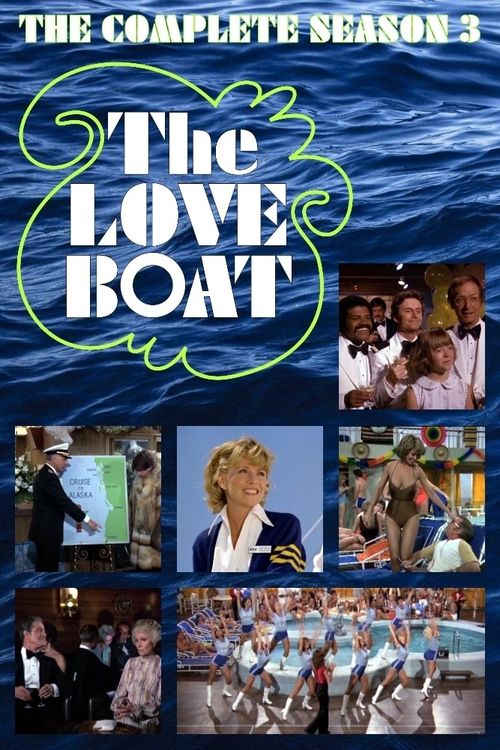
Retro Television Reviews: The Love Boat 3.25 “Celebration/Captain Papa/Honeymoon Pressure”


Welcome to Retro Television Reviews, a feature where we review some of our favorite and least favorite shows of the past!  On Wednesdays, I will be reviewing the original Love Boat, which aired on ABC from 1977 to 1986!  The series can be streamed on Paramount Plus!

This week, an important question is finally answered!

Episode 3.25 “Celebration/Captain Papa/Honeymoon Pressure”

(Dir by Richard Kinon, originally aired on March 29th, 1980)

Ever since Vicki first came aboard the ship, I have been wondering how exactly a 12 year-old can live (and apparently work) on an ocean liner.  One of my main questions has concerned how she is getting an education while sailing back and forth to Mexico.

With this episode, I finally got my answer.  When social worker Susan Stoddard (Lois Nettleton) boards the ship to decide whether or not to recommend that the Captain be given custody of Vicki, one of the first question that she asks is about school.

“Chief Petty Officer Dooley has a master’s in education,” Stubing replies, before saying that this never-before-mentioned character served as Vicki’s tutor.

Well, I’m glad that’s been cleared up.  Still, it is interesting that we’ve never before seen or even heard of this Dooley character.  We don’t even see Dooley in this episode.  You would think the social worker would want to talk to the person who is in charge of Vicki’s education.  Instead, Susan sees the rest of the crew, all of whom try to be on their best behavior in order to convince her that the Love Boat is not the floating HR nightmare that we all know it is.

(Still, at least the crew tried.  I’m surprised Doctor Bricker didn’t just try to sleep with her or something….)

This would be a really depressing episode of the Captain wasn’t awarded custody.  Luckily, Susan is so impressed by the crew that she says she will definitely file a positive report.  As she put it, Vicki not only has one wonderful parent.  She has “Five wonderful parents!”  Let’s see — Stubing, Julie, Gopher, Isaac, Doc …. yep, that’s five.  I’m sure Chief Petty Officer Dooley appreciates being left out of the group.

Isaac has more to worry about than just Captain Stubing’s situation.  Isaac is convinced that an old man named Gordon (Noah Beery, Jr.) is bank robber!  Gordon, who works as a bank guard at the port, is sailing on the Love Boat with his wife of 30 years, Betty (Alice Faye).  Gordon is spending a lot of money.  Isaac worries that Gordon stole the money but actually, it turns out that Gordon is just spending his life savings because his wife is in poor health and he wants to make sure that she has a wonderful vacation.  Unfortunately, Gordon spends too much on a diamond ring.  His wife, realizing what Gordon has done, secretly exchanges the ring for a cheaper one and tells her husband that she doesn’t need a life of luxury.  She just needs him.  Awwwwwww!  What a sweet old couple.

Finally, there are two real criminals on the boat.  Ralph (Norman Alden) and Ben (Richard Bakalyan) are two mob enforces who have been sent to accompany the boss’s daughter (Eve Plumb) on her honeymoon with her un-connected husband, Mark (Sal Viscuso).  Ralph and Ben’s presence makes Mark so uncomfortable that he can’t even consummate his marriage.  Ralph and Ben try to make things romantic for the couple.  Eventually, Doc Bricker tells the gangsters that Mark has a fictional disease, which causes Ralph and Ben to back off.  The married couple finally gets to celebrate their honeymoon.  But Mark still married into a mafia family so he’ll probably be machine-gunned as soon as he steps off the boat.

With the exception of the stupid Mafia story, this was a sweet episode.  I’m glad things worked out for the old couple and for Vicki and the Captain.  The Love Boat is not really a show that you watch for the acting but Gavin MacLeod’s natural sincerity always served him well whenever the show focused on his role as Vicki’s father.  Plus, I no longer have to worry about whether or not Vicki is going to have more than a sixth grade education.  So that’s a good thing.

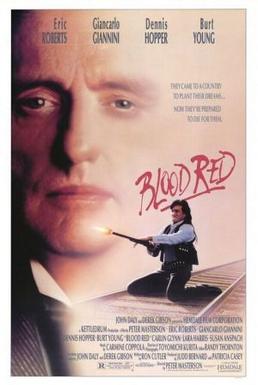
Film Review: Blood Red (1989, directed by Peter Masterson)


The time is the 1890s.  The place is California.  Sicilian immigrant Sebastian Collogero (Giancarlo Giannini) has just been sworn in as an American citizen and owns his own vineyard.  When Irish immigrant William Bradford Berrigan (Dennis Hopper) demands that Sebastian give up his land so Berrigan run a railroad through it, Sebastian refuses.  Berrigan hires a group of thugs led by Andrews (Burt Young) to make Sebastian see the error of his ways.  When Sebastian ends up dead, his wayward son, Marco (Eric Roberts), takes up arms and seeks revenge.

Have you ever wondered what would have happened if the famously self-indulgent directors Michael Cimino and Francis Ford Coppola teamed up to make a movie about the American Dream?  The end result would probably be something like Blood Red.  Like Cimino’s The Deer Hunter and Heaven’s Gate, Blood Red begins with a lengthy celebration (in this case, in honor of Sebastian’s naturalization ceremony) that doesn’t have much to do with the rest of the film but which is included just to make sure we know that what we’re about to see is more than just a mere genre piece.  Like many of Coppola’s films, Blood Red features a tight-knit family, flowing wine, and a score composed by Carmine Coppola.  The only difference between our hypothetical Cimino/Coppola collaboration and Blood Red is that the Cimino/Coppola film would probably be longer and more interesting than Blood Red.  Blood Red is only 80 minutes long and directed by Peter Masterson, who seems lost.  There’s a potentially interesting story here about two different immigrants fighting to determine the future of America but it gets lost in all of the shots of Eric Roberts flexing his muscles.

For an actor known for his demented energy, Eric Roberts is surprisingly dull as the lead but Blood Red is a film that even manages to make veteran scenery chewers like Dennis Hopper and Burt Young seem boring.  (Hopper’s bizarre attempt at an Irish brogue does occasionally liven things up.)  The cast is full of familiar faces like Michael Madsen, Aldo Ray, Marc Lawrence, and Elias Koteas but none of them get to do much.  Of course, the most familiar face of all belongs to Eric’s sister, Julia.  Julia Roberts made her film debut playing Marco’s sister, Maria.  (Because the film sat on the shelf for three years after production was completed, Blood Red wasn’t released until after Julia has subsequently appeared in Mystic Pizza and Satisfaction.)  She gets three lines and less than five minutes of screen time but she does get to briefly show off the smile that would later make her famous.  Today, of course, that smile is the only reason anyone remembers Blood Red.

Horror On TV: Kolchak: The Night Stalker 1.20 “The Sentry” (dir by Seymour Robbie)


Tonight on Kolchak….

There’s something on the loose underneath Chicago!  Could it be a …. killer lizard!?  Kolchak’s on the story!

Sadly, all good things must come to an end and this was the final episode of Kolchak: The Night Stalker.  Darren McGavin, of course, would later go on to epitomize the ideal middle American father when he played The Old Man in A Christmas Story.

This finale originally aired on March 28th, 1975.

I hope you have enjoyed this October’s trip down Kolchak Lane!

Bronson’s Back!: Death Wish II (1982, directed by Michael Winner)


To quote John McClane, “How can the same shit happen to the same guy twice?”

It has been eight years since Paul Kersey (Charles Bronson) lost his wife and single-handedly cleaned up New York City.  The first Death Wish ended with Paul in Chicago, preparing to gun down a new group of criminals.  I guess Chicago didn’t take because, at the start of Death Wish II, Paul is in Los Angeles and he’s working as an architect again.  He has a new girlfriend, a bleeding heart liberal reporter named Geri (Jill Ireland, Bronson’s real-life wife) who is against the death penalty and who has no idea that Paul used to be New York’s most notorious vigilante.  Having finally been released from the mental institution, Carol (Robin Sherwood) is living with her father but is now mute.

Crime rates are soaring in Los Angeles and why not?  The legal system is more concerned with the rights of the criminals than the victims and Paul has retired from patrolling the streets.  But when a group of cartoonish thugs rape and kill his housekeeper and cause his daughter to fall out of a window while trying to escape them, Paul picks up his gun and sets out for revenge.

Death Wish II was not the first sequel to Death Wish.  Brian Garfield, the author of the novel on which Death Wish was based, never intended for Paul to be seen as a hero and was disgusted by what he saw as being the film’s glorification of violence.  As “penance,” he wrote a sequel called Death Sentence, in which Paul discovered that he had inspired an even more dangerous vigilante.  When Menahem Golan and Yoram Globus bought the rights to produce a second Death Wish film, they decided not to use Garfield’s sequel and instead went with a story that was co-written by Golan.

It’s the same basic story as the first film.  Again, Paul is a mild-mannered architect who is a liberal during the day and a gun-toting reactionary at night.  Again, it’s a home invasion and a death in the family that sets Paul off.  Again, Paul gets help from sympathetic citizens who don’t care that the police commissioner (Anthony Franciosa) wants him off the streets.  Jeff Goldblum played a rapist with a switch blade in the first film.  This time, it’s Laurence Fishburne who fills the role.  (Fishburne also carries a radio, which he eventually learns cannot be used to block bullets.)  Even Detective Ochoa (Vincent Gardenia) returns, coming down to Los Angeles to see if Paul has returned to his old ways.

The main difference between the first two Death Wish films is that Death Wish II is a Cannon film, which means that it is even less concerned with reality than the first film.  In Death Wish II, the criminals are more flamboyant, the violence is more graphic, and Paul is even more of a relentless avenger than in the first film.  In the first Death Wish, Paul threw up after fighting a mugger.  In the second Death Wish, he sees that one of the men who raped his daughter is wearing a cross, leading to the following exchange:

“Do you believe in Jesus?”

“Yes, I do.”

“Well, you’re going to meet him.”

BLAM!

Death Wish II is the best known of the Death Wish sequels.  It made the most money and, when I was a kid, it used to show on TV constantly.  The commercials always featured the “You believe in Jesus?” exchange and, every morning after we saw those commercials, all the kids at school would walk up to each other and say, “You believe in Jesus?  Well, you’re going to meet him.”  It drove the teachers crazy.

Overall, Death Wish II is a lousy film.  Michael Winner, who was always more concerned with getting people into the theaters than anything else, directs in a sledgehammer manner that makes his work on the first film look subtle.  He obscenely lingers over every rape and murder, leaving no doubt that he is more interested in titillating the audience than getting them to share Paul’s outrage.  The script is also weak, with Geri so poorly written that she actually gets more upset about Paul going out at night than she does when she learns that Paul’s daughter has died.  When Paul sets out to track down the gang, his method is to merely wander around Los Angeles until he stumbles across them.  It doesn’t take long for Paul to start taking them out but no one in the gang ever seems to be upset or worried that someone is obviously stalking and killing them.

There are a few good things about the film.  Charles Bronson was always a better actor than he was given credit for and it’s always fun to watch Paul try to balance his normal daily routine with his violent night life.  Whenever Geri demands to know if he’s been shooting people, Paul looks at her like he is personally offended that she could possibly think such a thing.  Also, the criminals themselves are all so cartoonishly evil that there’s never any question that Paul is doing the world a favor by gunning them down.  For many otherwise sensible viewers, a movie like Death Wish II may be bad but it is also cathartic.  It offers up a simple solution to a complex issue.  In real life, a city full of Paul Kerseys would lead to innocent people getting killed for no good reason.  But in the world of Death Wish II, no one out after nightfall is innocent so there’s no need to worry about shooting the wrong person.

Finally, the film’s score was written by the legendary Jimmy Page.  The studio wanted Isaac Hayes to do the score but Winner asked his neighbor, Page.  Page took the film, retreated into his studio, and returned with a bluesy score that would turn out to be the best thing about the movie.  The soundtrack was the only one of Page’s solo projects to be released on Led Zeppelin’s record label, Swan Song Records.

Tomorrow, Bronson returns with Death Wish 3!