Playing Catch-Up With The Films of 2017: Paris Can Wait (dir by Eleanor Coppola)


Anne (Diane Lane) is the wife of Michael (Alec Baldwin).  Michael is an internationally renowned film producer.  As is established early on, their marriage is not perfect.  Michael is consumed with work and, at one point, Anne spots him deep in conversation with a young actress.  Anne’s reaction tells us all we need to know about Michael’s history as a husband.  While Michael obsesses on making the latest deal, Anne takes pictures of inanimate objects.  None of the pictures are particularly good but everyone in the movie raves about them.  I imagine that has something to do with the fact that Anne is based on Eleanor Coppola, who wrote and directed Paris Can Wait.

When the film opens, Anne and Michael are at Cannes.  Michael has spent the entire festival making deals but he’s promised Anne a Paris vacation afterward.  However, the day that they’re vacation is supposed to begin, Michael gets a call!  He’s needed in Budapest!  And Anne can’t fly because she has an ear infection…

No worries!  Their friend Jacques (Arnaud Viard) is willing to drive Anne to Paris and keep her company while she waits for Michael to return.  And so, while Michael flies off to Budapest, Anne and Jacques head off for Paris.  However, Anne soon finds herself questioning Jacques’s intentions.  Is he being flirtatious or is he just French?  When he stops off at every restaurant along the way and uses Anne’s credit card to pay the exorbitant bills, is he taking advantage of her or is he just being French?  When Anne isn’t doubting Jacques’s intentions, she’s questioning her marriage.  Is Michael really in Budapest to work on a movie or is he having an affair?

One of the good things about being rich is that you occasionally get to make a movie about how difficult it is to be rich.  That certainly seems to be the case with Paris Can Wait, which was written and directed by Eleanor Coppola, the wife of Francis Ford Coppola and the mother of Sofia and Roman Coppola.  Paris Can Wait is said to be autobiographical, which would seem to suggest that Eleanor and Francis aren’t particularly interesting human beings.

There are some positive elements to the film, of course. Diane Lane gives about as good a performance as one can when you’re playing an idealized version of a film’s director.  Also, Alec Baldwin manages to make it through the entire movie without bellowing.  In fact, Baldwin’s barely in the movie and that’s not a bad thing.  The French countryside looks beautiful but, quite frankly, it’s impossible for the French countryside not to look beautiful.  On the negative side, it just doesn’t add up to much.  You never really care whether or not Michael and Anne stay together.  You’re just thankful that you’ll never get stuck beside them on an airplane.

I think the main problem is that, as a director, Eleanor Coppola doesn’t really seem to know what she’s trying to say with her film.  For instance, I could imagine Sofia Coppola taking the exact same material and creating a movie that would be achingly poignant and full of ennui.  But, with Eleanor, it’s just another travelogue to nowhere.

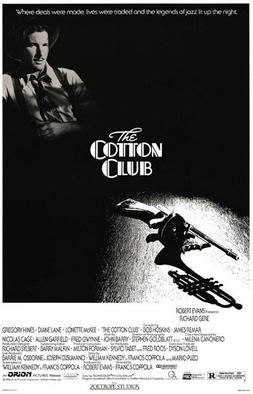
A Movie A Day #264: The Cotton Club (1984, directed by Francis Ford Coppola)


The time is the 1930s and the place is New York City.  Everyone wants to get into the Cotton Club.  Owned by British gangster Owney Madden (Bob Hoskins), the Cotton Club is a place where the stage is exclusively reserved for black performers and the audience is exclusively rich and white.  Everyone from gangsters to film stars comes to the Cotton Club.

It is at the Cotton Club that Dixie Dwyer (Richard Gere) meets everyone from Dutch Shultz (James Remar) to Gloria Swanson (Diane Venora).  Shultz hires Dixie to look after his girlfriend, Vera (Diane Lane).  Swanson arranges for Dixie to become a movie star.  Meanwhile, Dixie’s crazy brother, Vincent (Nicolas Cage), rises up through the New York underworld.  Meanwhile, dancing brothers Sandman and Clay Williams (played by real-life brothers Gregory and Maurice Hines) are stars on stage but face discrimination off, at least until Harlem gangster Bumpy Rhodes (Laurence Fishburne) comes to their aid.

The Cotton Club was a dream project of the legendary producer, Robert Evans, who was looking to make a comeback after being famously charged with cocaine trafficking in 1980.  Having commissioned a screenplay by his former Godfather collaborators, Mario Puzo and Francis Ford Coppola, Evans originally planned to direct the film himself.  At the last minute, Evans changes his mind and asked Coppola to direct the film.  After working with him on The Godfather, Coppola had sworn that he would never work with Evans again. (When he won an Oscar for The Godfather‘s screenplay, Coppola pointedly thanked everyone but Robert Evans.)  However, by 1984, a series of box office flops had damaged Coppola’s standing in Hollywood.  Needing the money, Coppola agreed to direct The Cotton Club.

Evans raised the film’s $58 million budget from a number of investors, including Roy Radin.  Roy Radin was best known for putting together Vaudeville reunions in the 70s and being accused of raping an actress in 1980.  Radin and Evans were introduced to each other by a drug dealer named Lanie Jacobs, who was hoping to remake herself as a film producer.  During the production of The Cotton Club, Radin was murdered by a contract killer who was hired by Jacobs, who apparently felt that Radin was trying to muscle her out of the film production.

While all of this was going on, Coppola fell into his familiar pattern of going overbudget and falling behind schedule.  This led to another investor filing a lawsuit against Orion Pictures and two other investors, claiming fraud and breach of contract.  When the film was finally released, it received mixed reviews, struggled at the box office, and only received two Oscar nominations.

With all of the murder and drama that was occurring offscreen, it is not surprising that the film itself was overshadowed.  The Cotton Club is a disjointed mix of gangster drama and big production numbers.  As always with post-Apocalypse Now Coppola, there are flashes of brilliance in The Cotton Club.  Some of the production numbers are impressive and visually, this movie has got style to burn.   However, among the leads, neither Richard Gere nor Diane Lane seem to be invested in their characters while the talented Hines brothers are underused.  The supporting cast is full of good character actors who are all in a search of a better script.  A few do manage to make an impression: James Remar, Bob Hoskins and Fred Gwynne as veteran gangsters, Nicolas Cage as the film’s stand-in for Mad Dog Coll, and Joe Dallesandro as Lucky Luciano.  The Cotton Club is sometimes boring and sometimes exciting but the onscreen story is never as interesting as what happened behind the scenes.


Growing Pains: YOU’RE A BIG BOY NOW (Warner Brothers 1966)


gary loggins's avatarcracked rear viewer

ybb1

Francis Ford Coppola  was still a UCLA film student when he made YOU’RE A BIG BOY NOW, the 1966 coming of age comedy he used as his MFA thesis. The young Coppola was 27, and had gained experience working for Roger Corman ; indeed, Corman gave him his first break when he hired Coppola to write and direct the horror quickie DEMENTIA 13. But YOU’RE A BIG BOY NOW was his first major studio release, and put him on the map as a talent to keep an eye on.

ybb2

Bernard Chanticleer is a 19 year old nerd with a way-overprotective mother and disinterested, authoritarian father. He works for Dad at a New York City library, and is constantly goofing up on the job. Dad thinks it’s time for Bernard to spread his wings and move on his own, much to Mom’s displeasure. She finds him a room at a house owned by Miss Thing, who’s tenants include conservative…

View original post 450 more words

2016 in Review: Lisa Marie’s 10 Favorite Non-Fiction Books of 2016


godfather-notebook

My look back at the previous year continues with 10 of my favorite non-fiction books of 2016!  Now, it should be noted that, because this is an entertainment-related website, I’m only listing my favorite entertainment-related books.  There was a lot of good nonfiction published last year but the majority of it had nothing to do with either the movies or television so who cares?

Anyway, all of these are wonderful and well-worth the money!

  1. The Godfather Notebook by Francis Ford Coppola
  2. TV: The Book by Matt Zoller Seitz and Alan Sepinwall
  3. The Only Pirate at the Party by Lindsey Stirling
  4. Natalie Wood: Reflections on a Legendary Life by Manoah Bowman
  5. The Purple Diaries: Mary Astor and the Most Sensational Hollywood Scandal of the 1930s by Joseph Egan
  6. In Search of Lost Films by Phil Hall
  7. Down from the Attic: Rare Thrillers of the Silent Era through the 1950s by John T. Soister and Henry Nicolella
  8. Shirley Jackson: A Rather Haunted Life by Ruth Franklin
  9. The Curse of Beauty: The Scandalous & Tragic Life of Audrey Munson, America’s First Supermodel by James Bone
  10. A Thousand Cuts: The Bizarre Underground World of Collectors and Dealers Who Saved the Movies by Dennis Bartok and Jeff Joseph

Finally, I have to give an honorable mention to two books that were published in 2015 but which I didn’t read until 2016.  These two books were definitely my favorite non-fiction reads in 2016 and there’s no way that I couldn’t mention them.  Troy Howarth’s So Deadly, So Perverse and So Deadly, So Perverse Volume 2 contain everything you could possibly want to know about the giallo genre!

ck1pcyfwyaau0tb

Tomorrow, my look back at 2016 continues with my favorite novels of the year!

Previous Entries In The Best of 2016:

  1. TFG’s 2016 Comics Year In Review : Top Tens, Worsts, And Everything In Between
  2. Anime of the Year: 2016
  3. 25 Best, Worst, and Gems I Saw In 2016
  4. 2016 in Review: The Best of SyFy
  5. 2016 in Review: The Best of Lifetime
  6. 2016 in Review: Lisa Picks the 16 Worst Films of 2016!
  7. Necromoonyeti’s Top Ten Albums of 2016
  8. 2016 In Review: Lisa Marie’s 14 Favorite Songs of 2016
  9. 2016 In Review: 10 Good Things I Saw On Television in 2016

Horror on the Lens: Dementia 13 (dir by Francis Ford Coppola)


(I originally shared this film back in 2011 — can you believe we’ve been doing this for that long? — but the YouTube vid was taken down.  So, I’m resharing it today!)

For today’s excursion into the world of public domain horror, I offer up the film debut of Francis Ford Coppola.  Before Coppola directed the Godfathers and Apocalypse Now, he directed a low-budget, black-and-white thriller that was called Dementia 13.  (Though, in a sign of things to come, producer Roger Corman and Coppola ended up disagreeing on the film’s final cut and Corman reportedly brought in director Jack Hill to film and, in some cases, re-film additional scenes.)

Regardless of whether the credit should go to Coppola, Corman, or Hill, Dementia 13 is a brutally effective little film that is full of moody photography and which clearly served as an influence on the slasher films that would follow it in the future.  Speaking of influence,Dementia 13 itself is obviously influenced by the Italian giallo films that, in 1963, were just now starting to make their way into the drive-ins and grindhouses of America.

In the cast, keep an eye out for Patrick Magee, who later appeared as Mr. Alexander in A Clockwork Orange as well as giving a memorable performance in Lucio Fulci’s The Black Cat.  Luana Anders, who plays the duplicitous wife in this film, showed up in just about every other exploitation film made in the 60s and yes, the scene where she’s swimming freaks me out to no end.

(One final note: I just love the title Dementia 13.  Seriously, is that a great one or what?)

Horror on the Lens: The Terror (dir by Roger Corman, Francis Ford Coppola, Jack Hill, Monte Hellman, Dennis Jakob, and Jack Nicholson)


(As some of you may have noticed, I shared this movie last year as well.  However, since the video that I embedded in the previous post was subsequently taken down, I figured I might as well post it again this year.  Plus, it’s Boris Karloff, Jack Nicholson, and Dick Miller!  Why not post it twice?)

Have you ever woken up and thought to yourself, “I’d love to see a movie where a youngish Jack Nicholson played a French soldier who, while searching for a mysterious woman, comes across a castle that’s inhabited by both Dick Miller and Boris Karloff?”

Of course you have!  Who hasn’t?

Well, fortunately, it’s YouTube to the rescue.  In Roger Corman’s 1963 film The Terror, Jack Nicholson is the least believable 19th century French soldier ever.  However, it’s still interesting to watch him before he became a cinematic icon.  (Judging from his performance here and in Cry Baby Killer, Jack was not a natural-born actor.)  Boris Karloff is, as usual, great and familiar Corman actor Dick Miller gets a much larger role than usual.  Pay attention to the actress playing the mysterious woman.  That’s Sandra Knight who, at the time of filming, was married to Jack Nicholson.

Reportedly, The Terror was one of those films that Corman made because he still had the sets from his much more acclaimed film version of The Raven.  The script was never finished, the story was made up as filming moved alone, and no less than five directors shot different parts of this 81 minute movie.  Among the directors: Roger Corman, Jack Hill, Monte Hellman, Francis Ford Coppola, and even Jack Nicholson himself!  Perhaps not surprisingly, the final film is a total mess but it does have some historical value.

(In typical Corman fashion, scenes from The Terror were later used in the 1968 film, Targets.)

Check out The Terror below!


4 Shots From 4 Films: Akira Kurosawa


4 Shots From 4 Films is just what it says it is, 4 shots from 4 of our favorite films. As opposed to the reviews and recaps that we usually post, 4 Shots From 4 Films is all about letting the visuals do the talking.

With the latest entry to the Star Wars franchise set to be released in just a few days I thought it was appropriate to share four particular scenes from one filmmaker who has been a huge influence on George Lucas’ vision for Star Wars. This filmmaker also became a huge influence on other master filmmakers such as John Ford, Steven Spielberg, Martin Scorsese, Francis Ford Coppola and Sidney Lumet just to name a few.

Many consider this filmmaker to be one of the greatest filmmakers who ever lived and in this humble individual’s opinion he was the greatest filmmaker who stood above all and whose storytelling and visual techniques would become part of the modern filmmaker’s toll bag.

The man I speak of is Akira Kurosawa.

4 SHOTS FROM 4 FILMS

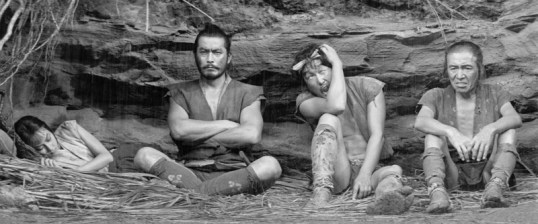
The Hidden Fortress (dir. by Akira Kurosawa)

The Hidden Fortress (dir. by Akira Kurosawa)

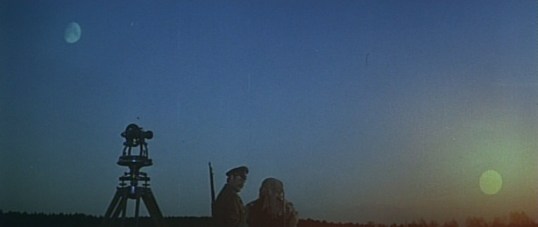
Dersu Uzala (dir. by Akira Kurosawa)

Dersu Uzala (dir. by Akira Kurosawa)

Yojimbo (dir. by Akira Kurosawa)

Yojimbo (dir. by Akira Kurosawa)

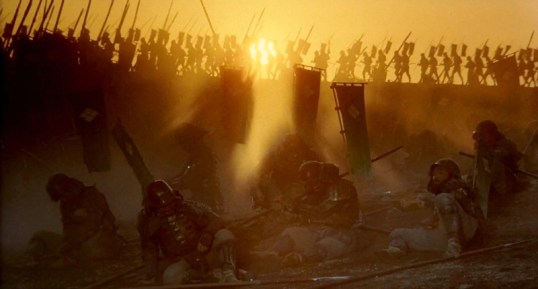
Kagemusha (dir. by Akira Kurosawa)

Kagemusha (dir. by Akira Kurosawa)

Horror on the Lens: Dementia 13 (dir by Francis Ford Coppola)


(I originally shared this film back in 2011 — can you believe we’ve been doing this for that long? — but the YouTube vid was taken down.  So, I’m resharing it today!)

For today’s excursion into the world of public domain horror, I offer up the film debut of Francis Ford Coppola.  Before Coppola directed the Godfathers and Apocalypse Now, he directed a low-budget, black-and-white thriller that was called Dementia 13.  (Though, in a sign of things to come, producer Roger Corman and Coppola ended up disagreeing on the film’s final cut and Corman reportedly brought in director Jack Hill to film and, in some cases, re-film additional scenes.)

Regardless of whether the credit should go to Coppola, Corman, or Hill, Dementia 13 is a brutally effective little film that is full of moody photography and which clearly served as an influence on the slasher films that would follow it in the future.  Speaking of influence, Dementia 13 itself is obviously influenced by the Italian giallo films that, in 1963, were just now starting to make their way into the drive-ins and grindhouses of America.

In the cast, keep an eye out for Patrick Magee, who later appeared as Mr. Alexander in A Clockwork Orange as well as giving a memorable performance in Lucio Fulci’s The Black Cat.  Luana Anders, who plays the duplicitous wife in this film, showed up in just about every other exploitation film made in the 60s and yes, the scene where she’s swimming freaks me out to no end.

(One final note: I just love the title Dementia 13.  Seriously, is that a great one or what?)

Horror on the Lens: The Terror (dir by Roger Corman)


Have you ever woken up and thought to yourself, “I’d love to see a movie where a youngish Jack Nicholson played a French soldier who, while searching for a mysterious woman, comes across a castle that’s inhabited by both Dick Miller and Boris Karloff?”

Of course you have!  Who hasn’t?

Well, fortunately, it’s YouTube to the rescue.  In Roger Corman’s 1963 film The Terror, Jack Nicholson is the least believable 19th century French soldier ever.  However, it’s still interesting to watch him before he became a cinematic icon.  (Judging from his performance here and in Cry Baby Killer, Jack was not a natural-born actor.)  Boris Karloff is, as usual, great and familiar Corman actor Dick Miller gets a much larger role than usual.  Pay attention to the actress playing the mysterious woman.  That’s Sandra Knight who, at the time of filming, was married to Jack Nicholson.

Reportedly, The Terror was one of those films that Corman made because he still had the sets from his much more acclaimed film version of The Raven.  The script was never finished, the story was made up as filming moved alone, and no less than five directors shot different parts of this 81 minute movie.  Among the directors: Roger Corman, Jack Hill, Monte Hellman, Francis Ford Coppola, and even Jack Nicholson himself!  Perhaps not surprisingly, the final film is a total mess but it does have some historical value.

(In typical Corman fashion, scenes from The Terror were later used in the 1968 film, Targets.)

Check out The Terror below!

Shattered Politics #53: The Godfather Part III (dir by Francis Ford Coppola)


GodfatherIII2

Well, it’s come to this.

First released in 1990, The Godfather Part III was nominated for best picture (it lost to Goodfellas Dances With Wolves) but it’s got a terrible reputation.  Over the past two weeks, whenever I’ve mentioned that I was planning on reviewing The Godfather and The Godfather Part II for this series of reviews, everyone who I talked to mentioned that they loved the first two Godfather films and that they hated the third one.  Quite a few, in fact, suggested that I shouldn’t even bother reviewing the third one.  In their eyes, The Godfather Part III was like that one cousin who you know exists but, because he got caught cashing your grandma’s social security check, you never send a Christmas card.

But you know what?

It was never even an option for me to skip reviewing The Godfather, Part III.  First off, I’m a completist.  It’s long been my goal to review every single best picture nominee and, regardless of how much some people may dislike it, that’s exactly what The Godfather Part III is.

Plus, I love the Godfather movies.  I’m a fourth Italian (and, much like the Corleones, my Italian side comes from Southern Italy) and I was raised Catholic.  Let’s face it — The Godfather movies were made for me.  Even Part III.

So, with all that in mind, I recently sat down and rewatched The Godfather Part III.  And I’m not saying that it was an easy film to watch.  It’s a flawed film and those flaws are made even more obvious when you compare it to the previous two Godfathers.  It’s hard to follow up on perfection.  And I have to admit that, even though I had seen Part III before, I was still expecting it to be better than it actually was.  I had forgotten just how many slow spots there were.  I had forgotten how confusing the plot could get.  I had forgotten….

Okay, I’m really starting to sound negative here and I don’t want to sound negative.  Because I like The Godfather, Part III.  I think it’s a good but uneven film.  Some of my favorite films are good but uneven…

But this is a Godfather film that we’re talking about here!

The Godfather Part III opens in 1979, 20+ years since the end of the second film.  Tom Hagen has died off-screen (booo!) and Michael (Al Pacino) is nearly 60 and looking forward to retirement.  He’s handed the Corleone criminal empire over to the flamboyant Joey Zasa (Joe Mantegna).  Michael has finally become a legitimate businessman but he’s lost everyone that he loved.  Kay (Diane Keaton) has divorced him.  His son, Anthony (Franco D’Ambrosio), knows that Michael was responsible for killing Uncle Fredo and wants nothing to do with the family business.  Instead, Anthony wants to be an opera singer.  Meanwhile, his daughter Mary (Sofia Coppola) is headstrong and rebellious.  (Or, at least, she’s supposed to be.  That’s what the audience is told, anyway.  None of that really comes across on the screen.)

Now, the first two Godfather films featured their share of melodrama but neither one of them comes close to matching all of the schemes, betrayals, and plots that play out over the course of Godfather, Part III.  Let’s see if I can keep all of this straight:

As the film opens, Michael is receiving an award from the Vatican.  Kay, who is now married to a judge, shows up with Mary and Anthony.  Michael is obviously happy to see her.  Kay glares at him and says, “That ceremony was disgusting!”  (Damn, I thought, Kay’s suddenly being kind of a bitch.  Fortunately, later on in the movie, Kay’s dialogue was both better written and delivered.)

Then, Vincent (Andy Garcia) shows up!  Vincent is one of those handsome, sexy gangsters whose every action is followed by an exclamation point!  Vincent is Sonny’s illegitimate son!  He wears a cool leather jacket!  He openly flirts with his cousin Mary!  He has sex with Bridget Fonda!  He kills Joey Zasa’s thugs!  He convinces Michael to mentor him!

And, as soon as Vincent enters the film, suddenly every scene starts to end with an exclamation point!

And then, Michael goes to Sicily!  He gets swindled by the corrupt Archbishop Gilday (Donal Donnelly)!  He gets targeted by a corrupt Italian politician!  He confesses his sins to Cardinal Lamberto (Raf Vallone)!  Lamberto later becomes Pope!

Meanwhile, Don Altobello (Eli Wallach) is conspiring to kill Michael!  Because that’s what elderly Mafia dons do!  And then Kay, Anthony, and Mary all come to Sicily!  Anthony is going to be making his opera debut!  And soon Vincent is sleeping with Mary, even though they’re first cousins!

And even more people want Michael dead and I’m not really sure why!  Everyone goes to the opera!  We sit through the entire opera!  Meanwhile, enemies of the Corleones are killed!  And some Corleones are killed!  And it all ends tragically!

Okay, I’m starting to get snarky here and it’s probably getting a little bit hard to believe that I actually do like The Godfather, Part III.  And, as much as I hate to do it, there are a few more flaws that I do need to point out.  Sofia Coppola is one of my favorite directors and she has really pretty hair and we both have similar noses but …. well, let’s just say that it’s probably a good thing that Sofia pursued a career as a director and not as an actress.  Reportedly, Sofia was a last minute pick for the role, cast after Winona Ryder suddenly dropped out of the production.  It’s not so much that her performance is terrible as much as it’s not up to the level of the rest of the cast.  Watching this Godfather, you’re acutely aware of how much of what you’re seeing on screen was determined by Sofia’s inexperience as an actress.

And then there’s that opera.  Now, I know that I’m supposed to love opera because I’m a girl and I’m a fourth Italian.  And I do love big emotions and big drama and all the rest.  But oh my God, the opera at the end of the movie went on and on.  There’s only so much entertainment you can get out of watching actors watch other actors.

But, at the same time, for every flaw, there’s a part of the film that does work.  First off, the film itself is gorgeous to look at, with a lot of wonderfully baroque sets and scenes taking place against the beautiful Italian landscape.  Al Pacino brings a very real gravity to the role of Michael and it’s fun to watch him trying to win back Diane Keaton.  (In those brief scenes, The Godfather Part III almost becomes a romantic comedy.)  Talia Shire is obviously having a lot of fun playing Connie as being a Lady MacBeth-type of character.  (In fact, they needed to give Connie a film of her own where she could poison anyone who get on her nerves.)  And Andy Garcia does a great job as Vincent.  You watch him and you never have any doubt that he could be Sonny’s son.

The Godfather Part III may not live up to the first two Godfather films but what film could?