The TSL’s Horror Grindhouse: The Cannibal Man (dir by Eloy de Igelsia)


Once upon a time, when the fascists still controlled Spain, there was a man named Marcos (Vincent Parra) who lived in a tiny house that appeared to be sitting in the middle of trash dump.  Marcos worked at a slaughterhouse and had a loving girlfriend named Paula (Emma Cohen).  Marcos wasn’t a mean person but he did have a temper.  Because he was poor and unedcuated, he was permanently on the outside of Spanish society.

One night, Marcos was out on a date with Paula when he got into an argument with a taxicab driver.  The argument escalated until Marcos finally (and accidentally) killed the man.  Paula thought that they should go to the police.  Marcos disagreed.  Eventually, to cover up his crime, Marcos strangled Paula in his tiny house.

Then, Marcos’s brother came by and discovered what had happened.  So, Marcos killed him too.  Then his brother’s fiancée came by and insisted on knowing what Marcos was hiding in the bedroom so Marcos killed her.  Then his brother’s fiancee’s father showed up at the house and started asking too many questions so Marcos killed him.

And soon, Marcos’s house was full of dead people.

Towering over Marcos’s house was an apartment building.  Living alone on the 13th floor was the handsome Nestor (Eusebio Poncela).  Nestor use to spend his days watching Marcos through a pair of binoculars.  Though he never knew what was happening in the house, Nestor still became fascinated with Marcos and his refusal to move out of his crummy house.

Eventually, Nestor befriended Marcos.  Though Nestor was wealthy, his status as a gay man in 1970s Spain made him as much of an outsider as Marcos.  Both Nestor and Marcos had reason to distrust and fear the police and this created a bond.  With Nestor’s help, Marcos got a hint of the life that he could have been living if 1) he hadn’t been born poor, 2) he didn’t live in the middle of a garbage dump, and 3) if his house wasn’t full of dead bodies….

In the late 60s and early 70s, European art films were often disguised as being exploitation films when they were released in the United States.  That’s certainly the case with this Spanish film from 1972.  The original Spanish title of this film was La semana del asesino.  In English, that translates to The Week of the Killer, an appropriate title since the film follows a week in the life of Marcos.  However, when the film was released in the U.S., it was retitled Cannibal Man, despite the fact that there’s not any cannibalism to be found in the film.

Regardless of what it’s called, the film itself is a surprisingly sensitive and well-done portrait of two outsiders trying to survive and find some sort of happiness under an authoritarian regime.  For all the murders that take place, the film itself is far more concerned with the friendship between Nestor and Marcos.  When Nestor takes Marcos to his health club and they share a dip in the pool, it’s a rare chance for both Nestor and Marcos to escape their problems.  It’s a nicely done scene, one that’s directed in such a way that you understand that this is one of the few times in Marcos’s life when he hasn’t been angry or scared.  Even he’s not sure how to handle it.

Director Eloy de Iglesia combines scenes that have a gritty, documentary feel to them with sequences that seem almost dream-like.  When Marcos kills his brother’s fiancee, the sound of the clock ticking in his house becomes almost deafening.  Vincent Parra plays Marcos as being an inarticulate man who often seems to be in a daze, as if not even he can believe what he’s done and what his life has become.  Eusebio Poncela is equally well-cast as the sympathetic Nestor.

Cannibal Man is a film that definitely deserves to be rediscovered.

Horror Scenes That I Love: The Old Man In The Woods In A Quiet Place


Since I reviewed A Quiet Place earlier today, it seems appropriate that today’s scene that I love is taken from that film.

In this scene, Lee Abott (John Krasinski) and his son come across an old man in the woods.  The old man is looking down at the remains of a woman who we presume to be his wife.  What he does next is a reminder of just how brutal and unforgiving life can be.  When the man screams, it’s the first human voice that we’ve heard in a while.  It’s also a cry of surrender and sacrifice, one that sets up the conclusion of the film.

Watch, listen, and don’t make a sound.


Italian Horror Spotlight: Cannibal Apocalypse (dir by Antonio Margheriti)


The 1980 film Cannibal Apocalypse begins in Vietnam.

Sgt. Norman Hopper (John Saxon) leads his troops into a Vietnamese village.  A dog approaches.  One of the soldiers starts to pet it.

“Watch it, asshole!” Hopper shouts.

Too late.  The dog explodes and takes the soldier with him.  That’s just the first of many explosive events in the film.  Minutes after the dog blows up, Hopper discovers two American soldiers being held prisoner in an underground cage.  One of them is named Charles Bukowski (yes, I know) and he’s played by the great Italian actor, Giovanni Lombardo Radice.  The other one is named Tommy (Tony King).

“Hey,” Hopper says, “I know these guys!  They’re from my hometown!”  He reaches down to help them out of the cage.  Charlie and Tommy promptly take a bite out of his arm….

Suddenly, Norman Hopper wakes up in bed, next to his wife.  He’s been having another nightmare.  In the years since returning from Vietnam, Hopper has married, started a family, and bought a nice house in Atlanta.  He seems to have his life together but he’s still haunted by what happened that day in Vietnam.

Charlie and Tommy are also still haunted.  Unlike Hopper, they haven’t been able to get their lives together.  Charlie’s a drifter and, when he shows up in Atlanta and calls Hopper at his home, Hopper isn’t particularly happy to hear from him.  After talking to Hopper, Charlie goes to a movie where he watches a couple make out in front of him.  Soon, Charlie is trying to eat the couple while panicked movie lovers flee the theater.  (“What type of cinema is this!?” one man cries out.)

Forced to eat human flesh while being held prisoner, Charlie and Tommy are both cannibals today.  However, as the film makes clear, cannibalism travels like a virus.  Anyone who gets bitten by Charlie and Tommy becomes a cannibal themselves.  That includes Hopper.  For years, Hopper has managed to resist the craving but, as soon as he gets that call from Bukowski, he finds himself tempted to take a bite out of his flirtatious neighbor.

With the authorities determined to eradicate not only the cannibalism plague but also those infected, Hopper finds himself forced to go on the run with Charlie, Tommy, and an infected doctor (Elizabeth Turner).  Eventually, everyone ends up in the sewers of Atlanta where people are set on fire, one unfortunate is literally chopped in half by a shotgun blast, and the rats turn out to be just as hungry as the humans….

And here’s the thing.  You’re probably thinking that this sounds like a really bad movie but it’s actually kind of brilliant.  I may love Italian horror but, for the most part, I’m not a fan of cannibal movies.  But, thanks to the performances and the energetic direction of Antonio Margheriti, Cannibal Apocalypse transcends the limits of the cannibal genre.   Obviously, gorehounds will find what they’re looking for with this movie but far more interesting is Cannibal Apocalypse‘s suggestion that war (represented by the cannibalism that Hopper, Tommy, and Bukowski bring back from Vietnam) is an infectious virus.  Once someone gets bitten, it doesn’t matter who they are or what type of life that they’ve led.  The infection cannot be escaped.

In an interview that John Saxon gave for the film’s DVD release, Saxon said that making this film actually left him feeling suicidal.  It wasn’t just the fact that the film itself presents a rather dark view of humanity.  It’s because it upset him to know that there was an audience that was as rabid for violence as Norman Hopper is for human flesh.  Saxon said that he had never seen the film and, in the interview, he had to be reminded what happened to Norman Hopper at the end of the film.  It’s a bit of a shame because Saxon gives a brilliant performance as Norman Hopper.  Saxon plays Hopper as being a sad man, a man who knows that he can’t escape his fate as much as he wants to.  There’s a tragic dignity to Saxon’s performance, one that gives this cannibal film unexpected depth.

Also giving great performances are Giovanni Lombardo Radice and Tony King.  As played by Radice, Charlie is a living casualty of war, a man who served his country and came home to be forgotten.  You understand Charlie’s anger and his resentment.  (When Bukowski finds himself in a stand-off with the police, one the cops explains away Bukowski’s actions by dismissively saying, “He’s a Vietnam vet,” a line of dialogue that not only explains Charlie’s anger at America but also calls out America for not taking care of its veterans,)  Meanwhile, Tony King gets one of the best scenes in the film when, seeing Hopper for the first time in years, he grins at him and yells, “Remember these choppers!?”

As strange as it may seem to say about a film called Cannibal Apocalypse, this is a film that will bring tears to your eyes.  It’s one of the classics of Italian horror.

Horror Film Review: A Quiet Place (dir by John Krasinski)


As a film viewer, I am sometimes guilty of taking sound for granted.

That was the first thought that I had while watching A Quiet Place, a horror film that came out earlier this year.  The film takes place in the near future, after the Earth has been invaded by aliens who track their prey by sound.  Lee Abbott (John Krasinski, who also directed), his wife Evelyn (Emily Blunt), and their children (including Millicent Simmonds) have learned that the only way to survive is to do everything in silence.  They communicate with sign lanague.  They walk carefully, knowing that even the sound of a footstep could lead to doom.

If ever the old cliché about echoing silence was true, it’s true while watching A Quiet Place.  Because Krasinski starts the film by showing us what happens when one forgets to be silent around the aliens, we know what will happen if Lee or his children make the slightest amount of noise and what’s interesting is that those of us watching find ourselves not making any noise as well.  Krasinski, Blunt, and Simmonds give such effective performances that you’re drawn into their story.  You don’t want them to get killed by the invaders so you make sure to remain quiet yourself.

That doesn’t mean that A Quiet Place is a silent film, of course.  Since Lee spends the majority of the film in the woods with his children, there’s the occasional sounds of nature.  And towards the end of the film, when someone finally speaks, it’s jarring both because we’ve gotten used to the silence and because we know what’s going to happen next.

My second thought while watching A Quiet Place was “Who knew John Krasinski was capable of this?”  I’ve always liked Krasinski as an actor but his previous films as a director leaned a bit towards the pretentious side.  There was nothing about his previous films that suggested Krasinski had it in him to direct one of the most creative and tension-filled horror movies of the year.  Krasinski proves himself to be an unexpected master of suspense.

But it’s more than horror that makes A Quiet Place effective.  A Quiet Place is a film about family.  Despite the circumstances, Lee and Evelyn have managed to create a safe household for their children.  It may be a silent household but it’s also a loving household and, with Evelyn being pregnant, it’s about to get bigger.  Blunt and Krasinski are married in real life and their chemistry is evident every time that they exchange a glance.  The film celebrates not only the love of family but the sacrifices that parents make for their children.  It’s probably the most pro-family of the year.

A Quiet Place is a short and efficient film.  At a time when the average film usually clocks over two hours, A Quiet Place is only 90 minutes long but it achieves so much in those 90 minutes!  A Quiet Place is a powerful movie, one that will make you appreciate both families and the noise that they make.

Horror on the Lens: Cast a Deadly Spell (dir by Martin Campbell)


For today’s horror on the lens, we have a real treat!

Produced for HBO in 1991, Cast a Deadly Spell takes place in an alternate 1948, where magic is used regularly and zombies are used as slave labor but the streets of Los Angeles are just as mean as they’ve ever been.  Fred Ward gives a fantastic performance as Harry Phillip Lovecraft, a hard-boiled P.I. who refuses to use magic on general principle.  Lovecraft, however, may have no choice when he finds himself embroiled in a case involving a magic book, Julianne Moore, and Clancy Brown!

Enjoy!

(If you want to know more about the film, check out this review that I wrote for Horror Critic.)

The TSL’s Horror Grindhouse: Bait (dir by Kimble Rendall)


What happens when you take The Mist and combine it with Jaws?

Well, you’d probably end up with a movie that’s a lot more interesting than 2012’s Bait.

Bait opens in an Australian supermarket and it’s nice to see that supermarkets in other countries are just as bad as supermarkets in America.  Two teenagers make out in the underground parking garage.  A former lifeguard stocks the shelves.  (The lifeguard, incidentally, was previously traumatized when he saw a friend of his eaten by a shark.)  The sister of that friend who got eaten by a shark shops with her new boyfriend.  The store manager gives people orders.  Two masked men try to rob the place, which leads to shoot out with the police.  It’s just a typical day!

Until, of course, the tsunami hits!

Now, on the one hand, the tsunami hit at the perfect time because it kept the masked men from shooting anyone else.  On the other hand, the tsunami hit at absolutely the worst time because apparently, sharks can survive anything.  Not only is the supermarket flooded but now, there is now a giant shark swimming through the aisles!

Our survivors all scramble to the top of the aisles, where they find themselves stranded.  Not only is the water shark-infested but there is also the risk of being electrocuted by broken wires!  The survivors are going to have to set aside their differences and work together if they’re going to escape the deluge of sharks and bad feelings!

Of course, if you know anything about these type of movies, you know that a group of people can never set aside their differences and work together until at least a handful of them have been eaten.  At one point, our survivors attempt to escape by building a makeshift shark cage out of grocery carts.  That actually might not a bad idea but it just looks so silly!

Anyway, the main problem with Bait is that the film, much like the characters, has no place to go.  The idea of a shark invading a supermarket has potential but once everyone’s stranded on top of their aisles, the action slows down to a crawl and we spend way too much time listening to thinly drawn characters shout insults at each other.  The characters are trapped but, unfortunately, so is the audience.

I was actually far more interested in the couple that was stuck in the flooded parking garage.  Those scenes, of the two of them trying to figure out how to escape from their car, had a claustrophobic intensity that the scenes in the supermarket lacked.  Lincoln Lewis and Cariba Heine were fun to watch as they bickered with each other and debated who was more to blame for their predicament.  Perhaps because they were separated from all of the noisy drama in supermarket, Lewis and Heine actually seemed to be having fun with their roles.

Anyway, Bait is one of those films that tends to show up fairly regularly on the SyFy network.  It’s not a particularly good movie but it is a reminder that the cinematic legacy of Jaws will outlast us all.  To be honest, if the sharks ever get together and form some sort of anti-defamation league, the film industry is screwed.

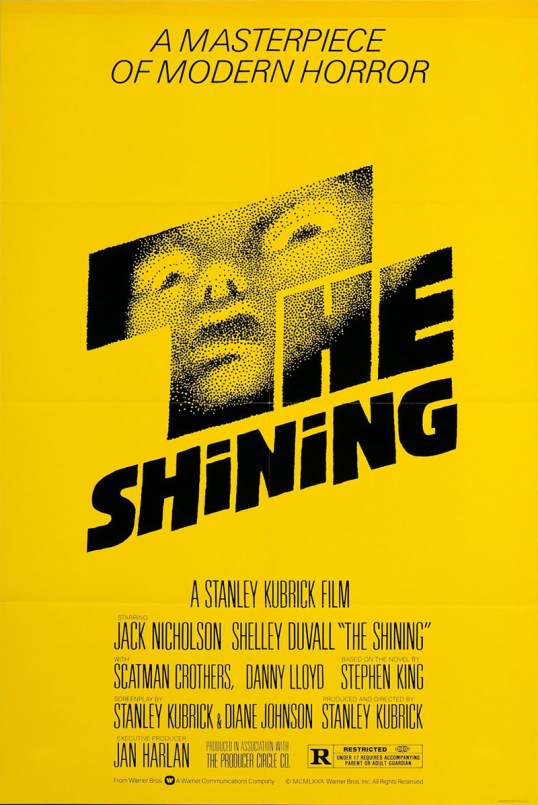
Scenes That I Love: Danny Meets The Grady Girls in The Shining


Stanley Kubrick’s The Shining is unique in that it’s a horror film that freaks me out every time that I see it.  Even though I’ve sat through the film so many times that I now practically have it memorized, The Shining still scares me.

And, to be honest, a lot of that has to do with the daughters of Charles (or was that Delbert) Grady.  Early on, we’re told that the previous caretaker, Grady, went crazy from the isolation and ended up killing his daughters with an axe.  And yet, if his daughters are dead, what are they doing in the hallway of the Overlook Hotel, inviting poor little Danny Torrance to come play with them!?

AGCK!

Seriously, this scene freaks me out every time that I see it.

Italian Horror Spotlight: The Last Shark (dir by Enzo G. Castellari)


Chances are this is going to sound familiar to you.

The 1981 film, The Last Shark (a.k.a. Great White), takes place in a small seaside community.  A teenager goes out in the water, doesn’t pay enough attention to the surroundings, and ends up getting eaten.  Local civic leader named Peter Benton (James Franciscus) wants to shut down the beach.  A crusty old shark hunter named Ron Hammer (Vic Morrow) says that he can take care of the problem.  However, Mayor William Wells (Joshua Sinclair) refuses to even admit that there’s a shark in the water.  After all, sharks are not only bad for business but also could potentially keep him from being President someday!

However, the shark attacks continue.  After his son is nearly eaten by a shark — a great white, to be exact — even the mayor is forced to admit that something must be done….

If you think that the plot of The Last Shark sounds like it has a lot in common with Jaws …. well, you’re right.  And you’re not alone!  Universal Pictures though that The Last Shark borrowed a bit too much from Steven Spielberg’s seminal film as well.  In 1982, Universal filed a lawsuit to block the film’s distribution in the United States.  Though the film played for a month (and grossed 18 million dollars) while the case worked its way through the legal system, a federal judge eventually ruled that The Last Shark was too similar to Jaws and, as a result, The Last Shark was not only yanked from theaters but it also didn’t even get a proper video release until 2013!  Because of all this, The Last Shark has developed a cult following.  It’s literally the film that the major studios didn’t want people to see.  Of course, The Last Shark was neither the first nor the lat film to rip-off Jaws.  It was, however, one of the few to make a good deal of money and I imagine that was the main motivation behind Universal’s lawsuit.

Interestingly enough, The Last Shark actually has more in common with Jaws 2 than with Jaws.  Just as in Jaws 2, a bunch of stupid teenagers make the mistake of going after the shark themselves.  Also, much as in Jaws 2, the shark manages to bite down on a helicopter and pull it under the water.  A quality shark movie always features at least one helicopter getting destroyed.  That the original Jaws become a classic despite not featuring any helicopter destruction is a testament to Steven Spielberg’s ability as a director.

As for The Last Shark, it’s a thoroughly shameless and undeniably entertaining film.  Director Enzo G. Castellari (who directed several Franco Nero films and might be best-known to American audiences for directing the original Inglorious Bastards) keeps the action moving at steady pace and even manages to give us a few striking images of shark mayhem.  (The scene where a man gets bitten in half manages to be both shocking and ludicrous at the same time.)  James Franciscus appears to be taking himself far too seriously in the role of Peter Benton but Vic Morrow seems to be having a good time as the ill-tempered shark hunter.

A few other thoughts on The Last Shark:

Mayor Wells, who has presidential ambitions, also has a mustache and a haircut that makes him look like a 70s porn actor.  (In fact, with the exception of James Franciscus, nearly every adult male in this movie has a mustache.)  Whenever Mayor Wells walked through a scene, I found myself expecting to hear a lot of bass and plenty of wah wah on the soundtrack.

Secondly, it would appear that the best way to track down a shark is to drop a steak in the water.  At least, that’s the lesson I learned from watching The Last Shark.  There are actually a handful of scenes of shark hunters announcing that they’re about to go hunt for the shark and then holing up a steak.  Forget about using blood or noise to attract your prey!  Instead, just toss some spare ribs in the ocean and wait for the shark to show up!

Anyway, Italian filmmakers were always fairly shameless when it came to ripping off successful movies.  In fact, one reason why I love Italian cinema is because of that very lack of shame.  Whatever its flaws, The Last Shark is a film totally without shame and, for that reason, it’s more than worth viewing.

4 Shots From 4 Nature-Run-Amok Films: Frogs, Grizzly, The Day of the Animals, Empire of the Ants


4 Shots From 4 Films is just what it says it is, 4 shots from 4 of our favorite films. As opposed to the reviews and recaps that we usually post, 4 Shots From 4 Films lets the visuals do the talking.

Nature takes it revenge in these 4 shots from 4 films!

4 Shots From 4 Nature-Run-Amok Films

Frogs (1972, dir by George McGowan)

Grizzly (1976, dir by William Girdler)

Day of the Animals (1977, dir by William Girdler)

Empire of the Ants (1977, dir by Bert I. Gordon)

Horror Film Review: Jaws 3 (dir by Joe Alves)


So, this is a strange one.

As the title states, this 1983 film is the third sequel to the Jaws.  As I pointed out in my reviews of the first film and Jaws 2, the first two films all starred Roy Scheider and took place on Amity Island.  In fact, it can be argued that Amity Island was almost as important to the success of the first two films as the shark.  When Martin Brody conquered his fears and got out on the water, it wasn’t just to destroy a shark.  It was also to protect a community under siege.

Well, there’s no such community like Amity Island in Jaws 3.  And there’s no Roy Scheider either.  Instead, our hero is Martin Brody’s son, Mike.  Mike is all grown up and working as the senior marine biologist at SeaWorld Orlando.  Mike is now played by a very young and very bearded Dennis Quaid.  This leads to an interesting situation where Mike — who grew up in New England and whose father was a former New York City cop — has a very pronounced Texas accent.  That’s not a complaint, of course.  I’m from Texas so I’m always happy to see (and hear) a fellow Texan in a movie.  Plus, Dennis Quaid’s a likable actor.  Still, it somehow seems appropriate that the third installment of the Jaws franchise would feature a New Yorker growing up to be a Texan.  I mean, if we’re going to accept that the same outlandish event can keep happening to the members of the same family then I guess anything’s possible.

The other Brody son, Sean, is also featured in the film.  Sean is now played by John Putch and, when he first shows up to visit Mike, he’s dressed like he just got off work at the rodeo.  You have to kind of wonder if maybe the trauma of nearly getting killed in Jaws 2 led to both of the Brody boys rejecting their New England roots and embracing the ways of the west.  Say what you will about Texas and all the states in between El Paso and Los Angeles, we’re pretty much shark free.

Anyway, this is a Jaws films so you can guess what happens.  A big shark ends up getting loose in SeaWorld and Mike tries to close the park down, just to be overruled by the park’s manger, Calvin Bouchard (Lou Gossett, Jr.).  Meanwhile, a hunter named Philip Fitzroyce (Simon MacCorkindale) announces that he will personally track down and kill the shark.  As you might guess just from the fact that his last name is Fitzroyce, Philip is arrogant and speaks with a posh accent.  Mike takes an immediate dislike to him but I was happy whenever Philip showed up, mostly because Simon MacCorkindale gave a performance that was so over-the-top that it was fun to watch.  Whenever MacCorkindale and Gossett got together in the same scene, the film stopped being about the shark and instead became a contest to see who could overenunciate their dialogue with the most style.

(In the end, MacCorkindale won, but only narrowly.  A few years after Jaws 3, Gossett would co-star in The Principal and would go on to secure his spot in the Overenunciation Hall Of Fame by pronouncing the word “drugs” in such a way that I first thought he was talking about druids.)

One of the reasons why Jaws 3 seems odd when watched today is because it was originally released in 3-D.  (In fact, the film’s original title was Jaws 3-D.)  As a result, there’s a lot of scenes of people either walking towards or pointing directly at the camera.  Whenever anyone holds up a pole or a harpoon or anything similar, you know that they’re going to end up pointing the end of it straight at the viewer.  At the start of the film, when the shark bites a fish in half, the fish’s head ominously floats closer and closer to the camera.  There’s a lot of scenes that were obviously designed to make audiences says, “Oh my God!  I feel like I could reach out and touch it!” but, in the non-3D version, those scenes are just weirdly paced and slightly out-of-focus.  (At one point during the film, the picture was so blurry that I actually checked to make sure I had my contacts in.)

Add to that, there’s more than few scenes where it’s obvious that the shark has been superimposed into the action.  If the first two Jaws films featured big sharks, Jaws 3 often seems to feature a cartoon shark.  In short, what may have been impressive in a theater in 1983 to an audience wearing special glasses is far less impressive when you’re watching the movie at 3 in the morning on AMC.

The other weird thing about this film is that it was actually filmed at SeaWorld Orlando.  I’m going to guess that the film was supposed to serve as a 99-minute advertisement and a lot of time is devoted to people talking about how much they love SeaWorld.  At the same time, this film also features the park’s manager refusing to shut down the park and basically putting everyone’s life in danger.  If anything, the film’s main message seems to be, “If you go to SeaWorld, you’ll die.”  You have to wonder if some executive lost his job after Jaws 3 came out.

Anyway, Jaws 3 is a silly movie that never quite comes to life in the way that both Jaws and, to a lesser extent, Jaws 2 did.  Yes, the shark’s ruthless and we get to hear the familiar music and there’s some cute dolphins but otherwise, the movie itself is just kind of bland.  Rumor has it that Jaws 3 was originally going to be a comedy called Jaws 3 People 0.  That probably would have made for a more memorable movie but, at the same time, I got some good laughs out of the scene where the tourists in an underwater tunnel realized that a shark was watching them so, in the end, everything worked out for the best.