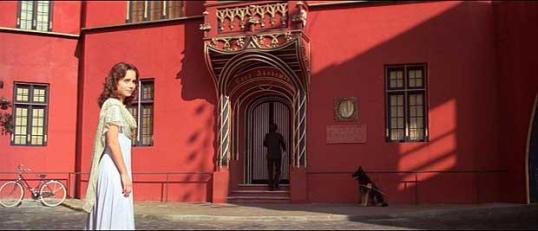
4 Shots From 4 Films: Eraserhead, The Hills Have Have Eyes, Shock Waves, Suspiria


4 Shots From 4 Films is just what it says it is, 4 shots from 4 of our favorite films. As opposed to the reviews and recaps that we usually post, 4 Shots From 4 Films lets the visuals do the talking!

This October, we’re using 4 Shots From 4 Films to look at some of the best years that horror has to offer!

4 Shots From 4 1977 Horror Films:

Eraserhead (1977, directed by David Lynch)

The Hills Have Eyes (1977, dir by Wes Craven)

Shock Waves (1977, dir by Ken Wiederhorn)


Suspiria (1977, dir by Dario Argento)

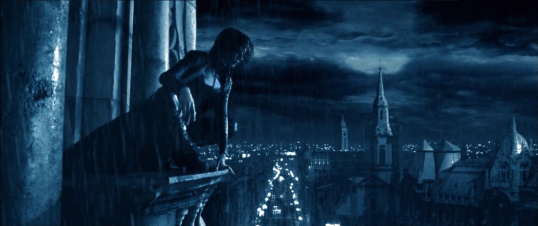
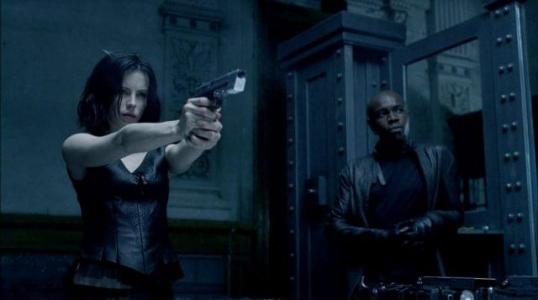
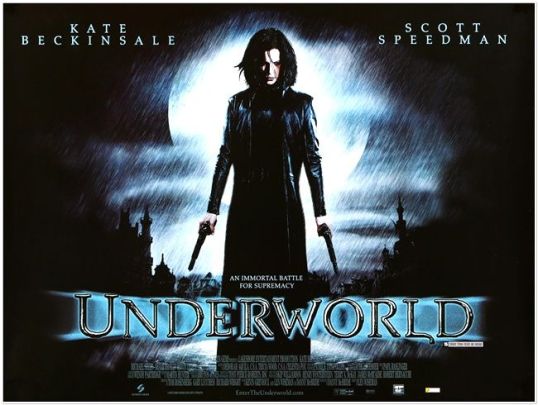
Horror Film Review: Underworld (dir by Len Wiseman)


Underworld is one hell of a confusing movie.

I saw Underworld when it was first released in theaters, way back in 2003.  And I’ve rewatched more than a handful of times since then, mostly because of my huge girl crush on Kate Beckinsale.  And every time that I watch this movie, I find myself wondering what the Hell’s going on.

I mean, I get it.  There’s a centuries-old war between vampires and Lycans and the Lycans are basically werewolves but they’re called “Lycan” because Lycan sounds better than werewolf.  The Death Dealers are vampires who go around and shoot Lycans on dark rainy nights.  And apparently, the vampires think that the Lycan threat has been neutralized because the leader of the Lycans, Lucian, is dead but maybe he’s not because Lucian’s body was never found.  And meanwhile, there’s three vampire rulers and two of the rulers get to sleep while the other one reigns and they switch out every few centuries.

Oh!  And the vampires and the Lycans are not really supernatural creatures.  Instead, they’re people who have been infected by a virus that causes them to live a really long time and have a craving for blood or something like that.  So, that explains why none of the vampires turn into a bat or anything like that during the movie.  Instead, everyone just runs around and does parkour and shoots guns at one another.

Also, the vampires don’t have to prey on human beings because they’ve learned how to clone blood because cloning is the solution for everything.

And also, everything happens at night while it’s raining because the vampires and the Lycans are secretly living in the same world with humans, they’re just living underground.  They’re living in an underworld, if you will.

Also ….

Well, listen, there’s a lot of plot in this movie.  Underworld lasts for 121 minutes and there’s really not a slow spot in the entire film.  In fact, that’s probably one of the film’s greatest strengths.  The nonstop action keeps you from thinking about how the plot of the film just seems to be something that the filmmakers made up as they went along.  Instead of wondering how everything fits together, you’re too busy watching as the movie flies from violent set piece to another.

Underworld‘s other great strength is that it stars Kate Beckinsale.  Nowadays, the action girl who kicks ass and defeats evil while looking good has become such a cliche that it’s easy to forget just how exciting it was when we first saw Kate Beckinsale, clad in leather and effortlessly dodging bullets and ruthlessly killing Lycans.  Though its impact may have subsequently been diluted by too many sequels and imitations, watching Underworld for the first time was a very empowering experience.  Watching Underworld for the first time, I wanted to be Kate Beckinsale. If Kate could defeat both vampires and Lycans without breaking a sweat then I knew that I could defeat my own insecurities.   Of course, unlike Kate, I didn’t have the advantage of movie magic to help me down a backflip off of a wall and I ended up spraining my ankle but still, Kate Beckinsale in Underworld was the perfect antidote to years of previously watching women in horror and action films be treated like either disposable victims or damsels in need of rescue.

In Underworld, Kate Beckinsale played Selene, a Death Dealer who tries to figure out why the Lycans are all after a human named Michael (Scott Speedman).  Selene also falls in love with Michael, which leads to some complications after Michael gets bitten by Lucian (Michael Sheen), the Lycan leader who wasn’t really dead after all.  Meanwhile, Kraven (Shane Brolly) wants to take over the vampires and a vampire elder named Viktor (Bill Nighy) is woken up early and then ages backwards through the film, which is actually a pretty clever idea.

And, as I said before, it never really makes much sense.  But, as incoherent as Underworld may be, it’s still an undeniably addictive viewing experience.  The movie is pure style.  It takes place in a world where it’s always night and it’s always raining and where everyone is beautiful and deadly at the same time.  Whether they’re a vampire or a Lycan, People in Underworld movies don’t merely enter a room.  Instead, they throw the doors open and allows blue light to flood in as they make a grand entrance.  At times, the film’s style is so kinetic and overwhelming that it threatened to get a little bit silly but, again, that’s a part of the film’s appeal.  While Kate Beckinsale thrills you with her empowering performance, the visuals grab you and say, “We’re going on a trip and don’t worry about whether it makes any sense!”

That’s why I’ve watched Underworld several times.  It doesn’t have to make sense.  It just has to kick ass.


Horror on the Lens: The Last Man on Earth (dir. by Ubaldo Ragona and Sidney Salkow)


Hi there and Happy October 4th!  For today’s treat from the ranks of horror films that have fallen into the public domain, I present to you one of the most important films in horror history.  Though it wasn’t appreciated when it was first  released back in 1964, The Last Man On Earth was not only the 1st Italian horror film but George Romero has also acknowledged it as an influence on his own Night of the Living Dead.

It’s easy to be a little bit dismissive of The Last Man On Earth.  After all, the low-budget is obvious in every scene, the dubbing is off even by the standards of Italian horror, and just the name “Vincent Price” in the credits leads one to suspect that this will be another campy, B-movie.  Perhaps that’s why I’m always surprised to rediscover that, taking all things into consideration, this is actually a pretty effective film.  Price does have a few over-the-top moments but, for the most part, he gives one of his better performances here and the black-and-white images have an isolated, desolate starkness to them that go a long way towards making this film’s apocalypse a convincing one.  The mass cremation scene always leaves me feeling rather uneasy.

The film is based on Richard Matheson’s I Am Legend and no, it’s nowhere as good as the book.  However, it’s a lot better than the Will Smith version.

If you have 87 minutes to kill, please enjoy The Last Man On The Earth.

The TSL’s Horror Grindhouse: Guru, The Mad Monk (dir by Andy Milligan)


The 1970 film Guru, the Mad Monk opens with a woman being dragged, by two men, down a New York sidewalk.  In the background, you can clearly hear the sounds of Manhattan morning traffic as people head to work or school, presumably barely noticing that a movie is being made one block over.

Now, normally, that might not be a problem.  In fact, it’s the kind of things that you tend to expect from an independent film made in the early 70s.  Cinema verite was all the rage back then and many films from that period would incorporate documentary techniques, shooting on location and making use of actual bystanders and the sound of actual traffic.  However, Guru, the Mad Monk is supposed to be taking place on the isolated (and fictional) prison island of Mortavia.  Even more importantly, it’s supposed to be taking place in 1480.  Now, obviously, all historical films require a certain suspension of disbelief.  I mean, we know that no cinematic version of the 15th Century is going to be a 100% accurate and we really should be happy about that because the the 1400s were a pretty disgusting time to be alive.  I mean, we don’t need to see people tossing a chamber pot out of their bedroom window in order to accept that a film is taking place in a certain time period.  However, what we do need is for there not to be two scenes that feature the sounds of cars driving by the film’s set.  One half expects some random person to wander into the shot and hail a taxi.

Guru, the Mad Monk was directed by Andy Milligan, who is a legendary name as far as grindhouse filmmaking is concerned.  Milligan was an off-off broadway playwright-turned-exploitation filmmaker who didn’t let a lack of money and/or discernible talent prevent him from directing an estimated 29 films.  Milligan’s films are distinguished by angry (if usually incoherent) storylines, flamboyant performances from a stock company made up of local Staten Island actors, cheap gore effects, and poor sound quality.  One reason why you especially notice the sound quality is because a typical Milligan film is surprisingly talky.  It makes sense when you consider that Milligan developed his artistic vision while working in theater but, as a director, Milligan never seemed to figure out how to break free from the inherent stageyness of his scripts.

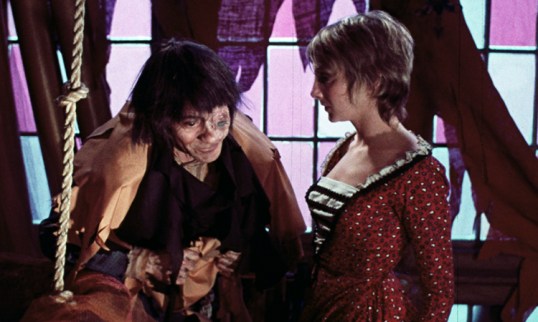
And yet, there’s also an odd and, at times, rather dream-like intensity to most of Milligan’s films.  Some of that is undoubtedly due to the fact that a typical Milligan film lacks any sort of intentional humor.  For instance, Guru features a supporting character named, believe it or not, Igor.  And yes, Igor (played by Jack Spencer)) is a hunchback.  And typically, you would think any filmmaker including a hunchback named Igor in a horror film made after 1940 would have to be having a little bit of fun with the cliches of the genre.  But no, Guru, The Mad Monk was obviously meant to be a very serious film and very much a reflection of the negative worldview that seemed to permeate all of Milligan’s films.  Guru, The Mad Monk is a dark film where almost everyone is corrupt and guilty of something and, watching the film, you get the feeling that its darkness is coming straight for Milligan’s heart.

Notice the white scooter in the background as these 15 century clergymen hold a meeting in Guru, The Mad Monk.

As for what the film’s about …. well, that’s hard to say.  The plot is rather difficult to follow.  Father Guru (played, in flamboyantly evil style, by Neil Flanagan) is the governor of the prison island of Mortavia.  (St. Peter’s, an Episcopal Church in Manhattan, stands in for the prison.)  Guru is usually quick to execute his prisoners so that his mistress, Lady Olga (Jacqueline Webb), can drink their blood.  It’s hard to say whether Lady Olga is supposed to be a real vampire or not.  When we first meet her, she just comes across as being a Lady Bathory-type but then there’s another scene where she appear to be wearing fake fangs and declares herself to be the “Soul of Darkness” so who knows for sure?

In between all of the eye gougings and beheadings that one would typically expect to find in a Milligan film, there’s also a love story as jailer Carl (Paul Lieber) falls in love with the latest prisoner, Nadja (Susan Israel).  Nadja is due to be executed but Guru agrees to spare her life if Carl will dig up some bodies and sell them to a nearby university.  Carl agrees but it soon turns out that he made a mistake trusting Father Guru.  It all leads to the expected bloodbath, along with Guru raving about the joys of living a life where “I preach one thing but continue to believe another!”

Clocking in at just 57 minutes, it’s a weird film.  Typically, I tend to defend films like this because, regardless of their flaws, they at least represent the director’s unique vision of the world.  That’s always been my defense when it’s come to Ed Wood, for instance.  But, when it comes to Milligan …. eh.  I mean, from a historical perspective, anyone who is interested in classic grindhouse and independent filmmaking has to see at least one Andy Milligan film.  And it can be said that you’ll never mistake an Andy Milligan film for anyone else’s.  But, at the same time, I have to admit that watching Guru was the longest 57 minutes of my life.

So, no …. unless you’re on some sort of Andy Milligan kick, I don’t really recommend Guru, The Mad Monk.

Sorry, Igor.
Horror Scenes That I Love: Caleb Meets The Witch


First released in 2016, The Witch is one of the best horror films of the past few years.

Based, so the film claimed, on actual historical records, The Witch told the story of a Puritan family living in 17th century New England and finding themselves haunted by not just a billy goat named Black Phillip but also by a baby-eating witch who lives in the forest.

In the scene below, Caleb (Harvey Scrimshaw) meets the Witch (Bathsheba Garnett) herself and they share a rather fateful kiss.  Among my friends, this scene is actually somewhat controversial.  Some of them wish that the film had kept the Witch off-screen for its entirety, the better to leave some ambiguity as to whether the family was truly cursed or just a victim of mass hysteria.  While I see their point, I think this scene works well in the overall scheme of the film.  In this scene, the witch reveals herself to be everything that the Puritans were supposedly against and her seduction of Caleb establishes that the film is ultimately a battle between the desires of the flesh and the piety of the soul.

It’s also interesting that, if The Witch can be viewed as a cinematic folk tale, the witch is wearing a red hood, linking her to the story of Little Red Riding Hood and leaving us to wonder who the wolf really is in this case.


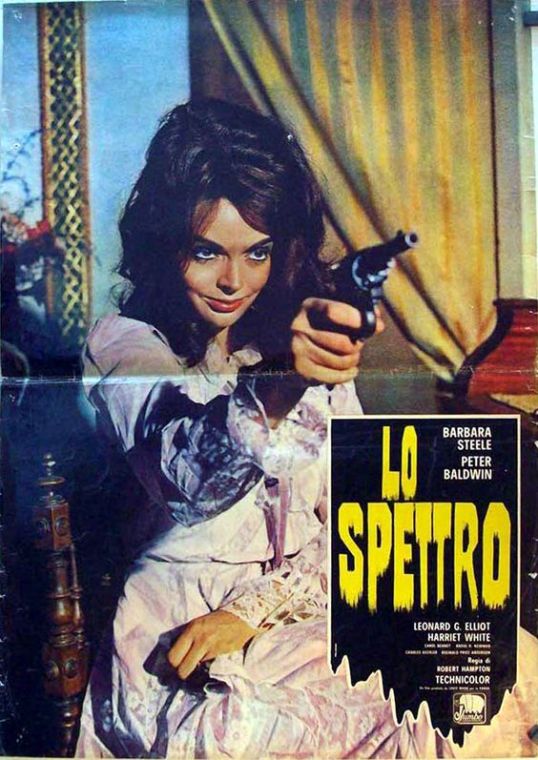
International Horror Film Review: The Ghost (dir by Ricarrdo Freda)


The 1963 Italian film The Ghost takes place in 1910 at an isolated Scottish estate.  It’s the type of estate where the mornings are always foggy, the nights are always full of lightning, and shadows always seem to be creeping around every corner.  The film opens with a darkened seance, one in which the estate’s housekeeper, Catherine (Harriet Medin), serves as a medium.  It’s an appropriate opening because, as we soon discover, everyone at this estate is obsessed with death.

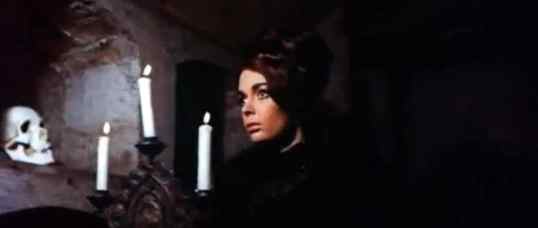
The estate’s owner, the appropriately-named Dr. Hichcock (Elio Jotta), is sickly and obviously doesn’t have much time left.  He speaks constantly of the end while his wife, Margaret (Barbara Steele) and his doctor, Charles Livingstone (Peter Baldwin), continually try to keep him for committing suicide.

Of course, just because Margaret and Charles seem to be committed to keeping Dr. Hichcock from killing himself that doesn’t mean that they aren’t willing to do the job themselves.  Margaret and Charles are lovers and are eagerly looking forward to getting their hands on Hichock’s fortune once he actually does die.  When Margaret suggests that maybe Charles could help the process out while still making Hichcock’s death look natural, Charles is, at first, a bit hesitant.  But, he finally goes through with it.

So, now, Dr. Hichcock’s dead!  They have a moodily-photographed funeral and everything!  However, Margaret and Charles are shocked when the doctor’s assets are revealed to amount to very little money.  Figuring out that he must have hidden his fortune somewhere in the estate, Margaret and Charles start to search but find themselves wondering how much they can trust each other.

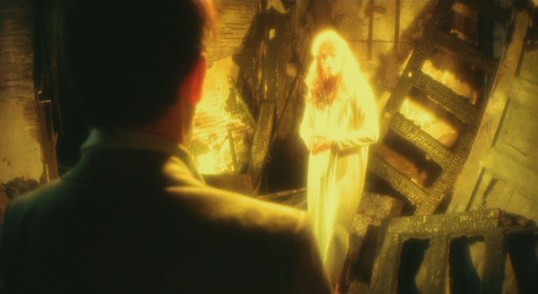
Making things even more complicated is that it appears that Dr. Hichcock might not be done with either one of them.  Soon, both Margaret and Charles are hearing the dead doctor’s voice echoing throughout the house and other strange things start to happen.  Even the housekeeper gets possessed and starts telling Margaret not to trust Charles.  Is Dr. Hichcock haunting them from the grave or is Margaret being driven mad by her own greed and guilt?  Or is there another solution?

The Ghost is a moody and enjoyable gothic mystery story, one that is dripping with atmosphere and which features a typically fierce and compelling performance from the greatest femme fatale of Euroshock cinema, Barbara Steele.  Take the murder at the center of the plot and then add in the creepy housekeeper and you have a film that feels almost like a cross between Rebecca and Double Indemnity.  It’s not a perfect film, of course.  Especially when compared to other Italian horror-thrillers of the era, the pace is a bit slow and you’ll probably figure out the story’s big twist before anyone in the film does.  But no matter.  Once you get used to it, the slow pace actually adds to the film’s creepy atmosphere and, if the plot is familiar, it’s familiar in the way that the best fairy tales and other cautionary legends are familiar.  It’s an enjoyably creepy film and a perfect example of why Barbara Steele remains one of the most revered icons of Italian horror.

4 Shots From 4 Films: Carrie, God Told Me To, The House With Laughing Windows, The Omen


4 Shots From 4 Films is just what it says it is, 4 shots from 4 of our favorite films. As opposed to the reviews and recaps that we usually post, 4 Shots From 4 Films lets the visuals do the talking!

This October, we’re using 4 Shots From 4 Films to look at some of the best years that horror has to offer!

4 Shots From 4 1976 Horror Films

Carrie (1976, dir by Brian De Palma)

God Told Me To (1976, dir by Larry Cohen)

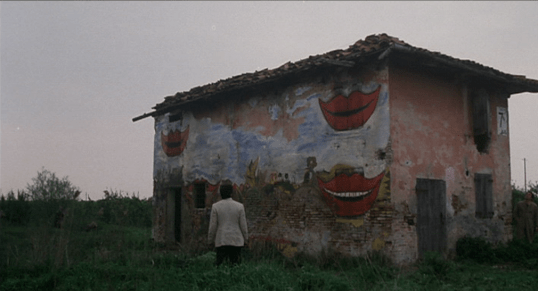
The House With Laughing Windows (1976, directed by Pupi Avati)

The Omen (1976, dir by Richard Donner)

Horror Film Review: The Devil’s Hand (dir by William J. Hole, Jr.)


Rick Turner (Robert Alda) has a problem.

Because he’s continually haunted by strange dreams, Rick hasn’t been getting much sleep.  As he explains to his incredibly understanding girlfriend, Donna (Ariadna Welter), the dreams involve a vision of a beautiful woman named Bianca (Linda Christian), who appears to be standing in the clouds while wearing a sheer negligee and calling out to him.

Donna insists that it’s probably nothing but Rick says that, after his last dream, he felt himself being drawn to a doll shop in downtown Los Angeles.  When Rick and Donna go down to the shop, they discover a doll of Bianca sitting in the window.  The owner of the shop, Frank (Neil Hamilton), insists that Rick came in earlier and specifically requested that Frank design the doll so that he could send it as a gift to another woman.  You would think that would upset Donna but she’s more interested in the fact that she’s found a doll that looks exactly like her.

Well, you can probably guess what happens.  Eventually, the doll that looks like Donna ends up pinned to the wall of the shop and Donna ends up in the hospital with a mysterious illness.  Rick manages to track down the real-life Bianca, who greets him in her apartment while wearing the same negligee from Rick’s dreams.  Bianca explains to Rick that she’s been reaching out to him because she wants him to join a cult that worships “Gamba, the Great Devil Dog.”

It turns out that the cult meets in the back of Frank’s doll shop.  Rick attends a meeting with Bianca and discovers that the cult is made up of exclusively of beautiful young women and bland, middle-aged men.  He even gets to witness a near-human sacrifice involving a wheel that’s studded with knives.  As Bianca explains it, Gamba sometimes turns the knives into rubber and then sometimes, he doesn’t.  Gamba’s unpredictable like that.

Bianca explains that Rick can have everything he wants if he just gives his soul over to the Devil Dog.  But what about Donna, who is still in the hospital?

The Devil’s Hand is a low-budget but occasionally effective horror film from 1962.  (Apparently, it was originally filmed in 1959 but it wasn’t released until 3 years later.  Linda Christian later said that she never actually got paid for appearing in this film, as the production company apparently ran out of money during filming.)  Oddly enough, the film opens with extremely cheerful surf music, which leads you to suspect that you’re about to see some sort of weird beach comedy.  Instead, The Devil’s Hand turns out to be a film about a cult operating in the shadows of Los Angeles.

The cult is probably the most interesting thing about the film.  Though the film doesn’t specifically call attention to this fact, it’s hard not to notice that most of the male cult members appear to be either accountants or middle-management types, the type who wear cheap suits and too much cologne.  It’s impossible not to be amused by the idea of a bunch of middle class nobodies gathering in the back of a doll shop so that they can worship the Great Devil Dog.  Neil Hamilton and Linda Christian are both perfectly cast as the leaders of the cult.  Hamilton is properly menacing while Christian seems to be having fun tempting Rick into the darkness.

Unfortunately, Rick’s not a very likable protagonist.  Even though his girlfriend is in the hospital, Rick doesn’t have any problem with going to the horse track and playing the stock market with Bianca.  In short, Rick comes across as being a bit of a jerk and you can’t help but feel that Donna might be better off without him.

Anyway, The Devil’s Hand is an entertaining occult film, one that’s definitely not meant to be taken too seriously.  It’s only 71 minutes long so it really plays more like an extended episode of an old anthology show than anything else.  (It just needs a narrator.)  The story moves quickly and you’ll never forget those accountants in the back of the doll shop.

Horror on the Lens: The Cabinet of Dr. Caligari (dir by Robert Wiene)


The Cabinet of Dr. Caligari is a film that I’ve shared four times previously on the Shattered Lens.  The first time was in 2011 and then I shared it again in 2014, 2015, 2016, 2017, and 2018!  Well, you know what?  I’m sharing it again because it’s a classic, it’s Halloween, and everyone should see it!  (And let’s face it — it’s entirely possible that some of the people reading this post right now didn’t even know this site existed in any of those previous years.  Why should they be deprived of Caligari just because they only now arrived?)

Released in 1920, the German film The Cabinet of Dr. Caligari is one of those films that we’ve all heard about but far too few of us have actually seen.  Like most silent films, it requires some patience and a willingess to adapt to the narrative convictions of an earlier time.  However, for those of us who love horror cinema, The Cabinet of Dr. Caligari remains required viewing.  Not only did it introduce the concept of the twist ending (M. Night Shyamalan owes his career to this film) but it also helped to introduce German expressionism to the cinematic world.

My initial reaction to The Cabinet of Dr. Caligari was that it simply wasn’t that scary.  It was certainly interesting to watch and I was happy that I was finally experiencing this film that I had previously only read about.  However, the film itself was obviously primitive and it was difficult for my mind (which takes CGI for granted) to adjust to watching a silent film.  I didn’t regret watching the film but I’d be lying (much like a first-year film student) if I said that I truly appreciated it after my first viewing.

But you know what?  Despite my dismissive initial reaction, the film stayed with me.  Whereas most modern films fade from the memory about 30 minutes after the end credits,The Cabinet of Dr. Caligari has stuck with me and the night after I watched it, I even had a nightmare in which Dr. Caligari was trying to break into my apartment.  Yes, Dr. Caligari looked a little bit silly staring through my bedroom window but it still caused me to wake up with my heart about to explode out of my chest.

In short, The Cabinet of Dr. Caligari passes the most important test that a horror film can pass.  It sticks with you even after it’s over.

For the curious with an open mind to watch with, here is Robert Wiene’s The Cabinet of Dr. Caligari!

Enjoy!

The TSL’s Horror Grindhouse: Single White Female 2: The Psycho (dir by Keith Samples)


13 years after the release of the first Single White Female and a countless host of imitations, an official sequel was released straight-to-video in 2005.  Subtitled “The Psycho,” (because apparently, Jennifer Jason Leigh was totally stable in the first film), Single White Female 2 tells the story of what happens when one roommate becomes obsessed with the other.  It all leads to murder and sexual infidelity and sudden hairstyle changes.

Maybe you’re thinking that this sounds exactly like the first Single White Female.  And, okay, there are some similarities.  But just consider some of the differences!

1. In the first Single White Female, Jennifer Jason Leigh’s character grows obsessed with Bridget Fonda after moving into Fonda’s apartment.  In Single White Female 2, Tess (played by Allison Lange) becomes obsessed with Holly (Kristen Miller) after Holly moves into Tess’s apartment.  See, this time, the psycho has her name on the lease.  HUGE DIFFERENCE!

2. In the first Single White Female, the plot is set in action after Bridget Fonda discovers that Steven Weber cheated on her.  In the sequel, the plot is set in motion by Holly’s original roommate, Jan (Brooke Burns), seducing a client who Holly was also sleeping with.  Again, that’s a huge difference and it also leads us to wonder if maybe Holly just sucks at choosing roommates.

3. In the first Single White Female, Jennifer Jason Leigh played an unstable bookstore employee.  In the sequel, Tess is a nurse who has a history of killing people who she feels would be happier dead.  In other words, Tess is a psycho with a mission.

4. In the first Single White Female, Jennifer Jason Leigh’s character hung out in a sleazy S&M club.  In the sequel, Tess actually performs on stage.

5. The first Single White Female actually looked like a real movie whereas the sequel has the flat and rather bland look of a film shot for and on video.

6. In the first Single White Female, you could understand why an insecure person would want to steal Bridget Fonda’s identity.  In the sequel, Holly’s identity doesn’t seem to be interesting enough to justify trying to steal.

7. In the first Single White Female, Jennifer Jason Leigh gave a performance that inspired both fear and sympathy.  In the sequel, Tess is just your typical straight-to-video movie psycho.  There’s no indication that she could have ever been anything other than a straight-to-video movie psycho.

8. The first Single White Female was a good film, almost despite itself.  The sequel is rather dull.

So, I guess my point here is that, if you want to watch a movie about a roommate stealing someone’s identity and getting a new haircut, the first Single White Female is the one to go with.  The sequel doesn’t really add anything worthwhile to the story, nor does it improve on it in any way.  Give some credit to Brooke Burns, who plays Holly’s untrustworthy ex-roommate and who, at the very least, seems to understand the type of movie in which she’s appearing.  Brooke Burns gets the worst lines but she at least seems to be having fun delivering them.  Otherwise, it’s best just to forget about this sequel.