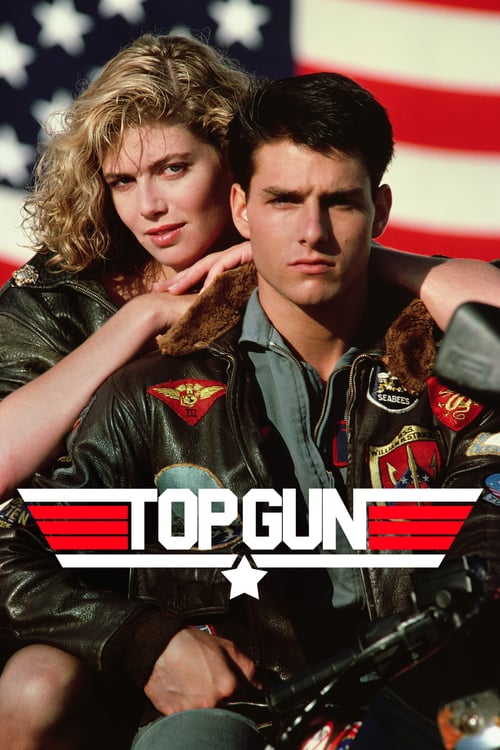
Film Review: Top Gun (dir by Tony Scott)


Oh, where to even begin with Top Gun?

First released in 1986, Top Gun is a film that pretty much epitomizes a certain style of filmmaking.  Before I wrote this review, I did a little research and I actually read some of the reviews that were published when Top Gun first came out.  Though it may be a considered a classic today, critics in 1986 didn’t care much for it.  The most common complaint was that the story was trite and predictable.  The film’s reliance on style over substance led to many critics complaining that the film was basically just a two-hour music video.  Some of the more left-wing critics complained that Top Gun was essentially just an expensive commercial for the military industrial complex.  Director Oliver Stone, who released the antiwar Platoon the same year as Top Gun, said in an interview with People magazine that the message of Top Gun was, “If I start a war, I’ll get a girlfriend.”

Oliver Stone was not necessarily wrong about that.  The film, as we all know, stars Tom Cruise as Pete “Maverick” Mitchell, a cocky young Navy flyer who attends the TOPGUN Academy, where he competes with Iceman (Val Kilmer) for the title of Top Gun and where he also spends a lot of time joking around with everyone’s favorite (and most obviously doomed) character, Goose (Anthony Edwards).  Maverick does get a girlfriend, Charlie (Kelly McGillis), but only after he’s had plenty of chances to show both how reckless and how skilled he can be while flying in a fighter plane.  Though the majority of the film is taken up with scenes of training and volleyball, the end of the film does give Maverick a chance to prove himself in combat when he and Iceman end up fighting a group of ill-defined enemies for ill-defined reasons.  It may not be an official war but it’s close enough.

That said, I think Oliver Stone was wrong about one key thing.  Maverick doesn’t get a girlfriend because he started a war.  He gets a girlfriend because he won a war.  Top Gun is all about winning.  Maverick and Iceman are two of the most absurdly competitive characters in film history and, as I watched the film last weekend, it was really hard not to laugh at just how much Cruise and Kilmer got into playing those two roles.  Iceman and Maverick can’t even greet each other without it becoming a competition over who gave the best “hello.”  By the time the two of them are facing each other in a totally savage beach volleyball match, it’s hard to look at either one of them without laughing.  And yet, regardless of how over-the-top it may be, you can’t help but get caught up in their rivalry.  Cruise and Kilmer are both at their most charismatic in Top Gun and watching the two of them when they were both young and fighting to steal each and every scene, it doesn’t matter that both of them would later become somewhat controversial for their off-screen personalities.  What matters, when you watch Top Gun, is that they’re both obviously stars.

“I’ve got the need for speed,” Tom Cruise and Anthony Edwards say as they walk away from their plane.  The same thing could be said about the entire movie.  Top Gun doesn’t waste any time getting to the good stuff.  We know that Maverick is cocky and has father issues because he’s played by Tom Cruise and Tom Cruise always plays cocky characters who have father issues.  We know that Iceman is arrogant because he’s played by Val Kilmer.  We know that Goose is goofy because his nickname is Goose and he’s married to Meg Ryan.  The film doesn’t waste much time on exploring why its characters are the way they are.  Instead, it just accepts them for being the paper-thin characters that they are.  The film understands that the the most important thing is to get them into their jets and sends them into the sky.  Does it matter that it’s sometimes confusing to keep track of who is chasing who?  Not at all.  The planes are sleek and loud.  The men flying them are sexy and dangerous.  The music never stops and the sun never goes down unless the film needs a soulful shot of Maverick deep in thought.  We’ve all got the need for speed.

In so many ways, Top Gun is a silly film but, to its credit, it also doesn’t make any apologies for being silly.  Instead, Top Gun embraces its hyperkinetic and flashy style.  That’s why critics lambasted it in 1986 and that’s why we all love it in 2020.  And if the pilots of Top Gun do start a war — well, it happens.  I mean, it’s Maverick and Iceman!  How can you hold it against them?  When you watch them fly those planes, you know that even if they start World War III, it’ll be worth it.  If the world’s going to end, Maverick’s the one we want to end it.
 

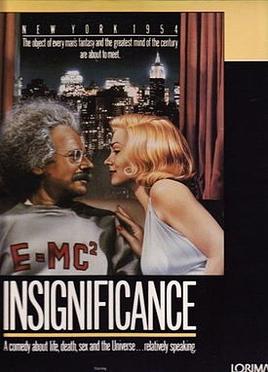
Film Review: Insignificance (dir by Nicolas Roeg)


The 1985 film, Insignificance, opens in New York City in the 1950s.

On the streets of New York, a crowd has gathered to watch as the Actress (Theresa Russell), a famous sex symbol, is filmed standing on a grate while wearing a white dress.  Beneath the street and the Actress, a fan has been set up and the crowd of onlookers cheers as the Actress’s skirt is blown up around her hips, again and again.  Standing in the crowd, the Actress’s husband, the Ballplayer (Gary Busey), watches and shakes his head in disgust.  After the scene has been shot, the Actress hops in a taxi while the Ballplayer chases after her.  A very famous man is in town and the Actress is on her way to pay him a visit.

In a nearby bar, the Senator (Tony Curtis), drinks and talks and sweats.  Though it may not be obvious from looking at him, the Senator is a very powerful man.  He’s leading an investigations into subversives who may be trying to bring down the United States government.  He may look like a small-time mobster but the Senator can make and destroy people on a whim.  He’s come to New York on a very specific mission.  He and his goons are planning on pressuring another famous man into testifying before the Senator’s committee.

Though they don’t know it, both the Actress and the Senator are planning on dropping in on the same man.  The Professor (Michael Emil) is a world-renowned genius.  When we first see him, he is sitting alone in a hotel room and looking at a watch that has stopped at 8:15.  The public may know the Professor for his eccentricities but, in private, he is a haunted man.  The Professor’s work was instrumental in the creation of the first atomic bomb.  And now, with both the U.S. and Russia stockpiling their atomic arsenals and the world seemingly on the verge of war, the Professor fears that his work will be the end of humanity.

Though none of the characters are actually named over the course of the film, it should be obvious to anyone with even a slight knowledge of American history that the four main characters are meant to be versions of Marilyn Monroe, Joe DiMaggio, Joe McCarthy, and Albert Einstein.  Insignificance imagines a meeting between these four cultural icons and really, it’s not difficult to imagine a scenario in which they all could have met.  Joe DiMaggio actually was present during the filming of the subway grate scene from The Seven Year Itch and most accounts record his reaction as being not that different from what’s portrayed in Insignificance.  Albert Einstein was suspected of having communist sympathies and several scientific figures (including many who worked on the Manhattan Project) were investigated during the McCarthy era.  Finally, Marilyn Monroe was often frustrated by her “dumb blonde” image and said that she found Albert Einstein to be a very attractive man.  When she died, a biography of Einstein was reportedly found on her nightstand.

In the film, the Senator pressures The Professor to appear before his committee.  It’s not long after the Senator leaves that the Actress arrives.  The Actress announces that she’s fascinating by the theory of relativity and, using balloons, toys, and a flashlight, she proceeds to demonstrate the theory for the Professor.  The befuddled Professor is impressed.  The Actress informs the Professor that he’s at the top of her list.  Meanwhile, downstairs in another hotel room, the Senator is met by a prostitute who bears a resemblance to the Actress. The Ballplayer sits in the hotel bar, tearing up a picture of the Actress and wondering why their marriage is failing.

Because this film was directed by Nicolas Roeg, the film is full of seemingly random flashbacks.  We see the Senator as an altar boy, trying to impress a smiling priest.  We see the Ballplayer getting yelled at by his domineering father.  We see the Actress, growing up poor and being ogled, at first by the young boys at an orphanage and later by Hollywood execs.  Meanwhile, The Professor continually sees the destruction of Hiroshima.  His visions are apocalyptic and, towards the end of the film, he even gets a glimpse into a possible future of atomic hellfire.  It’s a film about fame and cultural transition, a film where people look to celebrities for hope while doomsday comes closer and closer.

Or something like that.  To be honest, I wanted to like Insignificance more than I actually did.  As is typical with so many of Nicolas Roeg’s films, Insignificance has an intriguing premise but the execution is a bit uneven.  There are moments of absolute brilliance.  Theresa Russell and Gary Busey both give perfect performances and the film’s final apocalyptic vision will haunt you.  And then there are moments when the film becomes a bit of a slog and the dialogue starts to get a bit too pretentious and on-the-nose.  Michael Emil has some good moments as the Professor but there are other moments when he seems to be lost.  Meanwhile, Tony Curtis gives such a terrible performance as The Senator that he throws the entire film off-balance.  Curtis bulges his eyes like a madman and delivers his lines like a comedian doing a bad 1930s gangster impersonation.

That said, Insignificance is still an interesting film.  It’s uneven but intriguing.  Though the film may take place in the 50s and may deal with a quartet of historical figures, it’s themes are still relevant in 2020.  People still tend to idealize celebrities.  Politicians still hold onto power by exploiting fear.  The possibility that everything could just end one day is still a very real one.  Insignificance is a film worth watching, even if it doesn’t completely work.

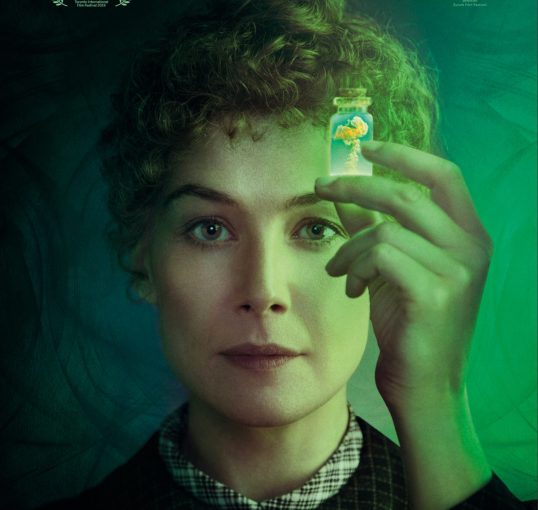
Film Review: Radioactive (dir by Marjane Satrapi)


If you want to talk about the birth of the modern world, you have to talk about Marie Curie.

That’s the argument made by the biopic, Radioactive.  It’s a compelling argument and it’s very much correct.  Born in Poland and a citizen of France, Marie Curie was the 1st woman to win the Nobel Prize, the 1st person and only woman to win the Nobel Prize a second time, and the only person to win a Nobel Prize in two scientific fields.  She shared her first Nobel Prize (in Physics) with her husband, Pierre.  After Pierre’s tragic death, Marie won her second Nobel, this time for Chemistry.  Both her daughter and her son-in-law would go on to win Nobel Prizes of their own and the Curie family continues to produce notable scientists to this very day.

Marie Curie is best known for her pioneering research on radioactivity, a coin that she termed.  She developed techniques for isolating radioactive isotopes.  She discovered that radioactivity could be used to battle aggressive forms of cancer.  Without her research, there would be no nuclear power, no chemotherapy, no X-ray machines, and no atomic weaponry.  Marie Curie is one of the few people about whom it can legitimately be said that they changed the world.  Of course, Curie herself later died of a radiation poisoning.

Radioactive opens with Marie (played by Rosamund Pike) on the verge of death, before flashing back to show us her early life and she went from being an obscure scientist to becoming the world renowned Madame Curie.  We watch as she meets and falls in love with Pierre Curie (Sam Riley).  The film celebrates not only their love for each other but also takes a look at Marie’s struggle to escape from Pierre’s shadow.  Though she was acknowledged as his partner and won her first Nobel Prize with him, it’s not until Pierre is trampled death by a bunch of horses that Marie’s genius is truly acknowledged.  The scenes in which Marie expresses her frustration at being overshadowed by her husband are some of the best in the film, largely because the film doesn’t make the mistake of attempting to portray Pierre as intentionally stealing all of the glory for himself.  Instead, society just assumes that Pierre deserves most of the credit because …. well, Pierre’s a man and Marie’s a woman.

Unfortunately, Radioactive makes some perplexing narrative choices.  Throughout the film, there are random moments when we get a sudden flashfoward and see random people interacting with radioactivity.  For instance, we go to a hospital in the 1950s and we listen as a doctor explains that he’s going to use radioactivity to help a patient combat cancer.  Another scene features the atomic bomb being dropped on Hiroshima.  We see the nuclear tests in Los Alamos.  One moment, Marie is crying in the middle of the street.  The next minute, an ambulance drives past her, on the way to Chernobyl.  On the one hand, it’s easy to see what the film’s going for.  It’s showing us everything, good and bad, that will happen as a result of Marie Curie’s work.  It makes the very relevant argument that sometimes, in order to get something good (less pollution, treatments for cancer) you have to risk something bad, like the possibility of being vaporized by an atomic bomb.  But the flashforwards are handled so clumsily that they actually detract from the film.  When I watched the sequence taking place at the hospital, I found myself wondering if Marie Curie discovered bad acting before or after she discovered radioactivity.  This is probably one of the few instances where a biopic would have been helped by taking a more traditional approach to its material.

On the plus side, Radioactive does feature a very good performance from Rosamund Pike, who really deserves to be known for more than just killing Neil Patrick Harris in Gone Girl.  (Don’t spoiler alert me.  The film’s nearly 6 years old.  If you haven’t seen it yet, you weren’t ever going to.)  Radioactive is currently playing on Amazon Prime and you should definitely watch it if you’re planning on keeping radioactive isotopes in your desk at work.  Seriously, don’t do it.

Song of the Day: Final Theme From Cinema Paradiso by Ennio Morricone


Well, here we are.  All things must come to an end and today, our month-long tribute to Morricone comes to a close with one final piece of music from the greatest composer of our age.  I want to close things out with a piece from Morricone’s score for 1988’s Cinema Paradiso.

Here, from Cinema Paradiso, is the final theme:

Goodnight, Morricone.

Previous Entries In Our Tribute To Morricone:

  1. Deborah’s Theme (Once Upon A Time In America)
  2. Violaznioe Violenza (Hitch-Hike)
  3. Come Un Madrigale (Four Flies on Grey Velvet)
  4. Il Grande Silenzio (The Great Silence)
  5. The Strength of the Righteous (The Untouchables)
  6. So Alone (What Have You Done To Solange?)
  7. The Main Theme From The Mission (The Mission)
  8. The Return (Days of Heaven)
  9. Man With A Harmonic (Once Upon A Time In The West)
  10. The Ecstasy of Gold (The Good, The Bad, and the Ugly)
  11. The Main Theme From The Good, The Bad, and the Ugly (The Good, The Bad, and the Ugly)
  12. Regan’s Theme (The Exorcist II: The Heretic)
  13. Desolation (The Thing)
  14. The Legend of the Pianist (The Legend of 1900)
  15. Theme From Frantic (Frantic)
  16. La Lucertola (Lizard In A Woman’s Skin)
  17. Spasmodicamente (Spasmo)
  18. The Theme From The Stendhal Syndrome (The Stendhal Syndrome)
  19. My Name Is Nobody (My Name Is Nobody)
  20. Piume di Cristallo (The Bird With The Crystal Plumage)
  21. For Love One Can Die (D’amore si muore)
  22. Chi Mai (various)
  23. La Resa (The Big Gundown)
  24. Main Title Theme (Red Sonja)
  25. The Main Theme From The Cat O’Nine Tails (The Cat O’Nine Tails)
  26. Deep Down (Danger Diabolik!)
  27. Main Theme From Autopsy (Autopsy)
  28. Main Theme From Investigation of a Citizen Above Suspicion (Investigation of a Citizen Above Suspicion) 
  29. Main Theme From A Fistful of Dollars (A Fistful of Dollars)
  30. Main Theme From For A Few Dollars More (For A Few Dollars More)
  31. Gui La Tesa (Duck, You Sucker!)
  32. Malena (Malena)
  33. Chi l’ha vista morire? (Who Saw Her Die?)
  34. Neve (The Hateful Eight)

Song of the Day: Neve by Ennio Morricone


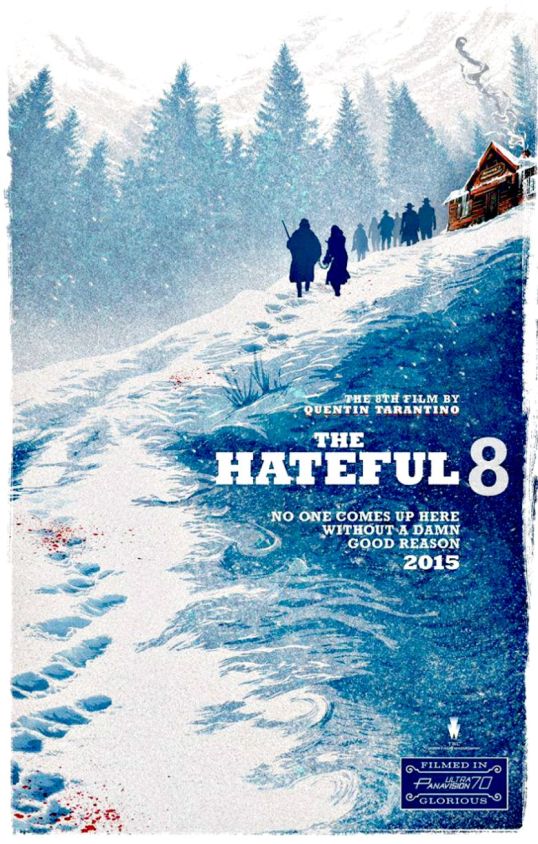
After decades of soundtracks that established him as one of the greatest of our modern composers, Ennio Morricone would win his first (and, sad to say, only) competitive Oscar in 2016.  (Morricone had previously been awarded an honorary Oscar for his overall body of work.)  He won that Oscar for his score for Quentin Tarantino’s 8th film, 2015’s The Hateful Eight.

As we are now winding down our tribute to Morricone, it only seems appropriate to share a piece of the soundtrack.  From the Hateful Eight, here is Neve:

Previous Entries In Our Tribute To Morricone:

  1. Deborah’s Theme (Once Upon A Time In America)
  2. Violaznioe Violenza (Hitch-Hike)
  3. Come Un Madrigale (Four Flies on Grey Velvet)
  4. Il Grande Silenzio (The Great Silence)
  5. The Strength of the Righteous (The Untouchables)
  6. So Alone (What Have You Done To Solange?)
  7. The Main Theme From The Mission (The Mission)
  8. The Return (Days of Heaven)
  9. Man With A Harmonic (Once Upon A Time In The West)
  10. The Ecstasy of Gold (The Good, The Bad, and the Ugly)
  11. The Main Theme From The Good, The Bad, and the Ugly (The Good, The Bad, and the Ugly)
  12. Regan’s Theme (The Exorcist II: The Heretic)
  13. Desolation (The Thing)
  14. The Legend of the Pianist (The Legend of 1900)
  15. Theme From Frantic (Frantic)
  16. La Lucertola (Lizard In A Woman’s Skin)
  17. Spasmodicamente (Spasmo)
  18. The Theme From The Stendhal Syndrome (The Stendhal Syndrome)
  19. My Name Is Nobody (My Name Is Nobody)
  20. Piume di Cristallo (The Bird With The Crystal Plumage)
  21. For Love One Can Die (D’amore si muore)
  22. Chi Mai (various)
  23. La Resa (The Big Gundown)
  24. Main Title Theme (Red Sonja)
  25. The Main Theme From The Cat O’Nine Tails (The Cat O’Nine Tails)
  26. Deep Down (Danger Diabolik!)
  27. Main Theme From Autopsy (Autopsy)
  28. Main Theme From Investigation of a Citizen Above Suspicion (Investigation of a Citizen Above Suspicion) 
  29. Main Theme From A Fistful of Dollars (A Fistful of Dollars)
  30. Main Theme From For A Few Dollars More (For A Few Dollars More)
  31. Gui La Tesa (Duck, You Sucker!)
  32. Malena (Malena)
  33. Chi l’ha vista morire? (Who Saw Her Die?)

Song of the Day: Chi l’ha vista morire? by Ennio Morricone


Today’s song of the day comes to use Ennio Morricone’s score for the 1972 giallo, Who Saw Her Die?  This may not be one Morricone’s best-known soundtracks but it’s still one of his best.  The movie’s pretty good as well.

From Who Saw Her Die:

Previous Entries In Our Tribute To Morricone:

  1. Deborah’s Theme (Once Upon A Time In America)
  2. Violaznioe Violenza (Hitch-Hike)
  3. Come Un Madrigale (Four Flies on Grey Velvet)
  4. Il Grande Silenzio (The Great Silence)
  5. The Strength of the Righteous (The Untouchables)
  6. So Alone (What Have You Done To Solange?)
  7. The Main Theme From The Mission (The Mission)
  8. The Return (Days of Heaven)
  9. Man With A Harmonic (Once Upon A Time In The West)
  10. The Ecstasy of Gold (The Good, The Bad, and the Ugly)
  11. The Main Theme From The Good, The Bad, and the Ugly (The Good, The Bad, and the Ugly)
  12. Regan’s Theme (The Exorcist II: The Heretic)
  13. Desolation (The Thing)
  14. The Legend of the Pianist (The Legend of 1900)
  15. Theme From Frantic (Frantic)
  16. La Lucertola (Lizard In A Woman’s Skin)
  17. Spasmodicamente (Spasmo)
  18. The Theme From The Stendhal Syndrome (The Stendhal Syndrome)
  19. My Name Is Nobody (My Name Is Nobody)
  20. Piume di Cristallo (The Bird With The Crystal Plumage)
  21. For Love One Can Die (D’amore si muore)
  22. Chi Mai (various)
  23. La Resa (The Big Gundown)
  24. Main Title Theme (Red Sonja)
  25. The Main Theme From The Cat O’Nine Tails (The Cat O’Nine Tails)
  26. Deep Down (Danger Diabolik!)
  27. Main Theme From Autopsy (Autopsy)
  28. Main Theme From Investigation of a Citizen Above Suspicion (Investigation of a Citizen Above Suspicion) 
  29. Main Theme From A Fistful of Dollars (A Fistful of Dollars)
  30. Main Theme From For A Few Dollars More (For A Few Dollars More)
  31. Gui La Tesa (Duck, You Sucker!)
  32. Malena (Malena)

Song of the Day: Malena by Ennio Moricone


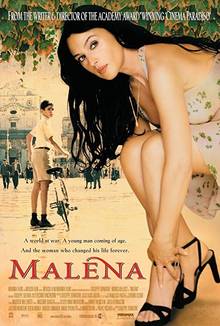
Today’s song of the day comes from Ennio Morricone’s score for the 2000 Italian film, Malena!

Here, from a performance in Chile, is Morricone’s Malena:

Previous Entries In Our Tribute To Morricone:

  1. Deborah’s Theme (Once Upon A Time In America)
  2. Violaznioe Violenza (Hitch-Hike)
  3. Come Un Madrigale (Four Flies on Grey Velvet)
  4. Il Grande Silenzio (The Great Silence)
  5. The Strength of the Righteous (The Untouchables)
  6. So Alone (What Have You Done To Solange?)
  7. The Main Theme From The Mission (The Mission)
  8. The Return (Days of Heaven)
  9. Man With A Harmonic (Once Upon A Time In The West)
  10. The Ecstasy of Gold (The Good, The Bad, and the Ugly)
  11. The Main Theme From The Good, The Bad, and the Ugly (The Good, The Bad, and the Ugly)
  12. Regan’s Theme (The Exorcist II: The Heretic)
  13. Desolation (The Thing)
  14. The Legend of the Pianist (The Legend of 1900)
  15. Theme From Frantic (Frantic)
  16. La Lucertola (Lizard In A Woman’s Skin)
  17. Spasmodicamente (Spasmo)
  18. The Theme From The Stendhal Syndrome (The Stendhal Syndrome)
  19. My Name Is Nobody (My Name Is Nobody)
  20. Piume di Cristallo (The Bird With The Crystal Plumage)
  21. For Love One Can Die (D’amore si muore)
  22. Chi Mai (various)
  23. La Resa (The Big Gundown)
  24. Main Title Theme (Red Sonja)
  25. The Main Theme From The Cat O’Nine Tails (The Cat O’Nine Tails)
  26. Deep Down (Danger Diabolik!)
  27. Main Theme From Autopsy (Autopsy)
  28. Main Theme From Investigation of a Citizen Above Suspicion (Investigation of a Citizen Above Suspicion) 
  29. Main Theme From A Fistful of Dollars (A Fistful of Dollars)
  30. Main Theme From For A Few Dollars More (For A Few Dollars More)
  31. Gui La Tesa (Duck, You Sucker!)

Song of the Day: Gui La Testa by Ennio Morricone


Today’s song of the day comes from Ennio Morricone’s score for Sergio Leone’s 1971 film, Duck, You Sucker!  Also known as A Fistful of Dynamite, this is probably Leone’s most underrated film and Morricone’s excellent score seems to be a bit underrated as well.

Though it may have been dismissed when originally released, many critics have recently discovered that the film actually holds up surprisingly well.  So does Morricone’s score.

From Duck, You Sucker!:

Previous Entries In Our Tribute To Morricone:

  1. Deborah’s Theme (Once Upon A Time In America)
  2. Violaznioe Violenza (Hitch-Hike)
  3. Come Un Madrigale (Four Flies on Grey Velvet)
  4. Il Grande Silenzio (The Great Silence)
  5. The Strength of the Righteous (The Untouchables)
  6. So Alone (What Have You Done To Solange?)
  7. The Main Theme From The Mission (The Mission)
  8. The Return (Days of Heaven)
  9. Man With A Harmonic (Once Upon A Time In The West)
  10. The Ecstasy of Gold (The Good, The Bad, and the Ugly)
  11. The Main Theme From The Good, The Bad, and the Ugly (The Good, The Bad, and the Ugly)
  12. Regan’s Theme (The Exorcist II: The Heretic)
  13. Desolation (The Thing)
  14. The Legend of the Pianist (The Legend of 1900)
  15. Theme From Frantic (Frantic)
  16. La Lucertola (Lizard In A Woman’s Skin)
  17. Spasmodicamente (Spasmo)
  18. The Theme From The Stendhal Syndrome (The Stendhal Syndrome)
  19. My Name Is Nobody (My Name Is Nobody)
  20. Piume di Cristallo (The Bird With The Crystal Plumage)
  21. For Love One Can Die (D’amore si muore)
  22. Chi Mai (various)
  23. La Resa (The Big Gundown)
  24. Main Title Theme (Red Sonja)
  25. The Main Theme From The Cat O’Nine Tails (The Cat O’Nine Tails)
  26. Deep Down (Danger Diabolik!)
  27. Main Theme From Autopsy (Autopsy)
  28. Main Theme From Investigation of a Citizen Above Suspicion (Investigation of a Citizen Above Suspicion) 
  29. Main Theme From A Fistful of Dollars (A Fistful of Dollars)
  30. Main Theme From For A Few Dollars More (For A Few Dollars More)

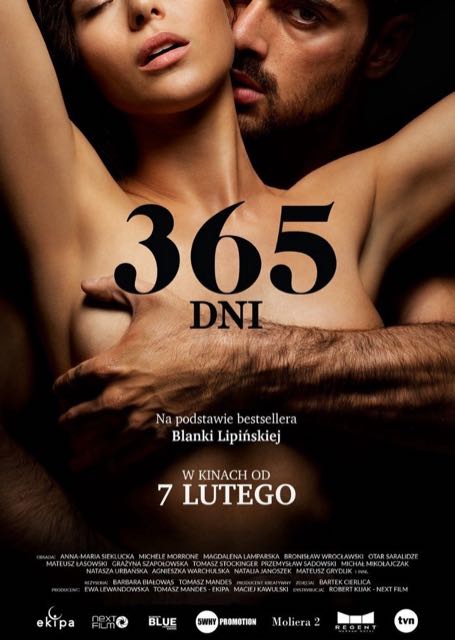
Val’s Mini-Post: A Jump In The Kiddie Pool With 365 Days (2020, dir. Barbara Bialowas & Tomasz Mandes)


Considering I am not on TikTok I of course heard about that challenge to watch the first scene of Gaspar Noé’s self-important, wish-fulfillment film called Love (2015). Fortunately, I had already subjected myself to that movie back in 2015. Unfortunately, that challenge apparently started with some Polish movie I had never heard of before called 365 Days. At the time of writing this post, this is the plot summary on IMDb for it:

Massimo is a member of the Sicilian Mafia family and Laura is a sales director. She does not expect that on a trip to Sicily trying to save her relationship, Massimo will kidnap her and give her 365 days to fall in love with him.

As no one will remember, when Fifty Shades Of Grey (2015) came out I tweeted that it sounded like it was a film for kids to watch during a sleepover so they can think they saw something. It turned out to be accurate. The plot summary above for 365 Days made me think the same thing, so of course I watched it. Don’t judge me. The previous three movies I watched were DDR With Joey King (The Kissing Booth 2), Basically Lego Power Rangers (The Lego Ninjago Movie), and Late Night Cable With 90’s 3D Graphics (Virtual Girl). I already know I have bad taste. So what did I think of it?

It’s not worth your time unless you are a kid who is looking for a movie that will make you think you saw something salacious. Go figure that it’s the same thing I said about Fifty Shades Of Grey. It’s almost like I mentioned that for a reason.

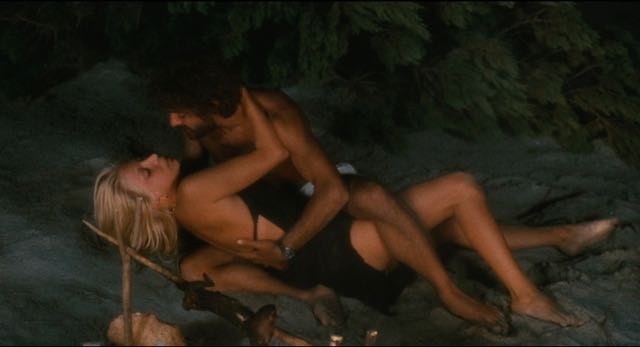
To add a little depth, it’s a pale imitation of something I could see Italian director Lina Wertmüller doing back in the 70s or 80s but with some modern, stylish set design and cinematography added on to it. Specifically, I’m thinking of Wertmüller’s Swept Away (1974)

Swept Away (1974)

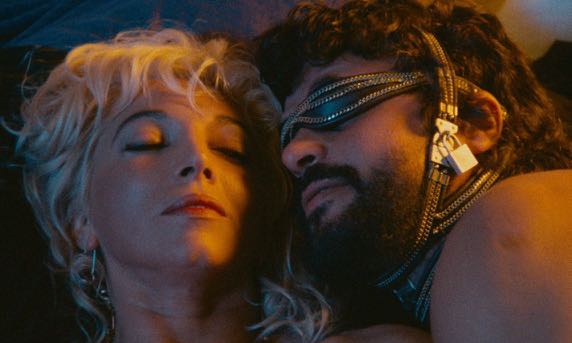
and Summer Night With Greek Profile, Almond Eyes And Scent Of Basil (1986).

Summer Night With Greek Profile, Almond Eyes And Scent Of Basil (1986)

And that’s me being very, very kind.

Here’s a couple screenshots that people have included on IMDb for obvious reasons. They get across what it’s like to watch this movie.

We meet again Joey King.

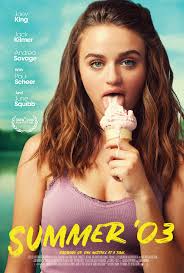
Summer ’03 (2018, dir. Becca Gleason)

It’s an image that is so taboo that it is quickly undercut by the poster for a coming-of-age movie with Joey King. It’s one of the many teases without any substance behind it that you’ll find in this film.

Yes, I’m aware it’s also similar to the poster for Lolita 2000 (1998). You don’t need to remind me.

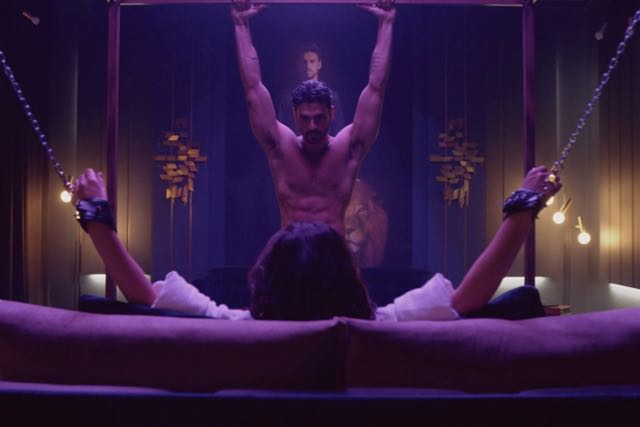
You might think that he is going to tame her like that lion back there. But like almost all of the sex stuff in this movie, it’s over very quickly and/or goes nowhere like the scene pictured above. Another woman shows up on the other side of the room, she appears to be kissing his knee over and over instead of centering herself, he approaches the kidnapped lady, and then decides against doing anything.

The only scene I remember being complete was a blow job he gets on an airplane from someone else to establish that he takes what he wants. That’s why aside from kidnapping her, he doesn’t really take what he wants in this movie. He nudges her in various ways to try and convince her to give it to him. Character development? I think it was their way of pretending as if she had at least as much choice as Beauty/Belle in Beauty And The Beast, which greatly varies depending on the film version you watch.

This is one of those erotica movies that if you haven’t seen something like it, or something more interesting, then it will still wash on by you without leaving much of an impression. It looks stylish. It’s well-shot. It tries to have some sort of forbidden plot-line to entice you into watching it and others into getting worked up about it. That’s about it!

I wish I had more to say, but I don’t think I should be recommending anything more along these lines–you can find those yourself. It’s also so forgettable that I’m losing memories of it as I type. I don’t think I can even say that it’s worth taking the time to riff. Skip it.

Song of the Day: The Main Theme From For A Few Dollars More by Ennio Morricone


Continuing our tribute to Ennio Morricone, today’s song of the day is the main theme from 1965’s For A Few Dollars More.  If Sergio Leone’s version of the old west was as a mythological landscape, Morricone’s music was always the perfect soundtrack.

Previous Entries In Our Tribute To Morricone:

  1. Deborah’s Theme (Once Upon A Time In America)
  2. Violaznioe Violenza (Hitch-Hike)
  3. Come Un Madrigale (Four Flies on Grey Velvet)
  4. Il Grande Silenzio (The Great Silence)
  5. The Strength of the Righteous (The Untouchables)
  6. So Alone (What Have You Done To Solange?)
  7. The Main Theme From The Mission (The Mission)
  8. The Return (Days of Heaven)
  9. Man With A Harmonic (Once Upon A Time In The West)
  10. The Ecstasy of Gold (The Good, The Bad, and the Ugly)
  11. The Main Theme From The Good, The Bad, and the Ugly (The Good, The Bad, and the Ugly)
  12. Regan’s Theme (The Exorcist II: The Heretic)
  13. Desolation (The Thing)
  14. The Legend of the Pianist (The Legend of 1900)
  15. Theme From Frantic (Frantic)
  16. La Lucertola (Lizard In A Woman’s Skin)
  17. Spasmodicamente (Spasmo)
  18. The Theme From The Stendhal Syndrome (The Stendhal Syndrome)
  19. My Name Is Nobody (My Name Is Nobody)
  20. Piume di Cristallo (The Bird With The Crystal Plumage)
  21. For Love One Can Die (D’amore si muore)
  22. Chi Mai (various)
  23. La Resa (The Big Gundown)
  24. Main Title Theme (Red Sonja)
  25. The Main Theme From The Cat O’Nine Tails (The Cat O’Nine Tails)
  26. Deep Down (Danger Diabolik!)
  27. Main Theme From Autopsy (Autopsy)
  28. Main Theme From Investigation of a Citizen Above Suspicion (Investigation of a Citizen Above Suspicion) 
  29. Main Theme From A Fistful of Dollars (A Fistful of Dollars)