As some of our regular readers undoubtedly know, I am involved in a few weekly live tweets on twitter. I host #FridayNightFlix every Friday, I co-host #ScarySocial on Saturday, and I am one of the five hosts of #MondayActionMovie! Every week, we get together. We watch a movie. We tweet our way through it.
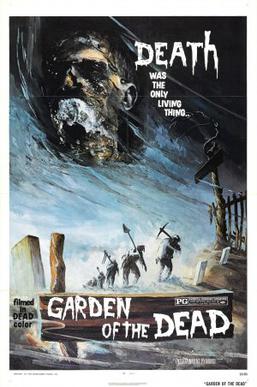
Tonight, for #ScarySocial, I will be hosting 1972’s Garden of the Dead! What happens when a bunch of deceased prisoners come back to life?
If you want to join us on Saturday night, just hop onto twitter, start the film at 9 pm et, and use the #ScarySocial hashtag! The film is available on Prime. I’ll be there co-hosting and I imagine some other members of the TSL Crew will be there as well. It’s a friendly group and welcoming of newcomers so don’t be shy.
4 Or More Shots From 4 Or More Films is just what it says it is, 4 shots from 4 of our favorite films. As opposed to the reviews and recaps that we usually post, 4 Shots From 4 Films lets the visuals do the talking!
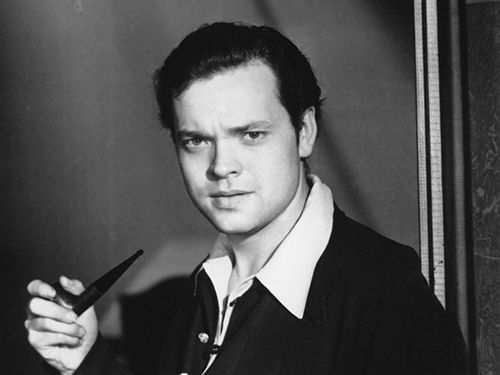
Today we celebrate what would have been the 108th birthday of the great Orson Welles! It’s time for….
4 Shots from 4 Orson Welles Films
Citizen Kane (1941, dir by Orson Welles, DP: Gregg Toland)
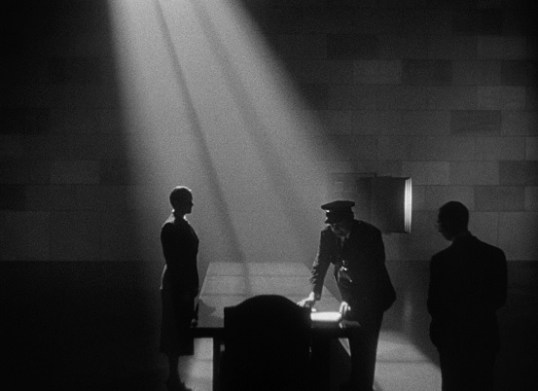
The Stranger (1946, dir by Orson Welles, DP: Russell Metty)
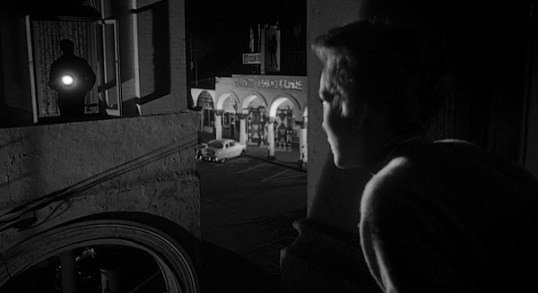
Touch of Evil (1958, dir by Orson Welles. DP: Russell Metty)
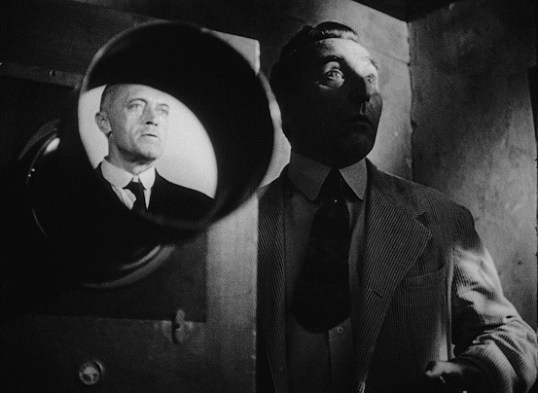
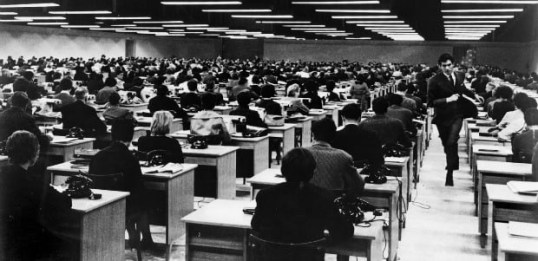
The Trial (1962, dir by Orson Welles, DP: Edmond Richard)
As some of our regular readers undoubtedly know, I am involved in a few weekly live tweets on twitter. I host #FridayNightFlix every Friday, I co-host #ScarySocial on Saturday, and I am one of the five hosts of #MondayActionMovie! Every week, we get together. We watch a movie. We tweet our way through it.
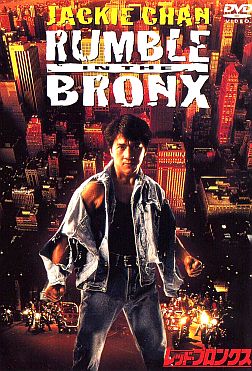
Tonight, at 10 pm et, #FridayNightFlix has got 1995’s Rumble in the Bronx!
Jackie Chan takes on the Bronx! And wouldn’t you know it, the Bronx looks a lot like Canada!
If you want to join us this Friday, just hop onto twitter, start the movie at 10 pm et, and use the #FridayNightFlix hashtag! It’s a friendly group and welcoming of newcomers so don’t be shy.
Rumble in The Bronx is available on Prime! See you there!
Cocaine Bear is the story of a duffel bag full of cocaine and the bear that gets into it. It’s loosely based on a true story. I say loosely because, in real life, the bear promptly overdosed and died. In the film, the bear not only survives eating a bag of cocaine but it also subsequently goes on a coke-fueled rampage.
The film opens in 1985, with a series of anti-drug commercials airing on television and a drug smuggler flying high above Georgia. The smuggler kicks his shipment of cocaine out of the plane, so that it can later be retrieved from the mountains below. Unfortunately, for him, he also manages to slip and plummets out of the plane to his death. A day later, in Georgia’s Chattahoochee–Oconee National Forest, two hikers are debating which band they should hire to play for their wedding when they happen to come across a black bear. The hikers decide to snap a picture of the bear. The bear, whose face is coved in cocaine, decides to eat the hikers.
Yep, both the bear and her two adorable cubs have discovered the joys of cocaine. It would probably be best to close down the park until someone can hold an intervention but, unfortunately, more and more people keep showing up. For instance, there’s a detective named Bob (Isiah Whitlock, Jr.) who is determined to track down the cocaine and use it to finally take down the St. Louis’s drug kingpin, Syd (Ray Liotta, in his final film role). Syd, meanwhile, has sent his son Eddie (Alden Ehrenreich) and his employee Daveed (O’Shea Jackson, Jr.) to retrieve the drugs. Daveed is determined to get the job done while Eddie, who is mourning the death of his wife, just wants to leave the family business behind. Local criminal Stache (Aaron Holliday) wants to deal the drugs himself but instead ends up bonding with Eddie. Park ranger Liz (Margo Martindale) wants to pursue her crush on animal inspector Peter (Jesse Tyler Ferguson). Finally, two kids, Dee Dee (Brooklynn Prince) and Henry (Christian Convery) have skipped school and are lost in the park. Dee Dee’s mother (Keri Russell) is determined to rescue them and then ground them for the rest of their lives.
Yes, there’s a lot of people in this film. I haven’t even mentioned Stace’s partners-in-crime or the paramedics who pick an inopportune time to show up. The majority of the people in this film end up getting ripped apart by the bear and, make no mistake about it, the bear is the true heroine of the film. All of the actors do well with their roles, though I do wish that Liotta could have ended his career playing something other than just another psycho criminal. Keri Russell, Margo Martindale, Isiah Whitlock, Jr., and Alden Ehrenreich all deserve a lot of credit for bringing their characters to life. But the bear is the true star here. The bear kills a lot of people and most of the deaths are pretty bloody but, at the same time, the bear doesn’t really mean any harm. It just really likes cocaine and the majority of the people who the bear kills are killed precisely because they either got cocaine on their clothes (or face) or they allowed themselves to become a part of the cocaine trade. The bear ultimately becomes a satirical representation of every anti-drug commercial that has ever aired. If you’re not worried about overdosing, how do you feel about getting torn apart by a bear? Not so much fun being a rebel now, is it?
Cocaine Bear is an admittedly dark comedy, one in which almost all of the human characters have at least one bizarre quirk to make them memorable. Usually, I’m not a huge fan of gory comedies but the humor in Cocaine Bear has an appealingly weird edge to it. Eddie, Stache, and an annoyed Daveed playing twenty questions while looking for a duffel bag full of drugs is amusing but it becomes hilarious when combined with scenes of the bear joyfully finding more cocaine. As well, Henry and Dee Dee’s reaction to finding a brick of cocaine is every parent’s nightmare but also one to which everyone should be able to relate and maybe even chuckle at. I laughed, even as I thought, “OH MY GOD, DON’T DO THAT!”
Finally, in a time when so many movies are full of unnecessary padding, Cocaine Bear deserves a lot of credit for telling its story in 90 quickly placed minutes. The film doesn’t waste any time getting to the point and it doesn’t overstay its welcome. A lot of filmmakers could learn a lesson from Cocaine Bear.
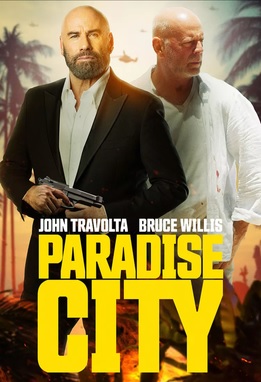
Ian Swan (Bruce Willis) is a famed bounty hunter who has spent the last ten years of his life pursuing an escaped fugitive who is wanted for the cold-blooded murder of four FBI men. Swan has tracked his prey to Hawaii but, when he’s shot and falls into the ocean, Swan is presumed dead. Swan’s long-estranged son, Ryan (Blake Jenner), comes to Hawaii to try to track down the man who killed his father. He meets up with Ian’s former partner, Robbie Cole (Stephen Dorff), and also the only cop on the island who cares about justice, Savannah (Praya Lundberg). Reluctantly, Cole works with Ryan and discovers that Ian’s shooting is somehow connected to a shady businessman named Arlene Buckley (John Travolta). A real estate developer, Buckley is working hard to elect a man named Kane (Branscombe Richmond) to the U.S. Senate. Buckley’s plan also involves taking control of a part of the Island that the natives call Paradise City. Got all that?
2022’s Paradise City has been advertised as being a John Travolta/Bruce Willis film but make no mistake. Neither Travolta nor Willis get much screen time, though they both make an impression in the limited time that they do have. Stephen Dorff manages to steal every scene in which he appears, playing Robbie as a well-meaning guy who can’t help but be kind of a screw-up. That said, Dorff really isn’t in that much of the film either. Instead, the main star of the film is Blake Jenner. Jenner has the blandly affable screen presence of a low-key frat boy. That worked for him when he was in films like Richard Linklater’s EverybodyWants Some!! but it’s not exactly ideal for an action star. Whereas the best action stars feel as if they’re always ready for a fight, Jenner comes across as the guy who would be trusted to order the keg for the next party.
Instead of taking charge of the screen, Jenner finds himself overshadowed by the gorgeous Hawaiian scenery. Hawaii is the true star of Paradise City and, even when the film itself doesn’t make a whole lot of sense, Hawaii itself is always amazing to look at. In many ways, Paradise City feels like an extra-violent episode of Baywatch Hawaii. (The film’s Baywatch aesthetic is confirmed when Savannah wears a bikini to a crime scene.) Just as with that show, the beaches and the jungles and the waterfalls and the oceans are all so stunning that it’s tempting to give the film a pass on the fact that the plot never makes much sense and any genuine emotional stakes are pretty much non-existent.
Unfortunately, it’s impossible to ignore the plot because, for a low-budget B-movie, Paradise City takes itself way too seriously. It’s one thing for Ryan to be estranged from his father. It’s another thing for the film to feature flashbacks to Ryan’s childhood, in which we discover firsthand that Ian never understood Ryan. It’s also one thing to make Buckley a family man. It’s another thing try to create a clumsy parallel between the way that Buckley is raising his son and the way that Ian raised Ryan. As opposed to films like Gasoline Alley or the DetectiveKnight films, Paradise City seems to be trying too hard to be something that it isn’t. Instead of just embracing its pulpy style and trying to entertain, the film is determined to tug at the audience’s heartstrings and make a statement about evil land developers. The film forgets that, sometimes, just being entertaining is the best thing that a film can be.
This was one of the last films that Bruce Willis made before it was announced that he would be retiring from acting. Watching the film, it’s easy to tell that a stand-in was used for most of Willis’s action scenes. When Willis delivers the majority of his lines, it’s hard not to miss the wiseguy energy that used to be his trademark. That said, when Willis is acting opposite Travolta and Dorff, he shows a bit of his old spark. The two scenes in which he confronts John Travolta are the best in the film. For a few minutes, he seems like the Bruce Willis who we all remember and it’s hard not to get a bit emotional watching two talented (if often underappreciated) actors acting opposite each other for what will probably be the last time.
Paradise City is not a particularly memorable film and the overly complicated plot is next to impossible to follow but I am happy that the cast and the crew got to hang out in Hawaii for a bit. It’s a lovely place to visit.
The 1971 “pseudo-documentary”, Punishment Park, imagines an alternative America that still feels very familiar.
With America paralyzed by continuing protests against racism, economic inequality, and the war in Viet Nam, President Richard Nixon declares a state of emergency and invokes the McCarran Internal Security Act of 1950. The law (which is a real law and still on the books, by the way) allows the federal government to detain anyone who is deemed a risk to national security. Anti-government activists are rounded up and put on trial before “community tribunals,” which are made up of a combination of military officers, politicians, businessmen, and housewives. Though the arrested are given a chance to defend themselves against the charges, there’s never any doubt that each trial will end with a conviction. Those convicted are given two options. They can either serve their entire sentence in federal prison. Or they can spend three days in Punishment Park.
Most of them make the mistake of picking Punishment Park.
What is Punishment Park? It’s 53 miles of California desert. Detainees have got three days to cross the desert, without food or water. If they make it to the American flag at the end of Punishment Park, they will be given their freedom. However, along with having to deal with the extreme heat, the detainees are also going to be pursued by a group of police officers and National Guardsmen. If the detainees are caught before reaching the flag, they’ll be sent to prison. The detainees are given a head start but it soon becomes apparent that the head start doesn’t count much for much when you’re in the desert without water. It also becomes apparent that Punishment Park is much more about revenge and reminding people of their place than it is about justice. The rules of Punishment Park only apply to the detainees.
As he did with the majority of his films (including the Oscar-winning The War Game), director Peter Watkins presents the film as being a documentary. Though they’re never seen onscreen, we hear the voices of the British and German film crews asking questions to both the detainees and the people pursuing them. (We also occasionally hear them protesting the brutality of what they’re witnessing, though the cops and soldiers are quick to point out that they really don’t care what a bunch of Europeans thinks about their actions.) The film cuts back and forth from one group being chased through Punishment Park and another group being put on trial and eventually convicted. Watkins cast the film with amateur actors, with the detainees being played by actual anti-war activists while many of the people pursuing them were played by actual guardsmen and police officers. Watkins has subsequently started that the attitudes and the hostilities of the people in the film were mirrored off-screen by those playing them as well. Much like the Stanford Prison Experiment, every one was more than willing to play their roles. It brings a much-needed authenticity to the film’s alternative history. (Interestingly enough, it also leads to several of the detainees coming across as being a bit annoying, as people who are convinced of their own righteousness tend to be. The important thing is that they’re authentically annoying. Even 50 years after the film was shot, both camps are full of people who still seem familiar.) Ironically, the film’s biggest weakness is that everyone seems to be so genuinely worried about whether or not they’ll survive the trek through the desert that it’s difficult to believe that they would actually stop moving so they could have a conversation with the documentary crew.
Still, whatever flaws the film may have, Punishment Park feels sickeningly plausible. In our current era of rising authoritarianism, militarization, reckless accusations of treason, and cries to set aside the Constitution so that “enemies” can be stripped of their rights, Punishment Park continues to feel frighteningly relevant today.
In case you were wondering what Hillary Swank has been up to (other than starring on that television show about newspaper in Alaska), here’s your answer! She’s playing an alcoholic in Ordinary Angels, which appears to be another “uplifting, based on a true story” film of 2023. This film is scheduled to be released on October 13th. That’s Friday the 13th, by the way.
Actually, I imagine that this film might do well with an October release date. Consider it to be counter-programming for all the folks who aren’t into horror. Here at TSL, we’ll be in the middle of our annual horrorthon. As the song goes, “if it makes you happy….”
Apparently, A Haunting In Venice is not the only crime-related film that Tina Fey (who one does not usually associate with crime films) has coming out this year. On June 16th, she will be co-starring in Maggie Moore(s), along with Jon Hamm and Nick Mohammed. The film was directed by Hamm’s Mad Men co-star, John Slattery. Here’s the trailer:
Based on a true story, eh? To be honest, the trailer make it look like this film might be trying too hard to be quirky and Coenesque but who knows? Sometimes, a good film gets a bad trailer and, more often, a bad film will get a really good trailer. The cast is certainly talented so we’ll see!
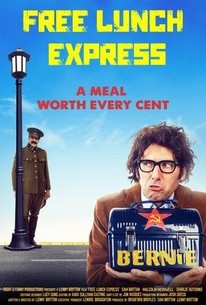
Eric Roberts appears about twenty minutes into 2020’s Free Lunch Express. He plays a man standing in line at a Vermont welfare office. He tells a youngish Bernie Sanders (played, at that point in the movie, by Sam Brittan) that the easiest way to make some extra money is to run for public office because there’s no limit on the amount of money you can raise and you can keep whatever you have left after the campaign. Having been recently kicked out of a commune and having no interest in getting a real job, Sanders is intrigued by the advice and soon embarks on his first political campaign. Roberts only appears in that one scene. It probably took an hour or two of his time to film. Roberts spends the entire scene laughing, supposedly because he’s amused over the idea of making a living as a perennial political candidate.
(For that matter, Eric Roberts is not the only familiar face to pop up in Free Lunch Express. Not surprisingly, Kevin Sorbo shows up. He plays the ghost of George Washington and I’ll admit that I chucked at his Elizabeth Warren joke. Far more surprisingly, Malcolm McDowell shows up as the narrator and epically rolls his eyes at every major moment of Sanders’s life.)
As for the rest of the film, Free Lunch Express is an attempt to do an Adam McKay-style satire about the career of Bernie Sanders. Unfortunately, the problem with trying to make fun of Bernie Sanders is that even Bernie’s most fervent supporters already realize and often acknowledge that he’s a vaguely ludicrous figure. Indeed, the very things that the film pokes fun at — like Bernie’s permanently messy hair, his thick Brooklyn accent, his habit of yelling out his comments while pointing upwards, and his apparently inability to make normal small talk — are the same things that most of his supporters find to be appealing about him. I disagree with Bernie on the majority of the issues and I would probably move to another country if he was ever elected President but, at the same time, I can’t help but kind of like him. One reason why so many people voted for him in 2016 is because he seemed to be authentic in a way that other politicians did not. It’s easy to poke fun at a slick politician but it’s far more difficult to do so at someone who looks like he just got out of bed and who tends to say whatever pops into his mind. It’s far easier to satirize the personality of a Hillary Clinton or a Mitt Romney than it is to satirize a Bernie Sanders.
Free Lunch Express follows Bernie through three stages of his life. As a child, Bernie (played by Jonah Britton) swears a blood oath while standing in front of a poster Joseph Stalin and he declares that he’ll never be bullied again. As a young man, Bernie (Sam Brittan) moves to Vermont and annoys all the other hippies to such an extent that he’s forced to take Eric Roberts’s advice and run for political office. And, as an old and ineffective Senator, Bernie (now played by Charles Hutchins) runs for the presidency and only drops out after Hillary (Cynthia Kania) promises to campaign in Wisconsin and Ohio in the general election. There were a few moments that made me chuckle, like the portrayal of Ben & Jerry as being two hippies who can’t have a conversation without shouting out the name of their latest flavor or Bernie cluelessly traveling to dreary Moscow for the worst honeymoon ever. But, for the most part, the humor falls flat and the jokes are often too repetitive to really be effective. Having a young and nerdy Bernie swear his allegiance to Stalin because he thinks that Stalin, who killed millions of his own citizens, will create a world without bullies is funny. However, having the ghost of Stalin randomly speak to Bernie throughout the years is a joke that grows tiresome and never really pays off. It’s pretty much the same issue that I had with Adam McKay’s Vice. Much as Vice did with Dick Cheney, the film tries so hard to take down Sanders with ridicule that it instead makes him seem almost likable. Indeed, by focusing on the times that Bernie was, in the film’s view, humiliated by Hillary Clinton, the hippies at the commune, and basic economic realities, the film actually portrays Bernie as someone who refuses to surrender his principles, regardless of how often the rest of the world tells him that he’s wrong. The film aims to be Tartuffe and instead turns into Candide.
Finally, on a personal note, I think anyone who ever runs for office should be ridiculed, regardless of what they believe or whether or not they’ve done a good job. It’s a good way to keep them honest and to remind theme that they’re supposed to work for us and not the other way around. If one’s beliefs can’t survive a joke or two, that says far more about the beliefs than it does about the jokes.
Previous Eric Roberts Films That We Have Reviewed:
Somehow, I missed this trailer when it dropped last week. Well, no matter! The movie’s not being released until September 15th so I still have time to share the trailer for A Haunting in Venice, the latest Agatha Christie adaptation from Kenneth Branagh! This film finds Poirot retired and living in self-imposed exile in Venice. When he attends a séance, he is dragged back into the world of mystery solving.
The cast of suspects includes: Kyle Allen, Camille Cottin, Jamie Dornan, Tina Fey, Jude Hill, Ali Khan, Emma Laird, Kelly Reilly, Riccardo Scamarico, and Michelle Yeoh! Not having read Christie’s Hallowe’en Party, I can’t tell you who the murderer is or even who the victim is. But, personally, I suspect Tina Fey did it.