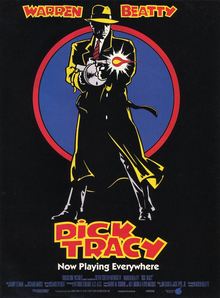
The year is 1937 and “Big Boy” Caprice (Al Pacino) and his gang of flamboyant and often disfigured criminals are trying to take over the rackets. Standing in their way is ace detective Dick Tracy (Warren Beatty), the yellow trench-wearing defender of the law. Tracy is not only looking to take down Caprice but he and Tess Trueheart (Glenne Headly) are currently the guardians of The Kid (Charlie Korsmo), a young street kid who witnessed one of Caprice’s worst crimes. Tracy’s investigation leads him through a rogue’s gallery of criminals and also involves Breathless Mahoney (Madonna), who has witnessed many of Caprice’s crimes but who also wants to steal Tracy’s heart from Tess.
Based on the long-running comic strip, Dick Tracy was a labor of love on the part of Warren Beatty. Not only starring but also directing, Tracy made a film that stayed true to the look and the feel of the original comic strip (the film’s visual palette was limited to just seven colors) while also including an all-star cast the featured Madonna is an attempt to appeal to a younger audience who had probably never even heard of Dick Tracy. When Dick Tracy was released, the majority of the publicity centered around Madonna’s participation in the film and the fact that she was dating Beatty at the time. Madonna is actually probably the weakest element of the film. More of a personality than an actress, Madonna is always Madonna no matter who she is playing and, in a film full of famous actors managing to be convincing as the members of Dick Tracy’s rogue gallery, Madonna feels out of place. Michelle Pfeiffer would have been the ideal Breathless Mahoney.
It doesn’t matter, though, because the rest of the film is great. It’s one of the few comic book films of the 90s to really hold up, mostly due to Beatty’s obvious enthusiasm for the material and the performances of everyone in the supporting cast who was not named Madonna. Al Pacino received an Oscar nomination for playing Big Boy Caprice but equally good are Dustin Hoffman as Mumbles, William Forsythe as Flaptop, R.G. Armstong as Pruneface, and Henry Silva as Influence. These actors all create memorable characters, even while acting under a ton of very convincing makeup. I also liked Dick Van Dyke as the corrupt District Attorney. Beatty knew audience would be shocked to see Van Dyke not playing a hero and both he and Van Dyke play it up for all its worth. Beatty embraces the comic strip’s campiness while still remaining respectful to its style and the combination of Danny Elfman’s music and Stephen Sondheim’s songs provide just the right score for Dick Tracy’s adventures. The film can be surprisingly violent at times but the same was often said about the Dick Tracy comic strip. It wasn’t two-way wrist radios and trips to the Moon. Dick Tracy also dealt with the most ruthless and bloodthirsty gangsters his city had to offer.
Dick Tracy was considered to be a box office disappointment when it was originally released. (Again, you have to wonder if Beatty overestimated how many fans Dick Tracy had in 1990.) But it holds up well and is still more entertaining than several of the more recent comic book movies that have been released.
Betty and Barney Hill (played by Estelle Parsons and James Earl Jones) are a happily married couple living in New Hampshire in the mid-60s. They are both haunted by something that happened two years previously, while they were on vacation. They both remember something appearing in the sky over their car but they can’t remember anything that happened afterwards. They are both haunted by nightmares and a strong feeling that something terrible most have happened to them. Finally, they meet with Dr. Benjamin Simon (Barnard Hughes), who places them both under hypnosis. Only then does a clear picture start to emerge of what Betty and Barney believe happened as they both describe being abducted and experimented upon by aliens.
The UFO Incident is a very sober and serious account of the Hills’s abduction. It never takes a clear side as to whether Betty and Barney are remembering something that actually happened or if they’re just remembering elaborate dreams. That works to the film’s advantage, though it might disappoint those looking for a more dramatic take on the subject. This is a made-for-TV movie so don’t expect much from the special effects and the alien costumes look disappointingly cheap. The important thing, though, is that the film treat the Hills and their story with respect and James Earl Jones gives one of his best and most relatable performances as Barney. The film is as much about how even a good marriage can be threatened by stressful times as it is about the UFOs.
The UFO Incident is based on the non-fiction book, The Interrupted Journey by John G. Fuller, which purported to tell the story of the Hills and their abduction. The Hills were two of the first people to come forward with a story about being abducted by aliens. Much of the common elements that can be found in stories about alien abductions, like the little grey men, the medical experimentation, and the amnesia afterwards, began with the Hills’s account of what they believed happened to them in 1961. The Hills, who were active and highly respected in their community, were considered to be unusually credible witnesses, though Dr. Simon ultimately decided that Barney’s recollections of being on the UFO were probably influenced by Betty’s descriptions of her nightmares. Barney, himself, died in 1969, three years after the book was published. Betty remained active in the UFO community until her death in 2004.
Long before he played the long-suffering Mr. Feeney on Boy Meets World, William Daniels made his film debut as another school principal in the 1963 film, Ladybug Ladybug.
In Ladybug Ladybug, Daniels plays Mr. Calkins and he’s got a lot more to worry about than just some unstable student with an unhealthy fixation on a girl that he’s gaslighted into loving him. No, Mr. Calkins has to deal with the very real possibility that a nuclear war might break out at any second. One day, when an imminent nuclear attack warning signal goes off, no one can be sure whether or not it’s real or if it was an accident. However, Mr. Calkins takes no chances. He dismisses school for the day and tells all of the students to go home.
However, there’s a problem. The school is in a rural area and most of the students live several miles away. Because it’s early in the day, there aren’t any school buses running. The children will have to walk home. To make sure that the kids get to safety, they’re divided into groups. A teacher is assigned to each group, tasked with keeping the children calm and making sure they reach their houses.
It’s a long walk and the countryside is deathly quiet. Some of the children talk about what’s going to happen if there really is a war. Others, being too young to understand the seriousness of the situation, treat it all like a game. As each child reaches their house, they have to deal with parents who are more concerned about why their child has come home early than the fact that there might be a war about to break out.
Back at the school, Mr. Calkins and a few remains teachers wait. One teacher tries to clean up her classroom, all the while realizing that there’s a chance that the classroom will never be used again.
And we, the viewers, keep waiting for a bomb to drop or, at the very least, some sort of clarification about what’s really happening. We wait in vain. The film’s ending is harrowing but, at the same time, ambiguous. Is the world ending or are the children going to wake up in the morning and head back to school? It all depends on how you interpret the film’s final few moments.
Of course, by the time we reach that ending, a group of children has already taken cover in a bomb shelter. Unfortunately, their self-appointed leader has decided that there’s not room for all the children, which means that one girl ends up getting kicked out. Wandering around outside, she finds an old refrigerator to hide in. Your heart sinks as you watch her climb in and close the door behind her….
Ladbybug Ladybug is a grim film. At times, it runs the risk of being a bit too grim. The film definitely gets across its point but it’s so relentlessly depressing that it’s a bit difficult to sit through. Of course, Ladybug Ladybug was filmed around the same time as the Cuban Missile Crisis so, for many viewers in 1963, the film was less an allegory and more just a record of the feelings and fears that they had to deal with every single day. Towards the end of the film, when one of the children desperately starts to yell, “Stop! Stop! STOP!,” he was undoubtedly speaking for an entire generation that grew up under the shadow of mutually assured destruction.
Ladybug Ladybug was one of the many nuclear war-themed films to be released in the early 60s. One could easily imagine it as being a companion piece to Fail Safe. While President Henry Fonda is debating whether or not to sacrifice New York, the children are simply trying to get home.
If you’re ever visiting my former hometown of Denton, Texas, you owe it to yourself to do two things.
Number one, go to Recycled Books and Records. It’s right across the street from the old courthouse and it’s perhaps the greatest used bookstore in the world. When I was going to college at UNT, I would spend hours in Recycled Books. Not only do they have three floors of books but they have some really nice apartments on the fourth floor. I attended my share of hazily remembered parties in those apartments.
The second thing that you must do is stop by the Campus Theater. The Camps Theater is located on the other side of the old courthouse and it is a true historical landmark. (It’s also the home of the Denton Community Theatre.) When you step inside of the theater, be sure to look for a plaque on the wall. The plaque will inform you that, in 1967, Arthur Penn’s Bonnie and Clyde premiered at the Campus Theater.
Bonnie and Clyde not only premiered in Denton but it was also filmed around North Texas. This was a pragmatic decision, made to minimize studio interference. Even with that in mind, that’s still the way it should have been because Bonnie Parker and Clyde Barrow are true Texas legends. In the 1930s, they were young, they robbed banks, and they killed people. Much like many of the outlaws of the era, they became folk heroes and they died in a hail of bullets.
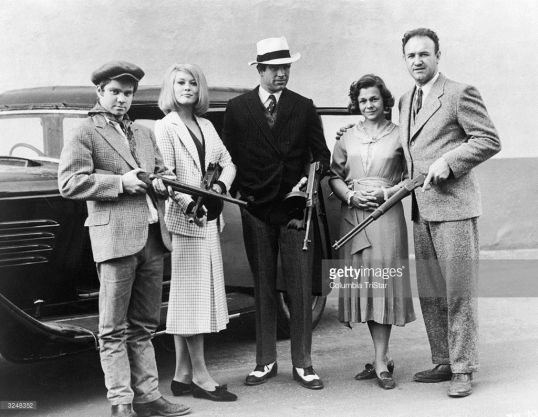
In the picture above, Clyde is short, scrawny, and slightly handsome in a class clown sort of way. Bonnie, meanwhile, is even shorter than Clyde and has the hard look of someone who has never known an easy life. Both of them have a look that should be familiar to anyone who has spent any time in the small towns that dot the North Texas landscape. They look like real people. They don’t look like film stars.
Here’s the movie’s version of Bonnie and Clyde:
In other words, Bonnie and Clyde is not a documentary. But that doesn’t matter. 50 years after it was first released Bonnie and Clyde remains a powerful and, even more importantly, extremely entertaining film. When the film was released, it was controversial for it violence and, having recently rewatched it, I have to say that the violence still makes an impression. When guns are fired, the shots seem to literally explode in your ear. When people are torn apart by bullets, they die terrible deaths and the film’s most graphic demises are reserved for its most likable characters. Towards the end of the film, with the Texas Rangers relentlessly closing in on Bonnie and Clyde, the tension becomes almost unbearable.
What makes the violence all the more disturbing is that it often interrupts scenes that, until the bullets started flying, were often humorous. A bank robbery starts out as a lark, becomes an exciting chase scene as Bonnie and Clyde attempt to escape, and suddenly turns into an act of shocking of violence when Clyde fire a gun and shoots a man point-blank in the face. Later, stopping to help an old farmer change a tire leads to a sudden ambush. Perhaps the film’s outlook is best captured in a scene in which the Barrow gang cheerfully bonds with a hostage until they suddenly find out that he’s an undertaker, a reminder that the promise of death is always present.
“Get him out of here!” Bonnie snaps.
Like many of the great gangster films, Bonnie and Clyde presents its outlaws as being folk heroes. They may rob banks and occasionally kill people but they look good doing it and they seem like they would be fun to hang out with. The thing that set Bonnie and Clyde apart from previous gangster films is that it refused to even pretend to condemn its bank robbers. The cops and the Texas Rangers are all on the side of the banks and the banks are on the side of big business. Bonnie and Clyde aren’t outlaws. They’re rebels. When they rob banks, they’re not just taking money. They’re standing up to the same establishment that was feared in the 30s, resented in the 60s, and hated today.
Clyde is played by Warren Beatty (who also produced the film) and Bonnie is played by Faye Dunaway and both of them give performances that literally define screen charisma. You never forget that you’re watching two movie stars but, at the risk of repeating myself, Bonnie and Clyde is not meant to be a documentary. At times, it almost seems as if Beatty’s Clyde and Dunaway’s Bonnie know that they’re characters in a gangster movie. They know that they’re doomed because that’s how gangster movies work so, as a result, they’re determined to live as much life as possible before that final reel. The supporting cast — Gene Hackman, Estelle Parsons, Michael J. Pollard, Gene Wilder — are all great but the film is definitely a celebration of Beatty and Dunaway.
Bonnie and Clyde went from premiering at the Campus Theater to a best picture nomination. However, it lost to In The Heat of the Night.
The Story of Suicide Sal
A Poem by Bonnie Parker
We each of us have a good “alibi”
For being down here in the “joint”;
But few of them really are justified
If you get right down to the point.
You’ve heard of a woman’s “glory”
Being spent on a “downright cur,”
Still you can’t always judge the story
As true, being told by her.
As long as I’ve stayed on this “island,”
And heard “confidence tales” from each “gal,”
Only one seemed interesting and truthful —
The story of “Suicide Sal.”
Now “Sal” was a gal of rare beauty,
Though her features were coarse and tough;
She never once faltered from duty
To play on the “up and up.”
“Sal” told me this tale on the evening
Before she was turned out “free,”
And I’ll do my best to relate it
Just as she told it to me:
I was born on a ranch in Wyoming;
Not treated like Helen of Troy;
I was taught that “rods were rulers”
And “ranked” as a greasy cowboy.”
Then I left my old home for the city
To play in its mad dizzy whirl,
Not knowing how little of pity
It holds for a country girl.
There I fell for “the line” of a “henchman,”
A “professional killer” from “Chi”;
I couldn’t help loving him madly;
For him even now I would die.
One year we were desperately happy;
Our “ill gotten gains” we spent free;
I was taught the ways of the “underworld”;
Jack was just like a “god” to me.
I got on the “F.B.A.” payroll
To get the “inside lay” of the “job”;
The bank was “turning big money”!
It looked like a “cinch” for the “mob.”
Eighty grand without even a “rumble” —
Jack was last with the “loot” in the door,
When the “teller” dead-aimed a revolver
From where they forced him to lie on the floor.
I knew I had only a moment —
He would surely get Jack as he ran;
So I “staged” a “big fade out” beside him
And knocked the forty-five out of his hand.
They “rapped me down big” at the station,
And informed me that I’d get the blame
For the “dramatic stunt” pulled on the “teller”
Looked to them too much like a “game.”
The “police” called it a “frame-up,”
Said it was an “inside job,”
But I steadily denied any knowledge
Or dealings with “underworld mobs.”
The “gang” hired a couple of lawyers,
The best “fixers” in any man’s town,
But it takes more than lawyers and money
When Uncle Sam starts “shaking you down.”
I was charged as a “scion of gangland”
And tried for my wages of sin;
The “dirty dozen” found me guilty —
From five to fifty years in the pen.
I took the “rap” like good people,
And never one “squawk” did I make.
Jake “dropped himself” on the promise
That we make a “sensational break.”
Well, to shorten a sad lengthy story,
Five years have gone over my head
Without even so much as a letter–
At first I thought he was dead.
But not long ago I discovered
From a gal in the joint named Lyle,
That Jack and his “moll” had “got over”
And were living in true “gangster style.”
If he had returned to me sometime,
Though he hadn’t a cent to give,
I’d forget all this hell that he’s caused me,
And love him as long as I live.
But there’s no chance of his ever coming,
For he and his moll have no fears
But that I will die in this prison,
Or “flatten” this fifty years.
Tomorrow I’ll be on the “outside”
And I’ll “drop myself” on it today;
I’ll “bump ’em” if they give me the “hotsquat”
On this island out here in the bay…
The iron doors swung wide next morning
For a gruesome woman of waste,
Who at last had a chance to “fix it,”
Murder showed in her cynical face.
Not long ago I read in the paper
That a gal on the East Side got “hot,”
And when the smoke finally retreated
Two of gangdom were found “on the spot.”
It related the colorful story
of a “jilted gangster gal.”
Two days later, a “sub-gun” ended
The story of “Suicide Sal.”
The Story of Bonnie and Clyde
Another Poem by Bonnie Parker
You’ve read the story of Jesse James
Of how he lived and died;
If you’re still in need
Of something to read,
Here’s the story of Bonnie and Clyde.
Now Bonnie and Clyde are the Barrow gang,
I’m sure you all have read
How they rob and steal
And those who squeal
Are usually found dying or dead.
There’s lots of untruths to these write-ups;
They’re not so ruthless as that;
Their nature is raw;
They hate all the law
The stool pigeons, spotters, and rats.
They call them cold-blooded killers;
They say they are heartless and mean;
But I say this with pride,
That I once knew Clyde
When he was honest and upright and clean.
But the laws fooled around,
Kept taking him down
And locking him up in a cell,
Till he said to me,
“I’ll never be free,
So I’ll meet a few of them in hell.”
The road was so dimly lighted;
There were no highway signs to guide;
But they made up their minds
If all roads were blind,
They wouldn’t give up till they died.
The road gets dimmer and dimmer;
Sometimes you can hardly see;
But it’s fight, man to man,
And do all you can,
For they know they can never be free.
From heart-break some people have suffered;
From weariness some people have died;
But take it all in all,
Our troubles are small
Till we get like Bonnie and Clyde.
If a policeman is killed in Dallas,
And they have no clue or guide;
If they can’t find a fiend,
They just wipe their slate clean
And hand it on Bonnie and Clyde.
There’s two crimes committed in America
Not accredited to the Barrow mob;
They had no hand
In the kidnap demand,
Nor the Kansas City depot job.
A newsboy once said to his buddy;
“I wish old Clyde would get jumped;
In these awful hard times
We’d make a few dimes
If five or six cops would get bumped.”
The police haven’t got the report yet,
But Clyde called me up today;
He said, “Don’t start any fights
We aren’t working nights
We’re joining the NRA.”
From Irving to West Dallas viaduct
Is known as the Great Divide,
Where the women are kin,
And the men are men,
And they won’t “stool” on Bonnie and Clyde.
If they try to act like citizens
And rent them a nice little flat,
About the third night
They’re invited to fight
By a sub-gun’s rat-tat-tat.
They don’t think they’re too tough or desperate,
They know that the law always wins;
They’ve been shot at before,
But they do not ignore
That death is the wages of sin.
Some day they’ll go down together;
And they’ll bury them side by side;
To few it’ll be grief
To the law a relief
But it’s death for Bonnie and Clyde.
I first found out about the 1976 made-for-tv movie The Tenth Level while I was doing some research on the Milgram experiment. The Milgram experiment was a psychological experiment that was conducted, under the direction of Prof. Stanley Milgram, in 1961. Two test subjects were placed in two separate room. One test subject was known as the “Learner” and he was hooked up to a machine that could deliver electric shocks. The other subject was the “Teacher.” His job was to ask the Lerner questions and, whenever the Learner gave an incorrect answer, the Teacher was supposed to correct the error by pushing a button and delivering the electric shock. With each incorrect answer, the shock would get worse.
Of course, what the Teacher did not know was that the Lerner was an associate of Prof. Milgram’s and that pushing the button did not actually deliver a shock. The Lerner would intentionally give wrong answers and, after the Teacher pushed each subsequent button, the Lerner would groan in pain and eventually beg the Teacher to stop. The test was to see how long the Teacher would continue to push the buttons.
The study found that 65% of the Teachers, even when the Lerner stopped responding, continued to push the buttons until delivering the experiment’s final 450-volt shock. It was a surprising result, one that is often cited as proof that ordinary people will do terrible things if they’re ordered to do so by an authority figure.
The Tenth Level is loosely based on the Milgram experiment. Prof. Stephen Turner (William Shatner) is a psychology professor who conducts a similar experiment. Turner claims that he’s looking for insight into the nature of blind obedience but some of his colleagues are skeptical. His best friend (Ossie Davis) thinks that Turner is mostly trying to deal with the guilt of being a WASP who has never had to deal with discrimination. His ex-wife, Barbara (Lynn Carlin), thinks that the experiment is cruel and could potentially traumatize anyone who takes part in it. Turner, meanwhile, is fascinated by how random people react to being ordered to essentially murder someone.
Eventually, a good-natured carpenter/grad student, Dahlquist (Stephen Macht), volunteers. At first, Turner refuses to allow Dahlquist to take part because he’s previously met Dahlquist and Dahlquist is a friend of one of Tuner’s assistants. However, Dahlquist literally begs to be allowed to take part in the experiment and Turner relents.
Unfortunately, the pressure of administering shocks proves to be too much for Dahlquist and he has a 70s style freak-out, which essentially means that the screen changes colors and everything moves in slow motion as he smashes up the room. As a result of Dalquist’s violent reaction, Turner is called before a disciplinary committee and basically put on trial.
The Tenth Level is an interesting film. On the one hand, the subject matter is fascinating and, if nothing else, the film deserves some credit for trying to seriously explore the ethics of psychological experimentation. On the other hand, this is a film from 1976 that features William Shatner giving numerous monologues about the nature of man. And, let us not forget, this is William Shatner before he apparently developed a sense of humor about himself. That means that, in this film, we get the Shatner that inspired a thousand impersonations. We get the Shatner who speaks precisely and who enunciates every single syllable. And let’s not forget that Shatner is paired up with Ossie Davis, an actor who was never exactly subtle himself.
The end result is a film that is both thought-provoking and undeniably silly. This is a film that will make you think even while it inspires you to be totally snarky.
(Also of note, John Travolta supposedly makes his film debut in the Tenth Level. Apparently, he plays a student. I have yet to spot him.)
I recently saw the 1968 best picture nominee Rachel, Rachel on TCM and I have to say that, at first, I was rather underwhelmed by it. Don’t get me wrong. I thought it was well-acted. I thought it managed to capture a lot of details of small town life. I thought that, for a film made in 1968, it was surprisingly mature and nonjudgmental when it came to exploring feminine sexuality. I was even more surprised to see a nearly 50 year-old movie that actually featured a sympathetic portrayal of a lesbian. Just consider that the homophobic The Sweet Ride was released at the same time and you can see just how unusually progressive Rachel, Rachel was as far as this was concerned.
And yet, when I first watched Rachel, Rachel, it was difficult for me to connect with it. And I really wasn’t sure why. I mean, it is true that Rachel, Rachel is one of those films that moves at a very deliberate post but, trust me, I’ve seen and enjoyed many films that were a helluva lot slower than Rachel, Rachel. But, for whatever reason, it took me two viewings to really appreciate Rachel, Rachel as a surprisingly sensitive character study.
The film is about Rachel (Joanne Woodward), a 35 year-old virgin who lives with her mother in a small Connecticut town. Since the death of her stern and overbearing father, Rachel has lived with her mother. She’s a withdrawn and meek woman who has frequent fantasies that veer between unrealistic happiness and nightmarish morbidity. Her best friend, another unmarried teacher named Calla (Estelle Parsons), invites Rachel to a revival meeting and, for the first time in her life, Rachel actually allows herself to be openly passionate. After the meeting, Calla suddenly kisses her. Shocked, Rachel temporarily ends their friendship.
Even before the revival meeting, Rachel has run into Nick (James Olsen), a friend from high school who is in town to visit his family. After getting kissed by Calla, Rachel ends up turning to Nick and losing her virginity to him. Rachel believes that she’s in love with Nick and is soon fantasizing about their future children. However, it’s obvious to everyone (except for Rachel) that Nick doesn’t quite feel the same way…
When I first saw Rachel, Rachel, I had a hard time relating to the character of Rachel. I watched and, as much as I tried to be sympathetic, I still found myself wondering how anyone could possibly still be a virgin at the age of 35. I mean, I understand that times were different and all but seriously! I guess back then, people actually were serious about the whole “no sex before marriage” thing. (That probably explains why people used to get married when they were 17.) The film is full of largely silent flashbacks to Rachel’s youth and we see that she was raised in an emotionally repressed environment. She was raised to wait for the right man to come along and, when he didn’t, Rachel eventually found herself as a 35 year-old virgin.
And, without getting too TMI here, let’s just say that I couldn’t relate to Rachel’s situation.
But, when I watched the film for a second time, I discovered that even if I don’t know what it’s like to be a 35 year-old virgin, a lot of Rachel’s experiences were, in their way, universal. Consider the scene at the start of the film where Rachel fantasizes that everyone in town is staring at her as she walks down the sidewalk, all because her slip is showing. Who hasn’t, at some point in their life, felt like everyone was staring at her and judging? And, for that matter, who hasn’t had a Nick in their life?
Interestingly enough, Rachel, Rachel was the directorial debut of the iconic actor Paul Newman. One thing that I’ve noticed about films directed by actors (especially first films) is that the actor-turned-director often seems to feel that he has to prove himself by indulging in as much showy cinematic technique as possible. (And if you don’t understand what I mean, check out George Clooney’s Confessions of a Dangerous Mind.) And, as much as I hate to admit it because I’ve never read one negative word about Paul Newman, I have to admit that Newman’s direction was one of the reasons why, at first, I found myself feeling detached from the film.
While Newman tells most of Rachel’s story in an admirably straight-forward way, he also included just a few too many arty flashbacks and fantasies. Some of the fantasies — like the one at the start of the film that I mentioned two paragraphs ago — are handled well but others are distracting and they remind the viewer that they’re watching a film. And Rachel, Rachel is a film that works best when it’s naturalistic. Whenever it gets too self-consciously cinematic, it takes the viewer a few minutes to get sucked back into Rachel’s story.
But, and this is the important thing, Paul Newman also gets some great work out of his actors. Judging from some other films in which I’ve seen him, James Olson was not a particularly good actor but he was great in Rachel, Rachel. Estelle Parsons has been an overdramatic presence in a few films and a lot of tv shows but she’s great in Rachel, Rachel. And then there’s Joanne Woodward, who was great in a lot of films, including Rachel, Rachel. Newman and Woodward were married when they made Rachel, Rachel and were still married when Newman died 40 years later. Newman reportedly directed Rachel, Rachel because he wanted Woodward to have a great role. Woodward is on-screen throughout the entire film and Newman’s love for her is obvious in every frame.
Rachel, Rachel is a flawed and imperfect film but it’s still worth catching the next time that it shows up on TCM.
 The year is 1937 and “Big Boy” Caprice (Al Pacino) and his gang of flamboyant and often disfigured criminals are trying to take over the rackets. Standing in their way is ace detective Dick Tracy (Warren Beatty), the yellow trench-wearing defender of the law. Tracy is not only looking to take down Caprice but he and Tess Trueheart (Glenne Headly) are currently the guardians of The Kid (Charlie Korsmo), a young street kid who witnessed one of Caprice’s worst crimes. Tracy’s investigation leads him through a rogue’s gallery of criminals and also involves Breathless Mahoney (Madonna), who has witnessed many of Caprice’s crimes but who also wants to steal Tracy’s heart from Tess.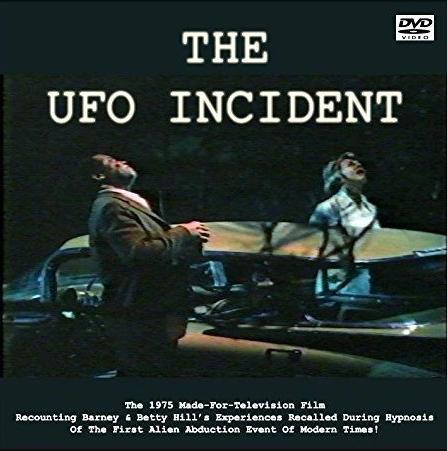




 Through the Shattered Lens