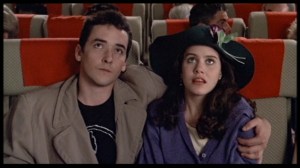
Retro Television Review: St. Elsewhere 2.8 “All About Eve”


Welcome to Retro Television Reviews, a feature where we review some of our favorite and least favorite shows of the past! On Fridays, I will be reviewing St. Elsewhere, a medical show which ran on NBC from 1982 to 1988.  The show can be found on Hulu and, for purchase, on Prime!
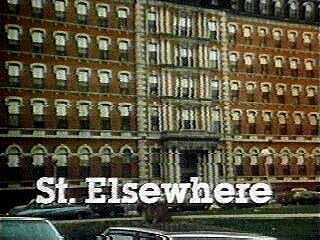
This week, everyone’s got the blues.

Episode 2.8 “All About Eve”

(Dir by David Anspaugh, originally aired on December 14th, 1983)

What a depressing episode!

With tension rising between Boston’s Catholics and its Protestants, threats are being called into the hospital because young Protestant Eddie Carson (Eric Stoltz) is still a patient.  (Last week, I assumed Eddie was Catholic but apparently, he’s supposed to be a Protestant.  I also assumed his parents were blown up in the pub bombing.  In this episode, it was made clear that the victims were his aunt and uncle.)  A group of masked, IRA-style terrorists break into Joan Halloran’s home.  Joan’s gone at the time but Bobby Caldwell is in the shower and he ends up getting beaten into unconsciousness.

(Wow, did someone on the writing staff have an issue with Irish Catholics?)

Meanwhile, Dr. Westphall has to explain to his several autistic son Tommy (Chad Allen) that their beloved housekeeper has quit and moved away.  Westphall’s daughter says she’s going to skip college and stay home to help take care of her brother.  While I’ve always known that the widowed Westphall had an autistic son, this was the first episode to actually show us Westphall interacting with Tommy.  And, with no disrespect meant to the autistic community, I can understand why Westphall always seems so depressed.  Tommy runs and hides in a corner.  Tommy hits his father.  Tommy demands to know if everyone is going to leave him.  By the end of the episode, Westphall was exhausted and I was even more exhausted from watching him.

But Westphall’s angst was not the most depressing thing about this episode.  On top of everything else, Eve Leighton died!  She didn’t die as a result of the heart that Dr. Craig transplanted into her.  The heart was working fine.  Instead, the rest of Eve’s body gave out.  Being in the hospital initially saved her life but it also shut her off from everything that inspired her to keep living.  Dr. Craig was in surgery when Eve coded.  By the time he was able to get to her room, she was already gone.  And with Eve’s death, that also means that the heart that once belonged to Morrison’s wife is gone as well.

I mean, seriously …. GOOD LORD!  It was a well-acted episode.  Both William Daniels and Ed Flanders broke my heart.  But I seriously had to rewatch Happy Gilmore after watching this show.  That’s how depressed it left me!

But that’s life and death in a hospital.  Every hospital is home to hundreds of different stories and the majority of them do not have happy endings.

Retro Television Review: St. Elsewhere 2.7 “Entrapment”


Welcome to Retro Television Reviews, a feature where we review some of our favorite and least favorite shows of the past! On Fridays, I will be reviewing St. Elsewhere, a medical show which ran on NBC from 1982 to 1988.  The show can be found on Hulu and, for purchase, on Prime!

This week, Peter’s in trouble …. again!

Episode 2.7 “Entrapment”

(Dir by Mark Tinker, originally aired on December 7th, 1983)

Oh, that Peter White!  Always in trouble for something!

This week, a woman comes into the Emergency Room with her baby and begs for some Seconal, just to help her get some sleep.  Peter says that Seconal might be too powerful a drug but he’s moved by the woman’s pleas.  Finally, he gives her the drugs.  The next morning, Dr. Craig and Dr. Westphall get a call.  The woman was an undercover cop and now, Dr. White — a recovering drug addict himself — is under investigation.

Both Dr. Craig and Dr. Auschlander think that the solution is to just kick Peter out of the hospital.  Westphall disagrees, saying that Peter has come a long way since he completed rehab.  Westphall promises Peter that he and Auschlander will support him when his hearing comes up.

As for Dr. Craig, he finally found out that his secret admirer was Kathy Martin.  This led to Ellen Craig (played by Bonnie Bartlett, William Daniels’s real-life wife) heading down to the morgue and politely telling Kathy to stay away from her man before then mentioning that, if politeness hadn’t worked, she was prepared to beat Kathy up.  I love Ellen.  She’s one of the best characters on the show.

Meanwhile, Irish kid Eddie Carson (Eric Stoltz), who was admitted to the hospital last week, is upset because he’s going to have a big ugly scar on his face.  He’ll probably be even more upset when he discovers that a rival Irish teenager (a protestant, naturally) planted a bomb in his family’s restaurant and blew up his parents.

This was an okay episode.  The highlight was definitely Ellen confronting Kathy Martin.  As for the other storylines, Eddie Carson’s story felt a bit contrived while Peter White’s story was just getting started.  I assume the hearing will be next week.  It’s interesting to see Peter as the victim for once.  Usually, it’s his own stupidity that screws things up for him.  This week, he really was unfairly targeted.

We’ll see what happens next week.

Retro Television Review: St. Elsewhere 2.6 “Under Pressure”


Welcome to Retro Television Reviews, a feature where we review some of our favorite and least favorite shows of the past! On Fridays, I will be reviewing St. Elsewhere, a medical show which ran on NBC from 1982 to 1988.  The show can be found on Hulu and, for purchase, on Prime!

This week, the hospital staff is under pressure!

Episode 2.6 “Under Pressure”

(Dir by David Anspaugh, originally aired on November 30th, 1983)

What a depressing episode!

It’s another day at St. Eligius and almost everyone seems to be in a bad mood.  Patients are complaining that Dr. Craig is so obsessed with his heart transplant that he’s ignoring them.  Dr. Westphall wakes up in a bad mood and continue to be in a bad mood for the entire episode.  Dr. Morrison is upset because he’s treating two Irish teens who nearly killed each other because one is Protestant and the other is Catholic.  (One of the teens is played by a young Eric Stoltz.)  Bobby Caldwell has to figure out how to put together the face of one of the Irish boys.  Ehrlich is complaining  nonstop.  Morrison is missing his wife.  Auschlander is dealing with his approaching mortality.  (There’s a wonderful moment when Norman Lloyd rolls his eyes while Auschlander listens to Westphall whine.)

Finally, a man calling himself Mr. Entertainment (Austin Pendleton) took over one of the hospital’s elevators and sang to the patients.  That cheered some people up.  It would have annoyed the Hell out of me.  Mr. Entertainment is checked into the psych ward, where he meets the new head psychiatrist, Michael Ridley (Paul Sand).  (Hugh Beale apparently no longer works at the hospital.  Both he and Dr. Samuels were dropped after the first season, with no onscreen explanation.)  The episode ends with Mr. Entertainment singing for a collection of nurses and doctors and bringing some happiness to their lives.

Everyone in this episode is under pressure.  That’s fine.  That’s realistic.  Being a doctor cannot be an easy job.  But it just made for a rather melancholy episode and I have to admit that I couldn’t wait for the end credits and that meowing cat.

Perhaps next week will be better.

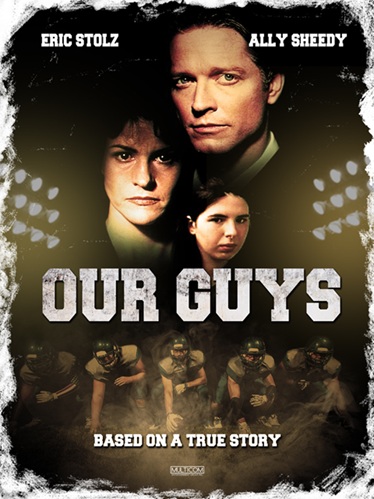
April True Crime: Our Guys by Bernard Lefkowitz and Our Guys (dir by Guy Ferland)


If there’s any true crime book that I recommend without hesitation, it’s Our Guys by Bernard Lefkowitz.

First published in 1997, Our Guys deals with a terrible crime that occurred in the leafy suburban community of Glen Ridge, New Jersey.  In 1989, it was an affluent community that loved its high school football team and where conformity and financial success were the most valued qualities the someone could have.  On March 1st, a 17 year-old girl was invited to a house party where, after she was convinced to head down to the basement, she was raped with a broomstick and a baseball bat by several members of the football team.  The girl was intellectually disabled and was later determined to have an IQ of 64.  Her name has never been revealed to the public.  In his book, Lefkowitz assigned her the pseudonym of Leslie Faber.

The crime was terrible.  So was the aftermath.  When one of the witnesses went to a teacher with what he saw happen in the basement, the town responded by rallying around the accused.  Initially, Leslie was accused of lying.  Then, as it became clear that something actually had happened in that basement, Leslie was accused of bringing it on herself.  Leslie, who was desperate to have friends and who was later determined to be psychologically incapable of saying “no” or even understanding what consent meant, was cast as a wanton seductress who led the members of the football team astray.  A girl who went to school with Leslie even tape recorded a conversation with Leslie in which Leslie was manipulated into saying that she had made the entire thing up.  It also undoubtedly didn’t help that some of the accused boys had fathers who were on Glen Ridge’s police force.

It’s a book that will leave you outraged.  Lefkowitz not only examined the crime itself but also the culture of the town and its general attitude that “boys will be boys.”  Despite the fact that they had a losing record and the fact that one of them was infamous for exposing himself every chance that he got, the football team was viewed as being made up as winners.  They were allowed to party every weekend with their parties becoming so legendary that they bragged about them in their yearbook quotes.  With a group of supportive girlfriends doing their homework for them, the football team was free to do whatever they wanted and, by the time they were seniors, they were infamous for being voyeurs.  While one football player would have sex, all the others would hide in a closet and watch.  When one of the football players stole $600 from one of his classmates, his father paid back the money and no one was ever punished.  In a town that valued material success above all else and viewed being different as a sign of weakness, Leslie and her family were treated as being outcasts.  In the end, three of the football players were sentenced to prison.  One was sentenced to probation.  A few others accepted plea deals and had their arrests expunged from the record.  Years later, one of the guys who was in the basement but not charged would murder his wife while home on leave from the military.

In 1999, Our Guys was adapted into a made-for-television movie.  Featuring Heather Matarazzo as Leslie, Ally Sheedy as the detective who investigated her rape, Eric Stoltz as the lawyer who prosecuted the case, and Lochlyn Munro as a cop who starts out on the side of the football team before realizing the truth, Our Guys simplifies the story a bit.  While the book focused on Glen Ridge and the culture of celebrating winners no matter what, the film focuses on Sheedy as the detective and her disgust with the suburbs in general.  Unfortunately, by not focusing on the culture of the town, the film presents the rape as being the bad actions of a group of dumb jocks as opposed to an expression of Glen Ridge’s contempt for anyone who was viewed as being on the outside.  What Lefkowitz showed through a precise examination of the town and its citizens, the film quickly dispenses by having Stoltz and Sheedy make a few pithy comments about how much the town loves it football team.  The story will still leave you outraged and Heather Matarazzo gives a heart-breaking performance as Leslie.  But, for those wanting the full story of  not only what happened in Glen Ridge but also how it happened, the book is the place to find it.

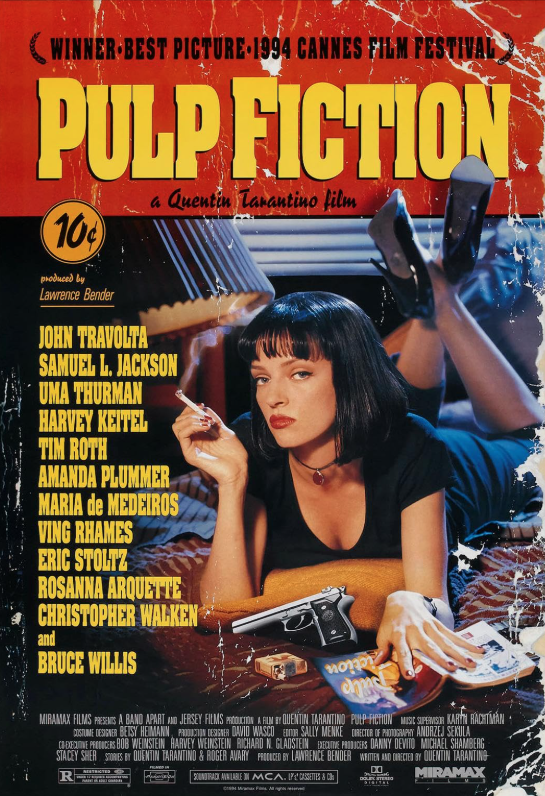
Pulp Fiction, (Written & Dir. Quentin Tarantino) Review by Case Wright


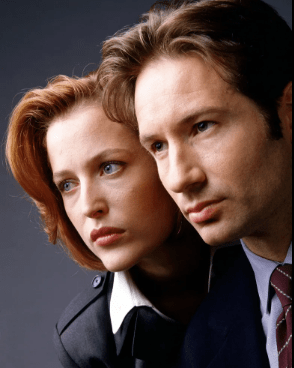
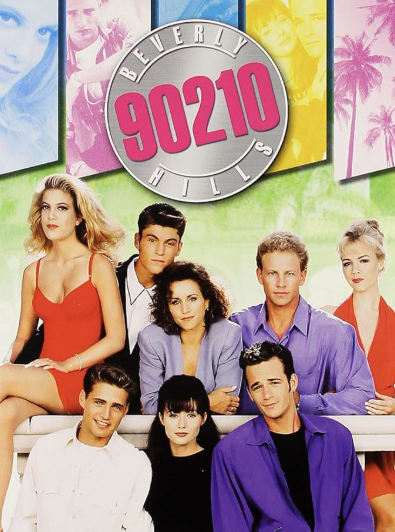
“Pulp Fiction” was as peak 1990s as much as these two:

Or this Archie’s Comic live action show

While “X-Files” attracted big audiences 60-40% male and the reverse for “90210”, “Pulp Fiction” captured 1994: Jocks, Nerds, Guys, Women, Girls, Boys, Boomers, X-ers, Older Millennials, you name it – Everyone was into Pulp Fiction. Tarantino described this art as a number of cliches: the mobster attracted to the mob wife, the boxer who tricks the mobsters into giving him money and NOT throwing the fight, and the killer who finds God. The cliches dig into DNA. WHY? Because they have the same motivations as our caveman ancestors: the unobtainable mate, a sense of honor, and redemption. These themes are the basic building blocks of what make us human beings and why these stories echo through the millennia – our ancestors fears are the same as ours today. Some might claim that “Reservoir Dogs’ was better- they are incorrect– Pulp Fiction was WAY more entertaining.

Even though this was released and written in the 1990s, it had an older feel to it. First, everyone smoked indoors. I remember the 1990s, smoking was on the OUTS big time! Second, man did he like to use a certain racial slur. OOF. But then again, I’m not from Los Angeles. Maybe, it’s like Alabama there? I have no idea! I can say that the film did hold up as re-watched it today. It was still relevant and maybe that’s because it was difficult to pin down the time period; in fact, the music was mostly from the 1970s and the story time jumped- A LOT! The Miramax producer who worked on the show also jumps a lot, but mostly in the shower.

The story begins with two mobsters Vincent Vega and Jules Winnfield murdering two guys to get a magical briefcase back to their boss Marsellus Wallace, which feeds into the next storyline of Butch an aging fighter who’s about to rip off the mob, which feeds into Mia Wallace – Marsellus Wallace’s wife overdosing on heroin, which feeds into Butch on a quest to retrieve his great-grandfather’s watch, which feeds into a pretty graphic man on man scene of sexual violence and revenge, which feeds into Jules finding God, which feeds into cleaning brains out of a car, and finally ending in a diner being robbed by Tim Roth. Yes, the film requires attention. It’s not “Dazed and Confused”. You gotta pay attention.

I recently watched a show with Lisa Marie that time jumped – oh no, were their Germans around who got too close at a family reunion off camera?!

I still believe this is Quentin’s Opus and you cannot convince me otherwise because it connected to everyone and launched and re-launched A LOT of careers. Pulp Fiction’s legacy was that it empowered a 1990s writers to work in humor with their grittiness like in Halloween H20, which I reviewed here

https://unobtainium13.com/2016/10/29/halloween-h20-alt-title-they-stab-baby-boomers-dont-they/
: Pulp Fiction, (Written & Dir. Quentin Tarantino) Review by Case Wright

I recommend to going on Hulu and checking Pulp Fiction out again.

The TSL Horror Grindhouse: The New Kids (dir by Sean Cunningham)


Oh my God, this movie is awesome!

Within the first five minutes, the film features not only a training montage but also a scene where a family cheering good news immediately gets a phone call delivering bad news.  (“SHUT UP!” our hero yells at his friends and family.)  By the time the film hits the five minute mark, it has managed to denounce communism, terrorism, laziness, and drunk driving!  And that’s even before James Spader shows up as a cocaine-sniffing teenage crime lord!

First released in 1986 and directed by the same guy who did the first Friday the 13th, The New Kids tells the story of Loren (Shannon Presby) and his sister, Abby (Lori Loughlin).  Their father (Tom Atkins) was a badass army colonel who fought communists, received commendations from the President (and that President was Ronald Reagan so you know those commendations were for doing something cool and not just for posting memes on twitter), and who taught his children self-defense.  Every morning, he exercised with them and drilled into their heads the importance of being disciplined and willing to stand up for themselves.  Sadly, their father and mother were both killed in a car accident after meeting with President Reagan at the White House.

Though they’ve been taught how to survive in the world by an expert, Loren and Abby are both teenagers and the law says that they need adult supervision.  They move down to Florida and stay with their Uncle Charlie (Eddie Jones),  Charlie owns a run-down amusement park that he’s decided to call Santa Land.  He figures that tourists who are driving to “Walt Disney World and Epcot” will want to stop off at Santa Land.  Personally, I think the tourists will probably want to keep driving to where they actually want to go but who knows?  Uncle Charlie does have a petting zoo and there is something oddly charming about the idea of Santa hanging out in the bayous of Florida.  I mean, there’s a reason why Santa Claus And The Ice Cream Bunny is beloved by viewers all over the world.

At the high school, everyone notices Loren and Abby.  Abby gets  a dorky boyfriend named Mark (Eric Stoltz …. no, really!) and Loren starts dating the sheriff’s daughter, Karen (Paige Lynn Price).  Unfortunately, the new kids have been noticed by Eddie Dutra (James Spader) and his gang of inbred rednecks.  Dutra and his gang deal drugs and have a pit bull who they’re hoping to enter into dog fights.  (“Went straight for the jugular,” one gang member says at one point.)  Dutra decides that he likes Abby, which leads to Loren getting protective, which leads to Dutra and the boys waging their own war on Abby and Loren and everything eventually comes to a deeply satisfying Straw Dogs-style conclusion at Santa Land.

The New Kids is one of those films that succeeds by being thoroughly absurd and over-the-top.  Dutra and his gang aren’t just evil.  Instead, they’re downright Satanic in their determination to destroy the new kids.  The gang is fearsome enough, especially Gordo (Theron Montgomery), who is the fat future forklift operator from Hell.  But what really makes this gang memorable is the fact that their leader is James Spader, with bright blonde hair, a smooth Southern accent, and moves that are so assured that he sometimes seem to be dancing across the screen.  Dutra’s evil and the cocaine that he snorts leads to him making some bad decisions but he’s got style.  As for the New Kids, Shannon Presby is a bit bland as Loren but that blandness actually provides a nice contrast to Spader’s more flamboyant performance.  Lori Loughlin is likable and kicks Gordo in the balls, which is pretty cool.  (Gordo more than deserved it.)

Cheerfully sleazy and unapologetically ridiculous, The New Kids is 80s exploitation cinema at its best.

Film Review: The Butterfly Effect (dir by Eric Bress and J. Mackye Gruber)


How many different ways can Ashton Kutcher fuck up time and space?

That’s the question asked in the gloriously silly The Butterfly Effect, a film that was a minor hit back in 2004.  Ashton plays Evan Treborn, a disheveled college student who is studying how memory works.  All through his life, Evan has suffered from seizures that are triggered by stress.  Evan has a lot of stress because apparently, there’s not a single bad thing that didn’t happen to him when he was a child.

Crazy father who tried to strangle Evan before being gunned down in front of his son’s terrified eyes?  Yep.

Sexual molestation at the hands of a suburban drunk?  Yep.

A best friend who blew up not only a mailbox but also a mother and a baby?  Yep.

A dog that was set on fire by a neighborhood bully?  Yep.

Another friend who was driven into a catatonic state by all the madness around him?  Yep.

A girlfriend who, due to family tragedy, had to move away?  Yep.

However, things seem to be getting better for Evan.  Now, he’s a psychology major with a bright future.  His professors love him.  He’s even got a roommate named Thumper (played, somewhat inevitably, by Ethan Suplee).   And, as he’s soon to discover, he possesses a special power.  All he has to do is read his old journals and, for a limited time, he can go into the past and change his history.

Of course, it turns out that changing history is a lot more complicated than it looks.  Evan goes back into the past and confronts the pervy suburban drunk.  He then goes back to the present and discovers that he’s now a shallow frat boy who is hated by both his professors and Thumper!  Even worse, he eventually ends up in prison for killing a man.  Going back into the past and saving his dog leads to his friend Lenny (Elden Hansen) spending the rest of his life imprisoned.  Another trip to the past results in Evan waking up as a double amputee.  Depending on what Evan does, his friend Kayleigh (Amy Smart) either becomes a shallow sorority princess or a drug-addicted prostitute.  Meanwhile, Kayleigh’s brother (William Lee Scott) goes from being a psychotic murderer to a clean-cut religious guy.

Thumper never changers, though.  Thumper endures.

This, of course, is a lot of pressure to put on any character played by Ashton Kutcher and soon, Evan is having nosebleeds and migraines.  Every time he changes the past, his brain is flooded with 20 years worth of new memories.  His brain might explode before he can fix all the damage that he’s done….

Watching The Butterfly Effect is an odd experience because, on the one hand, the premise is genuinely intriguing but, on the other hand, the film stars the reliably goofy Ashton Kutcher.  Ashton grows a beard and doesn’t wash his hair for the first half of the movie, which is the film’s way of letting us know that we’re meant to take him seriously but it doesn’t change the fact that he’s still Ashton Kutcher.  Even when playing the most dramatic of scenes, Ashton tends to deliver every line as if it’s the set up for a punch line.  It’s not surprising that the best part of The Butterfly Effect is when Ashton wakes up and discovers that he’s now a frat boy.  Those scenes are intentionally funny and they take advantage of what Ashton Kutcher is actually good at.

At the same time, it’s hard not to get into The Butterfly Effect.  It’s a mess but it’s a likable mess and it’s undeniably enjoyable to see how everyone’s life changes as a result of Ashton’s constant meddling.  (William Lee Scott especially has fun, switching between being full-blown psycho and full-blown religious.)  The Butterfly Effect may be dumb but it’s fun.  It’s a film that’s best watched with your snarkiest friends.

Horror Film Review: Anaconda (dir by Luis Llosa)


In many ways, the 1997 monster film Anaconda is an incredibly dumb movie but let’s give credit where credit is for.  Whoever was in charge of casting this movie managed to assemble the most unlikely group of co-stars that you would ever expect to see in a movie about a documentary crew who run into a giant snake while sailing down the Amazon River.

I mean, let’s just consider the most familiar names in the cast.  Jennifer Lopez.  Ice Cube.  Jon Voight.  Owen freakin Wilson.  I mean, it’s not just that you wouldn’t expect to come across these four people all in the same movie.  It’s that they all seem to come from a totally different cinematic universe.  They’ve all got their own unique style of acting and seeing them all on the same small boat together is just bizarre.  You’ve got Jennifer Lopez, delivering her lines with a lot of conviction but not much sincerity.  And then you’ve got Ice Cube coolly looking over the Amazon and basically daring the giant snake to even think about trying to swallow him.  Owen Wilson is his usual quirky self, delivering his lines in his trademark Texas stoner drawl.  And then you’ve got Jon Voight.

Oh my God, Jon Voight.

Voight plays Paul Serone, a Paraguayan who says that he can help the documentary crew find an isolated Amazon tribe but who, once he gets on the boat, basically takes over and announces that he’s actually a snake hunter and he’s planning on capturing the biggest anaconda in existence.  It takes a while for the snake to show up.  When it finally does, it’s actually a pretty impressive throw-back to the type of cheesy by entertaining monsters that used to show up in drive-in movies back in the 50s and the 60s.  But really, the biggest special effect in the movie is Jon Voight.  Wisely, Voight doesn’t waste any time trying to be subtle or in anyway believable in the role of Serone.  Instead, Voight gives a performance that seems to be channeling the spirit of the infamous Klaus Kinski.  Voight growls, snarls, and glares as if the fate of the world depended upon it and he rips into his Paraguayan accent with all the ferocity of a character actor who understands the importance of being memorable in an otherwise forgettable movie.  It’s as if Voight showed up on set and looked at what was going and then said to himself, “Well, Jon, it’s all up to you.”  Serone is really a pretty vicious character.  I mean, he literally strangles a character to death with his legs!  But, thanks to Voight’s crazed energy he’s still the most compelling character in the movie.  It’s really scary to think about what the film would have been like without Voight shaking things up.  Along amongst the cast, Voight seems to understand just how silly Anaconda truly is.  Voight takes a rather middling monster movie and, through sheer force of will, manages to make it at least somewhat entertaining.

Personally, I’d like to see a remake of Anaconda, one that would feature the same cast but would be directed by Werner Herzog.  Just imagine if Herzog had told the story of that trip down the Amazon.  Gone would be the bland dialogue and rudimentary character motivations.  Instead, we’d have Jennifer Lopez slowly going insane while hundreds of monkey lay siege to the boat and Ice Cube musing on the never ending conflict between man and nature.  Herzog’s Anaconda would probably be just crazy enough to keep up with Jon Voight’s performance.

Embracing the Melodrama Part II #101: Harvard Man (dir by James Toback)


https://twitter.com/hrmonie/status/358515665419763713

Oh please, Harvard Man sucks.

I watched this 2002 film for one reason and one reason only.  It stars Sarah Michelle Gellar and I used love Buffy the Vampire Slayer.  In fact, now that I think about it, my love for Buffy the Vampire Slayer has led to me watching a lot of really bad movies.  Seriously, somebody give Nichols Brendon a role in a good movie and do it now!  I’m tired of reading about him getting arrested at conventions.

But anyway, in Harvard Man, Sarah plays Cindy Bandolini, a student at Harvard.  Her father is a gangster and he’s played Gianni Russo, who is best known for playing Carlo Rizzi in The Godfather.  Cindy is also dating the star of Harvard’s basketball team, Alan Jenson (Adrian Grenier).  Cindy knows that Alan’s parents have just lost their farm to a tornado.  She tells Alan that if he’ll throw an upcoming basketball game, her father will pay him $100,000.  However, Mr. Bandolini isn’t really in on the deal.  Instead, Cindy has set it up herself with the help of two of her father’s associates, Teddy (Eric Stoltz) and Teddy’s girlfriend, Kelly (Rebecca Gayheart).

But what Cindy doesn’t know is that both Teddy and Kelly work for the FBI.  She also doesn’t know that Teddy and Kelly are engaging in threesomes with a philosophy professor, Chesney Cort (Joey Lauren Adams) and that Chesney is also having an affair with Alan.

Got all that?

Good.  Of course, it doesn’t really make that much of a difference because Alan is such a passive character that you get the feeling that he really doesn’t care what happens one way or another.  About halfway through the film, he takes a massive dose of LSD and he spends the rest of the film tripping while all of the various characters chase him across Boston.

And then Al Franken shows up, playing himself.  As Alan wanders across campus, Al Franken walks up to him and says, “Hi, I’m Al Franken.”  It turns out that the future senator is showing his daughter around Harvard and wants to ask Alan what the campus is like nowadays.  As future President Franken speaks in his nasal tones, we get all sorts of fun distortion effects so, if you’ve ever wanted to see Al Franken with a big googly face, Harvard Man is the film for you.  Al Franken’s scenes are, however, partially redeemed by the way that the actress playing his daughter rolls her eyes at her desperately uncool dad.

And, of course, while this is going on, we get random scenes of Joey Lauren Adams giving an endless lecture about ethics.  Why, exactly?  I imagine it has something to do with fooling critics like me and making us mistake Harvard Man for a movie with a brain.

Harvard Man is a pretentious mess of a film but it’s a fascinating example of what happens when every single role in a movie is miscast.  Eric Stoltz and Rebecca Gayheart are the least believable FBI agents ever.  You don’t believe for a second that short and scrawny Adrian Grenier could be a basketball star.  Joey Lauren Adams comes across like she’d be lucky to teach at Greendale Community College, much less Harvard.  Al Franken makes for a remarkably unconvincing Al Franken.  And, as much as I loved her in Buffy, Cruel Intentions, and Ringer, I do have to say Sarah Michelle Geller is one of the least convincing Italians that I have ever seen on-screen.

Harvard Man is an incredibly bad film but at least you get to see Al Franken with a googly face,

HARVARDMAN

Back to School #45: Say Anything… (dir by Cameron Crowe)


220px-Say_Anything

For the past two and a half weeks, we’ve been taking a chronological look at some of the best, worst, most memorable, and most forgettable teens films ever made.  We started with two films from 1946 and now, 43 films later, we’ve reached the end of the 80s.  And what better way to close out the decade that is often considered to be the golden age of teen films than by taking a look at two films from 1989 that both paid homage to the films that came before them and also served to influence the many films that would come after.

When people talk about Say Anything…, they usually seem to talk about the fact that it was the directorial debut of Cameron Crowe (who, it must be said, launched the golden age of teen films by writing Fast Time At Ridgemont High) and that it features what may be John Cusack’s best performance.  Famously, Cusack apparently felt that — after performances in Class, Sixteen Candles, and Better Off Dead — he was through playing teenagers.  But then he read Crowe’s script and was so impressed by it that he agreed he would play a student one last time.

It may, however, have helped that the character Cusack plays, a likable and easy-going kickboxing enthusiast named Lloyd Dobler — is only briefly seen as a student.  He graduates from high school early on in the movie.  That majority of Say Anything… deals with the summer right after high school.*  Lloyd has an unlikely but heartbreakingly real romance with Diane Court (Ione Skye), the valedictorian.

Cusack is so charming as Lloyd (and, needless to say, he gets all of the best lines) that I think people tend to overlook the fact that Ione Skye is equally as good.  Diane is actually a far more challenging role than Lloyd.  Whereas Lloyd is distinguished by his confidence and his friendly manner, Diane is neurotic, shy, and unsure of herself.  She’s won a scholarship to study in England and is scheduled to leave at the end of the summer but she’s scared of flying.  Even worse, her father, Jim Court (John Mahoney), is being investigated by the IRS.  As the summer progresses, Diane is forced to deal with the fact that not only has her seemingly perfect father broken the law but, when he’s confronted with his crimes, he uses his daughter as his excuse.  Yes, Jim seems to be saying, I stole money but I only did it to give you the best life possible.

Everyone seems to remember Say Anything… as the film that has that scene where Lloyd serenades Diane by holding that radio over his head.  And yes, that’s a wonderfully romantic scene, even if it’s been parodied so many times that it’s probably no longer as effective as it was when the film was first released.  But for me, Say Anything… is truly about Diane growing up and realizing that her father is not the saint that she thought he was.  (Making this realization especially upsetting is the fact that, initially, Mahoney is so likable in the role.)  You’re happy that Lloyd is there for her and you truly do come to love him because he is the perfect boyfriend, but ultimately, Say Anything… is Diane’s story.

(That said, though, I have to admit that some of my favorite scenes are just Lloyd talking to his friends.  Lili Taylor gives a great performance and how can you not laugh at Jeremy Piven hanging out at the convenience store?)

Ultimately, of course, the film works because both Lloyd and Diane come across as real human beings.  They’re not just boyfriend and girlfriend.  Instead, they’re two very likable characters who have been lucky enough to find each other.  In the end, you love Lloyd not because he’s funny or quirky but because he loves Diane for who she is.

Of course, it also helps that Say Anything has the perfect ending.

Ding!

Say-Anything_199

—-

* On a personal note, the summer after I graduated high school was the best summer of my life because I spent most of it in Italy!  Viva Iatalia!