Quickie Review: Field of Dreams (dir. by Phil Alden Robinson)


“The one constant through all the years, Ray, has been baseball. America has rolled by like an army of steamrollers. It has been erased like a blackboard, rebuilt and erased again. But baseball has marked the time.” — Terence Mann

I have always been a fan of baseball. I would say that baseball has been the one thing which has always remained constant for me throughout the years. Other sports may be flashier, faster and more violent, but baseball I’ve always equated as part of America’s national identity. This is why 1989’s Field Of Dreams by Phil Alden Robinson continues to resonate for me and for legions of baseball fans everywhere.

The film is based off of the W.P. Kinsella’s novel, Shoeless Joe, and tells the story of one Ray Kinsella and his titular field of dreams. It’s a film which sees Ray not just building a baseball field in his field of corn despite financial problems bringing him and his family closer to losing everything, but it also sees him traveling across the country to find a reclusive writer in Terence Mann (J.D. Salinger in the novel). It’s afilm which offers an insight to what makes baseball and the American identity so intertwined as the film finally offers Ray a chance to finally realize that the very baseball field he has built in his cornfield has granted many a second chance to realize their dream. For this film that dream is to be able to play baseball once more and this second chance becomes important to the ghosts of baseball’s past who have fallen from baseball’s grace through a scandal which had them banned from the game they love.

I’ve never been a big Kevin Costner fan, but his work in this film as Ray Kinsella showed me why people saw in him talent as an actor and not just a pretty face up on the screen. His real-life love for baseball shows in his performance as Ray whose own love for baseball becomes a personal journey for redemption and reunion with a father who also shared his love for the sport. The performances by Amy Madigan as Ray’s supportive wife was quite good and allowed the character not to be eclipsed by Costner’s excellent work as Ray. Even James Earl Jones as the writer Terence Mann gives the film a level of gravitas which just added to the film’s intimate yet epic nature. But it’s the breakout performance by Ray Liotta as the ghost of baseball great Shoeless Joe Jackson. Liotta’s screentime was limited to mostly in the latter part of the film, but his presence dominated every moment he was on the screen.

Field of Dreams has been called just a good baseball film by some, but for many people who have seen and loved it see it as more than just a film about baseball. It’s a film that shows Americana at it’s best and most nostalgic. Shows how one sport has become such a positive influence on the relationship between children and their fathers. It’s a film that dares to show genuine affection and love to the idea of letting someone follow their dream despite many outside influences and obstacles trying to get in their way. There’s a reason the film was nominated for an Oscar Best Picture. Even voters who are so used to rewarding films that look at the darker and more depressing side of the human condition could see the inherent quality in a film which looks at the brighter and more hopeful side of the equation.

The Girl With The Dragon Tattoo (dir. David Fincher)


I’ve probably gone back and rewritten this review multiple times over the past few hours. I’ve been struggling to come to a final conclusion to how I felt about the film. On one hand it is a hollow crime thriller, all polish and no substance, and on the other it is an exceptionally crafted dark and mysterious tale of sex, corruption and murder that oozes with atmosphere. One could make the case for either, and many critics have argued in favor of one side or the other. After a lot of contemplation, I’ve come to decide that it actually seems to rely on both being hollow and atmospheric, but what continues to conflict me is whether the former can truly be overlooked even if crucial to the final product.

‘The Girl With The Dragon Tattoo’ stars Daniel Craig as Mikael Blomkvist, a journalist who has recently come under a lot of scrutiny after being accused of making up a story about a wealthy executive and losing the case of libel brought upon him. Facing financial and credibility problems he is hired by Henrik Vanger (Christopher Plummer) a wealthy entrepreneur  who wants Mikael to solve a ‘cold case’ that has haunted him for forty years, that being the disappearance of his grand-niece Harriet who he believes was murdered by a member of his corrupt family filled with Nazis and recluses. As Mikael delves deeper into the mystery of her disappearance he hires the assistance of Lisbeth Salander, a goth-hacker with a dark past who has her own personal issues to deal with, specifically a financial guardian who wants sexual favors in order for her to access her money. When they are finally brought together they discover the dark secrets of the Vanger family and its links to a serial murderer case that begins to threaten their own lives.

David Fincher, who directed ‘Zodiac’ and ‘Se7en’, is no stranger to graphic and dark thrillers so it is no surprise that he handles the creation of ‘The Girl With The Dragon Tattoo’ with a level of competence few other directors could have. Along with the help of cinematographer Jeff Cronenweth and being set in Sweden the film has a very dark and cold (often literally) tone, making an atmosphere just as chilling as the subject matter and beautiful to look at. Sadly under the gorgeous and dark visuals and the bleak and mysterious atmosphere there isn’t much to be had. There is a real lack of emotion and soul.

I can only assume that Fincher’s intentions from the beginning were to avoid any real substance, and to make a film just as hollow and sadistic as the story is was trying to tell. There is just about no emotion and so no reason to be attached to anyone except Lisbeth, but our empathy for her stems more from the vial acts we see acted upon her and less from truly knowing who she is, and why she is so emotionally restrained. It is not until the last twenty minutes that she gets any sort of development, but was it too little too late? Again I cannot decide. One could argue that this insight into the character earlier on would have made us care for her more, which I can understand. But I also question whether or not she could have even opened up the way she does at the end without having first gone through the events of the film, in particular the relationship she has with Mikael. Either way, I’m just glad Fincher went with Rooney Mara to play Lisbeth.

It is hard not to compare both film versions of the Lisbeth character, and even harder to choose which was better. This is mainly because both films, although similar in many ways, have very different tones. The Swedish version is a much more straight forward thriller and Rapace’s Lisbeth fits that film in being just a strong and tough individual, though there doesn’t seem to be too much below her surface and most of the development of her past is shown. Mara’s Lisbeth is a much more complex character, and although the film doesn’t give her much depth in terms of story until the very end, Mara gives off hints of a disturbing past just in the way she talks and moves, especially when men get too close to her. In reality she is a much weaker character than in the Swedish version. I personally liked that soft side because it makes her feel more like a vulnerable woman so when she fights back it feels more powerful.

It is this humanization that really helps propel Fincher’s adaptation over the Swedish version in my eyes. Even Daniel Craig, who put on a very good performance, is given a lot more to do and a much more interesting personality. He gives the character a bit of charisma, and wasn’t just a monotonous individual, like in the original, making it easier for us to care for both him and Lisbeth. It also makes their odd but provocative relationship seem more genuine and intimate.

All of this stuff I loved…but then I fall back to feeling like it was all for nothing. I mean it looks pretty, and the mystery is intriguing and the atmosphere is dark and cool, but once it is all over nothing really sticks other than the technical aspects. This isn’t helped by the fact that it over stays its welcome for the last few minutes, even if it adds to the characters. Luckily the pacing is done well enough to never make it feel boring but it does end up being rather anti-climactic. But I feel a second viewing is necessary.

With that said, as conflicted I am about everything else one thing that I can say for certain was fantastic is the score. It was crucial in the creation of the moody and dark atmosphere. Trent Reznor and Atticus Ross, who did the Oscar winning score for ‘The Social Network’, continue to impress and help give the film a pounding and chilling heartbeat. Also the ‘Bondesque’ opening credits, a brilliant animation of dark tar, leather and gothic imagery set to Karen O’s cover of Led Zeppelin’s ‘Immigrant Song’, was absolutely stunning.

So overall I will say that it is an incredibly well-crafted and dark thriller with fantastic visuals and a wonderful performance by Rooney Mara and because of that it certainly deserves a lot of credit but below the surface it is a rather hollow and anti-climactic story making it hard for me to love it as much as I might have wanted to. It also did not help that going into it my anticipation was at an all-time low due to the hype that was built up around it and by how much I liked the original. So for now I’ll just say I enjoyed it for what it was, it certainly is well crafted enough to deserves the praise it is getting, but a second viewing will determine whether or not I truly thought it was a great film. Still I recommend it for those interested.

Quick Review: Contagion (dir. by Steven Soderbergh)


Note that this isn’t the only review for Contagion.

Arleigh has an in-depth review of the film, which is also available to see, whereas this is more of a summary. As it’s for the same film, I’ve used the same tags that were in Arleigh’s post.

Before I start, I have to say that I haven’t had a theatre be so quiet during a film since I went to see Mirrors, and that was because there was no one there. My showing for Contagion was packed, but no one made a sound throughout the film. I coughed twice (because I had to), and you wouldn’t believe how many heads turned in my general direction. If nothing else, it shows that the movie had some impact to the audience, and that’s always (okay, usually) interesting to see. By the time the movie is over, you will probably pay attention to how many times you touch your face or the objects around you.

If there’s one thing I can give director Steven Soderbergh, it’s that he has a great ability to work with ensemble casts. He did a great job in getting everyone to work together on the Oceans Eleven remake and sequels. He also walked away with a Best Director Oscar for Traffic. His films have the ability to avoid having his stars chew up enough screen time that they appear to be an actual center character. Catherine Zeta-Jones’ had a character who’s story was just as strong as Benecio Del Toro’s.

On this, Contagion is no different. In essence, it’s almost like watching cameos in a miniseries.

Although the film is peppered with various actors, no one person can be considered the main character of the film. Soderbergh is able to get them all to play their roles well. He and Scott Z. Burns – one of the writers on The Bourne Ultimatum and a collaborator with Soderbergh – give us a number of perspectives for this story and damn, the whole thing is very tight overall. The movie has very little wasted space.

Like the story itself, the movie moves at a great pace, opening with Elizabeth Emhoff (Gwenyth Paltrow) on her second day after exposure to the virus after returning from a trip to Hong Kong. This eventually escalates to other infections reported in other areas around the world. In an effort to contain and understand what they’re dealing with, the Center for Disease Control starts an investigation. Lead by Dr. Ellis Cheever (Lawrence Fishburne), he sends Dr. Erin Mears (Kate Winslet) to Minnesota to determine the scale of the problem.

In addition to the CDC’s efforts, the World Health Organization also gets involved, sending their own field agent to Hong Kong, played by Marion Cotillard. Both doctors come up with information that appear to be helpful for the overall investigation in various ways.

The other two angles in the film are through a conspiracy theory blogger / investigative reporter played by Jude Law and Mitch Emhoff (Matt Damon), who has to deal with the impact of his wife’s sickness. Enrico Colantoni, Brian Cranston, Sanaa Lathan, Elliot Gould and Jennifer Ehle round out the cast. It should be noted that Ehle is the daughter of Kenneth Branaugh’s Hamlet actress Rosemary Harris, who looks remarkably like her mother. That’s just something that caught my eye.

In terms of the Kid Factor, I would be hesitant to take kids to see this unless they had a pretty clear handle on death or getting sick. Teens and adults could probably handle the film, but anyone under than that may freak out a little. Mind you, there’s very little gore in this film. When I think about it, there’s not even a whole lot of blood. There is some violence though as the story escalates and humanity goes wild, but it’s not that far a cry from many zombie movies. It’s up to the parents discretion on whether their kids should see this.

I should also point out that the music in this film is also very good. Cliff Martinez, who also worked on the score for Drive (also out this month) did an impressive job with an electronic score that sits in the background of the film, but also fits the pacing of the film well. It’s worth giving it a listen if at all possible. This quick review was actually written to the Contagion score.

Contagion is definitely worth seeing, easily recommended, but if you happen to be particular about germs, note that this may not be the most comfortable film to watch. Don’t be shocked if you end up hugging yourself while watching this in the theatre. With Soderbergh moving away from film directing to pursue other interests, Contagion is a nice final bow to his career.

Review: Contagion (dir. by Steven Soderbergh)


In a world where almost every season news media both traditional and on-line warn the population of what could be an outbreak of a new super-virus that could cause a new pandemic similar to the Spanish Flu of 1918. This was a pandemic which occurred before transcontinental travel was the norm and the virus still managed to kill 1% of the world’s population. Now, it’s 2011 and with warnings of swine flu, bird flu, Ebola, SARS and any number of infectious diseases still in the public’s consciousness we get a new film from filmmaker Steven Soderbergh which seriously explores a world discovering a new deadly disease and how the world responds and deals with the crisis.

Contagion begins with a simple “Day 2” caption as we see one Beth Emhoff (Gwyneth Paltrow) awaiting her flight to board in O’Hare at Chicago. There’s a bit of character building about this character who we see as already in the early stages of what looks to be the flu. From there Soderbergh does an interesting bit where he lets the camera linger for just a split second longer whenever Beth touches something. Soderbergh does this many times that the audience will soon get used to it and forget the significance of the act. We see Beth get a ride home from a colleague back to her home where she’s welcomed home by her husband Mitch and her young son Clark who runs to her and gives her a big hug.

The story really hits the ground running as Beth and soon those she has come into contact with begin to show similar symptoms and quickly die. The CDC and it’s head administrator, Dr. Ellis Cheever (Laurence Fishburne), soon begin to see a pattern to the deaths and the similarity to their symptoms. We soon see another aspect of the story begin with the arrival of Dr. Erin Mears whose job is to investigate the circumstance which seems to be leading into a cluster case starting with Beth and the area she lives in.

The third aspect of this film throws in internet news blogger Alan Krumwiede (Jude Law) who begins to suspect that several deaths around the world looks to be interconnected in someway and that the government, the CDC and the WHO (World Health Organization) are trying to hide these disturbing facts from the general public. Krumwiede becomes the purveyor of unfiltered news which seems to do more harm than good as more and more people begin to believe his conspiracy theories about what looks to be a growing global pandemic cause by an unknown virus every expert brought in to help cannot seem to figure out.

Let me just first say that to call Contagion a thriller in the traditional sense would be flimsy at best. Soderbergh and the film’s writer, Scott Z. Burns, have made a thriller but in a sense that it skews heavily on using realism and an almost docudrama style to push the film’s narrative. The thriller aspect comes from the notion that this film’s plot is not far off from actually becoming a real event. There’s no usage of dramatic tropes from past disaster and apocalyptic films to manipulate the audience. The film as a thriller would be quite mundane when stacked up against films like Outbreak and The Andromeda Strain. It’s the realness of the story, the events taking place on the screen which gives the film it’s dramatic heft.

We begin to see what Soderbergh is trying to accomplish with this film. How transcontinental travel which took weeks during the 1918 Spanish Flu pandemic now can spread a highly infectious disease in a manner of less than a day’s plane flight over one ocean. The film shows in disturbing detail just how easily we as a people can spread a disease just by doing the most innocuous thing like absently touching one’s face many times a minute then transferring whatever we had to any surface we touch. Contagion definitely will add to the paranoia of those who already have an unhealthy habit of disinfecting everything before they even touch it.

The film doesn’t just touch upon the medical side of solving the growing crisis, but also explores how the governmental response and sociological reaction to the epidemic. For the former we see how protocols and the need to slowly disseminate information to the public only adds to the public’s mistrust of the very agencies created to help them in case of such an event. Soderbergh doesn’t condemn or praise these agencies for their bureaucracy. We see the reason why places like the CDC take their time to finally inform the public as we get the unfiltered and manipulative news blog side of the news media in the form of Krumwiede’s blog. While he does dare to ask the questions other more traditional news organizations fail to ask he also becomes too enamored with how many people read his blog that he’s willing to manipulate the news itself in order to gain more followers.

Contagion hits the second half of the film with the world in full crisis mode and the film taking on a more apocalyptic tone. We see streets in San Francisco full of garbage bags as agencies who used to pick them up have either gone on strike or have stopped their daily runs in fear of infection. Then there are the riots at pharmacies and stores as interstate commerce grounds to a halt and no new supplies of goods and sundries make it to stores. Society itself begin to devolve as everyone and every group start to look after their own and begin to turn on others for the dwindling supplies.

It’s here in the second half that we see the film take on some of the more traditional aspects of a thriller, but even here Soderbergh doesn’t seem to want to linger on the more sensational side of the story. He continues, for good or ill, on the narrative style he began with and that’s to see the epidemic from beginning to conclusion in as clinical a manner as possible. It’s for this reason that at times the more intimate and personal side of the film’s story involving the Emhoff family seemed like it was from a different film. The Emhoff’s end up becoming the heart of the film, but it’s this emotional center that never seemed to fit with the sterile and cold narrative style Soderbergh chose to tell the film’s story.

The performances by the star-studded cast was quite good, but no one person really stood out. If I had to choose one it would have to be Kate Winslet’s Dr. Mears who goes out into the field early in the crisis investigating the early stages of the epidemic. We see her frustration at having to deal with local governmental agencies who fear the hit a quarantine would put on local economies (as if people dying in droves wouldn’t be a bigger hit) and the very danger of contracting the disease itself since having no knowledge of how it works she must use means of protection that may or may not protect her. While her story-arc in the film was just one of several it was her’s which really showed a major impact at how impersonal can be and how no one is truly safe.

Contagion is a film that tells a story about the possibility of such an event occurring and does it well, if not in a very clinical way, but it also shows just how unprepared we truly are when it comes to the smallest of creatures who sees us as nothing more than living forms of intercontinental travel. It’s exploration of such a global crisis in all it’s aspects (medical, research, governmental, media and sociological) makes it seem more like a docudrama more at home in the Discovery Channel, The Science Channel and the like instead of a cinema multiplex. It’s all due to Soderbergh’s storytelling skills that he’s able to pull off such a non-traditional thriller and make people more afraid about their surroundings coming out of the film than they were going into it. It’s not one of Soderbergh’s best films, but it’s a strong offering from him and one of the better films to come out in 2011.

Trailer: Sleeping Beauty (dir. by Julie Leigh)


This coming October we get a small indie film from Australia which has caught my attention since I saw it had been one of the entries to the main competition at this year’s Cannes Film Festival. The film is Sleeping Beauty and it’s the directorial debut by Australian writer-director Julia Leigh and starring one of the industries rising young stars in Emily Browning.

Sleeping Beauty is described as an erotic drama which follows Browning’s university student who becomes involved in the hidden world of beauty and desire and those young women hired and trained to play a role in them. From what I could tell from the trailer and reading about reactions by audiences to the film at Cannes this film looks to have a similar tone and theme to British illustrator and erotic writer Erich von Götha (pseudonym used by Robin Ray).

With Cronenberg also exploring the more hidden corners of sexuality through psychoanalysis with his film A Dangerous Method it looks like the Awards season will have another sexually-charged film joining it around the discussion table with Julia Leigh’s Sleeping Beauty. The film is set for an release in the US sometime this October 2011.

AMV of the Day: Kobato – Ring a Bell


Been awhile since I was able to find and post a new AMV (anime music video) which means the pickings have been slim. But as I was writing up the post commemorating the site’s 1000th post milestone I was listening to some J-Pop as background music and one particular song came on. It was BONNIE PINK’s “Ring a Bell” which was used as the opening song for the very fun and beautiful JRPG Tales of Vesperia. As soon as I finished writing up the milestone post I searched YouTube for AMV’s which used this song and after finding a couple AMV’s which used it I settled on the best one I was able to find.

The latest AMV is from YouTube user XValkyrieAngelX and it was titled Kobato – Ring a Bell. I knew of the song, but the anime used was one I’ve heard about but never had the opportunity to watch: Kobato.

First off, the editing work by XValkyrieAngelX was very good. She didn’t make the video too cluttered and confusing with massive amounts of quick edits and cuts. Her use of particular video effects was timed well with the song that they weren’t distracting. One thing she was also able to do was keep the AMV relatively spoiler-free. The anime itself has been called one of the many romance-comedy that continues to be quite popular in Japan and pretty much with most anime fans so the video shows of the romance side of the anime but not enough to ruin the whole story.

The song “Ring a Bell” is one of those catchy J-Pop ballads which just sticks to one’s mind and won’t let go. Using this song really matches up well with the visuals used from Kobato. One of the best compliments I could ever give an AMV creator is that they were able to convince me to watch an anime I’ve only remotely heard of just based on watching them use it in one of their videos. Kobato – Ring a Bell is one such AMV and as soon as I finished watching it I went over to Amazon and, lo and behold, the DVD was up for pre-ordering and I went ahead and pre-ordered it.

XValkyrieAngelX has more AMV’s uploaded in her YouTube account and this one has given me reason to watch the rest of her work.

Song: “Ring a Bell” – BONNIE PINK

Anime: Kobato

Creator: XValkyrieAngelX

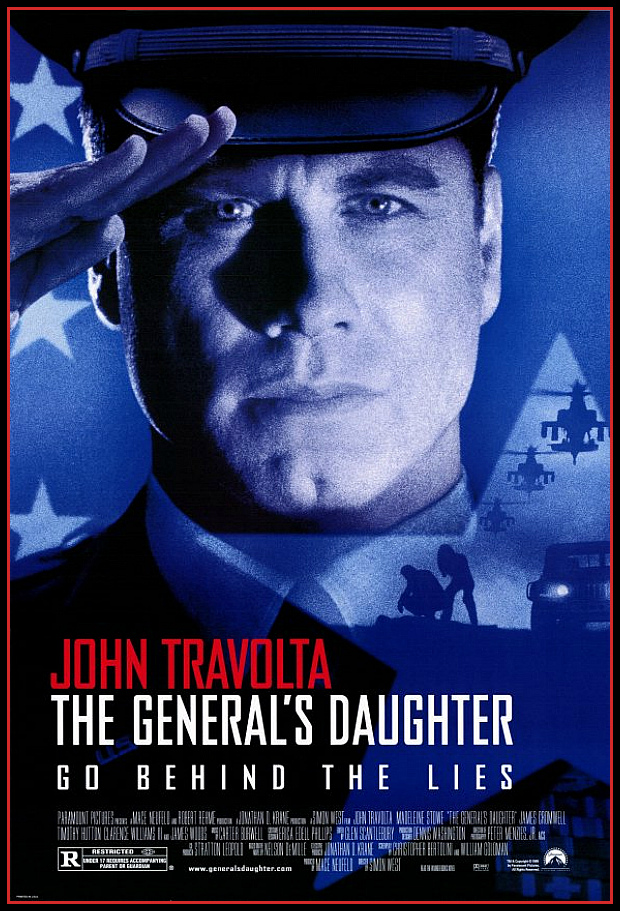
Quickie Review: The General’s Daughter (dir. by Simon West)


The time around the late 1990’s saw a slew of filmmakers who seemed to have been influenced by the filmmaking style of one Michael Bay. In 1998 one such film which had a certain Michael Bay look to it was the crime thriller The General’s Daughter by filmmaker Simon West (fresh off his success from the previous year’s Con-Air). This film adaptation of the Nelson DeMille novel of the same name starred John Travolta when he was still enjoying the second renaissance of his career brought on by his role in Pulp Fiction.

The General’s Daughter was pretty much a crime procedural wrapped around the secretive and insular world of military life. It has Chief Warrant Officer Paul Brenner (played by Travolta) of the Army’s CID investigating what seems to be the apparent rape and murder of a female officer who also happens to be the daughter of the base’s commandant and political-minded general. Brenner’s soon joined by another CID agent, Sara Sunhill (Madeleine Stowe), who must now navigate the insular world which makes up the officer ranks of the military. They find suspects cropping up faster than they could handle and the one prime suspect in base psychologist Col. Moore (James Wood in an over-the-top performance) has secrets about the victim that could jeopardize the lives and career of not just most of the officers on the base but the victim’s own father. This set-up and the basic understanding of the plot should make for a great thriller, but the by-the-numbers direction by Simon West and the over-the-top performances by too many of the characters in the film sinks The General’s Daughter before it could soar.

The story in of itself really has nothing to drag down the film. From the beginning the screenplay does a great job in tossing red herrings to keep the true murderer secret until the very end. It’s these red herrings which manages to bring out the ultimate reason as to the death of Capt. Elisabeth Campbell (Leslie Stefanson) and how a traumatic event in her past became the one major link which would lead to her death early in the film. It’s how these events were acted out which brings down the script. It’s been said that great performances could raise a mediocre script, but the same could be said for the opposite. Very average to bad performances could drag down a great script.

Travolta’s performance was good enough most of the time. He’s especially good when pouring on the Southern charm to try and gain an advantage over those he’s interacting with, but when he suddenly switches over to tough Army investigator that he goes from just beyond campy to over the line into full-blown camp. The same could be said for pretty much everyone in the film from Stowe’s character who manages to just stand around doing nothing but act as a sort of “gal Friday” for Travolta’s character until the very end when she suddenly becomes a crack investigator to help move the plot along. Clarence Williams III really hams it up as the base general’s right-hand man and one would wonder if he realized he wasn’t actually in a grindhouse or exploitation film when it was time to act.

Despite the performances dragging the film down I must admit that The General’s Daughter was quite watchable and entertaining to a certain level. It’s the film’s inadequacies which also makes it quite a disposable fare that should’ve been more. One wonders how the film would be done today with a different set of actors and a filmmaker who knew the nuances of how to navigate around a thriller. Until the inevitable remake from Hollywood gets greenlit (the way things get remade now it’s bound to happen) it’s this version of The General’s Daughter that’d be on record and it’s a film that has too many bad performances for a great screenplay to overcome. A film that ultimately remains mildly entertaining but forgettable in the end.

Quick Review: L.A. Noire


It was a dark and stormy night, the scent of blood in the rain, and I found myself huddled in front of my XBox. 

In the gaming world, bringing out a new IP can be tricky. If you have a great design team and a fantastic story, sometimes players will gravitate to it. Ubisoft’s Assassin’s Creed and Rocksteady/Eidos/WB’s Batman: Arkham Asylum are great examples of a new IP that actually managed to stand on it’s own. EA’s Mirror’s Edge, though one of my favorite games, didn’t garner enough interest to keep EA/Dice from shelving any possible sequels. I believe the problem with Mirror’s Edge was that it was a niche game. If you loved parkour/freerunning and dealing with puzzles, it was a fantastic game. If you were nauseated by first person movement, you never touched it.

And this is the danger that Rockstar’s L.A. Noire faces. It’s a detective story, and it’s going to be hard pressed to pull the Halo and Call of Duty shooter crowd (myself included) into its web. Unlike other Rockstar Games, you don’t spend too much time trying to cause mayhem to the city or roaming around. You can play in the sandbox, sure, but you also have a purpose in trying to stop crime. In a sense, you could compare it to the Spider Man games, sans web shooters and sticky fingers/feet. Know this, if you don’t at least watch someone play this game or try it yourself, you are seriously missing out on something grand.

Let me repeat: “You are seriously missing out on something grand, if you don’t at least try it.”

In L.A. Noire, you play Cole Phelps, fresh out of WW II with a Silver Star and logically moving to a role of a officer in the L.A.P.D. Quick to make a name for himself, Cole takes the initiative to further his career by solving the crimes he comes across. This moves him through the ranks and brings him to some of the more high profile cases in LA during the 1940’s. You can move through five different styles of investigations, ranging from Homicide to Vice to Arson. The case system in L.A. Noire is very cool, and requires you to walk the perimeter of a crime scene to examine the clues that are around. The music in the game helps to let you know if you’re moving too far away from the crime scene (the music will stop playing), if you’ve stumbled onto a clue (a chime), or if you’ve managed to collect all of the clues in an area (an uplifting melody). What’s important to note is that gathering evidence isn’t as easy as picking up an object and adding it to your inventory. You have to sometimes turn the object around in Cole’s hands to make sure that he sees (he sees, not that you see) something of particular about it. It takes the Detective Mode of Batman: Arkham Asylum up a notch in that even you may find clues and info in both games, L.A. Noire lets you choose how to incorporate it in your interrogations. It would be interesting to see if Arkham City has a similar approach along the line. The Interrogation features of L.A. Noire introduces a new technology to Rockstar’s arsenal called MotionScan. This tech, similar to what was used in The Social Network allowed them to map the actors facial movements. This becomes a key part of the interrogations in that you can effectively ‘read’ a witness and tell if they are lying to you or possibly have some doubts to what they’re telling you. I haven’t seen anything like this since Intrigue! For the Commodore 64, so it’s pretty refreshing to encounter the system here.

The one problem I do have with L.A. Noire so far is that the Interrogation System (at least in one of the first 3 cases I handled) seemed to run in a loop. When I fouled up an Interrogation, I was forced to redo it until I got it right. I believe it was because of the case I was working on (it was literally the introduction to Interrogating), and that other cases may not do this. If all of the interrogations have that style, that could become a problem. The whole “do it until you get it right” is great in a game like Mirror’s Edge, but it would be nice to see a case slip from your fingers because you botched something.

You’ll also find a number of cameos from various actors in L.A. Noire. Keith Szarabajka (The Dark Knight) is the narrator of the story, and you’ll also run into Courtney Gains (Memphis Belle, The Burbs) and many others (including Fringe’s John Noble), which adds to this.

Of course, it wouldn’t be a Rockstar Game without the Sandbox to play in. The Sandbox here is Los Angeles, 1947. I can’t comment on how realistic it looks, as I’ve never been to L.A., but for the purposes of this game, it makes sense. From what I’ve played so far, it’s not as rich and picturesque as Red Dead Redemption, but it does definitely fit the atmosphere of a noir story. Shadowy corners, dark alleys, it’s done quite well. Add to that the music of the story, a mixture of Jazz and action paced tunes, and you’re pretty much in a detective story all your own. Overall, L.A. Noire breaks a lot of new ground in what it achieves. You won’t get the Grand Theft Auto experience in that you’ll go crazy shooting and crashing through the city, and it might not be for every audience out there, but for those who love detective stories or crime dramas, it’s a definite gem.

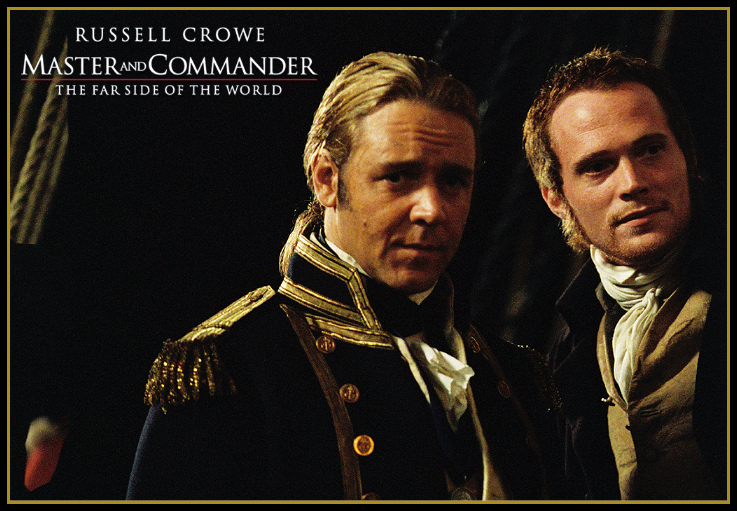
Quickie Review: Master and Commander: The Far Side of the World (Peter Weir)


If there was a film which deserved better when it first came out in 2003 it would be Peter Weir’s epic adaptation of the Patrick O’Brian seafaring novels starring the character of Capt. Jack Aubrey. It was just bad luck on the part of Weir’s film that it came out the same year and month as the juggernaut that would sweep through not just the box-office for the 2003 holiday season, but all through the award-season. If Master and Commander: The Far Side of the World had only come out a year later there’s a great chance it would’ve been the frontrunner for 2005 Academy Awards for Best Picture, Best Director, Best Adapted Screenplay and many more. But the juggernaut that was Peter Jackson’s Lord of the Rings: The Return of the King would not be denied after two previous years when Jackson and his magnum opus were passed over.

To say that Peter Weir was at the top of his game with Master and Commander would be an understatement. Working from a script written by Weir himself and John Collee, the film would take several episodes from the Patrick O’Brian Aubrey-Maturin novels and combine them to make a coherent and thrilling period piece that rarely ever get made anymore. This was epic filmmaking at its finest with Weir’s direction keeping the long-running time of the film from becoming too tedious. Yet, he was also able to keep the film from becoming one battle setpiece following another. There was enough of a balance between the quiet storytelling, especially between the characters of Capt. “Lucky” Jack Aubrey (played by Russell Crowe in what had to be his best role ever) and his close friend and ship’s doctor Stephen Maturin (Paul Bettany matching Crowe scene for scene) to keep the film grounded in reality.

Master and Commander is set during the Napoleonic Wars when France and England battle it out on land and in the high seas. On one side is the HMS Surprize captained by Jack Aubrey which patrols the sea lanes from French privateers looking to attack and loot the rich English whaling ships to help fund Napoleon’s ambitions. The film is actually a cat-and-mouse thriller wrapped around a character piece as Aubrey’s ship and crew, outgunned and less armored than the French frigate Acheron it has come across during its patrol, must not just try and survive but find a way to beat it’s larger opponent. It’s during the quiter scenes in-between sea engagements that the film actually becomes stronger. We see life onboard the HMS Surprize as being quite harsh and primitive and not so glamourous as past films about sailing life would have audiences believe. The film shows how this harsh life for volunteers and press-ganged crew ratings creates a strong bond of fellowship amongst the crew members that when they believe someone is jeopardizing their lives they quickly turn on that individual. But it’s through the near-dictatorial handling of his crew which keeps both ship and crew from devolving into mutiny. Crowe does a great job of giving Jack Aubrey that balance of ruthless taskmaster whose word is law onboard, but also gives his captain that bon vivant flair which when used accordingly makes Aubrey a hero to the very men he has to lord over.

This benevolent dictator was balanced out by Bettany’s Dr. Maturin who acts not just as the scientific counter to Aubrey’s militaristic personality, but also as the conscience of the ship who looks first to the crew’s well-being. This dynamic between Crowe and Bettany kept the film anchored and stabilized as we see the long-standing friendship between these two get tested not just by the crisis they find themselves in but also the vast ideological differences between the military man and the scientist. Yet, despite all their problems and difference when things became rough the two would settle it amicably and concentrate on their shared task with their bond of friendship intact and much stronger after.

The film doesn’t shirk it’s thrills as Master and Commander provides audiences with some of the most thrilling and accurate portrayal of naval combat during the Napoleonic era. There are no steel-hulls or rapid-fire guns. The engagements between the HMS Surprize and the Acheron were all brutal affairs from the first time the latter ambushes Aubrey’s ship early in the film to the final battle which sees not just ship-to-ship fighting but boarding actions as the crew of the Surprize attempt a desperate gamble to take the fight to the bigger French privateer. It’s a testament to Weir’s direction that even through the chaotic nature of each battle he’s able to keep each scene easy to follow and allow for main characters to stand out for audiences to recognize.

It’s a shame that the film didn’t succeed in the box-office more than it did. Master and Commander: The Far Side of the World showed that there was still old-school epic filmmaking left in Hollywood with filmmakers willing to tell a grand story with bigger-than-life characters on a broad canvas. The fact that it took an even more epic film to surpass Peter Weir’s film shouldn’t detract from this film’s accomplishments.

Scenes I Love: 12 Angry Men


With the recent passing of filmmaker Sidney Lumet I’ve gone through some of the films of his I’ve come to see as favorites of mine. One film which always came to the forefront whenever I spoke about Lumet as a filmmaker is his directorial film debut in 1957 with his adaptation of 12 Angry Men. Of all his films this is the one which I always go back to time and time again. Part of me is somewhat biased in regards to this film since I was part of a class reading of the original teleplay and played the role of Juror #3.

The scene in the film which I love the most has to be when Juror #8 (played with calm assurance by Henry Fonda) and Juror #3 (played with seething rage by Lee J. Cobb) finally get into it after a very long deliberation in trying to find a consensus on the guilt or innocence of the defendant in their case. I love how in this scene everything that’s right about the American jury system was being upheld by Juror #8. How the guilt or innocence of the defendant should come down to just the facts of the case and combing through all the testimony. How emotions and personal feelings and bias should never enter the equation. It is a person’s life in their hands and it is a responsibility too great to leave it to emotions to find the verdict.

This scene also shows the darker side of the American jury system in that there will be, at times, people chosen to preside as a juror in a case will come in with emotional baggage and a hidden agenda which clouds their decision making. They don’t look at the facts and testimony at hand but at what they believe to be true no matter what the facts may say otherwise. this is how the jury system becomes twisted and becomes part and parcel to the notion that justice is never truly blind but always colored by human frailties and prejudices.

Even 54 years since the films first premiered it still holds a powerful effect on me and those who sees it for the first time. It helps that you have a master filmmaker in Sidney Lumet guiding an exceptional cast of actors. One could come to the conclusion that the audience has the angel on one shoulder with Juror #8 and the devil on the other with Juror #3. All in all, a great scene that always stays with me long after the film has ended.