Here is Dracula, presented by Orson Welles and The Mercury Theater!


Did you know that in 1938, the same year that they horrified America with their production of The War Of The Worlds, Orson Welles and the Mercury Theater did a radio version of Dracula?

Check out this amazing cast list:

Orson Welles – Dracula/Dr. Arthur Seward
George Coulouris- Jonathan Harker
Ray Collins – Russian Captain
Karl Swenson – The Mate
Elizabeth Fuller – Lucy Westenra
Martin Gabel – Professor Van Helsing
Agnes Moorehead – Mina Harker

Coulouris, Collins, and Moorehead would, of course, all go one to appear with Orson Welles in Citizen Kane.

And now, we are proud to present, for your listening pleasure …. DRACULA!

Horror Scenes That I Love: Bela Lugosi in Dracula


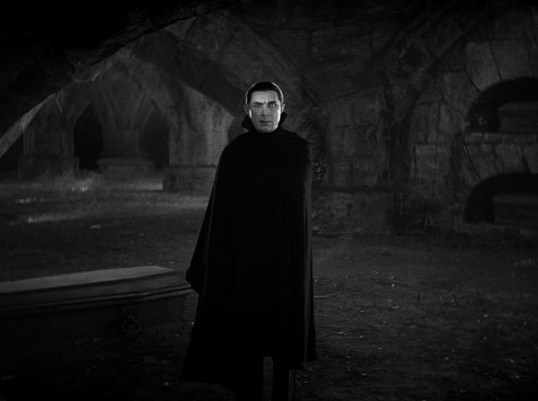
Dracula (1931, starring Bela Lugosi as the Count, Dir by Tod Browning, DP: Karl Freund)

On this day, 143 years ago Bela Lugosi was born in what is now Romania.  Lugosi began his career in his native country, appearing on stage.  After serving as an infantryman in World War I, Lugosi moved into the movie industry and appeared in silent Hungarian films.  The young Lugosi was an activist, involved in labor issues and trying to unionize the Hungarian film industry.  When a new government came to power in Hungary in 1920, the politically-active Lugosi moved first to Germany and then eventually ended up in the United States.  After a period of working as a merchant seaman, Lugosi returned to acting.

He first played Dracula on stage in New York City.  In 1928, while touring in the role of Dracula, he moved out to California and quickly became a part of the Hollywood community.  When Universal produced a film adaptation of Dracula in 1931, Lugosi was the obvious choice for the lead role.  The film made Lugosi a star and it also typecast him.  Lugosi never stopped acting, though the films varied widely in quality.  By the end of his career, Lugosi was a member of the Ed Wood stock company.  Even appearing in something like Bride of the Monster, Lugosi still made an impression.

In the scene below, from 1931’s Dracula, Lugosi suggests that Edward van Sloan’s Van Helsing should perhaps leave the country.

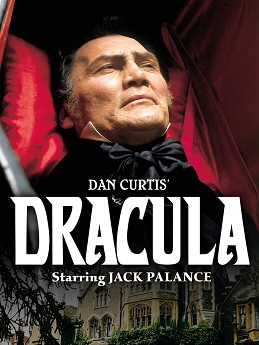
Horror Film Review: Bram Stoker’s Dracula (dir by Dan Curtis)


1974’s Bram Stoker’s Dracula opens with a familiar sight.

British solicitor Jonathan Harker (Murray Brown) is in Transylvania, where he has an appointment with a mysterious man named Dracula.  The local villagers are superstitious and seem to be frightened of Dracula’s very name.  When Harker reaches Dracula’s castle, he discovers that Dracula (Jack Palance) is a courtly but enigmatic man.  When Dracula sees a photograph of Jonathan’s fiancée, Mina, and her best friend, Lucy, something about it seems to capture his attention.  Later, that night, Jonathan is attacked by several female vampires.  After Dracula saves Jonathan’s life, he forced Jonathan to write a letter home, saying that he will be staying in Transylvania for month.  Jonathan attempts to escape but is instead dragged off to the crypt, where Dracula’s brides await….

Soon, Dracula is in England.  Lucy (Fiona Lewis), who looks exactly like Dracula’s long-dead wife, is taken mysteriously ill and dies.  Dr. Abraham Van Helsing (Nigel Davenport), called in when Lucy was showed signs of being sick, suspects that there is a vampire at work.  Lucky’s fiancé, Arthur Holmwood (Simon Ward), doesn’t believe it until he sees, with his own eyes, Lucy raised from the dead and calling for him to come and join her….

Not to be confused with the Francis Ford Coppola film, 1974’s Bram Stoker’s Dracula was directed by horror impresario Dan Curtis.  It’s a rather loose adaptation of Bram Stoker’s novel.  For one thing, Jonathan Harker does not return to England.  Dracula is, from the start, more interested in Lucy than in Mina.  Lucy’s other suitors — Quincy Morris, John Seward — are not present.  And Dracula himself does not get younger as the result of drinking blood.  In fact, it’s such a loose adaptation that it’s actually difficult to justify calling it Bram Stoker’s Dracula.  (In fact, the film is also known as Dan Curtis’s Dracula, which is a far more appropriate title.)

That said, it’s still an entertaining vampire movie.  Jack Palance, who previously worked with Dan Curtis in The Strange Case of Dr. Jekyll and Mr. Hyde, gives a properly intense performance as Dracula.  He doesn’t try to adopt any sort of Eastern European accent or anything like that.  Instead, he delivers his lines through clenched teeth (or, perhaps, fangs) and he fixes his victims with a powerful stare that hints at the animalistic urges behind his controlled demeanor.  Palance plays Dracula as being arrogant and convinced that no mere mortal can defeat him.  At the same time, there’s a vulnerability to Palance’s Dracula.  Watch how his face briefly lights up when he sees Lucy’s picture and is reminded of his long-dead wife.  Watch his fury when he discovers that Van Helsing and Arthur have gotten to Lucy before him.  His love for his wife is the one shred of humanity that Dracula still has within him.  When he loses her a second time (in the form of Lucy), he’s prepared to go to war.

Bram Stoker’s Dracula was originally meant to air in October of 1973 but the showing was pre-empted by the announcement that Vice President Spiro Agnew had resigned.  As a result, this film — so clearly meant for Halloween — did not air until February of 1974.  That doesn’t seem fair.  Poor Dracula.

20 Horror Movies For The Weekend (10/10/25)


It’s time for another round of movie recommendations for the Halloween season!

Universal Horror On Prime

It’s the Halloween season and I am happy to say that Prime has a few classic, old school horror films.  I know that they probably take some getting used to for modern audiences but I personally love the old horror movie.

Dracula (1931), for instance, has a reputation for being rather stagey and that reputation is actually justified.  It was based less on Bram Stoker’s classic novel and more on the subsequent stage play.  That said, years of bad imitations have not diminished the strength of Bela Lugosi’s performance as Dracula.  Though this film is, understandably, dominated by Lugosi, I’ve always appreciated the performances of Dwight Frye and Edward Van Sloan as well.  Dracula is on Prime.

Frankenstein (1932) also features Edward Van Sloan and Dwight Frye, along with Mae Clarke as Elizabeth, Colin Clive as Henry Frankenstein, and Boris Karloff as the Monster.  Nowhere near as campy as its reputation would seem to suggest, Frankenstein is actually a thoughtful and rather sad horror film.  Karloff’s performance as the Monster has never been equaled and the scene where he unknowingly tosses the little girl in the lake to see if she will float is a classic moment of Universal horror.  Frankenstein is on Prime.

Needless to say, any viewing of Frankenstein should be immediately be followed by the second part of the story, Bride of Frankenstein (1935).  Bride of Frankenstein opens with Elsa Lanchester (as Mary Shelley) revealing that there is more to her story than revealed in the first film.  Lanchester returns towards the end of the film, playing the title character.  Her reaction to being brought to life is heart-breaking.  Boris Karloff is even better in this film than he was in the first one.  Of the old Universal horror films, this is the best.  It can be viewed on Prime.

The Invisible Man (1933) is often overlooked when it comes to discussing the classic Universal horror films but I’ve always enjoyed.  The special effects are effective to this day and Claude Rains gives an excellent performance as the title character.  The Invisible Man can be viewed on Prime.

Finally, I have to mention one of my personal favorites.  Creature From The Black Lagoon (1953) may have come out 20 years after the first wave of Universal horror films but it’s still an undeniable classic.  The scenes of the Creature and Julia Adams swimming underwater are like a surreal and beautiful ballet.  The Creature itself remains one of the best of Universal’s monsters.  It can be viewed on Prime.  (We’ll be watching it tomorrow for #ScarySocial!)

British Horror Online

In the 1950s, Britain’s Hammer Studios made their own version of the classic horror tales.  Hammer’s films were in color and featured a combination of blood and cleavage that made them very popular with audiences in both the U.K. and the U.S.  Even more importantly, they featured actors like Peter Cushing and Christopher Lee.

Curse of Frankenstein (1957) featured Peter Cushing as the Baron and Christopher Lee as the monster.  If the first Frankenstein presented the scientist as being misguided but ultimately well-intentioned, the Hammer version presents Baron von Frankenstein as being a man who is all-too eager to play God, mostly for the sake of his own ego.  Lee is an effective Monster but the true monster here is Cushing’s mad scientist.  Curse of Frankenstein can be viewed on Tubi.

Horror of Dracula (1958) was the first of many Hammer films to feature Christopher Lee as Dracula and Peter Cushing as Van Helsing.  (Somewhat sweetly, the two actors were best friends off-screen.)  Lee eventually grew bored with the Hammer Dracula films but, in the first one, he gives an intense and almost feral performance as the blood-thirsty vampire.  I’ve always preferred Cushing’s kindly Van Helsing to his cruel Frankenstein.  Horror of Dracula can be viewed on Tubi.

Hammer was not the only British studio creating memorable horror films.  Amicus Productions was responsible for some classic films of their own.  One of my favorites is Scream and Scream Again (1970), which manages to be a horror film, a science fiction film, and a conspiracy thriller all in one.  Christopher Lee and Peter Cushing appear in small roles while Vincent Price plays the scientist at the heart of the thriller.  The late Michael Gothard plays a killer who, when handcuffed to a car, simply rips off his hand in order to make his escape.  Scream and Scream Again can be viewed on Tubi.

In Death Line (1972), Donald Pleasence gives one of his best performances as an alcoholic cop who is investigating a series of disappearances in London’s underground.  Hugh Armstrong plays the rather pathetic cannibal who is only capable of saying, “Mind the gap….” Christopher Lee has a cameo.  Death Line can be viewed on Prime.

Finally, I have to recommend something from the underrated director Pete Walker.  The Flesh and Blood Show (1972) is a fun and macabre little horror story about actors rehearsing a play in an isolated theater.  Needless to say, they aren’t alone.  It can be viewed on Tubi.

Italian Horror Online

With this upcoming Monday being Columbus Day, here are some Italian horror recommendations.

Of course, any discussion Italian horror has to start with Mario Bava.  Black Sabbath (1963) is one of Bava’s best films, an anthology film that features three classic tales.  Boris Karloff appears in the second story, playing a patriarch who has been transformed into a vampire.  All three of the stories are wonderfully scary and entertaining and they all reveal Bava as a true master of horror.  Black Sabbath can be viewed on Tubi.

Baron Blood (1972) deals with a mansion, a curse, and an ancient evil.  The great Joseph Cotten stars.  Remember that story about the hole in Russia from which you could supposedly hear the screams of the people in Hell?  The “screams’ were even recorded.  It was later determined that the screams in question had been lifted from this very film.  Baron Blood can be viewed on Tubi.

Mario Bava’s Lisa and the Devil (1973) is a surreal mix of giallo mystery and demonic horror.  Elke Sommer plays Lisa (hey!) who finds herself stranded in a mansion and experiencing what may or may not be a dream.  Telly Savalas plays the mysterious Leandro, who may or may not be the other title character.  The film can be viewed on Tubi.

Bava’s final film as a director was 1977’s Shock, a brilliant and frightening ghost story starring Daria Nicolodi and John Steiner.  Nicolodi gives an intense and riveting performance as a mental fragile woman who may or may not be haunted by her ex-lover’s ghost.  The hallway scene is horrifying.  It can be viewed on Tubi.

Mario Bava’s son, Lamberto Bava, has gone on to have a directorial career of his own.  He is perhaps best-known for directing the Dario Argento-produced Demons (1985), in which the audience of horror movie is transformed into a collection of blood-thirsty demons.  It’s a wonderfully over-the-top horror film and it can be viewed on Tubi.

Lamberto Bava also directed A Blade In The Dark (1983), an excellent giallo about a film composer who is on a deadline but still finds time to get caught up in the brutal murders that all seem to be occurring around his duplex.  This was one of the first giallo films that I ever saw and I was pretty much hooked from the beginning.  The murder scene that takes place over the sink still freaks me out.  It can be viewed on Tubi.

Finally, I have to recommend a few films from Lucio Fulci, the genius who was responsible for some of the most visually stunning (albeit narratively incoherent) Italian horror films of all time.

First off, any discussion of Fulci’s horror work has to start with Zombi 2 (1979).  Though the film was sold as being a “sequel” to Dawn of the Dead, Zombi 2 is actually a separate story and a horror classic in its own right.  As opposed to the gray-skinned members of the undead that populated Romero’s films, Fulci’s zombies truly do look as if they’ve spent the last decade buried underground and they attack with a disturbing relentlessness.  One zombie battles a shark underwater.  A conquistador zombie digs its way out of the ground, in a scene that is actually shown from the zombie’s point of view!  The final scene is a classic and was apparently shot without bothering to get any permits ahead of time.  Zombi 2 is on Tubi.

Finally, any discussion of Fulci has to include his masterwork, The Beyond trilogy.  These three films, which are loosely-connected, are about as surreal and dream-like as they come, as narrative coherence is sacrificed for nightmarish visuals that truly do stick with the viewer.

In the first part of the trilogy, City of the Living Dead (1980), Christopher George and Catriona MacColl visit a small New England town where a priest’s suicide has opened a portal to Hell.  The great Giovanni Lombardo Radice makes his film debut as Bob the Pervert, who has a bad experience with a drill to the head but who still returns to get a measure of revenge.  City of the Living Dead can be viewed on Pluto TV.

The second part of the trilogy, The Beyond (1981), takes place in New Orleans.  Catriona MacColl plays a different character here, a woman trying to reopen a hotel where, decades ago, a painter was lynched.  The charming David Warbeck plays a doctor who has to deal with the dead coming back to life.  Cinzia Monreale plays the beautiful, blind, and enigmatic Emily.  The Beyond is about as close as the Italian horror industry ever got to capturing the feel of classic H.P. Lovecraft story.  The ending will stick with you.  It can be viewed on Tubi.

Finally, The House By The Cemetery (1981) features Catriona MacColl as yet another new character.  This time, she and her husband and their son move into a house in New England, little realizing that the house’s previous inhabitant, Dr. Fruedstein, is still in the basement.  This bloody film was apparently Fulci’s biggest hit in the States.  Dr. Fruedstein is a terrifying creation and the film ends on a note of haunting ambiguity.  This film can be viewed on Tubi.

That’s all I have room for in this entry but I imagine I’ll be writing about a lot more about Italian horror as the month progresses!

Click here for last week’s recommendations.


4 Shots From Horror History: 1930s Part One


This October, I’m going to be doing something a little bit different with my contribution to 4 Shots From 4 Films.  I’m going to be taking a little chronological tour of the history of horror cinema, moving from decade to decade.

Today, we take a look at the start of the 1930s.

4 Shots From 4 Films

Dracula (1931, dir by Tod Browning)

Dracula (1931, dir by Tod Browning)

Frankenstein (1931, dir by James Whale)

Frankenstein (1931, dir by James Whale)

Vampyr (1932, dir Carl Theodor Dryer)

Vampyr (1932, dir Carl Theodor Dryer)

White Zombie (1932, dir by Victor Halperin)

White Zombie (1932, dir by Victor Halperin)

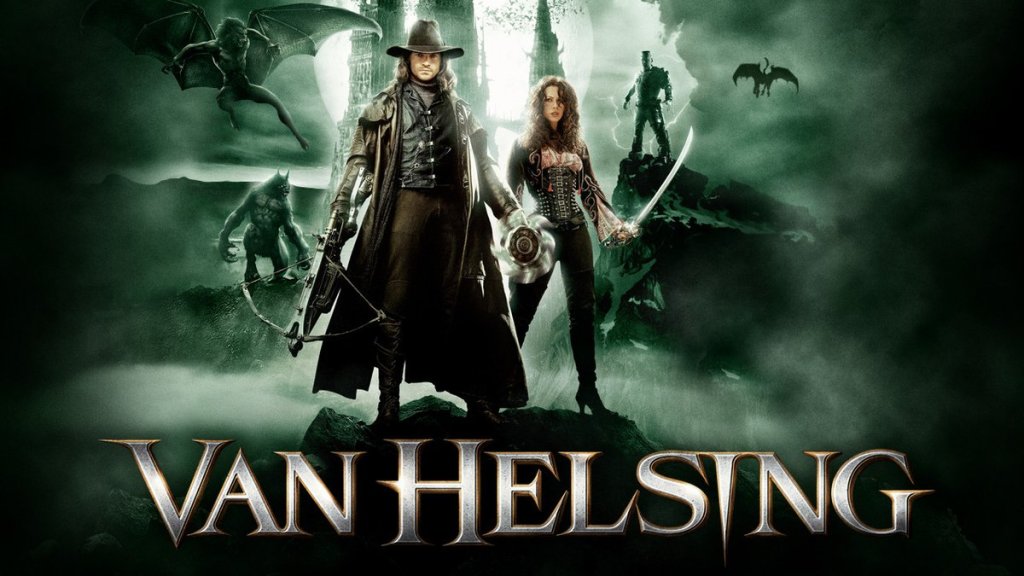
Guilty Pleasure No. 74: Van Helsing (dir by Stephen Sommers)


What can I say about this 2004 action horror film that can do it justice at just how it perfectly represent what I call a “guilty pleasure”.

Van Helsing by Stephen Sommers (him being at his most Stephen Sommersist) was suppose to be a new action franchise with Hugh Jackman as it’s lead. One must remember that in 2004, Hugh Jackman was still at the height of his popularity as an action star with roles as Wolverine in the X-Men film franchise and, in another guilty pleasure of mine, Swordfish.

This film was suppose to catapult him to the stratosphere and taking the action star role from aging ones such as Arnold Schwarzenneger, Sylvester Stallone and Bruce Willis. Instead Stephen Sommers reached for that brass ring and failed, but did so with a mish-mash of horror properties blended haphazardly to give us a film that tried to be too much yet also not enough.

Hugh Jackman in the title role was more than game to try and prop up the film’s convoluted plot. Kate Beckinsale was stunning as usual and hamming it up in what I could only guess is here version of a Transylvanian accent. Even Richard Roxbrough in the role of Dracula, miscast as he seem to be in the role, gave a campy and scenery-chewing performance that his performance went past bad and circled back to being entertaining.

Yet, for all its flaws, I actually enjoy Van Helsing for what it was and that was a modern version of those Abbott and Costello mash-up with the Universal horror characters of the 40’s and 50’s. One cannot mistake this film on the same level as Nosferatu (Murnau, Herzog and Eggers versions) and Sommers definitely cannot be mistake for the three auteurs who had their own take on the abovementioned film. But Sommers does make thrilling, though some would say repetitive, action films.

Did I turn my brain off watching Van Helsing?

I sure did, but it still didn’t stop me from being entertained…and I cannot ever sat anything bad about a film with Kate Beckinsale in a tight black-red leather corset. It’s against some sort of law to do so.

Previous Guilty Pleasures

  1. Half-Baked
  2. Save The Last Dance
  3. Every Rose Has Its Thorns
  4. The Jeremy Kyle Show
  5. Invasion USA
  6. The Golden Child
  7. Final Destination 2
  8. Paparazzi
  9. The Principal
  10. The Substitute
  11. Terror In The Family
  12. Pandorum
  13. Lambada
  14. Fear
  15. Cocktail
  16. Keep Off The Grass
  17. Girls, Girls, Girls
  18. Class
  19. Tart
  20. King Kong vs. Godzilla
  21. Hawk the Slayer
  22. Battle Beyond the Stars
  23. Meridian
  24. Walk of Shame
  25. From Justin To Kelly
  26. Project Greenlight
  27. Sex Decoy: Love Stings
  28. Swimfan
  29. On the Line
  30. Wolfen
  31. Hail Caesar!
  32. It’s So Cold In The D
  33. In the Mix
  34. Healed By Grace
  35. Valley of the Dolls
  36. The Legend of Billie Jean
  37. Death Wish
  38. Shipping Wars
  39. Ghost Whisperer
  40. Parking Wars
  41. The Dead Are After Me
  42. Harper’s Island
  43. The Resurrection of Gavin Stone
  44. Paranormal State
  45. Utopia
  46. Bar Rescue
  47. The Powers of Matthew Star
  48. Spiker
  49. Heavenly Bodies
  50. Maid in Manhattan
  51. Rage and Honor
  52. Saved By The Bell 3. 21 “No Hope With Dope”
  53. Happy Gilmore
  54. Solarbabies
  55. The Dawn of Correction
  56. Once You Understand
  57. The Voyeurs 
  58. Robot Jox
  59. Teen Wolf
  60. The Running Man
  61. Double Dragon
  62. Backtrack
  63. Julie and Jack
  64. Karate Warrior
  65. Invaders From Mars
  66. Cloverfield
  67. Aerobicide 
  68. Blood Harvest
  69. Shocking Dark
  70. Face The Truth
  71. Submerged
  72. The Canyons
  73. Days of Thunder

Here is Dracula, presented by Orson Welles and The Mercury Theater!


Did you know that in 1938, the same year that they horrified America with their production of The War Of The Worlds, Orson Welles and the Mercury Theater did a radio version of Dracula?

Check out this amazing cast list:

Orson Welles – Dracula/Dr. Arthur Seward
George Coulouris- Jonathan Harker
Ray Collins – Russian Captain
Karl Swenson – The Mate
Elizabeth Fuller – Lucy Westenra
Martin Gabel – Professor Van Helsing
Agnes Moorehead – Mina Harker

Coulouris, Collins, and Moorehead would, of course, all go one to appear with Orson Welles in Citizen Kane.

And now, we are proud to present, for your listening pleasure …. DRACULA!

4 Shots From 4 Films: Special Tod Browning Edition


4 Shots From 4 Films is just what it says it is, 4 shots from 4 of our favorite films. As opposed to the reviews and recaps that we usually post, 4 Shots From 4 Films is all about letting the visuals do the talking.

Today’s director is Tod Browning, who started his career during the silent era, ended it in the sound era, and was responsible for some of the most important horror and suspense films of both eras!

4 Shots From 4 Tod Browning Films

West of Zanzibar (1928, dir by Tod Browning, DP: Percy Hilburn)

Dracula (1931, Dir by Tod Browning, DP: Karl Freund)

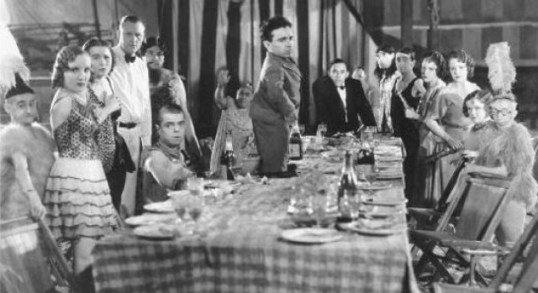
Freaks (1932, dir by Tod Browning, DP: Merritt Gerstad)

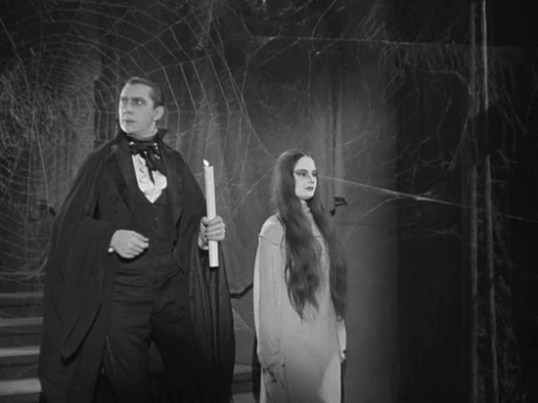
Mark of the Vampire (1935, Dir by Tod Browning, DP: James Wong Howe)

Horror Scenes That I Love: Bela Lugosi in Dracula


Dracula (1931, starring Bela Lugosi as the Count, Dir by Tod Browning, DP: Karl Freund)

Bela Lugosi was born in what is now Romania.  Lugosi began his career in his native country, appearing on stage.  After serving as an infantryman in World War I, Lugosi moved into the movie industry and appeared in silent Hungarian films.  The young Lugosi was an activist, involved in labor issues and trying to unionize the Hungarian film industry.  When a new government came to power in Hungary in 1920, the politically-active Lugosi moved first to Germany and then eventually ended up in the United States.  After a period of working as a merchant seaman, Lugosi returned to acting.

He first played Dracula on stage in New York City.  In 1928, while touring in the role of Dracula, he moved out to California and quickly became a part of the Hollywood community.  When Universal produced a film adaptation of Dracula in 1931, Lugosi was the obvious choice for the lead role.  The film made Lugosi a star and it also typecast him.  Lugosi never stopped acting, though the films varied widely in quality.  By the end of his career, Lugosi was a member of the Ed Wood stock company.  Even appearing in something like Bride of the Monster, Lugosi still made an impression.

In the scene below, from 1931’s Dracula, Lugosi suggests that Edward van Sloan’s Van Helsing should perhaps leave the country.

4 Shots From 4 Films: Special Tod Browning Edition


4 Shots From 4 Films is just what it says it is, 4 shots from 4 of our favorite films. As opposed to the reviews and recaps that we usually post, 4 Shots From 4 Films is all about letting the visuals do the talking.

This October, I am going to be using our 4 Shots From 4 Films feature to pay tribute to some of my favorite horror directors, in alphabetical order!  That’s right, we’re going from Argento to Zombie in one month!

Today’s director is Tod Browning, who started his career during the silent era, ended it in the sound era, and was responsible for some of the most important horror and suspense films of both eras!

4 Shots From 4 Tod Browning Films

West of Zanzibar (1928, dir by Tod Browning, DP: Percy Hilburn)

Dracula (1931, dir by Tod Browning. DP: Karl Freund)

Freaks (1932, dir by Tod Browning, DP: Merritt Gerstad)

The Devil-Doll (1936, dir by Tod Browning, DP: Leonard Smith)