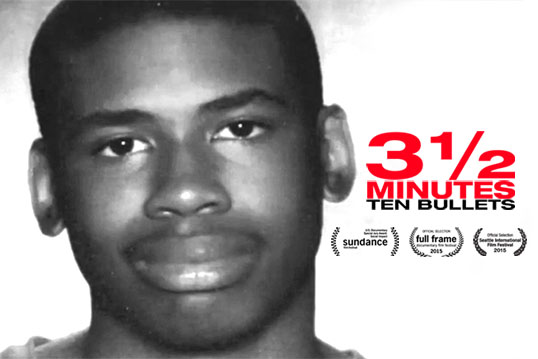
I’m a little late in sharing this (well, about three days) but things have been a little bit busy around these parts. The nominees for the International Documentary Association’s awards were announced a few days ago. You can view the full list here.
For the purposes of those of us who are obsessed with trying to predict all the Oscar nominees, our main concern is with the 6 movies that were nominated for the Best Feature Award. Best Documentary Feature is, traditionally, one of the most difficult categories to predict. Every little bit of info helps. All 6 of the movies listed below have also been included on the list of the 124 documentaries that have been deemed to be Oscar-eligible this year.
Best Feature Award Amy, The Black Panthers: Vanguard of the Revolution, Listen to Me Marlon, The Look of Silence, The Russian Woodpecker, What Happened, Miss Simone?
Despite making an effort to see more documentaries this year, Amy is the only one of the above nominees that I’ve actually watched. It definitely deserves to be nominated.
One final question: though Going Clear was not nominated by the IDA, it is Oscar-eligible. If Going Clear did somehow get an Oscar nomination, would Tom Cruise and John Travolta still show up for the ceremony?
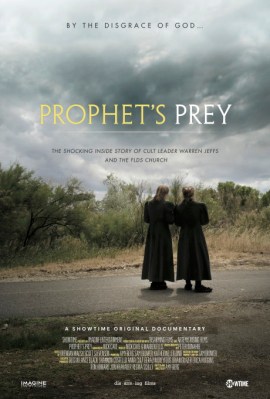
I just finished watching the documentary Prophet’s Prey and I have to say that it’s one of the creepiest things that I’ve ever seen in my life. As our regular readers know, I love horror movies but, in many ways, Prophet’s Prey is scarier than even the most effective horror film. Prophet’s Prey is frightening because it’s true.
Prophet’s Prey is about the secretive Fundamentalist Church of Jesus Christ of Latter Day Saints (FLDS), a group that is best known for its practice of polygamy. The Presidents of the FLDS, Warren Jeffs, has been convicted of two counts of child sexual assault and is currently serving a life sentence. This documentary suggests that Warren Jeffs (who is estimated to have close to 70 wives) is still controlling the FLDS from behind bars.
Warren Jeffs’s voice is heard throughout the film. He recorded his sermons, the majority of which appeared to be about the importance of obeying his authority, and we hear excerpts of them throughout the film. What’s especially striking is that Warren Jeffs does not sound the way that we would expect him to. After hearing about how powerful he is and how the members of the FLDS continue to defend and follow him, we expect to hear a voice full of charisma and insidious power. Instead, the sermons are delivered in a flat monotone and the utter banality of his voice makes them all the more creepy. It’s the same monotone that we hear when a tape is played of Jeffs praying and then having sex with a 12 year-old that he’s just married.
We also hear a few excerpts of Warren Jeffs at his arraignment. His response to nearly every question is to softly reply, “Fifth amendment.” Even when asked if he has any remorse about his crimes, he replies, “Fifth amendment.”
We also see footage of Warren Jeffs in jail. We watches as he wanders around his tiny cell and occasionally tries to get some sleep. And again, the thing that strikes us is how ordinary and boring he looks. If you ever needed proof of the banality of evil, Warren Jeffs would appear to be that proof.
How, we wonder, did this seemingly dull and uncharismatic man become one of the biggest (and, some would say, most dangerous) cult leaders in America?
The film searches for an answer and suggests that Warren Jeffs’s power over his followers has less to do with Warren and more to do with the culture in which they were raised. The film’s best moments come when the filmmakers drive through the twin towns of Colorado City, Arizona and Hilldale, Utah. These towns served as the headquarters of the FLDS. Cameras line the roads, keeping track of strangers driving past the modest and identical houses. The people who live in town watch the cars pass with unsmiling expressions. Soon, the camera crew realize that they are being followed by another car. At one point, a member of Jeffs’s security force pulls them over and asks what they’re done before taking their pictures. With mountains rising high in the background and the blue sky seeming to go on forever, Colorado City and Hilldale seem like the most isolated places in the world.
Because it covers so much material and comes to so many disturbing conclusions, Prophet’s Prey can be an exhausting film. Along with detailing the life and crimes of Warren Jeffs, the film also details the larger history and culture of the FLDS. It makes for fascinating and disturbing history and it all ends with the ominous reminder that Warren Jeffs is still leading his group from prison.
Pair Prophet’s Prey with Going Clear for an anti-cult double feature.
I think Lisa Marie and I could spend hundreds of hours just talking about history. While I love history in general, I do admit that military history has been a particular fascination of mine. Some would say that I’m just being bloodthirsty. That I’m reveling in the worst aspects of humanity. I would strongly disagree with that opinion.
Military history is not just about rehashing the cold facts and figures of battles, wars and conflict. It’s a type of history that gives people a window to the past. A past we could learn from so as not to repeat the same mistakes in the future. It’s not even the death and destruction shown through historical writing by aficionados and academia.
With PBS re-airing Ken Burns’ The Civil War this week we get to witness one of the great triumphs in filmmaking 25 years after it first aired in 1990. It’s a documentary that gives us an everyman’s look at the cause, effect and consequence of the bloodiest war in American history. A war that would shape the American consciousness for generations to come. It was also a war that pit brother against brother, fathers against sons and lifelong friends against each other as battlefields across the states and territories of the United States flowed with the blood of Americans.
One of the great things about this documentary series is how it doesn’t just rely on the facts and figures of this historical event in American history, but the personal voices of individuals who participated in the war and it’s periphery. These voices (as narrated by stars such as Morgan Freeman, Sam Waterston, Jason Robards, Julie Harris, Arthur Miller and George Plimpton to name a few) adds an poignant and personal touch to what could’ve been a very dry and academic exercise.
One of the best scenes in the series arrives at the end of the first day of five for the series. It’s a letter from one Union officer Sullivan Ballou to his wife a week before he participates in the war’s first major engagement, the First Battle of Bull Run.
Sullivan Ballou’s Letter
July the 14th, 1861
Washington D.C.
My very dear Sarah:
The indications are very strong that we shall move in a few days—perhaps tomorrow. Lest I should not be able to write you again, I feel impelled to write lines that may fall under your eye when I shall be no more.
Our movement may be one of a few days duration and full of pleasure—and it may be one of severe conflict and death to me. Not my will, but thine O God, be done. If it is necessary that I should fall on the battlefield for my country, I am ready. I have no misgivings about, or lack of confidence in, the cause in which I am engaged, and my courage does not halt or falter. I know how strongly American Civilization now leans upon the triumph of the Government, and how great a debt we owe to those who went before us through the blood and suffering of the Revolution. And I am willing—perfectly willing—to lay down all my joys in this life, to help maintain this Government, and to pay that debt.
But, my dear wife, when I know that with my own joys I lay down nearly all of yours, and replace them in this life with cares and sorrows—when, after having eaten for long years the bitter fruit of orphanage myself, I must offer it as their only sustenance to my dear little children—is it weak or dishonorable, while the banner of my purpose floats calmly and proudly in the breeze, that my unbounded love for you, my darling wife and children, should struggle in fierce, though useless, contest with my love of country?
I cannot describe to you my feelings on this calm summer night, when two thousand men are sleeping around me, many of them enjoying the last, perhaps, before that of death—and I, suspicious that Death is creeping behind me with his fatal dart, am communing with God, my country, and thee.
I have sought most closely and diligently, and often in my breast, for a wrong motive in thus hazarding the happiness of those I loved and I could not find one. A pure love of my country and of the principles have often advocated before the people and “the name of honor that I love more than I fear death” have called upon me, and I have obeyed.
Sarah, my love for you is deathless, it seems to bind me to you with mighty cables that nothing but Omnipotence could break; and yet my love of Country comes over me like a strong wind and bears me irresistibly on with all these chains to the battlefield.
The memories of the blissful moments I have spent with you come creeping over me, and I feel most gratified to God and to you that I have enjoyed them so long. And hard it is for me to give them up and burn to ashes the hopes of future years, when God willing, we might still have lived and loved together and seen our sons grow up to honorable manhood around us. I have, I know, but few and small claims upon Divine Providence, but something whispers to me—perhaps it is the wafted prayer of my little Edgar—that I shall return to my loved ones unharmed. If I do not, my dear Sarah, never forget how much I love you, and when my last breath escapes me on the battlefield, it will whisper your name.
Forgive my many faults, and the many pains I have caused you. How thoughtless and foolish I have often been! How gladly would I wash out with my tears every little spot upon your happiness, and struggle with all the misfortune of this world, to shield you and my children from harm. But I cannot. I must watch you from the spirit land and hover near you, while you buffet the storms with your precious little freight, and wait with sad patience till we meet to part no more.
But, O Sarah! If the dead can come back to this earth and flit unseen around those they loved, I shall always be near you; in the garish day and in the darkest night—amidst your happiest scenes and gloomiest hours—always, always; and if there be a soft breeze upon your cheek, it shall be my breath; or the cool air fans your throbbing temple, it shall be my spirit passing by.
Sarah, do not mourn me dead; think I am gone and wait for thee, for we shall meet again.
As for my little boys, they will grow as I have done, and never know a father’s love and care. Little Willie is too young to remember me long, and my blue-eyed Edgar will keep my frolics with him among the dimmest memories of his childhood. Sarah, I have unlimited confidence in your maternal care and your development of their characters. Tell my two mothers his and hers I call God’s blessing upon them. O Sarah, I wait for you there! Come to me, and lead thither my children.
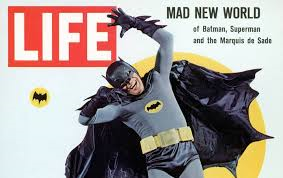
Holy high camp! STARRING ADAM WEST is a fun documentary about the quest to get a star on the Hollywood Walk of Fame for 60s TV star Adam BATMAN West. The film also serves as a biography of the cult actor, from his humble beginnings as a child in Walla Walla, Washington to his rise as TV’s biggest star of the mid-60s, and his fall after being typecast as the Caped Crusader reduced to performing in crappy car shows and carnivals. West later resurrected his career as an ironic icon in the 90s and still does voice work today, notably on the animated FAMILY GUY. Through all the ups and downs, the star has retained both his sense of humor and love of family. An entertaining look at a down to earth guy in the what-have-you-done-for-me-lately world of show biz, STARRING ADAM WEST is playing all this month on Showtime.
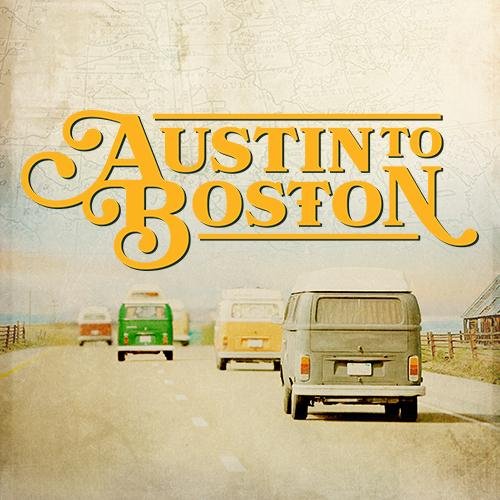
Austin to Boston is a documentary about a group of mostly British folk musicians who, in 2012, toured the United States. The group included a few familiar names (Ben Lovett of Mumford and Sons, for example) and several up-and-comers (Ben Howard, The Staves). Traveling across America in five VW campers, the bands went from Austin to Boston in two weeks. Along the way, they stopped and played at everywhere from Nashville to Woodstock. The documentary, which is narrated in a memorably grizzled fashion by driver Gill Landry, follows them as they discover America, deal with shows that are both good and bad, and, most of all, make music. Make no mistake, this is a musical documentary. While the musicians do occasionally talk about their lives, for the most part, we get to know them through their music.
I have to admit that I was a little bit surprised by how much I enjoyed Austin to Boston. My taste in music tends to run the gamut from EDM to more EDM so, to be perfectly honest, spending 70 minutes watching a bunch of folk acts should have been pure misery for me. (Someday, I’m going to write an article about the Tyranny of Acoustic Harmonizing.) But, even if it wasn’t my type of music, I could still appreciate that the musicians traveling from Austin to Boston were damn talented and had beautiful voices. Could I have done without that gospel song that seemed to go on forever? I certainly could have. But, if that’s your type music, you’ll probably really enjoy hearing it because it’s being performed by some seriously talented people.
And even if it isn’t your type of music, Austin to Boston is such an intensely likable documentary that it really doesn’t matter. There’s something really sweet and special about watching these British musicians discover and, to a certain extent, fall in love with America. And, speaking as an American, Austin to Boston made me better appreciate my frustrating home country as well. Over the course of this short but achingly sincere film, we get to see a lot of American scenery and it reminds us of just how beautiful it all can be. When you live here, you tend to take it for granted and sometimes, I think it’s good to take another look through non-native eyes.
Did Austin to Boston awaken any sort of dormant love that I may have for folk music? No, it did not. To a certain extent, I wish it had because it really is such a heartfelt documentary. But, in the end, The Staves all have beautiful voices but it’s just not my type of music. But it did make me better appreciate both my home country and the way that music — regardless of style or genre — can bring us all together.
And you know what? If this is your type of music, you’ll freaking love this documentary. You’ll watch Austin to Boston and you’ll say, “What the Hell was that EDM-loving redhead talking about? THIS IS GREAT!”
Austin to Boston can currently be viewed on Netflix.
Going Clear: Scientology and the Prison of Belief is one of the most genuinely creepy documentaries that I’ve ever seen.
Going Clear, which premiered on HBO earlier tonight, created a stir at Sundance earlier this year. Based on a book by journalist Lawrence Wright and directed by veteran and award-winning documentarian Alex Gibney, Going Clear is both a history and an expose of the notoriously secretive church of Scientology. Featuring interviews with 8 former members of the church (includingactor Jason Beghe and Crash director Paul Haggis), there’s a lot of information to be found in Going Clear but most reviews seem to concentrate on the picture that the documentary paints of two of Scientology’s top celebrity adherents, John Travolta and Tom Cruise.
And yes, there is a lot of speculation and, in Cruise’s case, accusations about the two men to be found in Going Clear. But, honestly, Going Clear is about a lot more than just celebrity gossip. Ultimately, it’s a disturbing portrait of a cult that uses the facade of glamour to hide a culture of abuse, exploitation, and paranoia. It’s easy to laugh at Scientology because, by this point, we all know about evil lord Xenu and we’ve all seen that South Park episode. We’ve seen The Master, which featured Philip Seymour Hoffman as an almost likable charlatan. Going Clear, however, makes a very convincing case that Scientology may be silly but it’s also nothing to laugh about.
The film opens with the story of L. Ron Hubbard, who is portrayed as being a pathological liar who channeled his need to tell stories into a prolific career as a pulp novelist. We hear an intriguing story about Hubbard’s brief friendship with occultist and scientist Jack Parsons. When Hubbard writes a self-help book called Dianetics, a mix of pseudo-science and pseudo-psychology, he launches the movement that will eventually become known as Scientology.
And, for the first 40 minutes of this film, it’s still easy to be rather dismissive of Hubbard. When he’s seen in archival footage, he’s a ludicrous but deceptively non-threatening figure, a con artist who got lucky. In fact, when he first appeared and started talking about his “beliefs,” my first reaction was to marvel at how perfectly Philip Seymour Hoffman captured Hubbard’s voice and mannerisms.
But, as Hubbard attracted more and more followers and became more and more powerful, it became apparent that Hubbard was much more than just a flamboyant con artist. We hear about how he grew increasingly paranoid. We hear about how schemed to destroy his enemies and just how easy it was to become one of those enemies. We hear how he eventually retreated onto a boat where his followers obeyed his every whim. Worst of all, we hear about how he kidnapped his youngest child and then taunted his wife by telling her (falsely) that he had the child killed and cut into little pieces.
Perhaps one of the creepiest scenes in the film is when Scientology’s second-in-command, David Miscavige, is seen announcing the 1987 death of L. Ron Hubbard. Dressed in what looks like a military uniform and speaking in perhaps the smarmiest tones ever, Miscavige announces that Hubbard has gone on to another state of being and then salutes a rather ludicrous picture of Hubbard dressed like an admiral. If Going Clear portrays Hubbard as being mentally ill, the portrait that emerges of Miscavige is far more disturbing.
Indeed, the film can be split into two parts. If the first part is about Hubbard’s Scientology, the second part is about the organization under the direction of David Miscavige. The majority of the people interviewed in the film were members under David Miscavige and all of them tell stories about a greedy and secretive organization that uses its tax-exempt status to essentially act outside the law. Stories are told of mental mind games, physical abuse, and constant harassment. In one of the documentary’s most haunting scenes, Sylvia Taylor (who was John Travolta’s former publicist) tells how she was forcefully separated from her baby and sent to work in a forced labor camp.
But, as disturbing as the interviews may be, the actual footage of David Miscavige himself is almost as unsettling. Though Miscavige, Travolta, and Cruise all refused to be interviewed by the film, Going Clear is full of archival footage. We see Miscavige speaking at a series of Nuremberg-style rallies and we listen as Miscavige give speeches that could just as easily pass for a Joel Osteen sermon. When Miscavige announces that the IRS has recognized Scientology as a religion, he does so at a rally and finishes by reminding the huge and well-dressed crowd that their donations will now be tax-deductible. We see Scientology recruitment videos, which all feature clean-cut white kids with permanent and robotic smiles across their faces. Much like the earlier footage of Hubbard, it would be silly if it wasn’t for what we know about the organization.
One reoccurring theme to be found in Going Clear is just how much Scientology values and exploits celebrity. Yes, the film does explore Scientology’s relationship with both John Travolta and Tom Cruise. The film goes so far as to portray Travolta as essentially being a prisoner of Scientology blackmail, a high-profile hostage who will never leave the church because the church knows too much about his private life.
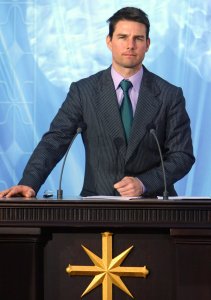
And while it’s hard not to feel some sympathy for Travolta, it’s far more difficult to feel sorry for Tom Cruise. Before I saw Going Clear, I always assumed that Cruise was just another actor with a strange belief. In Going Clear, however, Tom Cruise is portrayed as being a knowing participant in Scientology’s abuses. As Scientology’s most famous member, Cruise is waited on hand-and-foot by adherents who, we’re told, make 30 cents an hour.
Much like David Miscavige, Cruise refused to be interviewed for the documentary but he’s ultimately undone by archival footage. We watch Cruise salute both Miscavige and a portrait of Hubbard. We watch him give a self-congratulatory speech that sounds just as smarmy as anything we’ve heard from Miscavige. Perhaps worst of all, as far as Cruise’s credibility is concerned, we watch a video of Cruise vacantly laughing as he explains what Scientology means to him.
(What’s ironic, of course, is that for all the extra benefits that Cruise gets as a Scientologist, it’s pretty much destroyed his career. Edge of Tomorrow was one of the best movies of 2014 but, at this point, who wants to spend two hours with a Scientologist?)
The film ends with a look at how Scientology deals with people who leave the church. All 8 of the film’s interview subjects have chosen to leave the church and all 8 of them have been harassed and threatened as a result. And, whenever one is tempted to laugh off the craziness of Scientology, they should remember the footage of several Scientologist thugs conducting a surveillance operation on the house and family of a former member.
A portrait of abuse, brainwashing, and greed, Going Clear is a documentary that everyone should see.
So, here it is 2015. That means that next week, I’ll be posting my picks for the best and the worst of 2014. However, before I do that, I need to get caught up on reviewing what I saw in 2014. So, let’s get started with 5 quick reviews of 5 documentaries that I saw in 2014.
Banksy Does New York (dir by Chris Moukarbel)
To be honest, any film about Banksy is going to start with the automatic handicap of not being Exit Through The Gift Shop. No matter how good or bad the other documentary may be, it’ll never be as good as Exit Through The Gift Shop. Banksy Does New York is no exception.
Banksy Does New York chronicles the artist’s wonderfully subversive “31 works of art in 31 days” tour through New York City. For 31 days, new Bansky graffiti and installations appeared throughout New York City. It was up to the city’s residents to track down and discover Bansky’s latest work. (Making things difficult is that New York City, at that time, was being ruled by a tyrannical philistine named Michael Bloomberg, a man who has all the personality of a James Bond villain.) With Banksy remaining predictably off-screen, Bansky Does New York instead focuses on the aficionados who spent 31 days trying to track down Bansky’s work before it was destroyed by the jack booted thugs of the Bloomberg administration.
And that’s where Banksy Does New York struggles because, ultimately, Banksy is always more interesting than the majority of the people who claim to love him. Ultimately, the documentary is valuable as evidence that Bansky’s New York tour actually happened but it provides little real insight.
Captivated: The Trials of Pamela Smart(dir by Jeremiah Zagar)
Captivated tells the true story of Pamela Smart, a teacher who was accused of convincing two of her students to murder her husband. As the film shows, the Smart trial became a big media event and movies were made that were based on the crime and … *yawn.*
Sorry.
Usually, I love true crime documentaries but Captivated just bored me to tears. As far as the film’s point about media and celebrity are concerned — oh my God, who cares!? It’s been made so many times! I’m sorry but I refuse to get excited over any more documentaries that serve to only make the same point that’s been made by hundreds of other documentaries and self-impressed think pieces. If you can’t offer me any more insight than I might find in an article on Salon, then why should I pretend to be impressed?
The best part of Captivated were the clips that they showed from other, better films that had been inspired by the case.
The Last Patrol (dir by Sebastian Junger)
In this sad but ultimately triumphant documentary, filmmaker Sebastian Junger walks across America with two veterans who have recently returned from Afghanistan and a combat photographer. Along the way, they talk about the war, the struggle to adjust to being back home, and what the future holds. They also talk to several people that they meet during the journey and ask them what they think about America. One thing that quickly becomes apparent is that everyone — regardless of whether they supported the war or not, regardless of whether they like Barack Obama or not — seems to share a similarly pessimistic outlook as far as the future of America is concerned. Ultimately, The Last Patrol becomes less a celebration of America and more a tribute to the ability of humans to survive bad times. It definitely makes for interesting viewing.
Private Violence (dir by Cynthia Hill)
Private Violence is probably one of the most important documentaries to have been released in 2014. I first saw it on HBO and I’d recommend that everyone else keep an eye out for it as well. In a stark and matter-of-fact way, it follows the story of Deanna Walters, an Oklahoma police officer who was abducted and, over a four-day period, savagely beaten by her estranged husband. The film shows Deanna’s attempts to both rebuild her life and her struggle to get legal justice. (Despite nearly killing her, Deana’s husband was not initially arrested for the crime.) Working with Deanna and other abused women is Kit Gruelle, a former victim of domestic abuse who is now an advocate and who leads the viewer through the frustrating and often infuriating world of the courts, law enforcement, and shelters. Anyone who thinks that domestic abuse is not a problem or that victims were “asking for it,” should be forced to watch Private Violence over and over again.
Stop At Nothing: The Lance Armstrong Story (dir by Alex Holmes)
I’ve always had mixed feelings about Lance Armstrong. On the one hand, I really didn’t care much about him when everyone thought he was a hero. But then, when it was revealed that he essentially cheated his way to the top, I suddenly found myself wondering what it was like to be literally one of the most hated people in the world. Personally, I found it interesting that, suddenly, not only was it socially acceptable to hate another human being but it was practically expected. You could look at anyone on the street and know that person probably hated Lance Armstrong. It was all a bit overboard, I thought.
Anyway, Stop at Nothing: The Lance Armstrong Story is a collection of talking head interviews with people who knew Lance Armstrong before his career was destroyed and, essentially, they spend most of the film talking about how much they all hated Lance before the scandal and how much they hate him now. I’ve never heard so much ill will directed at a cancer survivor. Stop at Nothing will be interesting to people who want to have their negative feelings about Lance Armstrong justified but it really doesn’t add anything new to the story.
When I was younger, my family used to frequently visit relatives in Arkansas. (Except, of course, when we were actually living in Arkansas but that’s another story…) Any time that we were driving to Arkansas for a visit, we would always stop at this little park in Oklahoma. We’d eat lunch and then I’d run into the rest stop and I’d look at this big aquarium that was full of gold fish. And then after looking at the aquarium, I’d run over to the corner where they had all of the latest wanted posters and I’d look at who the FBI was searching for that year.
What always fascinated me was that, while there were always new faces posted in that corner, there were also posters that stayed up there for years. And, in my own weird little way, seeing those posters became something of a ritual that I always looked forward to. What fascinated me was reading about how each of these dangerous fugitives could be identified. One guy, for instance, was described as being a fancy dresser and a big tipper and, since I had heard horror stories about being a waitress from several of my relatives, I wondered how bad the guy could be if he was a big tipper. I was always interested to see who was thought to be in Mexico and who may have escaped up to Canada and I’ll admit that there was a part of me that always wondered if maybe they could be in Oklahoma, eating at that very park!
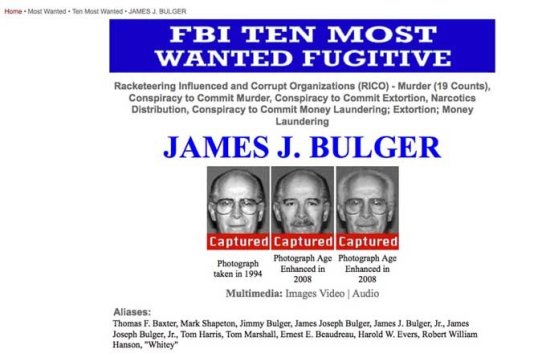
From the first time I saw James J. Bulger’s poster in the corner, it made an impression on me. First off, there was his picture, which made him look like an assistant principal. Then there was his long list of aliases. (Even back then, I was obsessed with lists and names.)
And finally, there were all of his identifying details.
For instance, the poster told me that he was fluent in several languages. The poster said that he had recently been sighted in Europe, which I often fantasized about visiting. It said that he was traveling with his girlfriend and that both of them loved animals….
Loved animals!?
I loved animals!
And, of course, then I would notice that this cultured and multilingual animal lover was wanted for 19 counts of murder, drug trafficking, extortion, and a whole lot of other things. The list of crimes told me that this James “Whitey” Bulger was not a good man but the identifying traits suggested something else.
(Another reason that Whitey made an impression on me is that he looked a lot less scary than Osama Bin Laden, who — the last few times we stopped at that rest stop — had invaded the corner…)
So, that was my first impression of Whitey Bulger.
My second impression came about a few years later when I read that the demonic gangster played by Jack Nicholson in The Departed was reportedly based on Bulger. I’m not sure if the real life Bulger used to carry around someone else’s severed hand but still…
And finally, my third impression came from the documentary that I watched last night on Netflix, Whitey: The United States of America vs. James J. Bulger. After spending 12 years in that corner, Bulger was eventually arrested in Florida and returned to his hometown of Boston, where he was put on trial for all of the crimes that had been listed at the top of that wanted poster. Veteran documentarian Joe Berlinger was in Boston for the trial, interviewing Bulger’s defense attorneys, a guy who calmly talked about a number of murders that he committed with Bulger, and the relatives of several of Bulger’s victims. Bulger himself even got a few words in, calling up his defense attorneys from jail and doing his best to present himself as being a gangster with a code of honor.
Indeed, from the start of the trial, Bulger’s main concern seems to be with convincing people that he had a code of honor. He has no hesitation about admitting to being guilty of most of the charges against him. What upsets him is that people are saying that he was a FBI informant and that’s why, for so long, he was able to avoid going to jail despite committing crimes in broad daylight. Bulger’s argument is that the Boston FBI fabricated evidence of him being an informant in order to cover up the fact that he was paying all of them off.
(Bulger also suggests that he was given blanket immunity by a special prosecutor in return for saving the prosecutor’s life.)
It’s an interesting suggestion. (Since the FBI refused to interviewed for the documentary, we only get Bulger’s side of the story.) However, regardless of whether or not you believe Bulger’s claims, the documentary makes clear that — whether they were on his payroll or using him as an informant — the FBI essentially allowed Bulger to spend several years doing anything and killing anyone that he wanted. By the end of the film, you can understand why the families of Bulger’s victims are often just as angry at law enforcement as they are at Bulger.
Whitey is a good documentary and it’s currently available on Netflix. If you’re into true crime, like I am, you’ll enjoy it. At the very least, I’m thankful that this documentary shined a little bit of light on that corner.
There’s a moment in the documentary Under the Electric Sky that moved me beyond belief.
For the first 90 minutes of the film, we’ve followed different people as they experience the 2013 Electric Daisy Carnival. Some of them are sweet, some of them are oafish, some of them are people that I would want to hang out with, and some of them I definitely would go out of my way to avoid. The one thing that they have in common is that they love EDM and that love has brought them to Las Vegas.
One of the more likable of them is a young, wheelchair bound man named Jose. Up until this point, we’ve seen Jose wheeling his way through the crowd, having a good time but still frustrated by the fact that he can’t see the stage from his wheelchair. And then, while Hardwell is performing on stage, a group of strangers lift up Jose’s wheelchair, literally holding him on their shoulders so that he can see the stage.
And you know what? I fully realize that this could have been arranged beforehand. I understand that someone involved in production could have asked those people to lift up Jose because he or she knew it would make a perfect film moment. But I don’t care. It’s such a wonderful moment and it perfectly encapsulated everything that I love about the EDM scene. It’s a moment that brought tears to my eyes when I saw it and it’s still bringing tears to my eyes as I write about it.
As far as the rest of Under the Electric Sky is concerned, if you’re into EDM, you’ll enjoy it. And if you’re one of those people who doesn’t get EDM — well, sucks to be you, doesn’t it?
Admittedly, the film was produced by the same people who put on the EDC and, at its weakest, it felt like a mix between an infomercial and an A&E reality show. But at its frequent best — like in the moment described above and in the brief moments where artists like Avicii, Armin Van Buuren, and Above & Beyond open up to the camera — it’s a wonderful and heartfelt tribute to one of the most loving and misunderstood subcultures in the world. At it’s best, Under the Electric Sky is a blast of pure musical joy and, with the world the way it is right now, we could all use a little joy.
Under the Electric Sky is currently available on Netflix and yes, I recommend it.
All of the meat and cheese of BlizzCon’s content is traditionally crammed into Friday. They open with a bang, throw all of the big news at you all at once, and then spend Saturday giving you some time to soak it in. Lots of Q&A panels are the norm, along with a growing collection of e-sports grand finals and a big rock concert to send you off in style. 2014 was no different, and there is certainly no major news to bring to the table, but it was nevertheless a day full of entertaining events, and I would like to share with you my two favorites.
The first is a documentary called “Looking for Group”. In celebration of the ten year anniversary of World of Warcraft, Blizzard created a one hour documentary about how the game came to be. The film leaves a lot to be desired from the players’ perspective. Blizzard took up a great deal of the time archiving fan experiences in the game–a married couple talks about first meeting in Stormwind, a teen reflects on growing up playing the game with his father, a handicapped woman remembers playing WoW to help mentally recover from her accident. It is probably incredible for a game developer to think that they made that much of an impact on peoples’ lives, but anyone who has played the game long enough has run into situations like this before. It’s nothing particularly novel or exciting for the fans. But the film also incorporates plenty of behind-the-scenes looks into how the company has operated over the years and the personalities leading the charge. I found the details on the early developmental years of the game especially interesting. If you have ever enjoyed World of Warcraft, it’s worth taking an hour to watch this:
The second video I want to share with you might take some persuasion. When your two favorite professional sports are golf and Starcraft, it is really hard to make friends. But such is my fate. Despite all of the columns I was pumping out Friday, I actually did manage to watch live all 30 matches of the Starcraft II World Championship Series Global Finals that took place at BlizzCon. MMA knocking off Bomber 3-1 might have been the biggest upset, but Classic’s rocky 3-2 finish over herO made MMA’s path to the final round feel easy. Life ultimately outclassed him 4-1 in a way that was certainly impressive but not exceptionally fun to watch. The real excitement came in the bottom bracket semi-finals. Life and TaeJa breezed their ways past San and INnoVation 3-0 and 3-1 respectively, and both players looked to be at the peak of their game rolling into the semi-finals. Life ultimately progressed to the finals 3-2 in what was surely the most intense series of the event. The video below was my favorite match of that series. It starts off with both players taking extremely aggressive and risky stances–in Life’s case one you would almost never see at this level. I’m not going to spoil who wins, but the 24 minute length of the video should tell you that both players move beyond the opening chaos. Neither player is willing to put on the breaks all game, forcing some really unconventional gameplay. With practically perfect micro on both fronts, we get to see what a top tier SC2 match ought to look like–two masterminds who can’t hope to surpass the other’s technical precision and have to bluff, gamble, and predict moves ahead of time to pull off a win.
I suppose that a lot of e-sports boil down to mind games as a sort of maximum skill level is reached. The glory of Starcraft II is that reaching that threshold is so difficult even many of the pros in the global finals succumb to error in basic techniques and strategy. That was not the case this weekend with TaeJa and Life, and that is what made this series my favorite at BlizzCon 2014.
And lastly, for those of you who were actually watching yesterday, what did you think of Metallica? I had a lot of fun on IRC during the closing ceremonies trash talking Lars, predicting what song would come next, and blabbering about metal in general. How did this band selection rank for you in the annals of BlizzCon closing ceremonies? Blizzard have offered a lot of variety in their selections over the years. From the somewhat genre-appropriate (Metallica), to the big ticket, high-budget rock sensation (Foo Fighters), to the bottom-barrel (Blind-182), to the in-house absurd (Lvl 80 Tauren Chieftain), we’ve seen a lot. Is it enough? Blizzard is all about nerd aggro. It is the heart and soul of their ethos. I’ve long thought a fantasy-oriented power metal band would be the best choice to reflect that. Even if most of the spectators had never heard of Blind Guardian before, you know they would bring the house down. Amon Amarth, Dethklok, Iced Earth, Iron Maiden, and Rhapsody of Fire were some of the other names that got dropped. Of course the most popular choice for a future BlizzCon was GWAR.
This will be my last post on BlizzCon 2014. Thanks for reading! Here are links to my previous entries: