Review: Penny Dreadful – Seasons 1 thru 3 (by John Logan)


“There are things within a soul that can never be unleashed… They would consume us. We would cease to be, and another would exist in our place, without control, without limits.” — Vanessa Ives

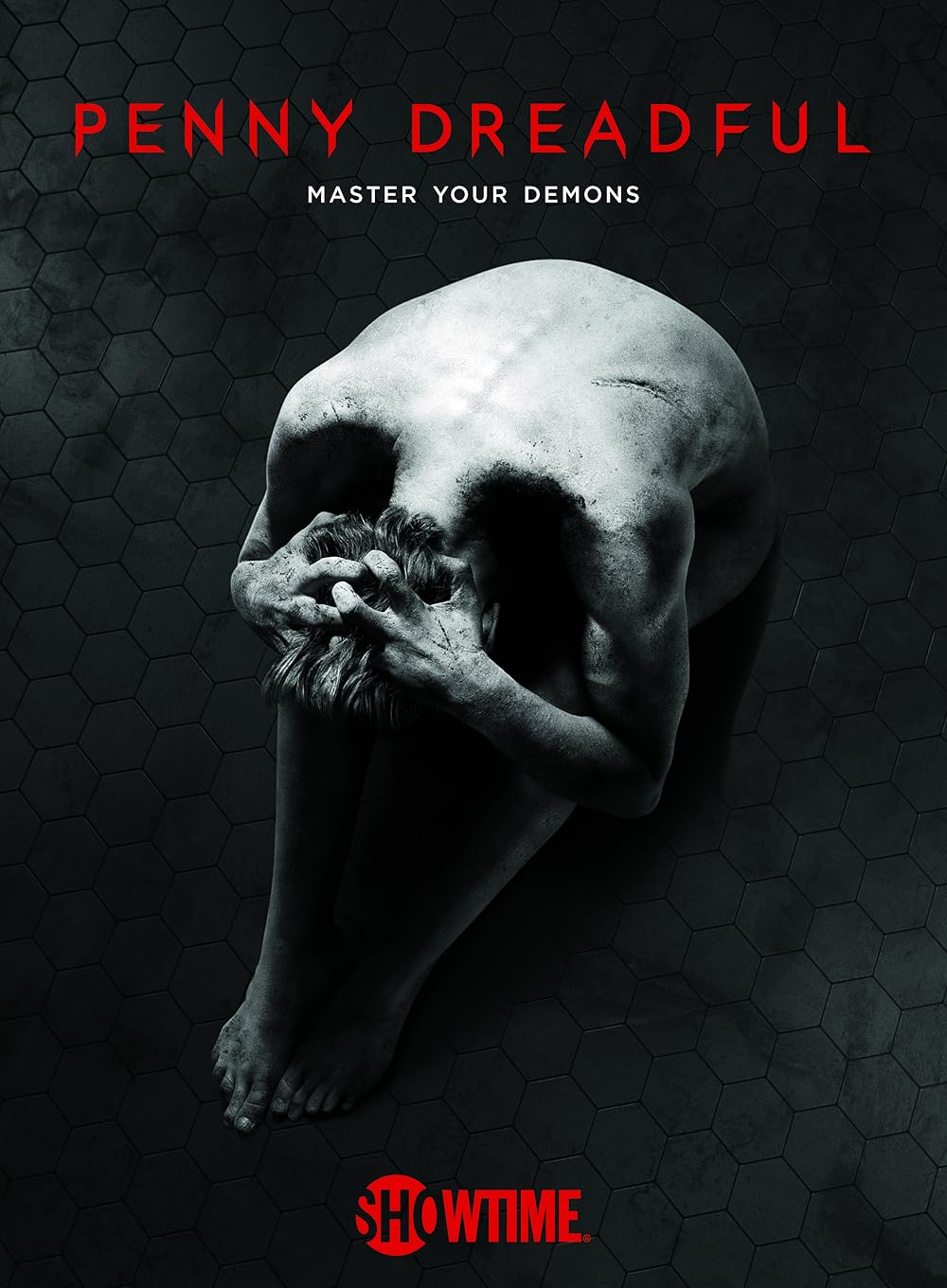
Penny Dreadful remains one of the more distinctive horror dramas of the 2010s, its three-season run on Showtime from 2014 to 2016 offering a rare blend of lush literary homage, character-driven tragedy, and outright Grand Guignol spectacle. Expanding the lens season by season clarifies how the series evolves from a moody, experimental monster mash into a full-blown gothic epic, while also highlighting the structural flaws and uneven pacing that prevent it from being universally accessible, even as standout performances from its ensemble elevate every frame. What emerges is a show that grows richer the more time it spends with its characters—particularly through highlight turns like Eva Green’s ferocious Vanessa Ives, Rory Kinnear’s soul-wrenching Creature, and the magnetic supporting work from Timothy Dalton, Josh Hartnett, and Billie Piper—rewarding patient viewers even as its narrative sometimes strains under the weight of its own ambition.

Season one of Penny Dreadful functions as an origin point and a proof of concept, introducing viewers to a haunted ensemble bound together by secrets, sin, and supernatural forces, with performances that immediately set a bar for emotional and physical intensity. The central plot—Sir Malcolm Murray and Vanessa Ives recruiting American gunslinger Ethan Chandler and tortured scientist Victor Frankenstein to rescue Malcolm’s daughter Mina from a vampiric master—serves less as a conventional quest and more as a framework to explore broken people clinging to purpose, anchored by Timothy Dalton’s commanding Sir Malcolm, whose gravelly authority and haunted eyes convey a lifetime of imperial regrets and paternal failure. Eva Green’s Vanessa is the undeniable highlight here, her ferocious intensity in episodes like Séance and Possession—where glossolalia, contortions, and violent ecstasy erupt—turning demonic outbreaks into raw expressions of guilt, repression, and spiritual crisis, earning her a Golden Globe nomination for a debut season that demands Oscar-level physicality and vulnerability. Josh Hartnett’s Ethan Chandler provides a grounded counterpoint, his brooding sharpshooter evolving from reluctant hero to tormented beast with subtle shifts in posture and gaze that foreshadow his lycanthropic reveal.

The first season also lays the groundwork for the show’s thematic fascination with duality and monstrosity, especially through Harry Treadaway’s brittle Victor Frankenstein—whose twitching desperation humanizes god-like hubris—and Rory Kinnear’s breakout as the Creature, a shambling horror who quickly reveals literate eloquence and bitter pathos, his scarred visage and rumbling baritone making every plea for connection a gut-punch that redefines “monster” from the outset. Season one’s pacing can feel deliberately slow, even theatrical, as it lingers on candlelit rooms, whispered confessions, and philosophical exchanges, and some viewers may find this emphasis on mood over plot progression alienating. Yet that same deliberation allows the show to build a cohesive emotional atmosphere in which every prayer, séance, and bloodletting feels weighted with meaning, amplified by Dalton’s authoritative gravitas and Green’s transcendent torment. Critics generally responded favorably to this opening run, praising these performances and the atmosphere while noting that its heavy tone and self-seriousness would not be to every viewer’s taste.

Season two represents Penny Dreadful at its most confident and cohesive, expanding the mythology while tightening the emotional focus around Vanessa’s confrontation with a coven of witches led by Evelyn Poole, with Helen McCrory’s serpentine Madame Kali emerging as a highlight villain whose purring malice and intimate manipulations steal scenes. By reframing the central antagonist from a shadowy vampire figure to this fully articulated witch—who weaponizes intimacy, religious iconography, and psychological terror—the show raises the stakes, and Green’s Vanessa responds with even greater ferocity, her possession battles now laced with backstory from Patti LuPone’s earthy, heartbreaking Cut-Wife, whose single-episode arc showcases LuPone’s unparalleled ability to blend folk wisdom with maternal ferocity. This season’s central conflict positions Vanessa as the battleground for Lucifer’s desire, giving the main cast a unity of purpose that the first sometimes lacked.

Character work in season two deepens significantly, with Josh Hartnett elevating Ethan into a moral savage whose lupine rampages in No Beast So Fierce blend raw physicality and soul-searching remorse, while Billie Piper’s evolution from fragile Brona Croft to the defiant Lily Frankenstein becomes a revelation—her steely monologues on patriarchal violence delivered with fiery conviction that rivals Green’s intensity. Rory Kinnear’s Creature reaches new pathos pleading for a mate, his rejection scene opposite Treadaway’s increasingly unhinged Victor one of the series’ most devastating showcases of mutual ruin. Reeve Carney’s Dorian Gray adds hedonistic shimmer, though his arc pales next to these powerhouses. Moments like the group’s desperate defense of Sir Malcolm’s home or Ethan’s transformations achieve a rare balance of gore, suspense, and lyrical resolution, with Dalton’s weary patriarch holding the emotional center. Critics frequently cite season two as the show’s peak, with 100% Rotten Tomatoes scores reflecting near-universal praise for these heightened performances and tighter narrative.

Season three is where the series’ strengths and weaknesses collide most dramatically, as it scatters the core ensemble geographically and mythologically while hurtling toward an abrupt conclusion, yet the actors rise to the challenge with career-best work. Eva Green’s Vanessa deepens into despairing isolation, her therapy sessions with Patti LuPone’s returning Dr. Seward (a chilling pivot from folk healer to clinical cutter) and tender courtship by Christian Camargo’s suave Dracula yielding some of her most nuanced work—balancing fragility, resolve, and erotic pull in a finale self-sacrifice that cements her as TV’s ultimate gothic heroine. Josh Hartnett’s Ethan, now grappling with Apache mystic Kaetenay (Wes Studi’s dignified gravitas a welcome addition), delivers visceral Western showdowns that showcase his action-hero chops alongside soulful reckoning. Timothy Dalton’s Sir Malcolm, questing in Zanzibar, brings imperial weariness to poignant closure, his highlight a raw confrontation with past sins.

Standouts continue with Billie Piper’s Lily rallying a feminist uprising, her ideological fire clashing gloriously with Dorian’s jaded ennui in scenes of revolutionary fervor and betrayal that highlight Carney’s subtle decay. Harry Treadaway’s Victor, partnering with Shazad Latif’s oily Jekyll, spirals into ethical abyss with manic precision, while Rory Kinnear’s Creature—rediscovering his identity as John Clare—delivers the series’ most quietly devastating arc, his family reunion a masterclass in restrained grief that rivals Green’s flashier exorcisms for emotional wallop. These performances salvage the fragmented plotting, infusing global detours with humanity even as resolutions feel rushed.

Evaluated across all three seasons, Penny Dreadful delivers a rich, if imperfect, journey elevated by its highlight performances: Green’s transcendent Vanessa as the tormented soul; Kinnear’s Creature as the rejected heart; Dalton’s authoritative patriarch; Hartnett’s brooding beast; Piper’s fiery avenger; and LuPone’s dual folk icons—forming an ensemble that turns gothic pulp into profound tragedy. Season one constructs a dense foundation; season two refines it into peak artistry; season three reaches for epic finality with power even in haste. The end result succeeds more as character-driven gothic poetry than tidy thriller, its actors ensuring unforgettable resonance for horror fans craving depth. In a landscape of sanitized scares, these performances make Penny Dreadful a dark, enduring achievement.

Horror AMV of the Day: Homura’s Seven Devils (Mahou Shoujo Madoka Magica)


homuras-seven-devils

It’s that time of the year when all things dark, terrifying and horrific invades the halls and corridors of Through the Shattered Lens.

While many who hear the term magical girl and colorful-costumed girls fighting evil won’t think dark and disturbing well they’d be dead wrong. The magical girl genre of Japanese animation have always had that undercurrent of darkness which makes these so-called kiddie anime series more adult than that many people realize.

In 2011, the magical girl anime series Puella Magi Madoka Magica (aka Mahou Shoujo Madoka Magica) came out and it finally explored that very undercurrent of darkness in the magical girl genre that people discussed about. The series was still cute, but also disturbing in how it explored the cost these teenage girls would incur in gaining magical abilities to fight evil.

The latest AMV of the Day takes Madoka Magica (especially the three films which followed the series) and it’s two lead character in Homura Akemi (girl with the dark hair) and Madoka Kaname (girl with the pink-hair) and their very complicated relationship that transcends not just their friendship, but time and divinity itself.

What better song to pair up with Madoka Magica but none other than “Seven Devils” by Florence + The Machine.

Anime: Mahou Shoujo Madoka Magica

Song: “Seven Devils” by Florence + The Machine

Creator: Kinnsao San

Past AMVs of the Day

4 Shots From 4 Films: Guillermo del Toro Edition


Happy Birthday to the Master of Dark Fantasy.

Guillermo del Toro ranks high in my eyes as one of the best filmmakers working today. His films have ranged from an inventive take on the vampire genre, the mutant monster film, an evocative ghost story and right up to a dark fable. Guillermo del Toro has worked on both smaller, personal projects and the big, blockbuster action. He’s comfortable in living in both worlds.

No matter which side he happens to land at any particular time he always brings his own brand of visual style and storytelling to each and every film that tells the world that they’re watching a Guillermo del Toro production.

4 Shot From 4 Films

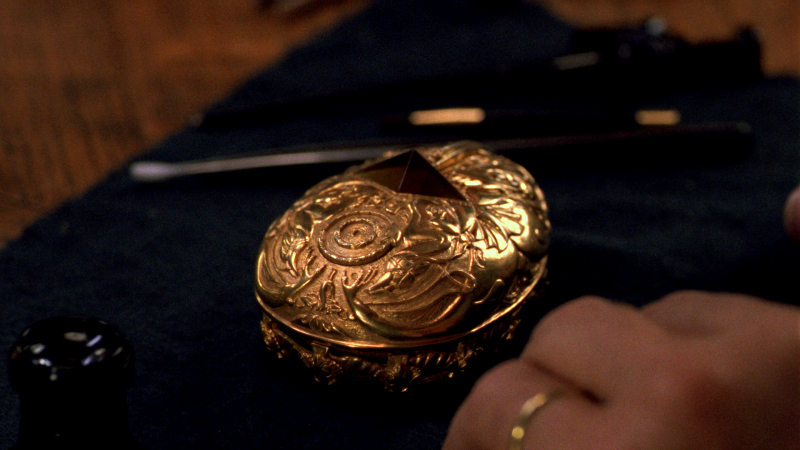
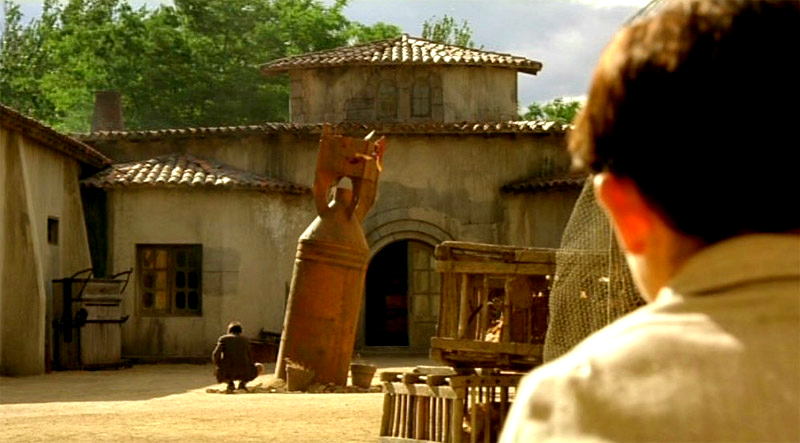
Cronos (dir. by Guillermo del Toro)

Cronos (dir. by Guillermo del Toro)

Mimic (dir. by Guillermo del Toro)

Mimic (dir. by Guillermo del Toro)

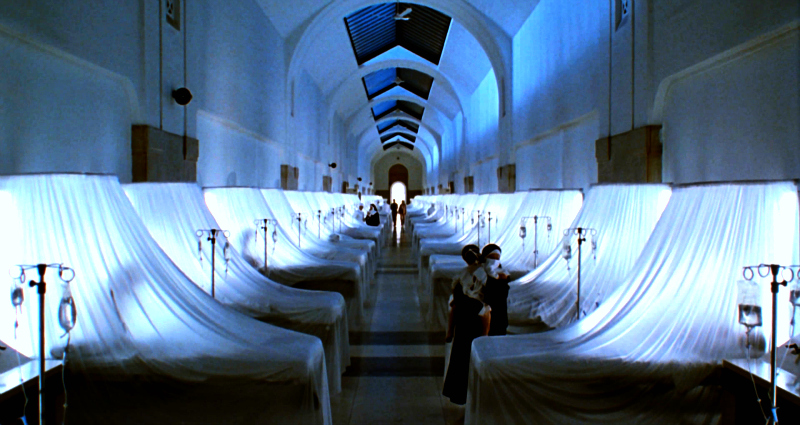
The Devil's Backbone (dir. by Guillermo del Toro)

The Devil’s Backbone (dir. by Guillermo del Toro)

Pan's Labyrinth (dir. by Guillermo del Toro)

Pan’s Labyrinth (dir. by Guillermo del Toro)

Horror AMV of the Day: Carnivore (Tokyo Ghoul)


TokyoGhoulKaneki

While horror anime is not quite widespread as other genres they do exist and one of the more recent ones is the horror/dark fantasy series which came out this past July.

Tokyo Ghoul is the anime from whence our latest “AMV of the Day” was born from. I’ve only seen highlight clips of the series, but from what I’ve seen it’s definitely right up my alley. It’s not so violent and gory that it goes over into “guro” realm. It looks like it’s series dealing with ghouls hiding within the human population and having their own clans and factions gives the series a nice urban gothic feel to it in addition to the horror.

This particular AMV uses the appropriate song by Starset called “Carnivore” which is one thing the ghouls in this series tend to be as eaters.

Guess what they like for breakfast, lunch and dinner? I heard it tastes like pork. Some very long pork.

Anime: Tokyo Ghoul

Song: “Carnivore” by Starset

Creator: Anime Bros

Past AMVs of the Day

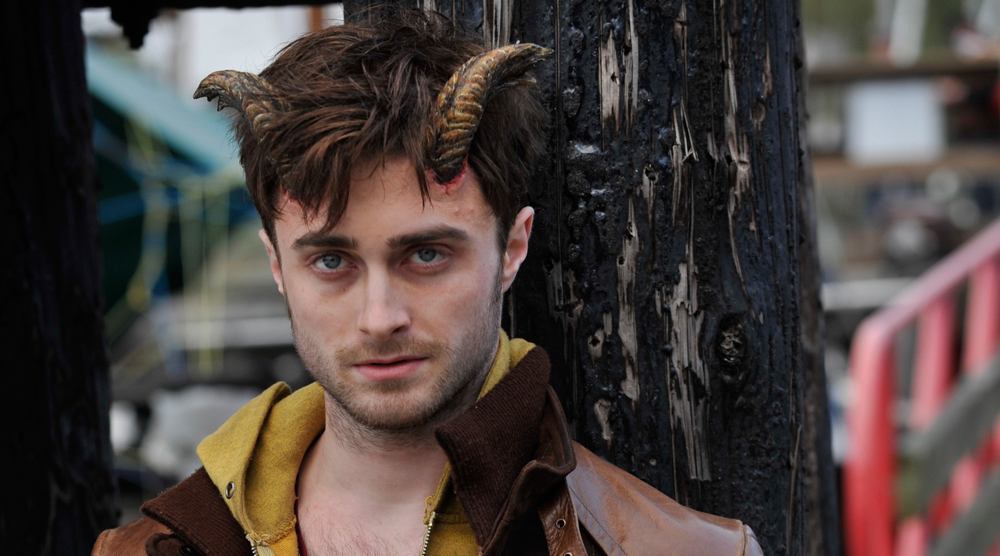
Trailer: Horns (Official Teaser)


radcliffe

The kids of the Harry Potter film franchise have all gone their separate ways. Some have moved on to taking smaller roles. Others have begun to take on roles that tries to rehabilitate their image from just being a Harry Potter actor. Emma Watson has had some success in redoing her post-Potter image. Yet, it’s the “Chosen One” himself who looks to really be going with as many left-field film role choices since the end of the franchise.

Daniel Radcliffe has been taking some interesting risks with his post-Potter career. Even before the franchise was over he had begun working on redoing his image. Whether it was doing the stage play Equus or taking on a horror film role with the gothic horror The Woman in Black, Radcliffe seems more than willing to leave his Potter days behind him.

The first trailer from the film adaptation of the Joe Hill penned dark fantasy Horns has now arrived. We see brief glimpses of Radcliffe in the title role with the proverbial horns that becomes the center of the film’s plotline.

Time will tell if Horns will be another notch in making Daniel Radcliffe less the Potter-kid and ore the talented actor he’s turning out to be.

Horns will be making it’s presence know this Halloween 2014.

Scenes I Love: Pan’s Labyrinth


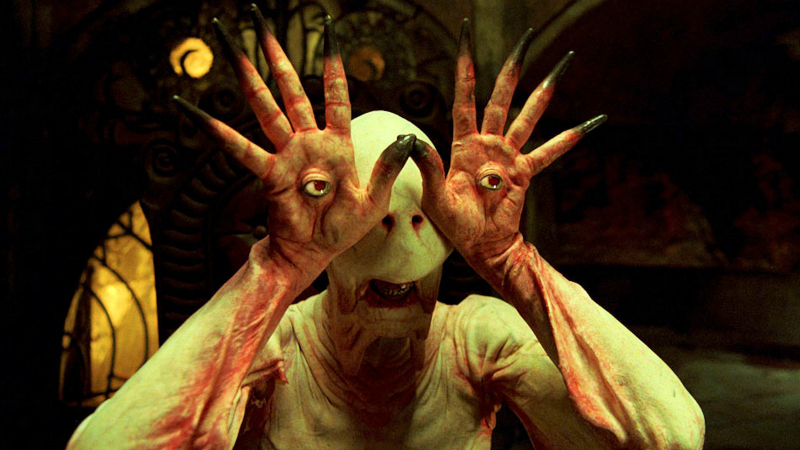
The Pale Man

If there’s one filmmaker alive today who probably deserves the label of genius it’s probably Mexican-born filmmaker Guillermo Del Toro. Yes, that’s probably hyperbolic high praise, but then with each new film he releases he shows audiences and critics something rarely seen before that gradually knocks down any doubts as to why he deserves the praise.

In 2006, Del Toro released the Spanish-language dark fantasy film Pan’s Labyrinth and people who had only known him as the guy who directed Blade II and Hellboy finally understood why critics both high and low were having such a major crush on the man’s work and talent. My favorite scene from this film was a major example why Guillermo Del Toro is such a genius. I’m talking about the scene with the “Pale Man” and Ofelia’s encounter with it during her second task given to her by the The Faun.

This sequence showed Del Toro not just juggling the dark fantasy aspect of the film, but also his talent for world-building and horror. This scene was the one which probably sold those still on the fence about the film as they watched it. It’s a scene which showed Del Toro’s love for monsters and he created one which has left an indelible mark on the film-going audience that still resonates to this day.

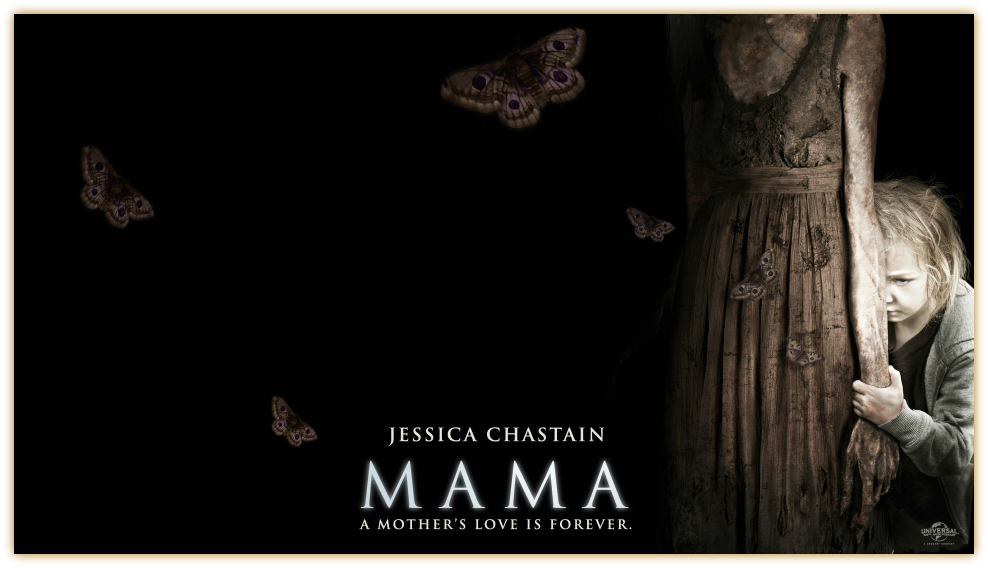
Review: Mama (dir. by Andres Muschietti)


Mama

In 2008 a young Argentine filmmaker made a 3-minute short film that caught the eye of one Guillermo Del Toro. The short film was titled Mama and it’s simple premise of ghostly mother chasing after two young girls in a darkened home was so well-received by Del Toro that he decided to produce a feature-length adaptation of the short film. He could’ve easily put himself in the director’s chair for the adaptation, but liking the work done by the short film’s original director the Mexican filmmaker gave the job to the original director, Andres Muschietti, and allowed him the freedom to make Mama the way it was meant to be made.

The feature-length version of the film works off of the screenplay written by the filmmaker Andres Muschietti and his sister Barbara Muschietti (with some help from Neil Cross) and expands on the brief sequence from the short film. We get a backstory as to the origins of the titular character and how she came to be throughout the film. We even get a much more detailed work up of the two young sisters who have become the obsession of the ghostly “Mama” and how they had gotten involved with her.

Mama opens up with a disturbing sequence where a father has murdered his partners in his company and his wife then taking his two young daughters out into the country where his grief at what he’s done leads him in an attempt to complete the cycle of becoming a family annihilator through the killing of his children then his own suicide. It’s only through the intervention of a shadowy figure in the abandoned cabin they’ve come across in the forest that this father’s plan fails. It’s a truly disturbing scene to see a father comforting his 3-year old daughter and at the same time hold a gun to her head. It’s almost a wonder that the audience feels both a sense of relief and horror at seeing “Mama” protect the young girls by killing the father.

We skip five years later as we find out that the father has a twin brother named Lucas (played by Game of Thrones‘ Nikolaj Coster-Waldau) who has spent the intervening years using whatever money the dead brother had left in an attempt to find the two young girls. Victoria and Lilly do get found by the scouts sent out by Lucas in the very same cabin where their father had taken them earlier in the film, but what the scouts find look more like feral animals than children.

One would think that the film would be about “Mama” wreaking havoc on Lucas to try and get her young girls back, but this film is not about mother versus father but mother versus mother. We’ve already met “Mama” briefly in the start of the film. The other mama in this fight for the girls’ love and soul is Lucas’ rocker girlfriend whose attitude in the beginning doesn’t shout maternal at all. Annabelle (played by Jessica Chastain) doesn’t think it’s her job to have to raise the two girls. It’s her love for Lucas that keeps her from bolting and trying to find a common ground with the two young girls. As the film moves forward Annabelle begins to feel protective of the two young girls and begins to believe that “Mama” is real and that she has followed Victoria and Lilly back from the cabin.

To say that this film is a horror film would be understating things. While it does have some jump scare moments and some creepy and disturbing images the story itself plays out more like a dark fairy tale set in a modern setting. just like another Del Toro produced horror film from the last couple years in The Orphanage, this film uses a fairy tale template to tell the story of the maternal love mothers have for their children. It’s interesting to note that the two mothers vying for Victoria and Lilly are not their biological mother, but surrogates who have come to love and care for the two girls in their own way.

Mama doesn’t break new grounds in the field of horror. It’s liberal use of gothic horror cliches and tropes by the Andres and Barbara Muschietti detracts from some darkly beautiful visuals and imagery that the filmmaker seemed very adept in creating to build that very sense of the fairy tale. What could’ve been a “been there and done that” and “paint-by-the-numbers” ghost story gets elevated by the performances by Jessica Chastain and the two young girls (Megan Charpentier as the elder sister Victoria and Isabelle Nélisse as the younger Lilly). Chastain in particular shines in the role of Annabelle as we believe her growth from reluctant caretaker to loving mother figure to protective mama bear by the time film ends on a very un-Hollywood ending.

Mama will definitely lose some fans of the horror genre who expect gore (which the film doesn’t have a drop of) and tons of scary moments (the film has jump scares but not much). This film will attract audiences looking for something familiar but at the same time with the added visual flair of a young filmmaker who looks to have a future in the genre, if not the industry, as a new creative eye who can work with something unoriginal and give it his own spin.

While the film is not on the same creative and storytelling level as Juan Antonio Bayona’s The Orphanage it is much better than Troy Nixey’s remake of the 1973 horror film Don’t Be Afraid of the Dark. The film does continue Guillermo Del Toro’s streak of finding new and upcoming young filmmakers in the horror genre and giving them a chance to break into the industry with him mentoring them through the process. Mama might not be a perfect film but Andres Muschietti’s work as a director shows that he has repaid Del Toro’s faith in him. I, for one, can’t wait to see what this filmmaker has up next.

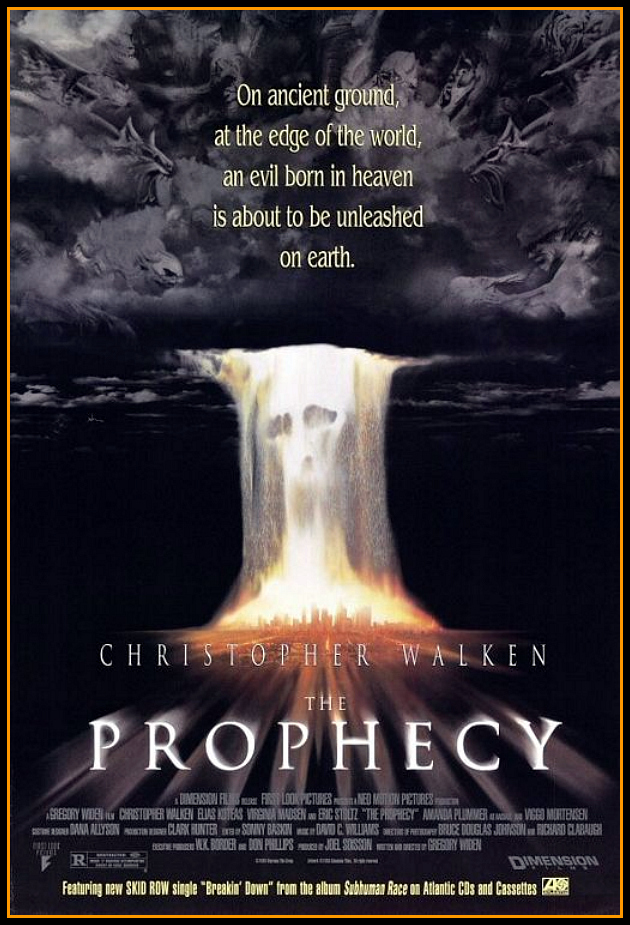
Horror Scenes I Love: The Prophecy (dir. by Gregory Widen)


What is it about stories of angels and demons that makes people gravitate towards them. One doesn’t even have to be religious to feel a sense of curiosity towards such stories. Is it because deep down we put some sort of faith that we’re being watched over by the One who created us. I’m not religious, but I always found stories about angels and their rebellion against God quite interesting. It’s the age-old tale of love, betrayal and redemption on a cosmic and divine scale. It’s from one such story that I find the latest “Scenes I Love”.

The film The Prophecy was one I had already reviewed a while back and whenever I come across it on cable I tend to drop whatever I’m doing and watch it. I go into much more detail why I enjoy this film very much in my review of it. This time I like to share one scene from the film that hints at just how much more epic this film could’ve been if it was a full-blown novel. It helps that the performance by Viggo Mortensen as Lucifer shows that even in 1995 he was already a great actor who hasn’t been discovered yet. While it’s deserving to say that Christopher Walken owned this film with his work in it I’d say Mortensen’s portrayal of The First Angel, The Morningstar and God’s Most Favored was something I wish a film could be made around.