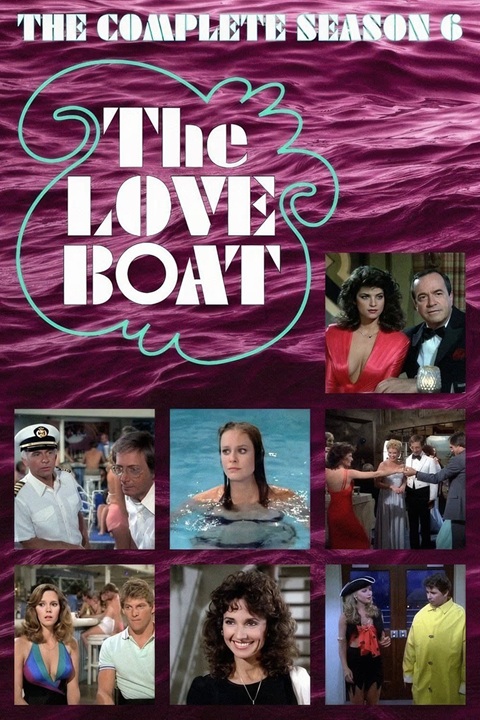
Retro Television Review: The Love Boat 6.5 “Hyde and Seek/Command Performance/Sketchy Love”


Welcome to Retro Television Reviews, a feature where we review some of our favorite and least favorite shows of the past!  On Wednesdays, I will be reviewing the original Love Boat, which aired on ABC from 1977 to 1986!  The series can be streamed on Paramount Plus!

This week’s cruise is brought to you by Bolivian Nose Candy.

Episode 6.5 “Hyde and Seek/Command Performance/Sketchy Love”

(Dir by Jerome Courtland, originally aired on October 30, 1982)

Gopher dates a 14 year-old!

WHAT!?

Of course, Gopher doesn’t realize that she’s fourteen.  I’m not really sure how Gopher doesn’t realize that because the girl is played by Kim Richards, who was 18 at the time but looked considerably younger.  It should also be noted that the girl is also pretending to be her own fictional older sister and she claims to be 18 but …. eh.  I have a hard time buying that Kim Richards could have convinced Gopher that she was two different people, just because that underbite was pretty hard to disguise.  Even if we give Gopher the benefit of the doubt, he’s still a guy in mid-thirties, dating a teenager while he’s supposed to be working.  I like Gopher but the Captain might have to find a new purser after this.  How to explain Gopher’s self-destructive behavior?  My theory is that he found Julia’s coke stash.

Fear not, though.  It all works out.  The truth comes out.  Kim Richards’s father (played by Dana Andrews) announces that he’s going to spank his daughter.  She’s fourteen, you’re not going to spank anyone, you old weirdo.

Meanwhile, a dude (Skip Stephenson) who looks like he’s been up a few nights on a cocaine binge falls in love with Morgan Brittany but …. uh oh!  He’s married!  Fortunately, his wife wants to divorce him, probably because of all the cocaine.  To me, the funniest thing about this story is that, as soon as he gets on the cruise, he starts spilling his guts to Isaac as if they’re old friends.  Dude, you don’t know Isaac.  It’s a big ship and Isaac’s the only bartender.  Isaac doesn’t have time to just stand there and listen to you whine.  But that’s the thing with cocaine.  It makes you a tad bit self-absorbed.  Trust me, I’ve seen Scarface.  I know about the yayo.

And finally, Dan Rowan plays a comedian who has been hired to perform on the ship.  His ex-wife (Marion Ross) and daughter (Eve Plumb) just happen to be on the boat as well.  Eve Plumb wants nothing to do with Dan Rowan, believing that he abandoned his family.  Dan Rowan uses his act to explain what really happened and to beg his daughter to forgive him.  I have to say that, if I was a passenger, I would be kind of ticked off.  You show up at the Acapulco Lounge, hoping to have a good laugh and suddenly the headliner is crying and delivering this really depressing monologue.  Thanks for ruining my cruise, jerk!  Seriously, how coked up do you have to be to sabotage your career like that?

This was not my favorite cruise but at least Julia’s hair looked better here than it did last week.  To be honest, the entire boat seemed to be coked up this week.  Hopefully, they’ll all go to rehab and next week will be a bit more pleasant.


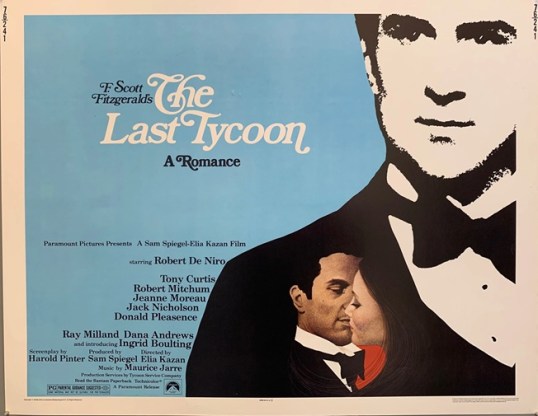
Icarus File No. 23: The Last Tycoon (dir by Elia Kazan)


Based on the final (and unfinished) novel by F. Scott Fitzgerald, 1976’s The Last Tycoon tells the story of Monroe Stahr (Robert De Niro).

Monroe Stahr is the head of production at a film studio during the early days of Hollywood.  Stahr is an unemotional and seemingly repressed man who only shows enthusiasm when he’s talking about movies.  He may not be able to deal with real people but he instinctively knows what they want to see on the big screen.  Stahr is a genius but he’s working himself to death, ignoring his health concerns while trying to create the perfect world through film.  He’s haunted by a lost love and when he meets Kathleen Moore (Ingrid Boulting, giving a remarkably dull performance), he tries to find love with her but, naturally, he doesn’t succeed.  Meanwhile, he has to deal with his boss (Robert Mitchum), his boss’s daughter (Theresa Russell), a neurotic screenwriter (Donald Pleasence), an impotent actor (Tony Curtis), and a lowdown dirty communist labor organizer (Jack Nicholson)!  Sadly, for Stahr, McCarthyism is still a few decades away.

There’s a lot of talented people in The Last Tycoon and it’s undeniably interesting to see old school stars — like Mitchum, Curtis, Dana Andrews, Ray Milland — acting opposite a Method-driven, 30-something Robert De Niro.  This is one of those films where even the minor roles are filled with name actors.  John Carradine plays a tour guide.  Jeff Corey plays a doctor.  This is a film about Golden Age Hollywood that is full of Golden Age survivors.  It’s a shame that most of them don’t get much to do.  The Last Tycoon is a very episodic film as Stahr goes from one crisis to another.  Characters show up and then just kind of disappear and we’re never quite sure how Stahr feels about any of them or how their existence really shapes Stahr’s worldview.  Robert De Niro may be a great actor but, as portrayed in this film, Monroe Stahr is a boring character and De Niro’s trademark tight-lipped intensity just makes Stahr seem like someone who doesn’t have much to offer beyond employment.  This is one of De Niro’s least interesting performances, mostly because he’s playing a not-particularly interesting person.  Mitchum, Pleasence, and the old guard all make an impression because they’re willing to coast by on their bigger-than-life personalities.  De Niro is trapped by the Method and a total lack of chemistry with co-star Ingrid Boulting.

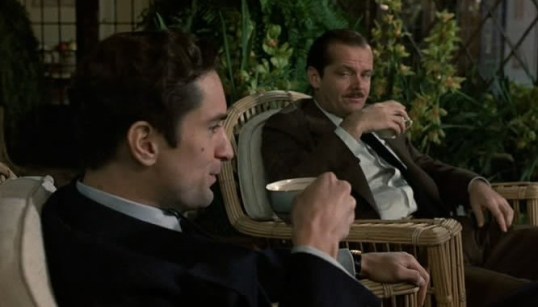
Still, this is the only film to feature both De Niro and Jack Nicholson.  (The Departed was originally conceived as a chance to bring De Niro and Nicholson together, with De Niro being the original choice for the role eventually played by Martin Sheen.)  Nicholson’s role is small and he doesn’t show up until the film is nearly over.  He and De Niro have an intense table tennis match.  Nicholson doesn’t really dig deep into Brimmer’s character.  Instead, he flashes his grin and let’s the natural sarcasm of his voice carry the scene.  It’s nowhere close to being as emotionally satisfying as the De Niro/Pacino meeting in Heat.  That said, Jack Nicholson at least appears to be enjoying himself.  His natural charisma makes his role seem bigger than it actually is.

Why was The Last Tycoon such a disappointment?  Though unfinished, the book still featured some of Fitzgerald’s best work and there’s a huge amount of talent involved in this film.  The blame mostly falls on Elia Kazan, who came out of retirement to direct the film after original director Mike Nichols left the project.  (Nichols reportedly objected to casting De Niro as Stahr.  While it’s tempting to think that Nichols realized that De Niro’s intense style wouldn’t be right for the role, it actually appears that Nichols and De Niro sincerely disliked each other as Nichols also abandoned the next film he was hired to direct when he was told that De Niro wanted the lead role.  Nichols choice for Monroe Stahr was Dustin Hoffman, which actually would have worked.  If nothing else, it would have provided a Graduate reunion.)  Kazan later said that he did the film solely for the money and it’s obvious that he didn’t really care much about the film’s story.  The film has some good scenes but, overall, it feels disjointed and uneven.  Kazan doesn’t really seem to care about Monroe Stahr and, as a result, the entire film falls flat.

Previous Icarus Files:

  1. Cloud Atlas
  2. Maximum Overdrive
  3. Glass
  4. Captive State
  5. Mother!
  6. The Man Who Killed Don Quixote
  7. Last Days
  8. Plan 9 From Outer Space
  9. The Last Movie
  10. 88
  11. The Bonfire of the Vanities
  12. Birdemic
  13. Birdemic 2: The Resurrection 
  14. Last Exit To Brooklyn
  15. Glen or Glenda
  16. The Assassination of Trotsky
  17. Che!
  18. Brewster McCloud
  19. American Traitor: The Trial of Axis Sally
  20. Tough Guys Don’t Dance
  21. Reach Me
  22. Revolution

Film Review: Berlin Correspondent (dir by Eugene Forde)


In the 1942 film, Berlin Correspondent, Dana Andrews plays Bill Roberts.

Bill is an American journalist, working out of Berlin.  Because the film takes place before America’s entry into World War II, Bill pretends to report only what the Germans want him to report.  Even while there are bombs exploding outside of the studio, Bill and his fellow correspondents report that everyone in Berlin is happy and that the German government is doing a great job.

However, Bill fills his reporting with code words, which are then interpreted by listeners in the American Intelligence service.  They understand that when Bill says that the people are happy, that means that they’re actually miserable.  When Bill says that the weather in Berlin is cloudy, that means that there is dissent brewing in the government.

Still, Captain Von Rau (Martin Kosleck) comes to suspect that Bill might be sending out secret messages and he decides to send someone to not only compromise Bill but to also discover who is feeding Bill information.  Von Rau sends his own fiancée, Karen Hauen (Virginia Gilmore), to seduce Bill.  Little does Von Rau suspect that Bill’s source of information is Karen’s own father (Erwin Kalser) and that Karen herself is going to end up falling in love with Bill.

Berlin Correspondent is typical of the films that were made to try to build support for the American war effort during the Second World War.  The hero is a tough and cynical American who pretends to not care about what is happening in the rest of the world but who eventually reveals himself to be an idealist with a strong sense of right and wrong.  Bill may say that he’s only in Berlin to report the news but, when Karen’s father is sent to a concentration camp, Bill proves himself to be willing to risk his own life to help the older man make it to Switzerland.  Karen’s father stands in for the members of the German resistance who worked from the inside to bring down the Nazis.  Bill and Karen’s love serves as a reminder that the world can come back together but only after Hitler has been defeated.

The two main Nazi villains are played by Martin Kosleck and Sig Ruman, two German actors who immigrated to the United States to escape the real-life Nazis.  Kosleck and Ruman play their characters as being buffoonish bullies who are easily outsmarted by street smart Americans like Bill.  It’s the film’s way of saying to the audience, “Are you really going to let these idiots think that they can defeat America?”  Still, a scene is included in which a crippled girl is described as being someone who should be put to death.  It’s a necessary reminder that the Nazis may be idiots but they’re also a legitimate threat.

Berlin Correspondent clocks in at a brisk 70 minutes and it features a typically strong leading performance from Dana Andrews.  If you needed someone to fight for America, 40s-era Dana Andrews would definitely be a good pick to go with.  It’s a joy to watch him outsmart the Nazis.

Retro Television Reviews: The Failing of Raymond (dir by Boris Sagal)


Welcome to Retro Television Reviews, a feature where we review some of our favorite and least favorite shows of the past!  On Sundays, I will be reviewing the made-for-television movies that used to be a primetime mainstay.  Today’s film is 1971’s The Failing of Raymond!  It  can be viewed on YouTube!

Poor Raymond!

Played by a young Dean Stockwell, Raymond is patient at a mental hospital who blames everything that has gone wrong on his life on one failed test.  During his senior year of high school, he got a 61 on an English test and, as a result, he not only only failed the class but he also wasn’t allowed to graduate.  The test was administered by a substitute teacher named Mary Bloomquist (Jane Wyman), one who did not know that Raymond had a reputation for being a bit eccentric.  When Raymond tried to ask her whether or not the final two questions were for extra credit, Mary refused to call on him because she was more preoccupied with her failed affair with another teacher (Dana Andrews).  Raymond didn’t answer the final two questions, even though he believed that he had the correct answers.  Now, locked away in a hospital, Raymond comes across an article announcing that beloved teacher Mary Bloomquist will soon be retiring and moving to England.

Seeking revenge, Raymond escapes from the hospital.  While police Sgt. Manzek (Murray Hamilton) search for Raymond, Raymond returns to his old school.  When he finds Mary in her classroom, Mary mistakes Raymond for a mover responding to a classified ad asking for help in getting all of her things packed up.  Raymond may be a homicidal but he also craves direction and praise so he helps Mary with her packing.  As he packs, Mary talks about her decision to retire and it turns out that she’s not quite the monster that Raymond imagined her to be.  Mary is retiring because she feels that she has never made a difference as a teacher.

That said, Raymond is still determined to get his revenge.  He wants Mary to give him the test a second time and to give him a passing grade.  And if she doesn’t, he’s prepared to kill her.  Unfortunately, despite claiming to have spent years studying the material, Raymond still thinks that Robert Browning wrote the Rhyme of the Ancient Mariner.

As the old saying goes, you never know how much your actions might effect someone else’s life.  Mary is a dedicated and well-meaning teacher who cares about her students but her decision to fail Raymond, made on a day when she was distracted by her own personal problems, is something that Raymond has never forgotten or forgiven.  Mary can barely remember it happening but Raymond has based his entire life around that moment and, as the film progresses, it becomes clear that he’s incapable of understanding that the entire world doesn’t revolve around what happened to him during his senior year.  On the one hand, Mary definitely should have answered Raymond’s question about whether or not the final two questions were multiple choice.  On the other hand, Raymond has clearly been using the incident as an excuse to justify every mistake that he’s made sense.  Ironically, Raymond’s quest for revenge gives Mary the chance to finally be the teacher that she truly wants to be.

It’s an intriguing premise.  Unfortunately, like so many made-for-TV movies from the early 70s, The Failing of Raymond is occasionally a bit too stagey for its own good.  Despite only being 73 minutes long, it never really develops any sort of narrative momentum.  That said, Dean Stockwell gives a performance that makes clear why Alfred Hitchcock was planning on casting him as Norman Bates if Anthony Perkins somehow fell through.  As played by Stockwell, Raymond is unfailingly polite and so obviously wounded that it’s impossible not to feel sympathy for him, even when he’s threatening to kill his former teacher.  Jane Wyman, as well, gives a sympathetic performance as Mary, who, despite that one bad day with Raymond, really is the type of teacher we all wish we could have had.

This film was directed by Boris Sagal, who did several made-for-TV movies and also directed Charlton Heston in The Omega Man.  His daughter, Katey Sagal, makes her film debut in a small role as one of Raymond’s fellow patients.

Horror on the Lens: The Failing of Raymond (dir by Boris Sagal)


Raymond (Dean Stockwell) has just escaped from a mental hospital and he has only one thing on his mind.  Raymond wants revenge.  Having looked over the past events of his life, Raymond has figured out that things started to go downhill for him when he failed a test in high school.  He blames his failure on his old teacher, Mary Bloomquist (Jane Wyman).

At the same time that Raymond is escaping, Mary is planning her retirement.  She’s decided that she no longer wants to teach.  The job just doesn’t seem worth it anymore.  But Raymond has other ideas.  Raymond wants her to give him the same test that he failed ten years before.  And this time, Raymond wants her to pass him or else.

The Failing of Raymond is a made-for-TV movie from 1971 and it features a good performance from Jane Wyman and a great one from Dean Stockwell.  The film ultimately hinges on one question.  Did Raymond really fail that test or did Mary fail Raymond?

Enjoy!

http://www.youtube.com/watch?v=egFBvsOaLnY

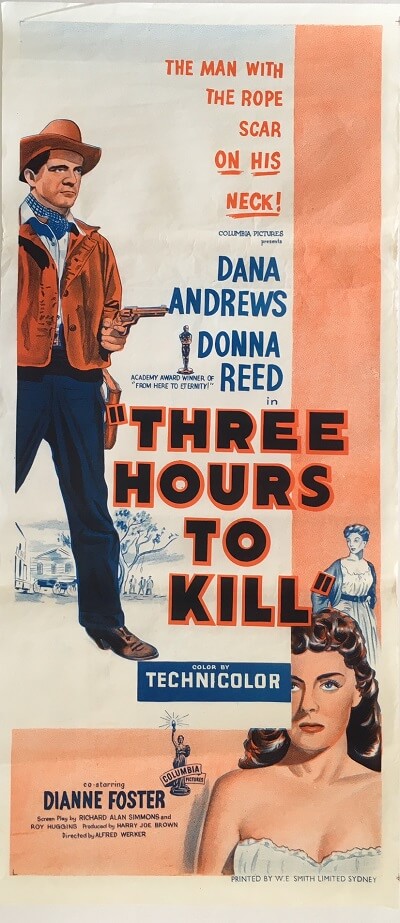
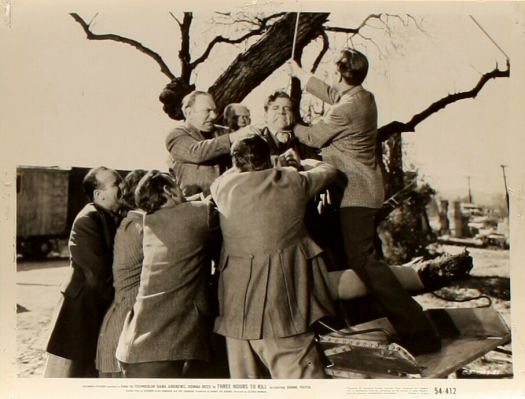
Time Well Spent: THREE HOURS TO KILL (Columbia 1954)


gary loggins's avatarcracked rear viewer

I don’t think you’ll find THREE HOURS TO KILL among anyone’s Top Ten Films list, or Top Ten Westerns, or even Top Ten Dana Andrews Movies. What you will find, if you give this movie a chance, is a solid, adult themed Technicolor Western with just a hint of film noir, made by Hollywood pros in front and behind the cameras. And you can’t ask for much more than that.

Jim Guthrie returns after a three year absence to the town that once tried to hang him. Jim relates the tale via flashback to old friend and current sheriff Ben East: a big night in town had everybody drinking and partying it up. Sexy hotel owner Chris Palmer comes on to Jim, but he only has eyes for pretty Laurie Mastin, bringing out the jealous side of banker Niles Hendricks. Laurie’s brother Carter disapproves of Jim, and a fight…

View original post 672 more words

Cleaning Out the DVR #17: Film Noir Festival 3


gary loggins's avatarcracked rear viewer

To take my mind off the sciatic nerve pain I was suffering last week, I immersed myself on the dark world of film noir. The following quartet of films represent some of the genre’s best, filled with murder, femme fatales, psychopaths, and sleazy living. Good times!!

I’ll begin chronologically with BOOMERANG (20th Century-Fox 1947), director Elia Kazan’s true-life tale of a drifter (an excellent Arthur Kennedy ) falsely accused of murdering a priest in cold blood, and the doubting DA (Dana Andrews ) who fights an uphill battle against political corruption to exonerate him. Filmed on location in Stamford, CT and using many local residents as extras and bit parts, the literate script by Richard Murphy (CRY OF THE CITY, PANIC IN THE STREETS, COMPULSION) takes a realistic look behind the scenes at an American mid-sized city, shedding light into it’s darker corners.

Andrews is solid as the honest…

View original post 1,048 more words

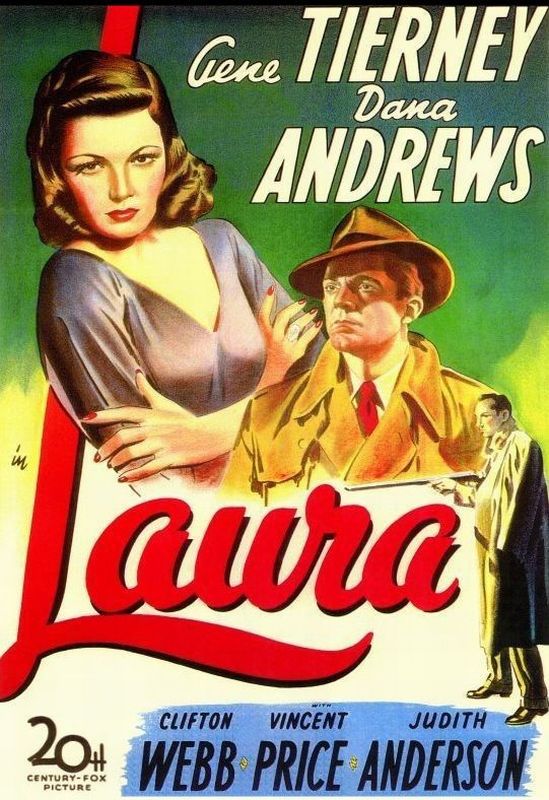
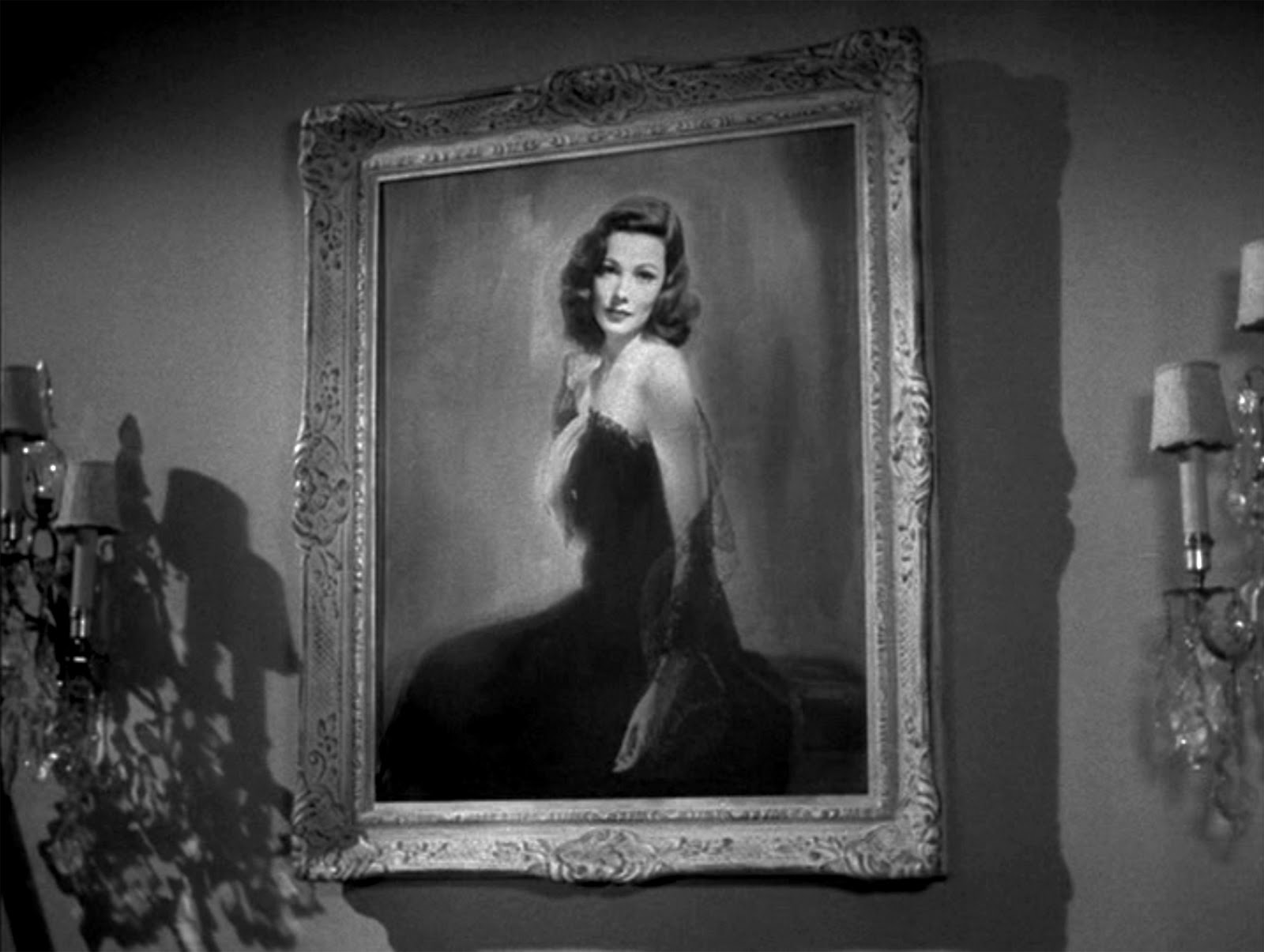
Fall in Love with LAURA (20th Century Fox 1944)


gary loggins's avatarcracked rear viewer

laura1

If you’re like me, you’ve probably watched LAURA more than once. It’s one of the top film noirs, indeed one of the top films period of the 1940’s. LAURA is unquestionably director Otto Preminger’s greatest achievement; some may argue for ANATOMY OF A MURDER or even ADVISE AND CONSENT, and they’re entitled to their opinions. But though both are great films, only LAURA continues to haunt the dreams of classic movie lovers, its main themes of love and obsession transferring to its fans even 73 years after its initial release.

laura2

Preminger, along with scenarists Jay Dratler, Samuel Hoffenstein, and Betty Reinhart, weave an intricate, sinister tapestry around the violent death of beautiful New York ad exec Laura Hunt. Cynical police detective Mark McPherson is determined to solve this particularly gruesome murder; Laura was killed at close range by a buckshot-loaded shotgun blast to the face. McPherson begins by questioning Waldo Lydecker, the acerbic newspaper columnist who relates…

View original post 527 more words

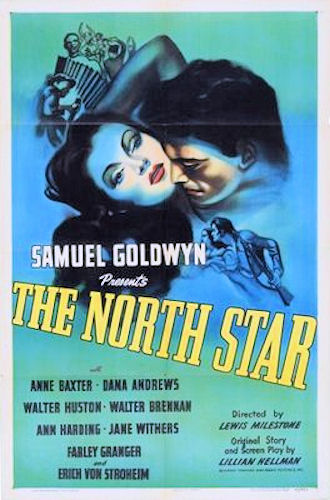
The Fabulous Forties #41: The North Star (dir by Lewis Milestone)


The North Star

The 40th film — wait a minute, I’m finally up to number 40!?  That means that there’s only ten more movies left to review!  And then I’ll be able to move on!  It’s always exiting for me whenever I’m doing a review series and I realize that I’m nearly done.

Anyway, where was I?

Oh yeah — the 40th film in Mill Creek’s Fabulous Forties box set was the 1943 war epic, The North Star.  This is one of the many war films to be included in the Fabulous Forties box set and I have to admit that they all kind of blend together for me.  Since these films were actually made at a time when America was at war, there really wasn’t much room for nuance.  Instead, every film follows pretty much the same formula: the Nazis invade, a combination of soldiers and villagers set aside their individual concerns and/or differences and team up to defeat the Nazis, there’s a big battle, a few good people sacrifice their lives, the Nazis are defeated, and the allies promise to keep fighting.

It’s a pretty predictable formula but that’s okay because it was all in the service of fighting the Nazis.  Could I legitimately point out that the villains in these movies are always kind of two-dimensional?  Sure, I could.  But you know what?  IT DOESN’T MATTER BECAUSE THEY’RE NAZIS!  Could I point out that the heroes are often idealized?  Sure, but again it doesn’t matter.  Why doesn’t it matter?  BECAUSE THEY’RE FIGHTING NAZIS!

That’s one reason why, even as our attitude towards war changes, World War II films will always be popular.  World War II was literally good vs evil.

Anyway, The North Star was a big studio tribute to America’s then ally, the Soviet Union.  When a farm in the Ukraine is occupied by the Nazis, the peasants and the farmers refuse to surrender.  They disappear into the surrounding hills and conduct guerilla warfare against the invading army.  It’s all pretty predictable but it’s also executed fairly well.  It doesn’t shy away from showing the brutality of war.  There’s a haunting scene in which we see the bodies of all of the villagers — including several children — who have been killed in a battle.

The Nazis are represented by Erich Von Stroheim.  Von Stroheim plays a German doctor who continually claims that he personally does not believe in the Nazi ideology and that he’s just following orders.  When wounded Nazi soldiers need blood transfusions, he takes the blood from the children of the village.  His rival, a Russian doctor, is played by all-American Walter Huston and indeed, all the Russians are played by American stars, the better to create a “we’re all in this together” type of spirit.  When Huston tells Von Stroheim that he is even worse than the committed Nazis because he recognized evil and chose to do nothing, he’s speaking for all of us.

Unfortunately, before the Nazis invade, The North Star devotes a lot of time to showing how idyllic life is in the communist collective and these scenes are so idealized that they totally ring false.  Everyone is so busy singing folk songs and talking about how happy they are being a part of a collective (as opposed to being an individual with concerns that are not shared by the other members of the collective) that it’s kind of unbearable.  Not surprisingly, The North Star was written by Lillian Hellman, who wrote some great melodramas (like The Little Foxes) but who was always at her most tedious when she was at her most overly political.

(Watching the opening of The North Star, I was reminded that I would be totally useless in a collectivist society.)

So, I have to admit, that I was rather annoyed with the villagers at first.  But then the Nazis invaded and I realized that we’re all in it together!  As I said earlier, you can forgive your heroes almost anything when they’re fighting Nazis.

The North Star is an above average war film and a below average piece of political propaganda.  See it as a double feature with The Last Chance.

Darkness on the Edge of Town: WHERE THE SIDEWALK ENDS (20th Century Fox 1950)


gary loggins's avatarcracked rear viewer

where1

I recorded WHERE THE SIDEWALK ENDS way back in June, and haven’t watched it until just recently. It was well worth the wait, for this is one of the finest noirs I’ve seen yet. Director Otto Preminger reunited with the stars of his film LAURA, Dana Andrews and Gene Tierney, to give us a bleak crime drama that more than holds its own with the best films noir of the era.

Police Detective Mark Dixon (Andrews) is a proto-Dirty Harry cop, a tough SOB not above laying the smackdown on New York City’s criminal element. Another assault charge leads to Mark being demoted by his superiors. Mark’s got a reason for his brutality tactics, though: his father was a criminal, and he’s psychologically compelled to clean up the corruption in his city.

where4

He’s particularly got a hair across his ass about gambling czar Tommy Scalise (Gary Merrill), who was set up in…

View original post 275 more words