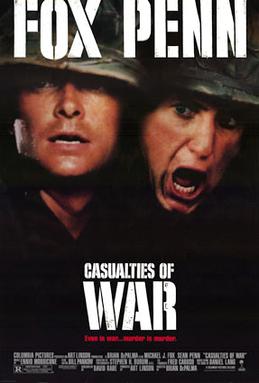
Casualties of War (1989, directed by Brian DePalma)


Private Max Eriksson (Michael J. Fox) is a new arrival in Vietnam, a young infantryman who is called a “cherry” by his fellow soldiers.  No one wants to get close to Eriksson because everyone knows that it’s the new guy who is most likely to make a mistake and get himself killed.  The only person who seems to care whether Eriksson lives or dies is Sgt. Tony Messerve (Sean Penn), a squad leader who is so tough and battle-worn that it is easy to forget that he is only 20 years old.  After a member of Messerve’s squad is killed in a firefight and Messerve’s squad had been denied leave despite all of the stress and pressure that they’ve been under, Messerve decides that, during their next mission, the squad is going to kidnap a woman from a village and take her with them.

Eriksson, who is still naive enough to sincerely say, “We’re supposed to be here to help these people,” is horrified by Messerve’s actions.  At first, only he and Diaz (John Leguizamo) refuse to take part in raping the terrified woman (Thuy Thu Le).  Diaz soon caves to the pressure from the rest of the squad and joins in.  Only Eriksson continues to refuse but his attempt to help the woman escape fails when the members of the squad murder her during a firefight with the Viet Cong.  After the battle, the wounded Eriksson discovers that no one in command wants to hear about what happened.  Messerve’s second-in-command, Clark (Don Patrick Harvey), targets Eriksson, trying to shut him up permanently.

One of the many Vietnam films to come out after the success of Platoon, Brian De Palma’s Casualties of War is an intense and disturbing recreation of a true story.   After years of being accused of making misogynistic and exploitive films, De Palma made an effective and sensitive anti-war film, one that did not exploit the suffering of the kidnapped woman but instead portrays the depravity of war and the courage it takes to do the right thing when everyone around is ordering you not to.  While it always takes a while to get used to Michael J. Fox in a serious role (and, at the start of the film, he really does seem to be miscast), he eventually gives the best performance of his career in Max Eriksson and, by using a framing device of Eriksson back in the United States after completing his tour, both De Palma and Fox show how the Eriksson, like countless other veterans, is still haunted by what he saw in Vietnam even after he returns home.  Sean Penn is equally impressive as Messerve, playing him as someone who sacrificed his soul in order to survive in Vietnam.  Messerve has come to view the entire country with contempt and, in his twisted way, he sees kidnapping the woman as a way to reward his squad for all that they’ve endured.  The rest of the cast is also strong, with John C. Reilly making his acting debut as a member of the squad.

Not surprisingly, the dark and disturbing Casualties of War was a box office disappointment.  It’s still one of most harrowing films made about Vietnam and one of De Palma’s best.
The Unnominated #13: Heat (dir by Michael Mann)


Though the Academy of Motion Picture Arts and Sciences claim that the Oscars honor the best of the year, we all know that there are always worthy films and performances that end up getting overlooked.  Sometimes, it’s because the competition too fierce.  Sometimes, it’s because the film itself was too controversial.  Often, it’s just a case of a film’s quality not being fully recognized until years after its initial released.  This series of reviews takes a look at the films and performances that should have been nominated but were, for whatever reason, overlooked.  These are the Unnominated.

First released in 1995, Heat is one of the most influential and best-known films of the past 30 years.  It also received absolutely zero Oscar nominations.

Maybe we shouldn’t be too surprised that Academy — especially the Academy of the 1990s — didn’t shower the film with nominations.  For all of its many strengths, Heat is still a genre piece, an epic three-hour crime film from director Michael Mann.  It’s a film about obsessive cops and tightly-wound crooks and it’s based on a made-for-TV movie that Mann directed in the late 80s.  While the Academy had given a best picture nomination to The Fugitive just two years before, it still hadn’t fully come around to honoring genre films.

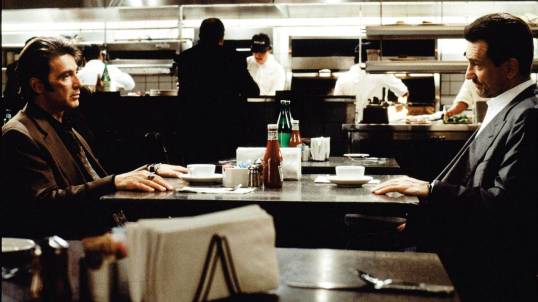
And yet one would think that the film could have at least picked up a nomination for its editing or maybe the sound design that helps to make the film’s signature 8-minute gun battle so unforgettable.  (Heat is a film that leaves you feeling as if you’re trapped in the middle of its gunfights, running for cover while the cops and the crooks fire on each other.)  The screenplay, featuring the scene where Al Pacino’s intense detective sits down for coffee with Robert De Niro’s career crook, also went unnominated.

Al Pacino was not nominated for playing Vincent Hanna and maybe we shouldn’t be too surprised at that.  Pacino yells a lot in this movie.  When people talk about Pacino having a reputation for bellowing his lines like a madman, they’re usually thinking about the scene where he confronts a weaselly executive (Hank Azaria) about the affair that he’s having with Charlene (Ashley Judd), the wife of criminal Chris Shiherlis (Val Kilmer).  And yet, I think that Pacino’s performance works in the context of the film and it’s often forgotten that Pacino has quite scenes in Heat as well.  Pacino’s intensity provides a contrast to Robert De Niro’s tightly controlled career criminal, Neil McCauley.  McCauley has done time in prison and he has no intention of ever going back.  But, as he admits during the famous diner scene, being a criminal is the only thing that he knows how to do and it’s also the only thing that he wants to do.  (“The action is the juice,” Tom Sizemore says in another scene.)  If any two actors deserved a joint Oscar nomination it was Pacino and De Niro.  In Heat, they’re the perfect team.  Pacino’s flamboyance and De Niro’s tightly-controlled emotions come together to form the heart of the picture.

No one from the film’s supporting cast was nominated either, despite there being a wealth of riches to choose from.  Ashley Judd and Val Kilmer come to mind as obvious contenders.  Kilmer is amazing in the shoot-out that occurs two hours into the film.  Ashley Judd has a killer scene where she helps her husband escape from the police.  Beyond Judd and Kilmer, I like the quiet menace of Tom Sizemore’s Michael Cheritto.  (Just check out the look he gives to an onlooker who is getting a little bit too curious.)  Kevin Gage’s sociopathic Waingro is one of the most loathsome characters to ever show up in a movie.  William Fichtner, Jon Voight, Danny Trejo, and Tom Noonan all make a definite impression and add to Michael Mann’s portrait of the Los Angeles underworld.  In an early role, Natalie Portman plays Hanna’s neglected stepdaughter and even Amy Brenneman has some good moments as Neil’s unsuspecting girlfriend, the one who Neil claims to be prepared to abandon if he sees “the heat coming.”

I have to mention the performance of Dennis Haysbert as Don Breedan, a man who has just been released from prison and who finds himself working as a cook in a diner.  (The owner of the diner is played by Bud Cort.)  Haysbert doesn’t have many scenes but he gives a poignant performance as a man struggling not to fall back into his old life of crime and what eventually happens to him still packs an emotional punch.  For much of the film’s running time, he’s on the fringes of the story.  It’s only by chance that he finds himself suddenly and briefly thrown into the middle of the action.

Heat is the ultimate Michael Mann film, a 3-hour crime epic that is full of amazing action sequences, powerful performances, and a moody atmosphere that leaves the viewer with no doubt that the film is actually about a lot more than just a bunch of crooks and the cops who try to stop them.  Hanna and McCauley both live by their own code and are equally obsessed with their work.  Their showdown is inevitable and, as directed by Michael Mann, it takes on almost mythological grandeur.  The film is a portrait of uncertainty and fear in Los Angeles but it’s also a portrait of two men destined to confront each other.  They’re both the best at what they do and, as a result, only one can remain alive at the end of the film.

I rewatched Heat yesterday and I was amazed at how well the film holds up.  It’s one of the best-paced three-hour films that I’ve ever seen and that epic gunfight is still powerful and frightening to watch.  Like Martin Scorsese’s Casino, it was a 1995 film that deserved more Oscar attention than it received.

Heat (1995, dir by Michael Mann, DP: Dante Spinotti)

Previous entries in The Unnominated:

  1. Auto Focus 
  2. Star 80
  3. Monty Python and The Holy Grail
  4. Johnny Got His Gun
  5. Saint Jack
  6. Office Space
  7. Play Misty For Me
  8. The Long Riders
  9. Mean Streets
  10. The Long Goodbye
  11. The General
  12. Tombstone


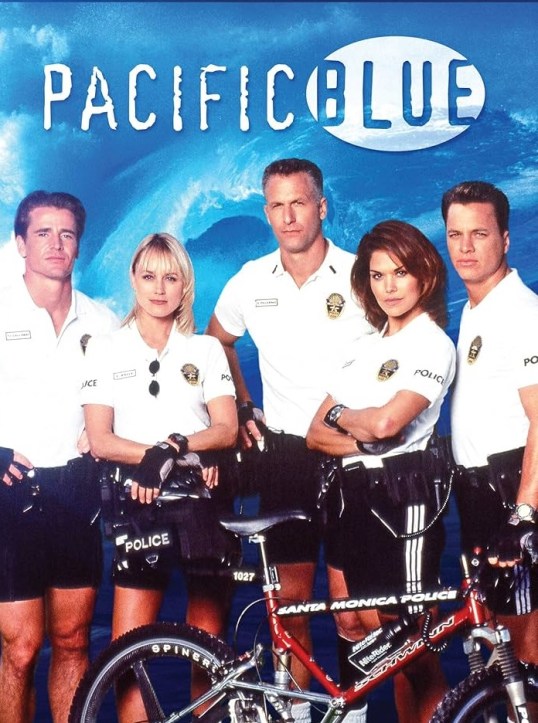
Late Night Retro Television Review: Pacific Blue 1.10 “Captive Audience”


Welcome to Late Night Retro Television Reviews, a feature where we review some of our favorite and least favorite shows of the past! On Tuesdays, I will be reviewing Pacific Blue, a cop show that aired from 1996 to 2000 on the USA Network!  It’s currently streaming everywhere, though I’m watching it on Tubi.

I’m a little bit late with this review but so what?  I mean, what’s Pacific Blue going to do?  Chase me on their bicycles?

Episode 1.10 “Captive Audience”

(Dir by Terrence O’Hara, originally aired on May 4th, 1996)

The local bank is being robbed!  The three robbers — desperate and murderous criminals all — have taken hostages, including TC and Cory.  TC just wanted to check out his safe deposit box.  Cory just wanted to withdraw some money so she could buy a motorcycle.  (If she had been withdrawing the money to buy another bicycle, I would have thrown a shoe at my television.)  TC is in uniform.  The robbers know he’s a cop.  Cory is not in uniform and she and TC are pretending not to know each other.  There’s also a pregnant woman in the bank who goes into labor, which means that Cory is going to have to get over her loathing of babies to help deliver one!

*Sigh*

I think I’ve said before that I hate cop shows that feature people being held hostage.  It’s always the same thing.  The robbers threaten a lot of people.  The hostages get beaten and abused.  Outside the bank, the negotiator says, “You have to give me more time!”  On Pacific Blue, the negotiator is Captain Palermo and there’s something just silly about him, in his shorts and crisp polo shirt, directing a bunch of rough-and-ready SWAT team members who are in protective gear.  Hostage situations are serious and potentially deadly but Palermo chasing the robbers are on his bicycle just made me laugh and laugh.  I also laughed when the SWAT team first arrived at the bank and spotted Cory and TC’s bicycles sitting outside the building.  “There might be cops in there,” someone says.  Apparently, they’re unsure about whether or not bike cops should be considered real police or not.  I’m glad I’m not the only one.

It falls to Del Toro and Chris to track down Doc Mueller (Charley Lang), a paranoid electronics expert who lives in a tent on the beach.  He agreed to help disable the bank’s alarm so that the SWAT team can sneak inside.  He also taps into the head robber’s “cellular phone” so that the cops can see who he is working with on the outside.  Shows from the 90s are always amusing because everyone’s always like, “He’s got a cellular phone!”  In 1996, those were still unusual and only used by desperate bank robbers.

(On a positive note, one of the robbers is played by a handsome young actor named Walton Goggins.  What ever happened to him?  Seriously, there’s not much about his performance here that indicates the type of actor he would become but still …. WALTON GOGGINS!)

Everything works out, of course.  The main bank robber tries to escape in a helicopter but Palermo chases him — on his bike! — and manages to jump into the helicopter.  It would have been really impressive if not for the bicycle and the fact that the Pacific Blue uniforms — those shorts and those blindingly white shirts — make all of the characters look really silly.  It’s hard to take a cop seriously when he’s dressed like an aging track coach.  The important thing, though, is that Cory gets over her hatred of babies and Palermo shows that bike cops deserve as much respect as real cops.

Eh.  Who cares?


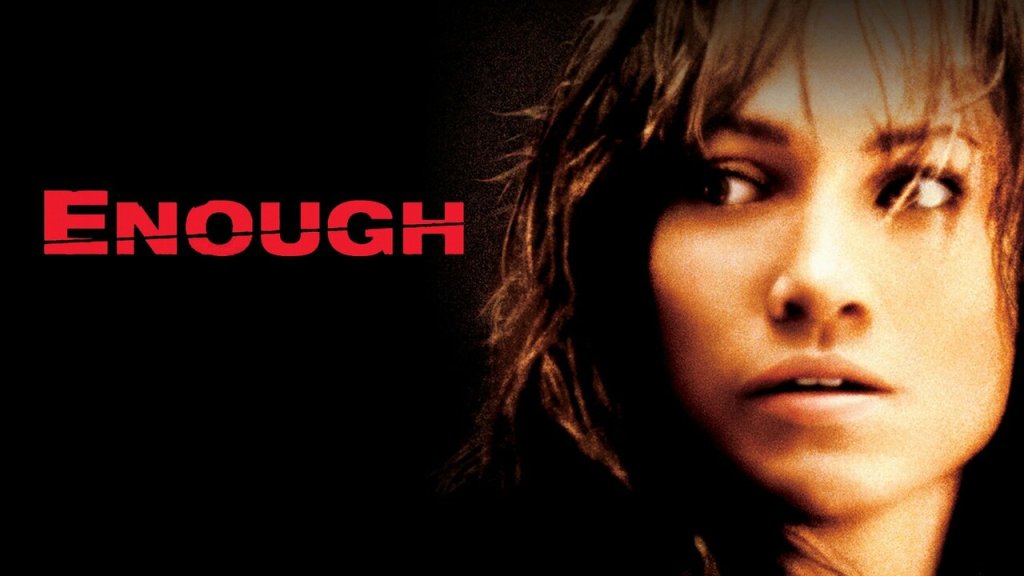
Jennifer Lopez has had ENOUGH (2002)! 


This morning I got up to make coffee for me and my wife. When I came back to our room, she had started the movie ENOUGH (2002) with Jennifer Lopez on the new projector that she bought me for Christmas. I’m not that big of a fan of Lopez, but I decided I’d go ahead and sit down to sip on my coffee prior to starting my day. I ended up watching the whole movie! 

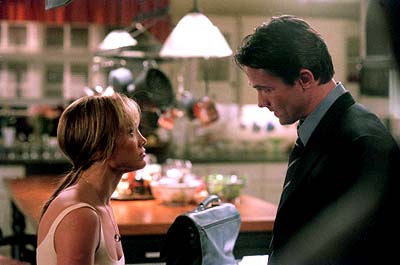
Jennifer Lopez plays Slim, a waitress in a diner in L.A., who meets a rich guy named Mitch Hiller (Billy Campbell) who impresses her when he gets rid of this rude jerk (Noah Wyle) trying to hit on her. Mitch and Slim get along famously, eventually getting married and having a cute little girl named Gracie. Everything seems perfect in their little world. Unfortunately, things aren’t what they seem, and one night Slim checks her husband’s pager. She calls the number and discovers Mitch has been cheating on her. When she confronts him about the affair, his entire countenance changes, and he begins beating the crap out of her. After the altercation, and before heading out to continue his affair, Mitch warns Slim not to leave because he refuses to live without her. With the help of her friend Ginny (Juliette Lewis) and a couple of others, Slim takes Gracie and they escape from Mitch. With all his money and connections, Mitch is able to track her down no matter where she goes. Feeling like she has no other options, Slim turns to her wealthy, estranged father, Jupiter (Fred Ward). He provides her the funds she needs to set up a new life and identity. Unfortunately, that damn Mitch tracks her down again. Narrowly escaping, Slim decides that she’s done running. She sends Gracie away with Ginny and begins training rigorously in self defense techniques. This time she’s taking the fight to Mitch with plans to end this shit once and for all. 

If you’re looking for a realistic drama about the effects of spousal abuse on the family unit and then across the larger society, ENOUGH is not the movie for you. This movie is more for the Charles Bronson crowd, where the bad guys are truly evil and the audience is in complete agreement with their need to perish. This is a formula that continues to work even if you have to completely suspend your disbelief. For example:

-Is it realistic that Mitch would be able to conceal what a complete and total asshole he is for many years from Slim, but then one night turn out to practically be the sidekick of Satan?

-Is it realistic that Mitch would be able track Slim and Gracie down time and time again, no matter where she goes across the country, even after she uses her Dad’s resources to change her identity?

-Is it realistic that Slim would be able to get enough self defense training in a short period of time to be able to confront the extremely fit Mitch at the end and kick his ass? 

While the setup is probably not the most realistic, we have to see images of Mitch beating up Slim on multiple occasions, even trying to kill her at one point. We also see him knock little Gracie to the ground and hurt her. We see him terrorizing her and anyone who tries to help her. This audience member just wanted to see Mitch pay.

I don’t really have any close connections to the main actors in ENOUGH, but they all do their jobs well enough to keep me involved. I have always been a fan of its director, Michael Apted. He’s made a few movies that I really like in CLASS ACTION (1991) with Gene Hackman, THUNDERHEART (1992) with Val Kilmer, and BLINK (1993) with Madeleine Stowe. He’s a more than competent director who knows how to get a reaction from his audience. This certainly may not reflect his best work, but he still handles the material in a professional manner. 

My final word on ENOUGH… I enjoyed the film in the same way I like the 3 piece combo at KFC, which I really do enjoy. I know it’s probably not the best stuff out there, but the classic formula still works, and I’m satisfied when it’s all gone! 

See the trailer for ENOUGH below:

Horror Film Review: Sleepwalkers (dir by Mick Garris)


Sleepwalkers_Motivational_by_Hailtothechimp

So, last night, I was looking for something to watch and I came across Sleepwalkers, a horror film from 1992.  And you know what?  I could sit here and I could get all snarky about Sleepwalkers and I could be hypercritical and all that other stuff.  It’s tempting because the film was written by Stephen King and Stephen King has had so much success that it’s easy to be overly critical of anything he’s involved with.

But I’m not going to do that.  Or, at least, that’s not my main objective with this review.  No, with this review, I want to pay tribute to cat named Clovis.

You see, there are several humans and humanoids in Sleepwalkers.  The film is about two energy vampires — Charles (Brian Krause) and his mother Mary (Alice Krige) — who have an icky incestuous relationship and who need to suck energy from virgins in order to survive.  Charles, who appears to be a teenager, has selected Tanya (Madchen Amick) as his latest target.  Tanya has loving parents (Lyman Ward and Cindy Pickett, who also played Ferris Bueller‘s parents) and there’s also a creepy English teacher (Glenn Shadix) who tries to blackmail Charles and ends up losing a hand as a result.  There’s several police officers, one of whom is killed when a corncob is driven into his spine.  And Steven King appears in an awkward cameo, along with Clive Barker and Tobe Hooper.

That’s right — there’s a lot of people in this movie but none of them made as big an impression as Sparks, the talented little kitty who plays Clovis.  Seriously, check Clovis out!

You see, there’s only one thing that can kill Charles and Mary and that’s the scratch of a cat.  From the minute that Charles and Mary move into their latest home, cats start to gather outside the house, meowing and just waiting for their chance to pounce.  And, when it comes time for the cats to finally make their movie, who is their leader?

CLOVIS!

After Charles kills Clovis’s owner, Clovis gathers every other cat around and we watch as, in slow motion, they run through the streets of the town.  That’s right — whatever else you may want to say about Sleepwalkers, this is a movie where cats finally get to kick some ass.

And who is the main ass kicker?

Little Clovis, of course!

At the end of the film, Tanya might not have many people left in her life but she’s got Clovis and, because of that, you know that everything’s going to be okay.

sleepwalkers1

As for the rest of Sleepwalkers … well, it’s watchable but it still really doesn’t make a huge impression.  And, to be honest, that really is the fault of the script.  It’s hard to know who (out of the humans) you’re supposed to care about.  Charles and Mary are pure evil and Charles has a really bad habit of speaking in lame one liners.  Tanya, meanwhile, is well-played by Madchen Amick but, as written, she’s a bit of a nonentity.  There is one fun scene when Tanya dances but then again, you have to wonder why movies, regardless of when they were made, always insist on making teenagers dance to songs that were written decades before they were born.

Fortunately, the film has Clovis.  Not only does he save the day but he saves the movie as well!

GO CLOVIS!

Clovis