Review: Kraven the Hunter (dir. by J. C. Chandor)


Kraven is Sony’s latest attempt to mine its Spider-Man-adjacent characters for cinematic gold, this time taking a stab at Sergei Kravinoff, better known as Kraven the Hunter. Even if you’re going in with rock-bottom expectations set by Morbius or the patchy Venom films, you might find yourself torn between mild intrigue and full-on indifference. The movie doesn’t bomb, but it certainly doesn’t soar either—it lands squarely in the “it’s fine, I guess” territory, buoyed by a handful of positive elements but weighed down by a laundry list of issues.

The film tries to position itself as a darker, grittier entry in Sony’s Spider-Man Universe but ultimately falls flat in several key areas. The movie follows Sergei Kravinoff (Aaron Taylor-Johnson), a man battling his toxic past and violent instincts, trying to define himself apart from his ruthless father, Nikolai (Russell Crowe). While Taylor-Johnson puts in a committed, physical performance and the action sequences deliver some visceral excitement—with brutal fight scenes and a snowy prison breakout standing out—the film struggles to transcend its predictable, shallow narrative.

One of the strongest aspects of Kraven is its commitment to visceral, intense action. The movie doesn’t shy away from bloody, fierce fights, embracing Kraven’s nature as a hunter rather than a hero. Physicality is a highlight here with Taylor-Johnson convincingly portraying the character’s power and agility. Some of the choreography—such as a snow-covered prison escape and a jungle chase—inject adrenaline into the movie, complemented by Russell Crowe’s imposing presence as the domineering father. Ariana DeBose’s Calypso and Alessandro Nivola’s Rhino provide interesting, if underdeveloped, counterparts that add flavor to the otherwise monochrome supporting cast.

However, the film is weighed down by a paint-by-numbers storyline that treads the well-worn path of antihero origin stories without adding fresh insight or emotional texture. The plot feels cliched and forgettable, with many moments so awkward and stilted that the dialogue and narrative flow could easily be accused of being AI-generated—and that accusation wouldn’t be out of place. This mechanical, artificial quality in the script creates a disconnect that makes characters seem like hollow archetypes rather than fully realized people. It’s as if the story was stitched together by a formula rather than human creativity, robbing the film of natural humor, depth, or emotional impact.

The biggest glaring example of this artificiality comes in the odd use of CGI for some of the characters’ facial movements. In particular, a scene with DeBose’s Calypso involved digital manipulation of her mouth and eyes to sync dialogue after filming, creating an uncanny, often distracting effect. This technique, reminiscent of the awkward, jarring movement of digitally animated mouths on still images, recalls the uncomfortable “Annoying Orange” vibe and highlights a troubling overreliance on technology rather than retakes or better production planning. It is a standout low point that further reinforces the impression of a rushed or overly engineered project.

The emotional core of Kraven revolves around the toxic father-son dynamic, which Crowe and Taylor-Johnson approach with convincing intensity, though the writing undermines their efforts with repetitive, obvious lines. The other characters, including Calypso, Rhino, and the Foreigner, suffer from limited screen time and one-dimensional arcs, often serving only to advance the plot mechanically rather than enrich the story. The film’s isolation from the broader Spider-Man universe also makes the stakes feel lower, leaving Kraven’s violent vendetta somewhat directionless and detached from broader consequences.

Visually, the film is inconsistent. While it nails gritty, physical action sequences, the CGI and digital alterations break immersion. The attempt at a darker, more grounded tone battles against these technical missteps and a narrative stuck in early-2000s superhero tropes.

Kraven offers some genuinely brutal action and committed performances but is hamstrung by a formulaic, AI-esque script and distracting technical glitches like the digital mouth-sync. It feels like a film caught between creative ambition and lazy execution, where flashes of potential are overwhelmed by awkward dialogue and uninspired plotting. For fans craving raw action or eager to see a Spider-Man villain on screen, it may be a mildly watchable diversion; for anyone seeking a fully fleshed-out, emotionally engaging story, Kraven is likely to disappoint.

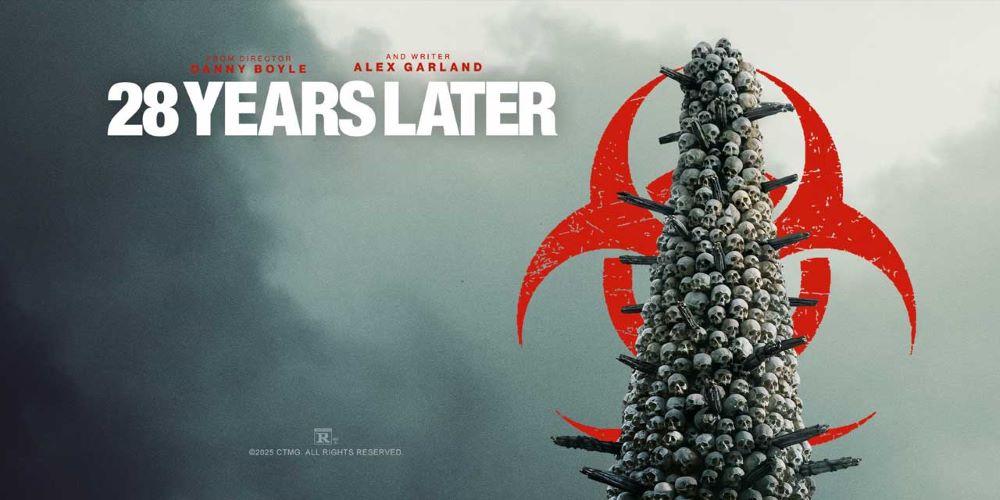
Horror Review: 28 Years Later (dir. by Danny Boyle)


Danny Boyle waited nearly two decades to return to the world he helped redefine with his groundbreaking 2002 film 28 Days Later, which reshaped the zombie subgenre by replacing the traditional, slow-moving undead with fast, feral infected that embody contagion, panic, and societal collapse. While purists continue to debate whether the creatures are technically zombies or infected, Boyle’s vision fundamentally changed how audiences engage with themes of epidemic, survival, and the breakdown of order on screen. The 2007 follow-up, 28 Weeks Later, directed by Juan Carlos Fresnadillo, expanded the Rage virus mythology and landscape but lacked the original’s haunting intimacy and innovation, leaving the franchise in a state of uncertainty until Boyle and writer Alex Garland reunited for 28 Years Later, a film that feels less like a conventional sequel and more like an elegy for a deeply changed world.

The film opens with a short, brutal prologue: young Jimmy Crystal’s family is consumed by the Rage virus while watching Teletubbies, and the boy flees to find safety only to discover his minister father welcoming the infected as a sign of apocalyptic judgment. This early scene deftly establishes the film’s unease, blending visceral horror with spiritual inquiry and foreshadowing a narrative caught between faith, grief, and chaos. Boyle reasserts his command of visceral set pieces while signaling that this film is more concerned with memory and ritual than with relentless terror.

Decades later, the British Isles have been sealed off; NATO forces enforce a quarantine and blockade, isolating the mainland as a toxic exclusion zone. On the tidal island of Lindisfarne, a small community clings to a fragile existence, protected by a causeway that floods at high tide—a detail that metaphorically underscores themes of isolation and dangerous connection. It is here that the emotional core emerges in Jamie and his son Spike, played by Aaron Taylor-Johnson and the remarkable newcomer Alfie Williams. Their spare, heartfelt relationship grounds what otherwise wanders into meditative and often surreal territory.

Alfie Williams emerges as one of the year’s most impressive new talents. His portrayal of Spike avoids the usual survivor archetype; instead, he presents a boy deeply shaped by inherited trauma and cautious curiosity. Boyle’s camera lingers on Williams’ face, capturing silent shifts of fear, wonder, and resilience, making his quiet moments as powerful as the film’s larger set pieces. Williams shines particularly in a sequence where Spike and his mother, portrayed with subtle grace by Jodie Comer, navigate a moss-covered village reclaimed by nature; Williams embodies awe and terror with a single glance. His encounters with the evolved infected—some sedentary and tree-like, others organized into predator packs—are charged with terrifying authenticity and emotional depth. Early reviews label Williams a breakout star, praising his ability to hold the screen alongside veteran actors.

Visually, Boyle and cinematographer Anthony Dod Mantle experiment with a striking mix of techniques, blending the use of iPhone 15 Pro Max cameras and drones with traditional film methods to create a language that oscillates between intimate human moments and sweeping, documentary-style landscapes. The Britain depicted is no longer a lifeless wasteland but an ecologically regrown terrain—lush, eerie, and indifferent. This verdant backdrop reflects the Rage virus’s own evolution. The infected have adapted in ways both terrifying and fascinating: some feed off the earth and fungus, becoming near-plantlike and sedentary, while others form packs ruled by alpha mutants, suggesting emergent social structures even after humanity’s collapse. This biological and ecological evolution amplifies the film’s central theme: survival transcending humanity.

Anchoring the film’s philosophical inquiry is Ralph Fiennes’s performance as Dr. Ian Kelson, a former general practitioner who has exiled himself to live among the infected. Fiennes crafts Kelson with haunting solemnity and layered ambiguity—part caregiver, part fanatic, part recluse—who has created the eponymous “Bone Temple,” a shrine assembled from bones and memories to honor the dead and the changed world they inhabit. The role requires quiet intensity, and Fiennes delivers; his interactions with Spike are charged with both menace and melancholy. Kelson’s reverence for the infected and his willingness to coexist with them challenge traditional survivalist narratives, injecting the film with a solemn meditation on loss, acceptance, and the possibility of new forms of life.

28 Years Later opts for a deliberately slower, more contemplative pace than its predecessors. Boyle and Garland invest their energy in exploring grief, adaptation, and collective memory. The infected become symbolic forces of transformation rather than mere antagonists, while survivors seek meaning through ritual and remembrance as a bulwark against despair. This approach has divided fans: some lament the absence of the unrelenting terror and pace that characterized the earlier films, while others welcome the franchise’s intellectual maturity and thematic depth.

Certain scenes—such as the stranded NATO patrol subplot and glimpses of emerging cult-like human factions—hint at a larger, more complex world but never overshadow the film’s intimate father‑son narrative. Jodie Comer complements Williams with a nuanced portrayal of Spike’s mother, and Taylor‑Johnson brings grounded emotional weight to Jamie, embodying a parent wrestling with how to protect the next generation in a broken world and dealing with his own inner demons.

The interplay between Williams and Fiennes forms the film’s core dynamic, uniting youthful vulnerability with somber reflection. Kelson’s philosophical acceptance of the apocalypse contrasts with Spike’s struggle for identity and belonging, producing compelling, often unsettling exchanges that elevate the narrative’s moral complexity.

Toward the film’s conclusion, a jarring tonal shift occurs with the sudden arrival of a grown-up Jimmy Crystal, whose unsettling presence and cult leadership drastically change the mood. The moment is so discordant that viewers are left questioning whether it is literal or a fevered hallucination—an ambiguity that effectively sets the stage for the sequel.

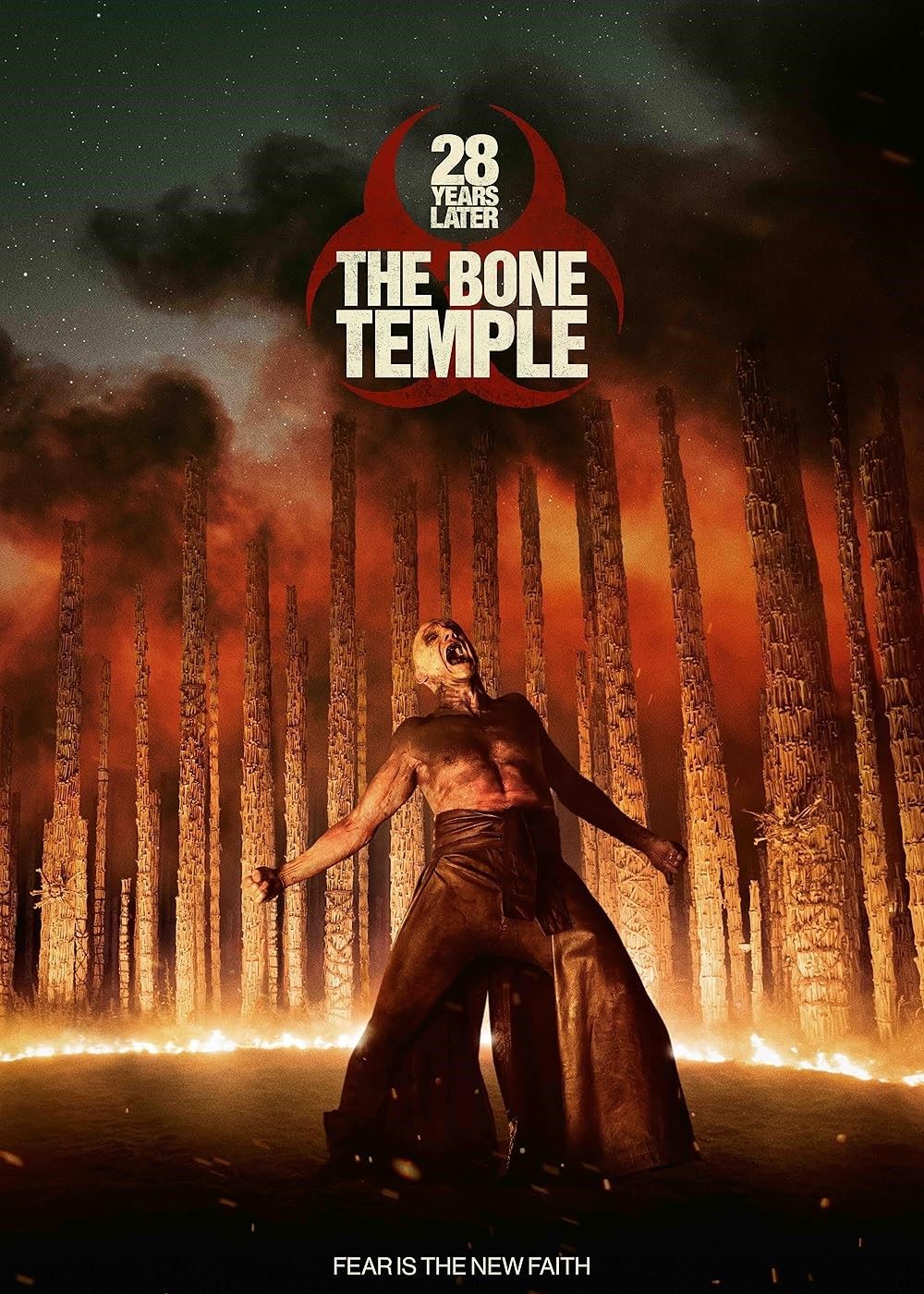
The upcoming follow-up, 28 Years Later: The Bone Temple, is set for release in January 2026 and will be directed by Nia DaCosta, with Alex Garland returning as screenwriter. This sequel is expected to explore the role of Kelson’s Bone Temple more deeply and develop the cult gathering led by Jack O’Connell’s Jimmy Crystal, expanding on the fractured post-apocalyptic world and the characters introduced in the current film.

Ultimately, 28 Years Later is a film about evolution—of species, storytelling, and filmmaking itself. It balances raw dread with haunting visuals and somber themes, anchored by Alfie Williams’s quietly compelling Spike and Ralph Fiennes’s enigmatic Dr. Ian Kelson. Boyle has not merely revived the franchise; he has transformed it into an unsettling, elegiac meditation on rage, loss, and the fragile hope that survives beyond apocalypse.

Hellhound On My Trail: Walter Hill’s CROSSROADS (Columbia 1986)


gary loggins's avatarcracked rear viewer

‘Well the blues had a baby/and they named it rock and roll” –

Muddy Waters

Hi, my name’s Gary, and I’m a bluesoholic! Whether it’s Deep South Delta or Electric Chicago, distilled in Great Britain or Sunny California, the blues has always been the foundation upon which rock’n’roll was built. Yet there aren’t a lot of films out there depicting this totally original American art form. One I viewed recently was 1986’s CROSSROADS, directed by another American original whose work I enjoy, Walter Hill.

Hill was responsible for cult classics filled with violence and laced with humor, like HARD TIMES (with Charles Bronson as a 1930’s bare knuckles brawler), the highly stylized THE WARRIORS , the gritty Western THE LONG RIDERS, and SOUTHERN COMFORT (a kind of MOST DANGEROUS GAME On The Bayou). He scored box office gold with the 1982 action-comedy 48 HRS, making a movie star out of…

View original post 466 more words

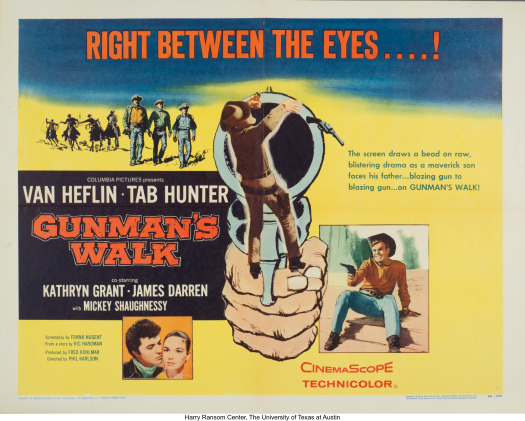
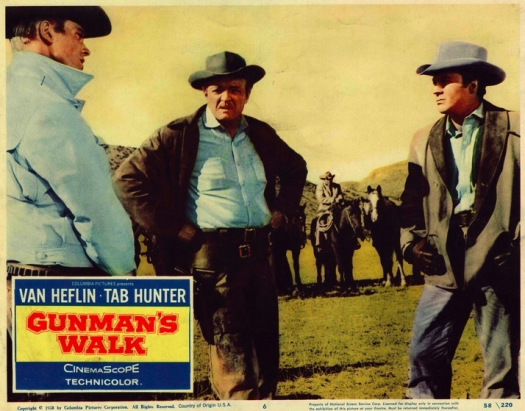
West-Teen Angst: GUNMAN’S WALK (Columbia 1958)


gary loggins's avatarcracked rear viewer

GUNMAN’S WALK may not be a classic Western like THE SEARCHERS or HIGH NOON, but it was entertaining enough to hold my interest. That’s due in large part to a change of pace performance by All-American 50’s Teen Idol Tab Hunter as a sort-of Rebel Without A Cause On The Range, an unlikable sociopath with daddy issues, aided and abetted by Phil Karlson’s taut direction and some gorgeous panoramic Cinemascope shots by DP Charles Lawton Jr.

Boisterous cattle rancher Lee Hackett (Van Heflin) is one of those Men-Who-Tamed-The-West types, a widower with two sons. Eldest Ed (Hunter) is a privileged, racist creep who’s obsessed with guns, while younger Davy (played by another 50’s Teen Idol, James Darren) is more reserved. The Hacketts are about to embark on a wild horse round-up, and enlist two half-breed Sioux, the brothers of pretty young Clee (Kathryn Grant,  young wife of crooner Bing Crosby).

View original post 404 more words

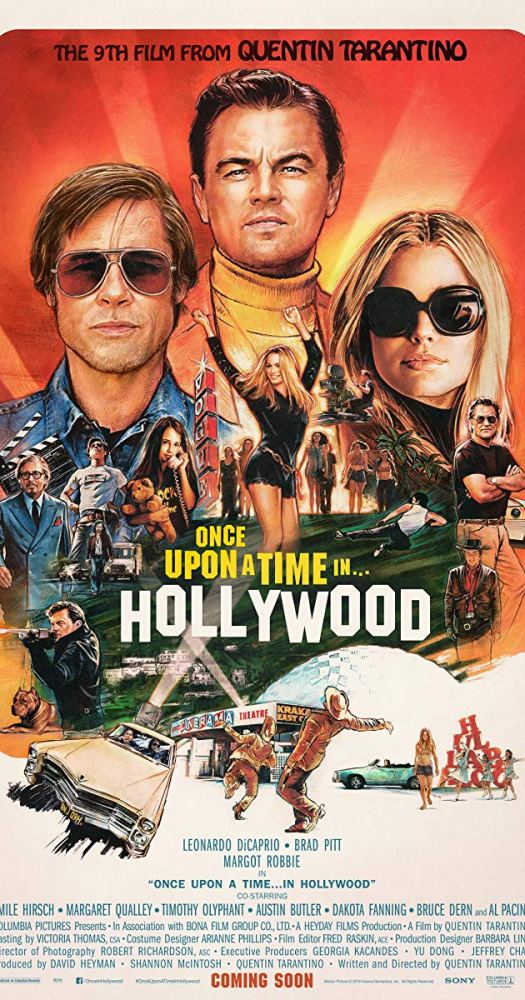
Boulevard of Broken Dreams: Quentin Tarantino’s ONCE UPON A TIME IN HOLLYWOOD (Sony/Columbia 2019)


gary loggins's avatarcracked rear viewer

If you’re as much of a movie/television/pop culture fanatic as I am (and if you weren’t, you probably wouldn’t be reading this blog!), I’m here to tell you you’re gonna ABSOLUTELY FUCKING LOVE this latest Quentin Tarantino epic!

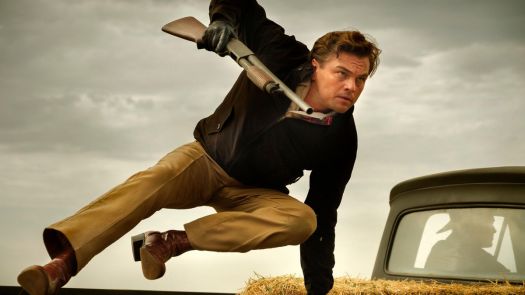
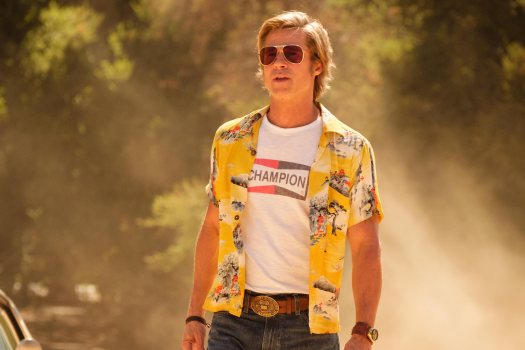
ONCE UPON A TIME IN HOLLYWOOD takes place in 1969, at the tail end of Tinseltown’s Glory Days, and the tail end of TV actor Rick Dalton’s career. Dalton (splendidly played by Leonardo DiCaprio) was the star of the late 50s/early 60s TV Western BOUNTY LAW (modeled after Steve McQueen’s WANTED: DEAD OR ALIVE), whose drinking problem has led him on the road to nowheresville, grabbing quick paychecks by guest starring as bad guys on episodic TV. He’s offered the chance to make some low-budget Spaghetti Westerns by producer Marvin Schwarsz (a bloated looking Al Pacino), bottom of the barrel stuff that’ll keep Rick’s name above the title.

Rick’s best bud Cliff…

View original post 529 more words

End of the Trail: James Stewart in Anthony Mann’s THE MAN FROM LARAMIE (Columbia 1955)


gary loggins's avatarcracked rear viewer

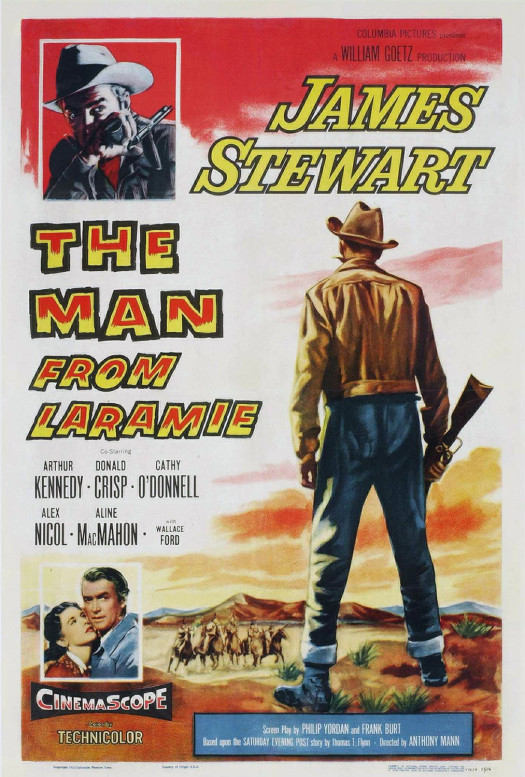
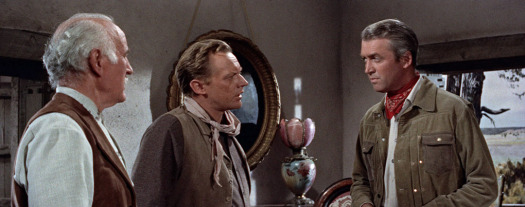
I’ve covered several of the  Anthony Mann/James Stewart Western collaborations here. Their final sagebrush outing together THE MAN FROM LARAMIE was shot in Cinemascope and gorgeous Technicolor, features a bunch of solid character actors, has beautiful New Mexico scenery… yet felt like a letdown to me. Maybe it’s because Mann and Stewart set the bar so high in their previous Westerns, but THE MAN FROM LARAMIE is an anti-climactic climax to the director/star duo’s pairings.

Stewart’s good as always, playing bitter Will Lockhart, whose brother was killed by Apaches and whose mission is to find out who’s selling the guns to them. But the film came off flat, feeling like just another routine Western – good, but not in the same category as WINCHESTER ’73 or BEND OF THE RIVER. Those Mann film noir touches are nowhere to be found, replaced by (dare I say it!)… soap opera elements!

Cathy…

View original post 356 more words

Drive-In Saturday Night 4: WHITE LINE FEVER (Columbia 1975) & HIGH-BALLIN’ (AIP 1978)


gary loggins's avatarcracked rear viewer

Breaker One-Nine, Breaker One-Nine, it’s time to put the hammer down with a pair of Trucksploitation flicks from the sensational 70’s! The CB/Trucker Craze came to be because of two things: the gas crisis of 1973 and the implementation of the new 55 MPH highway speed limit imposed by Big Brother your friendly Federal government. Long-haul truckers used Citizen’s Band radios to give each other updates on nearby fueling stations and speed traps set up by “Smokeys” (aka cops), and the rest of America followed suit.

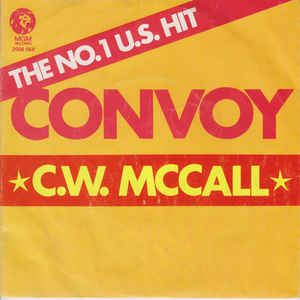
Country singer C.W. McCall had a massive #1 hit based on CB/trucker lingo with “Convoy”, and the trucker fad was in full swing. There had been trucker movies made before – THEY DRIVE BY NIGHT, THIEVES’ HIGHWAY, HELL DRIVERS, and THE WAGES OF FEAR come to mind – but Jonathan Kaplan’s 1975 WHITE LINE FEVER was the first to piggy-back on the new gearjammer…

View original post 793 more words

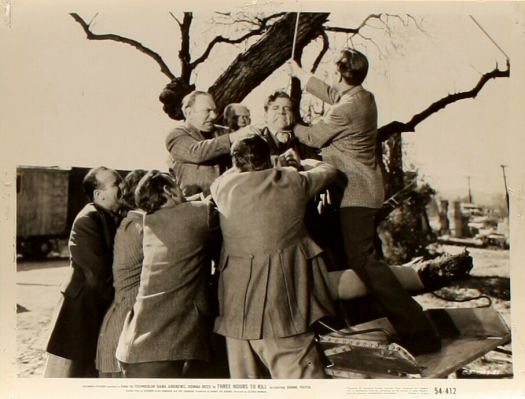
Time Well Spent: THREE HOURS TO KILL (Columbia 1954)


gary loggins's avatarcracked rear viewer

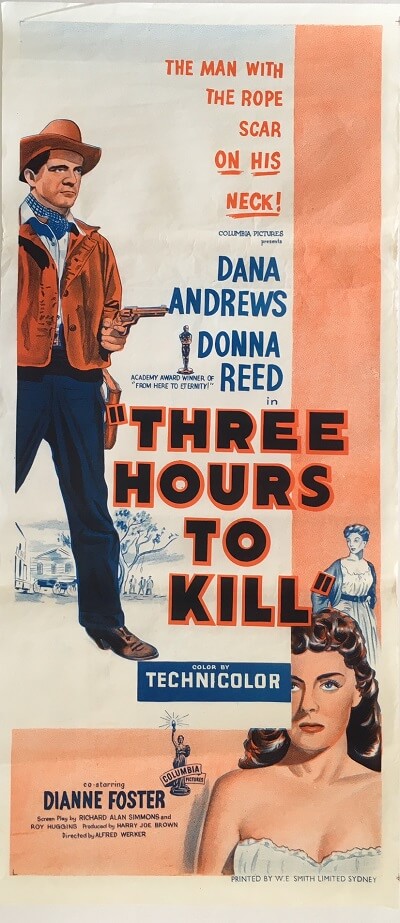
I don’t think you’ll find THREE HOURS TO KILL among anyone’s Top Ten Films list, or Top Ten Westerns, or even Top Ten Dana Andrews Movies. What you will find, if you give this movie a chance, is a solid, adult themed Technicolor Western with just a hint of film noir, made by Hollywood pros in front and behind the cameras. And you can’t ask for much more than that.

Jim Guthrie returns after a three year absence to the town that once tried to hang him. Jim relates the tale via flashback to old friend and current sheriff Ben East: a big night in town had everybody drinking and partying it up. Sexy hotel owner Chris Palmer comes on to Jim, but he only has eyes for pretty Laurie Mastin, bringing out the jealous side of banker Niles Hendricks. Laurie’s brother Carter disapproves of Jim, and a fight…

View original post 672 more words

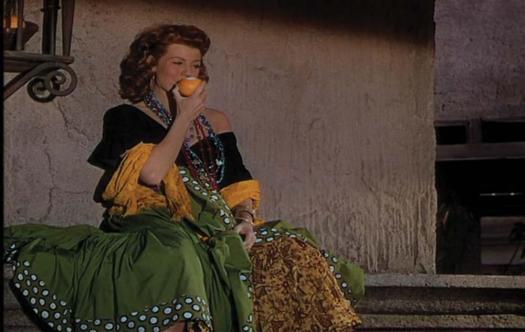
Dark Valentine: THE LOVES OF CARMEN (Columbia 1948)


gary loggins's avatarcracked rear viewer


Love takes many strange forms, none more strange than the obsessive love Don Jose has for the Gypsy temptress Carmen in THE LOVES OF CARMEN, Columbia Pictures’ biggest hit of 1948. The film, based on Prosper Merimee’s 1845 novella and Georges Bizet’s famous opera, reunites GILDA stars Rita Hayworth and Glenn Ford with director Charles Vidor, and though it’s in glorious Technicolor and set in 1800’s Spain, it’s got a lot of film noir elements going for it: there’s the protagonist caught in a rapidly moving downward spiral, the amoral femme fatale, crime, murder, and a bleak, downbeat ending. Think I’m stretching a bit? Let’s take a look…

Young nobleman Don Jose arrives in Seville with a dragoon squadron, a corporal with political ambitions and a bright future ahead of him… until he meets Carmen, a gorgeous red-haired Gypsy who is an expert manipulator. Jose is enchanted by this free-spirited…

View original post 623 more words

Man of the People: John Ford’s THE LAST HURRAH (Columbia 1958)


gary loggins's avatarcracked rear viewer

This post has been preempted as many times as tonight’s State of the Union Address! 


John Ford’s penchant for nostalgic looks back at “the good old days” resulted in some of his finest works. The sentimental Irishman created some beautiful tone poems in his 1930’s films with Will Rogers, and movies like HOW GREEN WAS MY VALLEY and THE QUIET MAN convey Ford’s sense of loss and wistful longing for simpler times. The director’s THE LAST HURRAH continues this theme in a character study about an Irish-American politician’s final run for mayor, running headfirst into a new era of politics dominated by television coverage and media hype instead of old-fashioned boots-on-the-ground handshaking and baby-kissing. It’s not only a good film, but a movie buff’s Nirvana, featuring some great older stars and character actors out for their own Last Hurrah with the Old Master.

Based on Edwin O’Connor’s 1956 novel, the…

View original post 818 more words