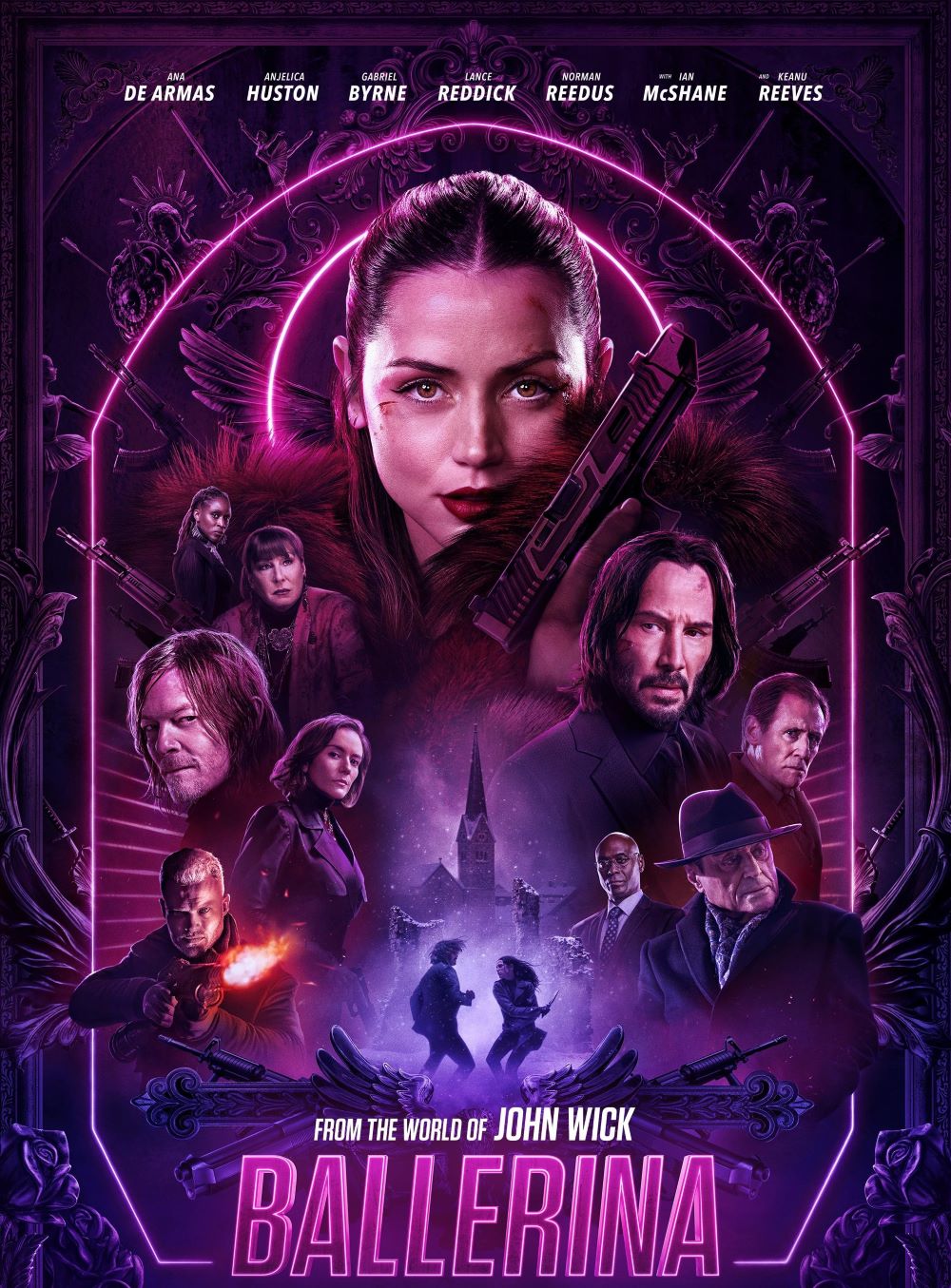
Review: Ballerina (dir. by Len Wiseman)


“You don’t choose to be a killer, you are chosen.” — The Chancellor

Ballerina lands in theaters feeling like someone finally turned the volume up on the quieter, more balletic side of the John Wick universe. Anchored by Ana de Armas’s poised, ferocious turn, the film doesn’t reinvent the neon‑lit, bullet‑cartoon rules of the franchise so much as rearrange them into a new rhythm. It’s still a very familiar kind of action movie—assassins, codes, bodies on the floor—but it carves out its own niche by centering a woman who’s not just another lethal accessory to John’s world, but someone the world has already trained into a weapon.

At the same time, Ballerina leans hard on the style and flourish of the later John Wick films, and that’s both its main selling point and its biggest limitation. The way shots linger on gun grips, the way the camera circles around bodies mid‑spin, the way every hallway fight feels like stage choreography—it’s all very familiar, very polished, and very much a continuation of the franchise’s visual language. That’s great if you’re here for the aesthetic, but it also means the film sometimes feels more like an extension of the Wick universe’s attitude than a story that confidently stands on its own two feet.

Ana de Armas plays Eve Macarro, a young assassin who grew up in the shadow of the Ruska Roma and the Continental, groomed to kill long before she fully understood what she was doing. The story unfolds in a loose “between films” slot in the Wick timeline, so fans who care about franchise continuity will get their little Easter eggs and cameos, but the film smartly never gets completely bogged down in explaining how this fits into every rulebook. Instead, it leans into the idea that the John Wick universe is big enough that other hunters can walk around in it, following their own grudges and grief. Eve’s motive is straightforward: she wants to track down the people she believes killed her father when she was a child, and along the way she has to square off against both the old guard of her upbringing and the cult‑like killers who seem to operate just outside the established order.

Like a lot of John Wick entries, though, Ballerina is ultimately more interested in expanding the world and reinforcing its rules than drilling deep into its own plot. Eve’s revenge‑driven quest gives the film its spine, but the mechanics of that revenge are often secondary to the chance to show off another assassin enclave, another weird code, or another showdown that feels like a set‑piece first and a character beat second. You can feel the priorities: where she travels, who she bumps into, and how this underworld operates often matter more than whether her arc is especially surprising or emotionally rich. The plotting starts to feel like connective tissue between bigger, more stylized sequences, and that’s where the reliance on franchise style starts to hurt more than help.

The film’s greatest strength is how it employs the language of ballet and violence in the same breath. The title Ballerina might make you expect a lot of literal tutus and pirouettes, and there’s a bit of that in the opening stretches, but the real choreography is in the fight scenes. Eve’s movement is light‑on‑her‑feet one moment—a few spins, a quick sidestep—and then suddenly brutal, close‑quarters savagery the next. The camera doesn’t just document her skills; it dances with them, letting wide‑angle shots show off the architecture of a fight before snapping into tight, impact‑heavy close‑ups. It’s unmistakably a Wick‑style approach, only dialed into a slightly more feminine, almost theatrical register.

De Armas deserves a lot of credit for making Eve feel like a real person, not just a killing machine with a pretty face. She’s cold, yes, but there’s weariness under the surface, the kind that comes from being raised in a world where emotions are a liability. The script doesn’t drown her in backstory; it just lets small moments—a hesitation, a glance at a photo, the way she holds a gun—do the work. When she finally loses her composure and starts to scream, grunt, and visibly struggle during later fights, the effect is more powerful than if she’d been effortlessly killing everyone from minute one. She sweats, she bleeds, she gets thrown around, and that makes her victories feel earned, not just cool.

Stylistically, Ballerina is very much in line with the rest of the franchise: glossy, slightly over‑the‑top, and hyper‑aware of its own aesthetic. The camera work is sleek, the color grading pops, and the score leans into synth textures that feel like a slightly more elegant cousin of the usual Wick pulse. There are also some deliberately playful musical choices—bits of Tchaikovsky and other classical motifs that echo in the background during key scenes—which tie the idea of ballet back to the film’s emotional core. The setting shifts from the familiar New York–style Continental spaces to a quieter, almost fairy‑tale European village that houses a different kind of assassins’ retirement community. It’s a neat trick: the filmmakers give us something that still feels like the same universe but just enough of a different flavor that it doesn’t feel like a rerun.

But that lush style also underlines how much the film is prioritizing world‑building over a tight narrative. Conversations about the Ruska Roma, the Continental, and the cult‑like assassins’ outpost are there less to advance Eve’s inner journey and more to remind us that the John Wick universe is vast, layered, and full of hierarchies. Fans who love the lore will probably eat that up, but if you’re hoping for a more self‑contained narrative, it can start to feel like you’re watching a very expensive lore compendium. The emotional core is there—it just has to fight for space amidst all the visual flexing and mythology maintenance.

Where Ballerina becomes a bit uneven is in its plotting. The basic “one girl, one very long night of revenge” template is solid, but the script doesn’t always give it enough depth or surprise. There are too many conversations where characters explain the rules of the world to each other, or recap what’s already been established, rather than using those moments to add nuance to the characters or relationships. The side figures—like various crime bosses, elders, and reluctant allies—do their jobs entertainingly enough, but they don’t all get the same level of interior life that Eve has. Some of the supporting performances are strong across the board, but the material doesn’t always push them to do anything more than punctuate the action beats.

Keanu Reeves drops in briefly as John Wick, and the cameo is handled with the kind of restraint that makes it feel like a favor rather than a stunt. He doesn’t hang around; he makes a sharp, efficient entrance, has a few quiet exchanges, and then exits, leaving the movie firmly in Eve’s hands. That’s crucial, because one of the criticisms of earlier spin‑off ideas was that they’d feel like vanity detours or glorified cameos. Here, John’s presence actually reinforces the idea that this is someone else’s story now, and that he’s just another player in a much larger ecosystem of killers.

The film’s worst moments are also some of its most visually striking: the bigger, more outlandish set‑pieces that lean fully into the franchise’s “go‑no‑go” action logic. The final third, in particular, is one long, almost goofy crescendo of fights, stunts, and absurdly lethal props. It’s a lot of fun in the moment, but it also underlines how thin the actual plotting can be. When the camera is spinning around a flamethrower‑wielding Eve or a hallway of assassins dropping in from the ceiling, the movie doesn’t always give us enough emotional context to care about who’s living or dying beyond the immediate spectacle. It’s the kind of sequence that will make fans cheer in the theater, but might look a bit clumsier on a second viewing.

One area where Ballerina arguably improves on the core series is its handling of gender dynamics. Eve isn’t fetishized; she’s allowed to be both emotionally grounded and physically dominant without being framed as some kind of fantasy object. The film nods to the idea of “girl power” in the assassin world, but it also lets the character operate within familiar constraints—tradition, hierarchy, and expectation—instead of pretending she’s a one‑woman revolution. She’s tough, but she’s also vulnerable, and that balance keeps the tone from tipping entirely into empty empowerment sloganeering. The way the movie treats her relationships—with her father’s memory, with her mentors, and with the people she’s ordered to kill—adds a layer of emotional sophistication that earlier entries in the franchise often glossed over for the sake of pure momentum.

If you’re coming into Ballerina expecting a radical reinvention of the series, you’ll probably leave a little underwhelmed. It doesn’t rip up the rulebook or deliver a huge thematic twist on what we already know about this universe. Instead, it refocuses the camera on a different kind of protagonist, lets the familiar style breathe a little differently, and proves that the world of John Wick is big enough to house more than just one lone wolf. It’s a stylish, violent, occasionally silly, definitely pulpy action film that knows exactly what it wants to be: a long, bloody ballet in which the lead is a woman who’s finally ready to dance on her own terms—even if the choreography sometimes matters more than the story it’s supposedly telling.

John Wick Franchise (spinoffs)
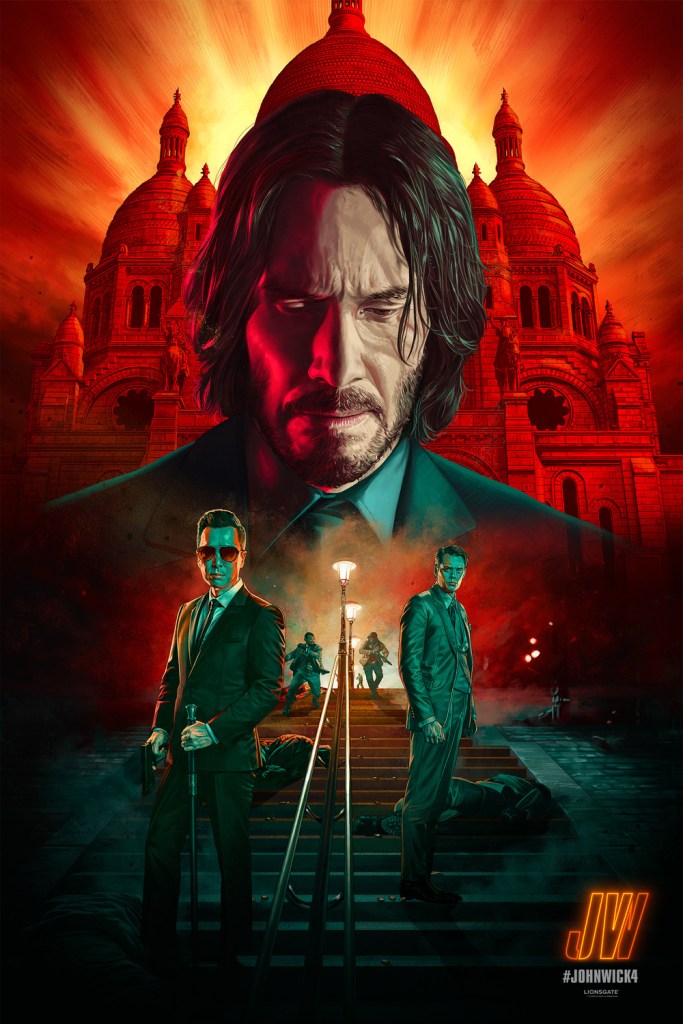
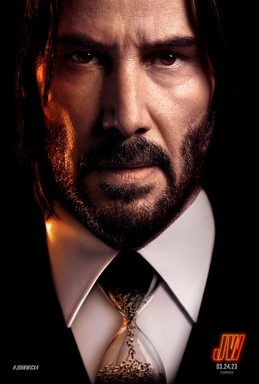
John Wick: Chapter 4 (dir. by Chad Stahelski) Review


“Those who cling to death; live. Those who cling to life; die.” – Caine

John Wick: Chapter 4 is the kind of action movie that doesn’t just lean into the spotlight—it steps into it, throws a flak vest over its suit, and then spends the next three hours filleting an entire world of assassins with brutal, balletic precision. At this point in the franchise, you’re either all‑in on the rules of the High Table, the Continental, and Wick’s endless mourning for his wife Helen, or you’re just here for the sheer spectacle of seeing Keanu Reeves beat up a continent’s worth of bad guys. The film not only respects that split audience, it tries really hard to satisfy both with a mix of operatic emotion, globe‑trotting locations, and a ridiculous amount of meticulously choreographed carnage.

One of the first things that stands out in John Wick: Chapter 4 is how much the world has expanded since the first film. The script doesn’t reinvent the core idea—Wick wants out, the system wants him broken, and the only way he can be free is by killing his way to the top—but it does layer on new zones, new factions, and a whole supporting cast of assassins who feel like they’re pulled out of their own B‑movies. From Morocco to Berlin, from New York to Paris, the film leans into a kind of hyper‑theatrical world‑building where every hotel lobby, nightclub, and underground fighting arena looks like it was designed by a comic‑book artist with a fetish for brutalism and neon lighting. That’s not a bad thing; it makes the universe feel lived‑in, even if it occasionally borders on self‑parody. The film also shuffles in a few fresh faces that give the usual assassin lineup some new flavors, including Donnie Yen as Caine, the stoic, blind assassin who carries both lethal efficiency and a quiet moral weight; Hiroyuki Sanada as the disciplined Shimazu, whose traditional demeanor and craftsmanship with a sword add a very grounded, almost old‑world element to the chaos; and Rina Sawayama as the high‑ranking assassin Akira, whose presence brings a mix of ruthless professionalism and a genuinely intriguing emotional arc that doesn’t feel like an afterthought.

There’s also Scott Adkins playing against his usual type as Killa Harkan, the head of the German Branch of the High Table, showing up in a surprisingly decent‑looking fat suit that gives him a grotesquely imposing presence while still hinting at the physicality audiences know from his other action roles. The character leans into the film’s tendency toward the theatrical, but he’s not just a walking gag; he fits into the world as one of the more visually exaggerated enforcers of the High Table’s rule. Alongside him, Shamier Anderson brings a lean, relentless energy as the Tracker, Wick’s shadowy, almost dog‑like pursuer whose loyalty to the system makes him more than just another interchangeable goon, while Marko Zaror crops up in the Berlin arena sequences as a brutal, wiry fighter whose style adds yet another distinct flavor to the movie’s unusually diverse fight roster. Taken together, these additions don’t just pad the body count; they give the film a sense that the John Wick universe is big enough to host everyone from classical swordsmen to modern martial‑arts specialists and even a few horror‑movie‑style fanatics, all orbiting the same doomed man.

The villain this time around is the Marquis Vincent Bisset de Gramont, played by Bill Skarsgård, and he’s the kind of High Table emissary who exists purely to make John’s life harder while reminding the audience that the system is more bureaucratic than it is mysterious. He’s got the cold, manipulative air of a corporate executive who’s never actually touched a gun but still has the power to ruin people’s lives on paper. His presence allows the film to spend more time on the politics of the assassin underground, which in turn forces John to pull in a wider network of allies, return favors, and, in a few cases, rebuild old friendships that were already on thin ice. That network includes the Bowery King, Caine, and the rest of the new cast, all of whom add texture to the usual slug‑fest even if the plot’s core emotional arc is still very much about a man who keeps remembering the wife he can’t get back.

Where Chapter 4 really flexes its muscles is in the action, and nowhere is that more obvious than in the extended Paris set‑piece that basically becomes the film’s centerpiece. It starts on the open city streets at night, with Wick already on the move, guns blazing and bodies piling up as the camera weaves through car‑chase energy and close‑quarters shoving. The chaos then escalates when the sequence shifts to the Arc de Triomphe roundabout, where the circular layout turns the whole area into a spinning, three‑dimensional shooting gallery. Cars whip around the monument, bullets ricochet off stone and metal, and the sheer spatial awareness of the choreography makes it feel like you’re watching a real‑time videogame map being systematically cleared in concentric circles, except the “map” is an iconic piece of Parisian infrastructure.

The escalation doesn’t stop there. The action migrates into a mostly empty, half‑abandoned apartment complex that feels like a brutalist concrete maze, each floor and hallway turning into a new arena for sprinting, reloading, and last‑minute dodges. The geography of the building becomes a character of its own, with shots that snake down stairwells, peer through doorways, and frame John as a lone figure ducking and weaving through a vertical death‑trap. It’s inside this apartment complex that the film drops one of its most memorable visual flourishes: a frenetic, prolonged shootout using dragon’s breath shotgun shells—incendiary rounds that send flaming pellets spraying outward—captured from an isometric, top‑down angle that directly evokes the look of indie action‑game favorites like The Hong Kong Massacre. The camera rides high above each room as Wick storms through, watching clusters of fire and bullets explode outward in geometric patterns, turning the interior layout into a living level map. It’s a moment that feels less like traditional cinema and more like a loving, hyper‑stylized homage to the way videogames can turn gunplay into a choreographed light show.

The final stretch of this extended Paris gauntlet is the brutal climb up the Rue Foyatier stairway to the Sacré‑Cœur steps, where the film’s choreographic and camera work reach their most expressionistic peak. The wide shots of Paris looming below, the narrowing of the stairway itself, and the way the camera sometimes drifts into an almost dreamlike, slightly elevated angle all combine to make the sequence feel like an endurance ritual rather than just another fight. By the time Wick reaches the top—after being hurled back down and forced to claw his way up again—the audience feels just as exhausted as he looks, which is exactly the point.

That’s part of what makes the film work when it isn’t just going hand‑to‑hand with you for nearly three hours. Beneath all the shooting and stabbing, John Wick: Chapter 4 is also quietly insistent on the idea that this is a tragedy. John Wick isn’t just a guy who happened to fall into a secret society of killers; he’s a man who has been reshaped by grief, loss, and the realization that every compromise he’s made along the way has only made his cage tighter. The film doesn’t over‑explain this; instead, it lets you watch him limp, cough up blood, and drag his battered frame through one more ambush, as if his body is the only thing strong enough to keep him breathing. The supporting characters—especially those tied to the High Table or to his past, including the newer faces like Caine, Shimazu, Akira, Killa Harkan, the Tracker, and the arena fighters—get a few moments to show that they’re not just cannon fodder, either. They have responsibilities, hierarchies, and codes that clash with the arbitrary cruelty of the Table, even if most of them still end up in the path of Wick’s bullets.

On the flip side, the movie is also unapologetically aware of how silly it is. There’s a knowing winking about the dialogue, the neon‑lit set designs, and the way lines like “You have until sunrise” are delivered with the gravity of a Shakespearean prophecy. The film doesn’t try to make you forget that this is ultimately a high‑end first‑person‑shooter turned into a live‑action ballet. It leans into the absurdity of escalating stakes, the way the world keeps conspiring to throw more and more assassins at John, and the fact that even when he’s bleeding out, he still insists on finishing a fight with a signature flourish. For some viewers, that will feel like a strength, a kind of self‑aware celebration of the genre. For others, it’ll feel like the moment the franchise tips from cool to camp, especially when the pacing starts to drag a bit in the middle section and the mix of formal duels, fat‑suited branch leaders, and endless negotiations begins to feel a little overstuffed.

The film’s length is its biggest liability. At around 169 minutes, John Wick: Chapter 4 is not shy about giving you more than enough time to live inside its world, but it also doesn’t always feel like it needs every last minute. The middle act, in particular, spends a lot of time on formalities, treaties, duels, and metaphysical negotiations with the High Table, which can slow the momentum when what you really want is for John to do another hallway‑fight or another truck‑pile‑up. There are times when the script feels like it’s stretching itself out to keep the spectacle going rather than tightening the storytelling, and that’s when the silliness of it all—like the deliberately over‑the‑top presence of Killa Harkan and the packed gallery of new faces—can start to work against the emotional weight the film is trying to build. A leaner, more ruthless edit would probably make the overall experience feel sharper and more focused.

Still, there’s a lot to admire in what the film manages to pull off. The sound design, the camera work, and the way the choreography is almost always shot in wide, relatively clear takes all combine to make the action feel substantial rather than edited into incomprehensible chaos. The supporting cast—Donnie Yen, Hiroyuki Sanada, Rina Sawayama, Scott Adkins, Shamier Anderson, Marko Zaror, and others—add texture and personality to a world that could otherwise feel like a series of interchangeable goons. They’re not just there to get shot; they’re there to give the film a sense of a larger, more complicated ecosystem of killers, each with their own rules and reasons.

In the end, John Wick: Chapter 4 is less a strict narrative continuation and more of a cinematic endurance event. It doesn’t reinvent the franchise, but it pushes the Wick formula into more extreme, more theatrical, and more emotionally committed territory. It’s messy in places, overstuffed in others, but it also has a few moments of pure, jaw‑dropping action that will probably end up in “best of the decade” lists among genre fans, especially that Paris mega‑set‑piece that starts on open streets, spirals through the Arc de Triomphe, invades an empty apartment complex for that dragon’s‑breath top‑down firefight, and climaxes on the Rue Foyatier stairs. If you’re someone who cares about emotional coherence and tight plotting, the film will probably test your patience. If you’re someone who’s here for the ballet of bullets, the operatic bloodshed, the eccentric new cast, and the sight of Keanu Reeves refusing to stay down no matter how many times the universe tries to kill him, then John Wick: Chapter 4 is a pretty satisfying send‑off—or at least a very loud, very stylish stop on the way there.

Weapons used by John Wick throughout the film

  • Glock 34 (TTI Combat Master Package) – His primary pistol early on, including the Morocco sequence against the new Elder and during the Osaka Continental battle.
  • Agency Arms Glock 17 – Used by Wick during the garden fight at the Osaka Continental after he takes it off a High Table enforcer.​​
  • TTI Pit Viper – The “hero gun” of the movie, custom‑built for Chapter 4, used heavily in the Paris staircase and duel lead‑up sequences.
  • Thompson Center Arms Encore pistol – custom-made single-shot pistols created specifically for the Sacre-Couer duel.
  • TTI Dracarys Gen‑12 – The dragon’s‑breath shotgun he grabs during the Paris apartment sequence, used in the isometric top‑down “videogame” style scene.
  • Spike’s Tactical Compressor carbine – Used by Wick after he takes it from High Table enforcers during the Osaka Continental fight.

John Wick Franchise (spinoffs)

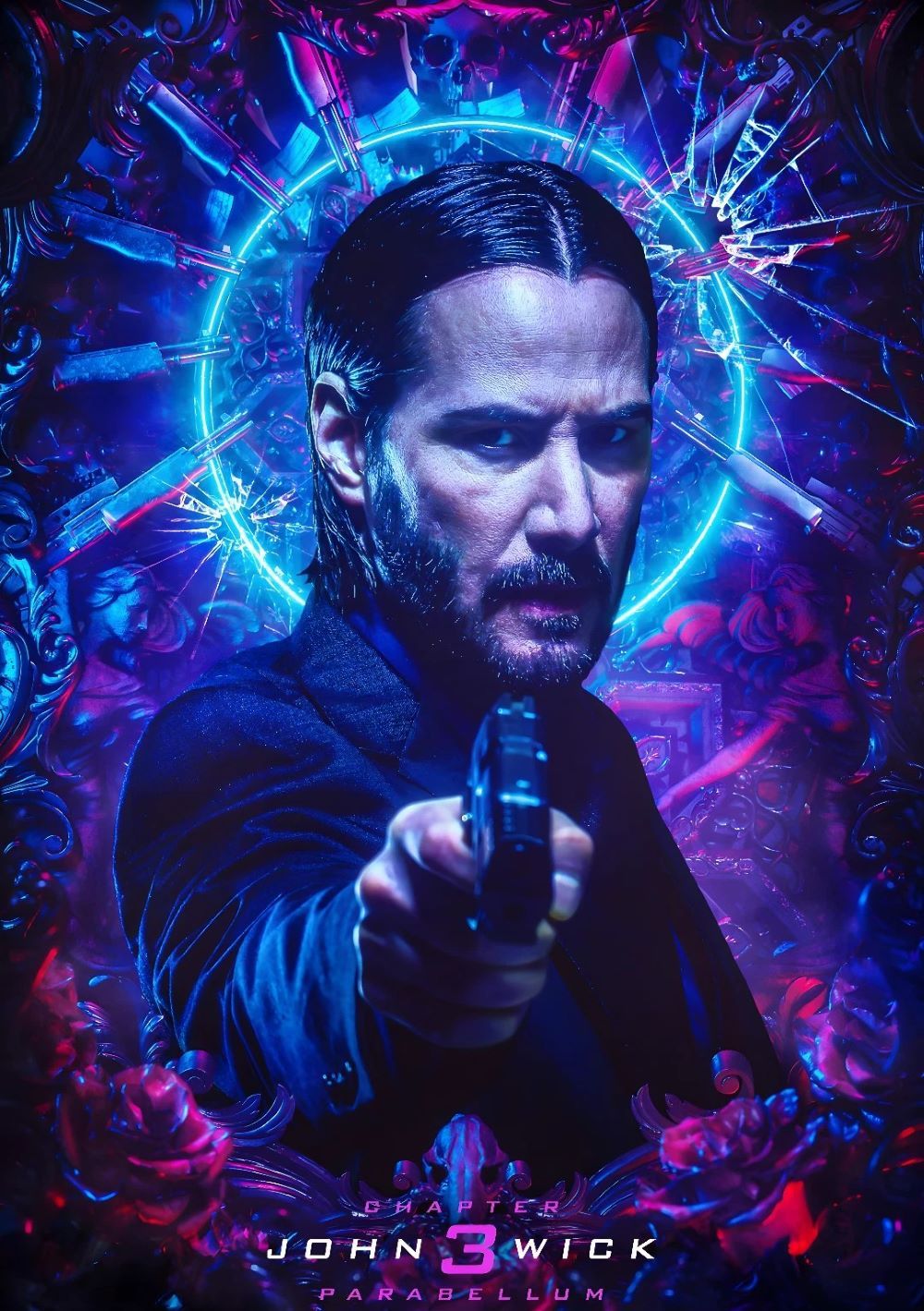
John Wick: Chapter 3 – Parabellum (dir. by Chad Stahelski) Review


“Nothing’s ever just a conversation with you, John.” — Sofia Al-Azwar

John Wick: Chapter 3 – Parabellum launches straight from the previous installment’s shocking finale, hurling John into a frantic dash through New York’s underbelly as a $14 million bounty turns every shadow into a threat. This chapter dials the franchise’s signature intensity even higher, plunging you into an assassin underworld bound by ironclad rules that start to fracture under pressure. The action explodes with creative savagery, though the storyline sometimes buckles beneath its ambitions, offering a pulse-pounding yet slightly bloated addition to the saga.

The movie opens with John scrambling through New York streets, his excommunicado status ticking down like a bomb. He’s got one hour before every killer in the city turns on him, and boy, do they. Keanu Reeves is back in top form, looking battered but unbreakable, his puppy-dog eyes conveying more grief and determination than any monologue could. The film’s Latin subtitle, Parabellum—meaning “prepare for war”—sets the tone perfectly as John grabs weapons from the oddest places, like a horse stable or a knife shop where he gets to use blades almost like guns with each throw.

What makes this entry stand out is how it expands the Wick-verse without losing that gritty intimacy. We dive deeper into the High Table’s bureaucracy, with the Adjudicator (Asia Kate Dillon) showing up as this cold, efficient enforcer who judges allies like Winston (Ian McShane) and Charon (Lance Reddick) for helping John. It’s a smart addition, adding layers to the rules that have always governed this world—markers, blood oaths, no business on Continental grounds. Halle Berry pops in as Sofia, an old flame running a Moroccan palace full of attack dogs, leading to one of the film’s wildest sequences where pooches tear into bad guys alongside John. Mark Dacascos as Zero, the sushi-loving villain who’s bald and sports a penchant for movie quotes, brings some quirky charm, even if he’s no Santino from Chapter 2.

Director Chad Stahelski, a former stuntman himself, continues to treat action like high art, and man, does Chapter 3 flex its muscles here harder than ever. The choreography is balletic and brutal, blending gun fu with knives, swords, and even books—there’s a library fight where John uses a volume as a shield and club, then politely reshelves it, which is peak Wick weirdness. Fights escalate from motorcycle sword duels slicing through rainy streets to hall-of-mirrors mayhem that nods to Enter the Dragon, with reflections multiplying the chaos into a dizzying ballet of blades. Indonesian martial arts legends Cecep Arif Rahman and Yayan Ruhian, The Raid 2 alumni who make their franchise debut here, light up the massive finale melee, trading blows with John in a flurry of fists, elbows, and blades that feels like a love letter to silat and caps the chaos perfectly.

Every sequence feels meticulously planned, relying on practical stunts that make CGI-heavy blockbusters look lazy and fake—think real falls, real crashes, real bone-crunching impacts that leave you wincing. The gun fu style—precise headshots amid flips, slides, and reloads—never gets old, evolving with fresh twists like pencil kills upgraded to book barrages or horse-mounted shootouts. The film’s true strength lies in these set pieces: they’re not just fights, they’re symphony-like spectacles where camera work syncs breathlessly with the violence, spatial awareness stays razor-sharp so you track every bullet and block, and the escalation feels organic, building from claustrophobic knife scraps to epic rooftop brawls. It’s the kind of action that honors the genre’s legends while pushing boundaries, making you forget any plot gripes amid the sheer kinetic joy.

That said, it’s not all flawless, and one drawback from Chapter 2 creeps back in here: the film leans heavily into more world-building of its universe, which puts character development on the back burner. John’s arc—fighting to earn back his freedom—repeats beats from the previous entry, and some twists, like Winston’s apparent betrayal, land more as fan service than emotional gut-punches. At 131 minutes, it drags in spots, especially during quieter moments that try to humanize John but end up repetitive, while the dialogue stays sparse and stylized, leaving characters like the Elder (Saïd Taghmaoui) feeling underdeveloped. But then again, the franchise has staked its claim on being action-focused from the jump, so if fans are bought into this wild ride by now, they’re probably here for the balletic bloodshed over deep psychology anyway—it’s like the film loves its assassins’ code more than fleshing out motivations beyond revenge.

Visually, it’s a stunner. Dan Laustsen’s cinematography turns New York into a neon-soaked hellscape, with rain-slicked streets and ornate Continental lobbies popping in crisp 2.40:1. The Morocco desert scenes add exotic flair, though they borrow heavily from The Good, the Bad and the Ugly. Tyler Bates and Joel J. Richard’s score pounds with industrial electronica, syncing perfectly to the violence, while select tracks like Team Rezo’s “Pray for Kaeo” amp up horse chases. Sound design is Oscar-worthy—the thud of fists, crack of gunfire, all mixed to immerse you in the carnage.

Keanu Reeves carries it all, 54 at release but moving like a man half his age thanks to rigorous training. His physical commitment sells John’s exhaustion; you see the toll in every limp and gasp. Supporting cast shines too—McShane’s suave Winston steals scenes with dry wit, Reddick’s Charon is unflappably loyal, and Berry holds her own in dog-assisted fury. Dacascos adds levity, slicing foes with a sunny disposition, but Dillon’s Adjudicator is more menacing presence than fleshed-out foe. It’s ensemble work in service of spectacle, not drama.

For fans of the series, John Wick: Chapter 3 delivers bigger, bolder chaos that honors stunt performers as the real stars. It celebrates cinema history with nods to Buster Keaton (a horse chase echoes The General) and Hong Kong action flicks, all while pushing practical effects. Critics raved about the thrills, calling it “blissfully brutal” entertainment that shames neighbors like generic superhero fare. Audiences loved the over-the-top kills and Reeves’ stoic heroics.

To keep it fair, though, this isn’t exactly groundbreaking stuff. The simplicity that charmed in the original—a widower’s rampage—has bloated into a globe-trotting saga chasing its own tail. Female characters, while badass like Sofia, still orbit John’s story, and the violence, though stylish, borders on cartoonish excess. Some felt it lost narrative steam, prioritizing set pieces over heart, turning Wick from grieving everyman to invincible machine. Compared to Chapter 2‘s operatic betrayal, this one’s more procedural, like a video game level grind.

Ultimately, John Wick: Chapter 3 – Parabellum is a love letter to action cinema, casual fun if you’re in for the mayhem. It’s not deep, but damn if it doesn’t make you cheer as John unleashes hell. Grab popcorn, dim the lights, and prepare for war—you won’t regret it, unless you’re after Oscar bait. Solid 8/10 for pure, delirious popcorn thrills.

Weapons used by John Wick throughout the film

  • TTI STI 2011 Combat Master: Iconic pistol from the armory scene—John’s “2011” choice with optics, extended mags, and flawless reliability for extended shootouts.
  • Glock 19 / 19X / 17: Multiple pickups during mint guard fights in Casablanca and Continental siege; versatile Glocks he commandeers mid-battle.
  • Walther PPQ / CCP: Snagged from assassins during the motorcycle chase; quick-use comped models for on-the-run defense.
  • TTI SIG-Sauer MPX Carbine: Siege standout with Trijicon MRO sight, Streamlight laser, and +11 mags—John’s signature stance shines in hallway clears.
  • SIG-Sauer MPX / MPX Copperhead: Casablanca mint raid grabs; compact 9mm shredders with red dots and grips for close-quarters fury.
  • Benelli M4 Super 90: Climactic Continental siege with Charon; armor-piercing slugs, extended tubes, ghost rings—devastating hallway blasts.
  • Benelli M2 Super 90 (TTI Ultimate package, implied variants): Siege support; Charon favors these, John grabs similar for enforcer waves.

John Wick Franchise (spinoffs)
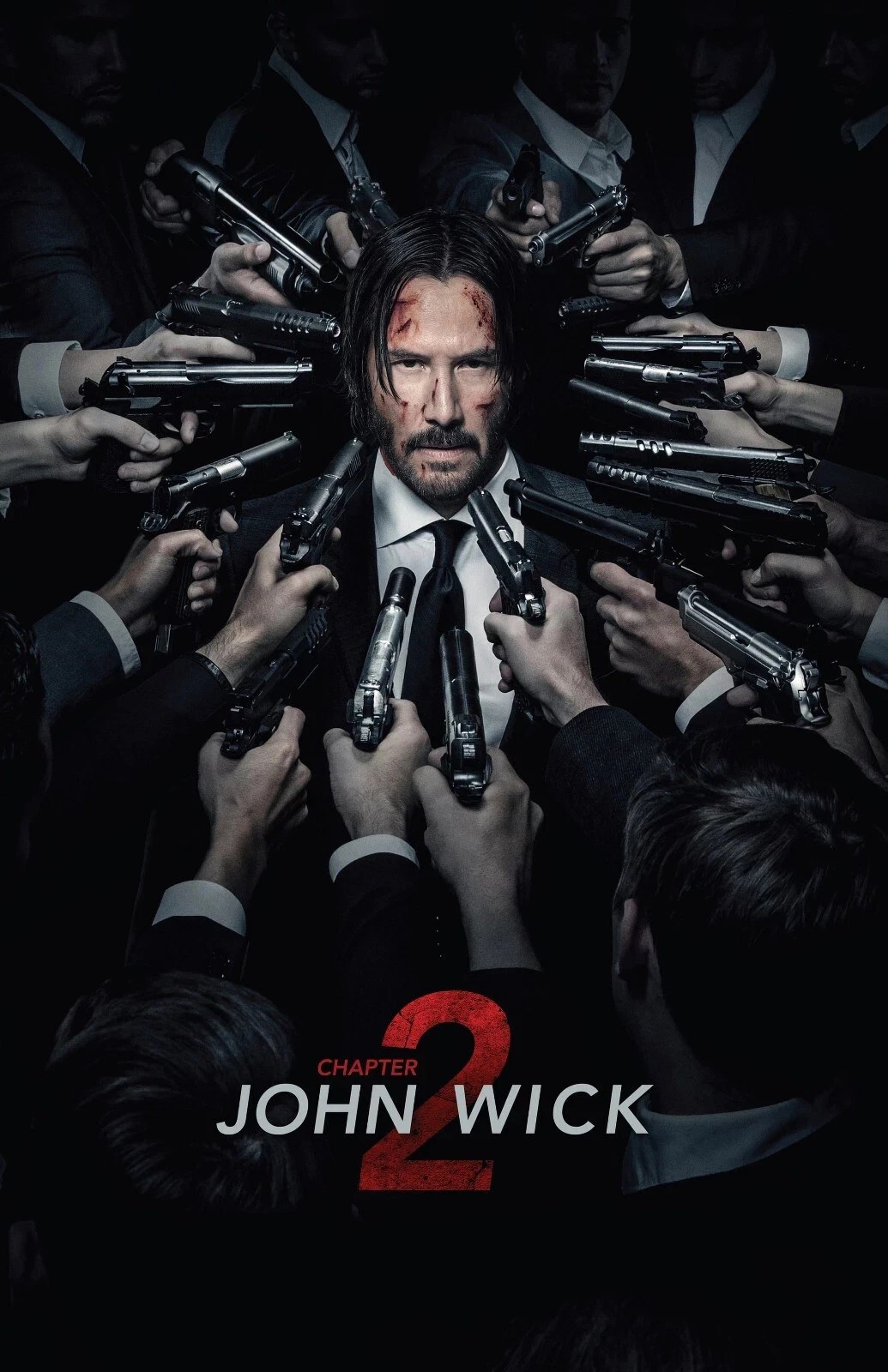
John Wick: Chapter 2 (dir. by Chad Stahelski) Review


“You stabbed the devil in the back and forced him back into the life that he had just left. You incinerated the priest’s temple, burned it to the ground. Now he’s free… What do you think he’ll do?” — Winston Scott

John Wick: Chapter 2 picks up right where the first film left off, diving headfirst into a world of high-stakes assassinations and stylish revenge with Keanu Reeves back as the grieving, unstoppable hitman. It’s a sequel that doubles down on the balletic action and expands the mythology without losing that raw, personal edge from the original. Directed by Chad Stahelski, it delivers non-stop thrills but occasionally stumbles with its sprawling plot and relentless pace.

John Wick is trying to lay low after avenging his dog’s death and reclaiming his car, but fate—or more specifically, a blood oath called a “marker”—drags him back into the game. An Italian crime lord named Santino D’Antonio cashes in that marker, forcing Wick to assassinate his own sister so Santino can take over the family empire. What starts as a reluctant job spirals into a city-wide manhunt, with Wick racking up bodies across New York and Rome while navigating the Continental Hotel’s strict no-kill rules and the politics of a shadowy assassin network. The story is still simple at its core—do a job, get betrayed, fight your way out—but it peels back more layers of this underworld, introducing gold coins as currency, tailors who outfit killers like runway models, and sommeliers who pair firearms with clients like fine wine.

Keanu Reeves owns the role here, his stoic intensity and physical commitment making every punch and headshot feel earned. He’s not exactly stretching himself as an actor—his deadpan delivery borders on monotone—but in this context, that restraint works, turning Wick into a mythic figure who’s equal parts broken widower and relentless killing machine. The supporting cast adds plenty of flavor: Common shines as Cassian, Santino’s loyal bodyguard and Wick’s equal in a fight, with their subway duel using silenced pistols becoming an instant standout for its mix of tension and dark humor. Ian McShane returns as Winston, the Continental’s suave manager, bringing a dry, almost amused detachment to the chaos, while Ruby Rose makes an impression as Ares, Santino’s mute enforcer whose sign-language threats and sharp physicality speak louder than words. Laurence Fishburne appears as the Bowery King, chewing scenery and hinting at deeper rivalries to come. Not every character is fully fleshed out—Santino himself sometimes veers into cartoonish villain territory—but the ensemble keeps the film lively and fun to watch.

The action is where John Wick: Chapter 2 truly shines, cranking the first film’s gun-fu into something close to operatic. Much of the authenticity in the gunplay choreography stems from Keanu Reeves’ legendary dedication to his craft—he trained extensively with celebrity gun trainer Taran Butler and Taran Tactical Innovations, becoming an expert 3-gun practitioner in the process. Taran Tactical not only provided the custom guns for this film and its subsequent sequels but also helped craft the realistic, fluid shooting sequences that feel like a masterclass in tactical movement. The opening car chase and warehouse brawl set the tone, with Wick dismantling goons using everything from knives to close-quarters takedowns. Later comes the much-teased moment where he turns a humble pencil into a lethally precise weapon. The Rome sequence is a highlight: Wick moves through catacombs and nightclubs like a walking arsenal, turning ancient corridors into a bullet-riddled maze, then facing a relentless wave of assassins amid concert lights and stone arches. The stairwell brawl with Cassian is brutal and almost slapstick in its escalation, as the two tumble down step after step, refusing to quit. A hall-of-mirrors shootout plays with reflection and distortion, turning gunfights into something visually playful as well as deadly. The camera stays steady and clear, letting you appreciate the choreography instead of hiding it behind shaky cam and quick cuts, which makes the violence feel both visceral and strangely elegant.

Visually, the film is a neon-soaked feast, trading the first movie’s moody blues for more varied, vibrant palettes. Cinematography leans into bold colors and strong compositions: the Continental’s warm golds, Rome’s stony greys and rich reds, New York’s cold night streets lit by harsh white and electric signage. The production design sells the assassin world as both stylish and slightly surreal. You get bespoke atelier shops that sell tactical suits lined with experimental ballistic-resistant fabric, underground vaults where every weapon looks museum-ready, and Continental sommeliers who double as gun experts, recommending the best weapons for whatever task is at hand. The score and sound design lean heavily into pulsing electronic beats and percussive hits that sync with the rhythm of gunshots and blows, giving big set pieces a musical, almost dance-like quality.

That said, the film is not without its flaws. At a little over two hours, it sometimes feels like it’s indulging its world-building at the expense of pacing. The explanation of markers, excommunication rules, and the High Table is cool in theory, but the movie occasionally pauses too long to explain its own lore when you’d rather keep the momentum going. Compared to the raw emotional drive of the first film—where a dead dog and stolen car were more than enough to get you fully on Wick’s side—this one’s central motivation feels more mechanical. He’s bound by honor and obligation here, which makes sense for the character, but doesn’t hit with the same gut-level impact. There’s also less room for genuine character development; Wick mostly shifts between “tired” and “angry,” and the supporting cast, as entertaining as they are, tend to orbit him rather than grow in their own right.

Tone-wise, John Wick: Chapter 2 leans even harder into heightened, borderline comic-book absurdity. The idea that there are assassins on every street corner, all answering the same call, is fun but pushes the world toward parody if you think too hard about it. The body count is enormous, the kill shots are almost always headshots, and the film rarely slows down to let the gravity of that register. There are moments of humor—deadpan exchanges, visual gags, Wick’s resigned reactions to yet another betrayal—that keep it from feeling grim, but they’re more like pressure valves than fully integrated wit. If you’re looking for commentary on violence or a deconstruction of the hitman myth, this isn’t that movie. It’s more interested in giving you the cleanest, slickest version of the fantasy and trusting you to go along for the ride.

On representation and subtext, the movie is pretty standard action fare: mostly male, mostly focused on coolness over any deeper exploration of gender, race, or class. Characters like Ares and Gianna D’Antonio hint at more interesting female perspectives within this world, but they’re quickly sidelined or removed from play. The Bowery King’s network suggests a class-conscious angle—homeless people as invisible eyes and ears of the city—but the film doesn’t dwell on it beyond the “secret army in plain sight” trope. None of this ruins the film, but it does keep it from feeling particularly fresh outside of its choreography and design.

Where the movie really succeeds is in firmly establishing John Wick as an ongoing franchise rather than a one-off surprise hit. The ending pushes Wick into even more precarious territory and sets up a larger arc without feeling like pure sequel bait. It expands the playground, raises the stakes, and leaves him in a place where you genuinely want to see what comes next. If the first film was a tightly contained revenge story, John Wick: Chapter 2 is the moment the series decides to become a full-blown saga.

Overall, John Wick: Chapter 2 is a stylish, hyper-violent, and extremely entertaining sequel that leans into its strengths—choreography, world-building, and Keanu Reeves’ physical presence—while showing a few growing pains in pacing and emotional weight. It may not have the purity or surprise factor of the original, but it compensates by embracing a larger, crazier canvas and delivering some of the most memorable action set pieces of the last decade. If you’re on board with the idea of a grief-stricken assassin turning his pain into an art form of meticulously staged carnage, this chapter absolutely delivers.

Weapons used by John Wick throughout the film

  • Glock 34 (TTI Combat Master Package): His go-to sidearm early on, customized by Taran Tactical Innovations (TTI); dual-wielded in the catacombs and against Gianna’s guards in Rome.​​
  • Heckler & Koch P30L (compensator-fitted): Opens the film disarming a henchman; buried post-use along with first-film gear.
  • Kimber Super Carry Custom (reverse two-tone, compensator): Provided by the Bowery King and used chasing Santino.
  • TTI TR-1 Ultralight (AR-15 carbine build): Iconic Rome rifle from the sommelier, with BCM mods, Trijicon scope, and PRI compensator; catacombs massacre shootout.
  • Benelli M4 Super 90 (TTI customized): Sommelier special in Rome; shredded through catacombs enemies.

John Wick Franchise (spinoffs)
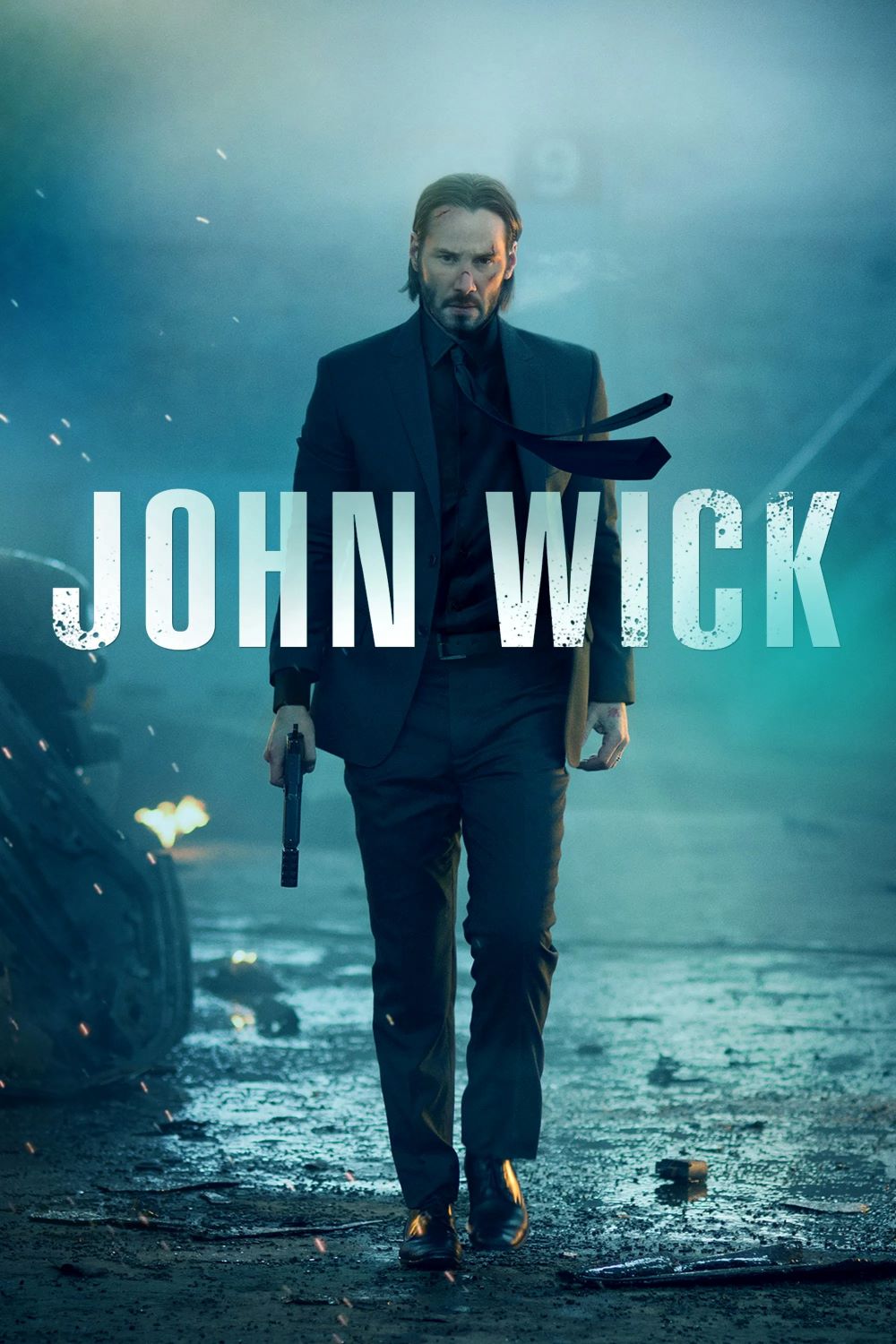
Review: John Wick (dir. by Chad Stahelski)


“John is a man of focus, commitment, sheer will… something you know very little about. I once saw him kill three men in a bar… with a pencil, with a fucking pencil.” — Viggo Tarasov

John Wick kicks off with a simple, gut-punching premise that hooks you right away. Keanu Reeves plays the titular character, a retired hitman trying to leave his bloody past behind after the death of his wife. She leaves him a beagle puppy as a final gift, symbolizing a chance at normalcy, but some punk Russian mobsters steal his prized Mustang and kill the dog, setting off a revenge rampage. It’s a revenge story done right—straightforward, no frills, and fueled by raw emotion rather than convoluted twists. Directed by Chad Stahelski and David Leitch, who share a stunt background, the film feels like a love letter to classic action flicks from the ’80s and ’90s, but with a modern polish.

What sets John Wick apart from the glut of forgettable action movies is its relentless focus on craftsmanship. The action sequences are balletic and brutal, blending gun-fu—a mix of precise gunplay and martial arts—with practical stunts that avoid overreliance on CGI. This gun-fu draws directly from the Center Axis Relock (CAR) system, a real-world self-defense close-combat technique where the pistol is held close to the chest at a forward cant for better retention and control in tight quarters. Reeves, at 50 when the film was made, moves like a man possessed, his long-limbed frame perfect for the choreography. Watch the nightclub shootout: bodies drop in waves as Wick reloads with one hand while pistol-whipping foes with the other, all grounded in CAR’s principles that have since become a staple in action films. It’s exhilarating, almost musical in rhythm, thanks to a thumping soundtrack featuring artists like Aloe Blacc and Kaiser Chiefs that amps up the tension without overpowering the visuals.

Keanu Reeves carries the film on his stoic shoulders, and it’s one of his best turns since The Matrix. John Wick isn’t a chatterbox; he’s all simmering grief and quiet menace, his thousand-yard stare conveying depths of loss that words don’t touch. That opening montage of him and his wife—tender beach walks, her terminal illness—hits hard because it’s so understated. Reeves sells the puppy’s death not with histrionics but a single, shattered sob, making his vengeance feel earned. Supporting players elevate the mix too: Michael Nyqvist chews scenery as the mob boss Viggo, Willem Dafoe shines as a sympathetic mentor figure, and Ian McShane adds suave authority as the Continental hotel’s manager. Alfie Allen, pre-Game of Thrones fame, nails the cocky antagonist role without caricature.

The world-building is another standout, introduced efficiently without info-dumps. The Continental Hotel emerges as a neutral ground for assassins, complete with gold coins as currency and strict no-business-on-premises rules—hints at a larger universe that sequels would expand. It’s a clever nod to pulp noir and spy thrillers, giving the violence a code of honor. Stahelski’s visual style, with its neon-drenched nights and stark lighting, evokes The Raid while carving its own path. The Mustang chase is a highlight: tires screech, bullets ping off chrome, and Wick dispatches goons from the driver’s seat with cold efficiency. Production design shines in details like the mobsters’ gaudy mansions contrasting Wick’s minimalist home, underscoring his outsider status.

John Wick isn’t flawless. The plot is paper-thin, essentially “bad guys kill dog, hero slaughters 100 dudes,” with little character depth beyond Wick. Supporting characters get one-note arcs; Viggo monologues about Wick’s legend, but we learn more through reputation than growth. Some viewers find the 101-minute runtime padded by repetitive shootouts—after the first dozen kills, the thrill dips into redundancy for all but the most action-addicted. Women are scarce and sidelined: Wick’s wife appears mostly in flashbacks, and the few female roles are functional at best. It’s a dude-bro fantasy at heart, prioritizing spectacle over substance, which alienates if you’re craving nuance or social commentary.

Pacing stumbles early too. The first act drags with somber setup, mourning the wife and puppy, before exploding into chaos. Once it hits gear, though, it rarely brakes, building to a cathartic finale at Viggo’s compound. Some criticize the violence as gratuitous—headshots galore, blood sprays like a Tarantino wet dream—but it’s stylized, not sadistic, with clear rules (headshots for efficiency) that heighten tension. Compared to contemporaries like Taken, which leaned on gruff one-liners, John Wick opts for silence, letting deeds speak. It’s refreshing, but purists might miss emotional beats amid the bullet casings.

Stylistically, the film borrows heavily yet innovates. Influences from Hong Kong cinema (Hard Boiled, John Woo) shine in the balletic-style of action, while the “gun fu” term coined by critics fits perfectly, elevated by that CAR-inspired hold that’s now echoed in blockbusters everywhere. Cinematographer Jonathan Sela’s work—wide lenses for spatial awareness in fights—makes every room a battlefield, unlike shaky-cam hacks. The music for the film was courtesy of Tyler Bates and Joel L. Richard, pulsing with industrial beats that sync to gunfire like a heartbeat. Budgeted at $20-30 million, it grossed over $86 million worldwide, proving audiences craved this stripped-down revenge tale amid superhero fatigue.

Reeves’ commitment deserves props; he trained rigorously in judo, jiu-jitsu, and firearms, selling every beatdown with authentic CAR posture. Stahelski, his longtime stunt double, directs with intimacy, framing close-quarters brawls to feel visceral. The film’s legacy? It revived Reeves’ career, birthed a franchise (now four films deep, plus spin-offs), and influenced action design industry-wide—expect “John Wick”-style choreography, complete with Center Axis Relock grips, in everything from Netflix shows to indies. Yet its simplicity invites backlash: online threads buzz with “overhyped” takes, arguing it’s style sans soul. Fair point—it’s not Heat‘s operatic depth—but as popcorn entertainment, it delivers uncut adrenaline.

Culturally, John Wick taps male grief mythology: the Baba Yaga legend (Wick as unstoppable boogeyman) mirrors real loss through mythic fury. No preachiness, just catharsis. Drawbacks persist—predictability (you know Wick wins), thin Russian accents straining credulity, and a sequel-bait ending that feels calculated. Still, it revitalized the genre post-Avengers dominance, proving solo heroes endure. For fans of Die Hard or Léon, it’s essential; others might yawn at the body count.

In a landscape of quippy Marvel flicks, John Wick stands tall for earnestness. It doesn’t pretend to be profound, owning its B-movie roots with A-grade execution. Reeves mourns, fights, repeats—rinse with blood. Flaws and all, it’s a blast: taut, stylish, and unapologetic. If action’s your jam, dive in; just don’t expect Shakespeare.

Weapons used by John Wick throughout the film

  • Heckler & Koch P30L: His signature primary pistol (custom compensator), used throughout—from the home invasion to the Red Circle club.
  • Glock 26: Backup compact pistol, pulled out during the bathhouse shootout when ammo runs low.
  • Coharie Arms CA-415: Short-barreled rifle (HK416 clone) for the church assault and parking lot shootout.
  • Kel-Tec KSG: Bullpup shotgun commandeered from goons after church assault and parking lot shootouts.

VAMPIRES (1998) – Happy Birthday, John Carpenter!


In celebration of the 77th birthday of the great Director John Carpenter, I decided to watch his 1998 film VAMPIRES, starring one of my favorite actors in James Woods. I specifically remember the first time I ever read that this movie was being made and that it would star Woods. It was 1996, and I had just been hired to work for a company called Acxiom Corporation in Conway, Arkansas. It was at this job that I first had access to this new thing called the Worldwide Web. As far as I know, it was the first time I had ever looked at the internet. Of course, I immediately started completing searches on some of my favorite actors, including James Woods, when I came across VAMPIRES as a movie currently in production. These were the first times in my life that I was able to find out about new film projects without looking in a magazine or watching shows like Entertainment Tonight.

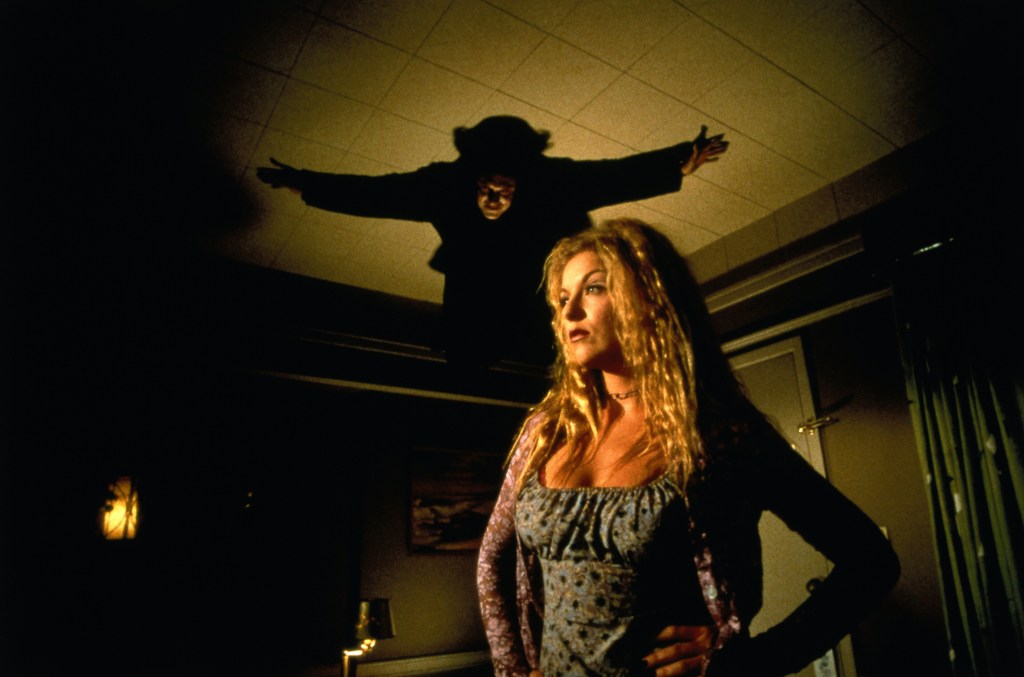
In VAMPIRES, James Woods stars as Jack Crow, the leader of team of vampire hunters who get their funding from the Vatican. We’re introduced to the team when they go into a house in New Mexico and proceed to impale and burn a nest of vampires. While the rest of the team celebrates the mission that night in a hotel filled alcohol, drugs, and whores, Jack can’t escape the feeling that something isn’t right, as he doesn’t believe they got the “master vampire” of the group. Unfortunately, Jack is right to worry. As they’re partying, the master vampire Valek (Thomas Ian Griffith) interrupts the fun and proceeds to kill everyone there, with the exception of Jack, his partner Tony (Daniel Baldwin), and Katrina (Sheryl Lee), a prostitute he decided to just bite on. Valek isn’t just a regular old master vampire, either. As it turns out, he’s the original vampire, and he’s on a quest to find the Berziers Cross, an ancient Catholic relic, that will allow him and other vampires to walk in the daylight. Against this backdrop, Jack, Tony, and a priest named Adam (Tim Guinee) use Katrina, who now has a psychic link with Valek, to try to kill the ultimate master vampire Valek, his cleric accomplice Cardinal Alba (Maximillian Schell), and just hopefully, save mankind in the process!

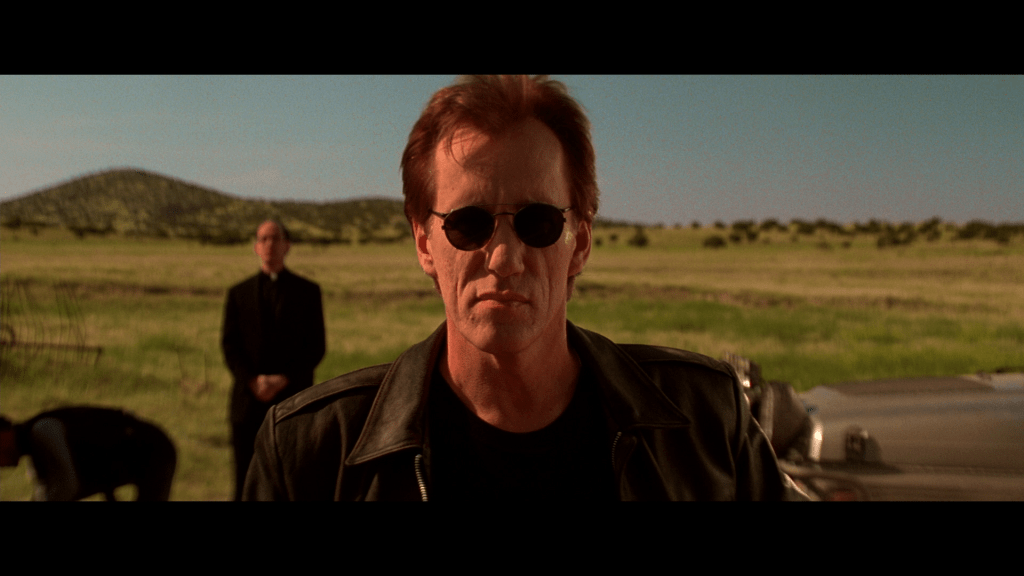
I know that VAMPIRES is not the most well-known or beloved John Carpenter film. He’s done so many great movies, but VAMPIRES is special to me as it was the first of his films that I ever saw in the movie theater. And the opening 30 minutes of the film is as badass as it gets. Carpenter is a master of the set-up. There’s lots of slow motion as Carpenter’s guitar riffs rock the soundtrack and the camera moves in on James Woods, with his cool sunglasses and black leather jacket, just before his team goes in and destroys a vampire nest at the beginning of the film. I also think the set-up of Thomas Ian Griffith as Valek is awesome, as he strolls up to the hotel room while the vampire hunters celebrate, completely unaware of the carnage about to befall them. Griffith has never looked cooler than he did in his long black coat and long hair, both blowing in the wind. These were awesome moments that illustrated Carpenter’s ability to project a sense of visual cool and power that I was mesmerized with. I wanted to see what happens next. And as a 25-year-old man at the time of VAMPIRE’s Halloween release in 1998, I also gladly admit that I really enjoyed the beauty of a 31-year-old Sheryl Lee. I would have definitely done everything I could do to save and protect her. The remainder of the film may have not been able to keep the same momentum as those first 30 minutes, but it’s a solid, enjoyable film, buoyed by the intense performance of Woods!

Vampires (1998) Directed by John Carpenter Shown: Thomas Ian Griffith, Sheryl Lee

There are several items of trivia that interest me about VAMPIRES:

  1. John Carpenter had a good working relationship with James Woods on the set, but they had a deal: Carpenter could film one scene as it is written, and he would film another scene in which Woods was allowed to improvise. The deal worked great, and Carpenter found that many of Woods’ improvised scenes were brilliant.
  2. VAMPIRES was John Carpenter’s only successful film of the 1990’s. Its opening weekend box office of $9.1 million is the highest of any John Carpenter film.
  3. The screenplay for VAMPIRES is credited to Don Jakoby. Jakoby has some good writing credits, including the Roy Scheider film BLUE THUNDER (1983), the Cannon Films “classic” LIFEFORCE (1985), and the Spielberg produced ARACHNAPHOBIA (1990). The reason Don Jakoby interests me, however, is the fact that he had his name removed from the film I’ve seen more than any other, that being DEATH WISH 3 (1985), starring Charles Bronson. Even though Jakoby provided the script for DEATH WISH 3, due to the drastic number of changes, Jakoby insisted his name be removed. The script is credited to the fake “Michael Edmonds” instead.
  4. As I was typing up my thoughts on VAMPIRES today, I learned of the death of the director David Lynch. This brings special poignancy to the fact that John Carpenter cast Sheryl Lee after seeing her on Lynch’s T.V. series TWIN PEAKS (1990).
  5. Frank Darabont, who directed one of the great films of all time, THE SHAWSHANK REDEMPTION (1994), has a cameo as “Man with Buick.” Fairly early in the film, after Crow, Montoya, and Katrina crash their truck escaping the hotel massacre, they encounter the man at a gas station and forcefully take the Buick. This is a strong sign of just how respected John Carpenter was by other great filmmakers at the time.

John Carpenter has directed some absolute classics like ASSAULT ON PRECINCT 13 (1976), HALLOWEEN (1978), ESCAPE FROM NEW YORK (1981), THE THING (1982), and BIG TROUBLE IN LITTLE CHINA (1986). There’s no wrong way to celebrate a man who has brought such joy into our lives through his work. Today, I’m just thankful that he has been given the opportunity to share his talents with us!   

Film Review: John Wick: Chapter Four (dir by Chad Stahelski)


Yesterday, I finally watched the hit film of March 2023, John Wick: Chapter Four.  It left me overwhelmed and I mean that in the best possible way.

The film picks up where the last film left off.  John Wick (Keanu Reeves), the dog-loving, formerly retired professional hit man, is still traveling the world and killing the leaders of the High Table.  As becomes apparent from the start of the film, it’s a bit of a fool’s errand as killing one leader only leads to another leader being installed.  When John travels to Morocco to kill the leader known as “The Elder,” he discovers that the Elder he knew is gone and has been replaced with a new Elder.  He still kills the new Elder because that’s what John Wick does.  He kills people.  He’s a literal killing machine, one who audiences like because he loves dogs, is still mourning for his dead wife, and he’s played by Keanu Reeves.  On paper, the relentless and ruthless character of John Wick is horrifying.  But, when he’s played by Keanu Reeves, he becomes the killing machine that audiences can’t help but love.

The arrogant and brilliantly named Marquis Vincent Bisset de Gramont (Bill Skarsgard, giving a wonderfully hissable performance) is currently in charge of the efforts to track down and kill John.  The Marquis establishes himself as being evil by not only killing Charon (Lance Reddick) but also blowing up the Continental.  Upset by the murder of Charon and the destruction of his business, Winston (Ian McShane, playing his role with the perfect amount of wounded dignity) tells John that he can end his entire war with the High Table by challenging the Marquis to a duel.  Unfortunately, to do that, John has to convince another criminal organization to sponsor him and just about criminal organization on the planet wants John did.  To make things even more difficult, the Marquis has brought the blind assassin, Caine (the incredible Donnie Yen), out of retirement to track down John.  Caine and John are old friends but Caine knows that his daughter will be killed unless he kills John.

Clocking in at 169 minutes, John Wick: Chapter Four is a big, flamboyant, and at times overwhelming production.  John Wick travels across the world and every country in which he finds himself is home to someone who wants him dead.  And since everyone that John Wick knows seems to have a unlimited supply of guards and henchmen, the fights are nonstop and the violence is over the top but the film is so energetic and cheerfully excessive that it’s never boring.  Each fight scene feels like it could be a separate film on its own, with each member of the cast getting a chance to show off what they can do.  The water-filled fight in a Berlin night club is the film’s best moment but it’s closely followed by an extended combat sequence that’s set in a hotel in Japan.  With its vivid cinematography and ornate production design and its spectacular stunts, John Wick Chapter 4 is a work of pure cinema, an thrill ride of glorious excess.  Along with providing an ending to John Wick’s story, it also pays tribute to everything that audiences love about action cinema.  It’s a film for people who love action and, even more importantly, it’s film that has as much love for its audience as it does for itself.

The film ends on a note of apparent finality, one that becomes more ambiguous the more that one examines it.  This may be the last chapter of John Wick’s story or it may not.  (Considering the film’s box office and critical success, I suspect that it will not be the last.)  John Wick Chapter Four serves as a fitting (if perhaps temporary) end to the saga and also a tribute to both the action aesthetic and Keanu Reeves’s innate likability. 

Keanu Reeves returns in the John Wick 4 Trailer!


The High Table would like a word with John Wick.

I’m surprised there’s anyone left to fight, but on hand, we have Natalia Tena (Game of Thrones), Bill Skarsgard (Barbarian), Hiroyuki Sanada (The Wolverine), Scott Adkins (Accident Man), Clancy Brown (Thor: Ragnarok) and the legendary Donnie Yen (Ip-Man, Rogue One). They join the original cast that includes Keanu Reeves, Laurence Fishburne, Lance Reddick, & Ian McShane.

John Wick: Chapter 4 is set to release in theatres on March 24, 2023.

John Wick: Chapter 2 Cordially Invites All to A Party In Rome


In 2015, a little film from Lionsgate came out during that time between the summer blockbuster and the awards seasons. It’s sort of the time of the cinematic year when a film is not good enough to be a blockbuster and not enough pedigree to be seen as awards-worthy.

This film was John Wick and it starred Keanu Reeves. It was also directed by two filmmakers more well-known for choreographing fights and action scenes than a full feature film.

John Wick had the last laugh as it surpassed everyone’s expectations to become one of the best action films of recent memory. It helped resurrect Keanu Reeves as a bonafide action star once again.

At this year’s New York Comic-Con the first teaser trailer for the second chapter of the John Wick story dropped to the howling delights of all attending.

We still have to wait until 2017 for John Wick: Chapter 2, but until then let’s stare in awe at John Wick doing what he does best.

Lisa Marie’s Thoughts On Captain America: Civil War


captain-america-civil-war-181827

It was freaking awesome!

That, in a nutshell, is my main thought when it comes to Captain America: Civil War.  It’s a movie that we spent a year anticipating.  It’s a movie that we were continually assured would be great.  And it’s a movie that, unlike Batman v Superman, actually lived up to all the hype.  It’s also a movie that has already been reviewed here on the Shattered Lens.  Check out Arleigh’s review by clicking here and be sure to check out Gary’s review as well.

So, what’s really left for me to say about Captain America: Civil War?  Beyond, of course, that it was freaking awesome.

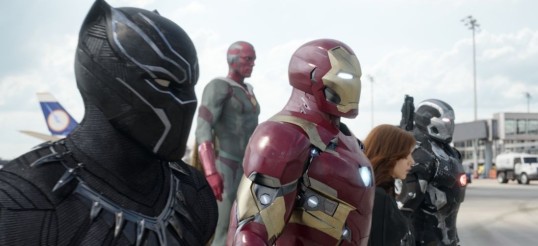
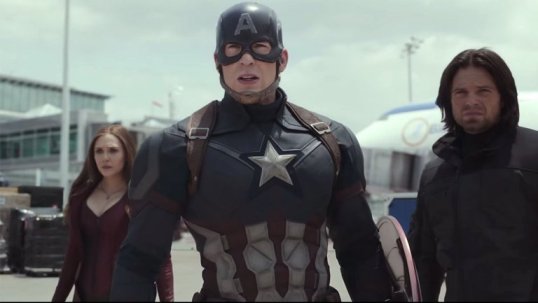
Of course, it’s hard to talk about Captain America: Civil War without also talking about Batman v Superman.  Both films start with the same basic idea: the heroic activities of super heroes has led to cities being destroyed and innocent people dying.  In Batman v. Superman, Batman takes it open himself to avenge the destruction of Metropolis and expose Superman as being the biggest false God since Baal.  In Civil War, the United Nations announces that, from now on, all super hero activity has to be cleared with them.  In Batman v. Superman, Batman and Superman are manipulated into fighting each other.  In Captain America: Civil War, Captain America and Iron Man are manipulated into fighting each other.  In Batman v Superman, Jesse Eisenberg plays a neurotic villain.  In Captain America: Civil War, Daniel Bruhl plays a neurotic villain.  Batman v Superman features more heroes than just Batman and Superman.  Civil War features more heroes than just Captain America and Iron Man.  Batman v Superman ends with a promise of more films to come.  So does Civil War.  Both films are huge and expensive star-filled spectacles and both of them are a part of a larger cinematic mythology.  They both even have roughly the same running time.  Of course, Batman v Superman seems even longer while Civil War is over far too quickly.

Ca

And yet, Civil War is a thousand times better than Batman v Superman.  For all of its sound and fury, Batman v Superman is ultimately an empty shell.  I left the film feeling not at all emotionally moved but definitely deafened by all the explosions and the yelling and the ranting and the pounding score.  As I left the theater, the world sounded like it was underwater.  Batman v Superman opens with the world exploding and the explosion continues for another two and a half hours.  Civil War, on the other hand, takes its time.  After the initial battle scene (which features a nice cameo from the great Frank Grillo), Civil War slows down.  It explores its characters and their relationships and their motivations.  The first hour of Civil War may be dominated by people debating but its compelling to watch because, after 8 years, the MCU and the characters within feel as alive as the world outside the theater.

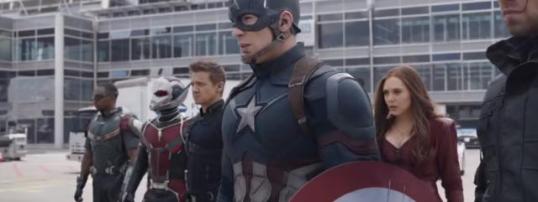
In Batman v Superman, Henry Cavill and Ben Affleck appeared to be acting in separate films.  That’s not a problem in Civil War.  When you watch Chris Evans and Robert Downey, Jr., you believe that they are friends and, when they fight, you don’t just thrill at the action.  You mourn the end of a friendship.  If Batman v Superman‘s battle ultimately felt hollow, the final battle in Civil War leaves you wincing in pain.

capitan-america-3-civil-war-steve-y-bucky

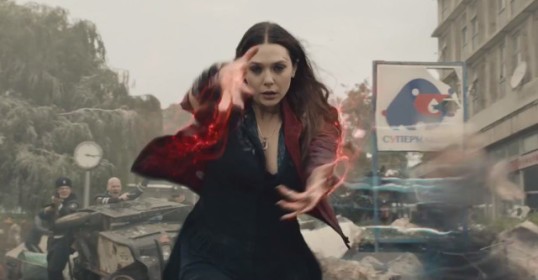
Which is not to say that Civil War is not a fun movie.  It’s the most genuinely fun film that I’ve seen so far this year.  There’s a joy to the best films of the MCU, a joy that — with the exception of Gal Gadot’s cameo — was totally lacking from the somber and self-important mess that Batman v Superman.  I have never heard an audience applaud more than they did while watching Civil War.  The film may have been dominated by Evans and Downey but every citi of thzene MCU got a chance to shine.  Scarlett Johansson, Paul Rudd, Sebastian Stan, Anthony Mackie, Don Cheadle, Jeremy Renner, Chadwick Boseman, Paul Bettany, and Elizabeth Olsen all proved their worth to this new cinematic mythology.  After years of using Halloween to pay homage to Scarlett Johansson, I may have to go as Wanda Maximoff this year.  After seeing Hollywood waste her off-center and damaged talent in films like Godzilla, it was good to see Elizabeth Olsen playing Wanda as if she could have been a cousin to her character from Martha Marcy Mae Marlene.

Scarlet-Witch-Elizabeth-Olsen

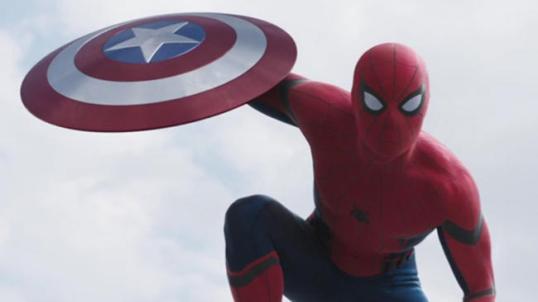
The audience saved their loudest and most enthusiastic cheers for Tom Holland, who claimed the role of Spiderman as his own and thankfully freed Andrew Garfield to go back to being the intriguing actor that we all remember from The Social Network and Never Let Me Go.  Holland doesn’t have a large role in Civil War but he’s still well-served by the film and the script makes great use of the character and Holland’s energetic performance.  As opposed to the super hero cameos in Batman v Superman, Spiderman’s appearance didn’t just feel like merely a teaser for a future film.  He belonged in the story.

gTP42

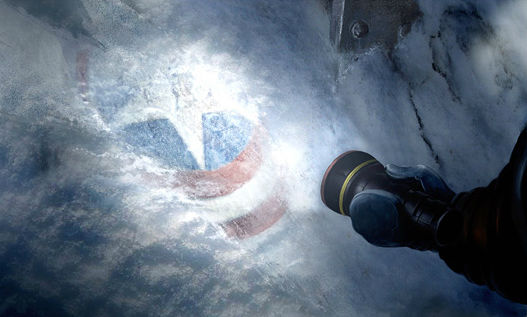
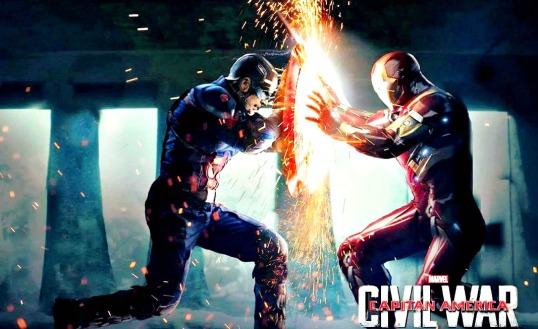
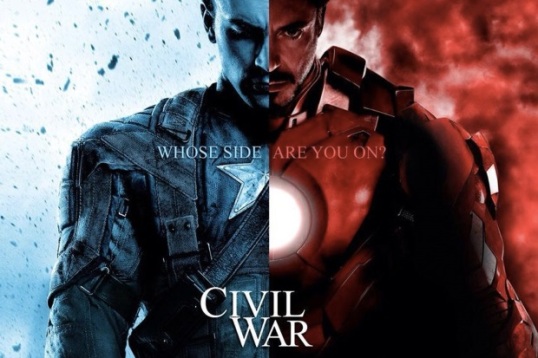
Of course, Civil War is dominated by the battle between Iron Man and Captain America and it says something about how successful the MCU has been that the battle feels less like a marketing gimmick and more like the natural result of what happens when two differing worldviews come into conflict.  When Tony Stark sides with the UN, it makes sense.  Ever since the very first Iron Man, Tony has been motivated by both guilt over making weapons and a fear that he doesn’t deserve his success.  Of course Tony would side with the UN.  Doing so not only allows him to alleviate his guilt but it also frees him of responsibility for any future actions that the Avengers may take.  It makes just as much sense that Captain America would feel the exact opposite.  His name is Captain America, not Captain United Nations.  When the UN was founded, he was still frozen in a block of ice.

ice

(Also interesting to note: Civil War was the first MCU film that I could follow without once having to ask my boyfriend for any background info on who all the characters were.  The MCU has become such a part of our culture that we all know the characters, regardless of whether we have ever read a Marvel comic or not.)

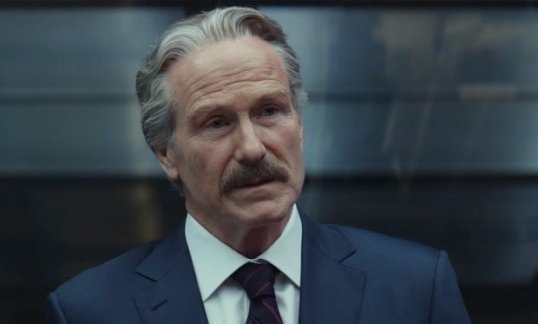
There is a nominal villain.  Daniel Bruhl plays Zemo and his role is actually pretty small.  That said, Zemo is definitely more interesting than the typical MCU villain (he’s certainly more memorable than Corey Stoll was in Ant-Man) and Bruhl does a good job playing him.  (Watching Civil War, it was hard not to think about how much better SPECTRE would have been if Bruhl, as opposed to Christoph Waltz, had played Blofeld.)  But, for me, the real villain of the film was the U.S. Secretary of State (played by William Hurt).  The character represented everything that all good people hate about the power structure.  William Hurt turned him into the epitome of unthinking and unreasonable authority.

William-Hurt-Captain-America-620x374

After Civil War was released, Salon’s Amanda Marcotte (who, let’s just be honest, ceased to be interesting the minute that she sold out and briefly worked for John Edwards in 2007) complained that Captain America had become “a douchey Libertarian.”  I would argue that 1) Captain America is definitely not douchey and 2) it’s his “libertarian” stance that makes him a hero.  Captain America does not represent any institution or ideology and he doesn’t take orders from faceless bureaucrats.  Captain America doesn’t need permission to do the right thing.  As played by Chris Evans, there’s something undeniably poignant about Captain America attempting to cling onto his idealism and his belief in personal freedom in an increasingly complicated and totalitarian world.  When told that he has a duty to become an anonymous, order-taking drone, Captain America says, “NO!”

(As a sidenote: If you want to see what the world expects Captain America to become, check out William Klein‘s Mr. Freedom.)

I know that some are claiming that Civil War is the best MCU film so far.  I wouldn’t quite go that far.  The film never quite reaches the lunatic heights of Guardians of the Galaxy nor does it match the subversive glee of Winter Soldier revealing that smug old Robert Redford is an agent of HYDRA.  But, no matter!  Captain America: Civil War is pretty freaking great!

ca2

Here are the other MCU reviews that have appeared here on the Shattered Lens:

  1. Arleigh on Iron Man 2
  2. Arleigh on Thor
  3. Arleigh on Captain America: The First Avenger
  4. Leonard on The Avengers
  5. Viktor Von Glum on The Avengers
  6. Ryan on The Avengers
  7. Arleigh on Iron Man 3
  8. Leonard on Iron Man 3
  9. Ryan on Iron Man 3
  10. Ryan on Thor: The Dark World
  11. Ryan on Captain America: The Winter Soldier
  12. Lisa on Captain America: The Winter Soldier
  13. Ryan on Guardians of the Galaxy
  14. Lisa on Guardians of the Galaxy
  15. Lisa on Avengers: The Age of Ultron
  16. Leonard on Ant-Man
  17. Ryan on Ant-Man
  18. Lisa on Ant-Man
  19. Arleigh on Captain America: Civil War
  20. Gary Loggins on Captain America: Civil War


Captain America Civil War