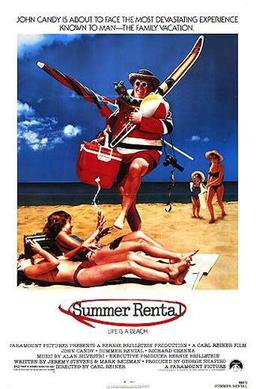
Summer Rental (1985, directed by Carl Reiner)


After a blow-up at work, air traffic controller John Chester (John Candy) is given five weeks of paid leave.  He takes his family to Florida, where they rent a beach house and discover that their summer town is controlled by snobbish sailing champion Al Pellett (Richard Crenna).  It’s the snobs vs slobs as Pellett tries to kick John and his family out of their summer rental and John tries to prove himself to his son and daughter (Joey Lawrence and Kerri Green) by winning the local sailing championship.  Luckily, John has Sully (Rip Torn), a modern-day pirate captain, on his side.

John Candy was a remarkable talent.  It’s just a shame that he didn’t appear in more good films.  He will always be remembered for films like Splash, Uncle Buck, Planes, Train, and Automobiles, and Only The Lonely but unfortunately, most of his starring roles were in lightweight, forgettable far like Summer Rental.  Candy is likable as John Chester and sympathetic even when he’s losing his temper over every minor inconvenience.  But the film itself never really does much to distinguish itself from all of the other 80s comedies about middle class outsiders taking on the richest man in town.  Candy is stuck playing a role that really could have been played by any comedic actor in 1985.  It’s just as easy to imagine Dan Aykroyd or even Henry Winkler in the role.  It feels like a waste of Candy.

The best thing about the film is Rip Torn’s performance as Sully.  Torn’s performance here feels like a dry run for his award-winning work as Artie on The Larry Sanders Show.  I would have watched an entire movie about Sully.  As it is, Summer Rental is inoffensive and forgettable.

Life Stinks (1991, directed by Mel Brooks)


Goddard Bolt (Mel Brooks), the massively wealthy CEO of Bolt Enterprises, wants to buy up a huge area of Los Angeles’s slums and tear them down, transforming the area into a chic neighborhood and moving all of the poor residents and street people out.  Rival businessman Vaughn Craswell (Jeffrey Tambor), who grew up in the slum and dreams of destroying it himself, has the same plan.  He and Bolt make a bet.  If Bolt can survive for 30 days on the streets, Craswell will allow Bolt to have the property.  Bolt agrees and soon, he is penniless and sleeping in alleys.  While Bolt befriends Sailor (Howard Morris) and Fumes (Theodore Wilson) and falls in love with a former dancer named Molly (Lesley Ann Warren), Craswell schemes to take over Bolt’s company and keep Bolt on the streets permanently.

Life Stinks was one of Mel Brooks’s attempts to make a straight comedy that wasn’t a parody and which had a serious message underneath the laughs.  The mix of comedy and drama doesn’t really gel,  because the drama is too dark and the comedy is too cartoonish.  Life Stinks is often guilty of romanticizing living on the streets.  With the exception of two muggers, everyone whom Bolt meets is a saint.  It is still interesting to see Brooks creatively at his most heartfelt and humanistic.

Life Stinks does feature some of Mel Brooks’s best work as an actor and it’s also features an excellent turn from Lesley Anne Warren.  At first, I thought Warren would be miscast as a woman who spent her days in a soup kitchen and her nights sleeping in an alley.  But she actually gives a very sweet and believable performance.

No matter what else, Mel Brooks is a true mensch.


Retro Television Review: Fantasy Island 5.3 “Cyrano/The Magician”


Welcome to Retro Television Reviews, a feature where we review some of our favorite and least favorite shows of the past!  On Tuesdays, I will be reviewing the original Fantasy Island, which ran on ABC from 1977 to 1984.  Almost the entire show is currently streaming on Daily Motion, YouTube, Plex, and a host of other sites.

This week …. someone’s missing!

Episode 5.3 “Cyrano/The Magician”

(Dir by Dan Chaffey, originally aired on October 24th, 1981)

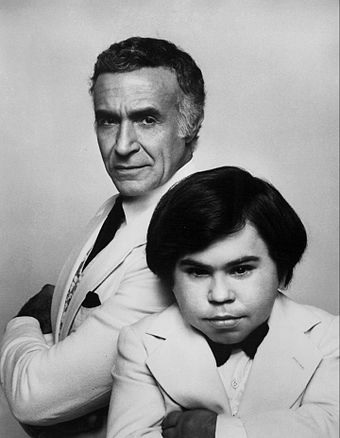
Hey, where’s Tattoo!?

Technically, Tattoo does appear in this episode but it’s only in the stock footage that appeared at the start of every episode.  Tattoo rings the bell and announces, “Da plane …. da plane!” but that’s it.  He does not meet Mr. Roarke outside of the bungalow.  He is not present to greet the guests.  He’s not present to say goodbye to the guests.  Tattoo is nowhere to be seen and, somewhat disconcertingly, no mention is made of why he’s missing.  Instead, Mr. Roarke and Julie handle the fantasies in this episode.

If I had to guess, I’d say that Herve Villechaize was having a salary dispute with the producers.  It seems obvious that Julie was brought in as a way to tell Villechaize that he was replaceable.  However, Tattoo’s absence is felt so strongly in this episode that it seems likely that all the producers did was prove Villechaize’s point about why he deserved more money.  Wendy Schaal is a likable performer but she had close to no real chemistry with Ricardo Montalban and Julie was such a blandly-written character that there was no way she could replace the enigmatic and rather cynical Tattoo.

Sad to say, one of this episode’s fantasies feels as if it would have been perfect for Tattoo’s commentary.  Marjorie Denton (Carol Lynley) is a bus driver who wants to go back to a time when men were at their most chivalrous.  She finds herself back in 17th century France, a time when men were chivalrous but woman had absolutely no rights.  At first, she is thrilled to be the subject of the attentions of both the handsome Gaston (Simon MacCorkindale) and the poetic Cyrano de Bergerac (John Saxon).  She is less thrilled to catch the eye of the Marquis de Sade (Lloyd Bochner).  It’s not a bad fantasy, though Cyrano and De Sade were not quite contemporaries.  But it’s hard not to think about how Villechaize was always at his best when dealing with wounded romanticism.  Since Cyrano himself turned out to be a guest having a fantasy, it’s hard not to regret that Tattoo was not around to encourage him.

As for the other fantasy, it’s one of those silly and kind of boring comedic fantasies that was obviously included for the kids.  (“Mommy, who is the Marquis De Sade?”)  Timothy Potter (Bart Braverman), no relation to Harry, is a bad magician who wants to be a great magician.  Mr. Roarke gives him a collection of old spell books and an assistant named Suva (Judy Landers), whom Timothy proceeds to fall in love with.  Unfortunately, Timothy doesn’t bother to study the books like Roarke told him to and he accidentally makes Suva disappear.  In the end, though, Roarke assures Timothy that he just sent her to Cleveland, which just happens to be his hometown.  There’s a chimpanzee in this fantasy and the chimp gives the most compelling performance.  The only thing that could have saved this fantasy would have been some snarky Tattoo commentary.

Is it possible to have Fantasy Island without Tattoo?  Based on this episode, the answer would be no.  Let’s hope he returns next week.

KISS Meets The Phantom Of The Park (1978, directed by Gordon Hessler)


In 1978, KISS appeared to have it all.  The band was famous for both their makeup and their anthemic stadium rock.  They had just released not only a new studio album but also four solo albums.  They had starred in their own Marvel comic and gained notoriety for supposedly allowing their blood to mixed in with the comic’s ink.  Teenagers loved KISS and parents and religious leaders feared that the band’s name stood for Knights In Satan’s Service.  KISS had everything except for motion picture stardom.

KISS Meets The Phantom Of The Park was supposed to change that.  The film starred Anthony Zerbe as Abner Devereaux, an engineer and an expert at animatronics who loses his job at Magic Mountain and seeks revenge by using robot versions of KISS to drive the audience of their concert to riot.  Fortunately, the real members of KISS are not just rock stars but also alien beings who descend from the heavens and shoot lightning bolts from their eyes.  (Gene Simmons can breathe fire.)  The real KISS isn’t going to allow their fan to be manipulated by a robot version of the band, which leads to a battle between KISS and the robots that protect Abner’s underground lair.

KISS Meets The Phantom of the Park aired on NBC on October 28th, 1978.  It was later given a theatrical release in Europe, where it was re-edited and retitled Attack of the Phantom.  Since then, it has become a very difficult film to see.  (On Amazon, old VHS copies go for several hundred dollars.)  One reason why the movie is so hard to see is because the members of the KISS hated the movie and felt that they were portrayed as being clowns instead of super heroes.  Even though the members of the band have since mellowed out about the film (with Gene Simmons suggesting it should be viewed on a double bill with Plan 9 From Outer Space), KISS Meets The Phantom Of The Park is still a film that is more talked about than actually watched.

While looking for clips of the movie on YouTube, I came across an upload of the entire film.  The only problem was that all of the dialogue was dubbed into German and that’s not a language that I speak.  Still, figuring that you have to take your opportunities when they’re available, I decided to watch.  I figured that the dialogue might not actually be that important and it wasn’t.  I was able to follow the plot just fine.  (The only weird thing about watching the move in German was listening to the members of the band speak in something other than a New York accent.)  Fortunately, there’s actually more singing than talking in Kiss Meets The Phantom Of The Park and the songs are untouched and in English.  KISS plays Magic Mountain in the film and they actually performed a real concert for filming.  Those are real fans of the band going crazy whenever Gene Simmons sticks out his tongue.

The movie itself is definitely a product of its time and not meant to be taken seriously.  The members of KISS are both aliens that descend from the heavens and rock musicians and they are never seen without their makeup.  Even when they’re hanging out at a hotel pool, they are in full costume and they’re wearing their makeup. When the members of the band enter the Phantom’s underground lab, they have to fight a series of very 70s robots, including some that know karate and two who have lightsabers.  For better or worse, it’s a very silly move that epitomizes an era.  The special effects are cheesy, the members of the band often look straight at the camera, and the rest of the cast does what they can with what they’ve been given.  Anthony Zerbe plays the Phantom with a hint of empathy while Deborah Ryan is the ingenue who searched for her missing boyfriend while Beth plays on the soundtrack.  Keep an eye out for Brion James, playing a security guard.

Overall, the band probably would have been smarter to just release a concert film but then the rest of us wouldn’t have the fun of watching Paul Stanley face off against a robot version of Bruce Lee.  KISS Meets The Phantom of The Park is worth watching at least once, even in German!

A Movie A Day #164: Split Decisions (1988, directed by David Drury)


Craig Sheffer seeks symbolic revenge and Gene Hackman picks up a paycheck in Split Decisions!

Ray McGuinn (Jeff Fahey) is a contender.  Ever since he let his father’s gym and signed with a sleazy boxing promoter, Ray has been waiting for his title shot.  His father, an ex-boxer turned trainer named Dan (Gene Hackman), has never forgiven Ray for leaving him.  Meanwhile, his younger brother — an amateur boxer and Olympic aspirant named Eddie (Craig Sheffer) — worships Ray and is overjoyed when Ray returns to the old neighborhood to fight “The Snake” Pedroza (Eddie Velez).  But then Ray is told that if he doesn’t throw the fight, he’ll never get a shot at a title bout.  When Ray refuses, The Snake and a group of thugs are sent to change his mind and Ray gets tossed out of a window.

Eddie is determined to avenge his brother’s death.  Does he do it by turning vigilante and tracking down the men who murdered his brother?  No, he turns pro and takes his brother’s place in the boxing ring!  Dan reluctantly trains him and Eddie enters the ring, looking for symbolic justice.  Symbolic justice just doesn’t have the same impact as Charles Bronson-style justice.

The idea of a barely known amateur turning professional and getting a chance to fight a contender feels just as implausible here as it did in Creed.  The difference is that Creed was a great movie so it did not matter if it was implausible.  To put it gently, Split Decisions is no Creed.  The boxing scenes are uninspired and even the training montage feels tired.  Look at Craig Sheffer run down the street while generic 80s music plays in the background.  Watch him spar in the ring.  Listen to Gene Hackman shout, “You’re dragging your ass out there!”  In the late 80s, Gene Hackman could have played a role like Dan in his sleep and he proves it by doing so here.  Underweight pretty boy Craig Sheffer is actually less convincing as a boxer than Damon Wayans was in The Great White Hype.

Split Decisions is another boxing movie that should have taken Duke’s advice.

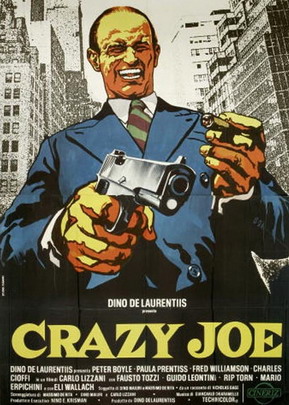
A Movie A Day #147: Crazy Joe (1974, directed by Carlo Lizzani)


Crazy Joe (Peter Boyle) is a gangster with a chip on his shoulder and a self-taught intellectual who can (misquote) Sartre and Camus with the best of them.  Sick of being taken for granted, Joe and his brother, Richie (Rip Torn), attempt to challenge the Mafia establishment.  The mob sets Joe up and gets him sent to prison.  While doing time, Joe befriends a Harlem gangster named Willy (Fred Williamson).  Refusing to associate with the other Italian prisoners, Joe allies himself with the black inmates and even helps to start a riot over the prison’s inhumane conditions.  When he is released, Joe hits the streets of New York with a vengeance, now backed up by Willy and his criminal organization.

Crazy Joe is based on the life of Joey Gallo, who was briefly a New York celebrity, hobnobbing with actors like Jerry Orbach and writers like Norman Mailer before he was gunned down at Umberto’s Clam Shop in Little Italy.  Though the names were changed to protect the guilty, Eli Wallach plays Vito Genovese, Charles Cioffi plays Joe Columbo, and Luther Adler is Joe Profaci.  Fred Williamson’s character is based on the infamous Nicky Barnes.

Crazy Joe is a good and violent mix of the gangster, prison, and blaxploitation genres.  Despite wearing an unfortunate toupee, Peter Boyle is great at putting the crazy in Crazy Joe and Fred Williamson ups the coolness factor of any movie he appears in.  Keep an eye out for Henry Winkler, giving a very un-Fonzie performance as Joe’s right-hand man.

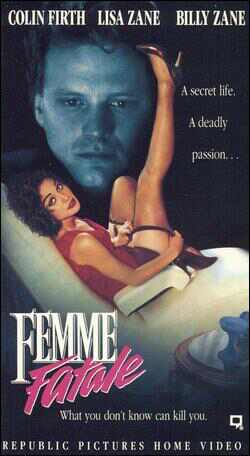
Movie a Day #110: Femme Fatale (1991, directed by Andre R. Guttfreund)


Joseph Price (Colin Firth) was once a painter but now he is the world’s least likely park ranger.  One day, he meets the beautiful and mysterious Cynthia (Lisa Zane).  Within days, Joe and Cynthia are married but one morning, Joe wakes up to discover that Cynthia is gone and she has only left behind a brief note.  Searching for his wife, Joe goes to Los Angeles and discovers how little he knew about Cynthia.  Joe’s search eventually leads him into the world of porn, drugs, S&M, and performance art.

This month, every entry in Movie A Day has had a least one Twin Peaks connection.  Femme Fatale has two.  Joe’s best friend, a laid back artist who is usually seen painting a topless woman who sometimes wears a brown bag over her head, is played by Billy Zane, who appeared as John Justice Wheeler during the second season of Twin Peaks.  Also, Catherine Coulson (the show’s famous Log Lady) appears as a nun who provides an important clue to Cynthia’s past.

Femme Fatale used to show up on HBO in the 1990s and it is currently on YouTube.  It may not be a great film but it does have a good cast.  Along with Billy Zane and Coulson, Femme Fatale also features Scott Wilson as a shady psychologist, Lisa Blount as an actress who used to work with Cynthia, and Pat Skipper and John Lavachielli as two talkative thugs named Ed and Ted.  Both Carmine Caridi and the great Danny Trejo show up in small roles.  It may seem strange to cast the very British Colin Firth as a park ranger but it works.  As for Lisa Zane, who is Billy’s older sister, Cynthia was probably her best role.

Predictable though the movie may be, Femme Fatale is enjoyably stupid if you are in the right mood.  There should always be a time and place for the old neo noirs of 1990s.

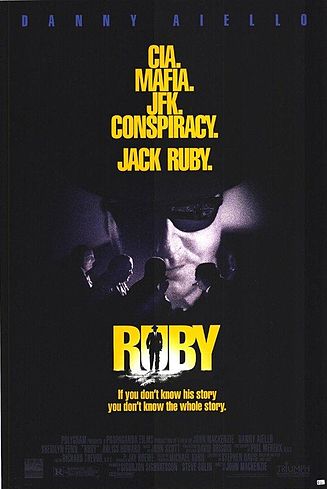
A Movie A Day #91: Ruby (1992, directed by John Mackenzie)


Of all the stars to come out of Twin Peaks, Sherilyn Fenn’s star briefly shined the brightest and sadly, she was the most misused by Hollywood.  While it is true that Fenn has worked regularly since Twin Peaks went off the air, she has rarely gotten the great roles that someone with her talent deserves.  Instead, her performances have far too often been the best thing about an otherwise mediocre film.

For example, Ruby.

In this very speculative biopic about the strip club owner who killed Lee Harvey Oswald and whose organized crime background has put him at the center of a thousand conspiracy theories, Danny Aiello plays Jack Ruby and Sherilyn Fenn plays his only friend, Sheryl Ann Dujean (or, when she’s stripping in the Carousel Club, Candy Cane).  The film portrays Jack Ruby as being a low-level mobster who is never as valuable or as important to his superiors as he thinks he is.  In this movie, Ruby is always on the outside looking in on the conspiracy and, when he kills Oswald, it is because he wants to prove that he is more than just a small time hood.  Candy, who was a composite of several Carousel Club dancers, maintains a strong platonic friendship with Jack and is always there for him to talk to, except for when she goes to Vegas to perform for and sleep with the President.

Ruby came out as the same time as JFK and it often seems like a fanfic based on Stone’s film.  Low budget and overwritten, Ruby never works as a movie but Danny Aiello is perfectly cast as the bombastic but insecure Jack Ruby.  Unfortunately, Ruby‘s screenplay often does not seem to know what it wants to say about its main character.  As Candy, Fenn is not given nearly enough to do but she still manages to show the same natural spark that made her a star on Twin Peaks.

Sherilyn Fenn is not the only Twin Peaks cast member to have a role in Ruby.  Keep an eye out for a post-Twin Peaks, pre-X-Files David Duchovny, playing the role of J.D. Tippit.

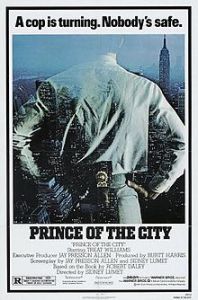
A Movie A Day #30: Prince of the City (1981, directed by Sidney Lumet)


220px-prince_of_the_city_foldedIn 1970s New York City, Danny Ciello (Treat Williams) is a self-described “prince of the city.”  A narcotics detective, Ciello is the youngest member of the Special Investigations Unit.  Because of their constant success, the SIU is given wide latitude by their superiors at the police department.  The SIU puts mobsters and drug dealers behind bars.  They get results.  If they sometimes cut corners or skim a little money for themselves, who cares?

It turns out that a lot of people care.  When a federal prosecutor, Rick Cappalino (Norman Parker), first approaches Ciello and asks him if he knows anything about police corruption, Ciello refuses to speak to him.  As Ciello puts it, “I sleep with my wife but I live with my partners.”  But Ciello already has doubts.  His drug addict brother calls him out on his hypocrisy. Ciello spends one harrowing night with one of his informants, a pathetic addict who Ciello keeps supplied with heroin in return for information.  Ciello finally agrees to help the investigation but with one condition: he will not testify against anyone in the SIU.  Before accepting Ciello’s help, Cappalino asks him one question.  Has Ciello ever done anything illegal while a cop?  Ciello says that he has only broken the law three times and each time, it was a minor infraction.

For the next two years, Ciello wears a wire nearly every day and helps to build cases against other cops, some of which are more corrupt than others.  It turns out that being an informant is not as easy as it looks.  Along with getting burned by malfunctioning wires and having to deal with incompetent backup, Ciello struggles with his own guilt.  When Cappalino is assigned to another case, Ciello finds himself working with two prosecutors (Bob Balaban and James Tolkan) who are less sympathetic to him and his desire to protect the SIU.  When evidence comes to light that Ciello may have lied about the extent of his own corruption, Ciello may become the investigation’s newest target.

prince-of-the-city

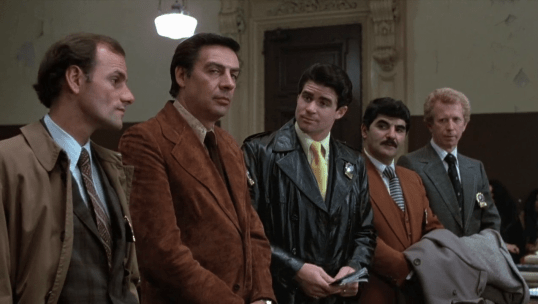
Prince of the City is one of the best of Sidney Lumet’s many films but it is not as well-known as 12 Angry Men, Dog Day Afternoon, Network, Serpico, The Verdict, or even The Wiz.  Why is it such an underrated film?  As good as it is, Prince of the City is not always an easy movie to watch.  It’s nearly three hours long and almost every minute is spent with Danny Ciello, who is not always likable and often seems to be on the verge of having a nervous breakdown.  Treat Williams gives an intense and powerful performance but he is such a raw nerve that sometimes it is a relief when Lumet cuts away to Jerry Orbach (as one of Ciello’s partners) telling off a district attorney or to a meeting where a group of prosecutors debate where a group of prosecutors debate whether or not to charge Ciello with perjury.

Prince of the City may be about the police but there’s very little of the typical cop movie clichés.  The most exciting scenes in the movie are the ones, like that scene with all the prosecutors arguing, where the characters debate what “corruption” actually means.  Throughout Prince of the City, Lumet contrasts the moral ambiguity of otherwise effective cops with the self-righteous certitude of the federal prosecutors.  Unlike Lumet’s other films about police corruption (Serpico, Q&A), Prince of the City doesn’t come down firmly on either side.

(Though the names have been changed, Prince of the City was based on a true story.  Ciello’s biggest ally among the investigators, Rick Cappalino, was based on a young federal prosecutor named Rudy Giuliani.)

Prince of the City is dominated by Treat Williams but the entire cast is full of great New York character actors.  It would not surprise me if Jerry Orbach’s performance here was in the back of someone’s mind when he was cast as Law & Order‘s Lenny Briscoe.  Keep an eye out for familiar actors like Lance Henriksen, Lane Smith, Lee Richardson, Carmine Caridi, and Cynthia Nixon, all appearing in small roles.

Prince of the City is a very long movie but it needs to be.  Much as David Simon would later do with The Wire, Lumet uses this police story as a way to present a sprawling portrait of New York City.  In fact, if Prince of the City were made today, it probably would be a David Simon-penned miniseries for HBO.

image-w1280

Back to School #44: Some Kind of Wonderful (dir by Howard Deutch)


some_kind_of_wonderful

For the past two and a half weeks, I’ve been reviewing, in chronological order, some of the best, worst, most memorable, and most forgettable teen films ever made.  We started with two films from 1946 and now, we find ourselves coming to the close of the decade that is often considered to be the Golden Age of teen films, the 1980s.  For our 44th entry in Back to School, we take a quick look at 1987’s Some Kind of Wonderful.

Why a quick look?

Because, quite frankly, there’s not that much to say about it.

Some Kind of Wonderful is a story about an artistic, lower-class misfit who has a crush on one of the popular kids.  The only problem is that the popular kid is being cruelly manipulated by one of the richest students in school.  The misft also has a best friend who is totally in love with the misfit but the misft has somehow failed to notice this.  Eventually, the misfit does get to date the popular kid.  Both the popular kid and the misft are given a hard time by the members of their collective clique but they still manage to go on one truly amazing date.  Finally, the film ends with a big show down at a party and two people kissing outside.

Sound familiar?

If it does, that probably means that you’ve seen Pretty In Pink.  Some Kind of Wonderful is basically a remake of Pretty In Pink, the only difference being that the genders have been reversed and that the film is a lot more heavy-handed (and predictable) when it comes to examining class differences.   (Not coincidentally, both films were written by John Hughes and directed by Howard Deutch and it must be said that when it comes to Some Kind of Wonderful, it’s easy to feel that both of them were simply going through the motions.)  The misfit is an aspiring painted named Keith (Eric Soltz).  His best friend is a drummer named Watts (Mary Stuart Masterson).  The object of Keith’s affection is Amanda (Lea Thompson).  Unfortunately, even though she lives in the same poor neighborhood as Keith and Watts, Amanda is dating the rich (and therefore, evil) Hardy (Craig Sheffer).
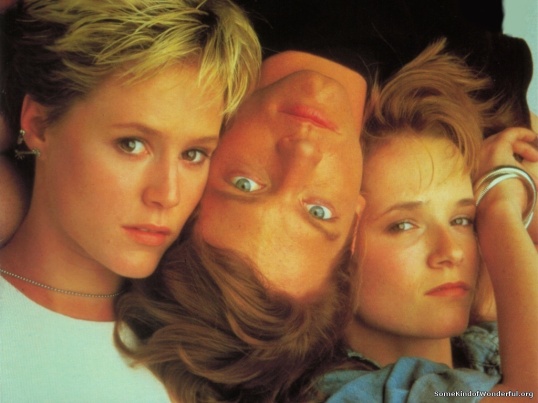
Some-Kind-of-Wonderful-some-kind-of-wonderful-2841626-1024-768

When Keith finally works up the nerve to ask out Amanda, he doesn’t realize that she’s just broken up with Hardy and is on the rebound.  Watts is skeptical, telling Keith, “Don’t go mistaking paradise for a pair of long legs,” and I’m just going to admit that, as the proud owner of a pair of long legs, that line really annoyed me.  I guess it’s because I’ve known people like Watts, who always act like there’s something wrong with wanting to look good.
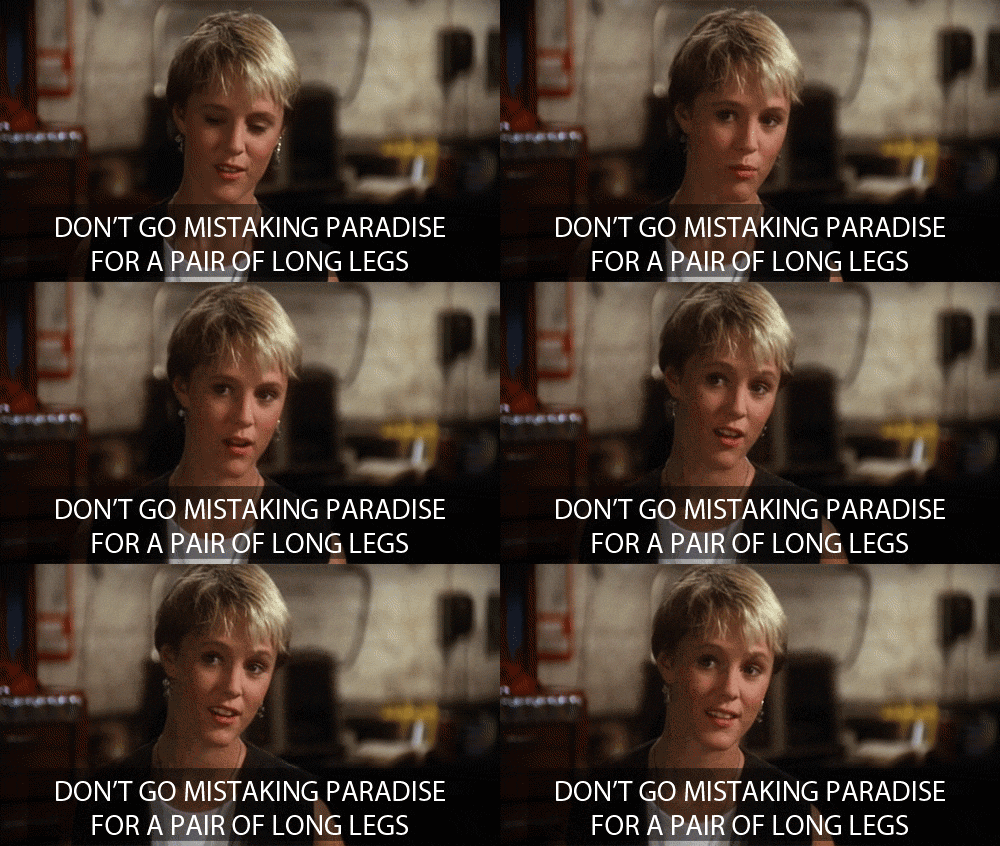
Shut up, Watts.

Shut up, Watts.

With the help of Watts and Duncan (Elias Koteas), the school bully that Keith managed to befriend in detention, Keith takes Amanda out on an amazing date and shows her a wonderful portrait that he’s painted of her.  At the same time, Hardy — angry because someone from a lower class is now dating his ex-girlfriend — starts to plot his own revenge…

There are some positive things about Some Kind of Wonderful.  There are two really good and memorable scenes that, momentarily, manage to elevate the entire film.  There’s the moment when Keith shows Amanda the painting.  And then there’s the erotically charged scene in which Keith and Watts practice how to kiss.  Koteas, Thompson, and Masterson all gives good performances.  Eric Stoltz is, at times, a bit too intense to sell some of the film’s more comedic moments but overall, he’s well-cast here.  (In fact, the only performance that I really didn’t care for was Craig Sheffer’s.  Sheffer one-dimensional villain only served to remind me of how good James Spader was in Pretty In Pink.)
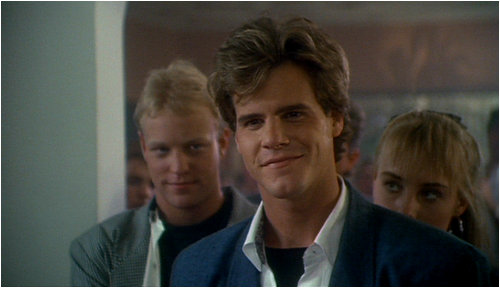
That's no James Spader

That’s no James Spader

And yet, there’s just something missing from Some Kind of Wonderful, something that keeps this film from being … well, wonderful.  I have to wonder if I had never seen Pretty In Pink, would I have thought more of Some Kind of Wonderful?  Perhaps.  Whereas Pretty In Pink was full of the type of small details and clever moments that make it a joy to watch and rewatch, Some Kind of Wonderful is one of those films that you can watch once and enjoy it without ever necessarily feeling the need to ever watch it again.
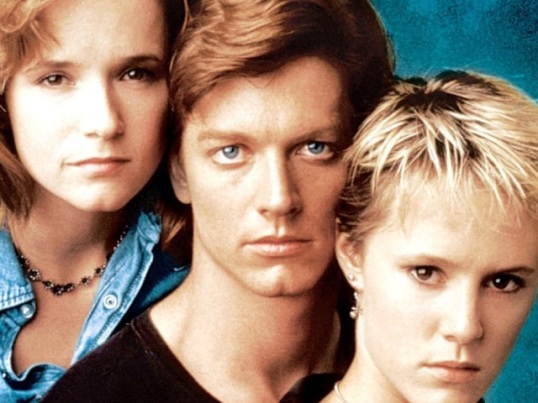
Eric Stoltz is going to kill someone