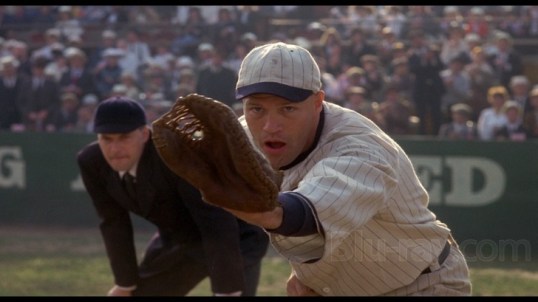
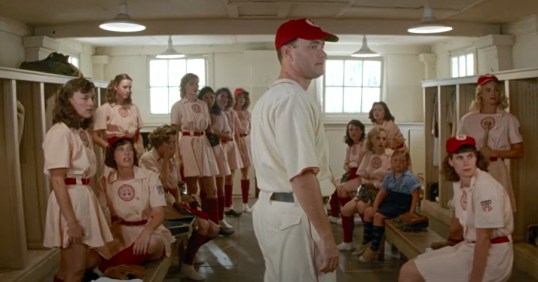
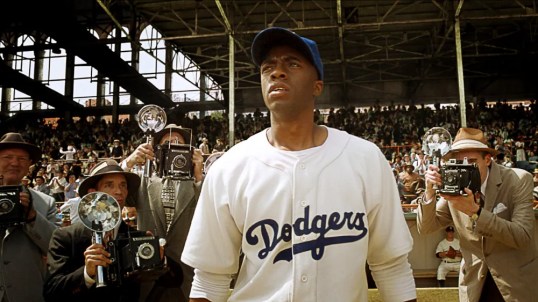
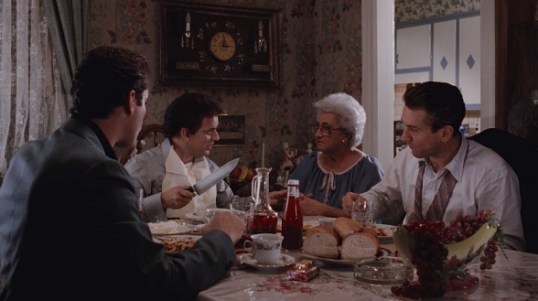
The Films of 2025: The Alto Knights (dir by Barry Levinson)


In The Alto Knights, I’m pretty sure that Robert De Niro sets the record for saying “What’s the mater with you!?” the most times in one movie.

I don’t know for sure, of course.  While I was watching the movie last night, I didn’t keep an exact count and, for that, shame on me.  That said, when you consider that The Alto Knights features Robert De Niro playing not just one but two old school Italian gangsters, you can be sure that there were a lot of scenes of either Vito Genovese (Robert De Niro) or Frank Costello (De Niro, again) demanding to know what was the matter.  When Genovese watches Costello testifying in front of a Congressional hearing, the “What’s the matter with you!?” count truly goes haywire.

The Alto Knights was directed by Barry Levinson, who has directed some great films.  It tells the relatively true story of the rivalry between Costello and Genovese.  Both Costello and Genovese were present when the modern Mafia was first created.  The diplomatic and negotiation-minded Costello was known as the “Prime Minister of the Underworld.”  Genovese was a much more violent gangster and he became one of the most powerful members of the New York Mafia by basically killing anyone who stood in his way.  Costello and Genovese started out as weary friends before coming mortal enemies.  Costello retired from the rackets after Genovese ordered one of his men to shoot Costello in the head.  Meanwhile, Genovese ended up involving the Mafia in the drug trade and died in prison.  In the film, Costello narrates their story.  There’s a lot of shots of an elderly Costello sitting in what appears to be a park as he speaks directly to the camera.  Interestingly enough, Gotti tried to do the same thing, with Travolta’s John Gotti speaking directly to the audience while standing in front of the Brooklyn Bridge.

The Alto Knights pretty much features all of the usual Mafia tropes.  All the usual points are hit.  Albert Anastasia (played by Michael Rispoli) is assassinated while getting a haircut and some viewers will remember that, before De Niro played the man who ordered Anastasia’s assassination, he also played the man who claimed to have shot Anastasia in The Irishman.  Personally, I love Mafia films but The Alto Knights felt a bit too recycled to be truly effective.  Barry Levison does the usual thing of dropping real-life newspaper headlines and photographs into the middle of the film and it doesn’t so much add verisimilitude as much as it just reminds one of David DeCoteau’s film about Bonnie and Clyde.

The film’s main selling point is that it features Robert De Niro playing two gangsters but there’s really not much gained from casting De Niro in both roles.  We get a few scenes of De Niro acting opposite of himself and it’s hard not to notice that Genovese’s reactions often don’t seem to match whatever it is that Costello’s saying.  As an actor, De Niro has the ability to be believable as both the cerebral Costello and the hot-headed Genovese but ultimately, the double casting just feels like a distraction.  Watching De Niro acting opposite himself, I found myself thinking how much more entertaining it would have been if Joe Pesci, Al Pacino, Harvey Keitel, or even John Travolta had played Genovese.  To be honest, if Levinson really had any courage, he would have given the role to James Woods and given us the Once Upon A Time In America/Casino reunion that we all deserve.

The film did win me over a bit towards the end with a recreation of the Apalachin meeting.  That was when Genovese invited every mob boss in the country to come to a meeting in upstate New York, just for the feds to suddenly show up and send everyone scattering.  For most of the film, it was hard not to feel that Barry Levinson was past his prime as a director but he actually did a good job with the Apalachin scenes.  I genuinely laughed when Genovese got into a pointless argument with his driver.  I loved the way the film captured the real-life absurdity of a bunch of mob bosses fleeing into the woods, all of their bravado suddenly dissipating as they scrambled into the wilderness.  If the entire film had just been about the Apalachin meeting, this review would probably be a lot of different.  As it is, one good sequence can’t save the film as a whole.

This is an offer you can refuse.

Retro Television Review: Homicide: Life On The Street 3.20 “The Gas Man”


Welcome to Retro Television Reviews, a feature where we review some of our favorite and least favorite shows of the past!  On Sundays, I will be reviewing Homicide: Life On The Street, which aired from 1993 to 1999, on NBC!  It  can be viewed on Peacock.
This week, the third season of Homicide comes to an end.

Episode 3.2o “The Gas Man”

(Dir by Barry Levinson, originally aired on May 5th, 1995)

The third season of Homicide was coming to an end and NBC was dragging its heels as to whether or not it would renew the show.  Homicide was critically acclaimed but its ratings were low, despite the efforts to make the show more audience-friendly during the third season.  Producer Barry Levinson grew frustrated with NBC’s refusal to tell him whether or not the show would be renewed.  Feeling that show was probably over, Levinson and showrunner Tom Fontana decided to do something truly radical.  They crafted a series finale that sidelined most of the major characters.

Instead, The Gas Man focuses on Victor Helms (Bruno Kirby) and his best friend, Danny Newton (Richard Edson).  Helms has just gotten out of prison, where he served six years after a gas heater he installed malfunctioned and caused the death of one of his customers.  Helms blames Frank Pembleton for the loss of both his freedom and his family.  (After getting released, Helms tries to talk to his teenage son but is rejected.)  Helms and Newton follow Pembleton across Baltimore, watching as he goes to work and to a fertility clinic.  While Pembleton is investigating the murder of a fortune teller, Helms and Newton sneak onto the crime scene and find both the murder weapon and the fortune teller’s severed head.  Helms takes both of them home and sends pictures to the Baltimore Sun, trying to taunt Pembleton.  Both the Sun and Pembleton assume its a hoax.  Eventually, Helms makes his move and, even with a knife to Pembleton’s throat, he realizes that he doesn’t have it in him to commit a cold-blooded murder.  He starts to cry.  Pembleton arrests him.  Life goes on.

This was an interesting episode.  The first time I saw it, I was a bit annoyed that the focus was taken off the lead characters.  But the more I think about it, the more I appreciate what Levinson was going for.  With this episode, he shows us what happens after the investigation and the conviction.  Victor Helms is angry because he feels, perhaps with some justification, that he was unfairly charged and convicted.  He’s obsessed with Pembleton but it’s clear that Pembleton doesn’t even remember him.  For Pembleton, arresting Victor Helms was a part of his job, nothing more.  For Helms, it was the moment that his entire life collapsed.  Bruno Kirby and Richard Edson both gave good performances as Helms and Danny.  Kirby captured Helms’s obsession but he also gave us some glimpses of the man that Helms used to be.  As portrayed by Edson, Danny’s loyalty to his friend was actually kind of touching.

Of course, it turned out that this episode was not the series finale.  Homicide would return for a fourth season, without Daniel Baldwin or Ned Beatty.  We’ll start season four next week!

4 Shots From 4 Films: Special 1990 Edition


4 Or More Shots From 4 Or More Films is just what it says it is, 4 shots from 4 of our favorite films. As opposed to the reviews and recaps that we usually post, 4 Shots From 4 Films lets the visuals do the talking!

Today, we pay tribute to the year 1990!  It’s time for….

4 Shots From 4 1990 Films

Goodfellas (1990, dir by Martin Scorsese, DP: Michael Ballhaus)

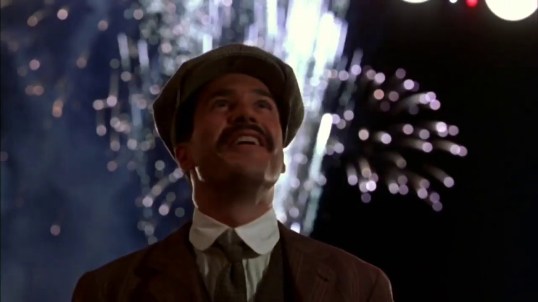
Avalon (1990, directed by Barry Levinson, DP: Allen Daviau)

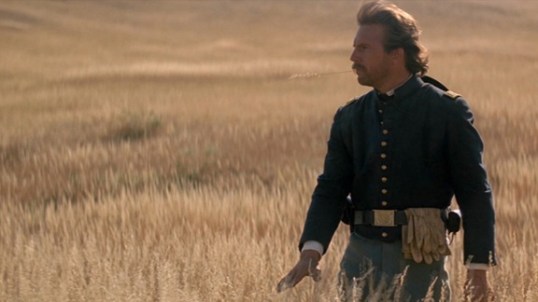
Dances With Wolves (1990, dir by Kevin Costner, DP: Dean Semler)

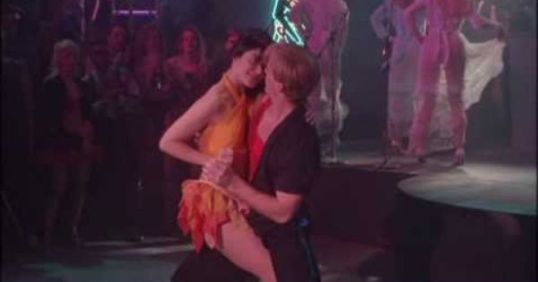
The Forbidden Dance Is Lambada (1990, dir by Greydon Clark, DP: R. Michael Stringer)

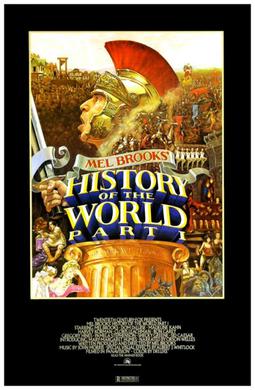
The History of the World, Part I (1981, directed by Mel Brooks)


Overlong, wildly uneven, gimmicky too a fault, and often laugh out loud funny with a mix of jokes that range from the crude to the sublimely clever to the surprisingly sentimental, The History of the World, Part I is the ultimate Mel Brooks films.

Narrated by Orson Welles and featuring five historical stories and a collection of coming attractions, The History of the World Part I follows man from his caveman origins to the French Revolution and the thread that ties it all together is that humanity always screws up but still finds a way to survive.  Moses (Mel Brooks) might drop and break one of the three tablets listing the 15 Commandments but he’s still able to present the other ten.  Stand-up philosopher Comicus (Mel Brooks) might make the mistake of poking fun at the weight of Emperor Nero (Dom DeLuise) but he still makes his escape with Josephus (Gregory Hines), Swiftus (Ron Carey), and Miriam the Vestal Virgin (Mary-Margaret Humes) and ends up serving as the waiter at the Last Supper.  (“Jesus!”)  The Spanish Inquisition may have been a catastrophe but it also gave Torquemada (Mel Brooks) a chance to show off his performance skills.  The French Revolution may have been a bloodbath but the future still held promise.  Ask for a miracle and he’ll show up as a white horse named Miracle, no matter what era of history you’re living in.

The humor is very Mel Brooks.  During the Roman Empire sequence, Madeline Kahn plays Empress Nympho.  Jackie Mason, Harvey Korman, Cloris Leachman, Spike Milligan, Jan Murray, Sammy Shores, Shecky Greene, Sid Caesar, Henny Youngman, and Hugh Hefner all make cameo appearances.  Carl Reiner is the voice of God.  John Hurt plays Jesus.  The film ends with the promise of a sequel that will feature “Jews in Space.”  Not every joke lands.  The entire caveman sequence feels forced.  But when the film works — like during The Inquisition production number — it’s hard not get caught up in its anything-goes style.  The entire Roman Empire sequence is probably more historically accurate than the typical Hollywood Roman epic.  That’s especially true of Dom DeLuise’s naughty performance as Emperor Nero.

Mel Brooks is 99 years old today and he says that he has at least one more film to give us, a sequel to Spaceballs.  I’m looking forward to it!  I’m also looking forward to rewatching and enjoying all of the films that he’s already given us.  The History of the World, Part I may not have initially enjoyed the critical acclaim of his earlier films but, in all of its anarchistic glory, it’s still pure Mel Brooks.

Film Review: …. And Justice For All (Dir by Norman Jewison)


First released in 1979, ….And Justice For All will always be remembered for one scene.

Yell it with me, “YOU’RE OUT OF ORDER!  THE WHOLE TRIAL IS OUT OF ORDER!  THEY’RE OUT OF ORDER!”

When attorney Arthur Kirkland (Al Pacino) starts screaming in the middle of the courtroom, it’s a cathartic moment.  We’ve spent nearly two hours watching as Arthur deals with one insane situation after another.  One of Arthur’s partners, Warren (Larry Bryggman), cares more about his car than actually delivering the right documents to a judge.  Another of Arthur’s partners, Jay (Jeffrey Tambor), has a nervous breakdown and, after shaving his head, ends up throwing cafeteria plates at people in the courthouse.  Arthur has three clients, one of whom is indigent, one of whom is innocent, and one of whom is a wealthy and despised judge (John Forsythe) who has been accused of a rape that Arthur suspects he committed.  The system offers no mercy for Arthur’s innocent (or, at the very least, harmless) clients while going out of it’s way to defend the judge.  Meanwhile, another judge (Jack Warden), is driven to take suicidal risks, like flying a helicopter until it runs out of fuel and comes down in a nearby harbor.  The assistant district attorney (Craig T. Nelson) only cares about his political ambitions and finally, after one incident after another, Arthur snaps.  And it’s cathartic because we’re all on the verge of snapping as well.

That final moment, with its signature Al Pacino rant, is such a strong and iconic scene that it’s easy to forget that the film itself is actually rather uneven.  The script, by Barry Levinson and Valerie Curtin, owes a good deal to the work of Paddy Chayefsky.  Just as Chayefsky often wrote about men being driven mad by institutional failure, ….And Justice For All features character after character snapping when faced with the screwed-up realities of the American justice system.  The final “out of order” speech is obviously meant to be this film’s version of Howard Beale’s “I’m as mad as Hell and I’m not going to take it!” speech from Network and, much like George C. Scott in the Chayefsky-written The Hospital, Arthur spends a lot of time talking about what he doesn’t like about his job.  The thing that sets ….And Justice For All apart from the best works of Chayefsky is that Levinson, Curtin, and director Norman Jewison all take Arthur Kirkland at his word while one gets the feeling that Chayefsky would have been a bit more willing to call out Arthur on his self-righteousness.  Arthur has every right to be angry when Warren forgets to give a judge an important document while Warren is substituting for him in court.  At the same time, Arthur is the one who trusted Warren to do it.  In the end, the document was not about one of Warren’s client.  In fact, Warren knew absolutely nothing about the case or Arthur’s client.  The document was about Arthur’s client and Arthur was the one who decided trust someone who had consistently shown himself to not be particularly detailed-orientated.  One gets the feeling that Chayefsky would not have let Arthur off the hook as easily as Levinson, Curtin, and Jewison do.  Arthur’s perpetual indignation can sometimes be a little hard to take.

It’s a very episodic film.  Arthur goes from one crisis to another and sometimes, you do have to wonder if Arthur has ever had any human or legal interactions that haven’t ended with someone either going insane or dying.  There’s no gradual build-up to the film’s insanity, it’s right there from the beginning.  And while this means the narrative often feels heavy-handed, it also makes that final speech all the more cathartic.  It’s an uneven film and, of all of the characters that Pacino played in the 70s, Arthur is probably the least interesting.  But that final rant makes up for a lot and, fortunately, Pacino was just the actor to make it memorable.  For all it’s flaws, the final few minutes of ….And Justice For All make the film unforgettable.


April True Crime: The Wizard of Lies (dir by Barry Levinson)


For many people, Bernie Madoff is a still a name that summons hate.

Madoff was the owner of Bernard L. Madoff Investment Securities, a firm that was a family business.  He ran it with his two sons, Mark and Andrew, and he gained a reputation for being a financial wizard, someone who never lost money and who always returned a profit for everyone who trusted him with their money.  He was someone who took money from the famous and the ordinary, the rich and the middle class, and he promised everyone that he would do wonderful things with that cash.  He lived in a fabulous home in New York City.  He had business and political connections.  His firm was, at one point, ranked as the sixth biggest on Wall Street but Madoff, himself, tried to keep a low-profile.

Of course, Madoff was a liar.  While his brokerage firm actually did make money, the asset management part of his business was actually a massive Ponzi scheme.  He took his clients’ money for himself and then kept everyone at bay by sending them fake documents that showed how well their investments were doing.  As long as the economy remained strong, Madoff had nothing to worry about.  People gave him their money, assumed it was safe, and then went away.  But when the stock market crashed in 2008, Madoff realized that his panicked clients would be coming for their money and he wouldn’t be able to give it to them.

Overnight, Madoff’s life collapsed.  He spent the rest of his days in prison, having been turned in by his own sons.  One son committed suicide, the other would die of cancer with his last words apparently being that his father was dead to him.  It was the biggest case of financial fraud in United State history and the majority of Madoff’s clients lost all of the money that they had given to him.  It was subsequently learned that many people had spotted red flags when it came to Madoff and his business.  (The fact that Madoff claimed to never lose money should have been a huge one.)  But Madoff invested his money in politicians and he never faced a real investigation until it was too late.  Madoff spend the rest of his days as a symbol of everything wrong with Wall Street.

Not surprisingly, quite a few movies were inspired by Bernie Madoff’s crimes, some of them featuring characters based on him and a few being about the case itself.  Produced by HBO, 2017’s The Wizard of Lies stars Robert De Niro as Madoff, Michelle Pfeiffer as his wife, and Alessandro Nivola as his son, Mark.  Directed by Barry Levinson, The Wizard of Lies follows Madoff as his Ponzi scheme collapses and it shows how the grand deception started.  Robert De Niro plays Madoff as being essentially soulless, a sociopath who knew he would eventually get caught but who just couldn’t bring himself to stop stealing people’s money.  Indeed, as played by De Niro, Madoff comes across as being one of the most joyless criminal masterminds in history.  He’s fooled everyone but he can’t enjoy it.  The impression that one gets is that Bernie Madoff was a pretty boring guy.  Perhaps that’s why people were willing to trust him with their money.  Someone that boring had to be trustworthy!  Many people have claimed that there’s no way that Mark and Andrew Madoff couldn’t have know what their father was doing.  In the film, one gets the feeling that Mark and Andrew knew something was going on but they decided to willfully blind themselves to what was happening around them.  The film hints that was Madoff’s secret power.  No one wanted to admit that his success was too good to be true.

The Wizard of Lies really doesn’t reveal anything new about the Madoff case.  Madoff’s crimes were actually pretty simple.  He wasn’t a criminal genius.  He was just someone who understood the importance of telling people what they wanted to hear.  Still, it’s a well-acted movie and, if you’re just looking for the facts of the case, The Wizard of Lies will give them to you.

4 Shots From 4 Films: Special Barry Levinson Edition


4 (or more) Shots From 4 (or more) Films is just what it says it is, 4 (or more) shots from 4 (or more) of our favorite films. As opposed to the reviews and recaps that we usually post, 4 (or more) Shots From 4 (or more) Films lets the visuals do the talking.

Happy birthday to Baltimore’s own Barry Levinson!

4 Shots From 4 Barry Levison Films

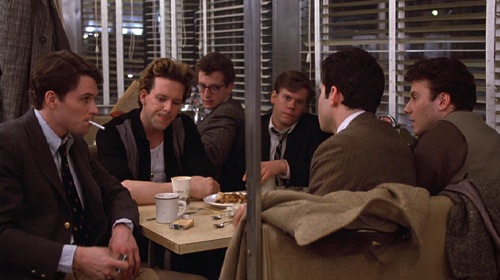
Diner (1982, directed by Barry Levison, DP: Peter Sova)

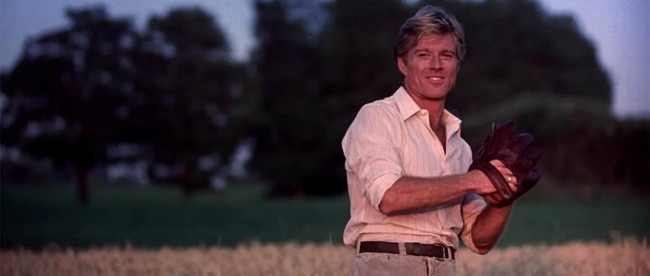
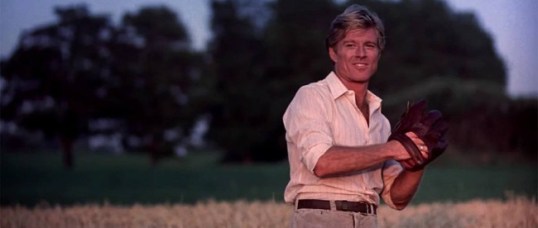
The Natural (1984, directed by Barry Levinson, DP: Caleb Deschanel)


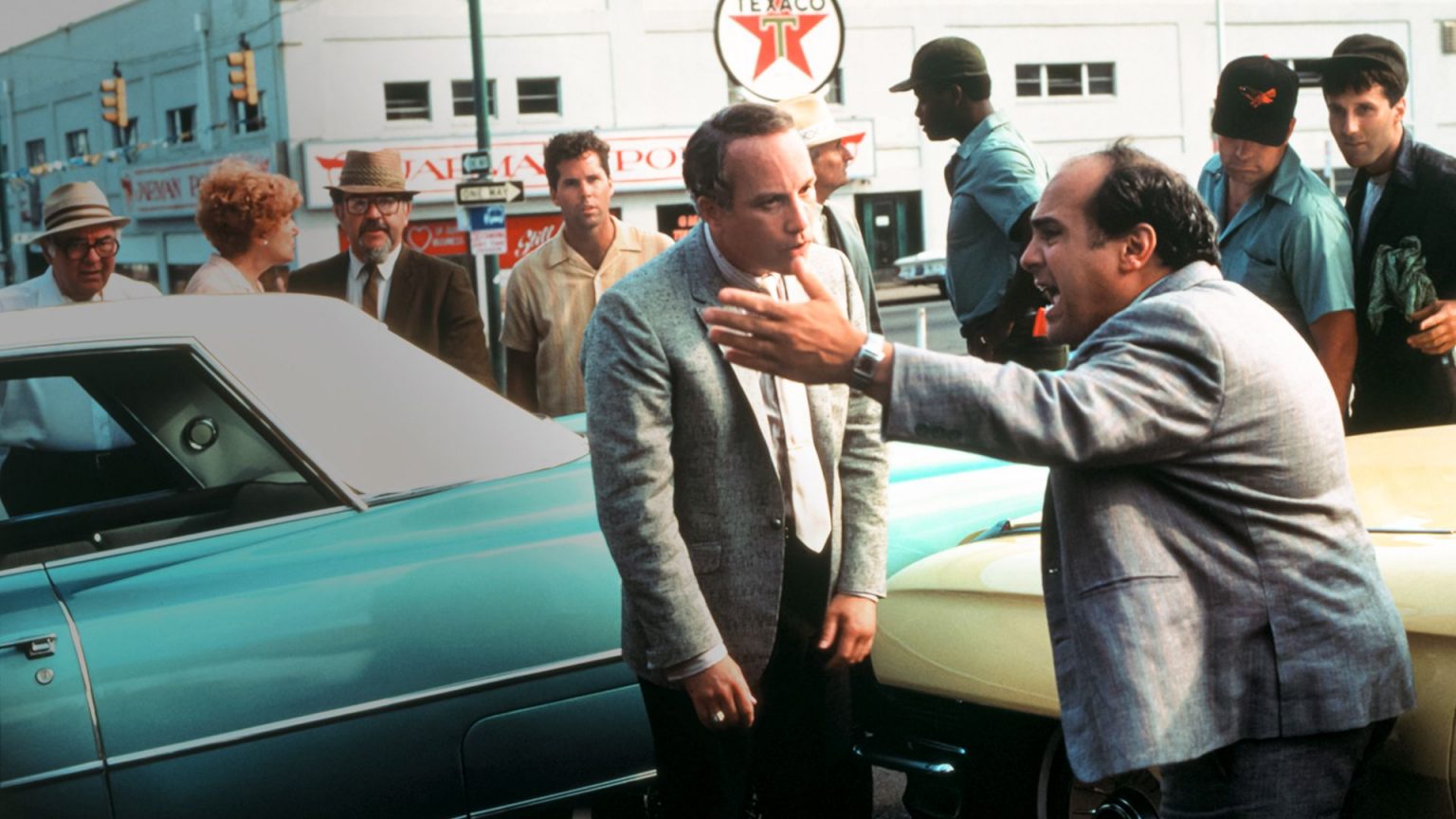
Tin Men (1987, directed by Barry Levinson, DP: Peter Sova)

Avalon (1990, directed by Barry Levinson, DP: Allen Daviau)


Retro Television Review: Homicide: Life on the Street 1.1 “Gone For Goode”


Welcome to Retro Television Reviews, a feature where we review some of our favorite and least favorite shows of the past!  On Sundays, I will be reviewing Homicide: Life On The Street, which aired from 1993 to 1999, on NBC!  It  can be viewed on Peacock.

Today, I take a look at the pilot for a show that has been called one of the best of all time.

Episode 1.1 “Gone For Goode”

(Directed by Barry Levinson, originally aired on January 31st, 1993)

The opening credits for the first episode of Homicide: Life on the Street immediately announce that the show is not going to be a typical network cop show.  The music starts out as moody and low-key before eventually being dominated by a pulsating beat.  The images of dirty streets and crumbling rowhouses and of a dog running around behind a fence are all in black-and-white.  The faces of the cast appear, the majority of them in harsh close-up.  When viewed today, most of the faces are familiar.  Daniel Baldwin, Ned Beatty, Andre Braugher, Clark Johnson, Yaphet Kotto, Melissa Leo, Jon Polito, and Kyle Secor all flash by and the thing that the viewer will immediately notice is that it’s almost as if they’ve been filmed to remove any hint of glamour or attractiveness.  (Out of that impressive cast, only Baldwin, Johnson, Leo, and Secor are still with us.)

Gone for Goode tells several stories, introducing the detectives as they investigate various murders in Baltimore.  Meldrick Lewis (Clark Johnson) and Steve Crosetti (Jon Polito) are first seen searching for a bullet in a dark alleyway and arguing in only the way that two people who have worked with each other for a long time can argue.  Lewis continually refers to Crosetti as a “salami-head,” and Crosetti, who claims that he’s being kept up at night by his doubts about whether or not John Wilkes Booth was actually Lincoln’s assassin, repeatedly says that Lewis will regret that.  Later, Crosetti writes a complaint about the ethnic insults that he’s been forced to listen to but apparently, he never actually sends it.

When not arguing with each other, Crosetti and Lewis investigate “Aunt Calpurnia,” who has buried five husbands and whose niece has nearly been murdered three times.  Aunt Calpurnia has life insurance policies out on everyone.  While digging up Calpurnia’s former husband, Lewis comments that the body in the grave doesn’t look as large as the man in the picture that he’s been given.  The cemetery’s caretaker replies, “Nobody stays fat down there.”  Technically, that’s true but it also turns out that the wrong man was buried in the grave and the caretaker has no idea where anyone is actually buried.

Detective Felton (Daniel Baldwin) and Detective Howard (Melissa Leo) investigate the murder of a man who was found decaying in a basement.  Howard is the primary detective on the case because Felton, being a screw-up, has too many unsolved cases under his name on the dry-erase board that dominates the squad room.  Howard currently has a streak of solved homicides and that continues for her when the murderer just happens to call the crime scene and then agrees to come in for a talk.

Detective Stanley Bolander (Ned Beatty) guilts Detective John Munch (Richard Belzer, who would play the same character years later on Law & Order: SVU) into investigating a hit-and-run that happened months ago.  Munch, who earlier tells a suspect that he is not Montel Williams (“So don’t like to me like I’m Montel Williams”) and leaves both Bolander and the suspect confused as to who Montel Williams is, eventually discovers that the murder was committed by a brain-dread idiot who can only repeat, “I was drinking,” when he’s confronted with his guilt.

Finally, Lt. Al Giardello (Yaphet Kotto) assigns Felton to work with Frank Pembleton (Andre Braugher), a brilliant but arrogant detective who insists on working alone.  Pembleton and Felton’s partnership begins with Pembleton spending an hour in the station’s garage, searching for his squad car because Pembleton forgot to write down the parking space on the back of his keys.  (Of course the garage is full of identical white cars.)  When Felton says suggests just going upstairs and getting a new set of keys, Pembleton shouts that the next car he tries to unlock could be the right car.

Needless to say, the Pembleton/Felton partnership does not last and Pembleton instead ends up working with an eager newcomer to the squad, Tim Bayliss (Kyle Secor).  They two of them work surprisingly well together until Bayliss objects to Pembleton “fooling” a suspect into waving his right to an attorney.

As the episode comes to a close, Bayliss answers his first call in the squad room.  At the crime scene, in the middle of a torrential storm, he discovers the body of a small girl.

I have to say that the idea of trying to review Homicide: Life on The Street is a bit intimidating, just because the show has got an almost legendary reputation.  It’s often described as being the best cop show of the 90s, as well as being held up as a perfect example of a show that was too good to last.  It was never a hit in the ratings and came close to being canceled several times.  Because it was filmed in Baltimore, it was viewed as being an outsider amongst the New York and Hollywood-produced shows that dominated the airwaves.  Executive produced by Barry Levinson (who also directed Gone for Goode) and based on a non-fiction book by David Simon, Homicide is the show that is often cited as the precursor for The Wire, another show that was loved by the critics but not by its network or the Emmy voters.

The pilot is intriguing, largely because it seems determined to scare off its audience.  Unlike other television  detectives, who are inevitably portrayed as being crusaders who are obsessed with justice, the detectives in Homicide are a blue collar bunch who, for the most part, are just doing their job.  Sure, someone like Frank Pembleton might be brilliant.  And Stanley Bolander might truly mean it when he tells Munch that “we speak for the dead.”  And Bayliss does seem to be very enthusiastic about being a “thinking” policeman.  But the show suggests that most detectives are like Felton, Lewis, and Much.  They’re not particularly brilliant and their approach to the job can sometimes seem callous.  But occasionally, they get lucky and a murder is solved.  Indeed, if there is any real message to the pilot, it’s that criminals are stupid.  They get caught not because of brilliant police work but because they do stupid things, like calling the crime scene or failing to ditch the car that they sole.

That said, the pilot also does what a pilot is supposed to do.  It introduces the characters and gives them just enough space to make an impression, along with also leaving enough room for them to grow.  The characters may not all be instantly likeable but, fortunately, the strong cast holds your interest.  The pilot is very much a product of the 90s, with Munch ranting about Montel Williams and Crosetti mentioning Madonna at one point.  But, at the same time, it still feels relevant today.  Pop culture might change but murder remains the same.
Diner (1982, directed by Barry Levinson)


Which member of the Diner gang would you be?

I think that is the question that everyone, or at least every guy, asks themselves after watching Barry Levinson’s debut film.  Most would probably want to say that they’re Boogie (Mickey Rourke), because he’s cool, all the ladies love him, and he makes creative use of a popcorn box at the movies.  Some would probably say that they want to be Fenwick (Kevin Bacon) because he’s smart and sarcastic.  No one wants to be Billy (Tim Daly) or Eddie (Steve Guttenberg), even though we would all want to be their friend.

The truth is that most of us would probably be Shrevie (Daniel Stern), the just-married one who is discovering that being an adult means working an unglamorous job and discovering the rest of the world doesn’t care about your taste in music.  The luckiest of us might be Modell (Paul Reiser), the funny one who doesn’t get a story but who makes a lot of jokes.

Diner was one of the first great hang-out movies.  There is no plot, at least not in the traditional sense.  Instead, it’s about a group of long-time friends who live in Baltimore in 1959.  They grew up together.  They went to high school together.  They’ve been hanging out at the same diner for as long as they can all remember.  And now, they’re at the point in their lives where the world expects them to act like adults and accept all the responsibility that goes along with that.  It’s a film that celebrates their friendship while also acknowledging that some of them are using that friendship as an excuse to not grow up.  They escape into trivia and movies, with one minor character reciting Sweet Smell of Success by memory.  Fenwick drinks.  Boogie gambles.  Even Billy, who doesn’t even live in Baltimore anymore, reverts to his old ways as soon as he returns for Eddie’s wedding and ends up sucker punching someone because of an old high school incident.

The preparations for Eddie’s wedding gives the film what structure it has.  Eddie is marrying the unseen Elyse, assuming she can pass his demanding quiz about the Baltimore Colts.  (That may sound unfair but if you’re from Baltimore, you’ll understand.)  While Eddie gets ready for his wedding, Shrevie’s marriage to Beth (Ellen Barkin) seems to be falling apart and she finds herself tempted to cheat with Boogie, who has his own problems with a local bookie.  Meanwhile, Billy learns that his girlfriend (Kathryn Dowling) is pregnant.

The film is about friendship and the friendships between the men feel real.  Levinson held off on shooting the largely improvised diner scenes until the end of the film, by which time all of the actors had developed their own idiosyncratic relationships with each other.  The heart of Diner is to be found in scenes like the one where Modell tries to ask for someone else’s sandwich without actually coming out and asking for it.  The dialogue in that scene and so many others has the ring of age-old friendship.  Though the film makes it easy to see why Mickey Rourke and Kevin Bacon become movie stars while Tim Daly has spent most of his career on television, the entire cast is still perfect in their roles.  It’s about as strong as an ensemble as you could ever hope to see.  They become the characters and watching the movie, it’s impossible not to see yourself and your friends in their performances.

Barry Levinson has gone on to direct many more films but for me, Diner will always be the best.


4 Shots From 4 Films: Special Barry Levinson Edition


4 (or more) Shots From 4 (or more) Films is just what it says it is, 4 (or more) shots from 4 (or more) of our favorite films. As opposed to the reviews and recaps that we usually post, 4 (or more) Shots From 4 (or more) Films lets the visuals do the talking.

Happy birthday to Baltimore’s own Barry Levinson!

4 Shots From 4 Barry Levison Films

Diner (1982, directed by Barry Levison, DP: Peter Sova)

The Natural (1984, directed by Barry Levinson, DP: Caleb Deschanel)

Tin Men (1987, directed by Barry Levinson, DP: Peter Sova)

Avalon (1990, directed by Barry Levinson, DP: Allen Daviau)