Music Review: Pink Floyd — The Wall (dir by Alan Parker)


1982’s Pink Floyd — The Wall is a film that I have mixed feelings about.

Some of that is due to my feelings about Pink Floyd.  On the one hand, I can’t deny their talent and I do like quite a few of their songs, if they do all tend to be a bit on the portentous side. On the other hand …. Roger Waters!  Bleh, Roger Waters. Waters was one of the founders of Pink Floyd and, for a while, the band’s de facto leader.  He’s also a rabid anti-Semite and a defender of Vladimir Putin’s.  That said, I’ve discovered that I can justify listening to Pink Floyd by remembering that the rest of the band hates Roger Waters as well and that Waters himself eventually left Pink Floyd.  Waters’s bandmate, David Gilmour, has flat-out called Roger Waters an anti-Semite.  Last year, when we had a total eclipse of the sun, I was happy to be able to play the last two tracks of Dark Side of the Moon while enjoying the early and temporary evening.  It just felt appropriate.

Outside of Dark Side of the Moon, The Wall is probably Pink Floyd’s best-known work.  (When I was younger, I can remember my Dad playing it whenever he was driving across the country.)  A concept album about how much it sucks to be a wealthy Englishman, The Wall is one of those albums and films that are beloved by people who consider themselves to be alienated.  Even more so than the average Pink Floyd album, The Wall was the brainchild of Roger Waters and, when the movie version was made in 1982, Waters wrote the screenplay.  That said, I think you can argue that, much as with Tommy, The Wall was ultimately more about the vision of the film’s director than that of the man who wrote the songs.

The Wall is definitely an Alan Parker production.  It’s big.  It embraces the sordid.  It’s stylish almost to the point of parody.  Every image has been carefully constructed by a director who got his start doing commercials and whose main goal was to get an immediate audience reaction.  Much like Parker’s Midnight Express or Evita, it’s a film that grabs your attention while you’re watching it and only afterwards do you stop consider that there really wasn’t much going on underneath the surface.

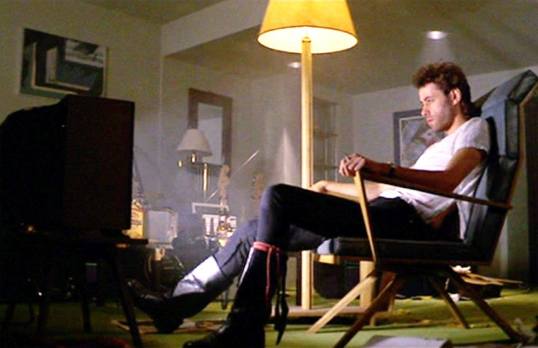
Pink (Bob Geldof) is a self-loathing rockstar who is haunted by his childhood in post-WWII Britain and whose marriage is failing.  He’s building a wall, brick-by-brick, to keep himself separated from pain but the price of becoming comfortably numb is to be so alienated that you imagine becoming a neo-Nazi who orders his followers to follow the Worm.  The imagery is powerful.  The animated sequences by Gerald Scarfe still make quite an impression, especially the marching hammers.  The score features songs like Another Brick In The Wall, Comfortably Numb, and Run Like Hell.  The film is relentless, full of downbeat imagery that is often excessive but which Parker understood would appeal to the film’s target audience.  Indeed, it’s such an overwhelming film that it’s easy to overlook the fact that, even before he transformed into a fascist, Pink is a drab character and his main problem seems to be that he can’t seem to find anything good to watch on television.

That said, I have to admit that, despite myself, I do like The Wall.  It’s just so shameless that it’s hard not to enjoy the silliness of it all.  Add to that, Comfortably Numb is a great song.  (Another Brick In The Wall is also a great song though perhaps not for the reasons that Waters thought it was.)  The Wall is a monument to the joys of cinematic excess.

Musical Film Review: The Commitments (dir by Alan Parker)


First released in 1991 and based on a novel by Roddy Doyle, The Commitments is the story of a manager with a dream and a band with a chip on its collective shoulder.

Living in working class Dublin, Jimmy Rabbitte (Robert Arkins) dreams of managing a band.  He’s a fan of old school soul and rock and roll music, the type that was played by black artists in the American South.  Jimmy feels that the Irish have a special connection to that music because, as he explains it, “the Irish are the blacks of Europe.”  (I think one could argue that the black people living in Europe are the blacks of Europe but we’ll go with it.  I understand Jimmy’s argument, even if it is the sort of thing that would send social media into a tizzy if it were made today.)  Jimmy puts an ad in the paper and discovers that there are a lot of aspiring musicians in Ireland and very few of them know much about soul music.  Even Jimmy’s father (a delightful Colm Meaney) seems to believe that he could be a part of the band.  In the end, Jimmy puts together the band himself, recruiting an unlikely collection of friends and barely know acquaintances.  He finds a lead singer in the talented but unruly Deco Cuffe (Andrew Strong), a pianist in the religious Steven (Michael Aherne), a saxophonist in Dean Fay (Felim Gormley), a guitarist in Outspan Foster (Glen Hansard), and three back-up singers in Bernie (Bronagh Gallagher), Imelda (Angeline Ball), and Natalie (Maria Doyle).  He also finds a mentor in trumpeter Joey “The Lips” Fagan (Johnny Murphy), an American who claims to have played with everyone who is anyone and who names the band The Commitments.  They’re a working class band and one that doesn’t always mix well with each other.  Deco’s gets on everyone’s nerves from the start but, as Dean puts it at the unemployment office, he’s much happier being a saxophonist on the dole than a plumber’s assistant on the dole.

There’s a raw energy to The Commitments, as both a film and a band.  Both the film’s comedy and its music comes from a very real pain.  No one in the film is rich.  No one has been given much of a chance by British society.  Deco may be obnoxious but he also epitomizes the wild spirt of someone who refuses to be tamed by society.  Jimmy Rabbitte may occasionally be a bit in over his head but it’s hard not to admire his refusal to surrender.  From the minute the band comes together, it’s obvious that they’re not going to last.  Nearly every gig ends in disaster and Joey, despite his knowledge of soul, is a bit rigid in his demands of the band.  When Dean improvises, Joey acts as if it’s the end of the world that Dean would rather play jazz than soul.  Joey sees jazz as being elitist.  Dean sees it as being a way to express his own artistic vision.  The wonderful thing about The Commitments is that they’re both allowed to be right.

The band might not last but the film leaves you happy that they still had their moment.  The Commitments is a film that feels alive, not just with artistic desire but with the anger of people who have been pushed to the side by the establishment.  For a while, the band gives them a chance to express that anger and, afterwards, it’s gratifying to see that the majority of the members still carry the legacy of The Commitments with them, with some members continuing to pursue music and others returning to their everyday lives in Dublin.  It’s a good film, one that celebrates both music and humanity.


Scenes That I Love: The Finale of Alan Parker’s Fame


In honor of Alan Parker’s birthday, today’s scene of the day comes from his 1980 film, Fame. This is one of the best finales ever captured on film.

In this scene, the film’s characters performer for one last time before graduating and heading out into a world that, for all their talent, promises nothing.  The film follows these students over the course of their four years at the High School for the Performing Arts and, as the finale plays out, we know that, no matter what happens, there years at the school will remain some of the most important of their lives.

4 Shots From 4 Films: Special Alan Parker Edition


4 (or more) Shots From 4 (or more) Films is just what it says it is, 4 (or more) shots from 4 (or more) of our favorite films. As opposed to the reviews and recaps that we usually post, 4 (or more) Shots From 4 (or more) Films lets the visuals do the talking.

81 years ago, on this date, the late director Alan Parker was born in London.  One of the many British directors, like the Scott brothers and Adrian Lyne, who began by directing advertisements, Parker went on to become a director known for both his intense visual style and his revolutionary use of music as a storytelling device.  It’s time for….

4 Shots From 4 Alan Parker Films

Midnight Express (1978, dir by Alan Parker, DP: Michael Seresin)

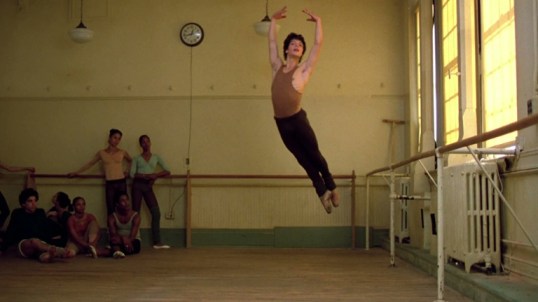
Fame (1980, dir by Alan Parker, DP: Michael Seresin)

Pink Floyd — The Wall (1982, dir by Alan Parker, DP: Peter Bizou)

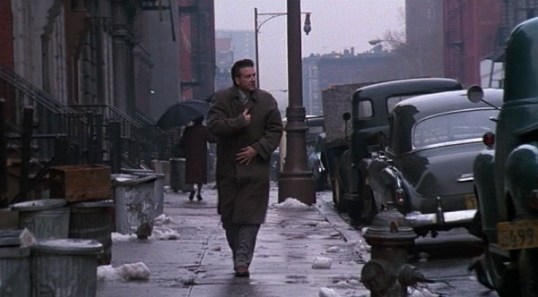
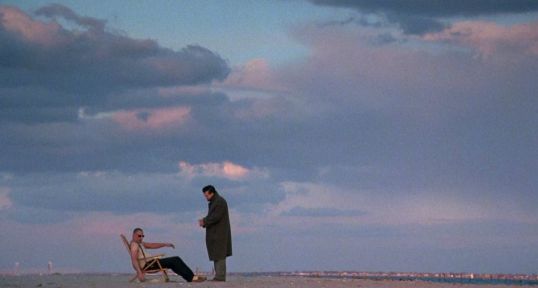
Angel Heart (1987, dir by Alan Parker, DP: Michael Seresin)


Lisa Marie Reviews An Oscar Nominee: Mississippi Burning (dir by Alan Parker)


1988’s Mississippi Burning opens on a lonely Mississippi backroad in 1964.  A car is pulled over by the police.  Inside the car are three young men, one black and two white.  Judging from their nervous expressions and the sound of the people who stopped them and the fact that they’re in Mississippi during the 60s, we can guess what is about to happen to the people in the car.

With the three men, who were civil rights activists who were involved in voter registration efforts, officially considered to be missing, the FBI sends down two agents to find out what happened.  The two agents are Alan Ward (Willem DaFoe) and Rupert Anderson (Gene Hackman).  Ward is a Northerner who does things by the book and who resents having to deal with lax Southern law enforcement.  He is serious-minded and, just in case we need a reminder of how serious he is, he wears bar-rimmed glasses that make him look like the world’s most fearsome IRS agent.  Anderson is from Mississippi.  He’s a talkative good ol’ boy who was a sheriff before he joined the FBI.  “You know what has four eyes but can’t see?” Anderson asks, “Mississippi.”  It’s a tense partnership, as Ward sometimes disapproves of Anderson’s methods and Anderson thinks that Ward doesn’t understand how things work in Mississippi.

From the first minute we meet local law enforcement, we know that they’re the killers.  Just the fact that one of them are played by Brad Dourif is evidence enough.  However, no one in town is willing to say a word against the police or their cronies.  The white citizens are either too intimidated or they agree with what happened to the three civil rights workers.  (The three men are often referred to as being “outside agitators.”)  The black townspeople live in fear of the Klan and have no reason to trust the word of white FBI agents like Ward and Anderson.

Ward and Anderson investigate the case, hoping that they can find some bit of evidence that will prove the guilt of Sheriff Stuckey (Gailard Sartain), Deputy Pell (Brad Dourif), KKK leader Clayton Townley (Stephen Tobolowsky), and maybe even the town’s mayor (R. Lee Ermey).  One advantage that the FBI has is that the murderers are incredibly stupid.  Another is that Deputy Pell’s abused wife (Frances McDormand, giving the film’s best performance) might be persuaded to testify against her husband.

Mississippi Burning is an example of both powerful filmmaking and problematic history.  Like Ridley Scott, director Alan Parker got his start making commercials and he brought the same sensibility to his movies.  He knew what audiences wanted to see and he made sure to give it to them.  Mississippi Burning looks fantastic and is full of memorable performances.  (Both McDormand and Hackman received Oscar nominations).  The action moves quickly and the villains are so hateful that watching them end up getting humiliated really does bring about a sort of emotional release.

At the same time, this is a film about the Civil Rights era that presents the FBI as being the heroes.  And while it’s true that the FBI did investigate the real-life murders that inspired this film, Mississippi Burning leaves out the fact that the FBI was just a rigorous in harassing and wire tapping Martin Luther King as they were in keeping an eye on the leaders of the Klan.  It’s a film about racism in which the heroes are as white as the villains.  Gene Hackman gives a good performance as Rupert Anderson but the film never really delves all that deeply into Anderson’s feelings about racism in the South.  We’re told that he was a sheriff in Mississippi but we never learn much about what type of sheriff Anderson was.  He’s opposed to the Klan but, historically, the same can be said of many segregationists in the 60s, many of whom felt the Klan’s activities brought unwanted federal attention to what was happening in their home states.  By not delving into Anderson’s own history as a member of Mississippi law enforcement or the FBI’s own more problematic history when it comes to the civil rights movement, the film provides viewers with the escape of viewing the bad guys as being aberrations as opposed to being the norm in 1964.  In the end, Mississippi Burning is an effective thriller with strong heroes and hateful villains.  Just don’t watch it for historical accuracy.

Mississippi Burning was nominated for Best Picture but it lost to Rain Man.

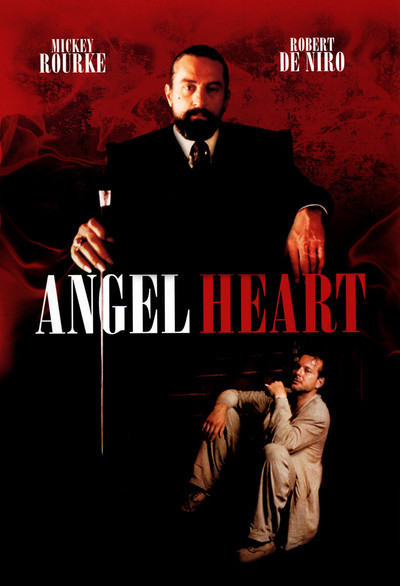
Horror Film Review: Angel Heart (dir by Alan Parker)


First released in 1987 and set in 1955, Angel Heart tells the story of Harry Angel (Mickey Rourke).

With a name like Harry Angel, it’s perhaps not surprising that Harry is a private investigator.  Harry operates out of New York.  He’s got a shabby apartment.  He wears wrinkled clothes.  He rarely shaves.  He smokes almost constantly.  (In a rare moment of comedy, the camera catches Harry blithely emptying a full ashtray in the middle of the street.)  Harry looks like he reeks of tobacco, beer, sweat, and lost dreams.  And yet, it’s difficult not to like Harry.  He’s got a charming smile, even if his face is often bruised from his latest beating.  He speaks in a low whisper and it’s hard not to get the feeling that Harry is actually kind of shy.  He’s incredibly sleazy but there’s something about him that just makes the viewer want to take care of him.

Harry is hired by a mysterious man named Louis Cyphere (Robert De Niro, cheerfully overacting).  Louis wants Harry to track down a singer named Johnny Favor.  As Cyphere explains it, he did a favor for Johnny and Johnny has yet to pay Cyphere what he owes.  Johnny has been suffering from PTSD ever since he served in World War II.  When last seen, Johnny was receiving electroshock treatment in an upstate hospital.

Harry’s search for Johnny leads him into an increasingly complex and disturbing conspiracy.  He meets a doctor who is addicted to morphine and, when the doctor turns up dead, Harry coolly uses the dead man’s shoe to light his match.  Eventually, Harry’s investigation leads him to New Orleans, where he meets both Johnny’s wife (Charlotte Rampling) and Johnny’s unacknowledged daughter, Epiphany (Lisa Bonet).  As Harry searches for Johnny, he deals with strange visions of his own mysterious past.  He sees himself wandering around Times Square shortly after the attack on Pearl Harbor.  Harry also finds himself having to deal with the fact that almost everyone that he talks to ends up being brutally murdered.  Every time that Harry tries to quit the case, Cyphere offers him more money.  (Cyphere tends to show up whenever Harry finds himself on the verge of abandoning his search.)

Angel Heart moves at its own deliberate pace.  In fact, the first hour can feel a bit slow but that first hour definitely pays off during the second half of the film.  By the time that Harry starts to truly uncover what has happened to Johnny, the audience actually cares about Harry and is actually worried about what’s going to happen to him when he reaches the end of the case.  Mickey Rourke was (and is) an eccentric actor but he’s at his most effective in Angel Heart.  A lesser actor would have just played Harry as being a typical hardboiled detective.  Rourke plays Harry as being a lost soul, a vulnerable man who is often as confused and scared as the people that he’s looking for.  By the end of the film, Harry realizes that the answer to the mystery was right in front of them and his look of despair is surprisingly powerful.  If De Niro gives a good performance that is almost totally on the surface, Rourke gives the type of performance that allows the audience to explore what’s going on beneath the surface of a character who many would initially view as being a cliché.  Mickey Rourke’s Harry Angel is right up there with Bogart’s Sam Spade and Jack Nicholson’s Jake Gittes.  He’s a familiar character who also seems to be a human being.

Full of sex, violence, and increasingly disturbing imagery, Angel Heart is not for everyone.  Alan Parker’s direction emphasizes the darkness of Harry’s world and the bleakness of his situation.  The film ends with a twist that may not be totally unexpected but which is still undeniably disturbing.  The more you think about it, the most disturbing it gets.  Angel Heart is an atmospheric and intelligent chiller.  It’s existential horror at its most nightmarish.

An Offer You Can’t Refuse #15: Bugsy Malone (dir by Alan Parker)


Remember how, a few weeks ago, I said I was going to spend the month of June reviewing 30 gangster movies?  Well, I was doing pretty well but then I got distracted with some things and I ended up falling behind and now, it’s the last day of June and I’ve only reviewed 14 of the 30 films that I was planning on taking a look at.  It’s frustrating but, as any movie blogger can tell you, it happens.  Still, I’m not one to give up so easily!  I promised to review 30 gangster movies and I’m going to keep my word.  Or, at the very least, I’m going to try to…. like, definitely maybe try to….

Anyway, let’s get back to it with 1976’s Bugsy Malone!

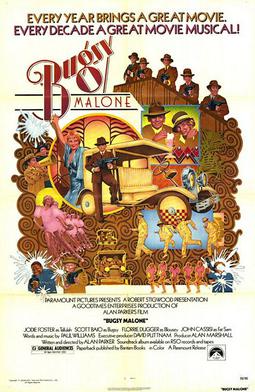
Bugsy Malone is an homage to the old gangster movies of the 1920s and 30s.  It’s also a musical, featuring a lot of songs about wanting to make a lot of money, fall in love, and go away to Hollywood.  On top of all that, it’s also a children’s film.  Though they may be playing gangsters and going to war over who will control the rackets, the cast is entirely made up of children.  Though the film does feature a lot of guns, none of the guns fire bullets.  Instead, they shoot custard pies.  Once you get cornered by a rival gangster and you get “splurged,” your career in the rackets is over.  You’re humiliated.  You’re nothing.  You’re just another two-bit hood who couldn’t make it in the big leagues.  You’re just….

Well, you get the idea.

Basically, the plot of the film is that Dandy Dan (Martin Lev) and Fat Sam (John Cassissi) are two rival gangsters who want to take over the Lower East Side.  Fat Sam owns a speakeasy, which means that there’s always a lot of dancing and singing going on in the background.  Bugsy Malone (Scott Baio) is a tough boxer who wants Fat Sam to give a job to Blousey Brown (Florrie Dugger), who dreams of going to Hollywood and becoming a big star.  Tallulah (Jodie Foster) is Fat Sam’s gun moll but she used to go out with Bugsy and she still wants him back.  Bugsy get caught up in the middle of the war between Dandy Dan and Fat Sam and it all eventually leads to a big pie fight and a lot of children covered in custard.  “You give a little love,” the children sing as they realize that their lives don’t have to be defined by gang wars, “and it all comes back to you….”

So, I have to admit that I was absolutely dreading watching Bugsy Malone.  I mean, singing children and custard pie guns?  It all sound just unbearably cutesy.  But, to my surprise, Bugsy Malone actually turned out to be a fun and clever little movie, one that was full of smart dialogue, catchy songs, excellent dancing, and wonderfully non-cutesy performances from its cast.  Even though the film may be about a bunch of children dressing up as gangsters, all of the child actors take their characters seriously and director Alan Parker directs the film as if it were an actual gangster film as opposed to just a children’s musical.  The end result is a film that’s cute but never cutesy.  Believe me, there is a huge difference between the two.

To my shock, Bugsy Malone turned out to be an offer that you can’t refuse.

Previous Offers You Can’t (or Can) Refuse:

  1. The Public Enemy
  2. Scarface
  3. The Purple Gang
  4. The Gang That Could’t Shoot Straight
  5. The Happening
  6. King of the Roaring Twenties: The Story of Arnold Rothstein 
  7. The Roaring Twenties
  8. Force of Evil
  9. Rob the Mob
  10. Gambling House
  11. Race Street
  12. Racket Girls
  13. Hoffa
  14. Contraband

Spring Breakdown #1: Midnight Express (dir by Alan Parker)


Since it’s currently Spring Break, I figured that I would spend the next two weeks reviewing films about people on vacation.  Some of the films will be about good vacations.  Some of the films will be about bad vacations.  But, in the end, they’ll all be about celebrating those moments that make us yearn for the chance to get away from it all.

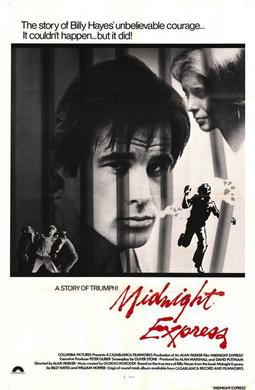
Take Midnight Express, for instance.  This 1978 film (which was nominated for six Oscars and won two) tells the story of what happens when a carefree college student named Billy Hayes decides to spend his holiday in Turkey.

When the film begins, Billy Hayes (played by Brad Davis), is at an airport in Turkey.  He’s preparing to return home to the United States.  His girlfriend, Susan (Irene Miracle), informs him that Janis Joplin has just died.  When Billy responds by making a joke, Susan accuses him of not taking anything seriously.  What Susan doesn’t realize is that Billy actually has a lot on his mind.  For one thing, he’s got several bricks of hashish taped around his waist.  He purchased it from a cab driver and he’s planning on selling it to his friends back in the United States.  Unfortunately, Billy’s not quite as clever as he thinks he is.  Because of recent terrorist bombings, the Turkish police are searching everyone before they board their plane.  Billy finds himself standing out in the middle of the runway with his hands up in the air, surrounded by gun-wielding Turkish policemen.

Billy finds himself stranded in a country that he doesn’t understand, being interrogated by men whose language he cannot speak.  An enigmatic American (Bo Hopkins) shows up and assures Billy that he’ll be safe, as long as he identifies the taxi driver who sold him to the drugs.  Billy does so but then makes the mistake of trying to flee from the police.  In the end, it’s the American who captures him and, holding a gun to Billy’s head, tells him not to make another move.

Soon, Billy is an inmate at Sağmalcılar Prison.  He’s beaten when he first arrives and it’s only days later that he’s able to walk and think clearly.  He befriends some of the other prisoners, including a heroin addict named Max (John Hurt) and an idiot named Jimmy (Randy Quaid).  Billy watches as the prisoners are tortured by the fearsome head guard (Paul L. Smith) and listens to the screams of inmates being raped behind closed doors.  After being told that his original four-year sentence has been lengthened to a 30-year sentence, Billy starts to degenerate.  When Susan visits, Billy end up pathetically masturbating in front of her.  When another prisoner taunts Billy, Billy bites out the man’s tongue, an act that we see in both close up and slow motion.  If Billy has any hope of regaining his humanity, he has to escape.  He has to catch what Jimmy calls the “midnight express…..”

Midnight Express is a brutal and rather crude film.  Though it may have been directed by a mainstream director (Alan Parker) and written by a future Oscar-winner (Oliver Stone), Midnight Express is a pure grindhouse film at heart.  There’s not a subtle moment to be found in the film.  The camera lingers over every act of sadism while Giorgio Moroder’s synth-based score pulsates in the background.  When Billy grows more and more feral and brutal in his behavior, it’s hard not to be reminded of Lon Chaney, Jr. turning into The Wolf Man.  The film may be incredibly heavy-handed but it’s nightmarishly effective, playing out with the intensity of a fever dream.

As for the cast, Brad Davis wasn’t particularly likable or sympathetic as Billy.  On the one hand, he’s a victim of an unjust system, betrayed by his own country and tortured by another.  On the other hand, Billy was an idiot who apparently thought no one would notice all that hash wrapped around his chest.  That said, Davis’s unlikable screen presence actually worked to the film’s advantage.  If you actually liked Billy, the film would be unbearable to watch.  Before Davis was cast, Dennis Quaid and Mark Hamill were both considered for the role.  If either of those actors has been cast, Midnight Express would be too intense and disturbing to watch.  For instance, it would be depressing to watch Dennis Quaid rip a man’s tongue out of his mouth.  You would be like, “No, Mr. Quaid, you’ll never recover your humanity!”  But when Brad Davis does it, you’re just like, “Eh.  It was bound to happen sometime.”

For more effective are John Hurt and Bo Hopkins.  Hurt and Hopkins both have small roles but they both make a big impression, if just because they’re the only two characters in the film who aren’t either yelling or crying all of the time.  While everyone else is constantly cursing their imprisonment, Hurt is quietly sardonic.  As for Hopkins, we’re supposed to dislike him because he’s with the CIA and he sold out Billy.  But honestly, no one made Billy tape all that hash to his chest.  Finally, you’ve got Randy Quaid and Paul L. Smith, who both glower their way through the film.  Smith is wonderfully evil while Randy Quaid is …. well, he’s Randy Quaid, the loudest American in Turkey.

Midnight Express was such a success at the box office that it caused an international incident.  There’s not a single positive Turkish character to be found in the entire film and it’s impossible not to feel that the film is not only condemning Turkey’s drug policies but that it’s also condemning the entire country as well.  The Turkish prisoners are portrayed as being just as bad as the guards and even Billy’s defense attorney comes across as being greedy and untrustworthy.  Watching the film today can be an awkward experience.  It’s undeniably effective but it’s impossible not to cringe at the way anyone who isn’t from the west is portrayed.  In recent years, everyone from director Alan Parker to screenwriter Oliver Stone to the real-life Billy Hayes has apologized for the way that the Turkish people were portrayed in the film.

Despite the controversy, Midnight Express was a huge box office success and it was nominated for best picture.  It lost to another controversial film about people imprisoned in Asia, The Deer Hunter.


Playing Catch-Up: Autumn in New York, Griffin & Phoenix, Harry & Son, The Life of David Gale


So, this year I am making a sincere effort to review every film that I see.  I know I say that every year but this time, I really mean it.

So, in an effort to catch up, here are four quick reviews of some of the movies that I watched over the past few weeks!

  • Autumn in New York
  • Released: 2000
  • Directed by Joan Chen
  • Starring Richard Gere, Winona Ryder, Anthony LaPaglia, Elaine Stritch, Vera Farmiga, Sherry Stringfield, Jill Hennessy, J.K. Simmons, Sam Trammell, Mary Beth Hurt

Richard Gere is Will, a fabulously wealthy New Yorker, who has had many girlfriends but who has never been able to find the one.  He owns a restaurant and appears on the cover of New York Magazine.  He loves food because, according to him, “Food is the only beautiful thing that truly nourishes.”

Winona Ryder is Charlotte, a hat designer who is always happy and cheerful and full of life.  She’s the type who dresses up like Emily Dickinson for Christmas and recites poetry to children, though you get the feeling that, if they ever somehow met in real life, Emily would probably get annoyed with Charlotte fairly quickly.  Actually, Charlotte might soon get to meet  Emily because she has one of those rare diseases that kills you in a year while still allowing you to look healthy and beautiful.

One night, Will and Charlotte meet and, together, they solve crimes!

No, actually, they fall in love.  This is one of those films where a young woman teaches an old man how to live again but then promptly dies so it’s not like he actually has to make a huge commitment or anything.  The film does, at least, acknowledge that Will is a lot older than Charlotte but it still doesn’t make it any less weird that Charlotte would want to spend her last year on Earth dealing with a self-centered, emotionally remote man who is old enough to be her father.  (To be honest, when it was revealed that Charlotte was the daughter of a woman who Will had previously dated, I was briefly worried that Autumn in New York was going to take an even stranger turn….)

On the positive side, the films features some pretty shots of New York and there is actually a pretty nice subplot, in which Will tries to connect with the daughter (Vera Farmiga) that he never knew he had.  Maybe if Farmiga and Ryder had switched roles, Autumn in New York would have worked out better.

  • Griffin & Phoenix
  • Released: 2006
  • Directed by Ed Stone
  • Starring Dermot Mulroney, Amanda Peet, Blair Brown, and Sarah Paulson

His name is Henry Griffin (Dermot Mulroney).

Her name is Sarah Phoenix (Amanda Peet).

Because they both have highly symbolic last names, we know that they’re meant to be together.

They both have cancer.  They’ve both been given a year to live.  Of course, they don’t realize that when they first meet and fall in love.  In fact, when Phoenix comes across several books that Griffin has purchased about dealing with being terminally ill, she assumes that Griffin bought them to try to fool her into falling in love with him.  Once they realize that they only have a year to be together, Griffin and Phoenix set out to make every moment count…

It’s a sweet-natured and unabashedly sentimental movie but, unfortunately, Dermot Mulroney and Amanda Peet have little romantic chemistry and the film is never quite as successful at inspiring tears as it should be.  When Mulroney finally allows himself to get mad and deals with his anger by vandalizing a bunch of cars, it’s not a cathartic moment.  Instead, you just find yourself wondering how Mulroney could so easily get away with destroying a stranger’s windshield in broad daylight.

  • Harry & Son
  • Released: 1986
  • Directed by Paul Newman
  • Starring Paul Newman, Robby Benson, Ellen Barkin, Wilford Brimley, Judith Ivey, Ossie Davis, Morgan Freeman, Katherine Borowitz, Maury Chaykin, Joanne Woodward

Morgan Freeman makes an early film appearance in Harry & Son, though his role is a tiny one.  He plays a factory foreman named Siemanowski who, in quick order, gets angry with and then fires a new employee named Howard Keach (Robby Benson).  Howard is the son in Harry & Son and he’s such an annoying character that you’re happy when Freeman shows up and starts yelling at the little twit.  As I said, Freeman’s role is a small one.  Freeman’s only on screen for a few minutes.  But, in that time, he calls Howard an idiot and it’s hard not to feel that he has a point.

Of course, the problem is that we’re not supposed to view Howard as being an idiot.  Instead, we’re supposed to be on Howard’s side.  Howard has ambitions to be the next Ernest Hemingway.  However, his blue-collar father, Harry (Paul Newman, who also directed), demands that Howard get a job.  Maybe, like us, he realizes how silly Howard looks whenever he gets hunched over his typewriter.  (Robby Benson tries to pull off these “deep thought” facial expressions that simply have to be seen to be believed.)  There’s actually two problems with Howard.  First off, we never believe that he could possibly come up with anything worth reading.  Secondly, it’s impossible to believe that Paul Newman could ever be the father of such an annoying little creep.

Harry, of course, has problems of his own.  He’s just lost his construction job.  He’s having to deal with the fact that he’s getting older.  Fortunately, his son introduces him to a nymphomaniac (Judith Ivey).  Eventually, it all ends with moments of triumph and tragedy, as these things often do.

As always, Newman is believable as a blue-collar guy who believes in hard work and cold beer.  The film actually gets off to a good start, with Newman using a wrecking ball to take down an old building.  But then Robby Benson shows up, hunched over that typewriter, and the film just becomes unbearable.  At least Morgan Freeman’s around to yell at the annoying little jerk.

  • The Life of David Gale
  • Released: 2003
  • Directed by Alan Parker
  • Starring Kevin Spacey, Kate Winslet, Laura Linney, Gabriel Mann, Rhona Mitra, Leon Rippy, Matt Craven, Jim Beaver, Melissa McCarthy

For the record, while I won’t shed any tears whenever Dzhokahr Tsarnaev is finally executed, I’m against the death penalty.  I think that once we accept the idea that the state has the right to execute people, it becomes a lot easier to accept the idea that the state has the right to do a lot of other things.  Plus, there’s always the danger of innocent people being sent to die.  The Life of David Gale also claims to be against the death penalty but it’s so obnoxious and self-righteous that I doubt it changed anyone’s mind.

David Gale (Kevin Spacey) used to the head of the philosophy department at the University of Texas.  He used to be a nationally renowned activist against the death penalty.  But then he was arrested for and convicted of the murder of another activist, Constance Harraway (Laura Linney) and now David Gale is sitting on death row himself.  With his execution approaching, journalist Bitsey Bloom (Kate Winslet) is convinced that Gale was framed and she finds herself racing against time to prevent Texas from executing an innocent man…

There’s a lot of things wrong with The Life of David Gale.  First off, it was made during the Bush administration, so the whole film is basically just a hate letter to the state of Texas.  Never have I heard so many inauthentic accents in one film.  Secondly, only in a truly bad movie, can someone have a name like Bitsey Bloom.  Third, the whole film ends with this big twist that makes absolutely no sense and which nearly inspired me to throw a shoe at the TV.

Of course, the main problem with the film is that we’re asked to sympathize with a character played by Kevin Spacey.  Even before Kevin Spacey was revealed to be a sleazy perv, he was never a particularly sympathetic or really even that versatile of an actor.  (Both American Beauty and House of Cards tried to disguise this fact by surrounding him with cartoonish caricatures.)  Spacey’s so snarky and condescending as Gale that, even if he is innocent of murder, it’s hard not to feel that maybe David Gale should be executed for crimes against likability.
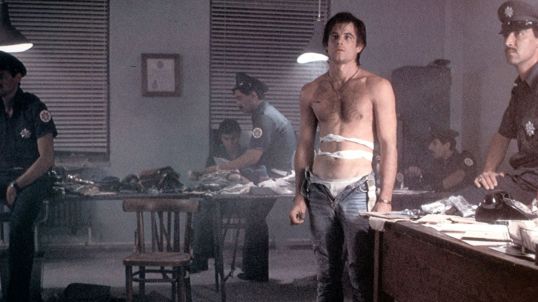
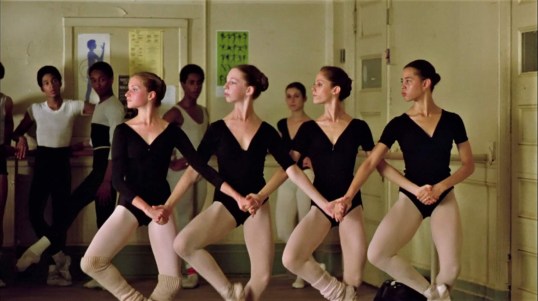
Back to School #23: Fame (dir by Alan Parker)


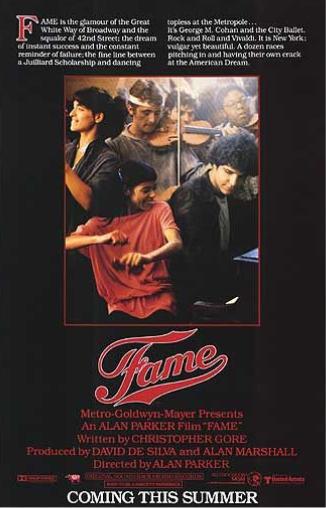
Fameposter

“Fuck it, if I can’t dance I’ll change to the drama department.” — Lisa (Laura Dean) in Fame (1980)

For nearly a week now, we’ve been taking a chronological look at some of the best and some of the worst films ever made about teenagers and high school.  Yesterday, we finished off the 70s with Rock ‘n’ Roll High School.  Today, we start the 80s by looking at yet another musical set in a high school.  That musical is 1980’s Fame.

Taking place at the High School For Performing Arts in New York City, Fame follows a group of students from the beginning of their freshman year to graduation four years later.  Among those students are Bruno (Lee Curreri), a musical prodigy, Coco (Irene Cara), who thinks that she’s the most talented student at the school, insecure Doris (Maureen Teefy), gay actor  Montgomery (Paul McCrane), talented but functionally illiterate dancer Leroy (Gene Anthony Ray), and self-destructive comedian Ralph Garcia (Barry Miller, giving the best performance in the film).  Over the course of four years, they fight, love, sing, and dance.  They especially do a lot of dancing, which is basically the main reason why I enjoyed the film.

Fame is the perfect film to transition into the 80s with because, in many ways, it’s a perfect combination of the 70s and the 80s.  In its use of ensemble and its emphasis on the gritty lives that the kids live outside of the school, the film is truly product of the 70s.  However, whenever the film follows the students inside of the school, it becomes very much an 80s film, the type where the emphasis is on stylistically hyper editing and emotions are just as likely to be expressed through a musical montage as through dialogue.  With its combination of the kids dreaming in the school and then facing the harsh realities outside, Fame feels like a collision of 70s pessimism and 80s optimism.

(Needless to say, pessimism usually makes for a more realistic film but optimism is a lot more fun to watch.)

Not surprisingly, for a film that made and released 34 years ago, a lot of Fame feels very dated.  (What is surprising is that the 2009 remake feels even more dated.)  It’s difficult not to cringe at the sight of all the leg warmers and big hair on display.  The same can be said for the synthesizer-heavy soundtrack but, to be honest, I like 80s music.  It may be cheesy but you can dance to it and really, what more can you ask from music?  If nothing else, Fame serves as a valuable time capsule of the time that it was made and yes, I know that I’ve been saying that about a lot of movies lately but hey, it’s true!  And I happen to love time capsules.  So there.

And besides, dated as the film may be, Fame does get the big things right.  It captures that feeling that we all had in high school, that feeling that you are destined for greater things and that, as long as you believe in yourself, good things will automatically happen to you.  It captures the wonderful feeling of not only being creative and talented but also knowing that you are talented and creative..

The film is full of hints that the majority of the students at the high school will probably eventually be forced to give up on their dreams.  A popular and handsome student is first seen graduating and full of confidence, just to pop up again an hour later, working as a waiter and looking desperate.  Haughty Coco goes to an audition and ends up in tears after a sleazy producer tells her to undress.  Ralph performs his stand-up comedy and, exhausted after going for days without sleep, ends up bombing.  Leroy is offered a chance to dance professionally but first he has to try to talk his English teacher into giving him a passing grade while she mourns for her husband, who died just a few hours earlier.  It’s actually a pretty dark movie but it’s hopeful too because, by the end of it, you realize that not all of the characters are going to make it but at least they’re going to have a chance to try.