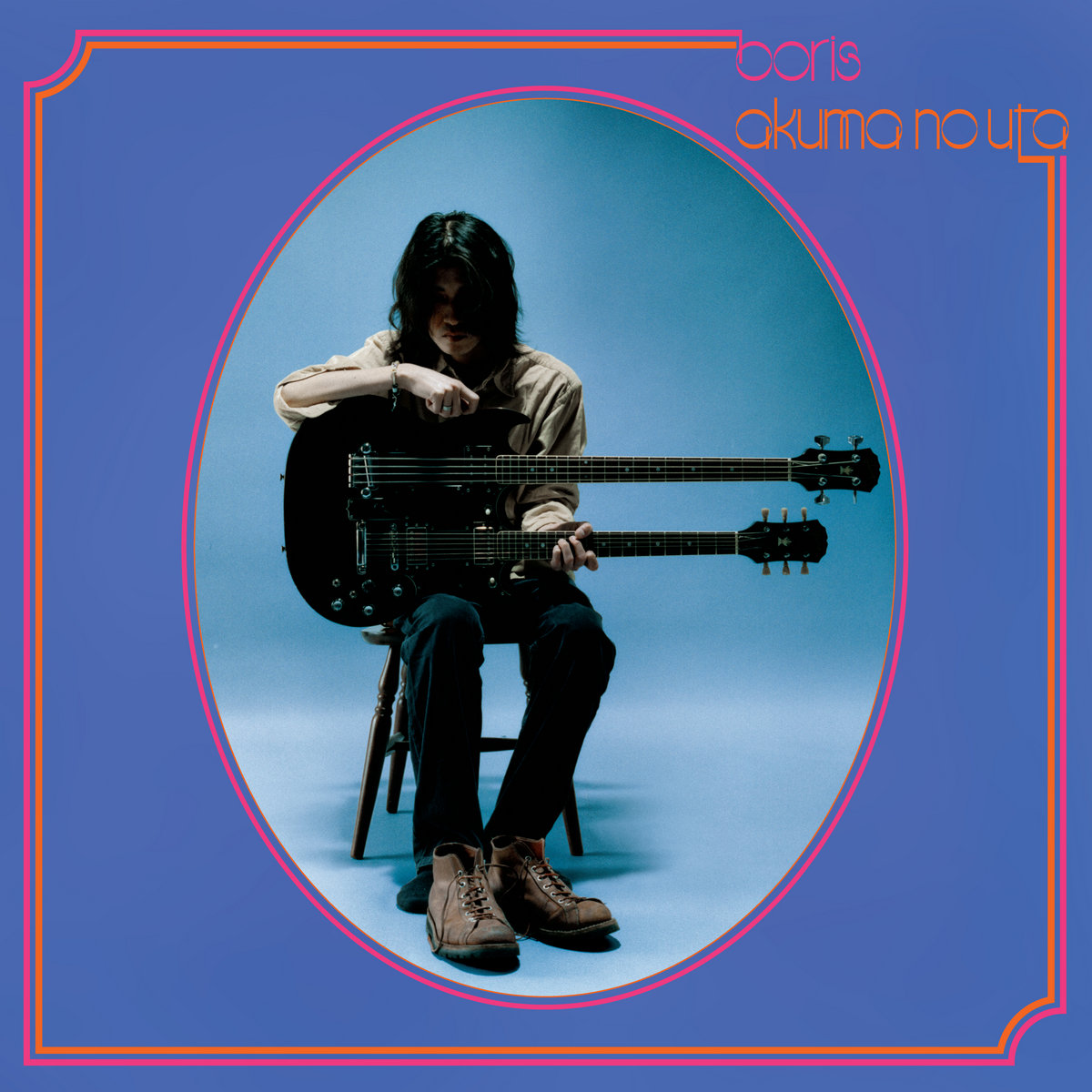
So, you want to talk about Boris’s Akuma no Uta. Where do you even start with a band like Boris? They’re one of those groups that defies easy description, a Japanese power trio that has spent decades exploring the absolute outer limits of heavy, distorted sound. They’ve done albums that are just one long, droning track, records that are pure noise, and others that are surprisingly poppy. But Akuma no Uta, released back in 2003, is something special. It’s often cited as the perfect entry point for the uninitiated, and honestly, it’s easy to see why. It’s the sound of a band taking all their wildest, heaviest ideas and distilling them into a concise, 39-minute punch to the gut that still somehow manages to be incredibly listenable. I have to give full credit where it’s due here—this record didn’t just fall into my lap by accident. It came highly recommended by TSL writer necromoonyeti, and I will always thank him for introducing me to this power trio. Without that nudge, I might have spent years circling the Boris discography, intimidated by its sheer size and weirdness, never quite knowing where to dive in. So, necromoonyeti, if you’re reading this, you absolutely changed my listening habits for the better.
Right from the jump, the album announces its intentions, though maybe not in the way you’d expect. The opening track, Introduction, is a masterclass in trolling the listener in the best possible way. On the CD and streaming versions, it stretches out to nearly ten minutes of slowly building drone, feedback, and amp hum. It’s the sound of a massive, slumbering beast slowly waking up, a wall of sound that’s more about atmosphere and tension than riffs. You sit there, waiting for the song to “start,” and for a while, it doesn’t. This was apparently a deliberate move on the band’s part, a very “Boris” thing to do, essentially making you earn the payoff that’s about to come. It’s meditative, hypnotic, and maybe a little bit frustrating on the first listen, but by the time the track fades into a wash of white noise, you’re completely locked into the album’s unique frequency. It’s a brilliant, subversive way to set the stage for the chaos that follows. I remember messaging necromoonyeti about this very track, half-confused and half-intrigued, and he just told me to be patient. Best advice I could have gotten.
And then, the chaos arrives. Ibitsu hits with the force of a freight train, completely shedding the droning patience of the intro for pure, punk-edged sludge fury. It’s an explosion of tight, angry riffage that’s over before you can fully process the whiplash. This is where you hear the Melvins and Black Sabbath influence loud and clear, but it’s filtered through a distinctly Boris lens of sheer, overwhelming volume. Furi follows in a similar vein, keeping the energy high and the riffs thick and fast, a one-two punch of raw aggression that just completely kicks the door down. The sheer momentum of these tracks is absurd, with guitar solos and drum fills that sound like they’re tearing the very fabric of the recording to shreds. Without that initial recommendation, I might have bailed during Introduction, never making it to this glorious pummeling, and that would have been a tragedy.
But the true centerpiece, the track that everyone who listens to this album comes away talking about, is Naki Kyoku. This is where Boris shows their full range and cements their status as something more than just another heavy band. The song begins with a breathtakingly beautiful, clean guitar loop that’s a direct homage to the album’s cover art, a cheeky parody of Nick Drake’s Bryter Layter. For the first few minutes, you’re lulled into a state of serene, shoegaze-inspired bliss. It’s absolutely gorgeous, and it feels like a completely different band. And then, just when you’ve settled into the calm, the song switches gears and lets loose with a crushing, doom-laden riff that feels like a personal affront to the preceding quiet. This contrast, this sudden and brutal shift from beauty to pure heaviness, is what makes the track so legendary. It builds and builds in a post-rock style, layering guitars and intensity until it reaches a fantastic, euphoric peak, capped off with what many fans consider one of the greatest guitar solos ever recorded. It’s an eleven-and-a-half-minute odyssey that never gets boring for a second, a perfect encapsulation of Boris’s ability to be both devastatingly heavy and achingly beautiful. Every time I hit that transition, I think back to necromoonyeti’s description of it as “life-changing,” and honestly, he undersold it.
The album doesn’t let up after that epic journey. Ano Onna No Onryou brings things back down to earth with a more straightforward, catchy, and almost garage-punk feeling, though it’s still heavier than just about anything else out there. It’s a great palate cleanser before the closing title track, Akuma no Uta. This final song is a masterpiece of pure, unadulterated doom. It opens with the sound of a tolling bell before unleashing a riff that’s so distorted and loud that it feels like the drums are about to collapse under the sonic pressure. It’s a slow, sludgy, and utterly suffocating track that perfectly closes out the experience. It even has a brief, sudden burst of speed that shows they’re not done keeping you on your toes, before sinking back into that glorious, monstrous mire of sound.
Akuma no Uta is an album that sounds like it’s constantly on the verge of breaking apart, due in no small part to its famously brick-walled production. For some, this lack of dynamic range can be a bit much, feeling like there’s no breathing room and even triggering tinnitus. But for most, it’s an essential part of the record’s overwhelming charm. It sounds like it was recorded at a volume so high that the microphones were screaming in protest, and that’s exactly the point. It captures the pure, physical feeling of standing in front of a massive stack of amplifiers, feeling the sound waves hit you. It adds to the raw, energetic, and slightly dangerous feel of the whole affair. This record is a testament to Boris’s fearless diversity and refusal to be pinned down, effortlessly blending doom, sludge, punk, shoegaze, and drone into a single, cohesive statement. It’s a perfect storm of sonic experimentation and raw power. If you’re looking for a life-changing, meditative experience, Boris has other albums for that, but if you want a thrilling, overstimulating, and incredibly fun ride through the very best of heavy music, Akuma no Uta is pretty much unmatched. And I owe that discovery entirely to necromoonyeti—seriously, man, thank you for pointing me toward this absolute monster of an album.


