6 Shots From 6 Films: Special Stanley Kubrick Edition


4 Or More Shots From 4 Or More Films is just what it says it is, 4 shots from 4 of our favorite films. As opposed to the reviews and recaps that we usually post, 4 Shots From 4 Films lets the visuals do the talking!

On this date, 97 years ago, Stanley Kubrick was born in New York City.  The rest, as they say, is history.

In honor of one of the world’s greatest directors, here are….

6 Shots From 6 Stanley Kubrick Films

The Killing (1956, dir by Stanley Kubrick, DP: Lucien Ballard)

Paths of Glory (1957, dir by Stanley Kubrick, DP: Georg Kraus)

Dr. Strangelove or: How I Learned to Stop Worrying and Love the Bomb (1964, dir. Stanley Kubrick, DP: Gilbert Taylor)

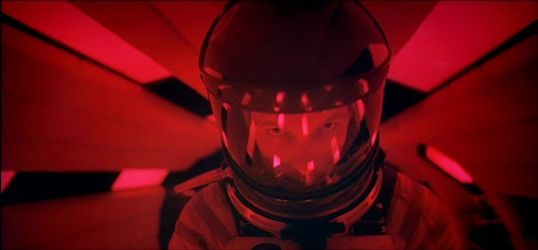
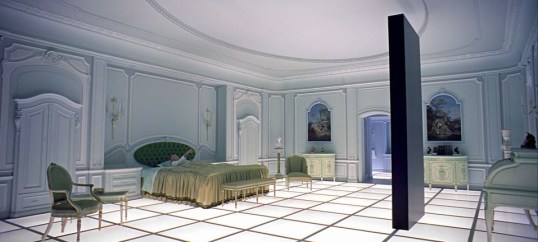
2001: A Space Odyssey (1968, dir by Stanley Kubrick, DP: Geoffrey Unsworth)

Barry Lyndon (1975, dir by Stanley Kubrick, DP: John Alcott)

The Shining (1980, dir by Stanley Kubrick, DP: John Alcott)

6 Shots From 6 Films: Special 1968 Edition


6 Shots From 6 Films is just what it says it is, 6 shots from 6 of our favorite films. As opposed to the reviews and recaps that we usually post, 6 Shots From 6 Films lets the visuals do the talking!

Today, we pay tribute to the year 1968!  It’s time for….

6 Shots From 6 1968 Films

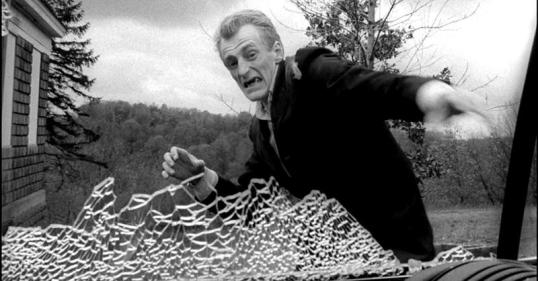
Night of the Living Dead (1968, dir by George Romero, DP: George Romero)

Petulia (1968, dir by Richard Lester, DP: Nicolas Roeg)

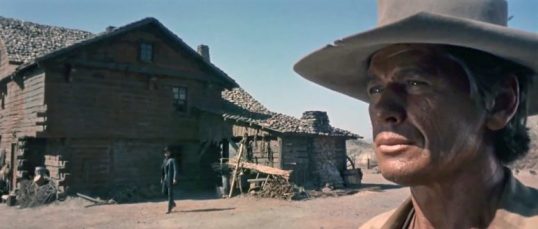
Once Upon A Time In The West (1968, dir by Sergio Leone, DP: Tonino Delli Colli)

2001: A Space Odyssey (1968, dir by Stanley Kubrick, DP: Geoffrey Unsworth)

Psych-Out (1968, dir by Richard Rush, DP; Laszlo Kovacs)

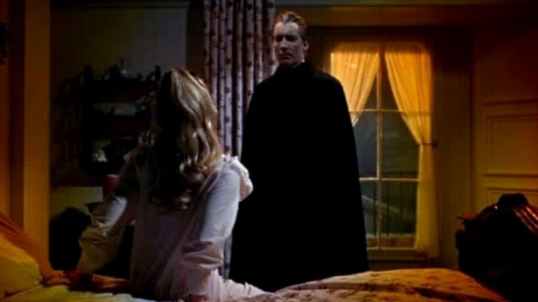
Dracula Has Risen The Grave (1968, dir by Freddie Francis, DP: Arthur Grant)

Scene That I Love: Douglas Trumbull’s Stargate Sequence From 2001: A Space Odyssey


Today would have been the 83rd birthday of special effects maestro, Douglas Trumbull.

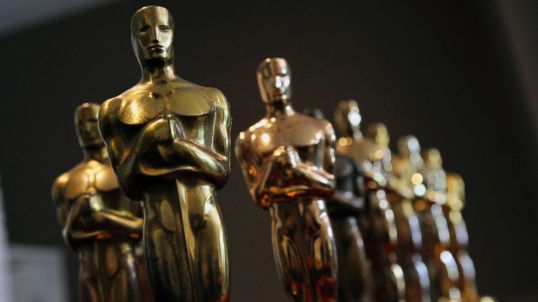
Today’s scene that I love come from 1968’s 2001: A Space Odyssey.  The famous stargate sequence was designed by Trumbull and it remains one of the most influential science fiction moments of all time.  In one of their greatest oversights, the Academy neglected to include Trumbull when they nominated the film for its special effects.  As a result, the Oscar only went to Stanley Kubrick.  Trumbull was not happy about that and, sadly, Kubrick and Trumbull did not speak to each other for years afterwards.

Despite not being included in the nomination, Douglas Trumbull’s work has stood the test of time.

4 Shots From 4 Films: Special Science Fiction Edition


4 Shots From 4 Films is just what it says it is, 4 shots from 4 of our favorite films. As opposed to the reviews and recaps that we usually post, 4 Shots From 4 Films lets the visuals do the talking.

Today, in honor of National Science Fiction Day, it’s time for….

4 Shots From 4 Science Fiction Films

2001: A Space Odyssey (1968, dir by Stanley Kubrick, DP: Geoffrey Unsworth)

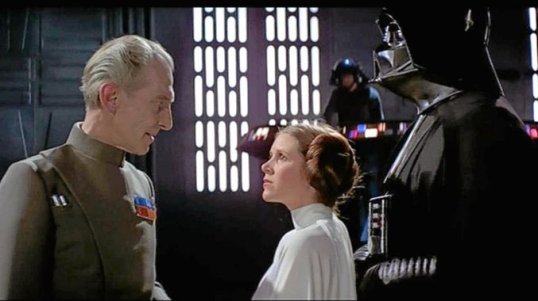
Star Wars Episode IV: A New Hope (1977, dir by George Lucas, DP: Gilbert Talyor)

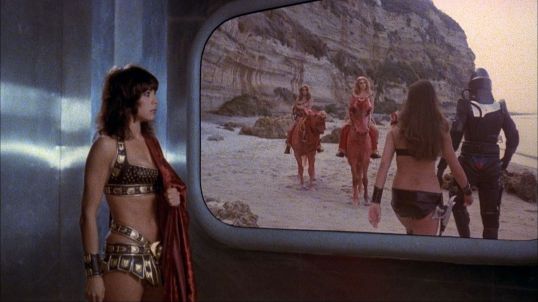
Starcrash (1978, dir by Luigi Cozzi, DP: Paul Beeson and Roberto D’Ettorre Piazzoli)

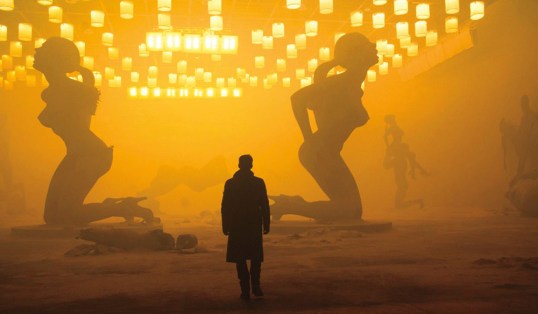
Blade Runner 2049 (2017, dir by Denis Villeneuve, DP: Roger Deakins)

12 Shots From 12 Films: Special Stanley Kubrick Edition


4 Or More Shots From 4 Or More Films is just what it says it is, 4 shots from 4 of our favorite films. As opposed to the reviews and recaps that we usually post, 4 Shots From 4 Films lets the visuals do the talking!

On this date, 95 years ago, Stanley Kubrick was born in New York City.  The rest, as they say, is history.

In honor of one of the world’s greatest directors, here are….

12 Shots From 12 Stanley Kubrick Films

Fear and Desire (1953, dir by Stanley Kubrick, DP: Stanley Kubrick)

The Killing (1956, dir by Stanley Kubrick, DP: Lucien Ballard)

Paths of Glory (1957, dir by Stanley Kubrick, DP: Georg Kraus)

Spartacus (1960, dir by Stanley Kubrick, DP: Russell Metty)

Lolita (1962, dir by Stanley Kubrick, DP: Oswald Morris)

Dr. Strangelove or: How I Learned to Stop Worrying and Love the Bomb (1964, dir. Stanley Kubrick, DP: Gilbert Taylor)

2001: A Space Odyssey (1968, dir by Stanley Kubrick, DP: Geoffrey Unsworth)

A Clockwork Orange (1971, dir by Stanley Kubrick, DP: John Alcott)

Barry Lyndon (1975, dir by Stanley Kubrick, DP: John Alcott)

The Shining (1980, dir by Stanley Kubrick, DP: John Alcott)

Full Metal Jacket (1987, dir by Stanley Kubrick, DP: Douglas Milsome)

Eyes Wide Shut (1999. dir by Stanley Kubrick, DP: Larry Smith)

10 Oscar Snubs From The 1960s


Ah, the 60s. Both the studio system and the production code collapsed as Hollywood struggled to remain relevant during a time of great social upheaval. The Academy alternated between nominating films that took chances and nominating films that cost a lot of money. It led to some odd best picture lineups and some notable snubs!

1960: Psycho Is Not Nominated For Best Picture and Anthony Perkins Is Not Nominated For Best Actor

To be honest, considering that the Academy has never really embraced horror as a genre and spent most of the 60s nominating big budget prestige pictures, it’s a bit surprising that Psycho was actually nominated for four Oscars.  Along with being nominated for its production design and its cinematography, Psycho also won nominations for Alfred Hitchcock and Janet Leigh.  However, Anthony Perkins was not nominated for Best Actor, despite giving one of the most memorable performances of all time.  The film literally would not work without Perkins’s performance and, considering that Perkins pretty much spent the rest of his career in the shadow of Norman Bates, it’s a shame that he didn’t at least get a nomination for his trouble.  Psycho was also not nominated for Best Picture, despite being better remembered and certainly more influential than most of the films that were.

1962: The Man Who Shot Liberty Valance Is Almost Totally Snubbed

The Man Who Shot Liberty Valance was not totally snubbed by the Academy.  It received a nomination for Best Costume Design.  But still, it deserved so much more!  John Ford, James Stewart, John Wayne, Lee Marvin, Vera Miles, and the picture itself were all worthy of nominations.  Admittedly, 1962 was a year full of great American films and there was a lot of competition when it came to the Oscars.  Still, The Man Who Shot Liberty Valance definitely deserved a best picture nomination over the bloated remake of Mutiny on the Bounty.  Today, if the first Mutiny on the Bounty remake is known for anything, it’s for Marlon Brando being difficult on the set.  But The Man Who Shot Liberty Valance is still remembered for telling us to always print the legend.
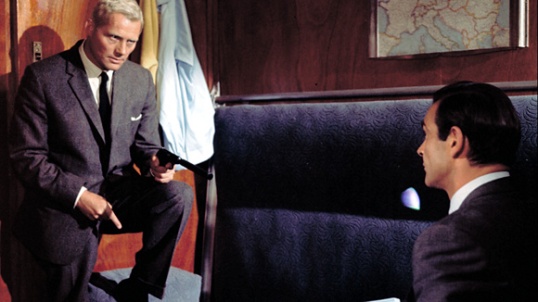
1964: From Russia With Love Is Totally Snubbed

The same year that the Academy honored George Cukor’s creaky adaptation of My Fair Lady, it totally ignored my favorite James Bond film.  From Russia With Love is a Bond film that works wonderfully as both a love story and a thriller.  Sean Connery, Lotte Lenya, Robert Shaw, and Terence Young all deserved some award consideration.  From Russia With Love was released in the UK in 1963.  In a perfect world, it would have also been released concurrently in the U.S., allowing From Russia With Love to be the film that gave the the Academy the chance to recognize the British invasion.  Instead, Tom Jones was named the Best Picture of 1963 and From Russia With Love had to wait until 1964 to premiere in the U.S.  It was snubbed in favor of one of old Hollywood’s last grasps at relevance.

1964: Slim Pickens Is Not Nominated For Best Supporting Actor

Playing three separate roles, Peter Sellers dominates Dr. Strangelove: Or How I Learned To Stop Worrying And Love The Bomb.  But, as good as Sellers is, the film’s most memorable image is definitely Slim Pickens whooping it up as he rides the bomb down to Earth.  George C. Scott and Sterling Hyaden also undoubtedly deserved some award consideration but, in the end, Pickens is the one who brings the film to life even as he helps to bring society to an end.

1967: In Cold Blood Is Not Nominated For Best Picture

In Cold Blood, though not a perfect film, certainly deserved a nomination over Dr. Doolittle.  In Cold Blood is a film that still has the power to disturb and haunt viewers today.  Dr. Doolittle was a box office debacle that was nominated in an attempt to help 20th Century Fox make back some of their money.

1967: Sidney Poitier Is Not Nominated For Best Actor For In The Heat Of The Night

In 1967, Sidney Poitier starred in two of the films that were nominated for Best Picture but somehow, he did not pick up a nomination himself.  His restrained but fiercely intelligent performance in In The Heat Of The Night provided a powerful contrast to Rod Steiger’s more blustery turn.  That Poitier was not nominated for his performance as Virgil Tibbs truly is one of the stranger snubs in Academy history.  (If I had to guess, I’d say that the Actors Branch was split on whether to honor him for In The Heat of the Night or Guess Who’s Coming To Dinner or even for To Sir With Love and, as a result, he ended up getting nominated for none of them.)

1968: 2001: A Space Odyssey and Planet of the Apes Are Not Nominated For Best Picture

Neither one of these classic science fiction films were nominated for Best Picture, despite the fact that both of them are far superior and far more influential than Oliver!, the film that won that year.

1968: The Good, The Bad, and the Ugly Is Totally Ignored

Not even Ennio Morricone’s score received a nomination!

1968: Petulia Is Totally Snubbed

Seriously, I don’t know what was going on with the Academy in 1968 but it seems they went out of their way to ignore the best films of the year.  Richard Lester’s Petulia is usually cited as one of the definitive films of the 60s but it received not a single Oscar nomination.  Not only did the film fail to receive a nomination for Best Picture but Richard Lester, George C. Scott, Julie Christie, Shirley Knight, Richard Chamberlain, and the film’s screenwriters were snubbed as well.

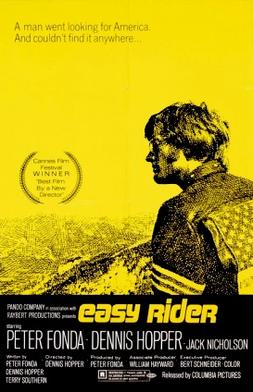
1969: Easy Rider Is Not Nominated For Best Picture

Yes, I know.  Easy Rider is a flawed film and there are certain moments that are just incredibly pretentious.  That said, Easy Rider defined an era and it also presented a portrait of everything that was and is good, bad, and timeless about America.  The film may have been produced, directed, and acted in a drug-razed haze but it’s also an important historical document and it was also a film whose success permanently changed Hollywood.  Certainly, Easy Rider’s legacy is superior to that of Hello, Dolly!

Agree? Disagree? Do you have an Oscar snub that you think is even worse than the 10 listed here? Let us know in the comments!

Up next: It’s the 70s!
6 Shots From 6 Films: Special Stanley Kubrick Edition


4 Or More Shots From 4 Or More Films is just what it says it is, 4 shots from 4 of our favorite films. As opposed to the reviews and recaps that we usually post, 4 Shots From 4 Films lets the visuals do the talking!

On this date, 94 years ago, Stanley Kubrick was born in New York City.  The rest, as they say, is history.

In honor of one of the world’s greatest directors, here are….

6 Shots From 6 Stanley Kubrick Films

Dr. Strangelove or: How I Learned to Stop Worrying and Love the Bomb (1964, dir. Stanley Kubrick, DP: Gilbert Taylor)

2001: A Space Odyssey (1968, dir by Stanley Kubrick, DP: Geoffrey Unsworth)

Barry Lyndon (1975, dir by Stanley Kubrick, DP: John Alcott)

The Shining (1980, dir by Stanley Kubrick, DP: John Alcott)

Full Metal Jacket (1987, dir by Stanley Kubrick, DP: Douglas Milsome)

Eyes Wide Shut (1999. dir by Stanley Kubrick, DP: Larry Smith)

10 Sci-Fi Films That Should Have Been Nominated For Best Picture


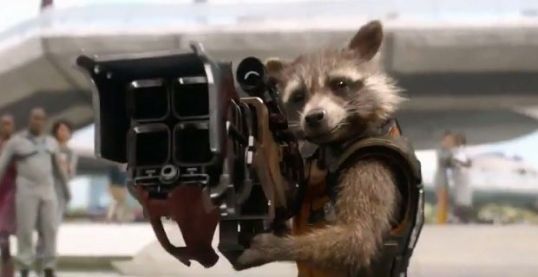
Guardians-of-the-Galaxy-rocket-with-gun

Over the past few years, it’s gotten a little bit more common to see science fiction films nominated for best picture.  While a sci-fi film has yet to win best picture, it is no longer as much of a shock to see a science fiction film nominated.  At least not as much as it is to see a horror film nominated.

That said, it’s still an uphill fight.  Here are 10 science fiction films that I feel could and should have been nominated for best picture:

  1. Metropolis (1927)

Fritz Lang’s expressionistic silent epic remains one of the most influential films of all time.  Metropolis was eligible to be nominated during the first year of the Oscars, a year in which not one but two awards for best picture were handed out.  That Metropolis was nominated for neither Best Production nor Unique and Artistic Picture was a huge missed opportunity.

2. The War of the Worlds (1953)

This film may be over 60 years old but it’s still one of the best alien invasion films ever made.  And yes, I prefer the original to the Spielberg version.

3. The Time Machine (1960)

Morlocks, Eloi, and war … oh my!

4. Planet of the Apes (1968)

“A planet where apes evolved from man?”  No, not quite.  “YOU BLEW IT UP!  GODDAMN YOU TO HELL!”  Yes, that’s better.  Today, Planet of the Apes may seem more than a little bit campy but it’s still an unusually intelligent social satire.  Charlton Heston’s persona has never been better used.

5. 2001: A Space Odyssey (1968)

Can you believe that this classic from Stanley Kubrick was not nominated?  Kubrick got a directing nomination but, when it came to picking the best films of the year, the Academy nominated Oliver! and Rachel, Rachel.

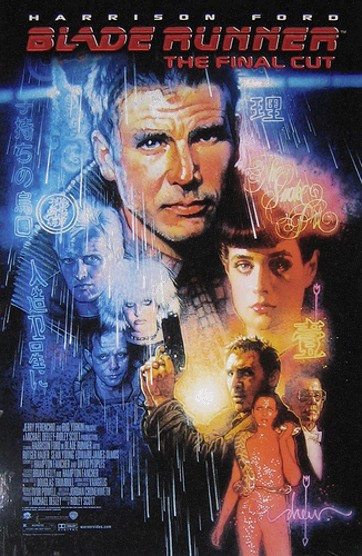
blade%20runner%20final%20cut

6. Blade Runner (1982)

Blade Runner is today recognized as a classic but it originally received mixed reviews and was ignored by the Academy.  At the very least, Rutger Hauer deserved a nomination.

7. Never Let Me Go (2010)

This underrated clone drama was sadly overlooked.  Andrew Garfield’s performance is heartbreaking.

Film Review Under the Skin

8. Under the Skin (2014)

This enigmatic film was probably too bizarre and unsettling for the Academy but Jonathan Glazer’s direction and Scarlett Johansson’s performance make Under the Skin a classic.

9. Guardians of the Galaxy (2014)

Whenever I rewatch Guardians of the Galaxy, I’m happy to discover that it still holds up as a wonderful piece of entertainment.  It remains my favorite film of 2014.

10. Ex Machina (2015)

Quite simply an amazing film, this is a Metropolis for the 21st Century.


‘Interstellar’ Review (dir. Christopher Nolan)


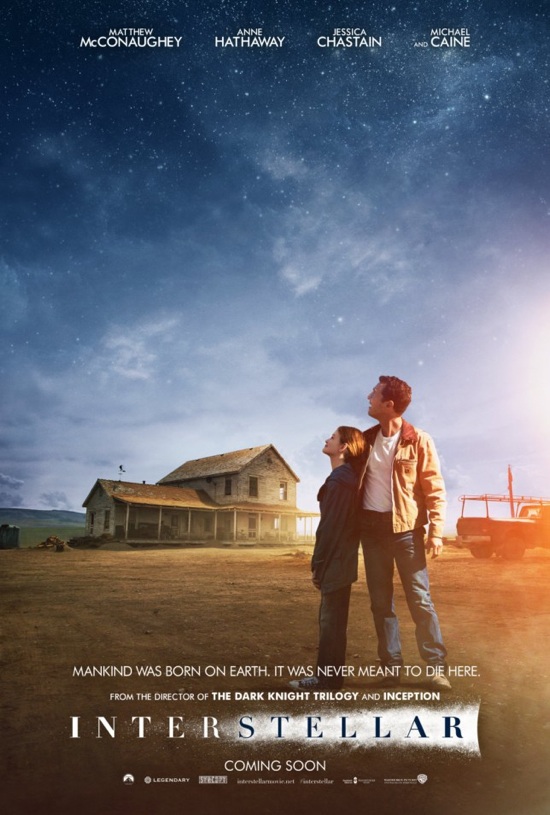
interstellar2

It would be disingenuous of me to not start this review by saying that I went into ‘Interstellar’ with a clear and present bias. Not towards Nolan – though I think he is a wonderful director who has not yet made a truly bad film. But a bias towards the scientific theories and potential themes I expected – based on trailers and the concept of the film – that it would explore. I have always been very interested in astronomy and astrophysics – and have a soft spot for science fiction films with a strong emotional core (‘Close Encounters of the Third Kind’, ‘Contact’). So when I headed to the theater I knew I was walking a very fine line (one that many reviewers walk but won’t admit to). If the film met (even marginally) my high expectations then it would in no doubt lead to high praise that bordered on hyperbole – and if it didn’t – if it disappointed – then it would cause a reaction a lot more negative than it really needed to be.

Where did ‘Interstellar’ ultimately fall? Hyperbole…or disappointment? Well luckily for me it was the former…to a fairly strong degree. I’ll say it now – this is not just probably  my favorite film of the year so far, but like with ‘Gravity’ and ‘The Tree of Life’ (yes, more on that later) in recent years, this may  fall within my favorite films of all time. It is a dazzling, visually stunning, emotionally resonant and incredibly well made sci-fi space epic – one with the power to keep you on the edge of your seat one minute and in tears the next. It explores big ideas about the cosmos while also staying incredibly grounding with an intimate story about family, regret, sacrifice and love. Like I said…hyperbole.

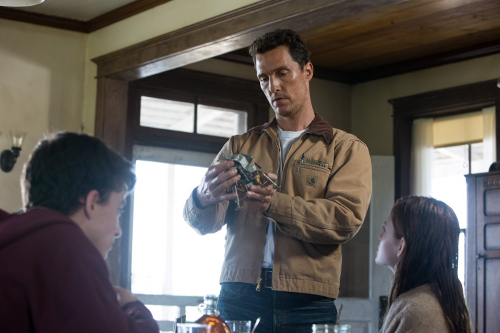
coop2

The film takes place in a not so distant future in which the world is becoming unlivable. After population growth, climate shifts and diseases ravishing crops, the world is struggling to produce enough of what little food sources they have left – which means a heavy reliance on corn farms. It is very bleak future where dust from dust storms covers everything, and the only focus of mankind is struggling to survive with what they know and have. Innovation, free thinking and exploration are at a standstill – and unless schools deem you smart enough to go on to a university, your only career prospective is farming.

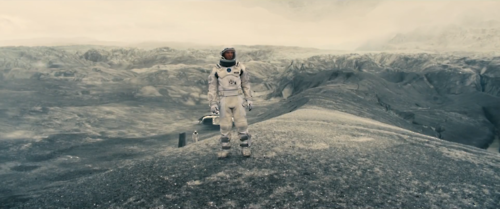
Matthew McConaughey stars as Cooper, a widower and former pilot who now owns a farm where he lives with his two young children. He does his best to provide for his family but clearly wants more for them than what the current world can provide. After finding a mysterious message in his daughter Murph’s room, Cooper finds himself being recruited by what is left of NASA. They are secretly putting together a mission to journey through a wormhole that has appeared near Saturn. They do not know how it got there but they do know that beyond it is a solar system with some potentially habitable planets. They want Cooper to pilot an expedition through the wormhole to explore these planets and see if one is suitable to set up a new human colony. Cooper reluctantly agrees, even though it means leaving his children behind. He knows that the journey could kill him or – due to the laws of relatively – that by the time he does return his children may be much older than he is or already dead. But the fate of the human race – including his son and daughter – relies on finding a new home. So he sets out with a team of astronauts – and one pretty funny robot – on a journey that will take them farther than any humans have ever gone. The decision devastates his young daughter Murph – who he had a close relationship with – and it sets her out on a journey of her own to save humanity in a way she believes her father couldn’t.

To go into much more detail of the plot would ruin much of the experience. But I will say it becomes a fast paced and exciting journey. It does sometimes fall back on the usual genre tropes but there is never a dull moment; and it all builds up to an emotional and rewarding conclusion.

murph

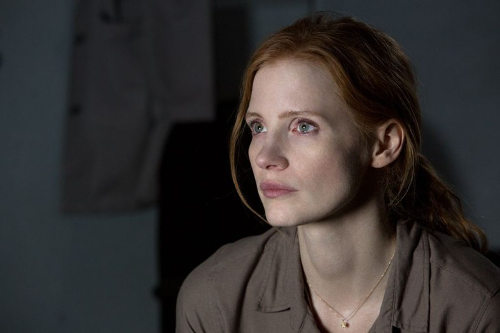
The performances are truly superb. For all his technical mastery, Nolan is also an actors’ director and he gets the most out of his casts. McConaughey is at his best here – which is saying a lot considering his work in recent years. The emotion he brings is on a whole different level than anything he has done before. Jessica Chastain, who plays the adult Murph, also has a strong presence. Both actors wear the burden of their decisions and regrets on their shoulders, and you can see it in every scene. They are the heart and soul of the film. Hathaway also did a wonderful job – as did Wes Bently, Michael Caine, and David Gyasi.

The score from Hans Zimmer is loud and heart pounding. He always manages to perfectly convey the intensity of some truly exciting set pieces – while also slowing down to capture the emotions of the more intimate moments, and this score is no different.

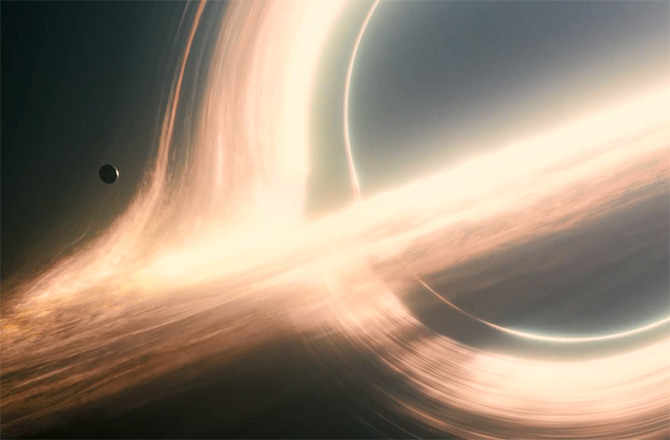
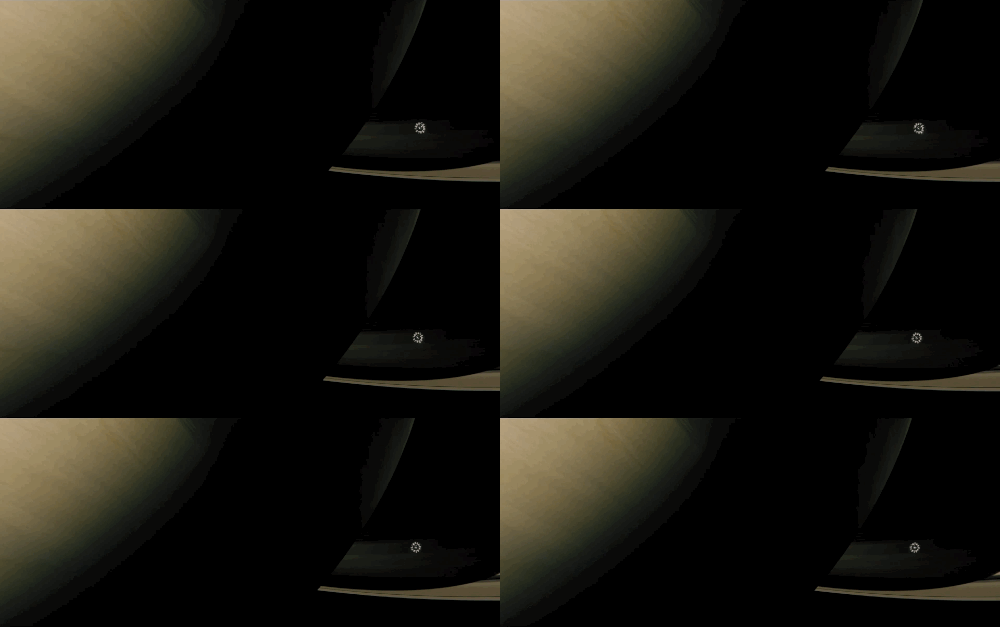
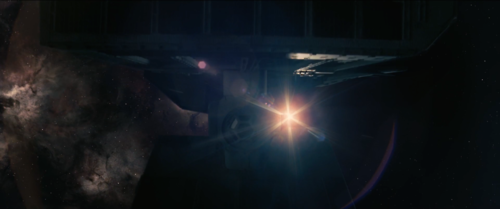
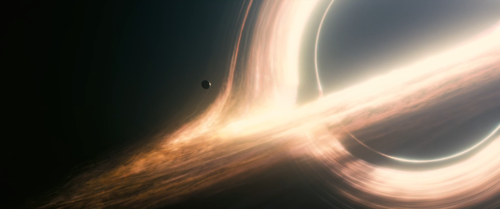
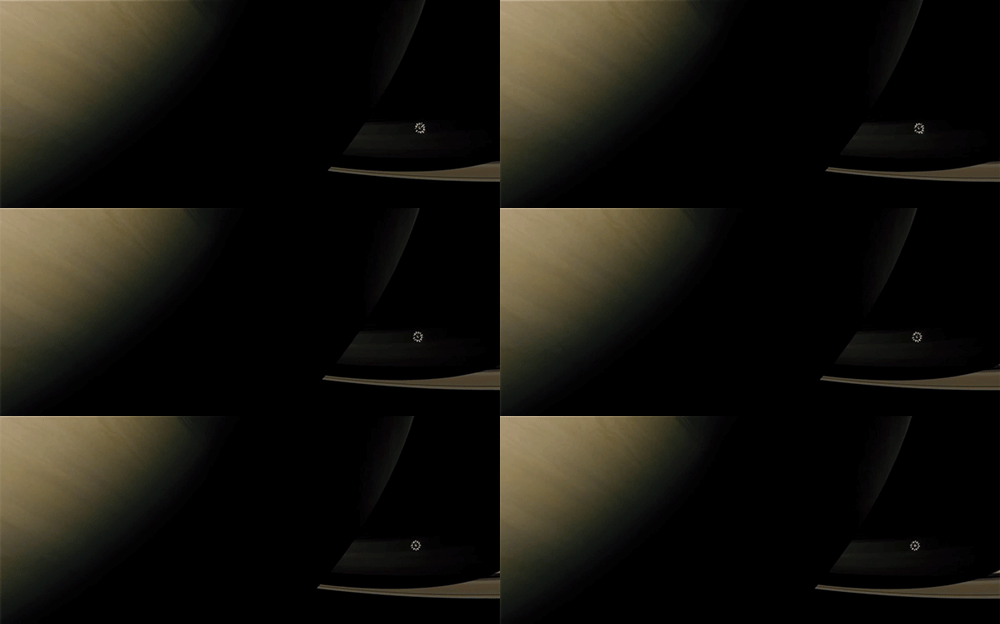
The visuals are absolutely stunning. The effects (most of them created through practical means) were influenced by physicist Kip Throne – who also oversaw a lot of the science in the film – and the result is dream-worthy space imagery. Interestingly, the depictions of the wormhole and black hole in ‘Interstellar’ are considered to be the most accurate ever created. The results are gorgeous, especially on a big screen – with one scene with Saturn making me all teary eyed.

tumblr_nel0c0Oncj1qd479ro1_1280

Below the spectacle and hard science is an emotionally resonant tale of exploration and human ambition that puts its faith not only in science but also the human soul.  Does it become heavy handed at times? Of course! This is a space opera – a science fiction epic – with a big budget, big ideas, big name actors, big visuals and so the emotions at times match that. The first 40 minutes or so do a fantastic job setting up the bond between Cooper and his daughter. It is a wonderful relationship – but a complex one filled with love, anger and regret. It is also the backbone of the story and Nolan builds the emotion from there.

Like with ‘The Tree of Life’ (I told you I was going here), the juxtaposition of dazzling space images and the exploration of the cosmos with this grounded and intimate family story about love and nature make for a challenging but truly rewarding experience. One that asks big questions about our relationship with each other and the universe we inhabit; and examines how the flow and clash of such things as love and instinct with nature can change and inspire us for better or worse. Nolan does seem to want to show how love has the ability to conquer and transcend even the harshest things nature and its laws can throw at us. It is almost fitting then that Chastain stars in each, and has a roll in both stories that could be almost viewed as similar – as the focal point of love that guides the main character and the audience. And like with ‘The Tree of Life’ I can totally understand why people would not like ‘Interstellar’. Neither are films for everyone. I believe most reviews I have seen are so mixed because ultimately ‘Interstellar’ relies so heavily on the emotions at the core of the story that it was inevitable that it wouldn’t connect with some people. You have to be open to some extreme sentimentalism, which just isn’t the case for everybody.

coop mur

I won’t go into much detail over the film’s final act, but I think it makes perfect sense within the logical and emotional progression of the story – though some critics disagree. They seem to think that Nolan’s often straight forward hard science approach is too stern and takes the wonder and ambiguity out of his stories and I found that to not be the case with ‘Interstellar’. Mainly because the ending does in fact have some level of ambiguity – but what it does explain adds a level of wonder and hope that would be lost had it been open ended. I will also say that I find it absolutely absurd that some critics who praise and accept the ending to’2001: A Space Odyssey’ have dismissed this one for being too convoluted or even nonsensical…as if those couldn’t also be said of the ending of Kubrick’s film.

But again maybe this is all just me. As I warned you, hyperbole was expected and I think this review lived up to that. I truly loved the film. It generated in me the same feeling of wonder, excitement and curiosity I got from the spectacle and emotions of ‘Close Encounters of the Third Kind’ and ‘Contact’ –the realism of ‘Gravity’ – and the complexity and mind bending theories of ‘2001: A Space Odyssey’. Throw in with that the connections I felt it had with such films as ‘The Tree of Life’ and there was no way I wasn’t going to love it. This is cinema at its finest. Whatever flaws it might have I can easily overlook due to not only how moving and entertaining of an experience it all is – but also because it is just so damn ambitious. Whether you see it on a large IMAX screen or not, you’ll be moved in one way or another.

tumblr_nejbrwgYQs1qanm80o3_500

Now, I don’t usually do this but I would like to end by quickly addressing the small group of people who have been crying sexism before the film even got its wide release. Apparently, because the lead is a scruffy male and the film is about the will power of mankind to journey off and explore the unknown, that it is somehow a male centric film that is about masculinity above all else. If the idea of human endeavor, innovation, the struggle to survive, and the pursuit of knowledge brings to your mind nothing but masculinity and male dominance then blame society – not the film – because it was clearly not its intentions  and really is just not even remotely the case here. You could easily replace McConaughey’s character with a female lead (like in ‘Contact’) and the narrative, emotional and thematic results would be EXACTLY the same. This all seems even more ridiculous given the fact that the female characters play a much more important role than any of the men. Their work, decisions and perspective essentially save the day. It isn’t until the men view the situations and universe through them that they are able to succeed.

I have also been thrown off by the complaints of Nolan’s reliance on “daddy issues” or the “dead wife/spouse” tropes, and fail to see how these (which I admit are often present in his films) should at all matter when they fit so well into the story and are so emotionally effective. Not to mention Cooper being a widower has nothing to do with any decision he makes; and the relationship Murph has with him is far more complex than simply being “daddy issues”. It is actually a wonderfully realized one, with Nolan drawing experience from the relationship he has with his own daughter.

But why are these even being brought up by people, so early and with such vigor? Do not get me wrong, I understand and appreciate the opinions of those who simply did not like it…but for the few who have criticized it for the aforementioned reasons I just cannot wrap my head around where they are coming from. Sexism is often an issue in cinema and film making as a whole and something that could clearly be worked on…but it just does not apply to ‘Interstellar’ in any way. And I say this as someone who isn’t a Nolan fan boy. Yes, I appreciate his work – he has made some truly great films – but I am not one of those who think he is the best director working right now. But it is hard to not be disappointed and confused by the fact that every time he releases a film there are tons of articles that pop up to critique what would otherwise be completely ignored in other films – or in some case they critique things they didn’t even care about in his other films. Maybe this is just the price a director like him faces. His work tends to be so popular that critics seem to try extra hard to make their voices heard – an attempt to quell the masses of fans excited to see it – by overreaching in their criticism. This is made all the more disheartening when you consider he is one of a very few filmmakers willing to take such big risks to make smart and ambitious films. But maybe I am wrong. Please, let me know your thoughts!
———

Twitter.

‘Interstellar’ Trailer #3


tumblr_n5og0iDbkk1rhmne4o2_500

(Trailer pulled from the official website where it can also be accessed with code: 7201969)

‘Interstellar’, directed by Christopher Nolan (‘Inception’, ‘The Dark Knight’), stars Matthew McConaughey, Jessica Chastain, Anne Hathaway, Casey Affleck, Michael Caine and many others. It is set in a not so distant future in which resources on earth are running low and a group of astronauts/explorers blast off to utilize “wormholes” to find habitable and resource rich planets outside of our solar system. The music is by Nolan’s go-to composer Hans Zimmer, and the cinematography by Hoyte Van Hoytema (‘Her’, ‘Let The Right One In’).

tumblr_n9jgn01DWX1sjygc4o1_500

tumblr_n9jgn01DWX1sjygc4o3_500

tumblr_n9jgn01DWX1sjygc4o5_500

I personally love astronomy and astrophysics. I love space, and have a mild obsession with Saturn. So when I say I am excited for ‘Interstellar’ it isn’t just because I am a fan of Nolan, or I am wrapped up in the wave of hype that tends to surround his films. I have a genuine personal interest in the science and themes involved here and so my expectations for this, even with all the confidence I have in its (amazing) cast and crew, are probably higher than any other release in 2014. Luckily the first full length trailer was beautifully made and was exactly what I wanted to see; and now this new trailer (which showed at Comic-Con) expands on the first, offering us even more of a glimpse as to what we are to expect…and boy oh boy does it look amazing. It has a genuine ‘Inception’ meets ‘2001: A Space Odyssey’ tone and look to it; and I can not wait to see those visuals in IMAX. Sadly it doesn’t hit theaters until November 6th…but until then I’ll be sitting here, with the trailer on loop *cries*.

tumblr_n5og0iDbkk1rhmne4o3_500