This October, I’m going to be doing something a little bit different with my contribution to 4 Shots From 4 Films. I’m going to be taking a little chronological tour of the history of horror cinema, moving from decade to decade.
Today, we take a look at the first half of the 1920s.
4 Shots From 4 Horror Films
The Cabinet of Dr. Caligari (1920, dir by Robert Wiene)
1980’s Alligator begins in 1968. While on vacation in Florida, a teenage girl named Marisa Kendall purchases a baby alligator named Ramon. When she returns home to Chicago, her jerk of a father flushes Ramon down the toilet.
12 years pass. Marisa (Robin Riker) becomes a herpetologist. As for Ramon, he actually survives being flushed down the toilet and thrives in the sewer. He eats the carcasses of animals that had been a part of an experiment involving a growth serum. The serum had the desired effect of making the animals bigger but it also increased their metabolism to the extent that they became aggressive and had to eat constantly. Evil industrialist Slade (Dean Jagger) is convinced that, by tossing the carcasses in the sewer, he’s ensured that no one will ever find out about the experiments. Instead, he’s turned Ramon into a giant alligator who is always hungry. Soon, the super-intelligent alligator is ambushing and eating sewer workers.
Burned-out Detective Dave Madison (Robert Forster) teams up with Marisa to solve the mystery of why so many body parts are turning up in the sewers. It’s not easy. No one wants to admit that there might be a giant alligator living under the city. Everyone wants to believe that’s just an urban legend. But, after a tabloid reporter (Bart Braverman) manages to snap a few photographs of Ramon before being devoured, the police are forced to deal with the fact that they’ve got an alligator on their hands. As Slade continues to try to cover up his involvement, big game hunter Colonel Brock (Henry Silva) comes to town and announces that he will be capturing the alligator.
Directed by Lewis Teague and written by John Sayles, Alligator is a dark comedy disguised as a horror film. While numerous people get eaten and the film ends on a properly ominous note, Alligator is obviously not meant to be taken seriously. The cast is full of good actors who send up their own images. That’s especially true in the case of Henry Silva, who appears to be having a blast as the hyper macho Colonel Brock. Robert Forster, meanwhile, delivers his lines with a self-aware weariness that seems a bit more appropriate for a noir hero than a film about a detective investigating a giant alligator. One reason why the film works is because Forster, Silva, and the rest of the cast understood exactly what type of film they were appearing in and they delivered their overheated lines with just enough wit to let the viewer know that the film was in on the joke. The big and somewhat stiff-looking alligator may not look entirely real and it may move somewhat awkwardly but ultimately, it’s the most likable character in the movie. It just wants to relax in the sewers but, every few minutes, someone else is bugging him.
When first released, Alligator struggled at the box office but it has since gone on to become a cult favorite. Quentin Tarantino is a self-described fan and he had said he was inspired to cast Robert Forster as Max Cherry in Jackie Brown after seeing him as Dave Madison in this film. That’s not bad for a movie about a giant alligator!
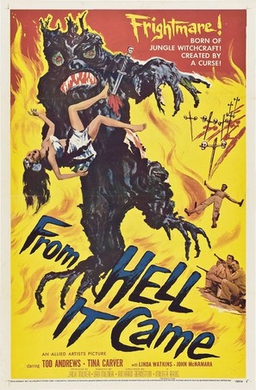
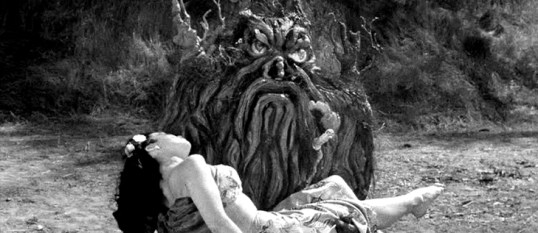
Sometimes, you’ll come across something that simply defies easy description. It’s something that actually has to be seen to be believed. I could describe to you the monster at the center of 1957’s From Hell It Came but I don’t know that, even with my extensive vocabulary, I really have the capability to capture just how absurd and weird this thing is.
In this case, a picture says more than a thousand words ever could:
The monster in From Hell it Came is a walking tree that has a rather angry (not to mention immobile) face. After Prince Kimo is framed for the murder of his father, the chief of a tribe that lives on a South Sea island, he is sentenced to execution. He announces that he will seek revenge on everyone who framed him. He’s then stabbed in the heart and encased in the trunk of a hollow tree. (Apparently, the knife is left in his heart which seems kind of unnecessary but who am I to argue?) Later, Kimo comes back as a walking tree who tosses his enemies into quicksand. The knife is still sticking out of the tree, which would suggest that Kimo was physically transformed. However, the native insist that Kimo has actually become one of their legendary monsters, the fearsome Tabanga.
Along with the natives, there is also a group of American doctors on the island. They’ve been sent to conduct research and to also give the natives medicine to help them deal with an outbreak of the plague. The natives don’t trust the medicine. They trust the magic of their medicine men. Since this film came out in 1957, the doctors react to this by rolling their eyes and talking down to everyone. If there’s one thing that has remained consistent over the decades, it’s that the worst way to get people to do anything is to talk down to them.
The doctors are the first to discover the tree stump that will eventually become the Tobanga. They take the stump back to their laboratory, where they discover that the stump is radioactive due to some nearby atomic tests. The next day, the stump comes to life and leaves the laboratory. One of the most interesting things about this film is that the scientists are skeptical about the natives claim that the tree stump is one of their legendary monsters come to life but they are willing to accept that radiation created a walking stump. Radiation bringing a tree stump to walking life actually makes even less sense than magic doing it.
While the tree is killing its enemies, the American doctors deal with their own drama. For instance, Dr. Terry Mason (Tina Carver), is a woman and that greatly disturbs her male colleagues, all of whom can’t understand why she’s not currently married and raising a family. Meanwhile, Mrs. Mae Kilgore (Linda Watkins, an American actress who played the role with an amazingly bad British accent) owns the local trading post and is not happy about having a killer tree wandering around the island. Mrs. Kilgore is prone to saying things like, “I saw the bloomin’ thing!”
In the end, the Americans finally figure out how to deal with the murderous tree. “Your American magic is better,” the current chief of the natives says. “Hell yeah!” I shout in response, “AMERICA!” From Hell It Came is a thoroughly ludicrous movie but, once you watch it, you’ll never forget that tree.
It’s the Halloween season and what better time is there to apply for a job as the governess at an isolated mansion or to learn the secrets of a prominent but mysterious family? This is the season to chase voices in the night and stand outside in the rain while a dark, shadowy structure looms behind you.
Need help getting in the mood for your gothic explorations? Don’t worry! I’ve got your back with these covers!
Who wouldn’t love to see a movie where a youngish Jack Nicholson played a French soldier who, while searching for a mysterious woman, comes across a castle that’s inhabited by both Dick Miller and Boris Karloff?
In Roger Corman’s 1963 film The Terror, New Jersey-accented Jack Nicholson is the least believable 19th century French soldier ever. However, it’s still interesting to watch him before he became a cinematic icon. His performance here is rather earnest, with little of the sarcasm that would later become his trademark. Boris Karloff is, as usual, great and familiar Corman actor Dick Miller gets a much larger role than usual. Pay attention to the actress playing the mysterious woman. That’s Sandra Knight who, at the time of filming, was married to Jack Nicholson.
Reportedly, The Terror was one of those films that Corman made because he still had the sets from his much more acclaimed film version of The Raven. The script was never finished, the story was made up as filming moved alone, and no less than five directors shot different parts of this 81 minute movie. Boris Karloff’s scenes were filmed first, with the other actors performing in front of a body double during their scenes. Among the many directors who filmed bits and pieces of TheTerror: Roger Corman, Jack Hill, Monte Hellman, Francis Ford Coppola, Coppola’s roommate Dennis Jakob, and even Jack Nicholson himself! (Despite this number of directors involved, Corman received the sole directorial credit.) Perhaps not surprisingly, the final film is a total mess but it does have a definite historical value.
(In typical Corman fashion, scenes from The Terror were later used in the 1968 film, Targets. In that film, Karloff plays a version of himself, an aging horror actor who watches The Terror and dismisses it as being “terrible.”)
“He was brought across in 1228. Prayed on humans for their blood. Now, he wants to be mortal again. To repay society for his sins. To emerge from his World of Darkness. From his endless Forever Night.”
I stumbled onto Forever Knight late one early pre-dawn Sunday Morning, which would show up on a special “Crimetime After Primetime”. Although the cast was different (save for John Kapelos, still playing Don Schanke), it still had the flavor of the 1989 TV Film. It also ended up trading the streets of Los Angeles for Toronto, Canada, which meant that the production also had to include Canadian talent. The two part pilot, which aired in May of 1992, was just a beat for beat revamp of the TV film’s story. I’ll try to find a way to not make these so long as this progresses.
In the prologue, we open in Paris in the year 1288. A young woman welcomes a man to the rest of his unlife, letting him know that while he’s now as eternal as the city, he must kill. This trio of vampires are our hero, Nicholas (Geraint Wyn Davies, Airwolf), his maker LaCroix (Nigel Bennett, HBO’s Gotti), and Janette (Deborah Duchene, TV’s Street Legal). Moving to the present day, the night watchman of a museum is murdered, and a jade cup stolen.
At the crime scene, Schanke is still going wild with the camera, assisting the forensic crew. He and Nick have a few words before Nick interviews the assistant curator, Dr. Alyce Hunter (Christine Reeves) about the missing cup. Alyce seems somewhat fascinated about Knight’s knowledge of the history and the use of the jade cup in blood drinking rituals. There’s a moment of quiet between them as they consider what that could mean.
Heading over to the morgue, we’re introduced to Natalie (Catherine Disher, who voiced Jean Grey in Fox’s X-Men and Val Cooper in Disney Plus’ X-Men ’97). She offers Nick some tea that he can’t quite stomach, but he’s making some progress in staying away from blood. The victim from the museum is one of three, all with large blood loss and some tell-tale puncture marks on their necks. “Nick, Is this something I should worry about?” she asks. Nick doesn’t have an answer. Back at the Precinct, the Captain (Gary Farmer, Tales From the Crypt: Demon Knight) is nervous about these murders and wants some results. A food order comes in, giving Nick three hamburgers that the Captain snarks over. “Skinny guy. Eats like a pig.” The Captain pairs Knight with Schanke, to Don’s delight and Nick’s aggravation.
The 2 elderly hobos from the film are now 3 people. Dr. Dave (George Buza, the voice of Beast in both Fox’s X-Men and in X-Men ’97), Topper (Zack Ward, Transformers) and Jeannie (Deep Space Nine’s Nicole De Boer). Nick warns the three to spend their nights inside with the murders going around. Jeannie lets Nick know they’ll be careful.
Nick heads home for the day, turning on the window shutters for the coming dawn. His fridge is stocked with bottles of the good stuff. He pours himself two glasses full of blood and drinks heartily. It’s been a long night, indeed.
Knight regroups with Schanke the following night. Schanke asks about Nick’s Cadillac and Nick explains that it has some incredible trunk space (for daytime sleeping, though he doesn’t share that tidbit). While on patrol, Nick hears some commotion in a building and detours the car. When they arrive at a nearby building, a woman informs Nick in Mandarin that her daughter’s inside and someone has an Uzi. Running inside, Nick and Schanke stack up on the door to the perp’s room, kicking the door open. The response is a blaze of gunfire. Thankfully, Knight’s vision clearly picks up the enemy with the hostage and has Schanke hold in place while he heads around to the back. Nick floats up to the window and pulls the gunman through it, quickly dispatching him outside of Schanke’s view.
Relaxing in a dark alley, Topper and Jeannie are arguing over what to do for the evening. Topper suggests that they could go to Nick’s Garage, where it’s much warmer, but Jeannie won’t want to have to owe him anything. Dr. Dave is no where to be found, but someone approaches the pair from the dark, attacking Topper causing Jeannie to scream.
Nick takes flight, paying Alyce a late night visit. Just before he shows up, however, Alyce finds a picture of Nick in an old book on archeology. Unlike the film, this doesn’t bring any kind of questioning or curiosity about why he was in the picture. What we do get is a nice flirtatious moment between Nick and Alyce. She loves the dark, and he’s all about the dark. Nick gets a little too close with a kiss, nearly losing control of himself. He pulls away and leaves Alyce be, just in time for a guard to show up. The romance will have to wait for another night. At the same time, Schanke debriefs the Captain, relaying that the captured perp claimed a vampire attacked him. The Captain relays a legend about how burning scorpions attaches other ones from miles around, which spooks Schanke. The Captain reminds him it’s just a legend, like vampires, and he should focus on the real world.
With Nick failing to check in the following morning, Natalie borrows his Caddy from the precinct and visits him at home. She finds him in a blood drunken self pitying stupor. With no fear of who or what she is, she lays into him for falling off the wagon. “You don’t want help, hey, I’m a dot on the horizon.”, she says. Their argument is interrupted by Alyce’s voice message, asking Nick to “talk about last night.” Nat, a little shaken by this, inquires what happened. Nick confesses that he kissed Alyce and then nearly killed her. Nat softens and asks him about the other vampires. Nick shares that the jade cup is part of a pair that could possibly cure vampirism. LaCroix has been keeping Nick away from both cup to ensure he stays immortal. Could he be the source of the current killings?
The next day, Topper’s body is discovered in a barrel. According to Nat, he was hit by a blunt object and then had the neck incision done. Nick becomes livid that he lost Topper on his watch and that Jeannie is missing, though we get a major clue in that there was a blood mobile that recently visited the area. Nick snaps at Schanke and pays a visit to Jeanette to find LaCroix. She’s adjusted to modern times pretty well, owning her own vampire nightclub. They share a quick discussion in French, with Jeanette informing Nick that LaCroix is indeed very much around and is keeping his eyes on him. As he leaves the nightclub and drives away, we find Alyce trailing behind him.
We end the episode with Nick turning on the car radio, hearing the voice of the Nightcrawler (LaCroix) who laments being in town and not having heard from his friend. The music station is still Metal, and yet the show still decides to play something different, this time a violin. “I am waiting.” LaCroix says to the microphone.
As some of our regular readers undoubtedly know, I am involved in a few weekly live tweets on twitter. I host #FridayNightFlix every Friday, I co-host #ScarySocial on Saturday, and I am one of the five hosts of #MondayActionMovie! Every week, we get together. We watch a movie. We tweet our way through it.
Tonight, at 9 pm et, Deanna Dawn will be hosting #ScarySocial! The movie? The Descent Part 2!
If you want to join us this Friday, just hop onto twitter, start the movie at 9 pm et, and use the #ScarySocial hashtag! It’s a friendly group and welcoming of newcomers so don’t be shy.
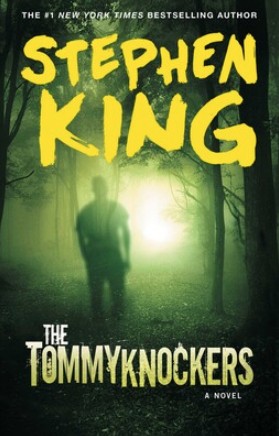
Stephen King has had addiction issues his entire adult life. He’s very open about it. In fact, there are at least three books he’s said that he doesn’t remember writing because he was using more blow than Julie on The Love Boat- the books are The Shining, Misery, and The Tommyknockers.
The plot is that a spaceship crashed long ago in Maine and it takes over the brains of the lifeforms who interact with it. The main characters are Roberta AKA Bobbi who literally stumbles on part of the ship, starting the plot because it starts infecting the town. Gard, a four alarm alcoholic/poet and Bobbi’s former lover, comes to help her and is immune to the ship’s affect because of a steel plate in his head.
As the story progresses, the ship changes the town folk both mentally and physically. The townies make all kinds of wacky and interesting inventions without knowing how they work, lose most of their teeth, and they develop pig-like faces. I told you that he did a lot of cocaine when he wrote this book.
The townies use Gard to help them dig out the ship and there are MANY chapters on the digging logistics. It’s fair to say that Gard spent most of his time in this book as an alcoholic day laborer (maybe he even did some work on my upstairs bathroom because that was done really shitty). I think that you could actually say they were entire chapters just devoted to his digging and things like that; man, Stephen really needs an editor with a spine.
A classic Stephen King plot device is that there are people who power up a haunted house and Tommyknockers uses that to an extreme! Even before I became an engineer, I wonder if Stephen understood how batteries worked? Can you imagine what he did to his kid’s Christmas toys?!
While his stories have recurring plot devices, the heroic journey for his characters changed with his personal change in fortune. The stories in Night Shift and the others from the early part of his career were all about failure: failing your loved ones and failing to maintain control over your life. In those years, the heroes could only succeed by sacrificing their life. The way to stop from harming everyone around them was through suicide because “blood calls to blood” i.e. the family curse. I think that it is clear that the Blood is alcoholism and drug abuse- it’s inherited. When he was failing in life, suicide was described as the only option because the hero was the doorway to misery and I can tell you from my childhood an alcoholic father is definitely the doorway to misery.
After 1979, his career took off and his bank account to pay for copious amounts of cocaine. However, the happy endings became the standard. Money can cure a lot problems, but blood calls to blood and the demons will always remain, but that is what made this book stand out because like his novels in the early part of his career- the hero dies. He can’t save Bobbi and this book was at a high point of addiction. It seems clear to me that it crossed his mind that he couldn’t live with his addiction and that death was the only exit.
Tommyknockers is a messy beach read that is mostly entertaining. If you’re like on a vacation with some real downtime and the Wi-Fi is broken or you’re really into aliens, give it a read.
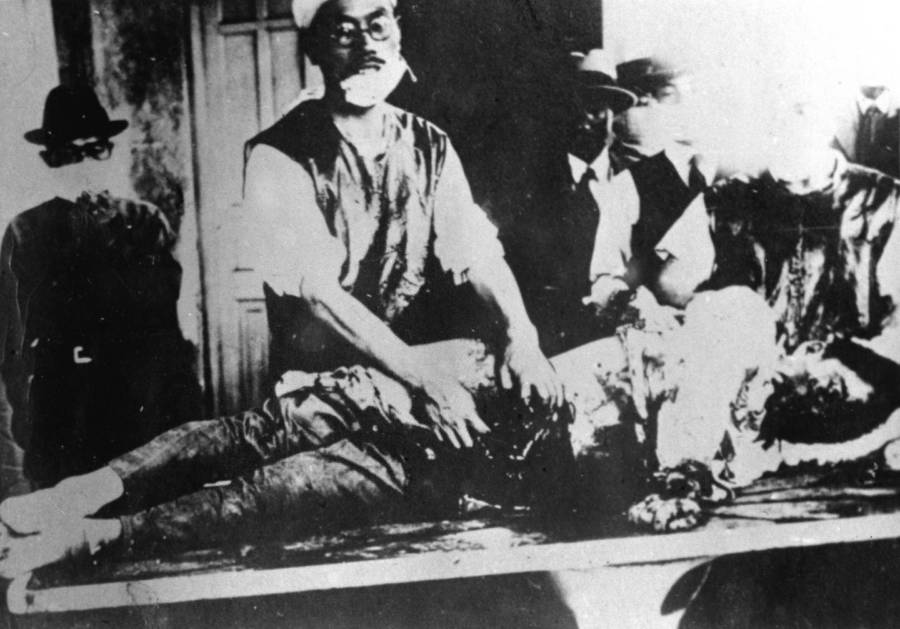
It was in 1988 that one of the darkest, least-discussed episodes of World War II history was thrust into public consciousness through the work of Chinese filmmaker T.F. Mou. The film in question is Men Behind the Sun, an infamous fusion of historical drama and horror that still provokes debate nearly forty years later. Unlike traditional war films that depict heroic battles, military strategy, or patriotic sacrifice, this film ventures deep into the murky shadows of wartime atrocity, unearthing the story of Unit 731—a chapter that had remained largely buried outside of East Asia.
The film is set during Japan’s occupation of Manchuria, beginning in the 1930s and stretching into the final years of the Pacific War. Mou frames much of the story through the perspective of a group of young Japanese boys who have been conscripted into service with the Imperial Army. These youths, filled with notions of loyalty and honor, find themselves assigned to Unit 731, a supposedly scientific research group whose true mission soon becomes horrifyingly clear. What they encounter—and what the audience is forced to witness—exposes both the capacity for cruelty and the terrifying ease with which human beings can normalize horror under the authority of war.
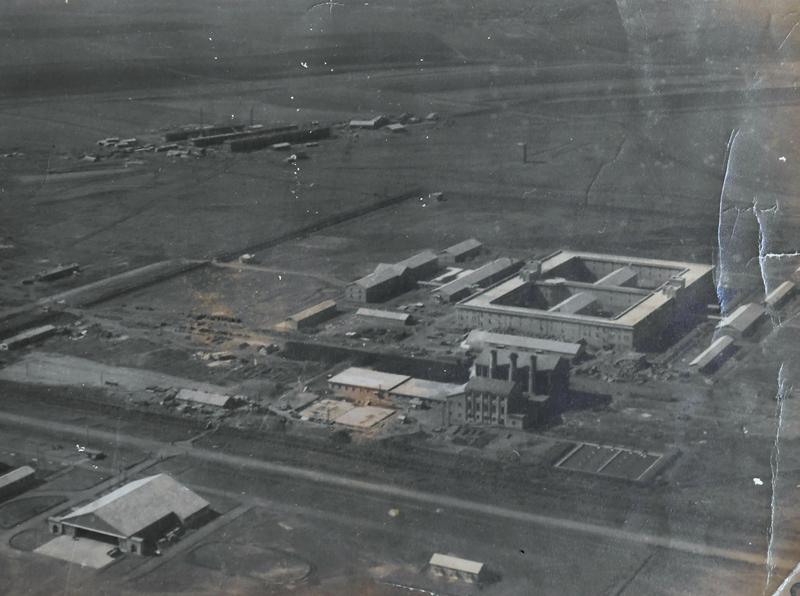
Unit 731 was not a fictional invention, but a very real military research facility overseen by General Shirō Ishii, a figure who still looms as one of World War II’s most notorious war criminals. Under the guise of developing defenses against epidemics and advancing medical knowledge, Ishii ran a program devoted to biological and chemical warfare research. The methods employed were monstrous: prisoners were intentionally infected with plague and anthrax, subjected to vivisections while still alive, had organs harvested for study, and were sealed within hypobaric chambers to measure the effects of barometric pressure. Others were exposed to grenades, chemical agents, or lethal extremes of cold and heat. The victims—callously referred to by their tormentors as “logs”—were largely drawn from the local Chinese population, though Russians, Koreans, and even children and pregnant women were subjected to the same fate. Official records suggest there were no survivors of these experiments.
In the film, the reaction of the Youth Corps to these atrocities provides the closest thing to a moral anchor. Initially repulsed, the boys attempt to adhere to the strict code of loyalty and duty impressed upon them by the Imperial Army. They are torn between horror at what they observe and fear of disobedience. But when a young Chinese boy whom they had befriended is selected as one of Unit 731’s subjects, the mask of discipline begins to crumble. Their attempt at resistance becomes both a moral turning point and a tragic acknowledgment of the futility of challenging the machinery of the Japanese war state.
What makes Men Behind the Sun stand out is its fragmented, almost documentary-like structure. Rather than weaving a straightforward dramatic narrative, Mou constructs the film as a series of stark vignettes, each showcasing one monstrous experiment after another. This disjointed quality mirrors the cold and methodical way Unit 731 carried out its work, giving the audience little comfort or space to detach. While the special effects often carry the look of late-1980s low-budget filmmaking, they remain powerfully effective in provoking revulsion. Time has not dulled their impact: the crude visual horror still conveys the visceral reality of suffering more effectively than polished stylization ever could.
To some, the film crosses too far into exploitation, presenting misery in a way that risks sensationalism. To others, it serves as a vital cultural reckoning, a way of exposing truths that were long suppressed not just in Japan but internationally. Men Behind the Sun may not offer the catharsis of traditional war cinema, but its unflinching confrontation with atrocity ensures it occupies a singular place in film history. Even more unsettling is the knowledge that outside the world of film, General Shirō Ishii himself escaped accountability. After Japan’s surrender, he cooperated with U.S. military authorities, trading his research findings for immunity from prosecution. As the Cold War escalated, his expertise in biological and chemical warfare was deemed too valuable to dismiss, and so the crimes of Unit 731 were quietly buried in exchange for data. This chilling epilogue—rooted not in cinema but in historical fact—ensures that the horror of Men Behind the Sun lingers long after the credits roll.







 Through the Shattered Lens