Welcome to Retro Television Reviews, a feature where we review some of our favorite and least favorite shows of the past! On Tuesdays, I will be reviewing the original Fantasy Island, which ran on ABC from 1977 to 1984. The show is once again on Tubi!
Smiles, everyone, smiles!
Episode 7.13 “Ladies Choice/Skin Deep”
(Dir by Don Weis, originally aired on January 28th, 1984)
The highlight of this week’s episode is Mr. Roarke beating someone up.
The person on the other end of the beating is John McDowell (Lloyd Bochner), who owns a winery on the Island and who, for reasons that aren’t particularly clear, hates Mr. Roarke. When McDowell discovers that Fancy Summerfield (Kim Lankford), who grew up at the winery when it was owned by her father, is in love with Mr. Roarke, McDowell decides to manipulate her to hurt Roarke. Fancy, who is upset that Mr. Roarke doesn’t return her romantic feelings, allows herself to fall for McDowell but then realizes that McDowell is a jerk.
A party at McDowell’s mansion leads to a fist fight between Roarke and McDowell. McDowell starts it but Roarke ends it. He beats up McDowell with such ease that McDowell surrenders. Fancy realizes that McDowell is not the man for her and she also realizes that Roarke does care about her, even if he’s not in love with her. (This episode implies that Roarke does not allow himself to fall in love with mortal women. It’s understandable when you consider what happened when he got married.)
And let’s give credit where credit is due. Ricardo Montalban looked good beating up Lloyd Bochner. Admittedly, it was obvious that the majority of the fight was filmed using stunt doubles but, in those rare occasions where we saw Roarke’s face as he threw a punch, Montalban looked like he knew what he doing.
(Lawrence, needless to say, did not come to Mr. Roarke’s aid during the fight. In fact, Lawrence was barely in this episode.)
As for the other fantasy, it was pretty stupid. Joe (Michael Lembeck) comes to the Island with his loudmouth buddy, Vinnie (Fred Travalena). They are attending a sports expo. Vinnie is all about hitting on the models but Joe falls for Paula Santino (Donna Pescow), who is pretty but definitely not glamorous. The main problem with this fantasy was that both Joe and Paula were neurotic quip machines so listening to them have a conversation made me want to rupture my ear drums. Vinnie, for his part, said some pretty bad things about Paula. Roarke was too busy beating up John McDowell to do anything about it.
This episode was …. actually, not quite as bad as some of the other season seven episodes that I’ve recently watched. The second fantasy got old pretty quickly but the first fantasy featured Roarke beating someone up and there’s something to be said for that. The main problem with this episode is that none of the Island guests were particularly likable but I still appreciated that Roarke was willing to go to all of that trouble for them.
Then again, without Tattoo around, Roarke really doesn’t have any choice but to take on all the trouble himself. What else is he going to do? Depend on Lawrence?
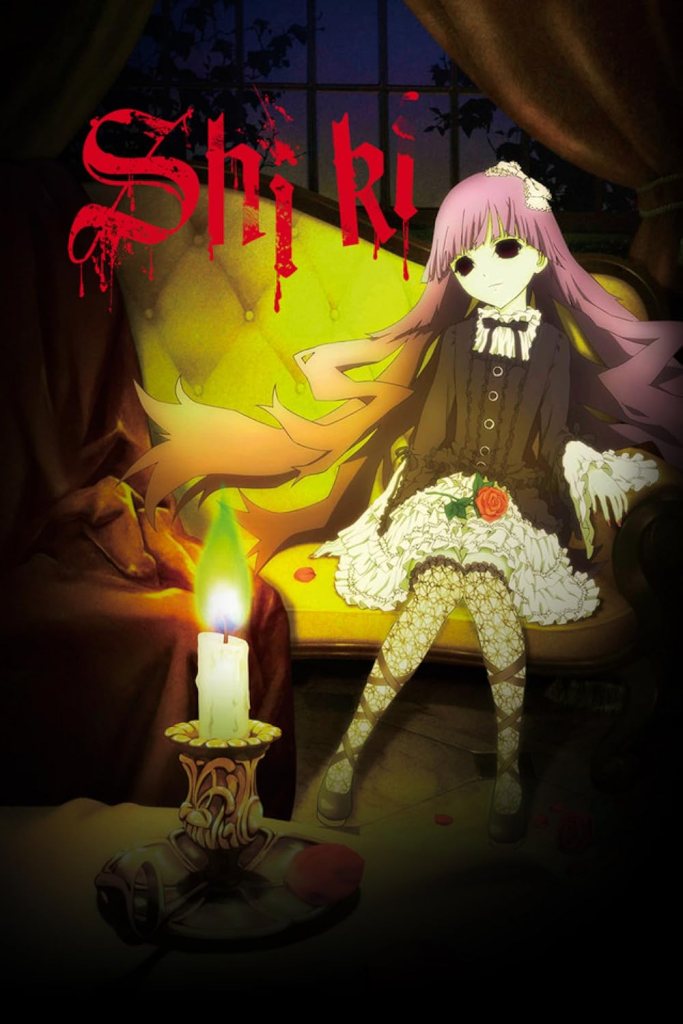
The anime adaptation of Shiki, based on Fuyumi Ono’s acclaimed horror novel and directed by Tetsurō Amino, stands as a rare specimen in the horror genre. Rather than relying on quick shocks, excessive gore, or typical jump scares, Shiki unsettles its audience through atmosphere, moral erosion, and the slow, relentless unraveling of human conscience. Premiering in 2010, the series unfolds at a measured, almost meditative pace, transforming what could have been a simple vampire tale into a profound meditation on survival, faith, fear, and the delicate boundary between life and death when everything is pushed to the brink.
The story is set in Sotoba, a small, isolated village nestled precariously near a larger modern metropolis. The residents of Sotoba live tightly woven lives, their routines and social bonds preserved with careful attention over generations. This fragile peace shatters when a mysterious wave of deaths begins sweeping through the population. At first, these fatalities are dismissed as consequences of the harsh local climate—heatstroke, seasonal illnesses, and the inevitable toll of old age. Yet, as the body count rises, the truth reveals itself to be much darker: the deceased are rising as vampires, known locally as “shiki” or “corpse demons,” creatures that survive by feeding on the living.
What distinguishes Shiki from many other vampire narratives is its refusal to paint the conflict in stark black-and-white terms of good versus evil. The shiki are portrayed not as mindless monsters but as tormented souls, burdened by memories, emotions, and guilt over what they have become and the horrors they must commit to survive. Conversely, the human villagers—once caring and close-knit neighbors—succumb to suspicion, fear, and eventually cold-hearted survival instincts. The real horror emerges as morality frays and the line between human and monster becomes irrevocably blurred.
Unlike classic horror tales set in small towns—such as Stephen King’s ’Salem’s Lot, where a seemingly idyllic village hides sinister supernatural forces—Shiki offers a nuanced inward gaze. For instance, the novel They Thirst situates vampirism within a sprawling urban landscape, where anonymity accelerates chaos and alienation. In contrast, Shiki uses the microcosm of Sotoba to emphasize intimate, communal decay. The focus is not just on the physical threat, but on the erosion of social bonds and moral fabric, revealing how fragile human civility truly is under stress.
While ’Salem’s Lot depicts vampires as a pure evil contaminating a tight-knit community—highlighting themes of moral corruption and contamination—Shiki explores moral ambiguity with far greater depth. The vampires, including the enigmatic Sunako Kirishiki, retain their memories, emotions, and even remorse. Both vampires and humans carry guilt and anguish, complicating simplistic notions of villainy. The villagers—their friends, family, and neighbors—begin to see the suffering of the vampires while realizing their own brutal deeds. The narrative challenges viewers to question whether survival excuses the loss of morality or if it is possible to retain one’s spirit even amid brutal chaos.
At the heart of the series are characters who embody competing moral philosophies. Natsuno Yuki, a cynical teenager newly transplanted to Sotoba from the city, provides both an insider and outsider’s perspective. His disillusioned view highlights how fear, suspicion, and grief can unravel even the most intimate relationships. Natsuno serves as a rational voice within a community unraveling into paranoia and despair, offering a reflection of the audience’s own struggle to comprehend the incomprehensible.
Dr. Toshio Ozaki exemplifies the desperate human desire for order amid chaos. Initially, he seeks to explain away the deaths with rational, scientific explanations grounded in medicine. However, when superstition and supernatural realities intrude, Ozaki is compelled to confront truths beyond his understanding. His leadership in trying to save Sotoba begins with scientific resolve but soon descends into moral compromise. As hysteria spreads, the villagers’ collective violence explodes into ruthless slaughter, justified as necessary to preserve survival. Ozaki’s internal conflict—balancing ethical convictions against brutal necessity—reflects the series’ central question: at what point does the will to survive erode the soul?
Set against this turmoil is Sunako Kirishiki, the quiet yet profoundly troubled leader among the shiki. Though she has lived for centuries and suffers deeply from a sense of divine rejection—believing God has forsaken her—Sunako retains a core spirituality that anchors her sense of morality. Even as she is forced to kill in order to survive, she wrestles with guilt and her faltering faith. Her belief that divine rejection is not synonymous with divine abandonment acts as a form of moral defiance, preserving her fragile humanity amid brutal circumstances.
This spiritual resilience is deepened through her relationship with Seishin Muroi, a local junior monk and published author. Muroi, gentle and introspective, offers a unique perspective on the tragedy unfolding in Sotoba. His dual roles as a religious figure and a thoughtful writer allow him to interpret the crisis with spiritual depth and philosophical insight. His literary works—admired by the Kirishiki family, especially Sunako—explore mortality, suffering, and the search for meaning beyond pain. As a monk, Muroi embodies faith and compassion; as an author, he grapples with existential ambiguities, granting him a rare wisdom in navigating the village’s descent.
Muroi’s role makes him both observer and actor in Sotoba’s unraveling. His spiritual duties compel him to provide comfort and guidance, while his writings deepen his understanding of human and supernatural suffering. This duality shapes his interactions with Sunako and others, serving as a pathway for faith and empathy to endure amid horror and despair.
Sunako’s friendship with Muroi becomes central to her moral endurance. In contrast to Tatsumi, the Kirishiki family’s pragmatic and ruthless jinrō guardian who views survival through a cold, utilitarian lens, Muroi offers a moral counterpoint grounded in mercy and hope. Through his compassionate presence and reflective insights, Sunako finds a way to renew her faith. Although she feels forsaken, Muroi’s influence rekindles the fragile spark of belief in her that prevents her humanity from being swallowed by despair.
The thematic contrast between Muroi and Tatsumi becomes a fulcrum for Shiki: survival devoid of soul versus survival with spirit. Muroi’s continuing faith—soft, tentative, but persistent—demonstrates that even in the bleakest conditions, moral conviction need not fade entirely. His dual lens as monk and author enriches the narrative, bridging theology and philosophy while threading through the story’s core existential dilemmas.
Amino’s direction amplifies these themes through patient pacing and subtle storytelling. The mounting tension grows slowly through quiet, contemplative moments and lingering visuals—the hum of cicadas, shifting light through leaves, the barely audible footsteps in the dark. Ryu Fujisaki’s stylized character designs convey unease with elongated features and a surreal sheen, while Yasuharu Takanashi’s sparse, mournful score melds choral lamentations with haunting silences. Together, these elements create an immersive atmosphere steeped in dread and melancholy.
By the series’ climax, the distinction between human and shiki dissolves into near indistinguishability. Both sides bear the scars of survival—physical, psychological, and spiritual. The violence ceases, but the damage lingers, leaving survivors hollow, burdened by guilt and loss. Yet amidst the ruins of a shattered community, Sunako’s renewed faith, forged under Muroi’s guidance, flickers faintly—an emblem of hope that refuses to be extinguished.
The final scene distills this weighty truth without grandiosity or closure. There are no victors, no absolutes—only profound loneliness in survival. The living bear wounds deeper than any inflicted by fang or bullet. But in this quiet aftermath, Sunako’s fragile faith, buoyed by Muroi’s steadfast compassion, pulses as the last vestige of what it means to remain human: choosing faith and empathy even when everything else seems lost.
Shiki closes not with resolution but with a haunting reminder: survival is incomplete without humanity, and faith—however delicate—is the courage to hold onto that humanity when all else has fallen away.
Welcome to Late Night Retro Television Reviews, a feature where we review some of our favorite and least favorite shows of the past! On Mondays, I will be reviewing CHiPs, which ran on NBC from 1977 to 1983. The entire show is currently streaming on Prime!
This week, Ponch reveals even more hidden talents!
Episode 4.16 “Karate”
(Dir by Leslie H. Martinson, originally aired on March 8th, 1981)
Ponch and Baker have been assigned to patrol Ponch’s old neighborhood. Ponch says that he feels as if he can see a ghost on every corner. Baker laughs and says that at least they have an easy assignment.
Not so fast, Baker!
Andy Macedon (Lewis Van Bergen) is paying teenagers to steal dirt bikes for him. Macedon went to school with Ponch. Macedon was a few years ahead of him and he was always a bully. Now, Macedon is setting up a crime ring. He’s even got Donny Bonaduce working for him!
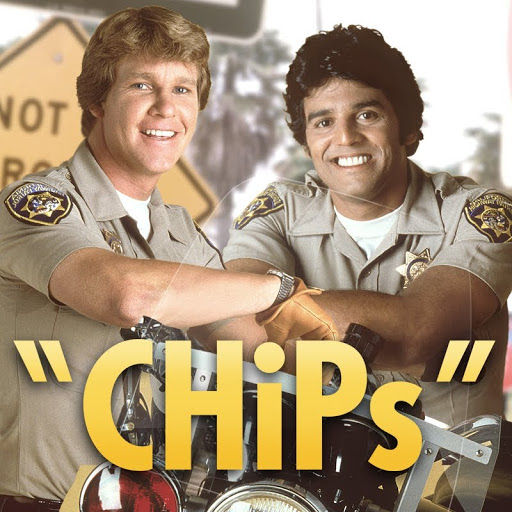
Ponch’s solution? Ponch decides to encourage the neighborhood kids to come to the local youth center by having Bonnie teach gymnastics while Ponch teaches karate. Are you surprised to discover that, on top of everything else, Ponch knows karate? You shouldn’t be. You’re watching….
Admittedly, it doesn’t start off well. When Andy Macedon comes down to the Youth Center and personally challenges Ponch to a fight, Ponch backs off. He does it because he doesn’t want to make trouble for the Youth Center but the kids view him as being a coward. If Ponch is ever going to stop Andy Macedon and keep young Rivas (Mario Marcelino) from falling under Macedon’s evil spell, he’s going to have to beat Andy in a karate street fight with everyone watching.
And that’s exactly what Ponch does. Why? Because it’s the Ponch Show and there is nothing that Ponch cannot do!
This episode featured a combination of bass-heavy music and not just Erik Estrada but also Danny Bonaduce doing karate moves so you know it was a classic. I related to Terri (Kari Michealson), the teenager who couldn’t decide if she wanted to be a gymnast or a criminal. I went through the same thing when I was 16. Ballet or crime? Crime or ballet? I compromised by shoplifting makeup after my dance classes.
The next episode of Hammer House of Horror is The House That Bled To Death but I’ve decided not to share it for this Halloween because it features the death of a kitty and I’m kind of tired of pets dying in horror films. It’s an effective and scary episode, though. It’s on YouTube so if you want to watch it, feel free.
Moving right along, tonight’s episode is CharlieBoy. Graham (Leigh Lawson) and his wife Sarah (Angela Bruce) inherit an statue that they don’t realize also doubles as a really big voodoo doll. After stabbing the statue a bit too many times, Graham comes to realize that he’s accidentally condemned almost everyone he knows to death, including both him and his wife. Thanks to the fast-paced director of Robert Young and the committed performances of the cast, this is an entertainingly macabre episode. It originally aired on October 18th, 1980.
Welcome to Retro Television Reviews, a feature where we review some of our favorite and least favorite shows of the past! On Mondays, I will be reviewing Miami Vice, which ran on NBC from 1984 to 1989. The entire show can be purchased on Prime!
This week, we start the fifth and final season of Miami Vice.
Episode 5.1 “Hostile Takeover”
(Dir by Don Johnson, originally aired on November 4th, 1988)
The fifth and final season of Miami Vice gets off to a good start with this episode. After opening with some appropriately glitzy scenes of the drug-fueled Miami nightlife, the episode then shows us that Sonny Crockett is still convinced that he’s Sonny Burnett. He has now returned to Miami and, along with Cliff King (Matt Frewer), he is one of the key advisors to drug lord Oscar Carrera (Joe Santos).
Carrera is at war with El Gato (Jon Polito), the brother of Sonny Burnett’s former employer, Miguel Manolo. El Gato, who wears gold lamé, cries over the body of one of his henchmen, and flinches when forced to deal with direct sunlight, is a flamboyant figure. In fact, he’s so flamboyant that it’s initially easy to overlook how determined he is to get revenge for the death of his brother. That means taking down the Carreras family and Sonny Burnett as well.
The Vice Squad knows that Sonny is moving up in the drug underworld but Castillo is firm when asked what they should do about it. Sonny has an active warrant out for murdering a corrupt cop. “Sonny’s not Sonny anymore,” Tubbs says at one point and Castillo seems to agree.
Tubbs goes undercover, making contact with the Carreras cartel. When Sonny meets Tubbs, Tubbs introduces himself as “Ricardo Cooper” and starts speaking in his terribly unconvincing Jamaican accent and that was when I said, “Miami Vice is back!” Sonny doesn’t trust Cooper from the start. “Maybe you’re a cop,” Sonny says. “Not I, mon,” Tubbs replies.
People are dying and, while Sonny doesn’t have a problem with that, the show is also careful to show that Sonny only shoots in self-defense. (It appears the most of the cold-blooded murders are farmed out to Cliff King.) When Oscar Carreras dies, it’s because his poofy-haired son (Anthony Crivello) accidentally shot him when Oscar discovered him with his stepmother. When the son dies, it’s because he was about to shoot Sonny after he caught Sonny with …. his stepmother, again. The Carreras family is so dysfunctional that it shouldn’t come as a surprise that Sonny steps up to take it over.
After promising Castillo that he’ll take out Sonny if necessary, Tubbs meets up with Sonny at beach-side tower. Tubbs looks at Sonny and suddenly says, “Sonny, it’s me, Rico.” Sonny stare at Tubbs. “Do you remember me?” Tubbs asks.
“Sure,” Sonny suddenly says, “You’re Tubbs.”
Three gunshots ring out as the episode ends.
OH MY GOD, DID SONNY KILLS TUBBS!?
We’ll find out next week. For now, I’ll say that — after a disappointing fourth season — this was exactly how Miami Vice needed to start things off for Season 5. Seriously, if you’re going to have Sonny get hit with amnesia, you might as well just go for it and take things to their logical extreme.
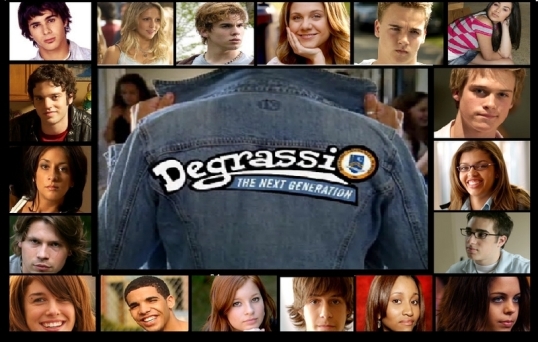
Welcome to Late Night Retro Television Reviews, a feature where we review some of our favorite and least favorite shows of the past! On Sunday, I will be reviewing the Canadian series, Degrassi: The Next Generation, which aired from 2001 to 2015! The series can be streamed on YouTube and Tubi.
This week, Ashley learns her father’s secret.
Episode 1.8 “Secrets & Lies”
(Dir by Bruce McDonald, originally aired on May 6th, 2002)
This is a landmark episode of Degrassi: The Next Generation for two reasons.
First off, it’s the first episode to establish that Liberty has a crush on J.T. Liberty’s unrequited crush was one of the show’s early storyline and, to be honest, it was frequently one of the more annoying storylines. Liberty was always a rather flat character and she and J.T. never really made much sense as a couple. (Yes, they did eventually become a couple.) Of course, watching this episode today, all I can think about is the fact that, in the far future, J.T. is going to die in Liberty’s arms after being stabbed in the back by a student from a rival high school. Much as with Degrassi High, knowing what the future holds adds a layer of poignance to these early episodes that they otherwise wouldn’t have.
As for this episode, J.T. tries to get Liberty to leave him alone by pretending to be gay. He gets this idea after Toby informs him that Ashley’s father, the dashing Robert Kerwin (Andrew Gillies), has come out of the closet.
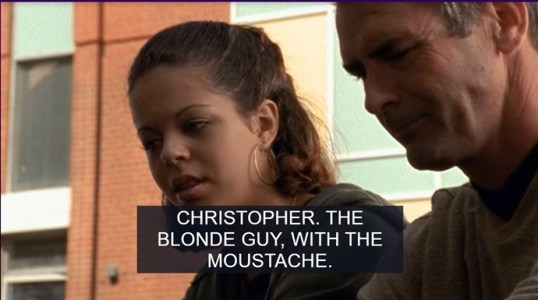
The majority of this episode deals with Ashley struggling to accept that her father is gay. Again, this is another storyline that becomes far more poignant if you already know that Robert is eventually going to marry his partner Christopher and Ashley’s boyfriend is going to have a mental breakdown at the wedding.
This episode actually did a very good job of realistically portraying Ashley’s initial reaction to learning that her father’s gay. Ashley is confused and, as she was still hoping that her parents would eventually get back together, she feels betrayed. It’s an honest reaction and probably not the sort of thing you would ever see on television today, where our idealized protagonists almost always have the right response from the start. The fact that the show deals honestly with Ashley’s emotions makes her eventual acceptance of her father’s sexuality all the more poignant.
This episode deals very sensitively deals with Robert’s coming out and Andrew Gillies and Melissa McIntyre both deserve a lot of credit for their performances. (Remember, this episode aired in 2002, at a time when gay characters were almost always portrayed as either being comedy relief or helpless victims.) I do have to admit that there is one rather clunky line in this episode. It comes when Ashley asks Robert if he has a boyfriend and Robert tells her about his partner, Christopher. Ashley’s next line (and Melissa McIntyre’s overdramatic delivery of it) always makes me laugh despite myself:
Aside from that line and all of the cringey stuff involving J.T. and Liberty (and, admittedly, that is a lot to overlook), this was a sensitive and well-handled episode.
In the fourth episode of Hammer House of Horror, Gary Bond plays a scientist whose son dies after eating some toxic proteins that just happened to be lying around the lab. The scientist’s wife (Barbara Kellerman) goes down to the local orphanage to collect a new son but this new kid turns out to be more than a little creepy.
This bizarre episode originally aired, in the UK, on October 4th, 1980. A quick warning: This episode does feature some dead rabbits. I like rabbits so that bothered me a bit, even though it made sense in the context of the story.
Two meteorite showers have fallen in rural England and a poacher has come across a strange plastic polyhedron at one of the sites. Brigadier General Alistair Lethbridge-Stewart (Nicholas Courtney), the head of the United Nations Intelligence Taskforce (UNIT), fears it could be the start of another alien invasion. He explains to UNIT’s skeptical scientific advisor, Dr. Liz Shaw (Caroline John), that UNIT was specifically created to protect the Earth from such invasions.
Meanwhile, a bushy-haired man has collapsed in front of an old-fashioned blue police call box. He’s been taken to a hospital, where the doctors are confounded by the fact that he appears to have two hearts. The Brigadier, hearing the news, is convinced that the man is his old friend the Doctor and heads to the hospital.
The Brigadier is right. The man (Jon Pertwee) is the Doctor but, as a result of being found guilty of stealing a TARDIS and breaking the Time Lord code of non-interference, the Doctor now looks and sounds completely different. While the Doctor works to convince the Brigadier that he is who he says he is, a tentacled alien known as the Nestene is using the Autons, a race of plastic humanoids, to do its deadly bidding.
I’ve always really liked Jon Pertwee’s interpretation of the Doctor and the reasons why are to be found in his very first adventure. While Pertwee’s Doctor was just as intelligent and egocentric as the two Doctors who came before him, he was also a man (or an alien, I guess) of action. Rather than just stay cooped up in that hospital room, the Third Doctor is constantly trying to escape. When the Autons show up and try to abduct him, the Third Doctor doesn’t go without a struggle. Unlike the first two Doctors, this Doctor has no problem commandeering a car and then demanding one just like it in return for working with UNIT. Pertwee combined intelligence with action and humor and that brought a unique feel to his five years in the role. I’ve often seen Pertwee’s Doctor compared to James Bond. I think a better comparison would be to Patrick McNee’s John Steed from The Avengers. The Third Doctor was an intelligent, erudite gentleman who dressed well and knew how to throw a punch.
The majority of the Third Doctor’s adventure would involve UNIT in some way. Exiled to Earth and with a locked-down TARDIS, the Third Doctor was the most Earth-bound of the Doctors but, as shown in Spearhead From Space, that worked well for Pertwee’s interpretation of the character. Pertwee and Nicholas Courtney were a good team and, for Pertwee’s first season, Liz Shaw was a companion who was actually the Doctor’s equal. (I had a huge crush on Caroline John when her episodes were first broadcast on PBS.) The first Auton Invasion showed why UNIT was so necessary and also why it needed the services of the Doctor.
The Autons have a reputation for being the scariest of Doctor Who’s monsters. They definitely were creepy, with their expressionless, plastic faces. Imagine mannequins that can walk and who will also shoot you on a whim and you have an idea of why the Autons inspired many bad dreams in 1970. (Like the Cyberman in Tomb of the Cybermen, the Autons were soon at the heart of a debate about whether or not Doctor Who was too scary for children.) The Autons are certainly more scary than the Nestene, which was quite obviously a puppet and not very well-put together one at that.
Spearhead from Space was a wonderful introduction to Jon Pertwee’s Doctor and it remains a classic of the original series. The first serial to be broadcast in color, it not only allows us to get to know the Third Doctor but it also introduces a classic new threat. As this story ends, the Doctor is settling to his new role as an advisor to UNIT. Waiting in the future are many more adventures and the Master.
Welcome to Retro Television Reviews, a feature where we review some of our favorite and least favorite shows of the past! On Sundays, I will be reviewing Homicide: Life On The Street, which aired from 1993 to 1999, on NBC! It can be viewed on Peacock.
This week, the sniper shootings continue.
Episode 4.9 “Sniper, Part Two”
(Dir by Darnell Martin, originally aired on January 12th, 1996)
Despite the suicide of William Mariner, people in Baltimore are still falling victim to a sniper who attacks every eight hours. All of the detectives, many of whom have just returned home from spending several sleepless days and nights investigating the first sniper, are called back in. At first, Pembleton and Bayliss suspect that Mariner must have had an accomplice. However, when a strange young man named Alex Robey (David Eigenberg) just happens to be at the scene of two separate shootings, it becomes clear that the second sniper is just a copycat who is looking for attention.
It’s quite a contrast between William Mariner, who lived in an upper class neighborhood and who died without revealing his motivations, and Alex Robey, who lives in a rowhouse and who reveals that he was obsessed with Mariner’s crimes. It’s a reminder that some murderers are easier to figure out than others. The detectives will never know what caused Mariner to snap. But Robey? Robey’s just desperate for attention.
Recently demoted Megan Russert works with the Squad, despite Barnfather ordering Giardello to keep her away from the case. (Wisely, Giardello ignores Barnfather.) By pretending to be sympathetic to his resentment over being treated as a “nobody,” Russert plays a key role in Robey eventually confessing to being the sniper. The episode makes it clear that Russert is going to become the latest member of the Homicide squad. That’s fine but I do sometimes wish that this show could introduce a new detective without having them miraculously solve the big case. This season started with Kellerman displaying detective skills that he has not displayed in any episode since. This week, it was Russert’s turn to suddenly be the greatest detective this side of Frank Pembleton. It makes me miss the relative realism of the earlier seasons, where even the best detectives sometimes struggled. Bayliss failing to close the case of Adena Watson was one of the defining events of Homicide’s first season. If Adena had died during the fourth season, there’s no way the Arraber would have gotten away with it.
With Alex Robey confessing to being the second sniper, it looks like maybe the people of Baltimore are actually going to break from being shot at people on rooftops. Good for them, they deserve a break.
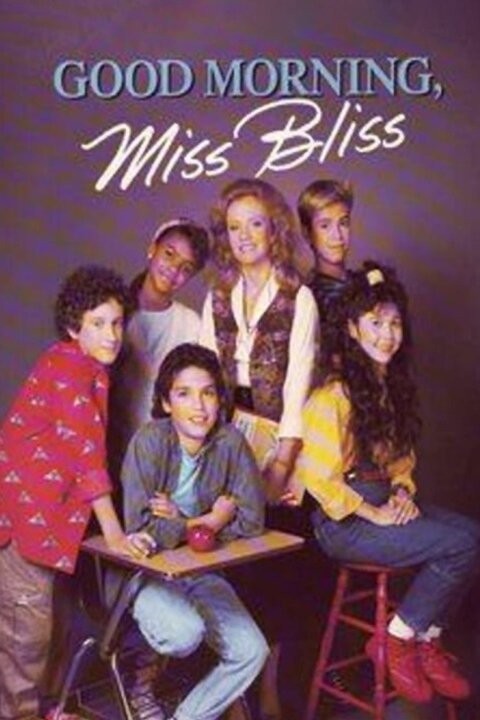
Welcome to Late Night Retro Television Reviews, a feature where we review some of our favorite and least favorite shows of the past! On Saturdays, I will be reviewing Good Morning, Miss Bliss, which ran on the Disney Channel from 1988 to 1989 before then moving to NBC and being renamed Saved By The Bell. The entire show is currently streaming on Prime!
This week, Miss Bliss takes over the school.
Episode 1.12 “Clubs and Cliques”
(Dir by Burt Brinckerhoff, originally aired on March 11th, 1989)
Mr. Belding is teaching Miss Bliss’s class!
Why?
Well, the answer doesn’t make much sense but here it is. The School Board has ordered Belding to name one of the teachers as an “assistant principal” who can be in charge whenever he’s out of the building. Most schools just hire an assistant principal but whatever. Maybe this is an Indiana thing. Since there are only three teachers to choose from and one of them is the mad scientist who wanted to force Nikki to dissect a frog, Mr. Belding goes with Miss Bliss. But, before Miss Bliss can officially have the job, she has to serve as a principal for a week. Belding covers her class.
At first, Mr. Belding is nervous. But, by the end of the class period, he’s thrilled. He tells Miss Bliss that he thinks he did a wonderful job and that the kids really got something out of it.
“Mr. Belding,” Miss Bliss replies, “it’s only homeroom.”
Okay, I’m just going to say it …. WHAT A BITCH! Seriously, how condescending can one person be? This is who you want to make principal? Is this how you motivate people? Again, this is why I cannot stand Miss Bliss. Seriously, if anyone ever said that to her — “It’s only homeroom,” — she would have rightly been offended.
(Then again, I have to wonder whether or not Mr. Belding’s ever taught a class before. This episode seems to imply that he hasn’t. Was that a common thing with principals back in the 80s?)
Miss Bliss has a lot to deal with because it’s pledge week. Apparently, the coolest club at JFK Middle School is the Rigma club and Zach has been told by Rick (J. Trevor Edmond) and Trevor (Christopher Carter) that he can wear a Rigma jacket if he’s mean to all of his friends. Zach calls Lisa’s parents and let them know that she wears makeup in school. He throws ice cream at Nikki’s sweater. He reveals that Mikey has a crush. He calls Screech a “nothing.” He loses all of his friends and then he finds out that he wasn’t even being considered for Rigma membership. Instead, it was all a big joke on the part of Rick and Trevor.
Now, to give credit where credit is due, Mark-Paul Gosselaar did a pretty good job playing up Zach’s regret after he realized he had lost all of his friends for nothing. The episode is interesting because it shows a side of Zach that would totally disappear over the course of Saved By The Bell. In this episode, Zach is insecure and desperate to belong. By the time Saved By The Bell really got going, it had been established that Zach had no insecurities and was automatically loved by everyone he met. Insecure Zach is infinitely more compelling but a bit less fun than confident Zach. Watching this episode, it’s hard to believe we’re watching the same Zach Morris who will eventually lie about a being a descendant of Chief Joseph.
Things work out in the end. His friends forgive Zach. Even more importantly, Miss Bliss gets in trouble for not calling and asking for permission from the Board of Education before giving everyone everything they wanted. “She’s not perfect,” Belding chuckles. You got that right, Mr. Belding!





 Through the Shattered Lens