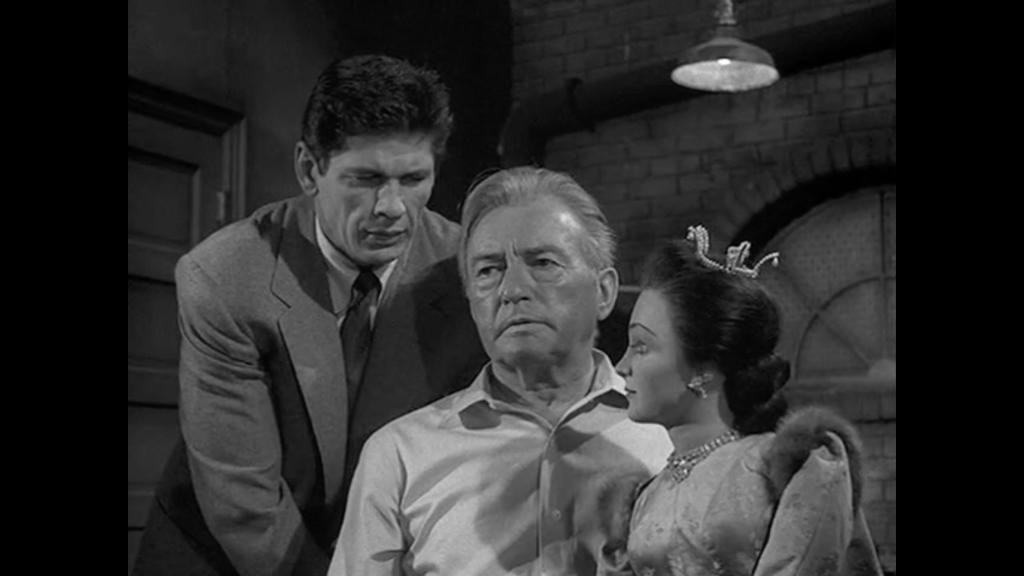
Doctor Who — The War Games (1969, directed by David Maloney)


The War Games is an episode of firsts and lasts.

It featured the last regular appearance by Patrick Troughton as the Second Doctor.  (Troughton would return for three guest appearances.)  Having played the role for three years, Troughton feared getting typecast and felt it was time to leave.  It was also the last episode to feature Frazer Hines (as Jamie) and Wendy Padbury (as Zoe) as companions.  (Hines holds the record for appearing in the most episodes as a companion.)  Finally, this episode was the last to be broadcast in black-and-white.

The War Games also featured a very important first.  This episode featured the first appearance of the Time Lords and the first trip to their home planet.  This was the first episode that showed the society that the Doctor fled when he stole his TARDIS and went to Earth.

At ten episodes, The War Games was either the second or third-longest serial in Doctor Who history, depending on whether or not you count The Trial of the Time Lord as just one long (and regrettable) serial.  The serial opens with the Doctor and his companions apparently landing in No Man’s Land during World War I.  As things progress, the Doctor notices anachronistic technology and Jamie is shocked when a redcoat shows up in a World War I prison.  The Doctor discovers that an alien known as The War Lord (Philip Madoc) has determined that humanity is the most bloodthirsty race in the universe and that he has abducted soldiers from Earth’s bloodiest wars.  They are fighting war games on The War Lord’s planet and the survivors will become the members of the War Lord’s army.  Helping the War Lord is the War Chief (Edward Brayshaw), a renegade Time Lord.

(Just as with The Time Meddler‘s Monk, there’s a fan theory that the War Chief was an early incarnation of The Master.  I don’t believe it, myself.  The Master was far more cunning than The War Chief.)

Despite running for four hours, The War Games is a rare Doctor Who serial that doesn’t have any slow spots and the scenes where the characters cross from war zone to war zone are creatively realized.  The serial starts out as if it’s going to be yet another dry historical episode and then it gradually reveals that all is not as it seems.  I especially liked the performance as Jane Sherwin as Lady Julia, an ambulance driver in the World War I zone.  (Jane Sherwin was also the wife of Doctor Who’s then-produccer Derek Sherwin.)

What really makes The War Games stand out is the final episode.

Having brought an end to the War Games, the Doctor is faced with the impossible prospect of returning the soldiers to their proper times.  He is forced to call upon The Time Lords for help.  Bernard Horsfall, Trevor Martin, and Clyde Pollitt appear as the Time Lords, who dematerialize the War Lord and send the soldiers back home with no memory of what happened.  Unfortunately, The Time Lords are not just going to let the Doctor off the hook for violating their police of non-interference.

First, Jamie and Zoe are sent back to their original times, both with no memory of their life on board the TARDIS.  The Doctor is then put on trial for having stolen his TARDIS and interfering in time and space.  The Doctor argues that he has been fighting evil.  The Time Lords accept his argument and then say that his punishment is to be sent to 20th Century Earth.  He’ll keep his TARDIS but he won’t be able to use it.  And, because the Doctor is well-known on Earth, he’ll have to regenerate.  He’s given five faces and told to pick one.  The Doctor refuses them all.  The Time Lords pick one.  “That’s the worst one!” the Doctor says before he finds himself spinning through space and time.

It’s a poignant ending to the Second Doctor’s adventures.  The Time Lords do not come across as being as bad as the Doctor often made them out to be but it is easy to see why an adventurer like the Doctor would feel constrained by their society.  That the Second Doctor called them for help despite knowing what the consequences would be not only shows how dangerous The War Lord’s plan was but also how the Doctor would always do the right thing even when it was dangerous for him to do so.  The Time Lords could have just as easily dematerialized The Doctor as punishment for stealing his TARDIS.  Jamie and Zoe are spared punishment but they lose their memories of the amazing adventures they shared.  And the Doctor changes once again.

For viewers like me, who got to know Doctor Who from the episodes that were broadcast late at night on PBS, The War Games is a bridge between “old” Doctor Who and the classic era of Jon Pertwee and Tom Baker.  In America, we didn’t get to see much of Patrick Troughton’s Doctor but what we got established him as one of the best to ever play the role.


Retro Television Review: Baywatch: Panic At Malibu Pier


Welcome to Retro Television Reviews, a feature where we review some of our favorite and least favorite shows of the past!  On Saturdays, I will be reviewing Baywatch, which ran on NBC and then in syndication from 1989 to 2001.  The entire show can be purchased on Tubi.

Today, I start a new series of reviews.  Since I already did Baywatch Nights, it just made sense to go ahead and do Baywatch.  All together, this show ran for 11 and a movie so it should only take 241 weeks to finish up the series….

“Baywatch: Panic At Malibu Pier”

(Dir by Richard Compton, originally aired on April 29th, 1989)

It’s not easy being a lifeguard.

That would seem to be the main theme running through Panic at Malibu Pier, the two-hour movie that also served as a pilot for Baywatch.  Consider the drama:

Mitch Buchanan (David Hasselhoff) loves the beach and he loves getting in the water but it’s cost him his marriage and now, his ex-wife (Wendie Malick) is suing for sole custody of their young son, Hobie (Brandon Call).  Hobie doesn’t like going to school.  He doesn’t understand why he can’t just spend all day on the beach like his father.  Mitch, meanwhile, has been promoted to lieutenant of Baywatch and he’s now no longer supposed to do rescues.  He’s just supposed to supervise the other lifeguard.  His boss, Captain Thorpe (Monte Markham), is very insistent on that.  Mitch explains that he doesn’t even like wearing socks.  Ewwww.  You have to wear socks, Mitch!

Eddie Kramer (Billy Warlock) is a rookie lifeguard.  He finished at the top of his class but he’s also a tough kid from Philadelphia who grew up in the foster system.  Shauni (Erika Eleniak) is another rookie lifeguard who freezes up when she has to provide CPR to a drowned girl.  Her mentor, Jill (Shawn Weatherly), tells Shauni that it happens to every lifeguard.  I bet it’s never happened to Mitch.  Shauni seems to have a crush on Eddie and Eddie seems to be driven to prove himself.  Eddie has guts because he wears a Philadelphia t-shirt in California.

Al Gibson (Richard Jaeckel) is the veteran lifeguard who is reaching retirement age and who dies at the end of the episode and gets a big lifeguard funeral on the beach.

Trevor (Peter Phelps) is the Australian lifeguard who calls everyone “mate.”

Finally, Craig Pomeroy (Parker Stevenson) is the attorney who prefers to spend his time in his lifeguard tower.  Even when he should be at the office and working for his clients, Craig just hangs out at his tower.  He saves the life of a disturbed teenager named Laurie (Madchen Amick).  Laurie subsequently becomes obsessed with him.  When the married Craig tells her to stay out of his lifeguard tower and stop taking off all of her clothes, she accuses Craig of assaulting her.  Later, she tries to murder Craig’s wife (Gina Hecht).  This all could have been avoided if Craig had just gone to his office like he was supposed to.

This pilot film for Baywatch has everything that the show would make famous — stiff line deliveries from the supporting cast, red swimsuits, David Hasselhoff’s earnestly goofy sincerity, slow motion, and plenty of musical montages.  Amongst the guest cast, Madchen Amick stands out at the obsessive Laurie, showing an ability for handling melodrama that would be put to good use on Twin Peaks.  Take a drink every time Mitch says, “Rescue can,” and see how long you can go before passing out.  Unlike a lot of pilots that don’t really resemble the eventual show, Panic at Malibu Pier is unmistakably Baywatch.

And, watching it, you can see why the show eventually became a success.  The beach scenery is nice.  The men are athletic, the women are pretty, and the slow motion is cool the first time you see it.  Of course, the most important thing about the pilot — and the show itself — is that it doesn’t require a good deal of attention.  It’s one of those things where you can step away from the screen for a few minutes and then come back without having worry about having missed anything important.

Panic at Malibu Pier was a ratings hit.  Baywatch followed.  We’ll get into that next week.

Forever Knight – S1:E1 – “Dark Knight, Part I”


“He was brought across in 1228. Prayed on humans for their blood. 
Now, he wants to be mortal again. To repay society for his sins. 
To emerge from his World of Darkness. From his endless Forever Night.”

I stumbled onto Forever Knight late one early pre-dawn Sunday Morning, which would show up on a special “Crimetime After Primetime”. Although the cast was different (save for John Kapelos, still playing Don Schanke), it still had the flavor of the 1989 TV Film. It also ended up trading the streets of Los Angeles for Toronto, Canada, which meant that the production also had to include Canadian talent. The two part pilot, which aired in May of 1992, was just a beat for beat revamp of the TV film’s story. I’ll try to find a way to not make these so long as this progresses. 

In the prologue, we open in Paris in the year 1288. A young woman welcomes a man to the rest of his unlife, letting him know that while he’s now as eternal as the city, he must kill. This trio of vampires are our hero, Nicholas (Geraint Wyn Davies, Airwolf), his maker LaCroix (Nigel Bennett, HBO’s Gotti), and Janette (Deborah Duchene, TV’s Street Legal). Moving to the present day, the night watchman of a museum is murdered, and a jade cup stolen. 

At the crime scene, Schanke is still going wild with the camera, assisting the forensic crew. He and Nick have a few words before Nick interviews the assistant curator, Dr. Alyce Hunter (Christine Reeves) about the missing cup. Alyce seems somewhat fascinated about Knight’s knowledge of the history and the use of the jade cup in blood drinking rituals. There’s a moment of quiet between them as they consider what that could mean. 

Heading over to the morgue, we’re introduced to Natalie (Catherine Disher, who voiced Jean Grey in Fox’s X-Men and Val Cooper in Disney Plus’ X-Men ’97). She offers Nick some tea that he can’t quite stomach, but he’s making some progress in staying away from blood. The victim from the museum is one of three, all with large blood loss and some tell-tale puncture marks on their necks. “Nick, Is this something I should worry about?” she asks. Nick doesn’t have an answer. Back at the Precinct, the Captain (Gary Farmer, Tales From the Crypt: Demon Knight) is nervous about these murders and wants some results. A food order comes in, giving Nick three hamburgers that the Captain snarks over. “Skinny guy. Eats like a pig.” The Captain pairs Knight with Schanke, to Don’s delight and Nick’s aggravation. 

The 2 elderly hobos from the film are now 3 people. Dr. Dave (George Buza, the voice of Beast in both Fox’s X-Men and in X-Men ’97), Topper (Zack Ward, Transformers) and Jeannie (Deep Space Nine’s Nicole De Boer). Nick warns the three to spend their nights inside with the murders going around. Jeannie lets Nick know they’ll be careful. 

Nick heads home for the day, turning on the window shutters for the coming dawn. His fridge is stocked with bottles of the good stuff. He pours himself two glasses full of blood and drinks heartily. It’s been a long night, indeed. 

Knight regroups with Schanke the following night. Schanke asks about Nick’s Cadillac and Nick explains that it has some incredible trunk space (for daytime sleeping, though he doesn’t share that tidbit). While on patrol, Nick hears some commotion in a building and detours the car. When they arrive at a nearby building, a woman informs Nick in Mandarin that her daughter’s inside and someone has an Uzi. Running inside, Nick and Schanke stack up on the door to the perp’s room, kicking the door open. The response is a blaze of gunfire. Thankfully, Knight’s vision clearly picks up the enemy with the hostage and has Schanke hold in place while he heads around to the back. Nick floats up to the window and pulls the gunman through it, quickly dispatching him outside of Schanke’s view. 

Relaxing in a dark alley, Topper and Jeannie are arguing over what to do for the evening. Topper suggests that they could go to Nick’s Garage, where it’s much warmer, but Jeannie won’t want to have to owe him anything. Dr. Dave is no where to be found, but someone approaches the pair from the dark, attacking Topper causing Jeannie to scream. 

Nick takes flight, paying Alyce a late night visit. Just before he shows up, however, Alyce finds a picture of Nick in an old book on archeology. Unlike the film, this doesn’t bring any kind of questioning or curiosity about why he was in the picture. What we do get is a nice flirtatious moment between Nick and Alyce. She loves the dark, and he’s all about the dark. Nick gets a little too close with a kiss, nearly losing control of himself. He pulls away and leaves Alyce be, just in time for a guard to show up. The romance will have to wait for another night. At the same time, Schanke debriefs the Captain, relaying that the captured perp claimed a vampire attacked him. The Captain relays a legend about how burning scorpions attaches other ones from miles around, which spooks Schanke. The Captain reminds him it’s just a legend, like vampires, and he should focus on the real world. 

With Nick failing to check in the following morning, Natalie borrows his Caddy from the precinct and visits him at home. She finds him in a blood drunken self pitying stupor. With no fear of who or what she is, she lays into him for falling off the wagon. “You don’t want help, hey, I’m a dot on the horizon.”, she says. Their argument is interrupted by Alyce’s voice message, asking Nick to “talk about last night.” Nat, a little shaken by this, inquires what happened. Nick confesses that he kissed Alyce and then nearly killed her. Nat softens and asks him about the other vampires. Nick shares that the jade cup is part of a pair that could possibly cure vampirism. LaCroix has been keeping Nick away from both cup to ensure he stays immortal. Could he be the source of the current killings? 

The next day, Topper’s body is discovered in a barrel. According to Nat, he was hit by a blunt object and then had the neck incision done. Nick becomes livid that he lost Topper on his watch and that Jeannie is missing, though we get a major clue in that there was a blood mobile that recently visited the area. Nick snaps at Schanke and pays a visit to Jeanette to find LaCroix. She’s adjusted to modern times pretty well, owning her own vampire nightclub. They share a quick discussion in French, with Jeanette informing Nick that LaCroix is indeed very much around and is keeping his eyes on him. As he leaves the nightclub and drives away, we find Alyce trailing behind him. 

We end the episode with Nick turning on the car radio, hearing the voice of the Nightcrawler (LaCroix) who laments being in town and not having heard from his friend. The music station is still Metal, and yet the show still decides to play something different, this time a violin. “I am waiting.” LaCroix says to the microphone. 

Late Night Retro Television Review: Freddy’s Nightmares 1.11 “Do Dreams Bleed?”


Welcome to Late Night Retro Television Reviews, a feature where we review some of our favorite and least favorite shows of the past! On Fridays, I will be reviewing Freddy’s Nightmares, a horror anthology show which ran in syndication from 1988 to 1990. The entire series can be found on Plex!

This week, there’s a new threat in town!

Episode 1.11 “Do Dreams Bleed?”

(Dir by Dwight H. Little, originally aired on January 8th, 1989)

There’s a new serial killer in Springwood!

We don’t really learn much about the Chopper, other than he attacks people with an axe.  When the episode begins, high school football star John Warring (Damon Martin) is dealing with dual trauma of having not only found the Chopper’s latest victim but also being the number one suspect.  His grades start to slip.  (As was so often the case on this show, his parents are conveniently out-of-town.)  He fears that he’s going to lose his girlfriend, Roni (Sarah Buxton).  Not even John’s coach, Coach Gacey (Jeff McCarthy), is much help.  That’s probably because Coach Gacey actually is the Chopper, not that anyone figures that out.  Driven mad by his dreams, John finds himself being taken away to an asylum.

(Really?  Coach Gacey?  He should have been the number one suspect based on his name alone.)

The second half of the episode follows Ronni as she now starts to have nightmares.  She wants to believe that John is innocent but her dreams indicate that she has her doubts.  Eventually, John escapes from prison and is able to save Ronni from Coach Gacey.  However, when the police arrive, they just assume that Coach Gacey was trying to save Ronni and that John is the Chopper.  Ronni is so shaken by the entire experience that she no longer knows what’s true and what’s not.

Wow, that’s dark!

This was actually a pretty good episode.  For once the two stories had coherent plots, with Ronni’s story logically building off of John’s.  The dream sequences were effectively creepy, director Dwight Little kept the action moving at a good pace, and even the dark ending felt earned as opposed to forced on the narrative.  I would have liked to have heard Freddy’s thoughts on Springwood having a new serial killer (instead, during the host segments, Freddy just did his usual bad jokes) but otherwise, this was a surprisingly good episode.

Horror On TV: Hammer House Of Horror Episode #2: The Thirteenth Reunion (dir by Peter Sasdy)


In this episode of Hammer House of Horror, Julia Foster plays a tabloid reporter who is assigned to investigate an unconventional weight loss program.  Foster discovers that weight loss is actually the last thing that the clinic is concerned with.  This is an enjoyable macabre episode, one the features a particularly nasty twist.

The Thirteenth Reunion originally aired in the UK on September 20th, 1980.

Doctor Who — The Tomb of the Cybermen (1967, directed by Morris Barry)


In 1966, Doctor Who changed forever.

William Hartnell was in failing health and having difficulty remembering his lines.  He was also not getting along with the current production team and was unhappy with the direction of the show.  (He felt that it was getting too violent and dependent upon the bug-eyed monsters who he had originally been told would have no part of the show.)  It became obvious that Hartnell would not be able to continue as the Doctor.  At the same time, Doctor Who was an unqualified hit and one that the BBC wanted to keep going.

Producer Innes Lloyd and story editor Gerry Davis decided that since the Doctor was an alien, they could just say that he could transform himself physically at will, which would allow them to recast the role.  Hearing the news, Hartnell is said to have replied, “There’s only one man in England who can take over, and that’s Patrick Troughton.”

William Hartnell was correct.  Patrick Troughton, 46 at the time, was a stage-trained character actor who had become a television mainstay.  As opposed to Hartnell, whose Doctor was stern and stubborn, Troughton played the Doctor as being “a comic hobo,” (to quote show creator Sydney Newman).  The Second Doctor enjoyed his travels and had an unquenchable curiosity.  Like an interstellar Lt. Columbo, The Second Doctor often played the fool to get the better of his enemies.  He also become a father figure to many of his companions, a role that Troughton also played offscreen as well.

Unfortunately, many of the Second Doctor’s adventures are missing or are only available in audio form.  When I was growing up, my father and I would watch Doctor Who on PBS.  PBS started with the Fourth Doctor and the Fifth Doctor before then going back to the Third Doctor and then finally broadcasting what they had of The First and Second Doctor.  There were so few of the Second Doctor’s serials available that it only took PBS a month and a half to finish up with Troughton.  People like me got to know Troughton’s Doctor more through his later guest appearances (The Three Doctors, The Five Doctors, The Two Doctors) than through his original adventures.

The Tomb of the Cybermen is the earliest serial known to exist in its entirety to feature Troughton as the Second Doctor.  In this 4-epiosde serial (which also launched the show’s fifth series), The Doctor and his companions Jamie (Frazer Hines) and Victoria (Deborah Watling) materialize on the desolate planet Telos and discover an expedition of humans are trying to enter the Tomb of the Cybermen.

In those days before The Master, The Cybermen were one of the Doctor’s main recurring enemies.  Former humanoids who sacrificed their emotions and individual personalities to become cyborgs, the Cybermen were relentless and ruthless and just as dangerous as the Daleks.  (The Cyberman also had something Daleks lacked, the ability to climb stairs.)  In Tomb of the Cybermen, the expedition assumes that the Cybermen buried in the underground tomb are no longer functioning.  It turns out that the Cybermen are just waiting for someone to revive them.

Tomb of the Cybermen is a classic Doctor Who serial.  The plot borrows considerably from the legends about mummies and cursed Egyptian tombs.  The expedition arrogantly enters the tomb, despite being warned not to.  It turns out that the expedition’s leaders want to use the Cybermen as their own army and their willing to sacrifice everyone with them to try to achieve that goal.  The revived Cybermen aren’t interested in an alliance.  The Doctor and his companions try to escape the crypt while also ensuring that the Cybermen will never escape again.  The plot is simple but exciting.  The Second Doctor pretends to be baffled by the tomb and its technology but later reveals that he always understood more than he let on.

The Tomb of the Cybermen is not only a great Troughton showcase.  It’s also historically important as one of the first serials to really upset Britain’s moral guardians.  Reportedly, British children were left terrified and unable to sleep after witnessing the Cybermen bursting forth from their tombs.  The infamous Mary Whitehouse would often cite Doctor Who as being detrimental programming for children.  The Tomb of the Cybermen was one of the serials that she often cited as just being too violent and frightening.

It’s a shame that we don’t have more of Patrick Troughton’s serials to watch because The Tomb of Cybermen reveals him to be the prototype for almost every Doctor who would follow.  (There’s a small moment where The Doctor, Jamie, and Victoria hold hands while stepping into the Tomb and it says so much about who the Doctor was, post-Hartnell.)  I’m glad, though, that we do have this showcase of the Second Doctor at his best.

Retro Television Review: St. Elsewhere 2.18 “Equinox”


Welcome to Retro Television Reviews, a feature where we review some of our favorite and least favorite shows of the past! On Fridays, I will be reviewing St. Elsewhere, a medical show which ran on NBC from 1982 to 1988.  The show can be found on Hulu and, for purchase, on Prime!
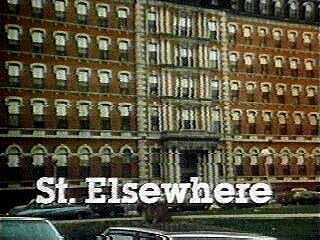
This week, Peter White returns to the hospital.

Episode 2.18 “Equinox”

(Dir by David Anspaugh, originally aired on March 14th, 1984)

A college student (Thomas Byrd) comes in after taking a hit to the groin during a touch football game.  It turns out that he might have testicular cancer and it falls to Dr. Cavanero to let him know that he will soon be down a ball.

Dr. Chandler is upset when his new girlfriend prefers to hang out with Luther.  Chandler accuses Luther of “shuckin’ and jivin’.”  Chandler’s girlfriend dumps him for being “mean.”  In a well-acted scene, Chandler talks to Morrison about how he’s expected to act one way as a black man and another way as a black doctor.

Fiscus makes the mistake of giving Elliott Axlerod (Stephen Furst) his lucky baseball cap.  Axelrod spills a urine sample on it and then accidentally sets the hat on fire while attempting to dry it.  Axlerod is having a terrible day until a man dressed like Paul Revere brings his horse into the ER for treatment.  It turns out that Axlerod’s father was veterinarian.  Axlerod cures the horse but he still has to get Fiscus a new hat.

Finally, Dr. White returns.  His charges have been reduced from attempted rape to assault.  Wendy Armstrong is not happy and starts to binge eat.  (And yet, as several nurses point out, she doesn’t gain a pound.  We all know what that means….)  When Kathy Martin sees Peter in the cafeteria, she yells that he raped her.  “You’re crazy,” Peter lies.

The episode ends with Dr. Chandler going for a run outside, stopping, and screaming into the air.

This episode was a bit uneven.  The Axlerod story worked because of the likability of Stephen Furst and not because the story itself was particularly clever.  The Philip Chandler/Jack Morrison conversation was the highlight of the episode, though the ending with Chandler screaming into the void was a bit overdone.

As for Dr. White, I’ve reached the point where I can’t even stand to look at him and I feel foolish for having any sympathy for him earlier in the season.  Hopefully, this season will end with Dr. White going to prison for life because I’m not sure how many more episodes I can handle of him wandering around the hospital with that smug look on his face.

Seriously, St. Elsewhere, take care of this guy soon….

Late Night Retro Television Review: Highway to Heaven 4.16 “Back to Oakland”


Welcome to Late Night Retro Television Reviews, a feature where we review some of our favorite and least favorite shows of the past!  On Thursdays, I will be reviewing Highway to Heaven, which aired on NBC from 1984 to 1989.  The entire show is currently streaming on Tubi and several other services!

This week, Mark rejoins the police force and discovers that things have changed since he last wore the blue.

Episode 4.16 “Back to Oakland”

(Dir by Michael Landon, originally aired on February 3rd, 1988)

Jonathan and Mark return to Mark’s old hometown of Oakland, California.  When Mark stops by his old precinct, he discovers that most of the police force is home with “blue flu,” protesting budget cuts.  Mark volunteers to return to active duty for a few days.  He’s paired up with his former partner, Frank Lawler (Kenneth Kimmins).

Mark, however, discovers that things have changed in his absence.  Cops are viewed with suspicion by the people that they are supposed to be serving.  And Frank is an unrepentant racist who expects Mark to have his back no matter what.

Jonathan, meanwhile, gets a job as a security guard at an all-black apartment complex.  “You’re the first white man to ever work here,” he’s told by the landlady (Fran Bennett).  The landlady’s son, Albert (Guy Killum), doesn’t trust white people and resists Jonathan’s attempts to reach out to him.

When Albert is caught shoplifting by Mark and Frank, Frank takes him into a back alley.  Frank removes his handcuffs and dares Albert to take a swing at him.  Mark steps out of the store just in time to see Frank shoot and kill Albert.

“He attacked me!” Frank says.

“I put cuffs on him,” Mark says.

In the end, Mark refuses to cover for Frank.  Jonathan arranges for Albert’s younger brother (Kenny Ford, Jr.) to meet with Frank’s son (Mark Sussman).  The episode ends with the two of them introducing each other.

This episode was Highway to Heaven at its most earnest and heartfelt.  I imagine there are some that would complain that this episode attempts to “both sides” the issue of racism.  Both Albert and Frank are portrayed as being obsessed their hatred of another race.  That said, only one of the two men is portrayed as being in a position to kill the other and potentially get away with it.  The scene of Mark, who has spent the entire series bragging about his time as an Oakland cop, taking a stand and telling the truth about what happened in the alley is surprisingly powerful.  Mark does the right thing and he does it without hesitation.  Is the ending of the episode a bit naive?  Perhaps.  But it’s so sincerely done that it’s hard not to appreciate the show’s intentions.

In other words, this episode was an example of what Highway to Heaven did well.  It’s not subtle but it’s so heartfelt that the viewer can’t help but be moved.

Horror On TV: Hammer House Of Horror Episode #1: Witching Time (dir by Don Leaver)


Hammer House of Horror was a British anthology series that ran for 13 episodes in 1980.  As you can tell by the title, the show was produced by Hammer Films.  Each episode dealt with a different type of horror and featured some of the best actors working in British film and television.

The first episode aired on September 13th, 1980.  Lucinda Jessup (Patricia Quinn), a 17th century witch, escapes from a pack of witch hunters by traveling into the future.  Discovering that her former home is now occupied by a film composer (Jon Finch) and his wife (Prunella Gee) and that the marriage is not a happy one, Lucinda puts her mark  on the composer.  Can the man’s unfaithful wife save him from the witch?  The husband isn’t all that sympathetic and I think that many viewers will probably feel that it might be for the best to just let the witch have him but this is still a well-acted and atmospheric episode.  Keep an eye for Ian McCulloch of Zombi 2 fame as the wife’s lover.

This episode also features some brief nudity so don’t watch it at work.


Doctor Who — The Time Meddler (1965, directed by Douglas Camfield)


Today, everyone knows the origins of the Doctor.  We know that the Doctor is a Time Lord and a native of the planet Gallifrey.  We know that the Time Lords had a policy of not interfering with other civilizations.  They could travel through time but they were never to change history.  We know that the Doctor, even after stealing the TARDIS, remained true to that belief while other renegade Time Lords did not.

It wasn’t always like that.  During the show’s early years, the Doctor was meant to be a very mysterious figure and it was implied that he himself had invented (rather than stolen) his TARDIS.  It wasn’t until nearly two years into the show’s original run that we met anyone else from the Doctor’s home planet and that we finally got to see a TARDIS that could actually change shape.

All of that happened in The Time Meddler, a four-episode serial the originally aired from July 3rd, 1965 to July 24th.  In this episode, the Doctor’s TARDIS materializes in Northumbria in 1066.  With Ian and Barbara having recently returned to their own time, the Doctor (William Hartnell) is now traveling with Vicki (Maureen O’Brien) and Steven Taylor (Peter Purves), both of whom come from the future and who are much less argumentative than either Ian or Barbara.  Finally, the Doctor has companions who are not only happy to be there but who are willing to do whatever he says.  Though the Doctor tells Vicki that he will miss Ian and Barbara, he does seem much more relaxed in this serial than in previous ones.

The Doctor’s arrival is observed by The Monk (Peter Butterworth), a mysterious figure who doesn’t seem to be surprised at all to see a blue police call box materialize in 1066.  A time meddler who it is implied has met the Doctor before, the Monk is plotting on changing the course of history by wiping out King Harald Hardrada’s Viking invasion fleet, therefore leaving Harold Godwinson and his troops fresh and fully armed so that they can then defeat William The Conqueror at the Battle of Hastings.  The Doctor is captured early on by the Monk, leaving Steven and Vicki to deal with the suspicious locals.

The Meddling Monk was truly a great creation.  As played by Peter Butterworth, he wasn’t so much an evil-doer as he was just someone who thought it would be fun to change history.  (I’ve always disliked the theory that the Meddling Monk was an early incarnation of The Master.  The Master was always evil while the Monk was basically a prankster.)  Peter Butterworth gives an amusing and energetic performance as the Monk and the highlights of the serial are the scenes between him and Hartnell.  They both bring out the best in each other and Hartnell, who could often seem testy while acting opposite the younger actors who played his companions, truly seems to enjoy playing opposite an actor who was basically his equal in both skill and experience.

This episode is best-known for being the first episode to introduce another member of The Doctor and Susan’s race.  It was also the first episode to feature a TARDIS other than the Doctor’s.  (The Monk’s TARDIS works, which reminds the viewer of just how broken-down the Doctor’s vehicle actually is.)  It is often overlooked that it was also one of the better “historical” episodes.  Doctor Who was originally envisioned as a show that would teach younger viewers about history.  Unfortunately, the purely historical episodes were often dry and uninvolving.  This episode teaches about the Battle of Normandy but it also livens things up by giving the Doctor a worthy adversary.

It can be difficult to judge Hartnell’s time as the Doctor, just because so many of his serials are either incomplete or totally missing.  For viewers who are used to a younger and friendlier Doctor, Hartnell’s Doctor can seem rather grouchy.  The Time Meddler, though, features William Hartnell at his best and is one of the highlights of Doctor Who‘s early years.