For the first AMV entry for 2013 and the latest in a long series I’ve decided to go for nostalgia to dictate my choice instead of quality (though I will say the video does it’s job well in matching the song used). Anyone who grew up during the late 90’s and early 2000’s have heard, seen and/or obsessed over the Japanese pop-culture phenomenon simply called Pokemon.
I was already an adult and I was caught up in the hurricane that was Pokemon when it swept through the West in the late 1990’s. Hell, I pretty much played most of the different color editions of the game on the Game Boy and it’s subsequent handhelds. I’m even proud to say that my two favorite Pokemons were Pikachu and Togepi. But that’s a different matter altogether. Today it’s all about the AMV titled “Ash vs. Gary”.
The video uses the very fight-like song “Remember the Name” by Ft. Minor to highlight the Pokemon battle match between the two rivals. As we can see in the video the two use many different Pokemons in their collection to battle it out. Their battle lasts until they each just have one Pokemon left and it’s a sudden death match that many fans of the show fondly remembers. In one corner is Gary’s fully evolved Blastoise (which is the final evolved version of the starter Pokemon Squirtle) and in the other corner is Ash’s tempermental Charizard (the final evolved form of the starter Pokemon Charmander).
Really, there’s nothing left to say other than enjoy the video and take a glimpse into a nostalgic trip down my own memory lanes.
Anime: Pokemon
Song: “Remember the Name” by Ft. Minor feat. Styles of Beyond
Who would’ve thought that Ben Affleck, the same guy who was in one of the most ridiculous romantic scenes ever put on film (hint: animal crackers), would be turning out to be one of the brightest directors these last few years. He hasn’t missed yet with two directing gigs with Gone, Baby Gone and The Town. With Argo he makes it three solid hits in a row.
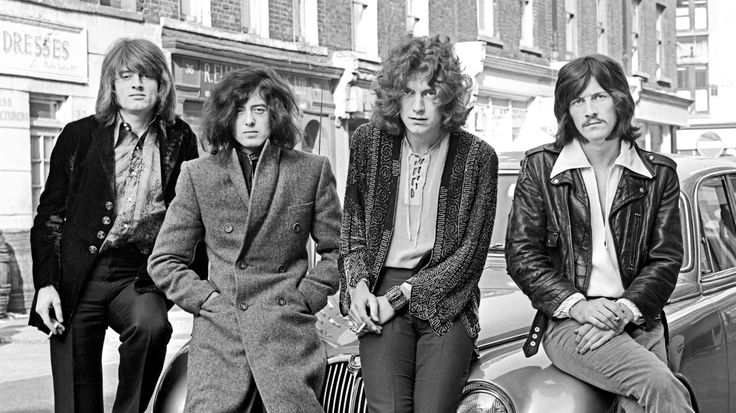
One thing that really struck me about the film Argo was Affleck’s use of licensed music to cue up particularly important scenes throughout the film. One such musical cue used one of my favorite rock and blues song ever. It’s Led Zeppelin’s cover of the Memphis Minnie and Kansas Joe McCoy song of the same name. Most young people seem to know this song from it’s constant use to score scenes and sequences about the Katrina disaster, especially scenes of a flooded New Orleans when the levees broke during the hurricane. It was nice to hear the song used in a scene not dealing with the aftermath of Katrina but to highlight the mental situation of the characters in Argo. I won’t say which scene exactly, but for those who have seen the film will know what I mean and the lyrics to the song should become even more weighty once they put two and two together.
I really love this song. From the use of harmonicas by John Paul Jones (and probably another sessions player) to Robert Plant’s emotional wailing right up to one of the best drum work by the great John Bonham. You can almost literally feel those drum sticks drop heavy on those drums. One would almost think Bonham was using tree trunks to play this song.
When the Levee Breaks
If it keeps on rainin’ levee’s goin’ to break If it keeps on rainin’ levee’s goin’ to break When The Levee Breaks I’ll have no place to stay.
Mean old levee taught me to weep and moan Lord, mean old levee taught me to weep and moan Got what it takes to make a mountain man leave his home Oh well oh well oh well.
Don’t it make you feel bad When you’re tryin’ to find your way home You don’t know which way to go? If you’re goin’ down South They go no work to do If you don’t know about Chicago.
Cryin’ won’t help you prayin’ won’t do you no good Now cryin’ won’t help you prayin won’t do you no good When the levee breaks mama you got to move.
All last night sat on the levee and moaned All last night sat on the levee and moaned Thinkin bout me baby and my happy home. Going go n to Chicago Go n to Chicago Sorry but I can’t take you. Going down going down now going down.
I must admit that in 2012 I didn’t get to listen in full many new albums outside of soundtracks. My Fave five of 2012 Songs will reflect this fact, but still with the lack of variety in my past year’s listening habit I thought the songs I came up with for the list I still would’ve put on a much bigger favorite 2012 list if I had need to come up with one. Without further ado he are the Fave Five (though it’s more Fave Six but I decided to combine the first entry’s two as a tie).
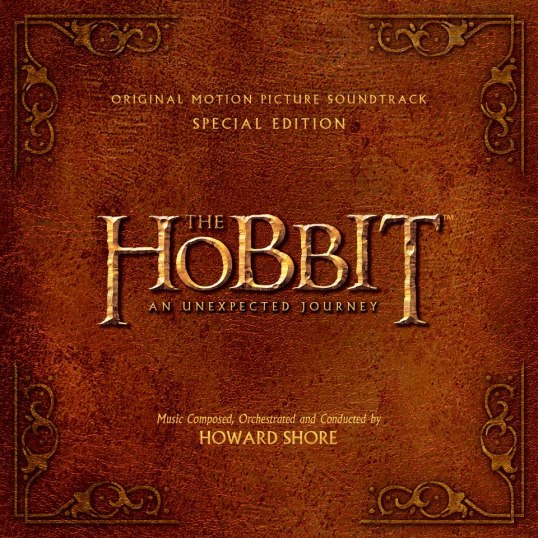
The Fave Five starts off with a tie that comes from the same film. Both songs come from the soundtrack to The Hobbit: An Unexpected Journey. While the film may not have been up to some audiences’ high expectations the soundtrack itself by Howard Shore (and for “Song of the Lonely Mountain” as sung by Neill Finn) continued the high-quality of the Tolkien soundtracks which began with the original Lord of the Rings trilogy. “Song of the Lonely Mountain” is a much more folk rock addition to the soundtrack while the “Misty Mountains” was actually part of the film itself when the character of Thorin Oakenshield sings it with his band of dwarfs while at Bilbo Baggin’s hobbit hole in the beginning. Both songs so a great job of telling the story of the quest that begins with this first film in the new trilogy.
The theme song 2012’s Skyfall was a throwback to the classic James Bond theme song’s of the Sean Connery and Roger Moore Bond eras. In fact, I thought it’s one of the best theme songs the long-running spy thriller franchise has had these past 25 years. It helps that you have Adele singing the theme who seems to be able to hit the right proper emotional notes during the song. It’s really hard to think of Skyfall the film being as good as it is without making sure one mentions Adele’s theme for it. I’d take the leap and say that the song itself may even be better than the film itself.
Mass Effect 3 was the epic conclusion to what was this gaming generation’s version of the original Star Wars space opera. It was a story that spanned the galaxy with memorable characters, thrilling action and some very good writing. There will always be the vocal minority who seem to think the ending to the trilogy was bungled by the writers over ta BioWare. That’s a whole different debate altogether. One thing that doesn’t seem to bring out the pitchforks was Clint Mansell’s score work for the game and it all culminates with the song simply titled “An End, Once and For All” which in it’s extended version more than makes up for whatever deficiencies the ending it orchestrally-scored may have had.
Another game’s music makes itself to my Fave Five list and this time it’s my second favorite song for the year of 2012. It’s from Halo 4 and it’s a song that brought new life to the venerable franchise. It didn’t just make the end credits more than just memorable, but also surprised many fans of the franchise’s music since the song wasn’t composed by the franchise’s original music composer, Martin O’Donnell, but by Kazuma Jinnouchi. It’s the one song in 2012 that I must’ve listened to on repeat for hours on end and probably in the high hundreds by now. It’s a song that brings back memories of the scifi soundtracks of the 80’s. It’s a work that I easily can compare to the best that’s ever been composed by luminaries in the genre like John Williams, Alan Silvestri, Michael Giacchino and others.
What can I say. The song speaks for itself. How can one not say this was the best song for 2012.
This is embarrassing. Here it is 2013, and my 2012 collection consists of only 38 albums, the majority of which I’ve listened to twice at best. I never heard the new Neurosis. I never heard the new High On Fire. Hell, forget metal, I didn’t even listen to the new Shins and Godspeed albums. I can’t offer an experienced, informed opinion now the way I could at the end of 2011. But I’ve been posting up some sort of album of the year list somewhere for over a decade now, and I’ll be damned if I let the fact that I didn’t really listen to any albums in 2012 stand in my way.
Or something like that. Here we go.
10. Dawnbringer – Into the Lair of the Sun God (track: IV)
It’s not often I get into a standard heavy metal album, but Dawnbringer did everything right in 2012. The songs rock along with a bit of an Iron Maiden drive to them, the power and black metal tendencies are tastefully incorporated to enhance the drive without altering the vibe, and the vocals know their limit. If it sounds a bit generic, don’t let that fool you. Not too many bands can pull this off without giving into the temptation to be more “epic” or “extreme” than they really are. Dawnbringer pull it off without the flare–without ever going over the top–and their accessibility places Into the Lair of the Sun God among the best of the year.
9. Korpiklaani – Manala
I wouldn’t say Hittavainen was the heart and soul of Korpiklaani, but he was an essential component. The band would be at a total loss without Jonne Järvelä, and their consistent line-up over the years has contributed enormously to their success, but Juho Kauppinen’s accordion aside, the folk instrumentation was almost all a product of Hittavainen. When he left due to health issues after Ukon Wacka in 2011, I feared it was the end of an era. Korpiklaani never missed a beat recovering from the loss in 2012. In addition to picking up the highly qualified Tuomas Rounakari as their new violinist, Jonne Järvelä stepped up to fill in the void by recording the mandolin, flute, and whistle tracks. I think I can hear some nuance differences between his and Hittavainen’s playing style, but it might just as well be in my head; Manala sounds like a Korpiklaani album through and through. I don’t like it as much as Karkelo and Ukon Wacka–it’s a bit heavier, too much so for my taste in folk metal–but in the greater sphere of Korpiklaani’s discography it is certainly composed and performed to par.
8. Ensiferum – Unsung Heroes
Ensiferum took a lot of slack for this album. I think a lot of people wanted to hear the over-the-top bombast that worked so effectively on Victory Songs, but in my opinion that was already growing stale on From Afar. Unsung Heroes is down to earth in a way they haven’t been since the 2001 self-titled debut, and I love it. They’re heading in exactly the direction I’d hoped for, and with the exception of the ugly mistake that is the album’s 17 minute closing track, Power Proof Passion, Unsung Heroes does not sound at all like a band past their prime. If they continue to push in the direction of tracks like Pohjola, they’re in position to trump Victory Songs and follow up Unsung Heroes with their best album to date.
7. Wodensthrone – Curse
I wish I’d taken the time to review this album earlier in the year, because I haven’t listened to it since the summer, and their flavor of epic black metal isn’t the sort of thing you can fully absorb in a quick last-minute listen. This is an album that can move nowhere but up in my charts over the months to follow, but for the time being I am content to place it somewhere in the middle. While busting out black metal that’s just as grim and unforgiving as the 1990s greats, Wodensthrone manage to infuse a tremendous amount of emotion that speaks of something beautiful hidden beneath the chaos. It’s buried a bit deeper than say, Femundsmarka by Waldgeflüster last year, but the feeling is similar.
6. Vattnet Viskar – Vattnet Viskar EP (song: Weakness)
If someone were to ask me what black metal sounded like in 2012, I might hand them this EP. It’s kind of cool getting to say that, because one of their members is a regular at the music forum where I get most of my recommendations. I wouldn’t have guessed back in March that they would be signed to Century Media by the end of the year, but I’m stoked to hear it. The whole notion of post-black metal has taken on a number of different flavors in these formative years, and Vattnet Viskar expand the genre by incorporating a lot of the all-encompassing guitar tones I associate with post-rock acts like Mono and This Will Destroy You. Top-notch stuff that’s really at the forefront of an emergent genre I’ve been anticipating for years.
5. Enslaved – RIITIIR
How Enslaved have aged so well is beyond me, but their last three albums have been their best three albums, and 22 years after the formation of this band they remain at the forefront of metal. Their viking-infused progressive black sound of late has done as much to shape the future of the genre as any new-found participant in the current popular trend towards black metal that has been taking shape over the past four years. RIITIIR is another outstanding output by the one classic early 90s black metal band that has managed to weather the ages unscathed.
4. Blut aus Nord – 777: Cosmosophy
The review I wrote of 777: Cosmosophy last month was one of the most thorough I’ve done all year, and there is nothing I care to say about the album that I haven’t said already. It is outstanding in its own right, but it does not feel like an entirely complete finale to their already classic 777 series. The first and third tracks, breathtaking though they may be, don’t seem to sufficiently progress from where the second album in the trilogy, The Desanctification, left off. The second track moreover, Epitome XV, is the weakest link on all three albums. The last two tracks compensate greatly by concluding in proper form, and I certainly think Cosmosophy is excellent. It can only be said to have “shortcomings” in so far as I expected it to be the best album of 2012. Fourth place isn’t too bad.
3. Torche – Harmonicraft (song: Reverse Inverted)
Calling Torche metal at this point is really pushing the limits of the definition. Since their early days writing crushing stoner anthems, they have evolved into a bizarre amalgamation equal parts metal and pop. But it’s not just the uniqueness of the happy, smiley-face hammers Harmonicraft beats you down with that makes it so appealing. Torche have become by all rights the heirs of the 1990s. These guys have more in common with the Smashing Pumpkins than they do with any of their stoner metal contemporaries. This is the sort of thing that 15 years ago we could have just labeled “alternative rock” and gone on enjoying without any need for classifications. While forging an entirely unique, original sound of their own, Torche have managed to capture a song-writing ethos that has been dead for a generation, and Harmonicraft is the cleanest breath of fresh air I’ve inhaled in years.
2. Krallice – Years Past Matter (song: Track 2)
Krallice is my favorite band making music today, and I dare say last year’s Diotoma might be my favorite album by any band ever. Seldom if ever has a band followed up such a masterpiece with something of equal worth, and I was shocked that Krallice had the energy left to release anything at all this year. Years Past Matter is an outstanding post-black metal outing in the vein of Dimensional Bleedthrough. The tracks took longer than usual to grow on me, and usual for Krallice entails dozens of listens, but the payout is always worth the time, and the slow process of appreciation is enjoyable in its own right. Mick Barr and Colin Marston’s dual tremolo is the grand ultimate ear-candy, and so long as they never compromise their commitment to that they will probably remain my favorite band. (Track 3 is my favorite song on Years Past Matter so far, but it was not available on youtube. Track 2 is a worthy substitute.)
1. Panopticon – Kentucky (song: Killing the Giants as They Sleep)
The fact that I didn’t review this album is almost embarrassing, because much like Aesthethica by Liturgy last year, it is an album that absolutely demands a thorough investigation to properly appreciate. I can’t easily tell you why I placed it this high, because frankly I don’t know yet myself. When I first read that a Louisville, Kentucky-based band called Panopticon had released a bluegrass black metal album, all sorts of thoughts ran through my head. Kentucky sounds like none of them. Do ignore the cliche “blackgrass” labels; while Austin Lunn listened to plenty of bluegrass in the process of recording this, he does not actually incorporate the genre as we might think of it. Instead he interweaves traditional Appalachian folk–not bluegrass particularly–as distinct tracks separated from the black metal. What folk does emerge in the bm is more akin to Waylander, and certainly far from “bluegrass”. That’s not a bad thing, just an–I think–important distinction to be made, because otherwise we might be left searching for genre stereotypes which simply aren’t present here. What Kentucky really accomplishes is a merging of a musical themes which perfectly juxtapose a beautiful landscape and a totally destitute human condition. The first half of “Killing the Giants as They Sleep” for instance generates landscape imagery with a degree of effectiveness similar to Femundsmarka by Waldgeflüster. (Have I referenced that album twice now? I think it’s time I paid it another visit.). You take a look around, take a deep breath, and really appreciate the natural beauty that surrounds you. About half way through the dialogue begins, and the explosion around 9:15 serves to draw you fully into the atrocities taking place here, both in the exploitation of workers and the desecration of the environment.
I don’t think Austin Lunn intended to make any sort of political statement here, but in succeeding so comprehensively to depict elements of Appalachia and its outskirts, he effectively did so. At a time when the working class of America is inexplicably becoming staunch supporters of big capital, this album hits a bulls-eye on all of the thoughts that have been forefront on my mind of late. His bleak renditions of union anthems like “Which Side Are You On?”, recently covered with such optimism by the likes of Dropkick Murphys, strike me as a painfully realistic reminder that the entire notion of equality as an American ideal is becoming antiquated.
But that might be seen as secondary. Wherever our ideas may lead us, Kentucky is the sort of album that inclines us to form them. It’s an album that makes me think. Like Aesthethica by Liturgy and Diotima by Krallice last year, it forces me to set aside my mundane daily routines and really engage the human experience. That alone, all other considerations aside, suffices to render it my favorite album of 2012.
Continuing my series on the best of 2012, here are ten of my favorite songs from 2012. Now, I’m not necessarily saying that these were the best songs of 2012. Some of them aren’t. But these are ten songs that, in the future, will define 2012 for me personally. Again, these are my picks and my picks only. So, if you think my taste in music sucks (and, admittedly, quite a few people do), direct your scorn at me and not at anyone else who writes for the Shattered Lens.
By the way, I was recently asked what my criteria for a good song was. Honestly, the main thing I look for in a song is 1) can I dance to it and 2) can I get all into singing it while I’m stuck in traffic or in the shower?
Anyway, at the risk of revealing just how much of a dork I truly am, here are ten of my favorite songs of 2012.
10 and 9) Make Bullying Kill Itself and Jacking It In San Diego (Trey Parker and Matt Stone)
These two songs were featured in the classic bullying episode of South Park. They should be required listening for anyone who thinks that a YouTube video can change human nature.
8) Big Machine (Ryan Miller)
Perhaps not surprisingly, I discovered a lot of my favorite music of 2012 in the films of 2012. This song was written for the Safety Not Guaranteed soundtrack.
7) Abraham’s Daughter (Arcade Fire)
This is from The Hunger Games soundtrack.
6) The Poison Tree (Moby, feat. Inyang Bassey)
Technically, this song — which is featured on Destroyed — is from 2011 but it was released, as a single, in 2012.
5) Call Me Maybe (Carly Rae Jepsen)
This is just a fun song.
4) Stronger (Kelly Clarkson)
Kelly Clarkson is always going to have to deal with haters, because she won American Idol and voted for Ron Paul. She’s one of my favorites, however.
3) Skyfall (Adele)
The minute I heard this song, I knew Skyfall was going to be great.
2) Blow Me (One Last Kiss) (P!nk)
It’s not really a year in music unless I have P!nk somewhere on the list.
1)Razor’s Out (Mike Shinoda featuring Chino Moreno)
This is from the soundtrack of The Raid: Redemption. Quite simply put, this is a great soundtrack for writing.
Tomorrow, I’ll continue my look at 2012 with my list of 10 good things that I saw on television last year.
So, over the weekend I was finally able to catch the latest from Quentin Tarantino. To say that I enjoyed Django Unchained would be an understatement. Review of the film will be coming forthwith. One thing I really loved about this film was how Tarantino continues to pay homage to the very films he has used to inspire the ones he himself makes. This is clearly evident when one hears the original title song from the original Django play out in the beginning of Django Unchained.
Simply titled “Django” this song was composed by Luis Bacalov with lyrics by Franco Migliacci and sung by Roberto Fia. For fans of the spaghetti western this song is just as iconic as those composed by Ennio Morricone for Sergio Leone’s “The Man With No Name” trilogy of spaghetti westerns. Where Ennio’s compositions were more in line with Leone’s more serious take on the Italian view of the western, Bacalov’s “Django” definitely has a much more grindhouse feel to it. It sounds like something that would be heard in a western, but also has that 60’s era folk rock sound.
For those who have been loving Tarantino’s spaghetti western should really go search out Sergio Corbucci’s original Django and also Bacalov’s score work.
Django
Chorus: django!
Django, have you always been alone?
Chorus: django!
Django, have you never loved again? Love will live on, oh oh oh… Life must go on, oh oh oh… For you cannot spend your life regreatting.
Chorus: django!
Django, you must face another day.
Chorus: django!
Django, now your love has gone away. Once you loved her, whoa-oh… Now you’ve lost her, whoa-oh-oh-oh… But you’ve lost her for-ever, django.
When there are clouds in the skies, and they are grey. You may be sad but remember that love will pass away.
Oh django! After the showers is the sun. Will be shining…
[instrumental solo]
Once you loved her, whoa-oh… Now you’ve lost her, whoa-oh-oh-oh… But you’ve lost her for-ever, django.
When there are clouds in the skies, and they are grey. You may be sad but remember that love will pass away. Oh django! After the showers is the sun. Will be shining… Django! Oh oh oh django! You must go on, Oh oh oh django…
The Hobbit: An Unexpected Journey doesn’t seem to be resonating with as many people like the previous The Lord of the Rings trilogy. Not to say that the film is a bad one. For those disappointed in the film seems to want a repeat of the first trilogy. My review of the film will and shall be up later today to help celebrate the site’s 3rd year anniversary. For now let me share the ending song to the first part of Peter Jackson’s latest Tolkien trilogy.
“Song of the Lonely Mountain” is sung by Neil Finn of Crowded House and it follows on the tradition of past Tolkien adaptations by Jackson by turning to musicians who Jackson and Shore enjoy listening to. The song has a Celtic, folksy rock sound to it. I particularly enjoyed the addition of hammers ringing on anvils to help listeners visualize the exiled dwarfs of Erebor toiling in front of their foundry in preparation for the day they retake their homeland from the dragon Smaug.
I didn’t like the song when it was first premiered a couple weeks in advance of the film, but it has since grew on me and has joined the other three end credits songs from the original trilogy as favorite original film songs.
Song of the Lonely Mountain
Far over the Misty Mountains rise Leave us standing upon the heights What was before, we see once more Our kingdom a distant light
Fiery mountain beneath the moon The words unspoken, we’ll be there soon For home a song that echoes on And all who find us will know the tune
Some folk we never forget Some kind we never forgive Haven’t seen the back of us yet We’ll fight as long as we live All eyes on the hidden door To the Lonely Mountain borne We’ll ride in the gathering storm Until we get our long-forgotten gold
We lay under the Misty Mountains cold In slumbers deep and dreams of gold We must awake, our lives to make And in the darkness a torch we hold
From long ago when lanterns burned Till this day our hearts have yearned Her fate unknown the Arkenstone What was stolen must be returned
We must awake and make the day To find a song for heart and soul
Some folk we never forget Some kind we never forgive Haven’t seen the end of it yet We’ll fight as long as we live All eyes on the hidden door To the Lonely Mountain borne We’ll ride in the gathering storm Until we get our long-forgotten gold Far away from Misty Mountains cold
This weekend sees the release of Peter Jackson’s long-awaited first film in The Hobbit trilogy. With news of a new Peter Jackson adaptation of a Tolkien source material there will also be news of the return of film composer Howard Shore back to the musical legacy that is the Middle-Earth film franchise. The latest “Song of the Day” comes from the soundtrack to The Hobbit: An Unexpected Journey and the track I chose has already become the most recognizable theme in this first film of the latest trilogy.
“Misty Mountains” was composed by Plan 9 and David Long and was sung by Richard Armitage as Thorin Oakenshield and his company of Darf Companions as they spend a quiet time in Bilbo Baggins’ home the night before they set out on their quest to destroy Smaug and retake their ancestral kingdom of Erebor in the Lonely Mountain to the far east of the Shire. Every Peter Jackson entry to the Middle-Earth saga has always had the cast sing one or two songs which comes straight out of the many songs created by J.R.R. Tolkien for his novels, short stories and appendices.
This song almost describes the past and future of Thorin Oakenshield as it describes in prose the destruction of his home of Erebor in the hands of Smaug the Dragon, but it could also describe a future event him and his company of Dwarfs (and one hobbit) must defeat as part of the climax of this first part of the new trilogy. The song is just a very well made one and very memorable. So memorable that there’s already reports of people who have returned for repeat viewings of the film joining in the singing of the song when it appears on the screen. While I wouldn’t want my experience interrupted by some in the audience trying their best to sound just as good singing in a deep tenor as Richard Armitage I can’t blame some of these fans for their love and enthusiasm for the song.
Misty Mountains
Far over the Misty Mountains cold, To dungeons deep and caverns old, We must away ere break of day, To find our long-forgotten gold.
The pines were roaring on the heights, The winds were moaning in the night, The fire was red, it flaming spread, The trees like torches blazed with light.
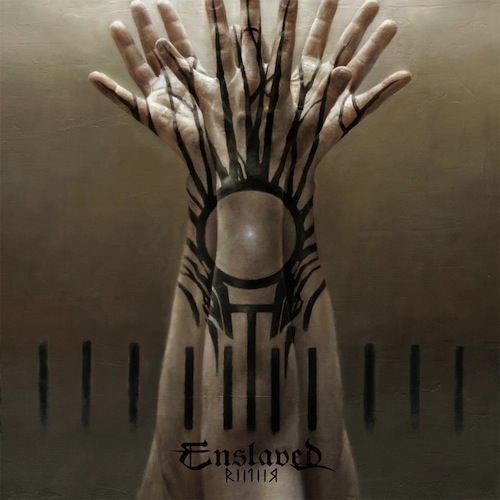
Norway’s Enslaved formed as a black metal band in 1991. That means Grutle Kjellson and Ivar Bjørnson have been playing together for at least 21 years. Most–I’d say the vast majority–of bands are pretty washed up by the 20 year mark. But Enslaved is a fluke. An anomaly. They stand on the cutting edge of the metal scene today, and their last three albums have been phenomenal.
Thoughts Like Hammers
Maybe some of it stems from their age. Bjørnson and Kjellson were 13 and 17 respectively when they began releasing demos as Enslaved. It’s hard to imagine a 20+ year old band whose founding members are in their mid-30s, but that’s what you get here: two artists in their creative prime.
RIITIIR’s aptly-named opening track, “Thoughts Like Hammers”, starts out with a bit of incoherent chaos before busting into a crushing viking metal plod that immediately answers any question as to whether RIITIIR is going to follow the same path as Vertebrae and Axioma Ethica Odini. The relatively new viking-prog-black mix they’ve landed on is faultless, and about the only thing they could do wrong is change it. RIITIIR picks up right where Axioma Ethica Odini left off.
It would be kind of odd to speak of post-viking metal when so few bands have defined the original style in the first place. But what makes Enslaved perhaps the best metal band to ever make a late-career venture into the world of progressive rock is their impeccable ability to maintain all of their heavy metal credentials. Kjellson’s growls are some of the most distinct and cutting in the scene, and there can never be any question about the band going soft. The lofty progressive movements are lush with sound in just the sort of way that has made viking metal bands like Enslaved and Týr consistently great throughout the years. Their juxtaposition of uplifting musical sweeps and crushing, dark passages transition flawlessly, with none of the grating clash of styles that you might hear in bands inclined to force the issue.
RIITIIR
As for how RIITIIR matches up to Vertebrae and Axioma Ethica Odini, I think RIITIIR maintains the much needed improvement in production quality that distinguished Axioma from its predecessor. The major riffs and choruses are just as instantly memorable. I think Axioma had perhaps a stronger black metal side to it, but the difference is slight. What I really feel in RIITIIR more than the other two is the consistent drive–a sort of all-embracing power that gives the album no down time to speak of. Even the slowest folk interludes are exceptionally well constructed to fit the context of their songs and maintain a tense, brooding atmosphere.
My immediate impression of RIITIIR is that it’s the best album to date from a band that has at this point thoroughly proven their standing among perhaps the top ten metal bands making music today. I don’t really need to go into exceptional detail on this one; it’s exactly what they did on their last two albums, only even better. Don’t let this year-end contender pass you by.




 Through the Shattered Lens