Shadows and Blood: A Study in Fear, Faith, and Community


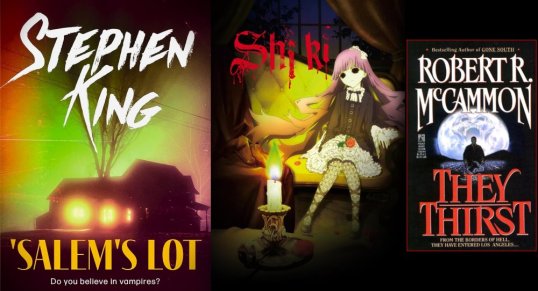
Stephen King’s Salem’s Lot, Robert R. McCammon’s They Thirst, and Fuyumi Ono’s Shiki (particularly the anime adaptation directed by Tetsurō Amino) share a powerful thematic core: each explores how supernatural terror—manifested through vampirism—intertwines with human frailty, exposing fractures within communities. Yet, despite this common ground, these works differ profoundly in their narrative scale, tone, and philosophical approach. While King’s novel grounds horror in the insular confines of a small American town, McCammon unleashes an urban catastrophe at an epic scale. Meanwhile, Shiki artfully meditates on moral ambiguity and the erosion of empathy within a rural village caught between the past and modernity. Together, they illuminate vampire stories as mirrors reflecting social decay from unique but equally compelling vantage points.

The Power of Place: How Setting Shapes Fear

The setting is more than a stage in these three narratives; it actively shapes the nature of horror, informs thematic undercurrents, and amplifies the stories’ emotional resonance.

King’s Salem’s Lot is a quintessential small-town story set in rural New England—a storied landscape in American Gothic tradition. Jerusalem’s Lot (the “Lot”) is painted with affectionate detail that grounds the supernatural in a tractable reality: the rhythms of local life, from church socials to school, from well-worn shops to community gatherings. This attention to the quotidian underscores the fragility of social order; the relatable nature of the town makes the encroaching evil feel intimate and devastatingly personal. The location’s history, marked by both myth and buried trauma, becomes fertile ground for the horror’s growth. The Marsten House, the ominous mansion dominating the town’s outskirts, serves as a physical and symbolic anchor, linking ancient malevolence to present-day community rot. This layering of place and history deepens the story’s resonance, as the familiar becomes uncanny and threatening.

In contrast, They Thirst uses Los Angeles to reflect the sprawling anonymity and fragmented social fabric of a modern metropolis. The city’s vastness and diversity are both a strength and a vulnerability—allowing vampirism to spread nearly unchecked, erasing communal protections afforded by intimacy and face-to-face alliance. McCammon’s choice of a sprawling urban setting serves as a metaphor for modern alienation and the collapse of traditional community structures. The urban chaos mirrors the moral and societal fragmentation that the vampiric horde exploits. This dynamic shifts the story from intimate community horror to an apocalyptic narrative of civilizational collapse. The setting also introduces themes related to urban decay, social stratification, and the fragility of institutions under siege.

Shiki occupies a thematic and emotional space between the two. Sotoba is a small, isolated village clinging to tradition yet caught at the edges of modernization. This geographic and cultural liminality shapes the unfolding horror—the limited population intensifies interpersonal relationships and magnifies the consequences of suspicion and violence. The village setting intensifies the claustrophobic and suffocating atmosphere, reinforcing themes of containment and the difficulty of escape from both physical and moral traps. Unlike the already frayed social fabric in Salem’s LotShiki shows the gradual erosion of trust amid existential threat. Sotoba’s setting underscores the fragility and resilience inherent in small communities confronting existential threat.

Vampires Beyond Monsters: Reflections of Suffering and Evil

While all three works feature vampires as antagonists, the portrayal and symbolic weight of vampirism differ considerably, offering diverse reflections on suffering, evil, and humanity.

In Salem’s Lot, Kurt Barlow is the archetype of absolute evil—essentially a force of pure corruption and predation. His presence is largely offstage for much of the novel, which builds tension by making him a looming, inscrutable threat. Barlow’s influence is insidious, infiltrating the town through secrecy and manipulation. King’s vampires are externalized evil but disturbingly intimate in their effect, feeding not only on blood but on the social fabric of their prey. They corrupt moral order and dismantle trust, intensifying the novel’s exploration of hidden poison beneath surface normality. Importantly, while Barlow is malevolent, he also embodies a supernatural inevitability—his arrival is cataclysmic and transformative, representing a metaphysical challenge to human resilience.

McCammon’s They Thirst features vampires, led by Prince Vulkan, who are ruthless conquerors rather than morally ambiguous figures. Their intent is dominion, and their methods are militaristic and coldly pragmatic. They represent predation on an epic scale—the vampiric plague as a social and political apocalypse. Unlike Salem’s Lot’s psychological and communal disintegration, They Thirst foregrounds survival from overwhelming external threats, casting vampire characters as ruthless agents of annihilation. Their lack of inner conflict or remorse signals a broad symbolic reading of vampirism as unstoppable systemic evil.

Shiki radically complicates this tradition by humanizing the vampire clan. The shiki retain memories, emotions, and even spiritual struggles, particularly in Sunako Kirishiki, whose anguish at perceived divine abandonment shapes her actions. The shiki are not merely villains; their transformation is framed as a tragic condition. This ambiguity invites a reconsideration of vampirism itself—as existential suffering rather than mindless evil. The human characters, in turn, commit atrocities fueled by fear and desperation, blurring moral lines. This treatment of vampirism fosters a deeper ethical inquiry, probing notions of victimhood, survival ethics, and the persistence of humanity amid monstrosity.

Erosion of Community: Patterns of Social Decay

All three narratives depict communities unraveling under supernatural duress, but the patterns and implications of this decay differ greatly.

Salem’s Lot emphasizes denial and insularity as precursors to collapse. The town’s refusal to confront its own mortality and hidden corruption creates fertile ground for vampirism’s spread. Neighbor turns against neighbor, suspicion displaces care, and longstanding relationships dissolve into paranoia. Resistance arises too late and is ultimately futile in preventing societal collapse. King’s portrayal powerfully dramatizes the theme of moral and social deterioration as an existential threat. The town’s downfall is as much a failure of collective conscience as a failure of defensive combat.

They Thirst shifts focus from interpersonal fissures to systemic collapse. The novel portrays institutions—government, law enforcement, emergency services—as overwhelmed by the scale of the crisis. Urban anonymity breeds helplessness and chaos, accelerating civilizational breakdown. The story is less about social betrayal and more about the impotence of modern systems to contain existential threats. The novel’s scale elevates the symbolic to the catastrophic, reflecting late-20th-century anxieties about societal fragility in the face of environmental, political, or medical catastrophe.

Shiki offers a patient, almost clinical examination of social collapse. The villagers’ gradual succumbing to hysteria, paranoia, and cruelty unfolds with intricate detail. The slow erosion of trust echoes real-world dynamics in isolated communities under existential pressure. Individual moral failings aggregate into communal atrocity, making social decay a collective tragedy. Ozaki’s transformation encapsulates this decline—a figure of rational science slipping into barbarity, illustrating the fragility of ethics. Shiki situates social collapse within a matrix of spiritual and existential despair, making the unraveling as much psychological as physical.

Navigating Morality: Clear Lines or Blurred Shades?

Vampire lore often wrestles with morality, and these works chart a spectrum from dualistic good-versus-evil to morally ambiguous coexistence.

King and McCammon largely preserve sharp moral contrasts. In Salem’s Lot, evil is externalized: vampires as corrupting agents and humans as embattled victims and resistors. Despite its nuanced portrayal of social conditions, the novel’s moral universe is anchored in traditional binaries. McCammon’s They Thirst simplifies this further, casting vampire antagonists as irredeemable conquerors, with human protagonists fighting for survival and restoration. Moral complexity here is subordinated to survival imperative and apocalyptic spectacle.

Shiki disrupts this binary, presenting vampirism and human survival as entwined and ethically problematic. The vampire shiki are both perpetrators and sufferers; human defenders often respond with equal brutality and moral compromise. Sunako’s internal struggle with faith and identity contrasts with pragmatic ruthlessness elsewhere, illustrating competing survival philosophies. By the story’s end, categories of hero and villain, monster and human dissolve, demanding viewers engage with ethical ambiguity. This dismantling of clear moral boundaries challenges conventional vampire narratives and invites broader reflection on the nature of evil, survival, and humanity.

Architecture as Living Symbol

In these vampire stories, architecture is more than a mere backdrop; it functions as a potent symbol of the evil, decay, and social malaise at the heart of the narrative’s horror.

In Salem’s Lot, the Marsten House stands as the quintessential haunted house and the novel’s epicenter of malevolence. It looms over the town “like a ruined king,” representing both buried communal sins and unresolved personal trauma. The violent acts of its original occupant, Hubie Marsten, have left a lingering “dry charge” of evil energy in the house, attracting supernatural darkness—namely, the vampire Barlow. This house is not just a dwelling but a repository of the town’s secret violences and moral corruption. It embodies the idea that physical places can retain and amplify the psychological and spiritual wounds of a community. Through protagonist Ben Mears, King explores how the Marsten House symbolizes childhood terror and the inescapable shadow of past trauma, making the horror both intimate and universal. The house’s persistence after Barlow’s death underscores that evil rooted in place tends to endure, emphasizing the novel’s theme of cyclical dread.

In Shiki, the architecture is less centralized but deeply symbolic. The Kirishiki mansion, a large ancestral home, serves as a physical and spiritual focal point for the vampire presence in the village. Unlike the outright malignancy of the Marsten House, the mansion crystallizes the tension between tradition and modernity, life and death, human and shiki. It is a place where the boundaries blur—reflecting the moral ambiguity and spiritual struggles central to the story. The surrounding village’s rural, isolated architecture further evokes containment and stagnation, intensifying the suffocating atmosphere that enables horror to take root.

In stark contrast, They Thirst features Castle Kronsteen, a sprawling medieval fortress transported from Europe and perched dramatically above the sprawling modern cityscape of Los Angeles. This castle’s Gothic turrets and stone walls symbolize an ancient, imperial evil looming over contemporary urban decay. The contrast between the timeless darkness of the castle and the sprawling modern metropolis highlights tensions between the past and present, tradition and decay. Castle Kronsteen functions as a domineering, almost imperial character in its own right, representing the overwhelming scope and scale of the horror threatening to engulf the city beneath it.

Together, these architectural embodiments deepen thematic exploration: the Marsten House as communal sin and personal trauma, the Kirishiki mansion as spiritual and existential tension, and Castle Kronsteen as an ancient, imposing force confronting modern fragility. Each structure anchors and amplifies the stories’ exploration of place, power, and the pervasiveness of evil, turning architecture into a palpable character that shapes and reflects the psychological and narrative landscape.

The Rhythm of Terror: Narrative Pacing

Each narrative’s pacing informs its emotional impact, shaping audience engagement.

Salem’s Lot progresses steadily, escalating horror from subtle dread to siege. Opening with survivors fleeing in the prologue casts a shadow of inevitability over the town’s fall, transforming the novel into a meditation on decay rather than triumph.

They Thirst moves swiftly, in a disaster-novel rhythm that prioritizes adrenaline and spectacle. The story surges through sequences of collapse and resistance, trading introspection for kinetic momentum.

Shiki unfolds with slow deliberation. Deaths and betrayals accumulate steady and eerie, building tension through silence and atmosphere. This measured pace invites deeper reflection on moral erosion, making the horror as much psychological as physical.

Anchoring Horror in Humanity: Characters and Emotions

Character development grounds Salem’s Lot in human emotion. The nostalgia-haunted Ben Mears, courageous Mark Petrie, and wise Matt Burke embody resilience and loss, anchoring the supernatural horror in poignant personal struggles.

They Thirst emphasizes ensemble dynamics over individual depth. Archetypes populate the urban tragedy: heroic officers, fraught leadership, resilient citizens. These characters embody collective survival more than introspective journeys.

Shiki is intensely character-driven, focused on the triangular relationship between Sunako, Ozaki, and Muroi. Ozaki’s ethical collapse and Muroi’s fragile compassion articulate the series’ core tension—survival without soul versus survival with spirit.

Faith and Spirituality as Themes

Faith plays distinct and evolving roles across Salem’s LotThey Thirst, and Shiki, reflecting each work’s unique engagement with spirituality, belief, and existential struggle.

In Salem’s Lot, faith operates primarily as a tactical tool in the fight against vampirism. Catholic imagery permeates the novel—crucifixes, holy water, prayers—serving as weapons with real efficacy against the vampires. However, King’s portrayal of faith is complex and often tinged with failure and doubt. Father Callahan’s journey vividly illustrates this tension. Although a man of the cloth, his faith is broken through possession and temptation, climaxing when Barlow forces him to drink vampire blood. This act symbolically casts Callahan out from both the church and the vampire’s dominion, leaving him a spiritual outcast—neither fully accepted by God nor Satan. The novel explores the fragility of institutional faith and the ambiguity of spiritual power. Despite the tactical use of religious symbols, true victory over darkness demands more than ritual; it requires personal courage and inner faith, which is tenuous and often fragile. King’s depiction reflects a broader struggle with the limits of faith in confronting evil, underscoring a theme of spiritual failure and human imperfection amid horror.

In They Thirst, faith is less central thematically, functioning more as a genre convention than a deep spiritual inquiry. Religious symbolism and rituals exist within the narrative framework to support the traditional vampire mythos—crosses, holy water, exorcisms—but the story emphasizes practical survival and tactical resistance over spiritual redemption. The narrative’s focus on urban apocalypse and large-scale battle sidelines faith as a source of personal or metaphysical strength. It remains a conventional trope rather than a core thematic element.

Shiki, by contrast, places faith and spirituality at the very heart of its story. The fractured spirituality of Sunako Kirishiki, the vampire queen, reflects a profound wrestling with divine rejection and the search for meaning amid despair. Unlike the overt religiosity of Salem’s LotShiki invokes more ambiguous spiritual themes drawn from Shinto and Buddhist ideas of impermanence, suffering, and rebirth. Seishin Muroi, the junior monk and author, embodies compassionate faith—tentative and vulnerable but persistent. His spiritual outlook offers a moral counterweight to the ruthless pragmatism represented by other characters and situates the horror within a larger metaphysical dialogue. The interplay between Sunako’s faltering belief and Muroi’s mercy elevates the narrative beyond a simple predator-prey conflict into an exploration of abandonment, hope, and the endurance of faith through suffering. In Shiki, spirituality challenges characters and viewers alike to consider what it means to remain human in the face of inhuman horrors.

Finally, the enduring appeal of these works lies in their refusal to offer easy answers. Their endings—whether cyclical, incomplete, or quietly hopeful—remind us that horror is a process as much as an event. Evil is never fully vanquished, community is never fully restored, and faith is always delicate. Yet, amid this uncertainty, the stories insist on the necessity of confronting darkness with courage, complexity, and compassion. They teach that survival is not merely physical endurance but a continual struggle to preserve humanity itself.

Together, these treatments of faith reveal differing cultural and narrative priorities: Salem’s Lot interrogates the efficacy and limits of institutional faith in the modern world, They Thirst leans on spiritual motifs mainly for horror tradition and practical effect, and Shiki deeply embeds spirituality as a question of existential and moral survival. This thematic spectrum enriches the vampire myth, showing how faith can be a weapon, a weakness, or a fragile beacon depending on context.

Endings: Closure Denied

Each story concludes with lingering unease rather than resolution.

Salem’s Lot cycles back to exile and loss, its evil dormant but unvanquished—suggesting horror as eternal cycle.

They Thirst ends with partial disaster containment but permanent scars on the city and humanity.

In King’s Salem’s Lot, the vampire infestation is deeply embedded in the fabric of small-town life, making the horror intensely personal and communal. Its portrayal resonates because the vampire threat arises not from some alien void but from the town’s own latent fractures—fear, denial, and the corrosive power of secrets. The Marsten House symbolizes this buried evil, and the story’s relentless progression toward decay reveals how easily normalcy can give way to nightmare when vigilance is lost. King’s novel not only terrifies but also mourns the loss of community, underscoring how vulnerability is often homegrown rather than externally imposed. The cyclical nature of the story’s ending, with evil persisting beyond the narrative, emphasizes the abiding nature of these human weaknesses.

Shiki closes quietly on shattered survivors burdened by guilt, with a faint glimmer of hope in Sunako’s rekindled faith—humanity persists, fragile but unbroken.

Final Thoughts: The Enduring Relevance and Richness of Vampire Horror

The vampire, as a figure in horror, has long transcended its folkloric origins to become a versatile metaphor for broader anxieties about society, identity, and morality. In Salem’s LotThey Thirst, and Shiki, the vampire myth is reimagined and repurposed to explore these anxieties across different cultural and narrative spectrums. What binds these works together is their shared insistence that vampirism is not simply a supernatural curse or a monstrous aberration; rather, it is a prism through which human fears of isolation, decay, and ethical erosion are refracted.

McCammon’s They Thirst pushes this metaphor into the scale and chaos of modern urban life. Here, vulnerability is linked less to hidden secrets than to systemic failures—bureaucratic, social, and infrastructural—that magnify the horror exponentially. Los Angeles becomes a dystopian battleground where ancient darkness asserts itself over sprawling human constructs. The presence of Castle Kronsteen towering above the city embodies the clash of old-world malevolence with contemporary decadence, making the story a grim allegory for the fragility of civilization in the face of relentless corruption. The impersonal, epic sweep of the novel captures the overwhelming scale of modern anxieties—environmental, societal, and existential—that seem beyond any one person’s control, contrasting sharply with Salem’s Lot’s intimate tragedy.

Shiki offers a unique and deeply philosophical take that complicates the vampire legend through the lens of moral ambiguity and spiritual struggle. By humanizing the shiki, granting them memories, emotions, and crisis of faith, Shiki refuses to simplify good and evil into opposing camps. Instead, it insists on the painful coexistence and interdependence of predator and prey. The villagers’ descent into paranoia and violence mirrors the vampires’ own suffering and ethical conflict. This narrative choice invites profound questions: When survival demands brutality, how much of our humanity can we retain? Can faith and mercy endure amidst extinction? These questions transform Shiki into not only a horror story but also a meditation on identity, isolation, and redemption. Its deliberate pacing and atmospheric storytelling deepen the emotional and existential impact, making the horror feel lived and morally urgent.

Together, these narratives illustrate how vampire stories continue evolving to reflect the shifting contours of human anxiety. In the mid-20th century, vampires were often portrayed as exotic or external evils; today, as these works show, they increasingly serve as metaphors for internalized struggles—within communities, within societies, and within the self. They force us to confront darker truths about human nature: how fear corrupts, how survival can harden or break the spirit, and how history and memory haunt both places and people.

Moreover, these stories highlight the importance of empathy as a form of resistance. While vampirism might symbolize physical and moral contagion, it also exposes where empathy has failed—between neighbors in Salem’s Lot, among city-dwellers in They Thirst, and even between predator and prey in Shiki. The endurance or collapse of empathy often determines the characters’ fates. Sunako’s fragile but persistent faith in Shiki suggests that compassion can survive even the most devastating horrors, offering a glimmer of hope. Similarly, in Salem’s Lot, the remaining survivors’ attempts at resistance—despite failure—reflect humanity’s enduring impulse to reclaim connection and meaning amidst ruin.

In a broader cultural context, these works reflect their creators’ environments and eras, imbuing vampire horror with layers of social commentary. King’s New England Gothic resonates with American anxieties about conformity, suburban malaise, and the hidden darkness beneath idyllic calm. McCammon’s Los Angeles setting echoes late-20th-century fears of urban collapse, societal fragmentation, and the loss of civic trust. Shiki speaks from a distinctly Japanese perspective, drawing on rural isolation, Shinto and Buddhist spiritual themes, and the tension between tradition and modern encroachment. This multiplicity enriches the vampire genre—demonstrating its flexibility and capacity to reflect diverse cultural fears and hopes.

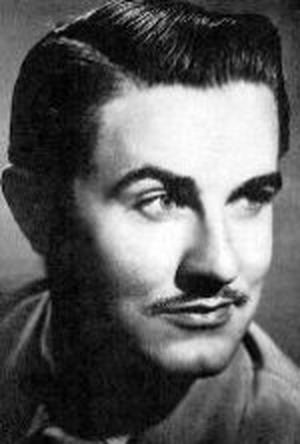
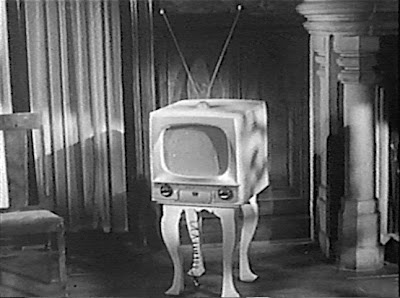
Horror On The Lens: Plan 9 From Outer Space (dir by Edward D. Wood, Jr.)


Today, we pay respect to Edward D. Wood, Jr. on the date of his birth.  He was born 101 years ago today.

Some films need no introduction and that’s certainly the case with Wood’s 1957 masterpiece, Plan 9 From Outer Space.

Plan 9 is a film like no other, a film that mixes UFOs with zombies and which ends with a rather sincere plea for world peace.  When Eros the Alien explains that the Solarnite bomb could destroy the entire universe, the film’s hero, airline pilot Jeff, doesn’t point out that Eros’s logic doesn’t make sense.  Instead, he just says that he’s glad that America is the one that has the bomb.  “You’re stupid!  Stupid minds!” Eros shouts before Jeff flattens him with one punch.  Go Jeff!  Don’t take any backtalk from that judgmental alien!

From Criswell’s introduction to Tor Johnson’s rise from the dead to Lyle Talbot casually standing with his hands in his pockets while a UFO explodes above him, Plan 9 is a true classic of some sort.

Can you prove it didn’t happen?

6 Edward D. Wood Jr. Trailers For Horrorthon


Since today would have been the 101st birthday of director Edward D. Wood, Jr., it seems appropriate to dedicate this week’s edition of Lisa Marie’s Favorite Grindhouse Trailers to him!

Below …. can you handle six trailers for six Ed Wood films!?

Watch, if you dare!

  1. Glen or Glenda (1953)

2. Jail Bait (1954)

3. Bride of the Monster (1955)

4. Plan 9 From Outer Space (1957)

5. Night of the Ghouls (1958)

6. The Sinister Urge (1960)

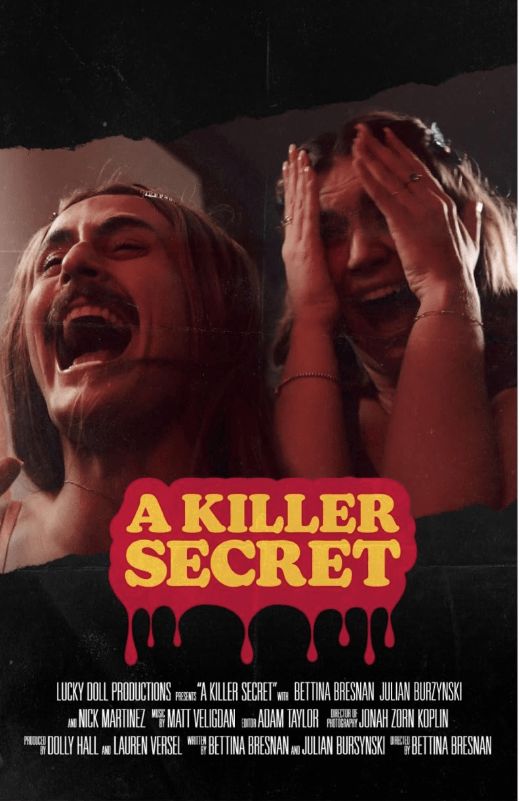
A Killer Secret, Short Film Review by Case Wright


A girl and her gay friend are watching cheesy scary movies together. He reminded me of my sister’s gay best friend in college. It’ll be difficult for me to hate this because of pleasant nostalgia; so again, my fingers are crossed.

They get a threatening phone call and run panicked through the house. They hide in the bathroom tub and begin confessing the worst things that they did to each other. Then, it turns out they were not being stalked.
What worked? I liked the camera work. The plot was good and it had a clear storyline and resolution. It’s not the greatest short that I have ever seen, but it was entertaining.
What didn’t work? I didn’t get the costume change at the end, but it was … fine. See it below!

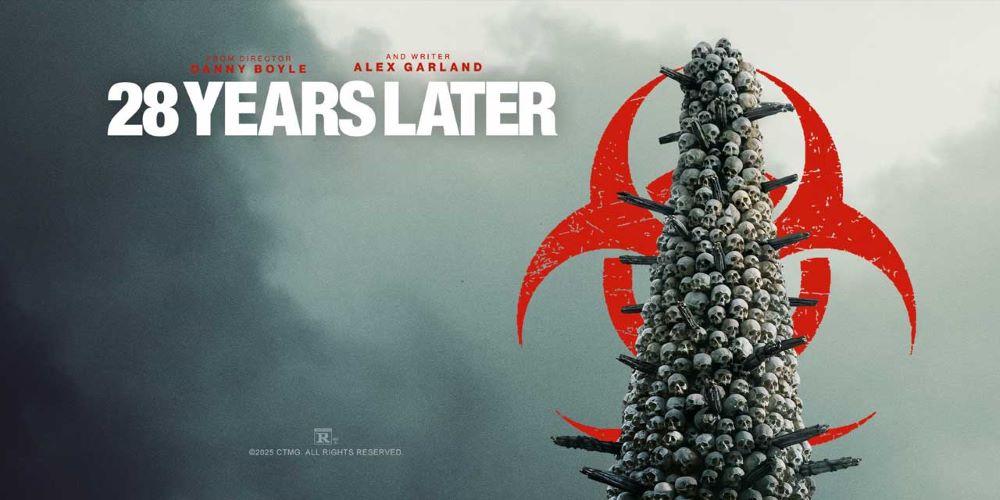
Horror Review: 28 Years Later (dir. by Danny Boyle)


Danny Boyle waited nearly two decades to return to the world he helped redefine with his groundbreaking 2002 film 28 Days Later, which reshaped the zombie subgenre by replacing the traditional, slow-moving undead with fast, feral infected that embody contagion, panic, and societal collapse. While purists continue to debate whether the creatures are technically zombies or infected, Boyle’s vision fundamentally changed how audiences engage with themes of epidemic, survival, and the breakdown of order on screen. The 2007 follow-up, 28 Weeks Later, directed by Juan Carlos Fresnadillo, expanded the Rage virus mythology and landscape but lacked the original’s haunting intimacy and innovation, leaving the franchise in a state of uncertainty until Boyle and writer Alex Garland reunited for 28 Years Later, a film that feels less like a conventional sequel and more like an elegy for a deeply changed world.

The film opens with a short, brutal prologue: young Jimmy Crystal’s family is consumed by the Rage virus while watching Teletubbies, and the boy flees to find safety only to discover his minister father welcoming the infected as a sign of apocalyptic judgment. This early scene deftly establishes the film’s unease, blending visceral horror with spiritual inquiry and foreshadowing a narrative caught between faith, grief, and chaos. Boyle reasserts his command of visceral set pieces while signaling that this film is more concerned with memory and ritual than with relentless terror.

Decades later, the British Isles have been sealed off; NATO forces enforce a quarantine and blockade, isolating the mainland as a toxic exclusion zone. On the tidal island of Lindisfarne, a small community clings to a fragile existence, protected by a causeway that floods at high tide—a detail that metaphorically underscores themes of isolation and dangerous connection. It is here that the emotional core emerges in Jamie and his son Spike, played by Aaron Taylor-Johnson and the remarkable newcomer Alfie Williams. Their spare, heartfelt relationship grounds what otherwise wanders into meditative and often surreal territory.

Alfie Williams emerges as one of the year’s most impressive new talents. His portrayal of Spike avoids the usual survivor archetype; instead, he presents a boy deeply shaped by inherited trauma and cautious curiosity. Boyle’s camera lingers on Williams’ face, capturing silent shifts of fear, wonder, and resilience, making his quiet moments as powerful as the film’s larger set pieces. Williams shines particularly in a sequence where Spike and his mother, portrayed with subtle grace by Jodie Comer, navigate a moss-covered village reclaimed by nature; Williams embodies awe and terror with a single glance. His encounters with the evolved infected—some sedentary and tree-like, others organized into predator packs—are charged with terrifying authenticity and emotional depth. Early reviews label Williams a breakout star, praising his ability to hold the screen alongside veteran actors.

Visually, Boyle and cinematographer Anthony Dod Mantle experiment with a striking mix of techniques, blending the use of iPhone 15 Pro Max cameras and drones with traditional film methods to create a language that oscillates between intimate human moments and sweeping, documentary-style landscapes. The Britain depicted is no longer a lifeless wasteland but an ecologically regrown terrain—lush, eerie, and indifferent. This verdant backdrop reflects the Rage virus’s own evolution. The infected have adapted in ways both terrifying and fascinating: some feed off the earth and fungus, becoming near-plantlike and sedentary, while others form packs ruled by alpha mutants, suggesting emergent social structures even after humanity’s collapse. This biological and ecological evolution amplifies the film’s central theme: survival transcending humanity.

Anchoring the film’s philosophical inquiry is Ralph Fiennes’s performance as Dr. Ian Kelson, a former general practitioner who has exiled himself to live among the infected. Fiennes crafts Kelson with haunting solemnity and layered ambiguity—part caregiver, part fanatic, part recluse—who has created the eponymous “Bone Temple,” a shrine assembled from bones and memories to honor the dead and the changed world they inhabit. The role requires quiet intensity, and Fiennes delivers; his interactions with Spike are charged with both menace and melancholy. Kelson’s reverence for the infected and his willingness to coexist with them challenge traditional survivalist narratives, injecting the film with a solemn meditation on loss, acceptance, and the possibility of new forms of life.

28 Years Later opts for a deliberately slower, more contemplative pace than its predecessors. Boyle and Garland invest their energy in exploring grief, adaptation, and collective memory. The infected become symbolic forces of transformation rather than mere antagonists, while survivors seek meaning through ritual and remembrance as a bulwark against despair. This approach has divided fans: some lament the absence of the unrelenting terror and pace that characterized the earlier films, while others welcome the franchise’s intellectual maturity and thematic depth.

Certain scenes—such as the stranded NATO patrol subplot and glimpses of emerging cult-like human factions—hint at a larger, more complex world but never overshadow the film’s intimate father‑son narrative. Jodie Comer complements Williams with a nuanced portrayal of Spike’s mother, and Taylor‑Johnson brings grounded emotional weight to Jamie, embodying a parent wrestling with how to protect the next generation in a broken world and dealing with his own inner demons.

The interplay between Williams and Fiennes forms the film’s core dynamic, uniting youthful vulnerability with somber reflection. Kelson’s philosophical acceptance of the apocalypse contrasts with Spike’s struggle for identity and belonging, producing compelling, often unsettling exchanges that elevate the narrative’s moral complexity.

Toward the film’s conclusion, a jarring tonal shift occurs with the sudden arrival of a grown-up Jimmy Crystal, whose unsettling presence and cult leadership drastically change the mood. The moment is so discordant that viewers are left questioning whether it is literal or a fevered hallucination—an ambiguity that effectively sets the stage for the sequel.

The upcoming follow-up, 28 Years Later: The Bone Temple, is set for release in January 2026 and will be directed by Nia DaCosta, with Alex Garland returning as screenwriter. This sequel is expected to explore the role of Kelson’s Bone Temple more deeply and develop the cult gathering led by Jack O’Connell’s Jimmy Crystal, expanding on the fractured post-apocalyptic world and the characters introduced in the current film.

Ultimately, 28 Years Later is a film about evolution—of species, storytelling, and filmmaking itself. It balances raw dread with haunting visuals and somber themes, anchored by Alfie Williams’s quietly compelling Spike and Ralph Fiennes’s enigmatic Dr. Ian Kelson. Boyle has not merely revived the franchise; he has transformed it into an unsettling, elegiac meditation on rage, loss, and the fragile hope that survives beyond apocalypse.

20 Horror Movies For The Weekend (10/10/25)


It’s time for another round of movie recommendations for the Halloween season!

Universal Horror On Prime

It’s the Halloween season and I am happy to say that Prime has a few classic, old school horror films.  I know that they probably take some getting used to for modern audiences but I personally love the old horror movie.

Dracula (1931), for instance, has a reputation for being rather stagey and that reputation is actually justified.  It was based less on Bram Stoker’s classic novel and more on the subsequent stage play.  That said, years of bad imitations have not diminished the strength of Bela Lugosi’s performance as Dracula.  Though this film is, understandably, dominated by Lugosi, I’ve always appreciated the performances of Dwight Frye and Edward Van Sloan as well.  Dracula is on Prime.

Frankenstein (1932) also features Edward Van Sloan and Dwight Frye, along with Mae Clarke as Elizabeth, Colin Clive as Henry Frankenstein, and Boris Karloff as the Monster.  Nowhere near as campy as its reputation would seem to suggest, Frankenstein is actually a thoughtful and rather sad horror film.  Karloff’s performance as the Monster has never been equaled and the scene where he unknowingly tosses the little girl in the lake to see if she will float is a classic moment of Universal horror.  Frankenstein is on Prime.

Needless to say, any viewing of Frankenstein should be immediately be followed by the second part of the story, Bride of Frankenstein (1935).  Bride of Frankenstein opens with Elsa Lanchester (as Mary Shelley) revealing that there is more to her story than revealed in the first film.  Lanchester returns towards the end of the film, playing the title character.  Her reaction to being brought to life is heart-breaking.  Boris Karloff is even better in this film than he was in the first one.  Of the old Universal horror films, this is the best.  It can be viewed on Prime.

The Invisible Man (1933) is often overlooked when it comes to discussing the classic Universal horror films but I’ve always enjoyed.  The special effects are effective to this day and Claude Rains gives an excellent performance as the title character.  The Invisible Man can be viewed on Prime.

Finally, I have to mention one of my personal favorites.  Creature From The Black Lagoon (1953) may have come out 20 years after the first wave of Universal horror films but it’s still an undeniable classic.  The scenes of the Creature and Julia Adams swimming underwater are like a surreal and beautiful ballet.  The Creature itself remains one of the best of Universal’s monsters.  It can be viewed on Prime.  (We’ll be watching it tomorrow for #ScarySocial!)

British Horror Online

In the 1950s, Britain’s Hammer Studios made their own version of the classic horror tales.  Hammer’s films were in color and featured a combination of blood and cleavage that made them very popular with audiences in both the U.K. and the U.S.  Even more importantly, they featured actors like Peter Cushing and Christopher Lee.

Curse of Frankenstein (1957) featured Peter Cushing as the Baron and Christopher Lee as the monster.  If the first Frankenstein presented the scientist as being misguided but ultimately well-intentioned, the Hammer version presents Baron von Frankenstein as being a man who is all-too eager to play God, mostly for the sake of his own ego.  Lee is an effective Monster but the true monster here is Cushing’s mad scientist.  Curse of Frankenstein can be viewed on Tubi.

Horror of Dracula (1958) was the first of many Hammer films to feature Christopher Lee as Dracula and Peter Cushing as Van Helsing.  (Somewhat sweetly, the two actors were best friends off-screen.)  Lee eventually grew bored with the Hammer Dracula films but, in the first one, he gives an intense and almost feral performance as the blood-thirsty vampire.  I’ve always preferred Cushing’s kindly Van Helsing to his cruel Frankenstein.  Horror of Dracula can be viewed on Tubi.

Hammer was not the only British studio creating memorable horror films.  Amicus Productions was responsible for some classic films of their own.  One of my favorites is Scream and Scream Again (1970), which manages to be a horror film, a science fiction film, and a conspiracy thriller all in one.  Christopher Lee and Peter Cushing appear in small roles while Vincent Price plays the scientist at the heart of the thriller.  The late Michael Gothard plays a killer who, when handcuffed to a car, simply rips off his hand in order to make his escape.  Scream and Scream Again can be viewed on Tubi.

In Death Line (1972), Donald Pleasence gives one of his best performances as an alcoholic cop who is investigating a series of disappearances in London’s underground.  Hugh Armstrong plays the rather pathetic cannibal who is only capable of saying, “Mind the gap….” Christopher Lee has a cameo.  Death Line can be viewed on Prime.

Finally, I have to recommend something from the underrated director Pete Walker.  The Flesh and Blood Show (1972) is a fun and macabre little horror story about actors rehearsing a play in an isolated theater.  Needless to say, they aren’t alone.  It can be viewed on Tubi.

Italian Horror Online

With this upcoming Monday being Columbus Day, here are some Italian horror recommendations.

Of course, any discussion Italian horror has to start with Mario Bava.  Black Sabbath (1963) is one of Bava’s best films, an anthology film that features three classic tales.  Boris Karloff appears in the second story, playing a patriarch who has been transformed into a vampire.  All three of the stories are wonderfully scary and entertaining and they all reveal Bava as a true master of horror.  Black Sabbath can be viewed on Tubi.

Baron Blood (1972) deals with a mansion, a curse, and an ancient evil.  The great Joseph Cotten stars.  Remember that story about the hole in Russia from which you could supposedly hear the screams of the people in Hell?  The “screams’ were even recorded.  It was later determined that the screams in question had been lifted from this very film.  Baron Blood can be viewed on Tubi.

Mario Bava’s Lisa and the Devil (1973) is a surreal mix of giallo mystery and demonic horror.  Elke Sommer plays Lisa (hey!) who finds herself stranded in a mansion and experiencing what may or may not be a dream.  Telly Savalas plays the mysterious Leandro, who may or may not be the other title character.  The film can be viewed on Tubi.

Bava’s final film as a director was 1977’s Shock, a brilliant and frightening ghost story starring Daria Nicolodi and John Steiner.  Nicolodi gives an intense and riveting performance as a mental fragile woman who may or may not be haunted by her ex-lover’s ghost.  The hallway scene is horrifying.  It can be viewed on Tubi.

Mario Bava’s son, Lamberto Bava, has gone on to have a directorial career of his own.  He is perhaps best-known for directing the Dario Argento-produced Demons (1985), in which the audience of horror movie is transformed into a collection of blood-thirsty demons.  It’s a wonderfully over-the-top horror film and it can be viewed on Tubi.

Lamberto Bava also directed A Blade In The Dark (1983), an excellent giallo about a film composer who is on a deadline but still finds time to get caught up in the brutal murders that all seem to be occurring around his duplex.  This was one of the first giallo films that I ever saw and I was pretty much hooked from the beginning.  The murder scene that takes place over the sink still freaks me out.  It can be viewed on Tubi.

Finally, I have to recommend a few films from Lucio Fulci, the genius who was responsible for some of the most visually stunning (albeit narratively incoherent) Italian horror films of all time.

First off, any discussion of Fulci’s horror work has to start with Zombi 2 (1979).  Though the film was sold as being a “sequel” to Dawn of the Dead, Zombi 2 is actually a separate story and a horror classic in its own right.  As opposed to the gray-skinned members of the undead that populated Romero’s films, Fulci’s zombies truly do look as if they’ve spent the last decade buried underground and they attack with a disturbing relentlessness.  One zombie battles a shark underwater.  A conquistador zombie digs its way out of the ground, in a scene that is actually shown from the zombie’s point of view!  The final scene is a classic and was apparently shot without bothering to get any permits ahead of time.  Zombi 2 is on Tubi.

Finally, any discussion of Fulci has to include his masterwork, The Beyond trilogy.  These three films, which are loosely-connected, are about as surreal and dream-like as they come, as narrative coherence is sacrificed for nightmarish visuals that truly do stick with the viewer.

In the first part of the trilogy, City of the Living Dead (1980), Christopher George and Catriona MacColl visit a small New England town where a priest’s suicide has opened a portal to Hell.  The great Giovanni Lombardo Radice makes his film debut as Bob the Pervert, who has a bad experience with a drill to the head but who still returns to get a measure of revenge.  City of the Living Dead can be viewed on Pluto TV.

The second part of the trilogy, The Beyond (1981), takes place in New Orleans.  Catriona MacColl plays a different character here, a woman trying to reopen a hotel where, decades ago, a painter was lynched.  The charming David Warbeck plays a doctor who has to deal with the dead coming back to life.  Cinzia Monreale plays the beautiful, blind, and enigmatic Emily.  The Beyond is about as close as the Italian horror industry ever got to capturing the feel of classic H.P. Lovecraft story.  The ending will stick with you.  It can be viewed on Tubi.

Finally, The House By The Cemetery (1981) features Catriona MacColl as yet another new character.  This time, she and her husband and their son move into a house in New England, little realizing that the house’s previous inhabitant, Dr. Fruedstein, is still in the basement.  This bloody film was apparently Fulci’s biggest hit in the States.  Dr. Fruedstein is a terrifying creation and the film ends on a note of haunting ambiguity.  This film can be viewed on Tubi.

That’s all I have room for in this entry but I imagine I’ll be writing about a lot more about Italian horror as the month progresses!

Click here for last week’s recommendations.


Music Video of the Day: Can I Play with Madness by Iron Maiden (1988, directed by Julian Doyle)


Director Julian Doyle also directed videos for Kate Bush but he may be best known for working as an editor on several Monty Python and Terry Gilliam films, including Life of Brian, Time Bandits, The Meaning of Life, Brazil, and Terry Jones’s Mr. Toad’s Wild Ride.

Enjoy!

The TSL Horror Grindhouse: Dance of the Damned (dir by Katt Shea)


In 1989’s Dance of the Damned, Cyril O’Reilly plays a vampire with a sensitive side.

The Vampire is out on his nightly prowl.  He goes to a strip club where he finds himself drawn to a dancer named Jodi (Starr Andreef).  The Vampire is drawn to Jodi because Jodi is thinking of committing suicide.  It’s her son’s birthday and the boy’s father refuses to even let her see him.  The Vampire approached Jodi and says the wants to talk to her because he hasn’t talked to anyone in a long time.  He offers to pay Jodi one thousand dollars if she’ll come back to his house and have a conversation with him.

Because the Vampire doesn’t drive, they take a city bus back to his place.  While sitting on the bus, they are harassed by two wannabe punks.  The Vampire pierces one of their eyes with the stem of a rose.  Oddly, Jodi barely notices.

At the house, the Vampire reveals his fangs and explains that he rarely feasts but tonight is one of those nights when he does.  He says that he picked Jodi because he could sense her loneliness and could tell that she wanted to die.  He also explains that, contrary to the vampire mythology, Jodi will not turn into a vampire after he drinks her blood.  Instead, she’ll just die.  Jodi’s response is to shoot the Vampire several times.  The bullets fall off of his body.

Jodi and the Vampire end up talking.  In fact, Dance of the Damned often feels more like a one-act play than a traditional vampire film.  Both Jodi and the Vampire are lonely and they discuss what its like to feel like they have nothing in the world.  The Vampire cannot exist in the daylight and, as a stripper, Jodi’s life is centered around the night as well.  When Jodi learns that the Vampire has never been to the beach because he never felt like there was much point in going during the night, Jodi insists that they go immediately.  The Vampire discovers what sand feels like.  He struggles to walk on it which was kind of weird but whatever.  At least the movie was trying to do something different!

The main theme of the film is that both the Vampire and Jodi are outsiders.  The Vampire was born a vampire and has no idea what it’s like to be a mortal being that can safely walk around in the daylight.  Because he has scars from a childhood incident with the humans, even the Vampire’s own people have rejected him.  Jodi, meanwhile, has been rejected by conventional society because she’s a stripper and now, she can’t even see her own child.  They are two outsiders who are linked together by their feelings of being lost.  Over the course of the night, they fall in love but it’s obvious that only one will still be around the next night and it’s also fairly obvious which one it will be.

I liked Dance of the Damned, though I imagine that it might be too talky for a lot of fans of the horror genre.  It’s more of a dual character study than a traditional vampire film.  Just as she did with films like Poison Ivy and The Rage: Carrie 2, director Katt Shea uses the horror genre as a way to explore the pressure that society puts on women to act, look, and dress a certain way.  Shea’s direction is moody and atmospheric and she gets an excellent performance from Starr Andreef.  Dance of the Damned is not a film for everyone but for those who are looking for a little emotional honesty to go along with their horror, it’s an intriguing film.

Horror On TV: Hammer House Of Horror #9: Carpathian Eagle (dir by Francis Megahy)


Tonight’s episode of Hammer House of Horror is Carpathian Eagle.

Men are being murdered in bed by a woman who removes their heart.  Inspector Clifford (Anthony Valentine) investigates with the help of a true crime historian named Natalie (Suzanne Danielle).  Natalie tells the story of an ancient Carpathian countess who murdered men in the same way and suggests that the murders might be the work of a modern-day descendant.  The truth turns out to be a bit more complicated, if also a bit predictable.

This is not my favorite episode Hammer House of Horror but still, it’s worth watching to catch a young Pierce Brosnan in an early small role.  This episode originally aired on November 8th, 1980.