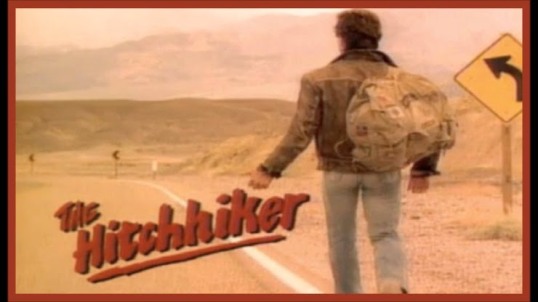
Horror On TV: The Hitchhiker 5.17 “Coach” (dir by Eric Till)


In tonight’s episode of The Hitchhiker, a track coach (Charles Haid) is freaking out over the prospect of his son (Jonathan Crombie) breaking his 25 year-old track record.  The coach ends up taking things to extreme to try to preserve his record.

This episode features a ferocious performance from Charles Haid, who plays the coach as every high school student’s worst nightmare.  This episode has a lot to say about both the strange rituals of athletic competitiveness and how some people are so scared of getting old that they’ll go to any extreme to hold on to their accomplishments of youth.

The episode aired on September 30th, 1989.

The TSL Horror Grindhouse: Crypt of Dark Secrets (dir by Jack Weis)


1976’s Crypt of Dark Secrets is yet another low-budget horror film that takes place in the bayous of Louisiana.

Seriously, what is it about the bayous that seems to attract the darker side of everyone’s imagination?  I’ve been to the Louisiana bayous and …. well, actually they are pretty creepy.  I guess if you were going to make a horror movie, the Louisiana bayou would be a good place to film.  It’s not like you have to spend a lot of money trying to create atmosphere or anything like that.  That bayous have got their own built in, free atmosphere.  You just have to start filming.

Anyway, Crypt of Dark Secrets does not feature a crypt but it does feature an island that’s sitting in the middle of the Louisiana swamp.  There are many legends about the island, with the locals saying that it’s protected by voodoo and “the ghosts of Aztec priests.”  There is always a fog on the island, regardless of how hot or otherwise sunny the day may be.  And there’s always a cool breeze in the middle of the fog.

There’s also a black snake that is often seen swimming in the water around the island.  Whenever the snake slithers onto the land, it turns into Damballa (Maureen Ridley), a swamp witch who is apparently at least a century old.  She protects the island and she has the power to not only conjure quicksand but to also raise the dead.  She also knows where a pirate’s treasure has been buried on the island but she’s certainly not going to let anyone find it.

Damballa has fallen for the island’s latest resident, a Vietnam vet named Ted Watkins (Ronald Tanet), who just wants the world to leave him alone.  He lives in a small house on the island and he refuses to keep his money in the bank, despite the fact that his military pension has made him a very wealthy man.  When three local losers, Max (Harry Uher), Earl (Butch Benit), and Louise (Barbara Hagerty), overhear that Ted keeps all of his money in a breadbox, they decide to pay him a visit and take that money for themselves.  Ted ends up dead and Max and Earl are shocked to discover that money is now covered with blood and basically useless to them.

Damballa does a naked dance over Ted’s body, which brings Ted back to life.  Despite Ted telling Damballa that he isn’t interested in vengeance and that he decided to leave hate and violence behind when he got out of Vietnam, Damballa teams up with the local voodoo priestess to get revenge on the three thieves.  As Damballa explains it, evil has to be punished.

Ted’s status as Vietnam vet adds an interesting subtext to Crypt of Dark Secrets.  During the same year that Taxi Driver was solidifying the image of the crazed Vietnam vet in the minds of many American filmgoers, Crypt of Dark Secrets featured a vet who just wants to be left alone to his own devices and who has no desire for further violence.  Indeed, for a film that centers around vengeance, Ted is remarkably forgiving.

As for the film itself, it’s fairly slow but, having been shot on location in Louisiana, it’s got a lot of authentic swamp atmosphere and its portrayal of voodoo is an interesting one.  (Voodoo, the film suggests, is the way that unwritten laws are enforced in the swamp.)  The performance are a mixed bag, with Ronald Tanet giving a convincing performance as Ted while Maureen Ridley delivers her lines in a strangely formal fashion that doesn’t feel right for her swamp witch character.  The actors playing the thieves are all convincing, as are the actors playing the inevitably portly Southern cops.

Crypt of Dark Secrets is flawed but it gets by on atmosphere.

Demonoid (1981, directed by Alfredo Zacarias)


Demonoid has a great title and it had a good one sheet but don’t be fooled.  The sword-wielding devil is barely in the move and the women at his feet may have appeared on the cover of every heavy metal album in the 80s but they’re not in the movie.

Exploring a recently uncovered tomb in Mexico, Jennifer (Samantha Eggar) and Mark Baines (Roy Jenson) are intrigued by a number of bodies that are missing their left hand.  Their guide explains that, centuries ago, men, women, and children were sacrificed to the Devil by having their left hands cut off.  When Mark and Jennifer discover a casket with a severed hand, they decide to take it back to the hotel with them.  Of course, the hand is not dead.  It springs from its casket and possesses Mark.  This leads to Mark fleeing back to the United States, trying to find a way to get rid of his possessed hand.  Unfortunately, the hand has a mind of its own and, even after Mark ends up getting set on fire, the hand continues to live and possess one person after another.  Jennifer teams up with Father Cunningham (Stuart Whitman), trying to bring an end to the hand’s reign of terror and giving the audience a chance to wonder how these two actors went from being Oscar nominees to co-starring in Demonoid.

Demonoid is a strange film that starts out as a leisurely travelogue of Mexico and then suddenly turn into a cinematic Grand Guignol, with person after person trying to figure out how to chop off their left hand without doing permanent damage to themselves.  Because the hand is immortal, it has no problem trying to kill whoever it is currently attached to, which leads to not only several scenes of actors fighting with themselves but also several detached hands running across the screen.  A detached but moving hand is creepy the first time you see it but it becomes progressively less so the more time that you spend with it.  The plot is ridiculous enough to be initially intriguing but ultimately, Demonoid is a handsy bore.

Horror Scenes That I Love: Klaus Kinski in Nosferatu


From the 1960s until his death in the early 90s, German actor Klaus Kinski was known for being the enfant terrible of world cinema.  Kinski was a volatile talent, an often angry and occasionally violent performer who specialized in playing extreme characters and who reportedly took pride in his ability to drive directors crazy.  Kinski appeared in good films and bad films and, in every one of them, he gave the type of unique performance that only he was cable of giving.

Kinski is best-remembered for his work with his frenemy, Werner Herzog.  When Herzog and Kinski weren’t making films together, they were often criticizing each other in the press and sending one another death threats.  In the documentary My Best Fiend, Herzog documented his partnership with Kinski.  Even while Herzog talked about the time that he went to Kinski’s home with the intent of killing him, Herzog’s affection for his frequent star was obvious.  Klaus Kinski was one of a kind.

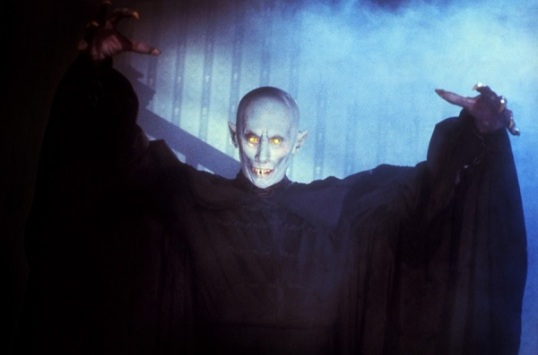
In Werner Herzog’s 1980 film, Nosferatu, Kinski played the role of Dracula.  In this scene, she comes to visit Isabelle Adjani’s Lucy.

Horror Book Review: Gimme a Kiss by Christopher Pike


The 1988 book, Gimme a Kiss, deals with everyone’s worst nightmare.

Jane Retton’s diary has been stolen, photocopied, and passed around all of the students at her high school!  Everyone at the school is reading about how Jane lost her virginity to her committed boyfriend and how she totally loves him.  Everyone at the school declares that this makes Jane a total whore, even though the diary makes it clear that Jane has only had sex with her boyfriend and she only did that after she was sure that she was in love with him.

Here’s the thing, though.  The diary is a lie!  Jane is still a virgin and the only thing that she wrote in her diary was her fantasy about what she would like to do with her boyfriend!  And now, just because Jane has upset the school’s snooty cheerleaders, everyone thinks that she’s sexually active….

Wow, this book is really a product of the 1980s.

Anyway, Jane decides that the best way to handle all of this would be to fake her death so she decides to pretend to fall off of a boat and …. wait, what?  I’m not really sure that I see Jane’s logic here.  It didn’t make much sense when I read the book and, looking back on it, it still doesn’t make much sense.  Still, Jane decides to fake her death so that everyone will reconsider the way they treated her while she was alive.  (Because, certainly, it’s not like everyone’s going to be even more pissed off at her if they discover they were put through a peroid of mourning for nothing….)  But then someone starts coming after Jane and her classmates for real…. Could Jane’s true enemy be someone close to her?

This book was only 122-pages long.  It was a quick read, which is always a good thing.  The plot didn’t make a bit of sense and it felt like something that Christopher Pike just tossed on the page to make a deadline.  As opposed to other Christopher Pike books, the characters come across as being rather flat.  I will applaud the book for embracing the melodrama, especially in the scene where Jane learns the real reason why she’s being targeted.  But otherwise, this is lesser Pike.

October True Crime: Kemper: The CoEd Killer (dir by Rick Bitzelberger)


The city of Santa Cruz, California is gripped by fear as two separate serial killers stalk and murder young women.  Detective Tom Harris (Christopher Stapleton) may not have many clues but he does have a brilliant best friend named Edmund Kemper (Robert Sisko).  Though most people just see Kemper as being a nerdy, middle-aged house painter who lives with his abusive mother, Harris understands that Kemper is actually a genius who has an instinctive understanding of the criminal mind.  With Kemper’s help, Harris is able to take down one of the killers.  Kemper celebrates by murdering his own mother and then calling Harris and revealing himself to be the other killer.  Harris must now track down Kemper before he can murder again.

2008’s Kemper: The CoEd Killer is very loosely based on the true story of serial killer, Edmund Kemper.  And by loosely, I mean that it has next to nothing in common with what actually happened.  In real life, Kemper was indeed a genius who lived with his mother and he did kill several hitchhikers.  However, Kemper committed the majority of his murders in the early 70s and, by most accounts, he did not have any friends on the police force.  Nor did he play a cat-or-mouse game with the police.  Instead, he committed ten murders and turned himself into the police after killing his mother and her best friend.  He was sentenced to life imprisonment.  Once in prison, he was frequently interviewed by FBI agents who were looking to understand how the mind of a serial killer works.  According to veteran profile John Douglas, Kemper proved to be an amiable and honest interview subject and much of the science behind what is known as profiling is a result of the insights that Kemper provided.  Douglas has described Kemper as being the most likable serial killer that he ever met, which is something that I’m sure provided little comfort to the families of the women that he killed.

In the movie, Kemper is a modern-day serial killer who calls the police on his cell phone.  (A major plot point involves Detective Harris trying to trick Kemper into getting frustrated enough to call the police station’s landline so it will be easier to trace his call.)  Kemper taunts the police and kidnaps a woman and holds her hostage in an attempt to mess with Detective Harris’s mind.  Kemper doesn’t so much come across as being particularly clever as much as the police themselves just come across as being amazingly bad at their jobs.  Somehow, they can’t find Kemper in the city, even though he never makes an attempt to disguise his distinctive appearance and continues to eat at the same diner where he and Harris ate at before Kemper revealed himself to be a killer.  The film’s version of Edmund Kemper takes the idea of hiding in plain sight quite literally.

The film has the same flat, made-for-video look that one tends to find in a lot of these low-budget serial killer biopics.  None of the acting is particularly effective, though Patricia Place does have a few memorable moments as Kemper’s foul-tempered mother.  For the most part, this is a true crime film that you can safely skip.

Horror Film Review: The Return of the Exorcist (dir by Angelo Pannaccio and Luca Damiano)


The 1975 Italian film, The Return of the Exorcist, opens with a disjointed series of flashbacks that gradually reveal why a young man named Piero (Jean-Claude Verne) is currently bound in a bed in a monastery.  What the flashbacks do not reveal is why Piero features one of the most fearsome mullets to ever been seen in an Italian film.  Seriously, I get that this film was shot in 1975 but it’s a little bit hard to be intimidated by someone who obviously spends hours a day obsessing over his mullet, regardless of what may or may not have possessed him.

Piero, we learn, is 17 years old and his troubles started when he was outside with his camera and he came across a naked woman (Mimma Biscardi) standing in the middle of a lake.  Piero took her picture and the woman laughed at him.  When Piero’s friends approached, the woman suddenly vanished.  When Piero developed the pictures, the woman was not in them.  He went back to the lake and discovered a medallion which, rather foolishly, he chose to wear.

Of course, because of the film’s flashback structure, we already know that the woman was previously sacrificed at a Satanic orgy and that her body was possessed by a succubus and, because Piero was stupid enough to put on that medallion, the succubus has now entered him.  Piero is soon acting strangely.  When he insults his girlfriend, Sherry (Sonia Viviani), she abandons him and eventually ends up at a club where she dances the night away.  Meanwhile, in his bedroom, Piero has a vision of the woman mocking him.  Piero grabs a knife and slashes it across the woman’s throat.  While this doesn’t effect the woman, it does lead to Sherry dying at the club.

The strangeness continues and Piero’s actions become progressively more and more disturbing.  After Piero attempts to assault both his mother (Francoise Prevost) and his sister, a nun named Elena (Patrizia Gori), the decision is made to call in an Exorcist.  The Exorcist arrives at the monastery and….

IT’S BARZINI!

Well, no, actually The Exorcist does not have a name.  In the credits, he is simply listed as “Exorcist.”  One can guess from the film’s title that the plan was to trick audiences into thinking that the character was either Father Merrin or Father Karrras from The Exorcist but anyone who has seen that film know that would be impossible.  The important thing is that this film’s Exorcist is played by Richard Conte, who previously played Barzini in The Godfather.

(For the record, Richard Conte actually had a pretty long career and played a lot of roles before he was cast as Barzini.  In fact, Conte was prominent enough that he was initially considered for the role of Don Vito Corleone.  Before The Godfather, Conte appeared in films like Ocean’s 11, The Greatest Story Ever Told, The Big  Combo, Tony Rome, and Lady in Cement.  After The Godfather, Conte appeared in several Italian films, like this one.  The Exorcist was actually his final film role, as he died of a heart attack shortly after shooting.)

What type of exorcist is Richard Conte?  He’s a very tough one.  As opposed to the scholarly Merrin and the conflicted Father Karras, Conte’s Exorcist comes across as if he’s ready to step into that bedroom and just literally slap the Hell right out of Piero.  And considering just how annoying a character Piero was, I don’t think anyone would have objected.

Anyway, Conte really doesn’t show up in the film until it’s close to being over and the Exorcism plays out pretty quickly.  The majority of this film is made up of scenes of Piero imagining the Succubus naked or the Succubus taking over Piero’s body so that it can go after his girlfriend, his mother and his sister.  There’s reason why this film is also known as Naked Exorcism.  It’s unapologetically sleazy, as many of the Italian Exorcist films were.  It’s also a bit boring, mostly because Piero is such a doofus that you really don’t care what happens to him.  They should have just tossed him in the lake and tested whether he weighed more than a duck.  Conte is a tough exorcist but the film itself is forgettable.

4 Shots From 4 Horror Films: Special Freddie Francis Edition


4 Shots From 4 Films is just what it says it is, 4 shots from 4 of our favorite films. As opposed to the reviews and recaps that we usually post, 4 Shots From 4 Films is all about letting the visuals do the talking.

This October, I am going to be using our 4 Shots From 4 Films feature to pay tribute to some of my favorite horror directors, in alphabetical order!  That’s right, we’re going from Argento to Zombie in one month!

Today’s director is Freddie Francis.  Though Francis may be best remembered as a cinematographer (who worked on three David Lynch films), he was also a director who did memorable work for both Hammer and Amicus in the 60s and 70s.

4 Shots From 4 Freddie Francis Films

The Evil of Frankenstein (1963, dir by Freddie Francis, DP: John Wilcox)

The Skull (1965, dir by Freddie Francis, DP: John Wilcox)

Dracula Has Risen The Grave (1968, dir by Freddie Francis, DP: Arthur Grant)

The Creeping Flesh (1973, dir by Freddie Francis, DP: Norman Warwick)

The Horror Covers of Argosy


July, 1923. Cover by Stockton Mulford

Argosy was one of the earliest and longest-lived of the American pulp magazines.  Initially, it was published from 1882 to 1978.  It was subsequently revived from 1989 to 1994 and then a second time in 2005 and 2006.  Over the years, there were many different variations on the publication’s name but no matter what exactly Argosy was called, each issue featured stories by prominent pulp writers.  Argosy published all genres, from adventure to mystery to science fiction to westerns to horror.  The covers were done by some of the prominent of the pulp artists.  Here are just a few horror-themed covers from Argosy:

June, 1924. Cover by Stockton Mulford

February, 1931. Cover by Paul Stahr.

March, 1931. Cover by Paul Stahr.

June, 1931. Cover by Paul Stahr.

June, 1933. Cover by Paul Stahr.

October, 1933. Cover by C.C. Beall

1934, January. Cover by Paul Stahr.

December, 1934. Cover by C.C. Beall

December, 1936. Cover by Rudolph Belarski

July, 1938. Cover by Rudolph Belarski

Horror Film Review: 13 Eerie (dir by Lowell Dean)


The 2013 film, 13 Eerie, takes place on an island that is not quite as deserted as our heroes originally assumed.

The island, known as the Eerie Strait, was once the home of a brutal, maximum security prison.  The island is full of abandoned buildings and abandoned vehicles, all of which sit there as monuments to the brutality of mass incarceration.  Prof. Tompkins (Michael Shanks) teaches a class in Forensic science and he brings six of his best students (played by Katharine Isabelle, Brendan Fehr, Brendan Fletcher, Jesse Moss, Kristie Patterson, and Michael Eisner) to the island.  With the help of an ex-convict named Larry (Nick Moran), Tompkins has set up several fake crime scenes (often featuring very real corpses) for his students to investigate.  For the class, the students are required to work in teams of two and the teams are not allowed to communicate with each other.  However, each team is given a walkie-talkie so that they can still communicate with Tompkins.

Now, just speaking for myself, I would probably drop the class rather than take part in any of this.  Seriously, as soon as you tell me that I’m going to have to spend my weekend hanging out at an abandoned prison and examining real corpses, I would probably walk out of the classroom and switch majors.  (Then again, I probably wouldn’t be majoring in forensics to begin with.)  But Tompkins’s students are very enthusiastic about heading off to the island.  I guess if doing obviously dumb things, going off to an isolated location with an ex-con would be an attractive option.

Anyway, the students head over to the Island and — surprise! — it turns out that there’s a lot of extra dead bodies lying around.  At first, the students think that the extra bodies are all a part of their class but then some of the dead bodies come back to life.  It turns out that the island — much like the prison camp in Garden of the Dead — was once used a place to experiment on prisoners.  As a result, many of the former prisoners have now been transformed into flesh-eating zombies who roam the island and look for new victims.

(And again, anyone who has ever seen a zombie movie, should have realized that this would happen.  It always amazing me that people in zombie movies have apparently never come across Night of the Living Dead on television late at night.  At the very least, you would think that these people would have at least read an article or two about The Walking Dead.  And really, even if you have somehow gone your entire life without being exposed to any zombie media, the sight of the dead walking around should be enough to convince most people to run away.)

13 Eerie has some atmosphere but it doesn’t really bring anything new to the zombie genre.  In fact, it so closely follows the rules of the genre that it actually gets kind of boring.  I appreciated, as always, the committed performance of Katharine Isabelle and I also liked that the film ended on a bit of a down note.  But, for the most part, 13 Eerie doesn’t bring anything new to the world of the living dead.