A Glorious Fantasy: A World of Three Dimensions


Abbreviated boilerplate! Once again I return to this ongoing series, in which I attempt to play through every game in the Final Fantasy franchise that I can get my hands on, from FF1 through Lightning Returns, and a variety of the spinoffs and other titles not included in the ‘main series’. This list continues to undergo revision, and I seriously considered removing Final Fantasy 9 from it for personal reasons. In addition, no MMO titles will be played. Sorry, folks?

I think all of this is extremely important knowledge, and that the human race will be improved by my research. Let’s move on!

FF7

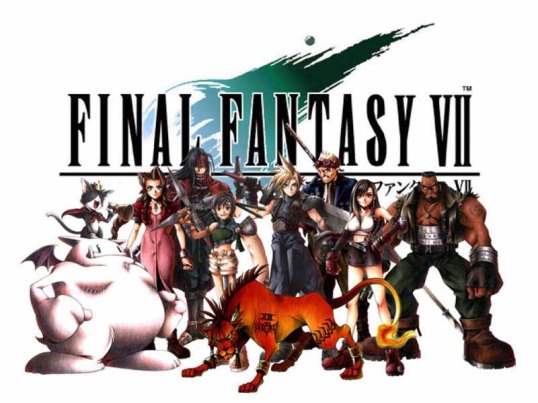
And, actually, let’s give this a little music, shall we? I hear that particular music in my head every time I see an image on the internet of the city of Midgar, or the logo for Final Fantasy VII.

Yes, that’s right. It’s time to talk about Final Fantasy VII.

Version Played: Steam-client PC port, with fun upscaled resolutions!

For those of you who have been following this series from its start, you probably already know that Final Fantasy VI is my favourite game in the series, and that this exercise was very unlikely to topple VI from its stance, astride the Final Fantasy world like a colossus. Despite having rediscovered how much of a bridge VI is between eras of the games, and despite gaining a much deeper and more interesting understanding of the franchise through this play experience… the dominance of VI, at the very least, has not changed. It is keeping this in mind, and knowing some of what must follow, that I want to preface this piece by saying the following: Final Fantasy VII is irrefutably a great game, and I wholeheartedly believe that, no matter what the rest of this article may contain.

What should also be apparent to everyone, already, is the degree to which Final Fantasy VII infected our cultural consciousness. The fact is, the beautiful CGI video sequences and 3-D scenario of Final Fantasy VII make it perhaps the most memorable of any game in the whole series. It is worth noting that on this day, far more games have been released after VII than came before it. I actually find that statement astonishing, now that I consider it. Just imagine how a sequence like the incredible Opera House performance in Final Fantasy VI might have captured our imaginations if it had been given a full CGI treatment on the PSX… or the PS2… or the 360… Incredible, right? (Don’t bring up the ill-executed “Final Fantasy Anthology” collection). Well, while no single sequence in Final Fantasy VII might equal up to the Opera House performance, or Kefka seizing the statues and destroying the world, the truth is lesser sequences are more memorable for many of us (those who exist in both the 2D and 3D era, meaningfully)… and, in many ways, that is the power of Final Fantasy VII.

It has other things to recommend it. Final Fantasy VII follows a large, diverse party. Each character gets to experience complex characterization as things progress, with a couple notable exceptions…. including side quests, some unique abilities, and the powerful and diverse Limit Breaks that really set them apart in mechanical terms. Each character I used in Final Fantasy VII felt very distinct and different… for a while. But unlike a game like Final Fantasy IV, or even VI, where they have absolutely distinct features, many of which come into play every single battle… the primary – non-cosmetic, let’s get real! – differences between characters in Final Fantasy VII deal with their unique Limit Break techniques. Some of those Limit Breaks are incredibly memorable, and will probably come to define the characters of Final Fantasy VII in many ways for you as a player… but you don’t see them every battle, and they don’t establish an identity in the way that “this character can use Steal” does.

This is because the characters in Final Fantasy VII are so customizable. While it is true that Aeris Gainsborough is a better magician and a (far) worse physical attacker than Barrett Wallace… I could make Barrett into a magician if I wanted to. It would involve loading him down with Materia to change his stats, but equipping him that way is a matter of seconds of work. And, if I change my mind later, it will take only seconds to change him back. Final Fantasy VI eventually allowed a player to control the stat growth of each party member by strategic use of Espers, but the changes were a) permanent and b) permanent.

I suspect that this trend – this gameplay quirk – will be significant in the immediate future of Final Fantasy. But we’ll see.

When I see people extol the virtues of Final Fantasy VII, I typically see three big arguments. There’s simply no way to talk about this game independent of the billions of words and millions of hours that have already been spent on it.

1) THE STORY, MAN. I don’t even know if this is legitimately the #1 argument made in favour of Final Fantasy VII, but it’s a common one, and it is compelling. Does Final Fantasy VII’s story plot tightly together, eliminate all holes, answer all questions, etc? No, it sure doesn’t. But that’s not everything. Final Fantasy VII’s storyline (in case you somehow don’t know…) traces the fortunes of a group of people who have decided to resist the oppression of the ShinRa Electric Power Company. ShinRa provides electricity to the world to power all manner of modern conveniences, which they obtain through the harvest of Mako energy. Of course, as we quickly learn, Mako energy is also the literal life energy of the world of Gaia. In condensing that energy into Materia and using it to power TV broadcasts, the ShinRa company is quite possibly destroying the planet. Literally. Of course, it’s not that simple. Sephiroth, the greatest of ShinRa’s genetically engineered warriors (called SOLDIERs, cryptically enough) returns to the great city of Midgar, slaughters many of Shinra’s top personnel, and flees. Much of the rest of the game is spent in the pursuit of Sephiroth, whose objectives are unknown, but are almost assuredly not benevolent.

When things come together, about 75% of the way through the game, we know that Sephiroth has used the ultimate black magic, Meteor. In VII, this magic literally summons a wandering planetoid, diverting its course through space toward Gaia. It will strike the surface, causing incredible damage. Unlike Earth, however, Gaia has a defense mechanism to protect it against such catastrophic damage. The Mako energy – actually called the Lifestream – will be gathered at the spot of the gaping wound caused by Meteor. Sephiroth will stand there, become one with all of the planet’s energy, and become a God. Not a benevolent one.

Heavy stuff, man. And ultimately very satisfying. We don’t need all the ends tied off on this story. We don’t need to see every detail hashed out to the end. And, if you [i]do[/i] want that, there are actually resources available! Such is its popularity, that there is now an actually thing called Compilation Final Fantasy VII. The expanded universe around Final Fantasy VII probes many of its deepest mysteries, expands upon fan-favourite characters, and in general should give you the satisfaction that you desire.

I have not yet decided whether to include any of these Compilation titles in my own quest to explore Final Fantasy’s depths.

2) It was my first Final Fantasy.

This one is more difficult to break down point by point, but it is definitely worth addressing. My first Final Fantasy (that I completed) was VI. I know for a fact that this creates a nostalgic bias on my part toward the game. Now, of course, Final Fantasy VI is universally heralded as excellent, so my opinion has never proved unpopular. But so many people were introduced to the genre by Final Fantasy VII at a ripe, young age that the game’s explosive – and enduring – popularity make total sense.

3) It was the first 3-D game in the franchise.

Let me add on to this that the 3-D combined nicely with the sheer scope of this game, to create something that – at the time – was utterly without precedent. This is another reason why this game’s flaws are less important than its triumphs. They were when it was released, and they still are today. When I played this game for the first time, in my buddy’s basement (he had the PSX before I did), he and I decided to trade off the controller periodically, and counsel each other on game decisions and so on. All of that was fun, but one thing I remember as much as anything else, was how incredible this game looked by the standards of the time. To this day, some people still prefer the sprites and the beautiful hand drawings of games like Final Fantasy VI… but the first time I saw this game, I knew that we were never going back.

Well. That was a load of nostalgia. Let’s talk about the game when looked at through modern sensibilities. I’m going to knock this out in list format.

1) Was it any good?

It sure was. I had a lot of fun playing this one. I enjoyed it enough to explore all of its various nooks and crannies, including breeding the Golden Chocobo, and using the power of Knights of the Round to unseat the mighty Emerald and Ruby WEAPON monsters. I played the shit out of Final Fantasy VII, and it didn’t matter how many times I had played it before.

2) How’s it hold up?

Unfortunately, Final Fantasy VII’s graphics have aged even more poorly than the sprites from early consoles. The nice resolution upscale of the Steam port made the character models look unusually sharp, while the matte backgrounds through most of the game looked fuzzy and out of focus at best. Unfortunately, even ‘sharp’ looking polygonal character models still look crappy compared to modern games. But what do you want? It’s between 17 years since Final Fantasy VII dropped. And, ultimately, it held up well enough for me to sink 50+ hours into it, and defeat the superbosses, so the graphical considerations weren’t so bad.

Of equally important note is that Final Fantasy VII has one of the series’ better soundtracks. While I personally think several games have better battle music – and yes, that includes the widely beloved One-Winged Angel, Final Fantasy VII has a vast soundtrack that includes a number of mood-setting tracks that are simply superb – tracks like Great Warrior, which plays as Red XIII learns the truth about his family legacy. Within the game, it plays only twice to my recollection, but it’s an incredibly compelling track. The same could be said for Launching a Dream Into Space, a theme composed explicitly for flashbacks about the failed Shinra space launch. Considering scope as a major factor, some would argue that VII’s soundtrack is Nobuo Uematsu’s triumph. I’m not sure that I would agree, but I do think that it was squarely at the center of the “golden age” of Square’s music, which ranged from Final Fantasy VI through Final Fantasy VIII.

3) Is Final Fantasy VII really overrated?

Perhaps.

It probably depends on whose rating you use as a baseline. The manic Sephiroth fans of the world probably do overrate the game. I think, however, most modern gamers who go far enough back to have played and enjoyed Final Fantasy VII when it was shiny and new have given it the due it deserves, and have come to accept its faults as well.

Well, this piece was probably not exceptionally helpful, since everyone has played the effing game, but thanks as always for reading. Next time, I’ll plunge into the depths of Final Fantasy VIII.

The Relevant Irrelevant Expo


Some reactions to games “unveiled” at E3, and some reasons why one would care… or not. Note that this is not intended to be absolutely comprehensive coverage of E3 at any level, but is instead simply one man’s opinion.

If you visit IGN today you can gain access to a fairly comprehensive review of the Electronic Entertainment Expo, or E3, the yearly convention that has ranged from absolutely industry defining to utterly without meaning in its scope of relevancy. To say that its current iteration is overrated might not be entirely correct, but it is within the scope of the discussion. In general, most of the games that were “revealed” or “unveiled” or whatever at E3 were things that were already in the public consciousness – at least at some level. To say that E3’s tech demos fleshed some of these games out significantly would likewise be stretching the truth – a demo is a demo is a demo. Those are words to live by.

Until we hold these upcoming titles in our hands, we know nothing. This is a truth that should have been driven deep into each gamer’s brain by this late stage. In case you are a newcomer, or one of the very young, please internalize this lesson right away: Game companies are trying to sell shit. If they incidentally create a great game… so much the better. But if you buy the game they are peddling, regardless of its comparative quality, then they have achieved their goals. Their salaries are secure for another round. Never make the mistake of assuming that a great demo will yield a great game. Ever. No matter the pedigree of the franchise, or the publisher involved, or whatever else.

Obvious, given that paragraph of raw cynicism, I would not advise you – dear reader! – to take any of the following impressions any more seriously than they are intended to be. I am simply reacting on instinct to things that I have seen from E3. Not even all things I saw from E3. In fact, in my more candid moments, I would probably admit to you that I would be delighted to see people argue with me in the comments section below. So keep that in mind.

Alright, all that’s done. Let’s take a look at some upcoming releases swept from behind black curtains at E3…

Alien: Isolation

Billed as the Alien game that fans have always wanted, Alien: Isolation is a survival horror title published by SEGA, and created by The Creative Assembly, the studio behind innumerable “Total War” franchises. What Total War has to do with evading an unbelievably lethal xenomorph is a question best left to the philosophers. This is a game that people have ostensibly actually played. For real. And those people liked it. I remain incredibly skeptical, but not totally immune to the charms of the idea…. After all, many serious gamers have labored many long years hoping to see an Alien game that captured the essence of the original film. At this point, though, aren’t we looking for survival horror rooted firmly in the unknown? How many surprises are there left for the xenomorph to gift us?

My Prediction: For achievement whores and survival horror junkies only. Ends up on a stack of “Oh, yeah, that was pretty good. I haven’t finished it…” for … everyone else.

Assassin’s Creed: 5,6,7…

Does anyone else remember when this was trumpeted as a trilogy of revolutionary action games, with contextual controls, a fascinating science fiction plot… and… well… three games? The first of the two Assassin’s Creed games talked about at E3 would bring the total number of distinct AC titles listed by Wikipedia to 16. The original Assassin’s Creed was released in 2007. I’ll let you do the math here.

Incidentally, I freely admit that Assassin’s Creed IV: Black Flag, was heralded almost universally as an improvement over a series that I had long since lost interest in… but why are people still hooked? Is there even a story being told here? I’m all the way out on Assassin’s Creed. I’d much rather Ubisoft just kept the engine and released something altogether new. Does this have to be the “Spider-Man” of gaming?

My prediction: An embarrassingly overrated (critically) offering from a series that was tired eight offerings ago. The announcement of Asssassin’s Creed 7 (or whatever) follows almost immediately.

Batman: Arkham Knight

This opinion is going to be unpopular… but… did you really love the third Arkham game? Are you even sure you loved the second Arkham game? Believe me, I am the first to admit that Batman is something of a badass. To be put in his skin, with a variety of his capabilities, like stringing villains upside down beneath statues on cables, is rewarding to say the least. Honestly? I got my fill the first time around. Increasingly implausible setups revolving around the same core gameplay just serve to make things even more thin and stretched than ever. Barring a significant improvement in gameplay, this is just another clone.

You should be waiting for a substantial Steam sale here, folks.

My Prediction: Increasingly thin premise leads to thin reviews and even thinner popular support. The end of this latest revival of Batman video games.

Bayonetta 2

Wii U exclusive? I am, in fact, laughing out loud.

My Prediction: Exclusives are a disaster when you’re the Wii-U.

Battlefield: Hardline

I have heard preliminary reports that this is… underwhelming. At best. I am not surprised. From the footage, it looks like the folks at DICE have decided to merge the successful Battlefield franchise with Payday: The Heist. I’m not sure why. Battlefield’s appeal, to me, has a lot to do with its portrayal of a battlefield. I have no patience for this nonsense. After the catastrophic launch of BF4, and its continuing problems, I have very little patience for DICE, either. This one is going to have to prove a lot to get back into my good graces.

My Prediction: Absolute disaster. The least successful BF since before Bad Company brought it back.

Borderlands: The Pre-Sequel

I, personally, might be out on Borderlands.

But it’s not because of some fundamental flaw that I see in the games. The infusion of humour into a “Diablo”-style game model of increasing loot drops makes for a very refreshing experience. For some. Your own mileage may vary. Still, this is a franchise that has the liberty to extend itself, from my perspective, in ways that Assassin’s Creed has not earned. The simple fact about Borderlands is that a simple frame story is adequate… as long as it’s stitched together with hilarity.

I think we can assume that it will be.

My Prediction: The new Diablo. I grow ever further from people conceptually, as I have an increasingly difficult time understanding why anyone would want to keep playing.

Call of Duty: This Year’s Call of Duty Star Wars Battlefront Advanced Warfare

Is any franchise more predictable? My own experience, and people that I personally have met, were turned off by CoD: Ghosts. Were you?

My Prediction: It’s CoD, for whatever that’s worth.

Civilization: Beyond Earth

Any new Civ is a big announcement since the advent of Civilization 4, which probably still remains the gold standard by which all similar titles must be judged. Civilization 5 failed to employ Leonard Nimoy to read its narrative dialogue, but otherwise improved substantially in some areas even upon Civ 4. There is little reason to doubt that this latest foray, whatever its inevitable practical issues might be, will provide new and unique opportunities to “civ”. I expect that all serious Civilization players are already planning to buy it. But if that list doesn’t include you yet…

… Why not?

Perhaps this is, finally, the Civ you’ve been looking for. I’d be the first to accept you if you said that Alpha Centauri was simultaneously what you wanted Civ to be, and yet fell short of all your expectations. Alpha Centauri definitely had its problems, even though I would defend it as a superior game of the last twenty years or so. Beyond Earth has the potential to far exceed anything that has come before in Civilization, however. One disappointing idea is that it may also mean that Civilization has explored Earth’s history as thoroughly as it can. I suppose I’ll be pouring out a 40 as I board my shuttle to the moon.

My Prediction: A game that is absolutely worse than Civ IV (no crime, actually!), but is almost as good as Civ V. Shows the potential of the franchise.

Dragon Age: Inquisition

Inquisition has vowed to return more to the ideals of the original DA (gameplay wise). I think this is undeniably a good thing. In fact, you could generate an almost perfect WRPG experience if you combined the tactical gameplay of DA:O with the sophisticated characterization and long-reaching multi-layered plot of DA2. Name games for me in each respect which are superior to DA:O (tactical RPG gameplay) and DA2 (characters). Do not use the phrase “Baldur’s Gate 2”. Go.

My Prediction: Disappoints both fans of DA:O and DA2. Becomes overly conservative after chance-taking DA2, but also unwilling to create the tactical difficulty levels that players are hungering for. Demonstrates a continuing lack of awareness from Bioware of what their players actually want.

Fable: Legends

Something literally no-one wanted! An RPG that can only be played online with other people.

No, I’m sorry. I can’t say for certain that no-one wanted it. If you wanted it, please respond in the comments below.

My Prediction: HAAAAAAAAAAAAAAAAHAHAHAHAHAHAHAHA.

Far Cry 4

Considering the games in this franchise have literally nothing connecting them.. do they really need to be a franchise? Seeing the number “4” after almost anything just bums me out. Still, Far Cry 3 was a triumph. If Ubisoft can continue on that successful path this is a game that is worth serious consideration as it releases.

My Prediction: A series of incredible trailers that make the game look better and better by the day.

FIFA 15

😀

My Prediction: A competently arranged sports game. C’mon. There’s a 0% chance that there will be any surprises here, one way or the other.

Forza Horizon 2

This really is a disappointment to me. Forza Motorsport 5 continued the successful Forza franchise on next-gen consoles, and it is an adequate representation of the genre. Forza Horizon (take one!) was a pleasant diversion from the world of racing established tracks with established racing cars, and so on, and so forth… The “refreshing” part starts to dilute right away when you make it into a sub franchise though, right?

All that being said… there’s promise here. The original Horizon was an undeniably fun game. A worthy side-diversion from the historically great Forza Motorsport 4. This one probably bears watching.

My Prediction: Less compelling than Horizon 1. Less compelling than Forza 4. A misguided attempt to score twice with the same franchise in the same year. Bad, bad…

Gears of War 4

R.I.P.

My Prediction: Does anyone give a shit anymore?

Halo 5

R.I.P.

My Prediction: R.I.P.

Halo: The Master Chief Collection

Presumably realizing that there’s no new ground left to tread (and there hasn’t been since Halo 3), now there’s an HD collection which brings all of the previous Halo titles up to snuff. Everything will be in 1080p. All the old multiplayer environments will return. All the old games have been remastered. What Microsoft really wants here is a time machine… if we could actually go back to the era of Halo 2’s multiplayer, that would be one thing… but just recreating it now? Let’s just say that I have my doubts.

Please don’t buy this collection.

My Prediction: Startlingly unpopular. Please don’t buy this collection.

Kingdom Hearts 2.5 ReMix

It’s sort of like the FFX/FFX-2 remasters, only it doesn’t bother to include Kingdom Hearts 1. The staggering volume of peripheral titles is well represented here, so your own mileage may vary.

My Prediction: If this is the HD collection you wanted, buy it. If not, boycott it.

Kingdom Hearts 3

zzzzzzzzzzzzzzzzzzz…

My Prediction: More to say, have you?

Mass Effect 4

We don’t know that much yet, even after E3. Still, it sounds like there will be a new, original story, with new characters, in the universe of Mass Effect. Given the scope of the setting, and the absolute masterpiece that was Mass Effect 1-3… I’m going to give Bioware some slack here. I’m going to wait until I have some solid information on what they’ve come up with before I start trying to hack it to pieces.

My Prediction: This will spawn 70 billion angry emails and internet comments, and 63 billion angry fanfics. It will also probably be excellent, if you can get over yourself.

Middle-Earth: Shadow of Mordor

We all know this game is going to be terrible right? I mean, people who love the lore of Tolkien are going to riot… it’s going to be mechanically or emotionally inferior to Bioware products like Mass Effect, or to the sophisticated blend of The Witcher…

I guess the jury is still very much out on this one. But I just don’t have high hopes at all.

My Prediction: My least fair judgment of all. I think this game will fucking suck.

Mirror’s Edge 2

Top of my “did not need a sequel” list. Great cash grab, guys! I loved the first one, but it actively bothers me that you can’t come up with another brightly lit setting to run athletic characters through. Booooooooooooooooooo.

My Prediction: The birth of another unnecessary series. Still, if the games remain bright and colourful, they have a niche over the browns, greys, brown and greys of, say, Gears of War, or Call of Duty.

Mortal Kombat X

Please make Story Mode repeatable.

Sincerely,
Gamers

My Prediction: Mortal Kombat was already a pretty good start on rejuvenating this franchise. I think it has an upward trajectory… but it needs to make some smart decisions. I don’t think it will. Underwhelming filler game!

Pokemon Alpha and Omega

The beginning and the end.

The first and the last.

My Prediction: Doth thou desire the power?

Rainbow Six: Siege

One of those oddball franchises that pops up with no regularity whatsoever. Still, I gleaned a great deal of enjoyment both out of Rainbow Six: Las Vegas and Rainbow Six: Las Vegas 2: The MGM Grandening. Or whatever. This is one of very few franchises that inspires an immediate “perk up” from me, instead of a sad shake of my head. This is a game that I will be keeping my eye on in the coming months.

My Prediction: My top multiplayer game for exactly three weeks. Then back to business as usual.

Star Wars Games

Star Wars games suck. They sucked before Disney acquired the rights, and they still suck now. Don’t get your hopes up.

My Prediction: Lens flares. They put JJ Abrams in charge, right?

Warhammer 40k: The Eternal Crusade

Too much lore, too much backstory. You will never find what you’re looking for in a video game. I’m sorry. I feel your pain.

My Prediction: A competently executed but ultimately very forgettable title.

The Witcher 3

As soon as censors get hold of the good sex cards, the appeal ends. Well, that’s not fair… this is definitely an above average RPG series. Actually, I have high hopes for the third installment. They still range about 35% lower than the average retail price. Bummer.

My Prediction: Way less nudity than everyone is hoping for. Bummer.
Game Review: Ham and Egg Lawyer


People tend to assume that, because I work in a law office, I know something about the law.  Actually, beyond the fact that marijuana should be legalized and police officers should be more polite when they stop you for speeding, I know next to nothing about the law.  (And, having typed that sentence, I now notice that both of those are personal opinions as opposed to legal facts.)  I know how to keep an office neat and organized but, when it comes to the actual practice of the law, I’m about as lost as your typical art history major who has a day job as an administrative assistant.

So, perhaps that’s why I enjoyed playing Ham and Egg Lawyer.

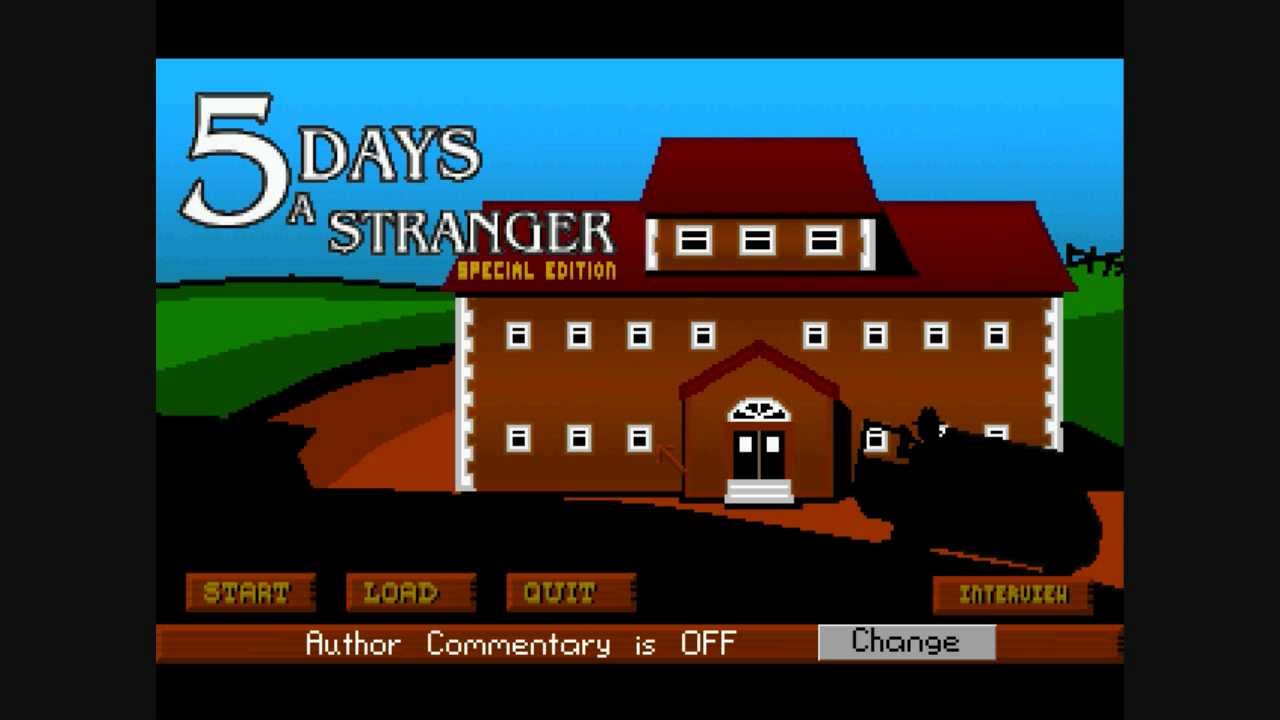
In Ham and Egg Lawyer, you play a lawyer who is fresh out of a law school and who is in the process of setting up her first practice.  What this means is that you spend most of your time answering the phone and getting asked various legal questions.  (Occasionally, you also get a call from a telemarketer who offers you a chance to improve your web page.)  The game takes place over 5 days and, once the work week has ended, you’re giving three different score — reputation, money, and stress — based on the choices you made.

Now, the main issue that some people will probably have with this game is that there really aren’t any concrete consequences for having either a low or a high score.  For instance, you can have a terrible reputation but clients are still going to call you up and ask you about age of consent laws and whether or not you’d be willing to handle their DUI.  By that some token, you could end up with a negative money score without having to worry about getting evicted, losing your practice, or starving to death.

But that didn’t really bother me.  The game is well-written and the people who call the office are consistently amusing.  From some of the comments that are made at the beginning of the game, I’m assuming that it was written by an actual lawyer and, as such, the game’s situations feel authentic.  If nothing else, it makes for an interesting slice-of-life experience.

As for myself, when I played Ham and Egg Lawyer, I specifically went out of my way to pick all of the wrong and/or greedy choices.  Bad legal advice?  I gave it.  Large retainers?  I charged them.  It wasn’t always easy because my natural instinct is always to try to help people out.  “Oh no,” I occasionally thought to myself, “I shouldn’t have guaranteed that client that I’d be able to get him a large cash settlement.  Even I know that!”

But then I reminded myself that it was just a game, I’m not really a lawyer, and it costs money to live well!  “Fuck being ethical,” I thought as the in-game phone rang with another mark looking for legal help, “Lisa needs a new pair of shoes.”

As a result, I ended up with a high money score but a negative reputation score and you know what?  I can live with that.  At the very least, I can use that money to start advertising on TV and then let’s watch the cash come rolling on…

Yay!

Play the game here.

Game Review: Artist Survival Simulator


Artist Survival Stimulator

You’re looking at this post and you’re asking yourself, “Since when has Lisa cared about games?  I thought she only cared about Italian horror films and Lifetime movies!  Is Lisa seriously reviewing a game?”

Well, as a matter of fact, I am.

Why?

Because I love the Artist Survival Simulator.

The Artist Survival Simulator is a work of interactive fiction that was designed by using Twine.  As the title suggests, the Artist Survival Simulator allows you to live the life of an artist.  And who doesn’t want to be an artist, right?  But, as this game shows, the life of an artist is not an easy one.

The game begins by asking you three times whether or not you really want to embark on this life.  At the very least, you can’t say that you haven’t been warned.  After clicking yes three times, you are informed that you have just completed your studies in fine arts!  Yay!  Your inspiration is strong (though, as you’ll soon find out, your inspiration increases and decreases depending on your actions throughout the game).  You worked while you were in college so you’ve got 5,000 Euros saved up.

(That’s right — you’re European!  So, while the rest of your fellow Europeans are busy voting for the UKIP and the Front National, you’re saving the world through art!  Yay!)

Each month, you’re given four options.  You can make art, you can work for a living, you can apply for a grant, or you can go on an inspirational excursion.  Now, if you’re anything like me, you’re going to want to make art and that’s great.  Depending on how or low your inspiration may be, you might create anything from a “timeless painting” to a “controversial monument” to a “mediocre sound art work.”  But here’s the thing — regardless of what you create, you’re not going to make any money from it.

“That’s okay,” you say, “Art is not about money!”

Well, that’s all good and well and hey, good luck with that and enjoy your Occupy reunion, you moonbat.  The fact of the matter is that, in both the game and real life, you need money to live.  Each month, your living expenses total 1,000 Euros.  As soon as you’re out of Euros, the game ends.  So, go ahead and just concentrate on creating art.  The game will be over in 5 turns.

So, let’s say you decide to spend a month working.  Hey, that’s a good idea.  At least you can make money.  But here’s the problem — each month you spend working, your inspiration decreases.  And here’s the thing — as your inspiration decreases, your art becomes less and less impressive and once you have totally run out of inspiration, your artistic career is over.

Luckily, there is a way to increase your inspiration.  You can go on an “inspirational excursion,” which is also known as a vacation.  These excursions are great because you return from them ready to create something wonderful.  The only problem is that they cost 2,000 Euros, which means that as soon as you return, you’re in danger of running out of money.  And how do we make money?  By working, which decreases the inspiration that you just spent so much money to build up.

Okay, so how can you make money without destroying your inspiration?  Well, you can apply for a grant but — much as in real life — there’s no way to predict whether or not you’ll actually get that grant.  If you do get it, you’ll be able to spend a few months creating art but, if you don’t, it just means that you’ve wasted an entire month and you’re down another 1,000 Euros.

The challenge is to balance the need for money with the need for inspiration.  Because, as soon as you run out of money and/or inspiration, you’re informed that maybe its time to start thinking about paying back your student loans…

THE HORROR!

I love the Artist Survival Simulator because it proves something that I’ve always suspected.  If you want to survive as an artist, it helps to come from a rich family.

Play it here!

Art


A Glorious Fantasy: The Magitek Revolution


Once again I return to this ongoing series, in which I attempt to play through every game in the Final Fantasy franchise that I can get my hands on, from FF1 through Lightning Returns, and a variety of the spinoffs and other titles not included in the ‘main series’. This list continues to undergo revision, and I seriously considered removing Final Fantasy 9 from it for personal reasons. In addition, no MMO titles will be played. Sorry, folks?

I think all of this is extremely important knowledge, and that the human race will be improved by my research. Let’s move on!

FF6-logo

This is a bittersweet entry for me. Final Fantasy 6 has always been my favourite Final Fantasy. It is the first one that I played to completion, and I still think of it as the absolute pinnacle of the JRPG form. There are things about later games that I like, individually, better than certain aspects of Final Fantasy VI. But unless I really undergo a transformation moving forward in the series (or if Lightning Returns is somehow the greatest game ever released… and I doubt it) … this is the high point. This is the pinnacle. For me, this is the definitive FF experience, and the game I would recommend throughout this entire odyssey without hesitation to anyone, anywhere, anytime.

Version Played: GBA Remake

Version Notes: Having played the original SNES version 90282834 times (all numbers approximate) and the GBA version 0 times, this was kind of fun for me. The primary feature of the GBA version is a new, upgraded translation over the Ted Woolsey original. Obvious upgrades include the names of characters no longer being in all caps for whatever reason, and the expansion of several characters. I never thought that the original translation of FFVI was particularly egregious, but I will freely admit to liking the GBA translation better. The GBA version also fixes a number of rather infamous bugs from the original game, including the Evade bug. I would highly recommend this version to both new players and returning ones alike.

So… where to begin, really, with Final Fantasy VI? At the risk of exposing my knowledge of future games, I can certainly say that FFVI’s style paved the way for the characters and combat systems of Final Fantasy VII and Final Fantasy VIII. It also represents the only real departure (let’s not count FFI and FFIII where you have only ‘generic’ characters) in the entire Final Fantasy series from the idea of a single protagonist, with supporting characters around her. In this case, while Terra Branford is an obvious protagonist type, and does start the story as its central character, she remains such only until the first major split in the party, when Terra leads a group trying to escort the rebel leader Banon to safety on the Lete River… meanwhile, Locke Cole attempts to delay the impending invasion of the Gestahlian Empire from overrunning the peaceful realm of Figaro… and Sabin Figaro is lost on the Lete, and must make form new alliances to get back home.

Let the idea of that sink in, just a little. It’s a truly novel concept, and one that is not really used in any other RPG-style game that I can recall to mind. The ensemble cast of FFVI is not held together by the glue of Terra Branford, nor by any other single character. Certainly, the game has a few characters much more ‘major’ than others (Terra, Celes, and Locke receive a large amount of development over their fellow cast members), particularly if you don’t indulge in some of the sidequests that the game offers once you reach its second half.

If any single character provides focus to the narrative, then, it has to be the bad guy. Actually, in this case, as is often the case, there are a couple of them. The villains provide us with a single thread to follow through the complex characterizations and variety of locales that the party will explore. Ultimately, this game is about stopping the mighty Kefka from literally grinding the people of the world into dust, until nothing at all remains. While this has basically been the goal of every antagonist we’ve faced thus far (spoiler alert: probably most of the upcoming ones have the same plan in mind), Kefka begins to realize his goals in a visceral way which is, again, unusual for this game series.

Final Fantasy VI is also the first game to depart in a major way from several of the core story themes that we’ve seen before in every other installment. Gone are the crystals (Earth, Wind, Air, and Fire). Gone are prophecies of any kind – the people of Final Fantasy VI’s world are more worried about repeating the mistakes of the past through a cataclysmic conflict called the War of the Magi, which destroyed the world and erased magic, but also gave rise to the steam engine, and modern technology. It’s this technology, and this complete departure from the series’ roots that gives this game it’s unique flavour, and also very much sets the stage for the succeeding games.

Here, too, is another innovation, which in some ways builds on the stylings of Final Fantasy IV, but not entirely – each character here possesses a unique skill, such as ‘Steal’ for Locke, or ‘Morph’ for Terra (Cecil, for example, had ‘Darkness’, and Kain ‘Jump’). However, beyond that unique skill and their individual equipment lists, the characters have many interchangeable features. Their ability gain at level up is determined entirely by the Esper system, which also teaches characters magic. It is possible (albeit, pointlessly difficult and unrewarding) to turn even the most magically inept character like Edgar into a spellcasting powerhouse with the Ultima ability by the game’s end. While this was previously a function of jobs, the character ‘jobs’ in FFVI are immutable, though you have many characters to choose from by the end, unlike in Final Fantasy IV.

Final_Fantasy_VI_OperaNone of this is why the game is so effective, however, or why its memory has lingered with me far beyond any other game in the series. The truth is, all of that has to be attributed by incredible moments, like the Opera House sequence, which elevate this game from a story perspective far beyond any previous offering. Its combat system may not be quite as fun to play with as FFV’s deep and immersive job system… but the characters will draw you in in a way that perhaps no other game in the series will.

After so many years, there’s not too much more to add here. Just know that if you have never experienced Final Fantasy VI, you are missing one of the great games of all time. That would be a shame.

FTL – Advanced Edition


When Faster Than Light first launched, in the before time, in the long long ago… the developers talked about updates. Upgrades. Expansions. For a long time, we had nothing.

But then, as good developers are wont to do… we got everything. We got FTL – Advanced Edition. It’s more than just an expansion to the amazing space-based Rogue-like that we already played. It’s more than a remake which provides tons of extra features and cosmetic improvements that would have helped the initial release. It’s both an expansion and a remake all at once. It’s a huge upgrade to the core game filled with many quality-of-life improvements combined with an expansion that introduces many new mechanics, a new cruiser, a heavy load of new weapons and augments… even a new alien race. It’s pretty good.

And before I go a step further, let me tell you about the best part: It’s free!

It’s free because you already bought Faster Than Light on my recommendation. If you didn’t… well, I feel for you. Because a great game has been out for years without your knowledge. Luckily, it’s not too late. Things haven’t changed. Even if you’re just buying now, the game is still going to cost you only $9.99 US. For everything! If you have any interest in this deep, strategic, space-based Rogue-like… this is an excellent price point. It could get better on the Steam sale… but in general, this isn’t too dear a price to pay to support an excellent indie developer who has produced an excellent product.

So what’s so good about FTL Advanced Edition? I guess everything. Let’s talk about the improvements, in no particular order.

– A new alien cruiser, provided free of charge to owners of Advanced Edition. It’s a totally unique ship. The new alien species (no surprise) mans this craft… and their special characteristic is being awesome… but also draining oxygen out of any room they’re in. Obviously, you can create an awesome ship out of these aliens alone. But that’s not guaranteed in FTL. Still, it’s brutally hard for boarders to take a ship with no oxygen. I’m sure we’ve all tried and been burned horribly by automated ships in the past!

– A new alien species! They suck oxygen, but otherwise are pretty awesome. Wait, it’s easy to turn no air to your advantage? Maybe they’re just awesome.

– Tooltips. The game has had a staggering upgrade in UI. One of the biggest and most immediately apparent differences is in UI. I think literally one zillion (technical term) tooltips have been added to the game. More or less everything now has some information associated. In some ways, you’re still flying blind, but in others… there’s a degree of transparancy which will help you decode what to do.

– Piles of new stuff. New equipment. New weapons. New events. Old events re-worked. It’s the same game, but it’s different enough. If you thought, for example, Reaper of Souls, was a very nice quality of life upgrade with some new content… this is at least that good. Only it’s free to game owners. Pretty rough, huh?

– New qualities, new hazards. Ion events in deep space. Freezing. Fire! Totally new qualities. In many ways, this is the same FTL that you already knew… except there’s a thousand more variables now. The expansiveness of the game has increased dramatically.

– Let’s talk more about those UI upgrades. Simple quality of life stuff. Making a jump on the sector map? You can now see what jumps are ‘in range’ and you can make from your destination. Ever been frustrated, being stuck in a random corner you thought you could escape, fighting Rebel cruiser after Rebel cruiser? Nah, no big deal now.

– More ship layouts. More ship access. You can now unlock any ship in the game (except for the Crystal cruiser) by beating the game. If you’re good, you’ll get access to ship after ship… and eventually, you’ll begin to gain access to C-style layouts. They include many of the new…

– New ships systems. Replace your medical healing bay with a Clone Bay that heals crew members only on jump, but also clones new copies of dead crewmates. Gain a battery backup that gives you a gigantic reactor boost for 30 seconds, giving you overwhelming power in those nebulae. Gain a hacking module which lets you close doors and cripple opposing ships. Gain the mind control module, turning opposing crewmen into your crewmen. Try deploying MC tech against the Rebel flagship, and make a winning strategy even better!

– A new sector. This exists, but I have not yet been able to produce it, through the games I’ve played. I apologize. Rumour holds that it centers around the new alien race, and their oxygen-sucking ways. It’s probably awesome.

– It bears repeating that the script has been revisited, expanded, and improved. This includes both old events and new. The overall experience is more streamlined, and more awesome, than it was before.

Do I seriously need to keep stumping for a free upgrade with bullet points?

Buy the game! Upgrade the game! Enjoy the game!

Review: Hearthstone: Heroes of Warcraft


Like most of my b.net friends (that is: auction house junkies and achievement whores), I downloaded Hearthstone: Heroes of Warcraft for a free mount. What I got was an addicting breath of fresh air laced with all the appeal of nostalgia. In Blizzard Entertainment I’ve trusted since I first picked up my copy of Starcraft back in 1998, but it would be hard to argue that the company has not grown a little washed out of late. Starcraft 2, for all its glory, faces too much competition to match the popularity of its legendary predecessor; Diablo 3 was a bore to all but the most devoted series fans; and World of Warcraft is gagging on the fumes that keep it running. I thought BlizzCon 2013 was the nail in the coffin (and I still do), but Hearthstone definitely breaks from the current trend. It is the first Blizzard release since StarCraft II: Wings of Liberty (2010) that felt fresh to me.

Hearthstone is an electronic card game reminiscent of Magic: The Gathering. Unlike M:tG, you’re not going to find yourself at a loss for players when your friends grow up and get “lives”. (sigh…) I’m sure plenty of online M:tG-style card games have existed in the past, but what’s significant here is that I have never played them. Hearthstone had a few things going for it pre-launch that genre competitors lack: it is free, it is Blizzard, and its launch coupled with a long over-due Battle.net meta program that makes it highly visible to current Blizzard customers. The minute you click play, you’ll find a few other perks. Peter McConnell’s soundtrack is nothing short of brilliant, the game is conceptually very simple to grasp, and the graphics strike that balance between clarity and imagination that is non-existent in modern gaming. (If you don’t know what I mean by this, consider a modern game with severely limited character development–say Mists of Pandaria–to an old-school NPC overload like Suikoden, and ask yourself which game you remember more characters in.)

Once you’ve been at it a while–I’ve been playing for all three weeks the game has been public–some obvious cons will emerge. The game is highly dependent on card acquisition, and the availability of new decks is unnecessarily limited. Playing strictly for free, a casual Hearthstone fan will accumulate roughly two card packs every three days. A pack consists of five cards, with at least one guaranteed to be rare or higher (rarities roughly parallel WoW’s system of common, uncommon, rare, epic, and legendary). Because the game is new, the total amount of cards out there is relatively low, leaving little room for creative builds that can succeed in the absence of numerous epics and legendaries. Unfortunately, Blizzard offers no easy progress through pay. Booster packs (5 cards) can be purchased at a rate of 2 for $3, 7 for $10, 15 for $20, and 40 for $50. At the outset, nothing short of the all-in $50 deal is going to guarantee you much of an upper hand, and by the time you’ve accumulated 20 or so free decks through casual play the $20 and lower options seem like too much of a gamble. So if you want to roll your way up into the higher ranks, you’re stuck paying the full retail price of a major release or else sticking it out for free over an extended period of time. There is no financial happy medium. You will likely find yourself wavering between ranks 17 and 19 for a long, long time until you’ve gotten lucky enough to build a competitive deck. I would happily pay $20 for 40 booster packs at least once, but $50 is unreasonable.

Blizzard does not currently allow cards to be traded or sold, and that makes some practical sense. (I would just roll fake accounts and trade free boosters to my main until I had the full collection in a matter of days.) What they offer instead is a “disenchant” feature, where you can permanently destroy cards and use the byproducts to craft others of your choosing. The problem with this system is that it leaves collectors in the dust early on. Until you’ve accumulated enough duplicates, you’ll be faced with the unpleasant choice between remaining in the lower ranks and abandoning rare cards.

On the plus side, extensive losing streaks are pretty uncommon. The game seems to be very well balanced to match you against players of similar skill/decks. Skill development will cap out before deck improvement, unfortunately, but the monotony can be broken by a system that allows you to play 9 different classes loosely based around their World of Warcraft parallels. My Warlock deck might cap out at rank 17, but I haven’t even touched a Druid yet. Boosters are not class-specific, so what I earn on an alt class is of equal worth to me. Whether alternate class play too will dull before higher-level decks can be built is still too soon to tell. I can say that three weeks into the public launch, Hearthstone is still sufficiently captivating to chew up an hour of my evening daily.

I love this game not only for its innate appeal, but for its status as proof that Blizzard can break from their self-imposed molds and release a game that is not dependent on a franchise model. My dreams of a World of Starcraft are still far-fetched, but I really, really hope that Hearthstone succeeds. It serves as a reminder that, before Blizzard found themselves inextricably bound to decade-old gameplay models, they were the most innovative corporation in the world of PC gaming.

Did I mention that Peter McConnell’s soundtrack is godly? Russell Bower might be at the peek of his career with Mists of Pandaria, but this is what I want to hear in a game. Two thumbs up for Hearthstone all around.

Shad#1129 on battle.net if you want to hit me up for a round or two. 🙂

The Reaper of Souls


Diablo_3_reaper_of_souls_box_art_0

There’s no need to be afraid. Spoilers do follow (to the extent that a Diablo game can be spoiled). You have been warned.

So, in the relatively recent (surprisingly still recent!) past… Blizzard Entertainment released a hilariously long-delayed sequel, which is sort of their hallmark, in Diablo 3. Probably everyone who had some interest in the Diablo franchise played it. And, in several ways, it was sort of the ultimate evolution of the Diablo formula and format. Is the storyline silly? Yes. In fact, it borders on preposterous. But it also holds together in a ‘good enough’ way to propel the action through a variety of beautifully rendered locales killing everything in sight. Reaper of Souls does not alter this formula. Presumably none of us tuned into Diablo for storytelling, right? It’s not an RPG. It’s a game where you click on monsters and kill them. Your reward is better loot, which makes it easier to click on monsters and kill them. It is weirdly absorbing in its way, but it is not high art. This is a game about a visceral experience; it is purely about fun.

And Diablo 3 was fun. It improved heavily upon Diablo 2. Each class can now be either sex! Each class now has a half dozen abilities in play at a given time, rather than just ‘left click’ and ‘right’ click… and the procedural generation, while still present, is a little more structured… or, at least, it feels a little more structured. Some areas seem to vary little between different playthroughs. To be perfectly honest, while it is a very competently produced game, a tight experience, with lovely graphics… I didn’t feel like I had $60 worth of game when I acquired Diablo 3. I think I eventually got enough play hours out of it to where I can shrug and move on… but I didn’t expect to find myself shelling out another $40 for Reaper of Souls. I did it anyway, though.

The good news is, for what fence-sitters may remain… Reaper of Souls is pretty good! Let’s discuss several reasons why:

– Act V. Act V is a massive act, easily twice the size of any of Diablo 3’s four acts. It comes complete with an entirely new selection of monsters, three major bosses with complex battle mechanics and a variety of environments, all of which are pretty cool. It’s hard not to respond to Act V as the best overall Act available in the game now. Act V, for those who haven’t been paying attention, follows the Nephalem’s quest to save the entire world of Sanctuary from a renegade angel, Malthael, whose exact plan remains unknown.

– Crusader. Crusader is the new class, a melee attacker like the Barbarian or Monk. The Crusader uses a weapon and shield style, though the weapon can be two-handed with the use of a passive skill slot. In play, they feel strong defensively, with a good area of effect capability. I have yet any of their legendary items with my own eyes, but the class does represent a new way to experience the game. I certainly can’t claim to have 60’d a Crusader, let alone 70’d… but I have played the Crusader, and it is good.

– Loot 2.0. I know this actually launched at the start of March, but it was part of the build-up to Reaper of Souls. I get how a company seeking profit would clamp onto the idea of the real cash auction house. I get how the economic power of the World of WarCraft Aution House could invite the creation of a similar body in Diablo 3… but even the most hardcore players I know would suggest that the existence of both cash and gold AHs was a mistake in Diablo 3. At best, they did nothing to improve the experience. In the real world, they significantly harmed it.

Now that the Auction House is gone… we get Loot 2.0. A universal improvement over loot 1.0, randomly generated loot now tends to generate according to your needs. Stats are much more likely to roll for your class, legendaries will (almost) always be for your class. Sets? I haven’t seen much of, despite a good number of hours invested… but I assume they adhere to similar principles.

– Bosses 2.0.

One area where Reaper of Souls really shrines is in boss design. Did you like the act bosses in Diablo 3? Because loot 2.0 comes with boss 2.0, and even without the expansion, the purple encounters throughout the game have been tweaked, revisited, improved… and it goes double for Reaper of Souls itself. Uzrael, the first of three significant act bosses, was more complex than the act bosses in Diablo 3… more complex than Baal had been in Diablo 2… Blizzard applying lessons learned from years of creating raid encounters for increasingly sophisticated MMO players. But there are balances to be struck, and they differ between products. A single character has to be able to confront Malthael at the finale of Reaper of Souls, and ultimately that’s as much a part of the game as 10/25 man raids are for World of WarCraft. This is a process that easily could have been screwed up, but instead it’s been implemented beautifully. Malthael’s encounter is an epic affair, featuring no easily discernible pattern, with Malthael possessing at least a dozen different types of attacks, some of which are not easy to dodge. He will test both your skill and your gear, and it was awfully satisfying to finally see him fall.

– Difficulty 2.0

Reaper of Souls heralds a new dynamic difficulty system for Diablo.. one that is based, more or less, on your gear… rather than your level. In Diablo 2, and again at Diablo 3’s launch, difficulty consisted of Normal, Nightmare, Hell, etc. difficulties, each higher difficulty “unlocked” by completing the previous one. In order to proceed, you have no choice but to play through the entire storyline, consecutively. It made it harder to just “jump in” to games with your friends unless they were in the same difficulty of the game, and the difficulty jumps generally were quite drastic.

Difficulty 2.0 attempts to smooth all of this with a much more dynamic difficulty system. Now, the player has access to a several ‘standard’ difficulty levels, and then Torment levels which are designed for high-level (60+ minimum) play. The higher the difficulty you play on, the bigger the bonus is to the player’s experience points earned, gold and item find. Since this sliding scale also stacks with the inherent bonuses from having multiple players in the game, high level runs on Torment difficulties with your friends can produce quick dividends in terms of loot. Of course, there’s always better loot just around the corner…

These are the most substantive changes. They were needed, they are positive, and if anything could re-invigorate the Diablo 3 experience for you… this patch and expansion will probably do it. The game features many other improvements, like customising items (both a single property of a given item can be swapped out, and its appearance ‘transmogrified’, using a new artisan in town), an expanded stash, re-worked items and class features, and so on.

There are two big negatives, however. They are intertwined, and they are compelling.

– $39.95 U.S.. And that’s not me getting overcharged for physical media at Wal-Mart. That’s from Blizzard’s digital store, through my Battle.net account. For an expansion? Ouch. Now, obviously, they did a lot of work on this one. Act V is big, Malthael is a bad ass, and all of the other updates and improvements were welcome… but it’s still a stiff price tag to pay for a game add-on. I’m suspicious of the idea that a new character class is really that big of an addition to this type of game. But there it is. They’ve already got my money.

– It’s still Diablo. That means that its replayability mileage for you [i]may vary[/i]. Just keep that in mind, before you shell out your hard-earned money. Still, if Diablo has always been something you’ve enjoyed, you will find this the most pleasing offering so far.

A Glorious Fantasy: Jobs, Jobs, and more Jobs!


Once again I return to this ongoing series, in which I attempt to play through every game in the Final Fantasy franchise that I can get my hands on, from FF1 through FF13-2, and a variety of the spinoffs and other titles not included in the ‘main series’. This list continues to undergo revision, and I seriously considered removing Final Fantasy 9 from it for personal reasons. But we’ll get there. I promise.

For those who are unfamiliar with my premise, here’s an almost comically thorough recap:

Most people have already played many/most/all of the games that I’m going to write about in this series (weirdly, as I compiled the list of games, I personally have not played a fair number of them). I don’t care. I’m going to look at all (most? I’m bad with structure, we’ll see how long this lasts) of the following things from these games:

– Some objective data. What version of the game did I play, and why did I select that one. This will be less important when I reach the PSX era, but we’re not there yet! One thing I’d like to do is discuss some of the changes between the “original” and the version I end up playing.
– Is the game any good? Seriously! I’m sure some of these games suck! <- Weirdly, most of them do not. Sadly, I believe our time with this bullet point might be done.
– Is the answer to that question, “It just doesn’t hold up”? Why? <– Let's see how Final Fantasy 7's polygons look in 2014.
– How would I place this game in a historical context? I want to watch the series evolve, devolve, side-volve and revolve as I go.
– Did I enjoy this game? What were the emotions and insane facial expressions I went through while playing it?
– How many times I frantically Googled maps for enormous maze-like dungeons because I no longer have the patience to solve them on my own?
– Was it… challenging? Were these games ever hard? Does the challenge ebb and flow?
– No MMORPGs. Sorry FF14 fans, I don’t ‘do’ MMORPGs anymore. Plus, the plan here hopefully doesn't involve spending a bunch of money acquiring and (especially) subscribing to games.

I think all of this is extremely important knowledge, and that the human race will be improved by my research. Let's move on!

FF5

Version played: GBA

When FF5 first became available in the United States via the hilariously subpar PSX port… I did play it. I promise. And aside from the horrific loading times and comically bad cinematics, I enjoyed it. I don’t recall why I stopped playing, or exactly how far into the game I’d progressed… but I do know that I had never actually finished the game when I fired it up on the GBA for this series. I only vaguely recalled the story pieces, and even many of the dungeons, from my prior experience… but it was also distinctly different than coming into the game cold, because I did remember some useful stuff.

The GBA version of FF5 features a much cleaner translation than the PSX port, and one more faithful to the original script. As far as I could tell, that was the only substantive change between the version I played and the original. The GBA version has more content of course, in a bonus dungeon that I didn’t spend too much time on, as well as four new job classes, one of which is only obtained by spending more time in that aforementioned bonus dungeon. I did obtain the other three, however, and got at least some use out of the Gladiator class, which proved to be a fairly potent physical fighter.

The first thing you have to understand about Final Fantasy V is that the game is not at all serious. It is the polar opposite of the heavy, heavy, heavy drama of Final Fantasy IV, with its drearily serious characters and situations, people getting offed all the time, and the mighty Golbez. Instead, the characters spend a fair amount of time goofing around, and the villain is the hammiest of hams. Imagine what you might expect to see if you genetically recombined the most flamboyant bond villain with a cacklin’, teleportin’ evil warlock who is actually a tree. That sounds about right. Will he capture the heroes and put them in easily escapable situations? Yes, my friend, he will! Will he talk incessantly about his evil plans, and how it’s already too late to stop him? You better believe it! Is he actually a tree? Damn straight. Exdeath!

The second thing to understand about Final Fantasy V is that its story is really stupid. No, really, it’s no good at all. It doesn’t make much sense, doesn’t bear any kind of scrutiny, and just kind of arbitrarily bounces the characters from situation to situation with logic that ranges from questionable to absurd. In a way, it all comes together at the end, but it still doesn’t amount to much.

To give you some idea of the Job Menu if you've never seen it.

To give you some idea of the Job Menu if you’ve never seen it.


Given that, why would you bother playing Final Fantasy V? Well, because the game play itself is a mountain of fun. It’s a considerable improvement over all of the previous installments in this area. Why? I’m glad you asked. Because JOB SYSTEM! Yes, the famous Final Fantasy job system makes its triumphant return, and it has been upgraded a lot since the heady days of Final Fantasy III. Not only does Final Fantasy V feature up to 26 jobs (with the GBA jobs), but now each character can master skills (and ultimately entire jobs), then pass those skills around even while in another job. When battling superbosses or the final boss, you might even switch your characters to ‘bare’, which allows you to equip any items in the game, and completely customize your battle abilities. The possibilities here, as you can probably guess, are staggering. There is simply no equal to this level of customization to be found in earlier Final Fantasy titles. It probably seems pretty routine for those who are mostly familiar with the later games in the series, but this literally had no precedent at the time!

Of course, as I said, this job system is shackled to the lame story. The characters are pretty generic, though obviously realized in a way that far surpasses our friends from the NES era, or from the oft-maligned Mystic Quest. Bartz, for example, is afraid of flying. It comes up a couple of times. It doesn’t go much deeper than that. I’m in the very unusual position of having to recommend a Final Fantasy title only for those who like the sound of the job system and its customization options… because a compelling narrative, this ain’t.

Final Fantasy V is also the first game in the series to really introduce the concept of ‘superbosses’. The iconic vision of the super boss is probably still the mighty Emerald and Ruby Weapons from Final Fantasy VII… and truthfully, those battles are far more epic in scope than Final Fantasy V’s Shinryu or Omega. This does not mean that Omega or Shinryu are easy by any means, however. With some luck, a lot of fire protection, some more luck, and a somewhat over-leveled party, I was able to defeat Omega. Essentially, he just puts down an initial barrage of damage which will totally overwhelm an unprepared party of any level. If you can survive this (with Fire Rings and other such items), get a bit of luck that Omega doesn’t use his most powerful possible combination of moves, and then begin to lay down some damage, it actually pans out that he’s not too difficult. Shinryu is another matter. I know of a strategy to kill him, but it involved too many rare steals from rare monsters for my taste. However, from this point on, I will at least attempt Final Fantasy super bosses where available. I’m not putting too many rules on myself.

I can already assure you that I’m unlikely to have the patience to create Nemesis in Final Fantasy X, for example. But I am going to try and make monsters in the Monster Arena, and talk a little bit about that experience. I know from past experience that the games are about to get a good deal more side quest-y… sometimes absurdly so. I will breed chocobos, I will become a world class Triple Triad master, and I will try to remember how to find Ozma so he can kick my ass in Final Fantasy IX (okay, so I’ll probably just look it up on the internet). I plan to talk a little about these side quests, just for fun, and for those who are enjoying this on-going series.

Oh, and I did a fair amount of Googling in Final Fantasy V. Just as a word to the wary, I would point out that Final Fantasy V has many bosses that require a more tactical approach than simply ‘hit things’. It does ultimately boil down to that, of course, but Final Fantasy V shakes things up with some interesting battle mechanics. This really is a game that can entertain you, if you let it.

Just don’t expect the works of Shakespeare.

A Glorious Fantasy: Mystic Quest


Once again I return to this ongoing series, in which I attempt to play through every game in the Final Fantasy franchise that I can get my hands on, from FF1 through FF13-2, and a variety of the spinoffs and other titles not included in the ‘main series’. This list continues to undergo revision, and for today, Final Fantasy 9 has been removed. Out of spite. Sigh. I know I’ll end up playing it when I get there, though.

Here’s an almost comically thorough recap of my basic premise:

Most people have already played many/most/all of the games that I’m going to write about in this series (weirdly, as I compiled the list of games, I personally have not played a fair number of them). I don’t care. Here are some things I promise I at least thought about when playing through each of these games:

– Some objective data. What version of the game did I play, and why did I select that one. What are the version differences?
– Is the game any good? Seriously! I’m sure some of these games suck! <– So far, they do not, with one notable exception.
– How would I place this game in a historical context? I want to watch the series evolve, devolve, side-volve and revolve as I go.
– Did I enjoy this game? What were the emotions and insane facial expressions I went through while playing it?
– How many times I frantically Googled maps for enormous maze-like dungeons because I no longer have the patience to solve them on my own?
– Was it… challenging? Were these games ever hard? Does the challenge ebb and flow?

I think all of this is extremely important knowledge, and that the human race will be improved by my research. Let's move on! Today's adventure…

Final_Fantasy_Mystic_US_boxart

The seemingly-but-not-really universally maligned Final Fantasy Mystic Quest! I did some research into this one, because I remember playing it as a kid… and the parts I remember from that experience (full disclosure: did not even come close to completing the game, just played it at a buddy’s house a few times)… were not bad. But it seems like what most people know about this game is that it’s bad. It sucks. It’s awful. Well…. is it? It’s a more complex question than it might appear on the surface. I’ll dive into it in detail, I promise. First though, the basic stuff.

Version played: Original SNES version.

As far as I know, this is the only ‘official’ version. There is a fan remake, “Final Fantasy Mystic Quest Remastered” – for which no current website seems to exist – which I did some research on. Apparently someone enjoyed Mystic Quest enough to go through the difficult process of remaking it on the popular “RPG Maker VX” software. I guess there would be harder games to remake, for what it’s worth!

Final Fantasy Mystic Quest says entry-level right on the NA box, as you can see. And that’s not far off… compared to other Final Fantasy games, the game is very simple. It has a point-by-point world map (ironically, a feature that didn’t become common until games later in the series) instead of an open-world one. The random encounters are gone, replaced with enemies that can all be seen on the screen. You command only two characters at a time, and even then, your second character by default is under ‘Auto’ computer control. Because none of the enemies require a particularly strategic approach, the computer’s auto control isn’t even un-usable: they prioritize healing the player, and never use nonsense attacks that would heal the opponent or be ineffectual. Healing spells and abilities are extremely powerful, items are plentiful. Oh, and instead of a traditional Final Fantasy inventory/equipment system, Mystic Quest’s system much more closely resembles that of a “The Legend of Zelda” title: the menu has a number of icons for your consumable items and equipment, but the best possible equipment is always on your character. The hero can use all of the available weapons in the game, and he always has the best of each one he’s received equipped. Each weapon has a field menu ability, such as the sword’s ability to thrust forward and ‘poke’ buttons, the axe’s ability to cut down trees, and the claw’s ability to (somehow) hookshot you across gaps. In fact, your hero also has a jump ability, so in some ways, this game has an adventure game feel.

Most simple of all? The story, unfortunately. The setup is a familiar one: there are these four elemental crystals. Only, some unpleasant rabble swung in and stole them all. Now the world is all out of whack. Prophecy says that the legendary knight-hero captain awesome will save everyone from disaster. The first character you meet, a bearded geriatric, is pretty sure that the Benjamin (the hero’s default name) really is this prophesized knight. Well, that’s good enough for Benny, who heads off into danger. Although each character in this game is a unique one, with their own skills and abilities, and unique personalities, the limited scope of the storytelling and dialogue doesn’t explore them in much detail. However, they are oddly somewhat less bland than other characters I’ve played with recently… despite that same limited scope. Huh.

Our most egregious example of multi-stage final bosses yet: The Dark King!

Our most egregious example of multi-stage final bosses yet: The Dark King!


Trying to place this game in the context of the series is a challenge. It’s definitely a sideways-move from the main series, with many ideas that will never re-appear in any future titles in the franchise (at least, not that I’ve ever heard of!). At a time when the main series is firmly entrenching itself in ATB, this game’s battles actually remind me more of Dragon Quest than anything. While Final Fantasy IV and V have colours of mages all over the place, and codify the mighty summon spells, Benjamin can learn all of the game’s magic, and he does so by finding (or being given) spells as treasure items throughout the game (note, then, that all party members in Final Fantasy VI, VII, VIII…, can be as versatile, magically, as you desire…). The point-based navigation of the world, even, is something that we will see later in the series a couple times at least. Obviously, the adventure game elements would never become firmly entrenched in an RPG franchise, but it’s interesting that for a game which is so widely maligned… well, is it, though?

It seems like many people who pan the game haven’t actually bothered to play it. They’ve just ‘heard’ about how dumb it is. Or seen some screenies, read some of the description of the game I gave above, and decided, “that sounds terrible”. And to some extent, you’re right. I would much rather have the vast customisation of Final Fantasy V, mastering jobs and mucking about, and the detailed storytelling that defines many of the series’ games. But Mystic Quest has a few things going for it that many people, and maybe this is a ‘retro’ fad thing, have seemingly come to appreciate over the years:

– A rockin’ soundtrack (not by series stalwart Nobuo Uematsu, but by Ryuji Sasai and Yasuhiro Kawakami). Seriously. Give attention to such essential tracks as all of the battle themes (especially Battle 3, the final boss’ music), City of Fireburg, Doom Ca… look, just check it out, okay? Or choose to trust me.

– A nice, tight play time. Even if you wipe out all of the ‘battle locations’ (basically, places with more monsters, in case you somehow aren’t tired of fighting them. You do get some prizes for ‘clearing’ them though), there’s no sidequest padding on this bad boy. I estimate it did not take me any more than twelve hours to complete… and I had no idea what the eff I was doing through the whole affair.

– Surprisingly entertaining gameplay. For all the bells and whistles that Mystic Quest is lacking, I didn’t feel the absence of more than a couple.

Of course, the game has problems. It could never have gotten such an unsavory reputation without them. If you’re looking for a compelling story, deep character motivations, lots of party chatter, or whatever… you’re barking up the wrong tree here. The game also has a wildly uneven difficulty curve, which can be frustrating at times. While for the most part Mystic Quest is not very difficult, some of the enemies have some cheeseball moves or abilities which can decimate your party (though, since you can’t get a Game Over unless you want one, obviously, you can’t really lose to poor luck), but more importantly, some of the boss fights become serious marathons, where your party’s resources simply might not be enough to outlast the boss. The solution, unfortunately, if you can’t fight any smarter, is to level up…

And boy, it is not fun to try and grind levels in Final Fantasy Mystic Quest. If you find yourself at an impasse, hope that there’s a nearby battlefield that you haven’t cleared yet… because otherwise, the amount of experience provided by monsters in a given area becomes trivial once you hit a certain point. If you can’t beat the boss at that point, you’ll have to track down and destroy every monster stack in sight. Luckily, this didn’t happen to me often, and it’s far from an unknown in these pre-PSX JRPGs. Final Fantasy VII is the first game in the series where I know before I go in that I’ll feel absolutely confident running straight through with no grinding for levels, spells, job points, or whatever else.

If the game still sounds terrible, then, honestly, don’t play it. It was definitely not the best game in the series, even so far. It’s a better game in virtually all ways than, say, Final Fantasy I, which really is just stumbling blindly by on nostalgia alone… but it doesn’t stack up to games like Final Fantasy IV which have so much to offer the player in terms of silly-but-much-longer stories and guys named Cid. Just don’t fool yourself into thinking this game has no merits at all based on some nebulous negative reactions to it from twenty years ago. There are worse games, even within the series, and yes, I’m looking strongly toward Final Fantasy XII here, though I won’t name any names.