Women In Chains (1972, directed by Bernard L. Kowalksi)


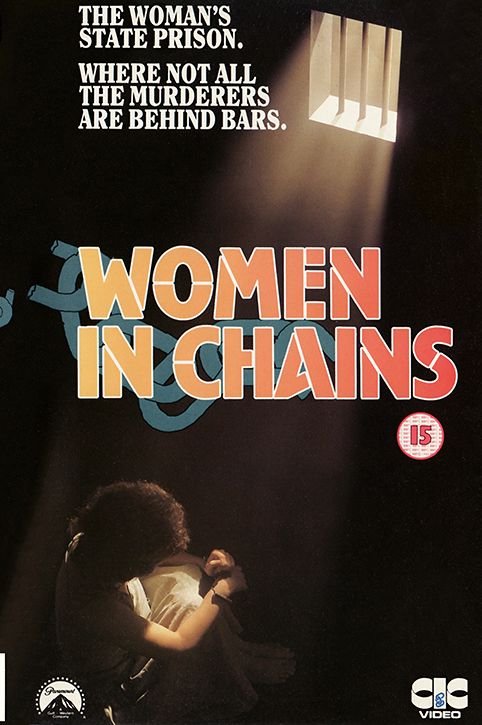
Sandra Parker (Lois Nettleton) is the world’s most dedicated parole officer.  After one of her parolees is sent back to prison and then dies under mysterious circumstances, Sandra decides to investigate on her own.  For Sandra, this means changing her name to Sally Porter and arranging to be sent to prison on a phony charge.  For some reason, Sandra/Sally only tells one other person what she’s doing.  The plan is for Sandra to spend two weeks undercover and then her friend, fellow parole officer Helen (Penny Fuller), will reveal the truth to the proper authorities and get Sandra sprung from prison.  It doesn’t work out that away, as Helen is killed in the line of duty shortly after Sandra finds herself behind bars.

The prison is run by the tyrannical Claire Tyson (Ida Lupino!), a matron who is more interested in exercising power than in rehabilitation.  Claire’s main enforcer is a butch prisoner named Dee Dee (Jessica Walter!!).  As soon as she enters the prison, Sandra gets on Tyson’s bad side.  Sandra asks too many questions and makes the mistake of demanding that her fellow prisoners be treated humanely.  Sandra even demands that a prisoner be given aspirin for a migraine, which is the type insubordination that leads to a stay in solitary.  (What’s strange is that, in solitary, Sandra ends up sharing a cell with another prisoner which I would think would defeat the purpose of being in solitary.)  With Tyson openly plotting to kill her and the only person who knows where she is dead, Sandra has to figure out a way to escape the prison and reveal the truth about what goes on behind bars.

Compared to most women-in-prison films, Women in Chains is pretty tame.  This is a women-in-prison film that you could safely watch with grandma.  This one was made for early 70s television, so there’s no nudity, no strong language, and even the required prison riot is restrained.  The film asks us to believe that Sandra would not only be stupid enough to only let one person know that she was going undercover but also that a parole officer could somehow walk around the prison without running into any prisoners who she previously dealt with. Obviously, the film’s plot is not its strong point but viewers with an appreciation for camp will undoubtedly enjoy the performances of Ida Lupino and Jessica Walter.  They rule that cell block with an iron fist and are entertaining to watch.

4 Shots From 4 Films: Special Sofia Coppola Edition


4 Shots From 4 Films is just what it says it is, 4 shots from 4 of our favorite films. As opposed to the reviews and recaps that we usually post, 4 Shots From 4 Films lets the visuals do the talking!

Today is the birthday of one of my favorite American directors, the one and only Sofia Coppola!  In honor of this day, here are….

4 Shots From 4 Films

Lost In Translation (2003, dir by Sofia Coppola)

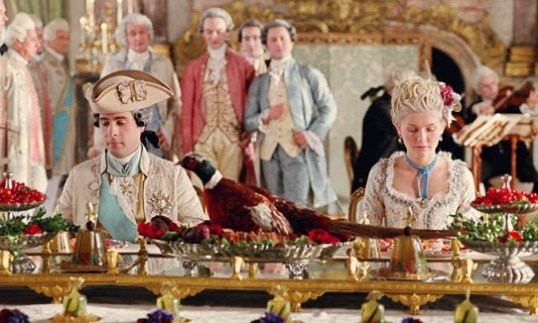
Maire Antoinette (2006, dir by Sofia Coppola)

Somewhere (2010, dir by Sofia Coppola)

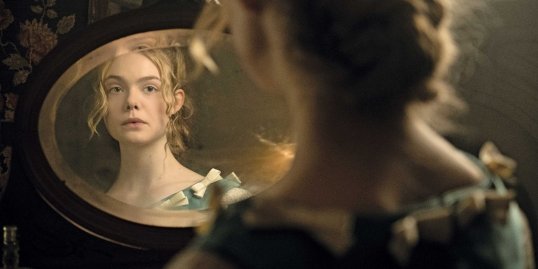
The Beguiled (2017, dir by Sofia Coppola)

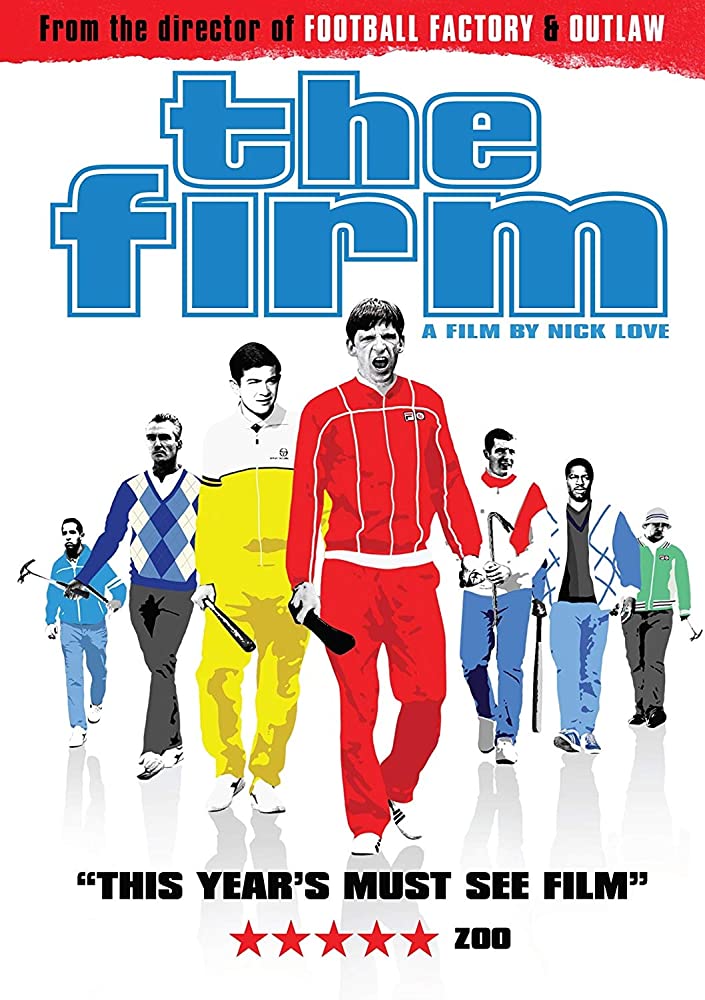
The Firm (2009, directed by Nick Love)


Dom (Calum MacNab) is a working class teenager living in London sometime in the 80s.  (The music on the soundtrack is early 80s but the clothing and the haircuts are all late 80s so who knows what the specific year is supposed to be.)  A chance meeting with the charismatic Bex Bessell (Paul Anderson) leads to Dom getting involved with Bex’s football firm.  A supporter of West Ham United, Bex and his group of football hooligans travel across the UK, engaging in fights with other firms.  Despite the fact that their lives seem to be structured around it, nobody in these firms seems to really care much about football.  Instead, it’s all about the fighting.

At first, Dom is happy to be a member of the firm.  It gives him something to do in his spare time and the other members of the group all seem to like him.  Bex takes him under his wing and soon, Dom is even starting to dress like Bex.  However, as Bex becomes more and more violent and grows obsessed with defeating Yeti (Daniel Mays), the leader of a rival firm, Dom starts to realize that he needs to find a way out.

The Firm is a loose remake of Alan Clarke’s 1989 film of the same title, which featured Gary Oldman giving one of the best performance of his career as Bex.  The original version was a character study of Bex, who was presented as being a newly minted member of the middle class and who was addicted to the rush of being a weekend hooligan.  The remake focuses on Dom, who was a minor character in the original.  If the original was meant to be a socio-political critique of the UK in the 80s, the remake is a coming-of-age story that almost feels nostalgic.  Dom eventually realizes that being a football hooligan isn’t for him but the remake seems to suggest that he’ll always value the memories.

The remake can’t really compare to the original, mostly because the remake doesn’t have Gary Oldman’s ferocious performance or Alan Clarke’s focused and gritty direction.  Taken on its own, though, the remake is not bad.  Calum MacNab is likable and relatable as Dom and Paul Anderson gives a good performance as Bex.  Anderson doesn’t try to imitate Oldman but instead brings his own spin to the character.  At first, Anderson’s Bex seems as if he’s considerably more buffoonish than Oldman’s Bex but, in the context of the remake, it works.  In the remake, it’s easy to underestimate Bex but give him a strange look or say the wrong thing and he’ll headbutt you just as quickly the Gary Oldman did to anyone who crossed him in the original.  The remake doesn’t have the original’s political subtext.  Instead, director Nick Love focuses more on historical nostalgia, stylized fight scenes, and the camaraderie that Dom initially finds in the firm.  The fights in the original were brutal and not always easy to watch.  The fights in the remake are exciting, up until it becomes obvious that Bex is losing his mind.

The remake of The Firm doesn’t do much to improve on the other but, when taken on its own terms, it’s a watchable story of football hooliganism.


Scenes That I Love: Winston Wolfe Says Goodbye In Pulp Fiction


Today is Harvey Keitel’s 81st birthday.

Harvey Keitel is one of those actors who has given so many great performances that it’s difficult to pick which one is his best.  He’s almost always great, even when the film sometimes isn’t.  That said, I’ll always have a lot of affection for the character of Winston Wolfe, the cleaner that Keitel played in Quentin Tarantino’s Pulp Fiction.

Keitel doesn’t show up until the final third of Pulp Fiction but once he does, he pretty much takes over the entire film.  For me, though, my favorite Winston Wolfe moment comes at the end of his story, when he says goodbye to John Travolta and Samuel L. Jackson and essentially reveals himself to be kind of an old-fashioned, almost dorky (if impeccably dressed) guy.

Happy birthday, Harvey Keitel!

4 Shots From 4 Films: Special Katharine Hepburn Edition


4 Shots From 4 Films is just what it says it is, 4 shots from 4 of our favorite films. As opposed to the reviews and recaps that we usually post, 4 Shots From 4 Films lets the visuals do the talking!

Yesterday was the birthday of one of the most iconic screen legends of all time, the one and only Katharine Hepburn!  In honor of her life, career, and legacy, here are….

4 Shots From 4 Films

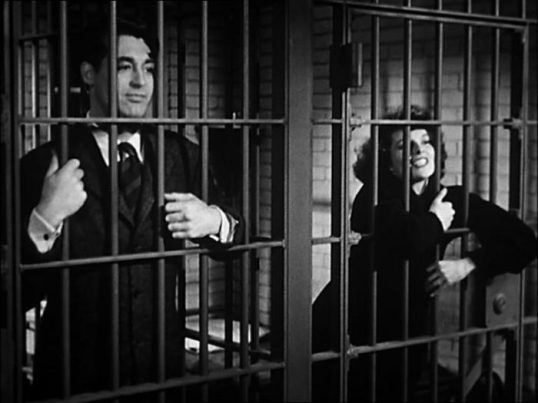
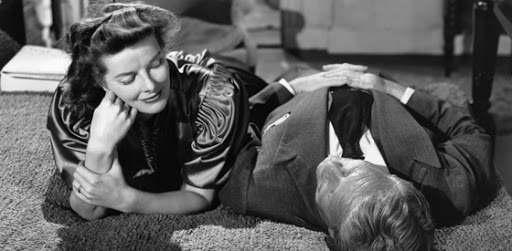
Bringing Up Baby (1938, dir by Howard Hawks)

State of the Union (1948, dir by Frank Capra)

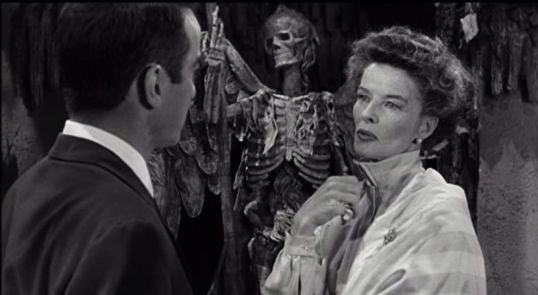
Suddenly, Last Summer (1959, dir by Joseph L. Mankiewicz)

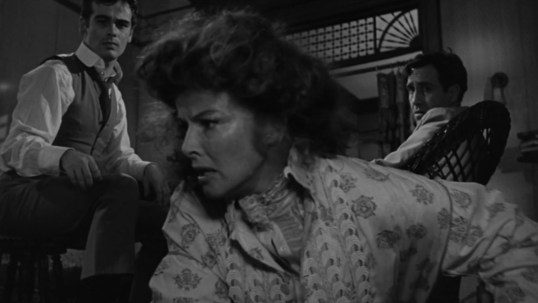
Long Day’s Journey Into Night (1962, dir by Sidney Lumet)

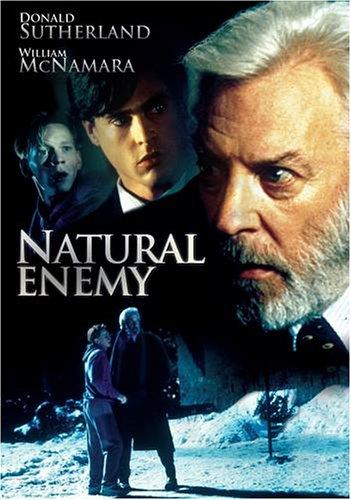
Natural Enemy (1996, directed by Douglas Jackson)


This one’s pretty dumb.

William McNamara plays Jeremy, who was given up for adoption 24 years ago and has never gotten over it.  After killing his adoptive parents, his birth father, someone’s mistress, and a private investigator played by Tia Carrere, Jeremy wants to celebrate his 25th birthday by killing his birth mother, Sandy (Lesley Anne Warren).  However, Jeremy wants to draw out Sandy’s suffering so he comes up with a plot so complex that it’s hard to believe that anyone could actually pull it off.

After Jeremy finds out that Sandy’s new husband, Ted (Donald Sutherland, massively slumming), is the head of a small brokerage firm, Jeremy reads every book that he can find and somehow become an expert on the stock market.  Even though Jeremy could have a high-paying job with any firm, he wants to work for Ted’s little firm.  Ted hires Jeremy and Jeremy proceeds to worm his way into Ted and Sandy’s life.  Jeremy also frames Ted for securities fraud, which leads to Ted losing his job and being blacklisted by all of Ted’s highly ethical Wall Street colleagues.  (Yes, I managed to write that with a straight face.)  Despite the fact that Jeremy is obviously disturbed and that Ted and Sandy’s life starts to fall apart from the exact moment that Jeremy becomes a part of it, only Ted and Sandy’s son, Chris (Christian Tessier), suspects that there’s something strange about Jeremy.

This is one of those dumb revenge thrillers that is dependent upon everyone in the movie being as dumb as possible.  Even Jeremy turns out to be dumb.  After killing almost everyone that he meets, Jeremy suddenly decides to keep one person alive and, of course, that decision comes back to haunt Jeremy in the end.  Jeremy is smart enough that he can trick people into believing that he’s a brilliant stock broker but he’s dumb enough to make an obvious mistake.  Of course, everyone else is dumb enough to to not catch on to the fact that Jeremy is a sociopath so the mass dumbness evens out in the end.

Probably the most interesting thing about this movie is that, somehow, Donald Sutherland ended up starring in it.  Even great actors have to put food on the table and hopefully, Sutherland ate well as a result of starring in Natural Enemy.

4 Shots From 4 Films: Special Jess Franco Edition


4 Shots From 4 Films is just what it says it is, 4 shots from 4 of our favorite films. As opposed to the reviews and recaps that we usually post, 4 Shots From 4 Films lets the visuals do the talking!

Today is the 90th anniversary of the birth of Jesus Franco!  One of the most prolific filmmakers of all time, Franco made movies that …. well, they’re not easy to describe.  Jess Franco was responsible for some of the most visually striking and narratively incoherent films ever made.  He made films that you either loved or you hated but there was no mistaking his work for being the work of someone else.

Today, in honor of his birthday, here are….

4 Shots From 4 Films

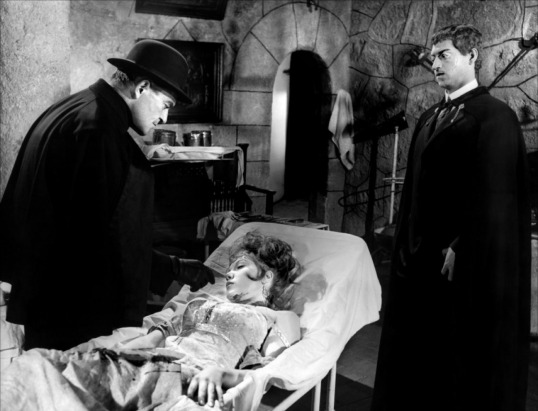
The Awful Dr. Orloff (1962, dir by Jess Franco)

The Blood of Fu Manchu (1968, dir by Jess Franco)

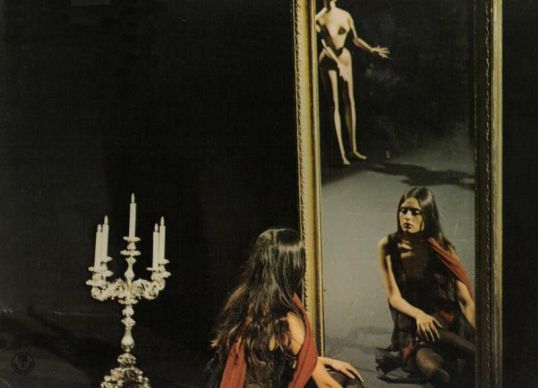
Vampyros Lesbos (1970, dir by Jess Franco)

Countess Perverse (1973, dir by Jess Franco)

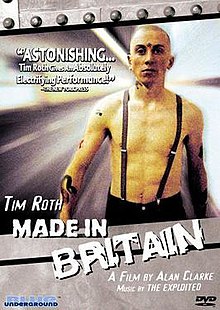
Made in Britain (1982, directed by Alan Clarke)


If you want to see a truly great performance, watch Tim Roth in Alan Clarke’s Made In Britain.

Roth, who was 21 years old at the time, plays Trevor, a working class British teenager who is also a racist skinhead, one who has a swastika on his forehead.  Trevor is sometimes clever, occasionally quick-witted, always angry, and often remarkably ignorant.  He’s smart enough to know that he doesn’t have much of a future but he’s still too immature to accept that he’s largely to blame.  Instead, Trevor blames the immigrants who he claims have invaded Britain and taken away all of the opportunities that should otherwise go to him.

After Trevor gets arrested for both shoplifting and for throwing a rock at a Pakistani, Trevor is taken to an assessment centre, where he’ll be expected to regularly check-in until his punishment is handed down.  Despite facing the prospect of being sent to a borstal (which, for our American readers, is essentially a reformer school), Trevor continues to defiantly commit crimes.  He steals a car.  He vandalizes a job centre.  He huffs inhalants and even pays another taunting visit to the Pakastani man.  Accompanying Trevor on some of his journeys is Errol (Terry Richards), his roommate at the assessment centre.  (It may seem strange, especially to viewers in the States, that the white supremacist Trevor would befriend the black Errol but, like many British skinheads in the 80s, Trevor focuses the majority of his hate on immigrants.)

It’s easy to dislike Trevor and Trevor often seems to go out of his way to alienate everyone who he meets.  Trevor is angry about the lot that he’s been given in life.  His parents are nowhere to be seen.  He has no prospects.  He has no future.  He spends all day surrounded by poverty and he resents the immigrants who have somehow found success in Britain while he’s struggling to get by.  Trevor has nothing to look forward to in the future and he’s pissed off about it, which has left him vulnerable to the poisonous philosophy of racism.  Trevor is always angry and he’s always looking for way to act on that anger.  He’s also intelligent enough to secretly realize, even if he won’t fully admit to himself, that he’s full of shit but he’s trapped himself in his role.  One gets the feeling that Trevor had the potential to make something out of himself but his rage and his impulsive manner have, at only the age of 16, left him with no futre.  Even if he eventually rejects racism, the swastika on his forehead is going to leave him branded for life.  It’s only towards the end of the film, after a police officer explains — in painstaking details — just hopeless Trevor’s situation is, that Trevor allows his mask to slip a little.  But Trevor only allows himself to appear defeated for a few minutes before his defiant smirk returns.

Tim Roth was only 21 years old when he made his acting debut in the role of Trevor and he gives a brilliant performance.  If you didn’t know who Tim Roth was, you would be excused for thinking that director Alan Clarke had gone out and cast an actual skinhead in the role.  Roth tears into the role with a frightening intensity.  Also of note is the gritty cinematography of Chris Menges, who uses a Steadicam to follow Trevor as he walks through his daily routine and to capture why someone like Trevor feels as if there’s no future to being made in Britain.

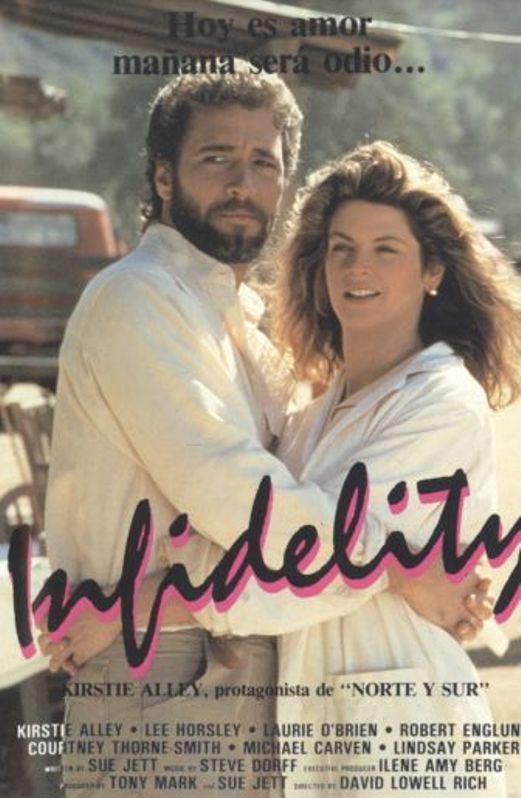
Infidelity (1987, directed by David Lowell Rich)


Nick Denato (Lee Horsley) is a world-famous photographer.  His wife, Ellie (Kirstie Alley!), is a renowned doctor.  They have homes in San Francisco and Africa and they regularly fly from one continent to another.  The Denatos used to be called “jet-setters,” back when flying back and forth was seen as a positive instead of as a crime against the environment.

Despite the fact that Ellie is pregnant, Nick leaves his wife behind in San Francisco so that he can explore Nepal with his buddy Scott (Robert Englund!!) and Scott’s young and leggy assistant, Robin (Courtney Thorne-Smith!!!!).  While Nick is away, Ellie has a miscarriage.  Nick flies home but it’s too late.  His wife already resents him for not being there when she needed him.  It doesn’t help that, a week later, Scott and Robin come to visit and Scott tells a story about how he nearly fell off a cliff.  “And where were you, buddy!?”  Scott says to Nick with a laugh, forgetting that Nick was back home with his hospitalized wife.  An awkward silence follows.

Ellie can tell that there is an obvious attraction between Nick and Robin.  Nick denies it and then, to prove Ellie wrong, he cheats on her but not with Robin.  Instead, Nick cheats with Ellie’s best friend, Eileen (Laura O’Brien).  Ellie divorces Nick, stops talking to Eileen, and gets involved with Etienne (Michael Carven).  Nick returns to Africa, where he spends his nights listening to opera in a tent and thinking about how much he loves his his ex-wife.

Infidelity was made for television and it used to come on late night television frequently in the 90s, mostly because of its cast.  Not only did the cast features Rebecca Howe but also Freddy Krueger and whoever it was that Courtney Thorne-Smith played on Melrose Place.  The main problem with the film is that Kirstie Alley and Lee Horsley have zero chemistry so you don’t really care if they get divorced or if they get back together.  The other problem is that Lee Horsley is a convincing cowboy but he’s not as convincing as a sophisticated Italian-American photographer who spends his spare time listening to opera.  The movie also cops out by having Nick cheat with a fairly minor character rather than with Robin.  On the plus side, the movie’s got Robert Englund playing the type of role that he almost always played in his pre-Nightmare on Elm Street days, the loyal friend.  What’s interesting about Englund’s performance here is that he had already played Freddy Krueger three times before playing Scott in Infidelity.  In fact, Infidelity aired at the same time that Nightmare on Elm Street 3: Dream Warriors was still playing in theaters.  Englund is likable as Scott and the film shows what type of career Englund probably would have had if David Warner hadn’t turned the role of Freddy down in the first Nightmare on Elm Street.


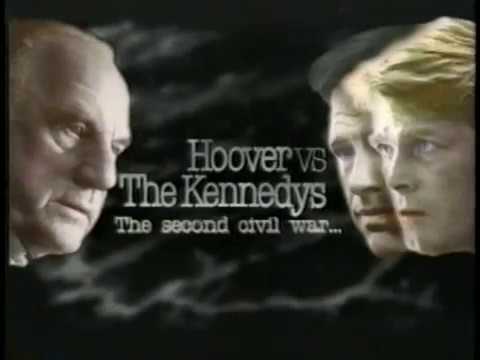
Hoover vs. The Kennedys: The Second Civil War (1987, directed by Michael O’Herlihy)


The year is 1961 and the young and dynamic John F. Kennedy (Robert Pine) has been elected president.  While the rest of the nation waits to see how Kennedy will lead, FBI director J. Edgar Hoover (Jack Warden) is convinced that he will continue to do what he’s always done.  As he explains it to his aide and only friend, Clyde Tolson, Hoover is a longtime friend of President Kennedy’s father, Joseph (Barry Morse).  Hoover knows how the Kennedys made their money and he also knows that the Kennedys probably stole the election.

Hoover quickly discovers that John F. Kennedy isn’t going to be like the other presidents under which he has served.  Kennedy appoints his self-righteous brother, Robert (Nicholas Campbell), as attorney general and Robert immediately sets out to make Hoover’s life unbearable.  When Hoover brings the brothers evidence that civil rights leader Martin Luther King (Leland Gantt) is not only associating with known radicals but that he also cheats on his wife, John and Bobby just laugh at him.  While John pursues an affair with Marilyn Monroe (Heather Thomas) and Bobby tries to reign in the FBI’s excesses, Hoover continues to collect information for his files and schemes to outlast both Kennedys.

Hoover vs. The Kennedys was a made-for-TV movie, one of the many films that have been made about the conflicts between the Kennedys and J. Edgar Hoover.  Since a good deal of the film is made up of Hoover and the Kennedy Brothers snapping at each other on the phone and then telling their closest aides about how much they dislike each other, it seems hyperbolic to call their relationship the “second civil war.”  Though the film does go as far as to suggest that Hoover didn’t make much of an effort to investigate the background of Lee Harvey Oswald, it doesn’t go any further when it comes to the theories surrounding John Kennedy’s assassination.  As well, the film is one of the rare ones to not speculate that Hoover and Clyde Tolson were more than just friends.  Instead, Hoover vs. The Kennedys concentrates more on all of the scandalous stories surrounding the Kennedy brothers.  The mob connections.  The womanizing.  The arrogance.  It’s all recreated here.  Perhaps because this was a Canadian production, Hoover vs The Kennedys doesn’t portray anyone positively.

The acting is a mixed bag.  Nicholas Campbell is believably abrasive as Bobby while Robert Pine was several years too old to be a convincing JFK.  Heather Thomas is an adequate Marilyn Monroe while Leland Gantt comes across as too emotional to be a believable Martin Luther King.  (In Gantt’s defense, the movie does not seem to know what to do with the character of King, treating the civil rights icon like a prop to be trotted out whenever some Hoover/Kennedy conflict is needed.)  The film’s best performance comes from Jack Warden, who plays Hoover as being a puritanical hypocrite who knows that, no matter who tries to push him out, he’s not going anywhere unless he wants to.  Hoover outlasted several presidents and Warden portrays him as being the ultimate political survivor.

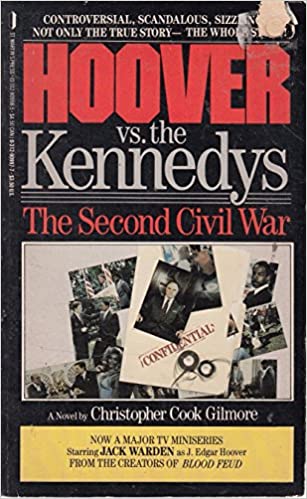
As far as Kennedy films are concerned, Hoover vs. The Kennedys is okay but it doesn’t offer up anything new.  Some of the most important roles are miscast and the movie never goes into much depth, beyond repeating all of the usual rumors.  Jack Warden’s a good J. Edgar Hoover, though.  The movie is not easy to find but it has been uploaded on to YouTube.  And, if you can’t find the movie, you can always order the novelization off of Amazon.