Film Review: Insignificance (dir by Nicolas Roeg)


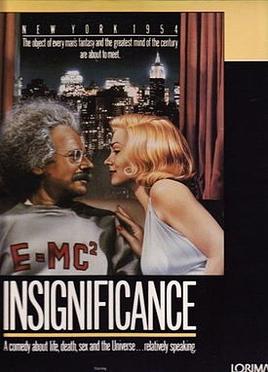
The 1985 film, Insignificance, opens in New York City in the 1950s.

On the streets of New York, a crowd has gathered to watch as the Actress (Theresa Russell), a famous sex symbol, is filmed standing on a grate while wearing a white dress.  Beneath the street and the Actress, a fan has been set up and the crowd of onlookers cheers as the Actress’s skirt is blown up around her hips, again and again.  Standing in the crowd, the Actress’s husband, the Ballplayer (Gary Busey), watches and shakes his head in disgust.  After the scene has been shot, the Actress hops in a taxi while the Ballplayer chases after her.  A very famous man is in town and the Actress is on her way to pay him a visit.

In a nearby bar, the Senator (Tony Curtis), drinks and talks and sweats.  Though it may not be obvious from looking at him, the Senator is a very powerful man.  He’s leading an investigations into subversives who may be trying to bring down the United States government.  He may look like a small-time mobster but the Senator can make and destroy people on a whim.  He’s come to New York on a very specific mission.  He and his goons are planning on pressuring another famous man into testifying before the Senator’s committee.

Though they don’t know it, both the Actress and the Senator are planning on dropping in on the same man.  The Professor (Michael Emil) is a world-renowned genius.  When we first see him, he is sitting alone in a hotel room and looking at a watch that has stopped at 8:15.  The public may know the Professor for his eccentricities but, in private, he is a haunted man.  The Professor’s work was instrumental in the creation of the first atomic bomb.  And now, with both the U.S. and Russia stockpiling their atomic arsenals and the world seemingly on the verge of war, the Professor fears that his work will be the end of humanity.

Though none of the characters are actually named over the course of the film, it should be obvious to anyone with even a slight knowledge of American history that the four main characters are meant to be versions of Marilyn Monroe, Joe DiMaggio, Joe McCarthy, and Albert Einstein.  Insignificance imagines a meeting between these four cultural icons and really, it’s not difficult to imagine a scenario in which they all could have met.  Joe DiMaggio actually was present during the filming of the subway grate scene from The Seven Year Itch and most accounts record his reaction as being not that different from what’s portrayed in Insignificance.  Albert Einstein was suspected of having communist sympathies and several scientific figures (including many who worked on the Manhattan Project) were investigated during the McCarthy era.  Finally, Marilyn Monroe was often frustrated by her “dumb blonde” image and said that she found Albert Einstein to be a very attractive man.  When she died, a biography of Einstein was reportedly found on her nightstand.

In the film, the Senator pressures The Professor to appear before his committee.  It’s not long after the Senator leaves that the Actress arrives.  The Actress announces that she’s fascinating by the theory of relativity and, using balloons, toys, and a flashlight, she proceeds to demonstrate the theory for the Professor.  The befuddled Professor is impressed.  The Actress informs the Professor that he’s at the top of her list.  Meanwhile, downstairs in another hotel room, the Senator is met by a prostitute who bears a resemblance to the Actress. The Ballplayer sits in the hotel bar, tearing up a picture of the Actress and wondering why their marriage is failing.

Because this film was directed by Nicolas Roeg, the film is full of seemingly random flashbacks.  We see the Senator as an altar boy, trying to impress a smiling priest.  We see the Ballplayer getting yelled at by his domineering father.  We see the Actress, growing up poor and being ogled, at first by the young boys at an orphanage and later by Hollywood execs.  Meanwhile, The Professor continually sees the destruction of Hiroshima.  His visions are apocalyptic and, towards the end of the film, he even gets a glimpse into a possible future of atomic hellfire.  It’s a film about fame and cultural transition, a film where people look to celebrities for hope while doomsday comes closer and closer.

Or something like that.  To be honest, I wanted to like Insignificance more than I actually did.  As is typical with so many of Nicolas Roeg’s films, Insignificance has an intriguing premise but the execution is a bit uneven.  There are moments of absolute brilliance.  Theresa Russell and Gary Busey both give perfect performances and the film’s final apocalyptic vision will haunt you.  And then there are moments when the film becomes a bit of a slog and the dialogue starts to get a bit too pretentious and on-the-nose.  Michael Emil has some good moments as the Professor but there are other moments when he seems to be lost.  Meanwhile, Tony Curtis gives such a terrible performance as The Senator that he throws the entire film off-balance.  Curtis bulges his eyes like a madman and delivers his lines like a comedian doing a bad 1930s gangster impersonation.

That said, Insignificance is still an interesting film.  It’s uneven but intriguing.  Though the film may take place in the 50s and may deal with a quartet of historical figures, it’s themes are still relevant in 2020.  People still tend to idealize celebrities.  Politicians still hold onto power by exploiting fear.  The possibility that everything could just end one day is still a very real one.  Insignificance is a film worth watching, even if it doesn’t completely work.
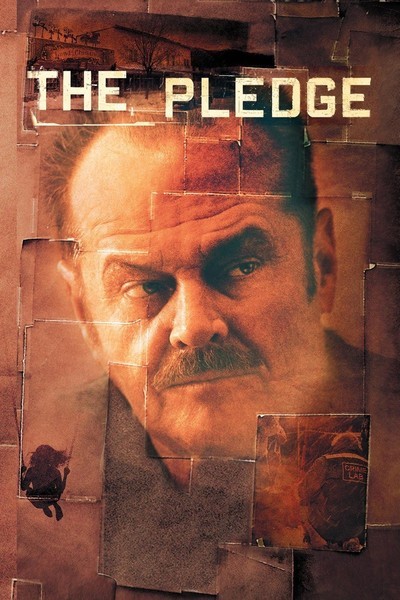
The Pledge (2001, directed by Sean Penn)


Jerry Black (Jack Nicholson) is a detective who, on the verge of retirement, goes to one final crime scene.  The victim is a child named Ginny Larsen and when Ginny’s mother (Patricia Clarkson) demands that Jerry not only promise to find the murderer but that he pledge of his immortal soul that he’ll do it, it’s a pledge that Jerry takes seriously.  Jerry’s partner, Stan (Aaron Eckhart), manages to get a confession from a developmentally disabled man named Jay Wadenah (Benicio del Toro) but Jerry doesn’t believe that the confession is authentic.  When Wadenah commits suicide in his cell, the police are ready to close the case but Jerry remembers his pledge.  He remains determined to find the real killer.

Even though he’s retired, the case continues to obsess Jerry.  He becomes convinced that Ginny was the latest victim of a serial killer and he even buys a gas station because it’s located in the center of where most of the murders were committed.  Jerry befriend a local waitress named Lori (Robin Wright) and, when Lori tells him about her abusive ex, he invites Lori and her daughter to stay with him.  Lori’s daughter, Chrissy (Pauline Roberts), is around Ginny’s age and when she tells Jerry about a “wizard” who gives her toys, Jerry becomes convinced that she’s being targeted by the same man who killed Ginny.  Even as Jerry and Lori fall in love, the increasingly unhinged Jerry makes plans to use Chrissy as bait to bring the killer out of hiding.

The Pledge was Sean Penn’s third film as a director.  As with all of Penn’s directorial efforts, with the notable exception of Into The Wild, The Pledge is relentlessly grim.  Freed, by virtue of his celebrity, from worrying about whether or not anyone would actually want to sit through a depressing two-hour film about murdered children, Penn tells a story with no definite resolution and no real hope for the future.  The Pledge is a cop film without action and a mystery without a real solution and a character study of a man whose mind you don’t want to enter.  It’s well-made and it will keep you guess but it’s also slow-paced and not for the easily depressed.

The cast is made up of familiar character actors, most of whom probably took their roles as a favor to Penn.  Harry Dean Stanton, Tom Noonan, Patricia Clarkson, Sam Shephard, Vanessa Redgrave, Helen Mirren, and Mickey Rourke have all got small roles and they all give good performances, even if it’s sometimes distracting to have even the smallest, most inconsequential of roles played by someone familiar.  Most importantly, The Pledge actually gives Jack Nicholson a real role to play.  Jerry Black is actually an interesting and complex human being and Nicholson dials back his usual shtick and instead actually makes the effort to explore what makes Jerry tick and what lays at the root of his obsession.

Though definitely not for everyone, The Pledge sticks with you and shows what Jack Nicholson, who now appears to be retired from acting, was capable of when given the right role.

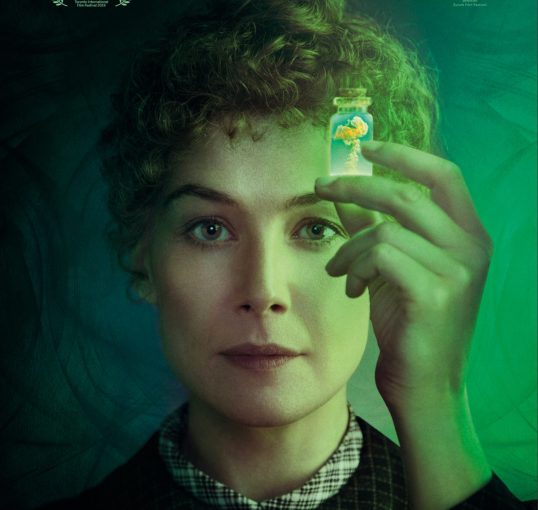
Film Review: Radioactive (dir by Marjane Satrapi)


If you want to talk about the birth of the modern world, you have to talk about Marie Curie.

That’s the argument made by the biopic, Radioactive.  It’s a compelling argument and it’s very much correct.  Born in Poland and a citizen of France, Marie Curie was the 1st woman to win the Nobel Prize, the 1st person and only woman to win the Nobel Prize a second time, and the only person to win a Nobel Prize in two scientific fields.  She shared her first Nobel Prize (in Physics) with her husband, Pierre.  After Pierre’s tragic death, Marie won her second Nobel, this time for Chemistry.  Both her daughter and her son-in-law would go on to win Nobel Prizes of their own and the Curie family continues to produce notable scientists to this very day.

Marie Curie is best known for her pioneering research on radioactivity, a coin that she termed.  She developed techniques for isolating radioactive isotopes.  She discovered that radioactivity could be used to battle aggressive forms of cancer.  Without her research, there would be no nuclear power, no chemotherapy, no X-ray machines, and no atomic weaponry.  Marie Curie is one of the few people about whom it can legitimately be said that they changed the world.  Of course, Curie herself later died of a radiation poisoning.

Radioactive opens with Marie (played by Rosamund Pike) on the verge of death, before flashing back to show us her early life and she went from being an obscure scientist to becoming the world renowned Madame Curie.  We watch as she meets and falls in love with Pierre Curie (Sam Riley).  The film celebrates not only their love for each other but also takes a look at Marie’s struggle to escape from Pierre’s shadow.  Though she was acknowledged as his partner and won her first Nobel Prize with him, it’s not until Pierre is trampled death by a bunch of horses that Marie’s genius is truly acknowledged.  The scenes in which Marie expresses her frustration at being overshadowed by her husband are some of the best in the film, largely because the film doesn’t make the mistake of attempting to portray Pierre as intentionally stealing all of the glory for himself.  Instead, society just assumes that Pierre deserves most of the credit because …. well, Pierre’s a man and Marie’s a woman.

Unfortunately, Radioactive makes some perplexing narrative choices.  Throughout the film, there are random moments when we get a sudden flashfoward and see random people interacting with radioactivity.  For instance, we go to a hospital in the 1950s and we listen as a doctor explains that he’s going to use radioactivity to help a patient combat cancer.  Another scene features the atomic bomb being dropped on Hiroshima.  We see the nuclear tests in Los Alamos.  One moment, Marie is crying in the middle of the street.  The next minute, an ambulance drives past her, on the way to Chernobyl.  On the one hand, it’s easy to see what the film’s going for.  It’s showing us everything, good and bad, that will happen as a result of Marie Curie’s work.  It makes the very relevant argument that sometimes, in order to get something good (less pollution, treatments for cancer) you have to risk something bad, like the possibility of being vaporized by an atomic bomb.  But the flashforwards are handled so clumsily that they actually detract from the film.  When I watched the sequence taking place at the hospital, I found myself wondering if Marie Curie discovered bad acting before or after she discovered radioactivity.  This is probably one of the few instances where a biopic would have been helped by taking a more traditional approach to its material.

On the plus side, Radioactive does feature a very good performance from Rosamund Pike, who really deserves to be known for more than just killing Neil Patrick Harris in Gone Girl.  (Don’t spoiler alert me.  The film’s nearly 6 years old.  If you haven’t seen it yet, you weren’t ever going to.)  Radioactive is currently playing on Amazon Prime and you should definitely watch it if you’re planning on keeping radioactive isotopes in your desk at work.  Seriously, don’t do it.

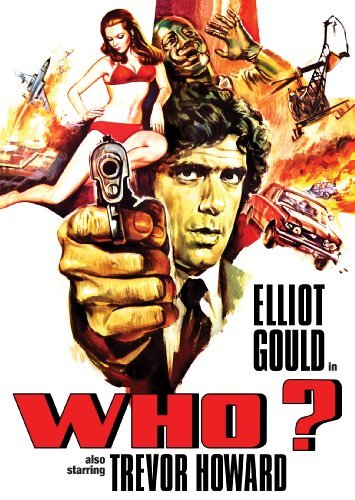
Who? (1974, directed by Jack Gold)


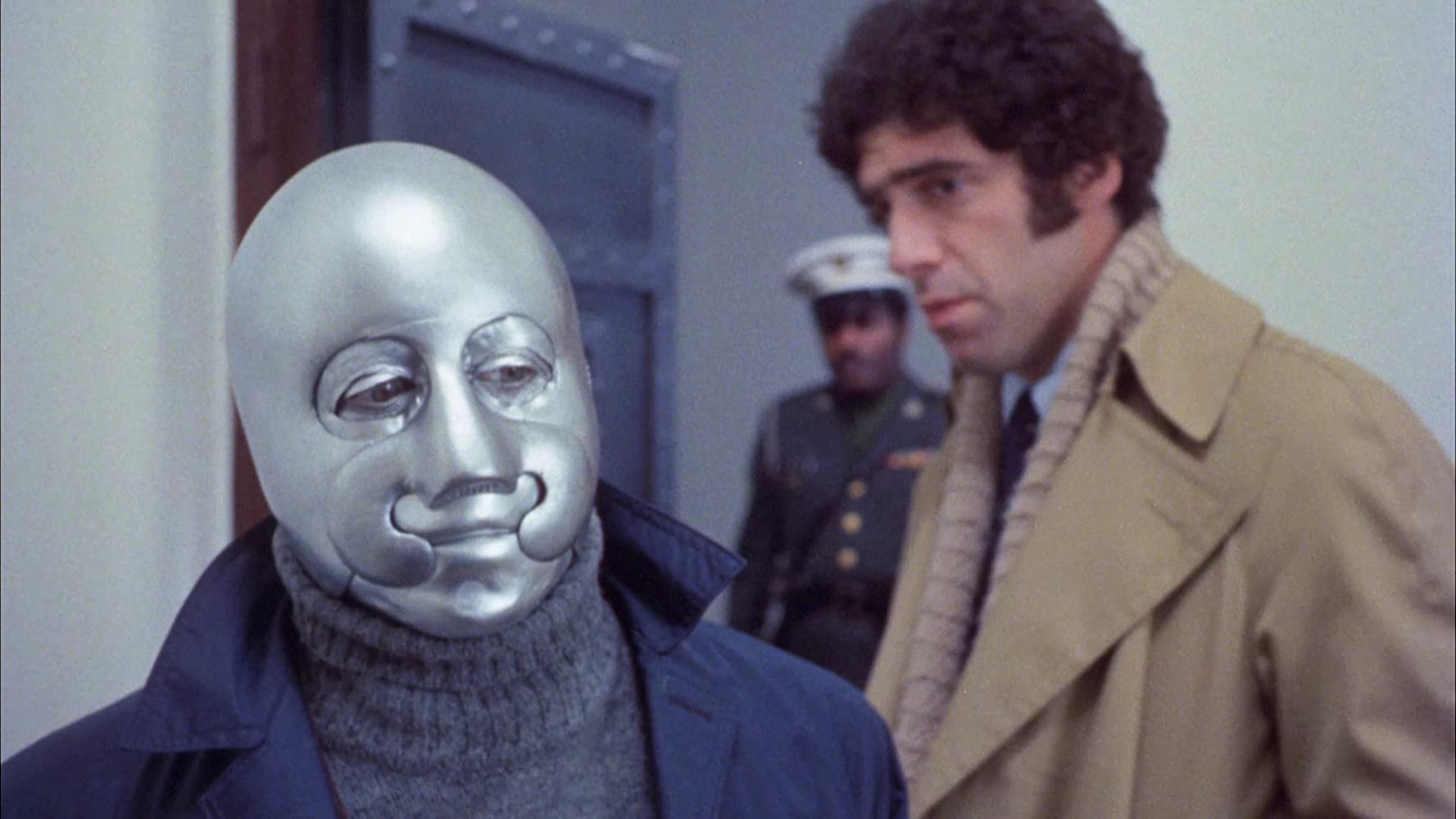
Lucas Martino (Joseph Bova), an American scientist who was previously captured by the Soviets in East Berlin and who was gravely injured in a terrible car crash, is finally returned to the Americans.  But is it really Dr. Martino?  Making identification difficult is that the Soviets had to totally rebuild Martino’s body after his car crash.  He appears to still have one of his original arms but he’s otherwise a cyborg.  He now has a metal head with an expressionless face.  Is he really Lucas Martino or is he a spy?  Even though his fingerprints check out, it’s possible that the real Martino’s arm could have been surgically grafted onto an imposter’s body.

It falls to agent Shawn Rogers (Elliot Gould) to determine whether or not this Martino is the real Martino.  Rogers interrogates the man claiming to be Martino but struggles to determine whether or not the man is who he claims to be.  Complicating matters is that, even if Martino is Martino, it’s possible that he could have possibly been brainwashed by Shawn’s Soviet counterpart, Col. Azarin (Trevor Howard).  As Shawn interrogates Martino, the film frequently shows Azarin asking Martino the exact same questions.  Is the film showing what Shawn thinks happened or is the film showing what actually happened?

Who? is based on a classic sci-fi novel by Algis Budrys.  It’s pretty faithful to its source material but it doesn’t really work as a film.  Some of that is because, despite the fact that Bova gives a good performance, the cyborg makeup is never really convincing.  Many potentially dramatic scenes are ruined by how silly Bova looks.  Trevor Howard is too British to be convincing as a sinister Russian and Elliott Gould is likewise miscast as Shawn Rogers.  Gould was always at his best playing quirky, counter-cultural characters.  Just think about his performance in Robert Altman’s The Long Goodbye, where Gould was such a strange P.I. that it allowed Altman to deconstruct the entire genre.  In Who?, Gould is meant to be a much more conventional secret agent and he seems lost in the role.

Speaking of Robert Altman, he’s the type of director who probably could have worked wonders with Who?  I think Michael Crichton probably could have pulled off the film.  Maybe Mike Hodges, as well.  But Jack Gold was a much less adventurous director than any of these filmmakers and his direction in Who? is often too low-key and conventional.  I kept waiting for the film to really go for it and challenge my expectations and surprise me but it never did.  Who? doesn’t seem to know what type of film it wants to be.  Is it a spy thriller or a sci-fi film or an examination of what it means to be human?  It tries to be all three but just doesn’t succeed.

The idea behind the movie is a good one and Budrys’s book remains intriguing.  This is one that I wouldn’t mind seeing remade, perhaps by someone like Denis Villeneuve or Alex Garland.

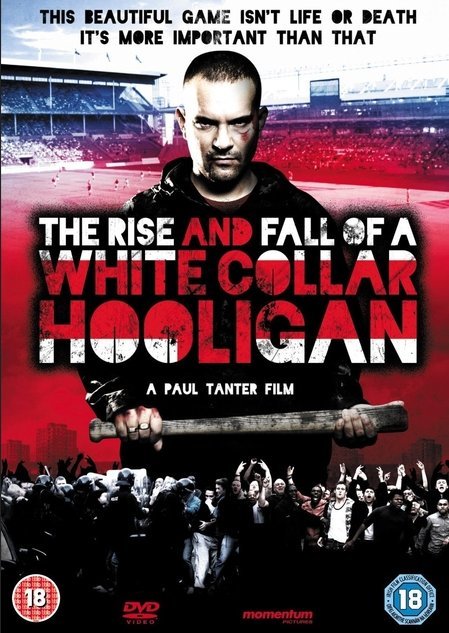
The Rise & Fall of a White Collar Hooligan (2012, directed by Paul Tanter)


Mike Jacobs (Nick Nevern) is an unemployed Brit who has never been able to get much going in his life.  He’s smart but he’s also a university drop-out and he refuses to accept any job that he feels wouldn’t provide a proper mental challenge.  Mike is also a football hooligan, spending most of his time getting into fights with the supporters of rival teams and occasionally with the police.  As Mike explains it, there’s no better thrill than getting angry, destroying stuff, and knowing that your mates are going to back you up.

At the latest soccer riot, Mike runs into an old friend of his named Eddie Mills (Simon Phillips).  Eddie offers Mike a job opportunity.  At first, Eddie just has Mike deliver a few packages, all to determine whether or not Mike can be trusted with something big.  Once Mike has proven himself, Eddie reveals that his business is credit card fraud.  He and his gang steal people’s credit card numbers and then, every night, withdraw as much money as they can on the card.  The scheme works because  the gang only uses a card once and then tosses the number away.  By the time the fraud has been discovered, the gang is using a totally different card.  Eddie explains that it’s a victimless crime because the banks are insured and the card holders don’t have to pay the bill once the fraud has been uncovered.

Despite his initial misgivings, Mike goes to work with Eddie.  At first, everything is great.  Mike is making a lot of money, doing a lot of drugs, and having a lot sex.  However, because this is a crime film, eventually Mike discovers that there’s no such thing as a victimless crime and the world of credit card fraud is much more dangerous than he realized.

It’s a tradition that movies about football hooligans rarely involve much football and that’s the case with The Rise and Fall of a White Collar Hooligan.  By my count, there are three short scenes that take place at a match and none of them are particularly important.  Instead, for Mike and Eddie, the point of football is the fight after the match.  The rush that they get from defying the police and smashing car windows is the same rush that they get from stealing money from the banks and the credit card companies.  The main difference between the two activities is that one just leads to black eyes and broken bones while the other makes them rich.

I liked The Rise and the Fall of White Collar Hooligan.  Though the story’s predictable, it’s stylishly directed and Nick Nevern and Simon Phillips are both good in the main roles.  What I especially liked is that the credit card scheme actually made sense and it was easy to understand how someone like Mike could convince himself that what he was doing really wasn’t that big of a deal.  There’s nothing surprising about the movie but it’s undeniably entertaining.

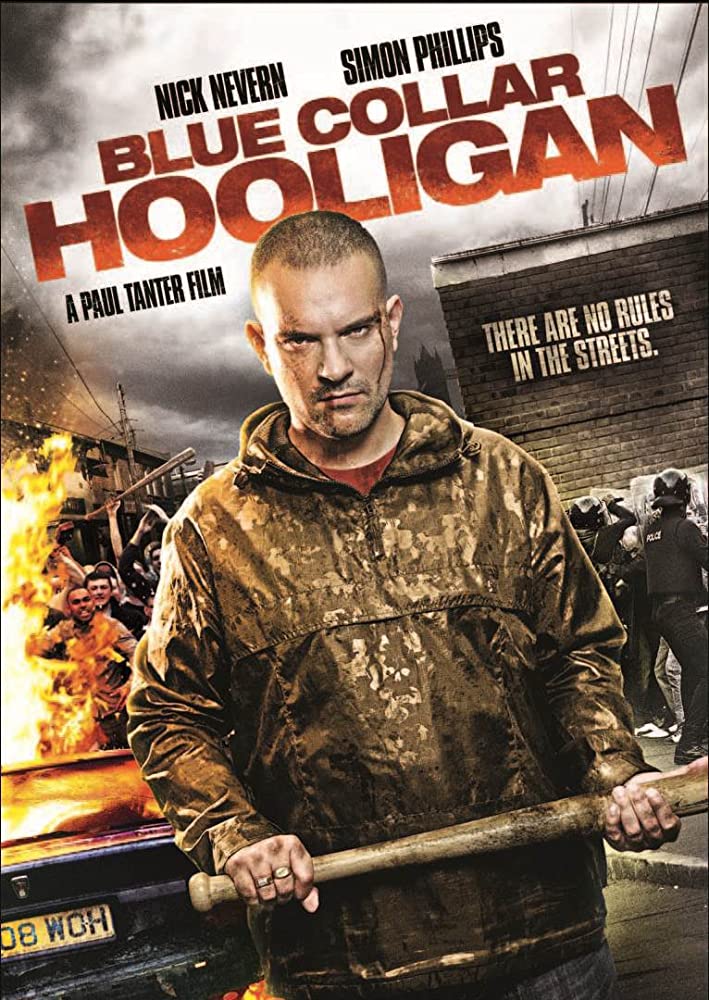
In the U.S., it was released as Blue Collar Hooligan.  I’m not sure why the title was changed.  Mike is blue collar but, throughout the film, he brags about how his crimes are all white collar and he even calls himself as “white collar hooligan.”  Maybe someone thought Americans would be more likely to watch the movie is they thought it was about a blue collar criminal instead of a white collar one.  They’re probably right.


Song of the Day: Final Theme From Cinema Paradiso by Ennio Morricone


Well, here we are.  All things must come to an end and today, our month-long tribute to Morricone comes to a close with one final piece of music from the greatest composer of our age.  I want to close things out with a piece from Morricone’s score for 1988’s Cinema Paradiso.

Here, from Cinema Paradiso, is the final theme:

Goodnight, Morricone.

Previous Entries In Our Tribute To Morricone:

  1. Deborah’s Theme (Once Upon A Time In America)
  2. Violaznioe Violenza (Hitch-Hike)
  3. Come Un Madrigale (Four Flies on Grey Velvet)
  4. Il Grande Silenzio (The Great Silence)
  5. The Strength of the Righteous (The Untouchables)
  6. So Alone (What Have You Done To Solange?)
  7. The Main Theme From The Mission (The Mission)
  8. The Return (Days of Heaven)
  9. Man With A Harmonic (Once Upon A Time In The West)
  10. The Ecstasy of Gold (The Good, The Bad, and the Ugly)
  11. The Main Theme From The Good, The Bad, and the Ugly (The Good, The Bad, and the Ugly)
  12. Regan’s Theme (The Exorcist II: The Heretic)
  13. Desolation (The Thing)
  14. The Legend of the Pianist (The Legend of 1900)
  15. Theme From Frantic (Frantic)
  16. La Lucertola (Lizard In A Woman’s Skin)
  17. Spasmodicamente (Spasmo)
  18. The Theme From The Stendhal Syndrome (The Stendhal Syndrome)
  19. My Name Is Nobody (My Name Is Nobody)
  20. Piume di Cristallo (The Bird With The Crystal Plumage)
  21. For Love One Can Die (D’amore si muore)
  22. Chi Mai (various)
  23. La Resa (The Big Gundown)
  24. Main Title Theme (Red Sonja)
  25. The Main Theme From The Cat O’Nine Tails (The Cat O’Nine Tails)
  26. Deep Down (Danger Diabolik!)
  27. Main Theme From Autopsy (Autopsy)
  28. Main Theme From Investigation of a Citizen Above Suspicion (Investigation of a Citizen Above Suspicion) 
  29. Main Theme From A Fistful of Dollars (A Fistful of Dollars)
  30. Main Theme From For A Few Dollars More (For A Few Dollars More)
  31. Gui La Tesa (Duck, You Sucker!)
  32. Malena (Malena)
  33. Chi l’ha vista morire? (Who Saw Her Die?)
  34. Neve (The Hateful Eight)

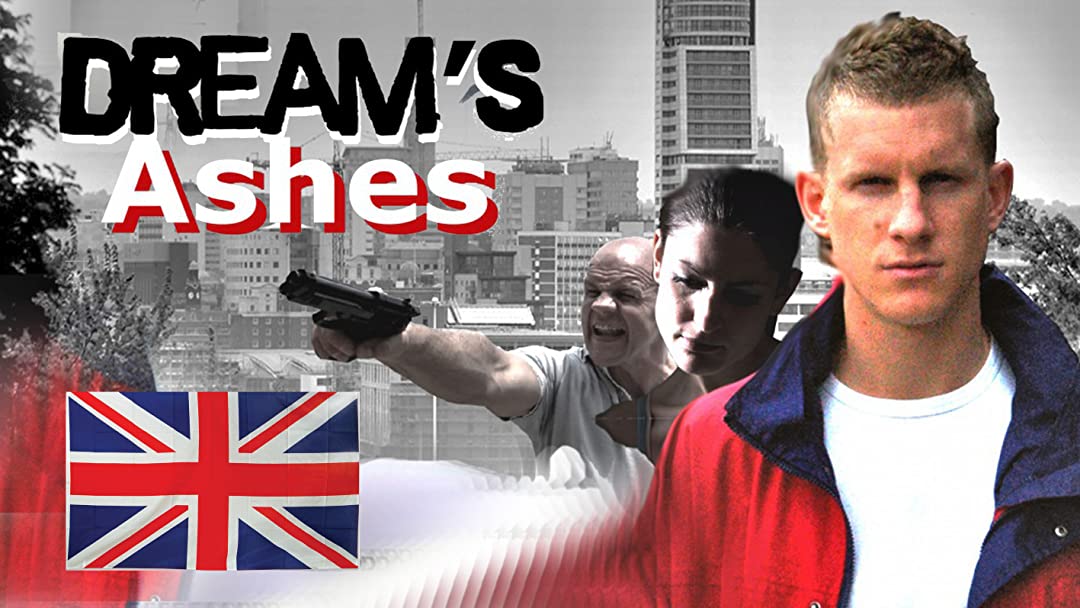
Dream’s Ashes (2005, directed by Rafe Clayton)


Lee (Alistair Marshall) is a drug dealer living in Leeds.  Pining for his former girlfriend, Lee goes about his day-to-day life, dealing drugs, getting harassed by the police, and searching for some sort of escape from his empty existence.  Unfortunately, it’s not going to be easy for Lee.  His own mum tells him that he’s not very smart and there is no easy exit from the world that Lee has found himself in.  Of course, his mother is also his main supplier and she pushes Lee to try to a new drug called Wax which leads to Lee having hallucinations of the baby that his ex miscarried at the start of the movie. Lee’s mother has not only pushed her son into the drug underworld but she’s also supplying his main competitor.  Can you blame Lee for having issues?

Dream’s Ashes is a low-budget indie for the UK.  Not much happens in the film, beyond Lee wandering from one shitty situation to another, all the while thinking about his dead baby and wishing that he could get back together with his ex.  That’s rather point of the film, of course.  Lee is stuck in a dead end existence, where there’s not much to do but deal drugs and wish that things could be different.  Unfortunately, Lee isn’t exactly a compelling character and the scenes where he talks, in voice over, about his life as a drug dealer feel as if they’ve been cribbed from an early draft of Trainspotting.

Where the film does succeed is in its cinematography.  Shot on location in Leeds, Dream’s Ashes looks wonderful.  The majority of the film is in gritty black-and-white, which makes the occasional flash of color all the more meaningful.  Lee’s jacket is always a muted red and the baby, when it appears, appears to be lit with a heavenly glow.  Visually, the film does a fantastic job of capturing the feel of being trapped in a bleak go-nowhere existence.  When Lee starts to embrace his drug-induced hallucinations, you can’t blame him.  They’re certainly better than anything that the real world has to offer him.

Dream’s Ashes is 65 minutes long and available on Prime.


Song of the Day: Neve by Ennio Morricone


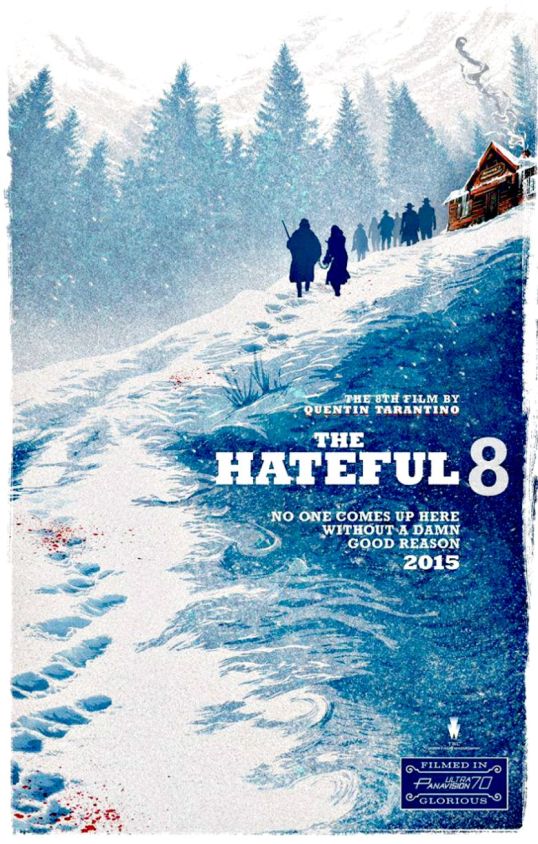
After decades of soundtracks that established him as one of the greatest of our modern composers, Ennio Morricone would win his first (and, sad to say, only) competitive Oscar in 2016.  (Morricone had previously been awarded an honorary Oscar for his overall body of work.)  He won that Oscar for his score for Quentin Tarantino’s 8th film, 2015’s The Hateful Eight.

As we are now winding down our tribute to Morricone, it only seems appropriate to share a piece of the soundtrack.  From the Hateful Eight, here is Neve:

Previous Entries In Our Tribute To Morricone:

  1. Deborah’s Theme (Once Upon A Time In America)
  2. Violaznioe Violenza (Hitch-Hike)
  3. Come Un Madrigale (Four Flies on Grey Velvet)
  4. Il Grande Silenzio (The Great Silence)
  5. The Strength of the Righteous (The Untouchables)
  6. So Alone (What Have You Done To Solange?)
  7. The Main Theme From The Mission (The Mission)
  8. The Return (Days of Heaven)
  9. Man With A Harmonic (Once Upon A Time In The West)
  10. The Ecstasy of Gold (The Good, The Bad, and the Ugly)
  11. The Main Theme From The Good, The Bad, and the Ugly (The Good, The Bad, and the Ugly)
  12. Regan’s Theme (The Exorcist II: The Heretic)
  13. Desolation (The Thing)
  14. The Legend of the Pianist (The Legend of 1900)
  15. Theme From Frantic (Frantic)
  16. La Lucertola (Lizard In A Woman’s Skin)
  17. Spasmodicamente (Spasmo)
  18. The Theme From The Stendhal Syndrome (The Stendhal Syndrome)
  19. My Name Is Nobody (My Name Is Nobody)
  20. Piume di Cristallo (The Bird With The Crystal Plumage)
  21. For Love One Can Die (D’amore si muore)
  22. Chi Mai (various)
  23. La Resa (The Big Gundown)
  24. Main Title Theme (Red Sonja)
  25. The Main Theme From The Cat O’Nine Tails (The Cat O’Nine Tails)
  26. Deep Down (Danger Diabolik!)
  27. Main Theme From Autopsy (Autopsy)
  28. Main Theme From Investigation of a Citizen Above Suspicion (Investigation of a Citizen Above Suspicion) 
  29. Main Theme From A Fistful of Dollars (A Fistful of Dollars)
  30. Main Theme From For A Few Dollars More (For A Few Dollars More)
  31. Gui La Tesa (Duck, You Sucker!)
  32. Malena (Malena)
  33. Chi l’ha vista morire? (Who Saw Her Die?)

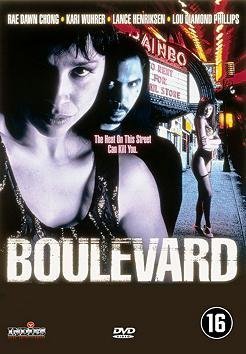
Cinemax Friday: Boulevard (1994, directed by Penelope Buitenhuis)


Having been knocked up by her abusive boyfriend, Jennefer (Kari Wuhrer) gives up her baby for adoption and then promptly gets the Hell out of town.  She runs away to the hard streets of Toronto, where she meets and moves in with a prostitute, the worldly Ola (Rae Dawn Chong).  Ola shows Jennefer how to survive in the big city and the two of them bond over how terrible their circumstances are, eventually becoming lovers.  Eventually, in order to make ends meet, Jennefer becomes a prostitute herself.  However, this means dealing with Ola’s sadistic pimp, Hassan (Lou Diamond Phillips), who is the type of creep who likes to practice his golf swing in between beating people to death.  Detective McLaren (Lance Henriksen) wants to take Hassan down but Jennefer knows better than to work with the cops.  Meanwhile, Hassan is growing more unstable and dangerous and Jennefer’s ex-boyfriend, J-Rod (Joel Bissonette), has shown up in town.

Boulevard is an interesting film.  It’s undeniably sleazy and exploitative, with the camera lingering over every sex scene and act of violence.  At the same time, it’s also a film with a conscience.  It’s on the side of the girls on the boulevard and it makes clear that every man who claims to be on their side, with the exception of McLaren, is actually a dangerous pervert.  Jennefer and Ola can only depend on each other.  Kari Wuhrer was rarely cast for her acting ability but she gives a surprisingly good performance in Boulevard and she’s matched every step of the way by Rae Dawn Chong.  Lou Diamond Phillips appears to be having fun getting to play a villainous role.  In fact, he has too much fun and goes so overboard that he sometimes takes you out of the reality of the situation.  Far better is Lance Henriksen, whose seen-it-all persona is used to good effect in Boulevard.

Boulevard is a sleazy film with a heart.

Song of the Day: Chi l’ha vista morire? by Ennio Morricone


Today’s song of the day comes to use Ennio Morricone’s score for the 1972 giallo, Who Saw Her Die?  This may not be one Morricone’s best-known soundtracks but it’s still one of his best.  The movie’s pretty good as well.

From Who Saw Her Die:

Previous Entries In Our Tribute To Morricone:

  1. Deborah’s Theme (Once Upon A Time In America)
  2. Violaznioe Violenza (Hitch-Hike)
  3. Come Un Madrigale (Four Flies on Grey Velvet)
  4. Il Grande Silenzio (The Great Silence)
  5. The Strength of the Righteous (The Untouchables)
  6. So Alone (What Have You Done To Solange?)
  7. The Main Theme From The Mission (The Mission)
  8. The Return (Days of Heaven)
  9. Man With A Harmonic (Once Upon A Time In The West)
  10. The Ecstasy of Gold (The Good, The Bad, and the Ugly)
  11. The Main Theme From The Good, The Bad, and the Ugly (The Good, The Bad, and the Ugly)
  12. Regan’s Theme (The Exorcist II: The Heretic)
  13. Desolation (The Thing)
  14. The Legend of the Pianist (The Legend of 1900)
  15. Theme From Frantic (Frantic)
  16. La Lucertola (Lizard In A Woman’s Skin)
  17. Spasmodicamente (Spasmo)
  18. The Theme From The Stendhal Syndrome (The Stendhal Syndrome)
  19. My Name Is Nobody (My Name Is Nobody)
  20. Piume di Cristallo (The Bird With The Crystal Plumage)
  21. For Love One Can Die (D’amore si muore)
  22. Chi Mai (various)
  23. La Resa (The Big Gundown)
  24. Main Title Theme (Red Sonja)
  25. The Main Theme From The Cat O’Nine Tails (The Cat O’Nine Tails)
  26. Deep Down (Danger Diabolik!)
  27. Main Theme From Autopsy (Autopsy)
  28. Main Theme From Investigation of a Citizen Above Suspicion (Investigation of a Citizen Above Suspicion) 
  29. Main Theme From A Fistful of Dollars (A Fistful of Dollars)
  30. Main Theme From For A Few Dollars More (For A Few Dollars More)
  31. Gui La Tesa (Duck, You Sucker!)
  32. Malena (Malena)