As some of our regular readers undoubtedly know, I am involved in a few weekly live tweets on Twitter and Mastodon. I host #FridayNightFlix every Friday, I co-host #ScarySocial on Saturday, and I am one of the five hosts of #MondayActionMovie! Every week, we get together. We watch a movie. We tweet our way through it.
Tonight, at 10 pm et, #ScarySocial presents Sleepaway Camp 2!
If you want to join us this Saturday, just hop onto twitter, start the movie at 10 pm et, and use the #ScarySocial hashtag! It’s a friendly group and welcoming of newcomers so don’t be shy.
Sleepaway Camp 2 is available on Prime! See you there!
“Because we’re here, lad. Nobody else. Just us. — Color Sergeant Frank Bourne
Cy Endfield’s Zulu is one of those old-fashioned war films that earns its epic reputation less through grand speeches or sentimental manipulation than through patience, physical detail, and an almost brutally simple premise: a small British force at Rorke’s Drift must hold its position against a vastly larger Zulu army. Released in 1964 and set during the Anglo-Zulu War of 1879, the film takes a historical event that could easily have become a stiff patriotic pageant and turns it into something tense, visually overwhelming, and surprisingly measured for its era. It is certainly built around British soldiers as its main point of identification, and it cannot fully escape the colonial framing of its story, but it gives the Zulu fighters a degree of discipline, courage, and humanity that many comparable films of the period would have denied them.
The opening has a deliberately sober quality. Before the siege gets underway, Endfield establishes the aftermath of the British disaster at Isandlwana, an event that hangs heavily over every decision made at the isolated mission station. Lieutenant John Chard, played by Stanley Baker, is not introduced as an obvious hero. He is an engineer officer who finds himself unexpectedly in command, unsure of what authority he truly has and visibly aware that the situation may be hopeless. Michael Caine, in one of his early major roles, plays Lieutenant Gonville Bromhead as the more aristocratic and initially dismissive counterpart. Their relationship is a familiar clash of temperaments, but the actors keep it from becoming too cartoonish. Baker gives Chard a practical, weary steadiness, while Caine makes Bromhead’s pride feel like both a weakness and a defense mechanism.
What makes Zulu work so well is how clearly it understands the mechanics of a siege. The film takes time to show men sorting supplies, moving mealie bags, organizing firing lines, reinforcing walls, and deciding which buildings can or cannot be held. That attention to logistics gives the action real weight. When the Zulu army finally appears along the hillsides, it is not just a cue for spectacle. It is the moment when every earlier decision becomes frighteningly important. The defenders are not winning through superhuman skill; they are surviving because they build, adapt, reload, retreat, and improvise faster than the situation can collapse around them.
Endfield’s command of scale is still impressive. The broad South African landscapes make the station seem tiny and exposed, while the formations of Zulu warriors moving across the terrain have a force that CGI-heavy battle scenes often struggle to recreate. The action is not especially graphic by contemporary standards, but it is physically convincing. Bodies fall, rifles jam, ammunition runs low, and the walls that seemed secure a few minutes earlier suddenly look inadequate. The battles have a clean visual geography as well. You can generally understand where the soldiers are positioned, where the attacks are coming from, and why a breach in one area threatens everyone else. That clarity is a major reason the film remains so watchable.
The Zulu warriors are filmed with genuine awe. They are the opposition in a military sense, but the movie rarely treats them as faceless monsters. Their attacks are coordinated, their persistence is formidable, and the British soldiers repeatedly acknowledge their courage. One of the film’s strongest ideas is that the men on both sides are forced to recognize the ability of the other. The final exchange of salutes is still powerful because it does not feel like a cheap declaration that war is noble. Instead, it feels like exhausted recognition after a catastrophe that has demanded terrible losses from everyone involved.
The film deserves credit for this, particularly considering the era in which it was made, although it still gives the Zulu perspective far less interiority than the British one. Individual British soldiers receive backstories, doubts, comic beats, and personal arcs; the Zulu fighters are mainly presented as a collective force. That limitation matters because the actual Anglo-Zulu War was not simply a neutral contest between two equally situated military forces. It occurred within the larger reality of British colonial expansion, and the film only lightly touches the political forces that made the battle possible. Zulu is more respectful than many older war movies, but it is not free of the assumptions of its time.
The historical side of Zulu is one of its most interesting qualities. The film does a very good job at historical accuracy, which is a rarity for films depicting real-life historical events, especially in the way it presents the basic structure of the defense at Rorke’s Drift: a badly outnumbered British garrison fortifying the station and enduring repeated Zulu assaults. Its investment in terrain, formations, material conditions, and the general progression of the battle makes the event feel researched rather than casually invented. The staging has a sense of military procedure that helps sell the defense as something grounded in a real crisis rather than merely a legend inflated for the screen.
That said, the characterization of the historical people involved was not as accurate, which is where the dramatic license comes in. The most famous example is Private Henry Hook, played with rough comic energy by James Booth. In the film, Hook begins as an unruly alcoholic and apparent coward before proving himself under fire. The real Henry Hook was a disciplined soldier and a teetotaler, making the movie version an almost total reinvention built around the satisfying “unlikely hero” arc. Bromhead is also simplified into a more inexperienced upper-class officer than the historical man appears to have been, while Colour Sergeant Bourne is made into a weathered older veteran despite having been only 24 at the time. These choices make sense as storytelling devices, but they are worth recognizing because they shape the viewer’s emotional understanding of the people involved.
There are other liberties that are harder to overlook once you know the history. The film presents the 24th Regiment as strongly Welsh and builds toward the memorable use of “Men of Harlech,” even though the regiment was not formally the South Wales Borderers at the time and the song was not its regimental song during the battle. The famous singing exchange between the defenders and the Zulus is also pure cinema rather than a recorded historical occurrence. It is a great scene on its own terms—moving, tense, and an effective pause before the final strain of the battle—but it also shows how Zulu turns history into myth. The movie is at its best when its embellishments intensify the human stakes without pretending that they are literal fact.
The performances throughout are solid, even when the writing leans into broad types. Stanley Baker holds the center with quiet authority, avoiding the temptation to make Chard a conventionally inspirational leader. Michael Caine is more visibly theatrical, but that suits Bromhead’s gradual shift from aloofness to responsibility. Jack Hawkins brings warmth and moral conviction to Reverend Witt, while Nigel Green’s Colour Sergeant Bourne provides the hard military backbone of the defense. James Booth is entertaining as Hook, even if the character’s historical distortion is unfortunate. The ensemble works because the film makes room for fear, resentment, class tension, and stubborn professionalism. These men do not suddenly become perfect comrades; they simply realize they have no choice but to depend on one another.
John Barry’s score deserves mention too. The music has the grandeur expected from a film of this size, but it does not overwhelm every scene with triumph. It often emphasizes rhythm and mounting pressure instead, helping the battle feel like a sustained ordeal. The sound of rifle fire, shouted commands, and the Zulu war chants combines with the score to create an atmosphere that is both stirring and unnerving. Even viewers who know the outcome can feel the uncertainty of each new attack because the film never lets the defense seem comfortably under control.
Ultimately, Zulu is a compelling and visually magnificent war film that remains worth watching precisely because it is not as simple as its reputation might suggest. It can be thrilling without being entirely celebratory, respectful without being fully equitable, and historically attentive without being historically pure. Its battle reconstruction is unusually convincing, while its treatment of real individuals often bends the truth to create clearer dramatic roles. That tension is part of what makes the film so fascinating. It is a classic piece of large-scale filmmaking, anchored by memorable performances and superb action staging, but it is also a reminder that even a relatively careful historical movie can turn real people and complex colonial history into a more streamlined story. Zulu does not offer the final word on Rorke’s Drift, but as cinema, it remains tough, exciting, and far more thoughtful than a standard war spectacle.
As some of our regular readers undoubtedly know, I am involved in a few weekly watch parties. On Twitter, I host #FridayNightFlix every Friday and I co-host #ScarySocial on Saturday. On Mastodon, I am one of the five hosts of #MondayActionMovie! Every week, we get together. We watch a movie. We tweet our way through it.
Tonight, at 10 pm et, I will be hosting #FridayNightFlix! The movie? 1995’s Judge Dredd!
If you want to join us this Friday, just hop onto twitter, find Judge Dredd on Prime, start the movie at 10 pm et, and use the #FridayNightFlix hashtag! I’ll be there happily tweeting. It’s a friendly group and welcoming of newcomers so don’t be shy.
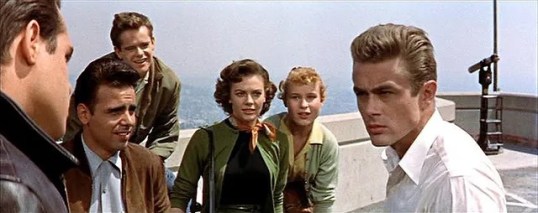
Since today is Nicholas Ray’s birthday, it seems appropriate to share a scene from Ray’s best-known film, 1955’s Rebel Without A Cause. In this scene, a group of teens who can barely find happiness or peace on their own planet are asked to consider the wonders of the universe.
4 Or More Shots From 4 Or More Films is just what it says it is, 4 shots from 4 of our favorite films. As opposed to the reviews and recaps that we usually post, 4 Shots From 4 Films lets the visuals do the talking!
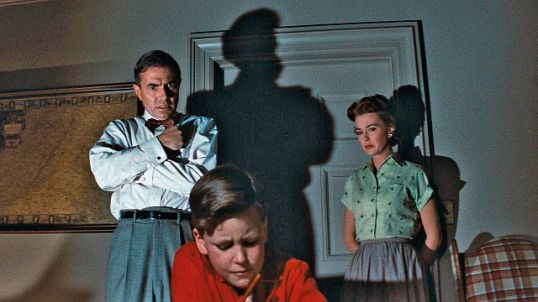
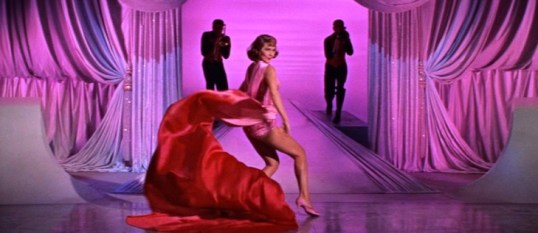
Director and screenwriter Nicholas Ray was born 115 years ago today, in Galesville, Wisconsin. He would go on to become one of the most influential American directors of all time, making independently-minded films that celebrated rebels and iconoclasts. The directors of the French New Wave loved him and for good reason.
Today, we celebrate the life and legacy of Nicholas Ray with….
4 Shots From 4 Nicholas Ray Films
In A Lonely Place (1950, dir by Nicholas Ray, DP: Burnett Guffey)
Rebel Without A Cause (1955, dir by Nicholas Ray, DP: Ernest Haller)
Bigger Than Life (1956, dir by Nicholas Ray, DP: Joseph MacDonald)
Party Girl (1958, dir by Nicholas Ray, DP: Robert J. Bronner)
“All I have in this world is my balls and my word.” — Tony Montana
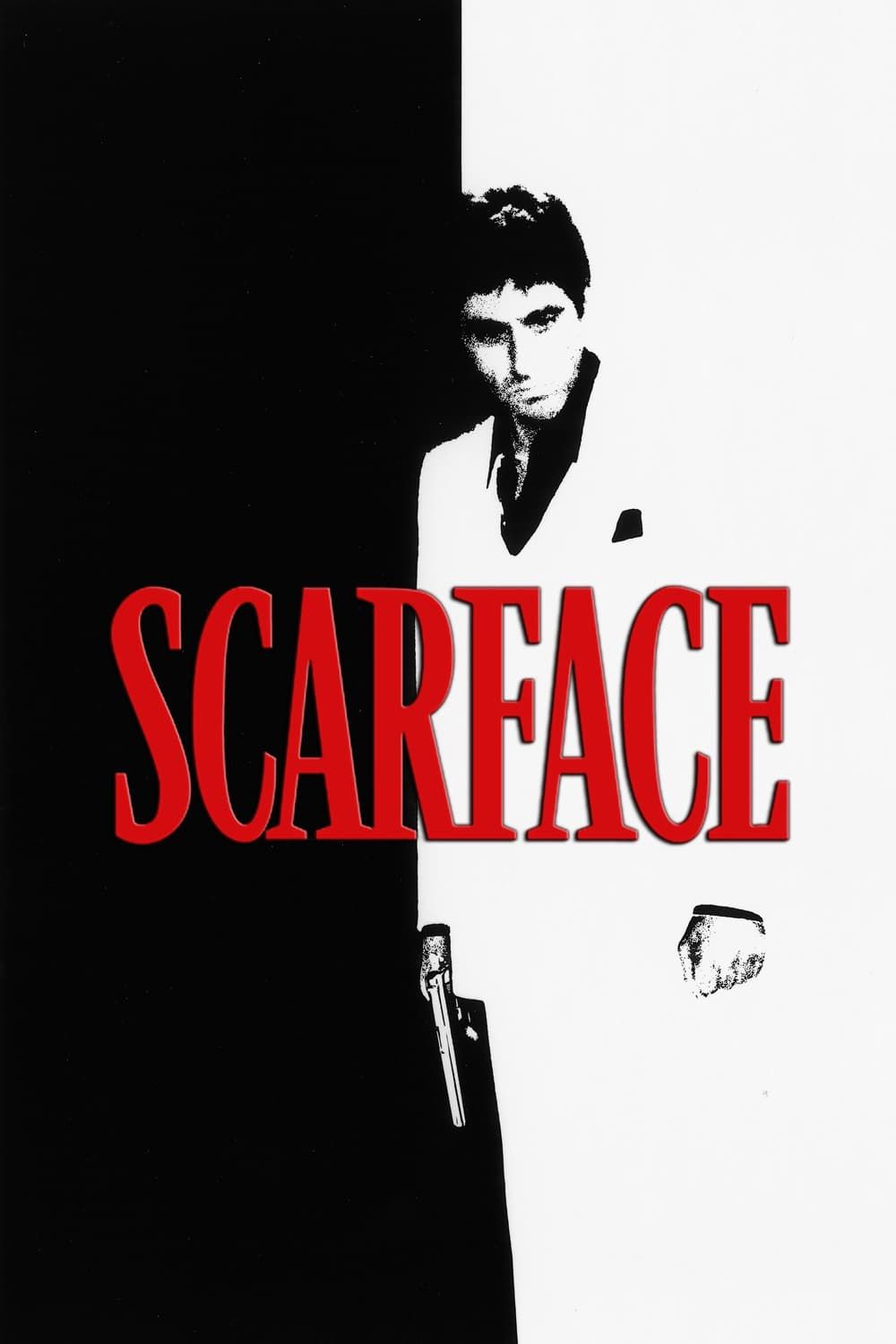
Brian De Palma’s Scarface is one of those movies that seems almost impossible to discuss at a normal volume. Everything about it is loud, excessive, sweaty, violent, vulgar, and deliberately too much. The movie does not simply tell the story of Tony Montana, a Cuban immigrant who rises through Miami’s cocaine trade before destroying himself. It turns that rise and fall into a neon-lit, operatic explosion of greed, paranoia, sex, money, and violence. At first, Scarface can feel like an overlong, incredibly entertaining gangster fantasy. But underneath all the cocaine mountains and machine guns, it is also a deeply cynical story about the American dream and what happens when ambition is allowed to become a substitute for an actual soul.
Tony arrives in Miami during the Mariel boatlift, immediately presenting himself as someone who refuses to be intimidated. He is not interested in being grateful, polite, or patient. Tony wants power, and he wants it quickly. That impatience is both his greatest strength and the obvious source of his downfall. He is willing to do things that other people are too afraid to do, which helps him climb the criminal ladder. At the same time, he cannot understand the idea of limits. Every success only makes him want something bigger: more money, more cocaine, more influence, a bigger house, a more beautiful wife, and absolute control over everyone around him.
The screenplay by Oliver Stone gives Tony a kind of blunt, almost cartoonishly direct philosophy. He believes that the world belongs to people who take it. In Tony’s mind, morality is mostly an excuse invented by people who lack the courage to seize what they want. That attitude makes him magnetic, but the film never truly presents his worldview as admirable. Tony may have the confidence of a king, but he behaves more like a man who is constantly terrified that someone will discover he is not really in control. His bravado is a shield against humiliation, poverty, and powerlessness. The more successful he becomes, the more obvious it is that he is still fighting the same emotional battle he was fighting when he first arrived.
Al Pacino’s performance is the central reason Scarface remains so watchable. He plays Tony as a human grenade, a character who seems to be vibrating with anger even when he is sitting still. The accent, the posture, the rapid shifts in mood, and the exaggerated physical gestures could easily have turned Tony into a parody. In fact, there are moments when Pacino absolutely does push the character into parody. Yet that is also part of the performance’s strange power. Tony is a man who has constructed himself as a larger-than-life personality, so Pacino makes him seem like someone performing Tony Montana even while he is alone.
Pacino understands that Tony’s violence is not simply about cruelty. It is about insecurity, pride, and the panic of losing status. Tony cannot tolerate being laughed at, challenged, ignored, or treated as inferior. A casual insult can become a life-or-death confrontation because he experiences disrespect as an existential threat. Pacino makes those reactions frightening, but he also gives them a pathetic quality. Tony is powerful enough to terrify an entire room, yet emotionally he often behaves like a wounded child demanding recognition.
That contradiction is what keeps the performance from becoming empty scenery chewing. Tony is ridiculous, but he is also tragic. He is disgusting, but he has flashes of genuine feeling, especially in his relationship with his sister Gina. Unfortunately, even his love for her becomes possessive and destructive. Tony wants to protect Gina, but he also wants to own her choices, her sexuality, and her future. He cannot separate love from control. The same problem affects his relationship with Elvira, played by Michelle Pfeiffer, and eventually his entire empire. Tony does not know how to care for people without turning them into extensions of himself.
De Palma’s direction matches Tony’s personality. The film is staged like a gangster epic filtered through a fever dream. Miami becomes a place of bright colors, glass surfaces, giant mansions, tropical heat, and constant artificial light. The city feels less like a real environment than a hallucination of wealth. Tony’s home is especially important because it looks like a monument to success but gradually becomes a prison. The famous final shootout transforms that mansion into a battlefield, with Tony defending his kingdom even after it has already collapsed around him.
The violence in Scarface is often shocking, but it is also theatrical. De Palma uses suspense, wide compositions, sudden bursts of brutality, and moments of grotesque visual humor to make the violence feel both horrifying and unreal. The movie’s excess can be exhausting, particularly in the middle section, where Tony’s rise begins to blur into an endless parade of deals, parties, arguments, and drug use. The length is part of the point: we are meant to feel Tony’s world becoming bloated and unstable. Still, some of the film’s scenes repeat ideas that it has already established. Tony is ambitious, Tony is paranoid, Tony is violent, and eventually Tony is high. The movie sometimes keeps shouting after the audience has already heard it.
That criticism matters because Scarface is not a flawless film. Its dialogue can be clumsy, its supporting characters are sometimes more functional than fully developed, and its treatment of women is frequently limited by Tony’s perspective. The film wants to condemn male domination and criminal capitalism, but it is also fascinated by the same things it condemns. It shows us the luxury, the clothes, the cars, the glamorous parties, and the apparent freedom of Tony’s lifestyle. Even while warning that this life ends in misery, it makes the fantasy visually seductive.
That tension helps explain the movie’s complicated legacy. When Scarface was first released in 1983, many critics found it excessive, ugly, and morally confused. Over time, however, its reach expanded dramatically through home video and popular culture. The movie became especially important to hip-hop, where artists recognized Tony’s language of survival, hustle, ambition, and self-invention. Al Pacino has credited hip-hop with helping the film find its audience, saying that rappers understood and embraced it. That relationship became one of the most important parts of Scarface’s afterlife.
Hip-hop did not simply treat Tony as a cool gangster. It also turned him into a symbol. The character could represent ruthless ambition, immigrant struggle, street credibility, material success, or the danger of becoming trapped by one’s own myth. Lines from the movie entered rap lyrics, album skits, music videos, and stage names. The film’s imagery became a shorthand for a certain kind of rise-from-nothing fantasy, even when the original movie was trying to show how poisonous that fantasy could be. In this sense, Scarface became bigger than its initial critical reputation. It stopped being only a crime film and became a cultural text that people could quote, remix, parody, and reinterpret.
Its influence on video games is just as obvious, especially in Grand Theft Auto: Vice City. That game’s 1980s Miami setting, neon colors, criminal empire structure, radio culture, and flamboyant protagonist clearly operate in the same general territory as Scarface. The film has also been connected directly to other games, including Scarface: The World Is Yours, which imagines an alternate continuation after the movie’s ending. The game allows players to rebuild Tony’s empire, purchase businesses, intimidate rivals, and expand across Miami. It turns the movie’s rise-and-fall structure into an interactive fantasy in which the player gets to ignore the ending and keep climbing.
That difference between film and game is revealing. Scarface ultimately insists that Tony’s dream cannot survive because Tony himself is incapable of moderation, trust, or self-knowledge. Video games can take the same world and make the player feel rewarded for doing exactly what Tony does: acquiring territory, collecting money, buying weapons, and becoming more powerful. In that format, the critique of excess can easily become a celebration of excess. Yet that is also why the film remains so influential to games. It provides an instantly understandable fantasy of criminal ascent, complete with a distinctive visual style and a protagonist whose personality is impossible to ignore.
In the end, Scarface is both a warning and a temptation. It tells us that Tony Montana is doomed, but it makes his climb so entertaining that we understand why generations of viewers, rappers, and game designers kept returning to him. Al Pacino’s performance is the movie’s beating heart: outrageous, funny, frightening, and occasionally heartbreaking. De Palma’s film may be messy and overstuffed, but its messiness is part of its identity. Scarface does not want to be tasteful or balanced. It wants to overwhelm you, seduce you, and then leave you staring at the wreckage of a man who mistook having everything for being somebody.
Hi, everyone! Tonight, on Mastodon, I will be hosting the #TubiThursday watch party! Join us for a true classic, Dirty Dancing!
You can find the movie on Tubi and you can join us on Mastodon at 9 pm central time! (That’s 10 pm for you folks on the East Coast.) We will be using #TubiThursday hashtag! See you then!
The great Robert Mitchum was born, on this date, 108 years ago. Today’s scene that I love comes from one of my favorite Mitchum films, the classic 1947 noir Out of the Past.
In this scene, we are reminded that no one was cooler than Robert Mitchum. And no one threw a better punch.
4 Or More Shots From 4 Or More Films is just what it says it is, 4 shots from 4 of our favorite films. As opposed to the reviews and recaps that we usually post, 4 Shots From 4 Films lets the visuals do the talking!
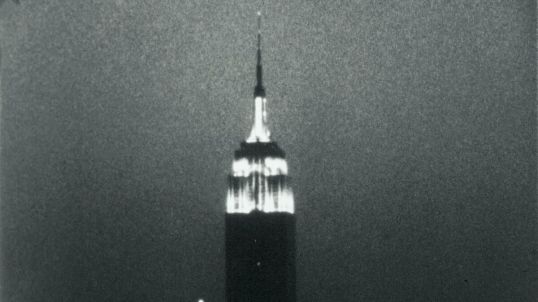
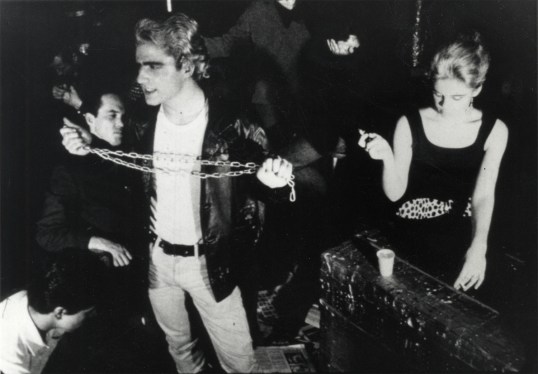
On this date, 98 years ago, Andy Warhol was born. Today, we mark this occasion with….
4 Shots From 4 Andy Warhol Films
Empire (1965, dir by Andy Warhol)
Vinyl (1965, dir by Andy Warhol)
Poor Little Rich Girl (1965, dir by Andy Warhol)
Chelsea Girls (1966, dir by Andy Warhol and Paul Morrissey)