Live Tweet Alert: Watch The Last Man On Earth With #ScarySocial!


As some of our regular readers undoubtedly know, I am involved in a few weekly live tweets on twitter.  I host #FridayNightFlix every Friday, I co-host #ScarySocial on Saturday, and I am one of the five hosts of #MondayActionMovie!  Every week, we get together.  We watch a movie.  We tweet our way through it.

Tonight, for #ScarySocial, I will be hosting 1964’s The Last Man On Earth!

If you want to join us on Saturday night, just hop onto twitter, start the film at 9 pm et, and use the #ScarySocial hashtag!  The film is available on Prime and Tubi!  I’ll be there co-hosting and I imagine some other members of the TSL Crew will be there as well.  It’s a friendly group and welcoming of newcomers so don’t be shy!


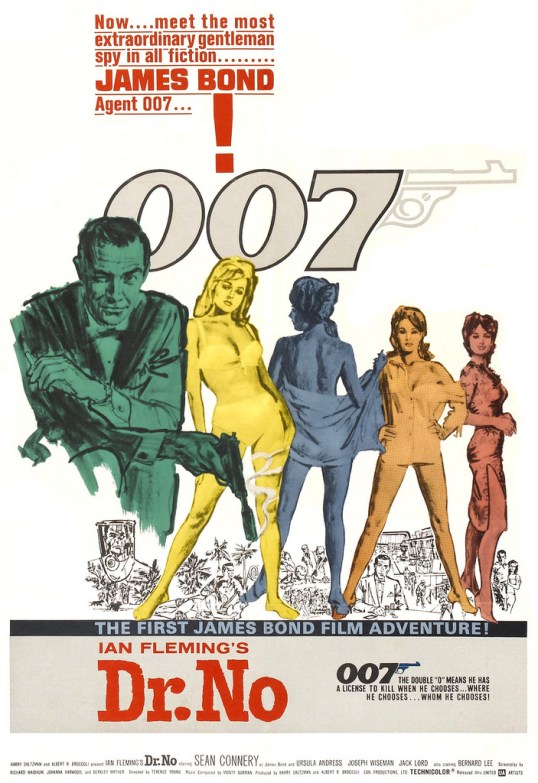
Scenes That We Love: Ursula Andress Makes The Bikini Famous In Dr. No


Today is the official birthday of the bikini and today’s scene that I love features a moment that played a huge role in the bikini’s growing popularity.

Ursula Andress was one of the very first Bond girls, appearing opposite Sean Connery in Dr. No.  Andress played the role of Honeychile Ryder, who was good with a knife and totally willing to trespass on Dr. No.’s beach.  Andress set the standard by which almost all future Bond girls would be judged and the scene where Bond and Ryder first meet remains one of the most famous in the Bond franchise.  It was such a culturally-defining moment in 1962 that it apparently led to rocketing sales of bikinis.  Up until this film came out, bikinis were apparently considered to be too risqué to be worn anywhere other than France.

(Personally, I’m thankful that Andress and Dr. No made bikinis popular.  I look good in a bikini and, even if I don’t swim, I do like lying out by the pool and pretending like I’m capable of tanning as opposed to just burning.)

Of course, in the original novel, Honey Ryder is naked (except for a belt and a knife) when Bond first sees her.  Personally, I think that’s a bit much.  I prefer the scene as it plays out in the movie, where everyone is flirtatious and fashionable.

Though Dr. No is best known for turning Sean Connery into a star, it also did wonders for Ursula Andress’s career.  Whereas she had previously been best-known for briefly dating Jams Dean and being married to John Derek, Andress was now an actress who was able to pick her roles and to become financially independent, a development she would later tell the Daily Independent that she owed to “that white bikini.”  Andress also appeared in Playboy several times, even after becoming a star.  When she was asked why, she replied, “Because I’m beautiful,” and I have to say that I absolutely love that answer.

Anyway, from 1962, here’s a scene that we love:

4 Shots From 4 Films: Special Jean Cocteau Edition


4 Or More Shots From 4 Or More Films is just what it says it is, 4 shots from 4 of our favorite films. As opposed to the reviews and recaps that we usually post, 4 Shots From 4 Films lets the visuals do the talking!

Today, the Shattered Lens celebrates the 136th anniversary of the birth of the great French surrealist Jean Cocteau!  It’s time for….

4 Shots From 4 Jean Cocteau Films

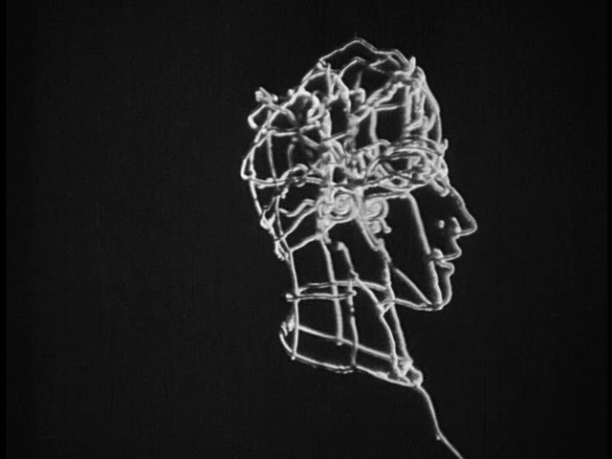
The Blood Of A Poet (1930, dir by Jean Cocteau, DP: Georges Perinal)

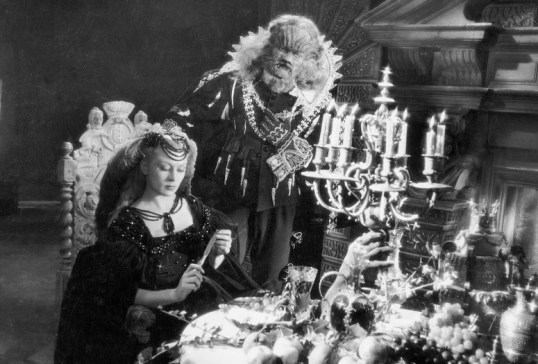
Beauty and the Beast (1946, dir by Jean Cocteau, DP: Henri Alekan)

Orpheus (1950, dir by Jean Cocteau, DP: Nicolas Hayer)

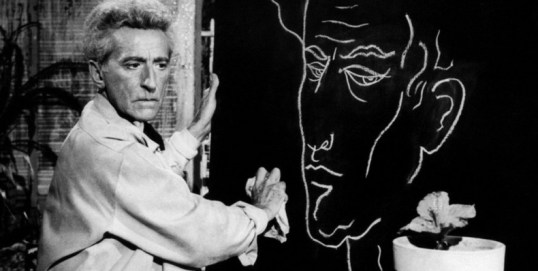
Testament of Orpheus (1960, dir by Jean Cocteau)

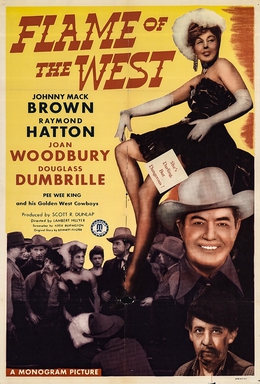
Flame of the West (1945, directed by Lambert Hillyer)


Marshal Tom Nightlander (Douglass Dumbrille) shows up in a lawless frontier town, tasked with bringing peace.  He could sure use the help of Dr. John Poole (Johnny Mack Brown), a former gunslinger who has set his weapons aside and now works as the town doctor.  Dr. Poole has sworn off guns but with corrupt businessman Wilson (Harry Woods) and his gang determined to keep their town lawless, Poole is soon forced to reconsider.

This B-western from Monogram is better than many of the other low-budget, poverty row westerns of the era.  While the plot is another example of a corrupt businessman and his gang making life difficult for peaceful settlers, the characters in Flame of the West are a little more complex than usual.  Brown stands out playing a character who, for once, doesn’t want to fight and believes that it’s better to talk than to shoot.  Of course, this being a B-western, he soon sees the error of his ways.  Dumbrille was usually cast as a villain so this film is a chance to see him in a likable and heroic role and he’s very convincing as a Wyatt Earp-style marshal.

Of course, even a serious B-western is still a B-western so songs and entertainment are provided by the gorgeous Joan Woodbury and Pee Wee King and his Golden West Cowboys.  (Don’t worry, I had never heard of them before, either.)  Joan Woodbury plays a saloon owner who wants to bring a higher class of entertainment to the frontier and she provides the film with enough sex appeal that 1945 audiences probably didn’t mind having to sit through the musical numbers before getting to the inevitable showdown between Johnny Mack Brown and Harry Woods.

Flame of the West is a good B-western that shows what dependable actors like Johnny Mack Brown and Douglass Dumbrille were capable of when given the opportunity.

Brad’s Scene of the Day – “Do you smoke?!” from LETHAL WEAPON (1987)


LETHAL WEAPON may be more of a Christmas movie, and today is the 4th of July, but today is also the 76th birthday of Ed O’Ross. Ed is an instantly recognizable character actor from movies like THE HIDDEN (1987) and RED HEAT (1989), but I always think of him first as Mendez, the guy who’s freaked out by The General (Mitchell Ryan) and Mr. Joshua (Gary Busey) at the beginning of LETHAL WEAPON!

While you’re enjoying the the 4th of July, take a few minutes to celebrate Ed O’Ross and one of the great buddy cop films of all time!

A Scene That I Love: Snoopy Plays The National Anthem in A Boy Named Charlie Brown


I shared this scene two years ago and then again last year but sometimes a scene is so great that you have to share it thrice.  Here, to honor America, is Snoopy performing the National Anthem.

I hope everyone has a great 4th of July!

Live Tweet Alert: Join #FridayNightFlix for Secret Admirer!


As some of our regular readers undoubtedly know, I am involved in a few weekly watch parties.  On Twitter, I host #FridayNightFlix every Friday and I co-host #ScarySocial on Saturday.  On Mastodon, I am one of the five hosts of #MondayActionMovie!  Every week, we get together.  We watch a movie.  We tweet our way through it.

Tonight, at 10 pm et, I will be hosting #FridayNightFlix!  The movie?  Secret Admirer!

If you want to join us this Friday, just hop onto twitter, start the movie at 10 pm et, and use the #FridayNightFlix hashtag!  I’ll be there tweeting, probably while fireworks shake the windows of my office.  It’s a friendly group and welcoming of newcomers so don’t be shy.

Secret Admirer is available on Prime and Tubi!

See you there!

4 Shots From 4 Films: Special Pete Walker Edition


4 Shots From 4 Films is just what it says it is, 4 shots from 4 of our favorite films. As opposed to the reviews and recaps that we usually post, 4 Shots From 4 Films lets the visuals do the talking!

Today, along with celebrating Independence Day, we are also celebrating the birthday of the great British director, Pete Walker!  Walker is 86 years old today and, if he’s not exactly a household name …. well, he definitely should be.  In fact, if there’s any director from the 70s and the early 80s who is deserves to rediscovered and reappraised, it’s Pete Walker!  He made exploitation films with wit and genuine suspense.  Frightmare is one of the scariest movies that I’ve ever seen.

In honor of Pete Walker’s birthday, here are….

4 Shots From 4 Films

Die Screaming, Marianne (1971, dir by Pete Walker, DP: Norman Langley)

The Flesh and Blood Show (1972, dir by Pete Walker, DP: Peter Jessop)

Frightmare (1974, dir by Pete Walker, DP: Peter Jessop)

Home Before Midnight (1979, dir by Pete Walker, DP: Norman Jessop)

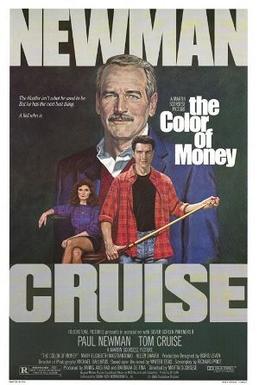
The Color of Money (1986, directed by Martin Scorsese)


ÀW

If you grew up in the 80s or 90s, you probably had at least one friend whose father kept a pool table in the garage.  This movie was probably the reason why.

Fast Eddie Felson (Paul Newman) was once The Hustler, the legendary pool player who recovered from having his fingers broken with a bowling ball and went on to defeat the legendary Minnesota Fats.  That was a long time ago.  Now, Fast Eddie is a slick liquor salesman in Chicago.  Eddie stills hangs out at the pool halls, despite his bad memories of the game.  When he sees a cocky young player named Vincent (Tom Cruise) and his girlfriend Carmen (Mary Elizabeth Mastrantonio), he takes them under his wing and teaches them how to hustle.  It’s not always easy because Vincent doesn’t like to lose, even if it means a chance to score an even bigger victory later on.  Eddie finds himself being drawn back into the game, even as he starts to wonder who is hustling who.

I always forget that The Color of Money is a Martin Scorsese films.  It’s a film that Scorsese made at a time when he had a reputation for only being able to make art films that critics loved but audiences stayed away from.  After the box office failure of The King of Comedy and his abortive first attempt to make The Last Temptation of Christ, Scorsese took The Color of Money to prove that he could work with a studio.  This is a Disney Scorsese film, with his signature camera moves but not much of his religious torment.  Even if it’s not one of his personal films, Scorsese makes pool look exciting, a battle that is as much about psychology as physicality.  Watching The Color of Money, you can smell the chalk on the tip of the pool cue.

Scorsese brings the seedy pool halls to life but it’s Paul Newman’s performance that dominates.  The Color of Money won Newman his first and only Oscar and he deserved it.  Newman had first played Fast Eddie Felson in 1961, in The Hustler.  Returning to the role twenty-five years later allowed Newman to show what would eventually happen to the angry young men that he played in the 60s.  Eddie has grown up and he’s got a comfortable life but he’s not content.  He finally has stability but he misses the game.  He needs the thrill of the hustle.  Newman is at his best in The Color of Money, building on The Hustler but also revealing new sides of Eddie Felson.

Newman is so good that Tom Cruise often gets overlooked but both Cruise and Mastrantonio hold their own against Paul Newman.  Cruise especially does a good job as Vincent, playing him as someone who is too cocky for his own good but also not as dumb as he looks.  Just when you think you’ve got Vincent figured out, Cruise surprises you.  The Color of Money came out the same year as Top Gun and Cruise’s Vincent feels like a commentary on the talented, troubled, but cocky characters that Cruise was playing at that time.  Cruise, Scorsese, and Newman make a good team in this more-than-worthy sequel.