A Movie A Day #130: Doc (1971, directed by Frank Perry)


No, this latest movie a day is not about Lisa and Erin’s cat.
Instead, Doc is yet another retelling of the famous gunfight at the O.K. Corral.  Most cinematic depictions of that event present Wyatt Earp as being an upright hero, Doc Holliday as being his roguish friend, and the Clantons as being black hat-wearing villains.  Doc takes the opposite approach.  In this one, Wyatt (Harris Yulin) and his brother are sociopaths whose feud with the Clantons comes down to Ike Clanton’s (Mike Whitney) refusal to bow to their authority.  Wyatt is a coward and a physical weakling, who gets beaten up by Ike and is only saved when his friend, Doc Holliday (Stacy Keach), steps forward to protect him.

In this film, Doc is clearly dying from the minute he first appears.  Not only is Doc so thin that his bride actually carries him over the threshold, he is also constantly coughing.  His misery is only relieved by opium, herbs, and the love of Katie Elder (Faye Dunaway), the prostitute that he wins in a poker game at the start of the film.  Doc would rather just spend his remaining days with Katie but, because of his friendship with Wyatt, he is dragged into the Earp/Clanton fight.

Like most revisionist westerns of the early 1970s, Doc is a heavy-handed metaphor for the Vietnam War, with Wyatt Earp serving as an LBJ/Nixon stand-in and Doc Holliday standing in for all the leaders who enabled them.  It sounds interesting and Stacy Keach gives a good performance but Doc is glacially paced and Harris Yulin is thoroughly miscast as Wyatt.  It takes forever to get to the gunfight and the Doc is so determined to be revisionist that it forgets to be interesting.  Doc is an unfortunate misfire.

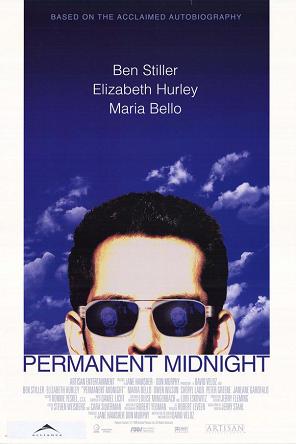
Film Review: Permanent Midnight (dir by David Veloz)


Meh.  Who cares?

That was largely my reaction to watching the 1998 film, Permanent Midnight.  In this film, Ben Stiller plays Jerry Stahl, a real-life screenwriter who had a fairly successful career going in the 80s and early 90s.  He came out to Los Angeles looking to be a serious writer but, instead, he ended up writing for silly puppet show and getting addicted to heroin.  He also married a British television executive named Sandra (Elizabeth Hurley), so that Sandra could get her green card.  When the star of a show that he writes for tells him to kick his habit or lose his job, Jerry ends up smoking crack cocaine with a new dealer (Peter Greene).  When Sandra tells him that she’s pregnant, Jerry responds by shooting up in the bedroom.  When he’s trusted to spend the day taking care of his baby daughter, he drives her around the seediest sections of Los Angeles while he searches for his drug dealer.  As the baby cries beside him, Jerry shoots heroin into his jugular.  Jerry ends up unemployable and abandoned by every friend that he had.  He works at a fast food restaurant, or at least he does until he meets another recovering addict (Maria Bello).  She’s the one to whom he tells his story, in between sex and bouts of impotence.  In the end, what’s left for Jerry Stahl to do but write a book and then a movie about his life as a junkie?

It’s a harrowing story and I guess Stahl deserves some credit for writing the screenplay for a movie that doesn’t exactly make him look good.  However, Permanent Midnight runs into the same problem that afflicts most movies about drug addiction.  With very few exceptions, drug addicts are just not that interesting.  The only thing more boring than watching someone shoot up is then having to listen to that person explain why he shoots up.  (Trainspotting is the obvious exception but Trainspotting benefits from Danny Boyle’s frenetic direction, Ewan McGregor’s explosively charismatic lead performance, a witty script, and a killer soundtrack.  These are things that Permanent Midnight lacks.)  The film attempts to build up some sympathy for Stahl by telling us about his difficult childhood, his father’s suicide, and his mother’s instability but, in the end, Jerry is a junkie who shoots up in front of his baby.  Regardless of how crappy his childhood was, it’s hard to care about whether or not he ever gets his shit together.  Mostly, you just want someone to step in and make sure he never gets near that baby again.

Permanent Midnight makes another mistake, one that is all too common when it comes to films about troubled artists.  It continually tells us that Jerry is a talented and important writer without ever showing us any evidence of that fact.  We’re supposed to feel bad that Jerry is stuck working on a sitcom called Mr. Chompers but, at no point, does the film really convince us that he deserves anything better.  Everyone says that Jerry is talented but we don’t really get to see any evidence of that fact.  It’s hard not to feel that maybe Jerry should just be happy that, unlike the majority of writers in Los Angeles, he actually has a steady job.

(Jerry does get one good line, when he appears on The Maury Povich Show to promote his book and says, “People always ask, ‘What’s the worst thing heroin drove you to do?’  I always answer, ‘showing up on Maury.'”)

Of course, for most people, the main appeal of seeing Permanent Midnight will be the chance to see Ben Stiller shooting up heroin while soaked in withdrawal sweat.  Stiller gives a serious performance, good enough that you regret that his acting career now seems to mostly consist of starring in bad movies and making cameos in even worse ones.  There’s actually a lot of familiar faces in Permanent Midnight: Elizabeth Hurley, Maria Bello, Fred Willard, Owen Wilson, Sandra Oh, Janeane Garofalo, Andy Dick, and others.  They all give good enough performance but ultimately, this is aimless and ultimately rather frustrating movie.

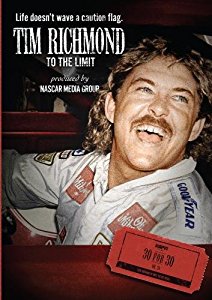
A Movie A Day #129: Tim Richmond: To the Limit (2010, directed by Rory Karpf)


Tim Richmond was not the typical NASCAR driver.  In a sport that was largely dominated by blue-collar “good ol’ boys,” Richmond was from a wealthy Ohio family and considered himself to be a “cosmopolitan.”  Unlike many of the drivers, he was not a car expert but he still instinctively knew how to handle a 200 mph turn.  A charismatic showman, Richmond spent a few years as one of the sport’s rock stars.  Along with co-starring with Burt Reynolds in Stroker Ace, Richmond was also the basis for the character played by Tom Cruise in Days of Thunder.  Tragically, one the way to becoming the best, his career was sidelined by health problems, starting with a bout of double pneumonia.  When he was returned to the sport, he was sidelined again when a drug test came back positive and rumors of his hard-partying lifestyle made it difficult for him to find a sponsor.  Even as he fought to get the drug test overturned, he was hiding a bigger secret.  At a time when the merest rumor of having the disease could ruin someone’s life, Tim Richmond was battling AIDS.
Fans of NASCAR might enjoy this documentary, which was produced as a part of ESPN’s 30 For 30.  It is mostly made up of talking head interviews and archival footage of Richmond both racing and being interviewed.  I had never heard of Richmond before I watched this documentary but his charisma is obvious in the clips shown of him and those interviewed speak of him with enough awe that it is easy to believe that, had he not died, Richmond would have become one of the greatest racers of all time.  Mostly, this documentary serves as a reminder of the fear and paranoia of the early days of the AIDS epidemic.  Long before Magic Johnson famously announced that he was HIV positive, Richmond died isolated and fearful that the world would learn the cause of his condition.  This documentary serves as a reminder of who Tim Richmond was and who he could have been.


Here’s The Trailer for Good Time!


Ever since the end of the Twilight series, Robert Pattinson has been picking unexpected and edgy projects.  And, while there is occasionally a hint of desperation to Pattinson’s picks (“I am not Edward, goddammit!” seems to be the common subtext), it’s also led to him appearing in some genuinely interesting films and proving that, if nothing else, he’s a far better actor than Zac Efron.

(For the record, I still say that Pattinson was brilliantly cast in Cronenberg’s Cosmopolis.)

Here’s the trailer for Pattinson’s latest, Good Time.  This film, which takes place over the course of one night, features Pattinson as a career criminal who is desperately trying to put together enough money to get his brother out of prison.  Judging from the trailer, this is either going to be really good or a complete mess.

Watch below and judge for yourself!

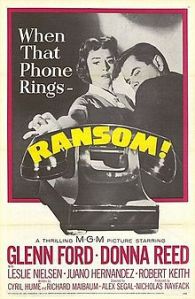
A Movie A Day #128: Ransom! (1956, directed by Alex Segal)


What would you do if your child was kidnapped?

That’s the question asked in this unjustly obscure film from 1956.  Dave Stannard (Glenn Ford) is a wealthy businessman, with a beautiful wife (Donna Reed), a big suburban home, and a butler named Chapman (the great Puerto Rican actor Juano Hernandez).  One day, his son Andy (Bobby Clark) does not come home from school.  The school says that a nurse showed up to pick Andy up for a doctor’s appointment but neither Dave nor his wife know about any appointment and their family doctor says that he would never send a nurse to pick up a patient.

Andy has been kidnapped.  When the kidnappers call, they tell Dave that they want half a million dollars in ransom.  Dave gets the money together but is then told, by reporter Charlie Telfer (Leslie Nielsen), that, once the kidnappers have the money, they will have no incentive to return Andy.  Since Andy is the only person who could identity them to the police, they may very well kill Andy after getting the money.  By paying the ransom, Dave will also be encouraging other kidnappers.

The next morning, Dave goes on television and announces that he will not be paying the ransom.  Instead, he announces that if the kidnappers do not immediately return his son, the money will be given as a reward to anyone who helps to track them down.

If this sounds familiar, it’s because Ransom! was later remade by Ron Howard, with Mel Gibson as the father and Gary Sinise as the kidnapper.  (Ransom! itself was a remake of a live television drama that aired in 1954.)  As opposed to the Howard film, the original Ransom! is a low-key character piece, one that takes place almost entirely in the Stannard home and in which the kidnappers remain largely unseen.  Almost the entire movie focuses on Dave, his decision, and his struggle to come to terms with that decision.  Was Dave right or was he wrong?  Ransom! is stagey but thought-provoking with excellent performances from the entire cast.  Even Leslie Nielsen, making his film debut, does well in the type of dramatic role that defined his career until he reinvented himself as a masterful comedic actor.

They don’t make them like this anyone and that is too bad.


Creature Double Feature 3: THE MONSTER THAT CHALLENGED THE WORLD (UA 1957) & THE GIANT CLAW (Columbia 1957)


gary loggins's avatarcracked rear viewer

Welcome to another exciting edition of Creature Double Feature, a fond look back at the type of weird and wonderful monster movies that used to be broadcast Saturday afternoons on Boston’s WLVI-TV 56. Today we’ve got twin terrors from 1957, one beneath the sea, the other above the skies. Let’s dive right in with THE MONSTER THAT CHALLENGED THE WORLD, a soggy saga starring former cowboy star Tim Holt and a monstrous giant sea slug!

An earthquake has released the beast in California’s Salton Sea, and when a Navy parachutist and a rescue crew goes missing, Commander “Twill” Twillinger (Holt) investigates. A mysterious, sticky white goo is found on board (no “money shot” cracks, please!), and a sample is taken to the lab of Dr. Rogers (Hans Conreid). Rogers analyzes the substance, a “simple marine secretion” (again, no wisecracks!), later discovered to be radioactive.

Rogers’ secretary Gail (Audrey Dalton) and Twill get off…

View original post 913 more words

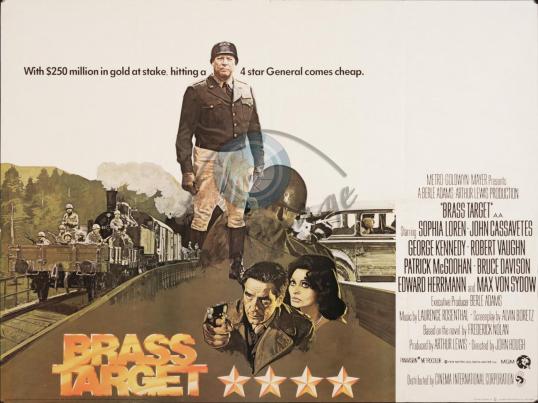
A Movie A Day #127: Brass Target (1978, directed by John Hough)


Everything’s a conspiracy!

At least, that is the claim made by Brass Target, a twisty and unnecessarily complicated thriller that argues that General George S. Patton (played here by George Kennedy, who is even more blustery than usual in the role) did not, as widely believed, die as the result of a car accident but was actually killed by an assassin using rubber bullets.  Why was Patton targeted for assassination?  Was he targeted by Nazis angered by Germany’s defeat or maybe Russians who knew that Patton had argued in favor of invading the Soviet Union towards the end of the war?  Would you believe it was all because Patton was investigating the theft of Nazi gold and his subordinates, the flamboyantly gay Colonel Donald Rogers (Robert Vaughn) and Rogers’s always worried lover, Colonel Walter Gilchrist (Edward Herrmann), were fearful that he was getting too close to discovering the truth?

John Cassevetes, who hopefully used part of his paycheck to fund either The Killing of a Chinese Bookie, Opening Night, or Gloria, plays Joe De Lucca, the burned out OSS colonel who is assigned to track down the Nazi gold but who really just wants to go back home to New York.  Patrick McGoohan, sporting an accent that is supposed to be American, plays De Lucca’s former friend and colleague, Colonel Mike McCauley, who now lives in a German castle.  Max von Sydow is the assassin, who also has a day job as the chairman of a refugee relocation committee.  Sophia Loren plays Mara, a Polish war refugee who, by pure coincidence, has slept with not just De Lucca but almost everyone involved with the conspiracy.  Bruce Davison is the young colonel who acts as Du Lucca’s supervisor.  Even Charles “Lucky” Luciano (played by the very British Lee Montague) is featured as a minor part of the conspiracy.

That is an impressive cast for a less than impressive movie.  Brass Target never provides a convincing reason as to why the conspirators would decide that killing Patton was their only option and, once the conspiracy gets underway and the movie starts to follow around Von Sydow for some Day of the Jackal/Black Sunday-style preparation scenes, the search for the Nazi gold is forgotten.  For some reason, though, I have a soft spot for this frequently ridiculous movie.  There are enough weird moments and details, like Vaughn’s twitchy performance, McGoohan’s accent, the way Kennedy blusters about the Russians being rude to him, and glamorous Sophia Loren’s miscasting, that Brass Target is always watchable even if it is never exactly good.

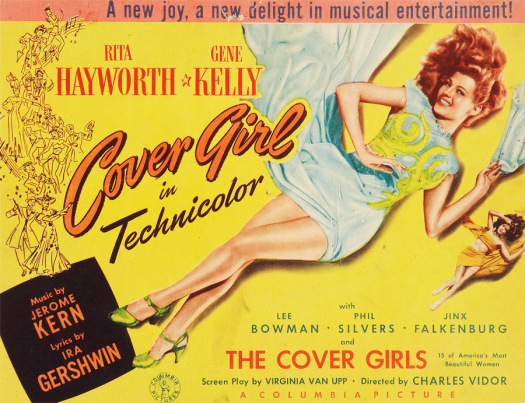
She Was Never Lovelier: Rita Hayworth in COVER GIRL (Columbia 1944)


gary loggins's avatarcracked rear viewer

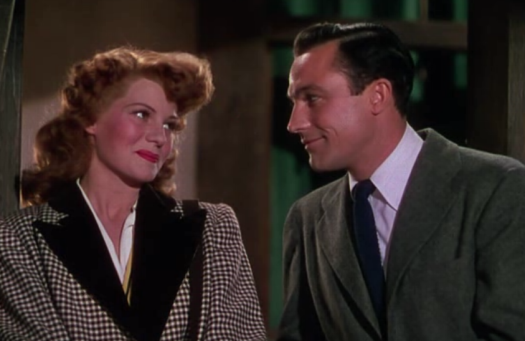
Bright, bold, and bouncy, COVER GIRL was a breakthrough film for both Rita Hayworth and Gene Kelly. Sultry, redheaded Rita had been kicking around Hollywood for ten years before Columbia Pictures gave her this star-making vehicle, while Kelly, on loan from MGM, was given free rein to create the memorable dance sequences. Throw in the comedic talents of Phil Silvers   and Eve Arden , plus a bevy of beauties and songs by Jerome Kern and Ira Gershwin, and you have what very well may be the quintessential 40’s musical.

Rusty Parker (Rita) is a hoofer at Danny McGuire’s (Kelly) joint in Brooklyn (where else?). She enters a contest sponsored by Vanity Magazine to find a new cover girl for their 50th anniversary issue. Editor John Coudair ( Otto Kruger ) spots her and is reminded of the girl he once loved and lost (who turns out to have been…

View original post 696 more words

A Movie A Day #126: Baby Face Nelson (1957, directed by Don Siegel)


The place is Chicago.  The time is the era of Prohibition.  The head of the Chicago Outfit, Rocca (Ted de Corsia), has arranged for a career criminal named Lester Gillis (Mickey Rooney) to be released from prison.  A crack shot and all-around tough customer, Gillis has only two insecurities: his diminutive height and his youthful appearance.  Rocca wants to use Gillis as a hit man but Gillis prefers to rob banks.  When Rocca attempts to frame Gillis for a murder, Gillis first guns down his former benefactor and then goes on the run with his girlfriend, Sue Nelson (Carolyn Jones).  Because they are both patients of the same underworld doctor (played by Sir Cedric Hardwicke), Gillis eventually meets public enemy number one, John Dillinger (Leo Gordon).  Joining Dillinger’s gang, Gillis becomes a famous bank robber and is saddled with a nickname that he hates: Baby Face Nelson.

While it is true that Lester “Baby Face Nelson” Gillis was an associate of John Dillinger’s and supposedly hated his nickname, the rest of this biopic is highly fictionalized.  The real Baby Face Nelson was a family man who, when he went on the run, took his wife and two children with him.  While he did get his start running with a Chicago street gang, there is also no evidence that Nelson was ever affiliated with the Chicago Outfit.  (The film’s Rocca is an obvious stand-in for Al Capone.)  In real life, it was Dillinger, having just recently escaped from jail, who hooked up with Nelson’s gang.  The film Nelson is jealous of Dillinger and wants to take over the gang but, in reality, the gang had no leader.  Because Nelson killed three FBI agents (more than any other criminal), he has developed a reputation for being one of the most dangerous of the Depression-era outlaws but, actually, he was no more violent than the typical 1930s bank robber.  Among the era’s outlaws, Dillinger was more unique for only having committed one murder over the course of his career.  In this film (and practically every other film that has featured Baby Face Nelson as a character), Nelson is a full on psychopath, one who even aims his gun at children.

Baby Face Nelson may be terrible history but it is still an excellent B-movie.  Don Siegel directs in his usual no-nonsense style and Mickey Rooney does a great job, playing Baby Face Nelson as a ruthless but insecure criminal with a perpetual chip on his shoulder.  As his fictional girlfriend, Carolyn Jones is both tough and sexy, a moll that any gangster would be lucky to have waiting for him back at the safe house.  B-movie veterans like Thayer David, Jack Elam, Elisha Cook Jr., and John Hoyt all have colorful supporting roles but the most unexpected name in the cast is that of Cedric Hardwicke, playing an alcoholic surgeon with broken down dignity.

Don’t watch Baby Face Nelson for a history lesson.  Watch it for an entertaining B-masterpiece.


Film Review: Snatched (dir by Jonathan Levine)


So, here’s the thing.

Lately, I’ve been seeing way too many good movies.  Seriously.  In March, I saw Logan and I thought it was great.  Then, roughly a month later, I saw Free Fire and, at first, I thought it was disappointing but, as the weeks have passed, I haven’t been able to get the film out of my mind.  Free Fire is definitely flawed but, if nothing else, all of the 70s-era costuming choices have stuck with me.  And then last week, I saw Guardians of the Galaxy Volume 2, which I really enjoyed.

However, when you’re serious about movies, you can’t just watch the good ones and pretend that the bad ones don’t exist.  So, this weekend, I decided that I would devote myself to seeing some bad movies.  Fortunately, it appears that every film that opened today is bad so that definitely makes my task a bit easier.

With that in mind, earlier tonight, my BFF Evelyn and I went to a showing of Snatched.  Snatched is a comedy that stars Amy Schumer and Goldie Hawn as a daughter and a mother who go on vacation in South America and end up getting kidnapped and then lost in the Amazon rain forest.  This was one of those movies that sounded terrible from the beginning.  The plot sounded terrible.  The trailer looked awful.  For the most part, the reviews have been lacerating and the few good comments have largely been of the “It’s not a very good movie but I don’t want to be too critical lest anyone mistake me for a member of the Schumer-hating alt-right” variety.

In other words, I wasn’t expecting much when I saw Snatched and, for the most part, the film met my expectations.  It’s not so much awful as it’s just forgettable and generic.  Even the film’s “raunchy” moments feel rather bland, as if the filmmakers said, “Let’s just let Amy be Amy,” and then Amy showed up on the set with a bunch of sketches that were previously judged to be not quite good enough for Inside Amy Schumer.  (Actually, in all fairness and as opposed to Trainwreck, Schumer did not write Snatched.  Instead, the script for Snatched was written by Kate Dippold, who also wrote the script for Ghostbusters, another film that often struggled to maintain narrative momentum from scene to scene.  Though the script was undoubtedly rewritten to accommodate her comic persona, a few reviews have been too quick to exclusively blame Amy Schumer for Snatched‘s flaws.)

The film actually starts with some promise.  Emily Middleton (Amy Schumer) loses her job and her boyfriend, Micheal (Randall Park), in the same day.  (The break-up scene, with Michael blithely dumping her and Emily desperately trying to convince both him and herself that she actually dumped him, is hilarious and briefly gave me hope for the rest of the movie.)  Emily had been planning on going on a trip to Ecuador with Michael but now she’s stuck with two, nonrefundable tickets.  Unfortunately, none of Emily’s friends are willing to go on a trip with her because, it turns out, they all kind of hate Emily.

In the end, Emily asks her mother, Linda (Goldie Hawn), to go to Ecuador with her.  Linda, as evidenced by a scrapbook of all the trips that she took when she was younger, used to be adventurous but, after being abandoned by her husband, she now spends almost all of her time locked away in her house.  She loves cats and her children, even if her son, Jeffrey (Ike Barinholtz) is kind of creepy.  Linda is reluctant to go to Ecuador.  She’s heard that it’s unsafe.  But those tickets are non-refundable and soon, Emily and Linda are in South America.

And really, if Snatched had just been Linda and Emily hanging out at the resort and bonding, it probably would have been a better movie.  Goldie Hawn and Amy Schumer are believable as mother and daughter and their relationship had a lot of potential.  Unfortunately, the plot demands that Emily and Linda end up getting kidnapped and held for ransom.  They escape fairly easily (and Emily kills a few people) but then they end up wandering through the rain forest, trying to make their way to the American embassy.  Along the way, they meet a few people.  Christopher Meloni is occasionally funny as a wannabe explorer but the film dispatches his character in a way that feels needlessly mean-spirited.  There’s also a scene with a tapeworm, which would be funny if it was an isolated bit on a sketch comedy show but which feels out-of-place here.  There’s even a poorly conceived scene, in which Emily helps a group of native villagers with their daily tasks and is complimented on it by Linda.  At first, I thought the scene was supposed to be a parody of condescending white liberalism but then I realized that it actually was condescending  white liberalism.  (You can almost hear the story meeting where an executive said, “Since some people might find our portrayal of South America to be xenophobic and borderline racist, we need to have one scene where Goldie and Amy interact with some natives without having to kill any of them.  One or two minutes will do.  Don’t put too much effort into it, time is money…”)  Snatched never seems to know what it’s trying to say or be.

That doesn’t mean that I didn’t chuckle sometimes.  As I said, the first quarter of the movie was fairly enjoyable in its slapdash way.  However, once the whole kidnapping plot kicked in and the film really got started, the only time I really laughed was when Linda reprimands her daughter with a sharp, “EMILY LOUISE!”  I laughed because it reminded me of all the times that my mom would stop my bratty behavior by snapping, “LISA MARIE!”  It was a moment that felt like an authentic and true mother-daughter moment and the fact that it happened while Emily and Linda were lost in the rain forest and being pursued by murderers is what made me laugh.  At the same time, it’s also one of the few moments in Snatched that actually felt spontaneous.  For a few seconds, the film actually felt alive.

Unfortunately, it’s very much an isolated moment.  Snatched is not terrible but it is awfully forgettable.  If you miss it in the theaters, don’t worry.  It’ll probably be mainstay on TBS for years to come.