Iconic Ingrid Pitt became a horror fan favorite for her vampire roles in the early 1970’s. The Polish-born actress, who survived the horrors of a Nazi concentration camp as a child during WWII, played bloodsucking lesbian Carmilla in Hammer’s THE VAMPIRE LOVERS, based on the classic story by J. Sheridan LeFanu, and was a participant in the Amicus anthology THE HOUSE THAT DRIPPED BLOOD opposite Jon Pertwee in that film’s best segment. Finally, Ingrid sunk her teeth into the title role of COUNTESS DRACULA, a juicy part where she’s not really a vampire, but a noblewoman who gets off on bathing in blood, loosely based on the real life events of Hungarian Countess Elizabeth Bathory.
Portrait of the real Elizabeth Bathory
Bathory (1560-1614) was the most infamous female serial killer in history, officially found guilty of 80 murders, yet a diary allegedly found puts the count as high as 650!…
The 2017 film, My Friend Dahmer, opens in a suburban high school in the 1970s. It’s a school like any other, with the usual collection of jocks, nerds, geeks, and outcasts. Jeff (Ross Lynch) is the token weird kid. Every school has one. He’s obviously intelligent but there’s something off about him. He shuffles around the school with his eyes down. When he speaks, he rarely shows any emotion, leaving you to wonder if he’s just shy or if he’s lost in a world of his own. There are rumors, of course, about all the strange things that Jeff has done. Some people say that they’ve seen him collecting dead animals. Jeff has told people that he has a shack where he uses acid to dissolve carcasses. Jeff frequently comes to school drunk, reeking of alcohol. And then there’s his parents! His father (Dallas Roberts) tries to be strict but usually just comes across as befuddled. Meanwhile, his mother (Anne Heche) alternates between doting on her oldest son and making paranoid accusations.
His father demands that Jeffrey make some friends. That’s why Jeff ends up in such unlikely places as both the school band and the school’s tennis team. Still feeling out-of-place, Jeff starts to act out in school. Walking through the hallway, he’ll suddenly start shouting and twitching. Jeff becomes known as the kid who will do anything. One his classmates, an artist named John “Derf” Backderf (Alex Wolff), even starts to draw pictures based on Jeffrey’s antics. Derf and his friends describe themselves as being Jeffrey’s fan club. For the rest of the school year, they encourage Jeff to act stranger and stranger. It would be incorrect to say that Derf and Jeff are really friends. In fact, towards the end of the school year, Derf starts to realize that he’s basically been exploiting Jeff for his own amusement. And yet, Derf and his friends provide perhaps the closest thing to “normal” human interaction that Jeff will ever experience.
As you’ve probably already guessed from the film’s title, Jeff is Jeffrey Dahmer, the infamous Milwaukee-based serial killer and cannibal who is estimated to have killed 17 young men before he was arrested in 1991. (In 1994, Dahmer was murdered in prison by an inmate who claimed to have been motivated by Dahmer’s lack of remorse.) Dahmer committed his first murder when he was 18, a fact alluded to towards the end of the film when we see Dahmer picking up a hitchhiker. (Disturbingly, the only time in the film in which Dahmer smiles and sounds like a “normal” person is when he’s trying to convince that hitchhiker to get in his car.) With the exception of that one scene, My Friend Dahmer deals with the year before Dahmer started his killing spree, when Dahmer was just the token weird kid.
The fact that we know what Jeffrey Dahmer is ultimately going to becomes add an ominous subtext to every scene in the film. Throughout, there are signs that something is wrong with Dahmer and yet neither his classmates nor his teachers ever seem to take those signs seriously. When Dahmer brutally cuts open a fish because he wants to see what’s inside of it, his friends are disgusted but they assume that’s just Dahmer being weird again. When he shows up drunk for class and his grades start to go downhill, his teachers just ignore him. No matter what he says (and he does say some truly disturbing things), everyone just shrugs it off. Their attitude is that Jeff’s the weird kid so, of course, he’s going to say weird things.
To its credit, My Friend Dahmer resists the temptation to sensationalize or make excuses for the monster that Jeffrey Dahmer became. Ross Lynch plays Dahmer as a hulking, inarticulate time bomb. It’s not so much that Dahmer can’t control his dark thoughts as he really has no desire to do so. The film contrasts Dahmer’s darkness with the light-hearted and, quite frankly, dorky guys who briefly became his clique. (Again, despite the film’s title, it would probably be a bit of a stretch to say that Dahmer had any real friends.) One practical joke, in which Derf sneaks Dahmer into every club’s yearbook picture, is so likable in its dorkiness that you almost forget that Derf’s scheme centers around a guy who will grow up to murder 17 people. In the end, both Dahmer’s crimes and his fate feels as inevitable as the fact that Derf will ultimately write and draw graphic novel about their relationship.
By any stretch of the imagination, it’s not a happy or pleasant film. I watched the film last night and I doubt I’ll ever watch it again. And yet, it’s an effective film, one that left me wondering what happened to some of the “weird kids” that I went to school with. Do we ever really know what’s going on inside someone’s head? Ross Lynch turns Dahmer into a disturbingly familiar monster while Alex Wolff is sympathetic in the role of Derf. Anne Heche goes a bit overboard as Dahmer’s unstable mother but Dallas Roberts has a few good scenes as the father who can only watch helplessly as his son grows more and more disturbed. The film is a disturbing trip into the heart of darkness, one that will haunt you after it ends.
Frank Zappa is definitely an acquired taste, one I acquired as a young kid listening to albums like “Absolutely Free”, “Weasels Ripped My Flesh”, and “Apostrophe”, which goes a long way in helping to explain my warped world view. Zappa’s avant garde rock’n’roll, a mélange of jazz, classical, doo-wop, psychedelica, and anything else he could think of, combined with his nonsensical, sexual, and scatological lyrics, skewered convention, the plastic world of suburban America, and hippie culture as well (Zappa was an equal opportunity offender). 200 MOTELS was his first attempt at making a movie, co-directing and co-writing with British documentarian Tony Palmer, and to call it bizarre would be a gross understatement.
Visually, the film is as close to Zappa’s avant garde compositions as you can get. 200 MOTELS was shot on videotape and transferred to 35mm film, using techniques like double and triple exposure, color filters, flash-cut editing, and…
Red Sparrow is a spy thriller that features a lot of spies but not many thrills. Jennifer Lawrence plays Dominika Ergova, a Russian ballerina whose career with the Bolshoi is ended when another dancer drops her on stage. Fortunately, Dominka’s sleazy uncle Ivan (Matthias Schoenaerts) has a new career in mind! Maybe Dominka could be a sparrow, a spy who seduces the enemy! Just in case Dominka doesn’t want to spend the rest of her life seducing westerners, Ivan arranges for her to witness a murder and then informs her that she’ll be eliminated as a witness unless she does what he tells her. This, of course, leads to Dominkia attending State School 4, where she is schooled in the arts of seduction by Matron (Charlotte Rampling). Upon graduation, Dominka is sent to Budapest, where she falls in love with a CIA agent named Nash (Joel Edgerton) and a lot of predictable spy stuff happens. Despite all of the sex and violence, it’s just not much fun.
Red Sparrow has all the ingredients to be an enjoyably trashy 90-minute spy flick but instead, it’s a slowly paced, 140-minute slog that just seems to go on forever. Throughout the film, director Francis Lawrence (no relation to the film’s star) struggles to maintain a steady pace. Too much time is spent on Dominka’s life before she suffers the injury that should have opened the film. Meanwhile, the only interesting part of the film — Dominka’s education at State School 4 — goes by far too quickly and, despite the fact that she was giving one of the few interesting performances in Red Sparrow, Charlotte Rampling vanishes from the film early on. Once Dominkia gets to Budapest, the film really slow down to a crawl. Joel Edgerton’s a good actor and an even better director but he gives an overly grim and serious performance in Red Sparrow and he and Jennifer Lawrence have next to no romantic chemistry.
(That lack of romantic chemistry petty much dooms the final forty minutes of the film. It’s easy to imagine a much better version of Red Sparrow in which Bradley Cooper played the role of Nash. True, that would have been like the 100th time that Cooper and Jennifer Lawrence starred opposite each other but why not? It worked for William Powell and Myrna Loy.)
As for Jennifer Lawrence, her performance is okay. It’s not one of her best and there’s a few moments where it seems as if she’s more concerned with maintaining her Russian accent than with what’s actually going on in the scene but, for the most part, it’s a good enough performance. That said, you do have to wonder how long she can go without having another hit film. Despite being heavily hyped, Passengers, Mother!, and Red Sparrow all underperformed at the box office. (In defense of Mother!, it was never going to be a box office hit, regardless of who starred in it.) As talented as she is, it’s sometimes hard not to feel that, as an actress, Jennifer Lawrence has lost some of the natural spark that took viewers by surprise in Winter’s Bone, launched a whole new genre of dystopian YA adaptations with The Hunger Games, and which previously elevated unlikely films like The House At The End Of The Street. She was a far more interesting actress before she became J Law.
Here’s hoping that she finally gets another role worthy of her talent!
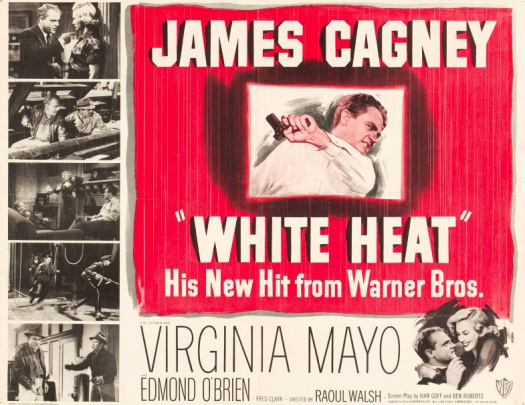
When James Cagney burst onto the screen in THE PUBLIC ENEMY, a star was born. Cagney’s machine gun delivery of dialog, commanding screen presence, and take-no-shit attitude made him wildly popular among the Depression Era masses, if not with studio boss Jack Warner, with whom Cagney frequently battled over salary and scripts that weren’t up to par. Films like LADY KILLER , THE MAYOR OF HELL , and ANGELS WITH DIRTY FACES made Cagney the quintessential movie gangster, but after 1939’s THE ROARING TWENTIES he hung up his spats and concentrated on changing his image. Ten years later, Cagney returned to the gangster film in WHITE HEAT, turning in one of his most memorable performances as the psychotic Cody Jarrett.
Cagney is older and meaner than ever as Jarrett, a remorseless mad-dog killer with a severe mother complex and more than a touch of insanity. Jarrett has frequent debilitating headaches…
The 1958 best picture nominee, Cat On A Hot Tin Roof, opens with a 30-something Paul Newman doing something stupid.
It’s a testament to just how incredibly handsome Paul Newman was in the 1950s that he can still be sexy even while he’s stumbling around in a drunken haze and attempting to jump over hurdles on a high school football field. Newman is playing Brick Pollitt, youngest son of the wealthy cotton farmer Big Daddy Pollitt (Burl Ives). Brick was a star athlete in high school but now, he’s a drunk with an unhappy marriage and a lot of bitter feelings. When Brick attempts to jump over the hurdles, he breaks his ankle. The only thing that keeps Brick from being as big a loser as Biff Loman is the fact that he looks like Paul Newman.
Brick is married to Maggie (Elizabeth Taylor), a beautiful woman who may have grown up on the wrong side of the tracks but who has married into money. The only problem is that it doesn’t seem like Brick is ever going to get that money. With Big Daddy getting older, everyone in Mississippi is wondering which Pollitt son will inherit his fortune. Will it be drunken, self-pitying Brick or will it be Goober (Jack Carson) and his wife (Madeleine Sherwood)? One point in Goober’s favor is that he and his wife already have five rambunctious children while Brick and Maggie have none. In fact, gossip has it that Brick and Maggie aren’t even sleeping in the same bed! (While Maggie begs Brick to make love to her, Brick defiantly sleeps on the couch.) The other problem is that, for whatever reason, Brick harbors unending resentment towards … well, everything. Perhaps it has something to do with the mysterious death of Brick’s best friend and former teammate, Skipper…
Brick, Maggie, Goober, and the whole clan are in Mississippi to celebrate Big Daddy’s 65th birthday. Big Daddy is happy because he’s just been told that, despite a recent scare, he does not have cancer. What Big Daddy doesn’t know is that his doctor (Larry Gates) lied to him. Big Daddy does have cancer. In fact, Big Daddy only has a year to live.
Whenever I watch Cat On A Hot Tin Roof, I find it’s helpful to try to imagine what it would have been like to watch the movie in the 1950s. Imagine how audiences, at a time when married couples were still regularly portrayed as sleeping in separate beds and when men were naturally assumed to be the kings of their household, reacted to seeing a film where Elizabeth Taylor was literally reduced to begging Paul Newman to make love to her while Newman hopped around on a crutch and continually found himself getting stuck in embarrassing situations. Though it may seem tame by today’s standards, the film was undeniably daring for 1958 and watching it is like stepping into a time machine and discovering that, yes, there was a time when Elizabeth Taylor wearing a modest slip was considered to be the height of raciness.
Of course, the film itself is quite toned down from the Tennessee Williams’s play on which it was based. Williams reportedly hated the changes that were made in the screenplay. In the play, Skipper committed suicide after confessing that he had romantic feelings for Brick, feelings that Brick claims he did not reciprocate. That was glossed voter in the film, as was the story of Skipper’s unsuccessful attempt to prove his heterosexuality by having sex with Maggie. By removing any direct reference to the romantic undercurrent of Brick and Skipper’s relationship, the film also removes most of Brick’s motivation. (It’s still there in the subtext, of course, but it’s probable that the hints that Newman and Taylor provided in their performances went straight over the heads of most audience members.) In the play, Brick is tortured by self-doubt and questions about his own sexuality. In the film, he just comes across as being rather petulant.
And again, it’s fortunate that, in the film, Brick was played by Paul Newman. It doesn’t matter how bitter Brick becomes or how much he whines about not wanting to be around his family. One look at Newman’s blue eyes and you understand why Maggie is willing to put up with him. In the role of Maggie, Elizabeth Taylor gives a performance that manages to be both ferocious and delicate at the same time. Maggie knows how to play the genteel games of the upper class South but she’s definitely not going to let anyone push her around. It’s easy to see why Big Daddy prefers the company of Maggie to his own blood relations. It’s not just that Maggie’s beautiful, though the implication that Big Daddy is attracted to her is certainly present in the film. It’s also the she’s the only person around who is as strong and determined as him.
Indeed, seen today, Cat On A Hot Tin Roof‘s main strength is that it’s a masterclass in good acting. Williams’s dialogue is so stylized and his plot is so melodramatic that one bad performance would have caused the entire film to implode. Fortunately, Newman and Taylor make even the archest of lines sound totally natural while Burl Ives and Judith Anderson are both the epitome of flamboyant charisma as Big Daddy and Big Mama. It takes a lot of personality to earn a nickname like Big Daddy but Ives pulls it off.
Along with being a huge box office success, Cat On A Hot Tin Roof was nominated for best picture of 1958. However, it lost to Gigi.
I recorded A Night To Regret off of Lifetime on June 19th, 2018!
Poor Chelsea Bilson (Mollee Gray)!
She’s got a lot to deal with. She’s a college student who is always busy. Her mother (Marguerite Moreau) is pressuring her to become an attorney, constantly asking her about her grades, and continually talking about how expensive Chelsea’s education is turning out to be. Her boyfriend has just dumped her, specifically because Chelsea doesn’t ever seem to have any time for him.
All Chelsea wants to do is direct a movie but even that’s become a struggle. Because her mother is only interested in financing Chelsea’s education, Chelsea is not only having to pay for the movie herself but she’s also having to do it all without her mother finding out what’s going on. Can you blame Chelsea for just wanting to spend a night unwinding?
It’s while she’s out with her friend Sara (Gigi Zumbado) that Chelsea runs into Mila (Kirsten Pfeiffer) and Liam (Tyler Sellers). Mila and Chelsea were childhood friends. As Chelsea explains it, she and Mila were always getting in trouble together. Mila eventually ended up living on the streets but it appears that she’s doing much better now. Now, she has expensive clothes and a nice apartment. And she even has a handsome business partner in Liam.
What is Mila’s business?
She’s a webcam girl and, in Lifetime films, that always means trouble!
Seeing that Chelsea needs money and some confidence boosting, Mila tries to turn Chelsea into a webcam girl. It’s not really something Chelsea is interested in doing, though she does make a thousand dollars as the result of one eager fan. That allows her to pay for one more day of shooting, which is a good thing.
What isn’t such a good thing is that it soon becomes apparent that Chelsea’s fan is more than a little unstable and obsessed. Even after Chelsea makes it clear that she wants nothing to do with him, he still tries to contact her. He sends her a message letting her know that he likes what she’s wearing. Chelsea looks outside her bedroom window, just in time to catch a truck driving away.
Meanwhile, Chelsea’s mom has a new friend! His name is Jake Peters (Kevin McNamara) and he’s a personal trainer! He has a disconcerting habit of showing up wherever Chelsea happens to be. Jake seems friendly but there’s something a bit off about him. He’s a little bit too friendly and he tends to speak in weird self-help clichés. And, of course, there’s the fact that Jake murdered his mother at the start of the film…
Yep, Jake has some issues. And it’s not a spoiler to tell you that he’s also Chelsea’s stalker. He’s got plans to make Chelsea’s one night as a webcam girl a night to regret!
I had to work the film’s title into that last paragraph because I think it’s a pretty good title. As soon as you hear those words, “A Night To Regret,” you’re immediately intrigued. A Night To Remember ended with the Titanic hitting an iceberg. How will A Night To Regret end?
Well, in A Night To Regret, the iceberg is Jake, who is a thoroughly creepy and unsettling character, so much so that you have to feel that both Chelsea and her mother were incredibly naive to not immediately turn and run the first time that they saw Jake approaching them. Jake is the type who will murder a random passerby, smirk about it, and then not understand why some people are turned off by his behavior. Kevin McNamara does a great job playing Jake, turning him into a memorable Lifetime villain.
I also liked the performances of Kirsten Pfeiffer and Tyler Sellers are Mila and Liam. (Interestingly enough, Liam is an anagram of Mila and vice versa.) Pfeiffer kept you guessing as to whether Mila was just a concerned friend or if her motives were more sinister while Sellers was so charming as Liam that you regretted he wasn’t in more of the movie. Also giving a good performance was Tina Huang, who projected a wonderful, no-bullshit attitude as Detective Morita.
A Night To Regret is a typical stalker flick but the performances of McNamara, Pfeiffer, Sellers, and Huang keep things interesting.
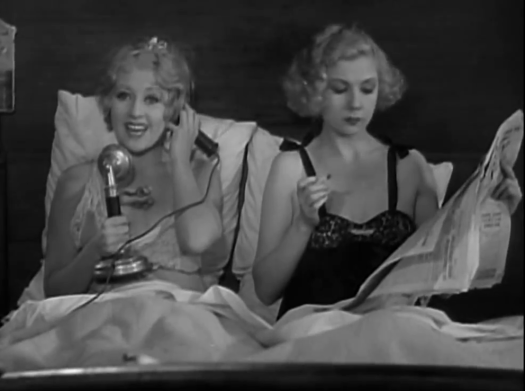
I know all of you, like me, will be watching tonight’s 89th annual Major League Baseball All-Star Game, and… wait, what’s that? You say you WON’T be watching the All-Star Game? You have no interest in baseball? Heretics!! But I understand, I really do, and for you non-baseball enthusiasts I’ve assembled a quartet of Pre-Code films to view as an alternative, starring some of the era’s most fabulous females. While I watch the game, you can hunt down and enjoy the following four films celebrating the ladies of Pre-Code:
DAUGHTER OF THE DRAGON (Paramount 1931; D: Lloyd Corrigan) – Exotic Anna May Wong stars as Princess Ling Moy, an “Oriental dancer” and daughter of the infamous Dr. Fu Manchu (Warner Oland)! When Fu dies, Ling Moy takes up the mantle of vengeance against the Petrie family, tasked with killing surviving son Ronald. Sessue Hayakawa (BRIDGE ON THE RIVER KWAI)…
In the beginning, there was a yacht in the Caribbean.
Working on that yacht was a waiter named Manuel (Juan Pablo Di Pace). Manuel was strong, handsome, and as sexy as a reality show participant. He knew how to repair things. He knew how to catch fish. His job may have required him to serve margaritas to rich assholes from the United States but he always did it with an attitude. Manuel was the type of arrogant working man who one would typically expect to find Giancarlo Gianinni playing in a Lina Wertmuller film. Of course, Manuel is more interested in getting laid than leading a worker’s revolution. In fact, just before setting out on his latest voyage, he broke up with his girlfriend. She reacted by pointing at him and laughing evilly. In a movie like this, that can only mean one thing: VOODOO CURSE!
And then there was Jenny (Kelly Brook) and her husband, Jack (Billy Zane). While Jenny was the trophy wife, Jack was the American businessman who rented out the yacht for a fishing expedition. Jack was arrogant. Jack was outspoken. Jack was convinced that he knew how to survive at sea, even though he didn’t. He and Manuel took an instant dislike to each other. It didn’t help Manuel’s cabin was right next to Jenny and Jack’s and that the sound of Jenny’s ecstatic moaning kept Manuel from getting a goodnight’s rest.
(Of course, another reason that Manuel was having trouble getting any sleep was because, at that very moment, his ex-girlfriend was dancing in a candle-filled room and apparently taking part in some sort of Santeria-related ceremony.)
Well, you can guess where this is going, can’t you? Jack and Manuel have an argument on the boat. Manuel gets fired and reacts by taking a towel and throwing it on a stove. Soon, the boat’s on fire. Jenny and Manuel wash up on the shore of an isolated island. For two days, Manuel takes care of Jenny. He catches fish for her. He encourages her to swim naked in the ocean. He yells at her, “You have a perfect ass, senora! It’s shaped like a heart because God didn’t give you a real one!” (If I had a dollar for every time I’ve heard that…) Despite herself, Jenny starts to fall for Manuel. Suddenly, Jack shows up on the beach!
Jack soon proves himself to be just as obnoxious on dry land as he was on the boat. Earlier, Jenny and Manuel had buried the body of the boat’s captain. Jack promptly digs the captain back up so he can get a change of clothes and some cigars. Jenny is stunned that Jack would do something so gross. Jack laughs it off as only Billy Zane can.
Soon, Jack is living on one end of the beach while Manuel is on the other. And Jenny is stuck in the middle. Meanwhile, Manuel’s ex-girlfriend is still dancing in that candle-filled room…
Survival Island is a movie that manages to both bad and brilliant at the same time. In the role of Jenny, Kelly Brook gives a performance that hits so many wrong notes that it almost becomes a perfect example of outsider art. When she should be scared, she seems to be mildly annoyed. When she should be happy, she again seems to be mildly annoyed. The script itself can’t decide whether Jenny is meant to be a noirish femme fatale or a repressed trophy wife. Jenny never really comes to life as anything other than a plot device but I do have to admire the fact that, even after a shipwreck and several days on a desert island, her makeup was always perfect and her hair was always clean. Still, considering that the film revolves around her, Jenny is a surprisingly insubstantial character.
Fortunately, the fact that Jenny is such a poorly written character almost doesn’t matter. What does matter is that Billy Zane is in this movie and he’s exactly the type of shameless, over-the-top performer that this story needs. There’s nothing subtle about Zane’s performance. Jack talks to himself. Even before they end up fighting over Jenny, Jack is always glaring at Manuel. When he manages to catch something to eat, Jack breaks out into a wonderfully self-satisfied grin and when he suspects that Jenny may have cheated on him, he pouts like a child who has just been informed that his favorite toy was donated to the Goodwill while he wasn’t looking. Jack’s the type of character who has a snarky comment about everything and Billy Zane is one of those actors who definitely knows how to deliver a sarcastic line or two. Jack may be a jerk but so what? He’s an American jerk so, as an American film reviewer, I’m required to be on his side. Once Jack — and Billy Zane — loses it and goes crazy on that island, nothing else matters. On the basis of Billy Zane’s presence alone, the film is a guaranteed a certain immortality. Indeed, the main conflict in Survival Island isn’t between Jack and Manuel. Instead, it’s between a film that takes itself seriously and a star who does not.
That’s really what makes Survival Island into such a slyly (if, perhaps, unintentionally) subversive film. The movie may think that it has something to say about class, relationships, and sex but Billy Zane is always on hand to announce,, “No, this is all about watching me go batshit crazy on an island! That’s all that matters!” Just as how Jenny must choose between Jack and Manuel, the viewer is forced to choose between taking the movie seriously or just enjoying Billy Zane at his zaney best.
I have a feeling that most people will go with the latter.
I recorded My Husband’s Secret Life off of Lifetime on March 25th.
Agck!
That looks like quite an accident, doesn’t it?
Lying on the ground is Freddy (Brett Donahue). Freddy owns a flower store so you might wonder how exactly he ended up lying in the middle of the street, covered in blood. Some of it could have to do with the fact that Freddy is the husband who is mentioned, in the title, as having a secret. Freddy may seem like a nice guy but he sure is shady about certain aspects of his past. For instance, why does he carry a lighter that was made in Russia? And when he talks in his sleep, why does he speak with slightly foreign accent? And then there’s his slightly creepy and rather overprotective mother.
As for why he’s lying in the middle of the road, he’s just been run by a man named Arthur (Joe Cobden). Arthur drinks too much and is frequently a nervous wreck. Interestingly enough, he once had a respectable job and a strong family. Whenever Freddy and Arthur meet, it’s on one of those park benches that practically screams, “Secret spy meeting place!”
Hovering over him is Jennifer Jones (Kara Killmer). Jennifer is Freddy’s wife and, to be honest, she was a bit concerned about her marriage even before Freddy ended up in the middle of the street. They’ve been married for seven years and yet, there’s still things that Jennifer doesn’t really known about Freddy. And when she just happens to spot him in the city, getting yelled at by an angry woman, Jennifer’s suspicions become even stronger. It gets even worse when she twice tries to call him and, after first ignoring her, he answers the second time and blatantly lies about where he is.
Later, when she confronts him, he admits that he was lying about where he was but then asks her why she didn’t call him out if she knew he was lying. I mean, how dare she allow him to lie!? That’s classic gaslighting and enough to make everyone watching the film shout, “Get away from him!”
But, shortly afterward, Freddy ends up in the middle of the street and, suddenly, the whole idea of leaving him gets a lot more awkward. Freddy’s in a coma now and how can you leave someone when they’re in a coma? While Jennifer waits for Freddy to wake up, her mother-in-law continues to push her away. What was Jennifer’s husband hiding and why is his mother searching through his house in the middle of the night? Jennifer is determined to find out!
In all probability, you’ll figure it out long before Jennifer does. I mean, honestly, when a guy starts speaking in a foreign accent in his sleep, it doesn’t take a genius to figure out that he’s probably not who he says he is. In fact, it takes a certain suspension of disbelief to accept that Freddy could have fooled Jennifer for all this time.
But — hey, this is Lifetime and Lifetime is all about suspending your disbelief and having a good time! Kara Killmer gives a sympathetic lead performance and Joe Cobden has a few good scenes as the perpetually shaky Arthur. At its most effective, My Husband’s Secret Life deals with a question that we’ve all asked (whether we admit it or not): How well do we know the people we love?
My Husband’s Secret Life is also known as Sleeper.


 Portrait of the real Elizabeth Bathory





 I know all of you, like me, will be watching tonight’s 89th annual Major League Baseball All-Star G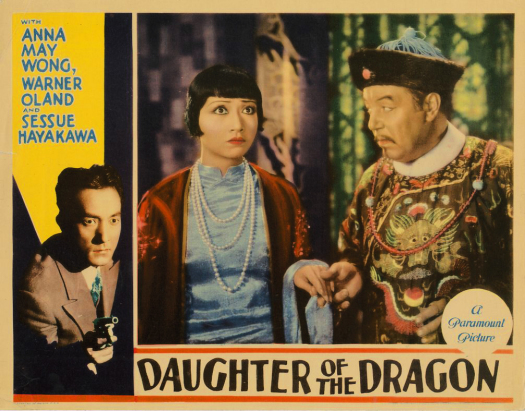


 Through the Shattered Lens