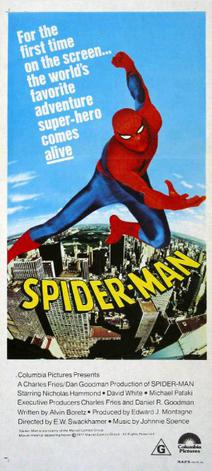
Spider-Man (1977, directed by E.W. Swackhemer)


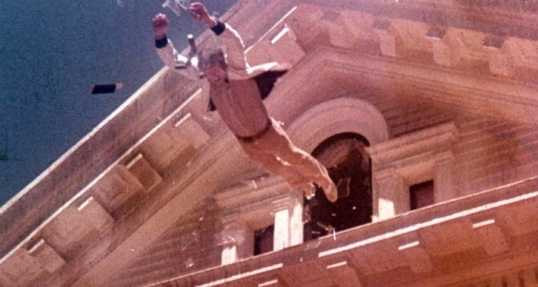
When a college student named Peter Parker (Nicholas Hammond) is bitten by a radioactive spider, he’s stunned to discover that he can now do everything that a spider can.  He can climb walls.  He has super strength.  He has super senses.  And, once he invents a sticky web serum, he can shoot webs and swing around the city!  All he has to now is sew himself a red and blue costume and he’ll be ready to fight crime in New York City!

It’s not a minute too soon because New York is dealing with a crime wave that only Spider-Man can deal with.  Seemingly ordinary people are suddenly going into hypnotic trances, stealing money and committing suicide.  An extortionist sends words that, unless he’s paid a lot of money, he’s going to unleash a wave hypnotic chaos on the city.  Could it have anything to do with a sinister New Age guru and hypnotist named Edward Byron (Thayer David)?

Though it was released theatrically in Europe, Spider-Man was produced for television and it served as the pilot for a short-lived CBS television series.  Along with The Incredible Hulk, this was one of the first attempts to build a television series around one of Marvel’s characters.  Unfortunately, the series only last 14 episodes before being canceled.  Though it can be hard to believe nowadays with the nonstop hype around every single comic book movie, there was a time when television and film executives were actually weary about trying to bring super heroes like Spider-Man and Captain America to life.  According to Stan Lee (who served as a consultant on Spider-Man), CBS wanted to distance their version of Spider-Man from its comic book origins.  While both the pilot and the series features Peter Parker crawling up walls and shooting webs, there’s no Uncle Ben.  There’s no talk about how with great power comes great responsibility.  Worst of all, there are no members of Spider-Man’s famed rogue’s gallery.  No Electro, no Sandman, no Green Goblin, and certainly no Dr. Octopus.  CBS wanted the show to feature down-to-Earth villains, which is an interesting strategy for a show about a grad student who can climb walls.

The television version of Peter Parker isn’t as insecure and angsty as either the comic book version or even the movie versions.  Hammond is likable and sincere in the role but he is also almost too self-assured as Parker, proof that CBS didn’t understand that a huge part of Spider-Man’s appeal was that he was never as confident as Superman or Captain America.  Instead, much like many of the people who read his comic, Peter was frequently worried and consumed with self-doubt.  The comic book version of Spider-Man was always wracked with guilt for not stopping the thief who eventually killed Ben.  The television version was more worried about selling enough selfies to The Daily Bugle to be able to go on a date with his professor’s daughter.

At least the pilot film featured a villain who wouldn’t have felt out of place in an issue of The Amazing Spider-Man, though he probably would have had a cool villain name, like the Mesmerizer, if he had appeared in the comic.  Thayer David played a lot of smug villains in the 70s, not to mention the fight promoter in Rocky.  In Spider-Man, David goes all in as the villain and he’s got the perfect posh accent for delivering threats and sarcastic put-downs.  Unfortunately, this version of Peter Parker is not the wise-cracking machine that he was in the comic books and he never really gets a chance to verbally put Byron in his place.

If you can overlook its deviations from the comic book, the pilot isn’t a bad made-for-TV adventure.  Though miscast and playing a far different version of Peter Parker than we’re used to, Nicholas Hammond does his best to make Peter and his transformation credible.  Thayer David, as always, is a good villain and the story, with ordinary people suddenly turning into ruthless criminals, isn’t bad.  Though there are a few convincing shots of Spider-Man web-slinging, most of the special effects are lousy but they’re really not any worse than what you would expect to see in a 70s made-for-TV movie.  Though the series ultimately didn’t work, the pilot is still an enjoyable precursor to what, decades later, would become the Marvel Cinematic Universe.
The Watcher in the Woods (1980) Review by Case Wright


The Watcher in the Woods is one of those films that scares you, but you see it in your youth and it first introduces you horror. It’s like a horror movie kiddie pool. I watched this today with my daughters, which makes a really bad dad or a really awesome dad. Not sure.

My Daughter’s – Half Scary, Half weird.

I would agree with that assessment. There’s possession and I think aliens, but they don’t burst out of your chest.

The Curtis family moves into a Good Value house rental in England next door to Mrs. Aylwood (Bette Davis). Right away, poor Jan (Lynn-Holly Johnson) starts seeing weird things all around the property like laser beams. Yes, laser beams. After a lot of strange things, we learn that Mrs. Alywood’s daughter disappeared. The middle-aged townsfolk are somehow responsible….dun dun dun.

There are a lot of themes in this movie that revolve around mirrors and eclipses. For a Disney film, it is pretty scary!

I any case, the movie is free! Watch it and determine for yourself if this was a bad parenting call.

Horror Scenes That I Love: The House Gets Revenge in Burnt Offerings


Since I reviewed Burnt Offerings earlier today, it just makes sense that today’s scene of the day should be the only emotionally rewarding scene from that film.

In this scene below — which does count as a spoiler, in case you’re one of those annoying toaduckers who complains about stuff like that — the House finally gets its revenge on the obnoxious family that’s been living inside of it.  Now, taken out of context, it may seem a bit harsh to describe the scene as being a crowd pleaser but, if you’ve sat through the entire film, it’s hard not to cheer a little when the chimney comes down.

Seriously, what an obnoxious little brat.

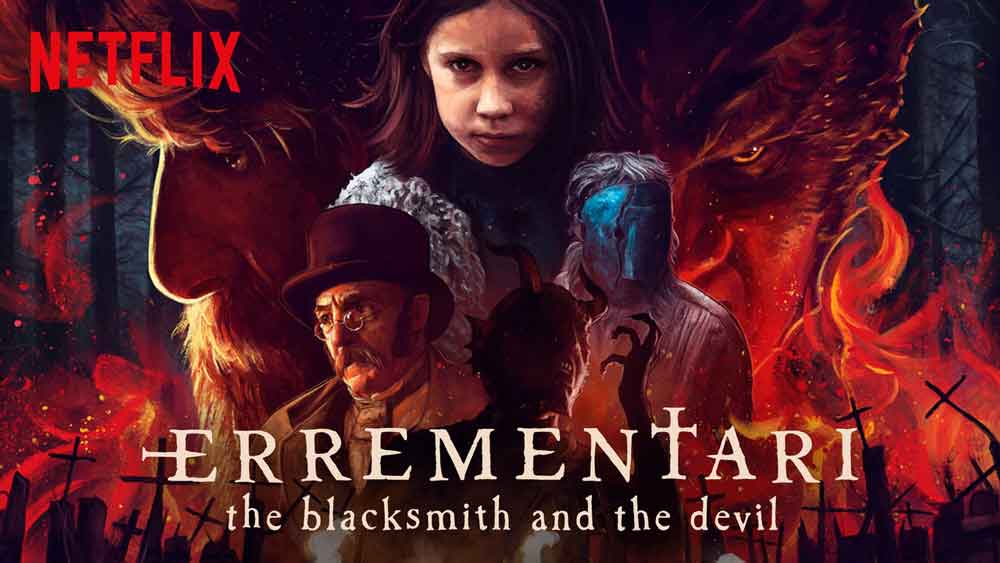
Errementari, Review by Case Wright


Happy Horrorthon!!! What do you get when you have Basques, Demons, Blacksmithing, and Illegitimate Children? About 91 minutes of entertainment! The toughest part of this movie is getting the title spelling correct. I couldn’t tell if they were speaking their Euskadi language or Spanish. I remember this dialect when I ran with the bulls in Pamplona. I was 22, hard-drinking, and up for anything dangerous. Once you left the city, it all looked liked rural Massachusetts and this film captured that old world culture and better yet, you have didn’t see me at 22 vomiting Paella, making out with Brits and Argentines, or ACCIDENTALLY ending up in a brothel.

The story centers around the reclusive Patxi who is considered a crazy hermit who lives outside of town and Usue, an orphaned child, who lives with the stigma of her mother’s suicide. Patxi was a veteran of the Napoleonic wars. When France invaded Spain, he fought, was captured and sentenced to death by firing squad. In order to see his family again, he made a deal with a demon Sarteal – as you do. Demons, they’re always acting like pun crazy evil genie’s, twisting your wishes to make them terrible.

I would be able to handle such a wish. I would draft a wish document with supporting case law, retain counsel for a minimum of 2 grand to review the wish, and insist the counsel indemnify. Sadly, Paxti did not have my savvy. After he made the wish, he survived and went home to find that his wife thought he was dead, had a baby – Usue- with a lover, and in a rage Paxti killed the lover and the mom hanged herself. In response, Paxti blames Sarteal for his wife’s death, captures Sarteal, and imprisons him in his bunker outside of town. Poor Usue is left parentless because of Paxti.

Side Note: Screw Paxti. Yes, Sarteal’s evil and blah blah blah, but it was Paxti who did the murdering. Take some personal responsibility, Paxti! It’s like that song “Hey Joe” by Jimi Hendrix. Joe is an asshat, but the Narrator is just as guilty. In Errementary, there’s no one else to blame! Unlike this story, Joe confessed that he was “gonna shoot [his] Old Lady and the narrator doesn’t do ANYTHING!!!” Why not say… Heeeey Joe, Where you going with that gun in your hand? Heeeey Joe, Maybe we should have a chat..take a breather…maybe up the meds a bit? Heeeeey Joe, you don’t down own your Old Lady and domestic violence is never acceptable! Heeeey Police, Joe’s got a damn gun and is threatening to murder his wife… yes… right now… he’s heading to.. where is that house honey? …. 72..yeah….7213 Robins Lane. Thank you.

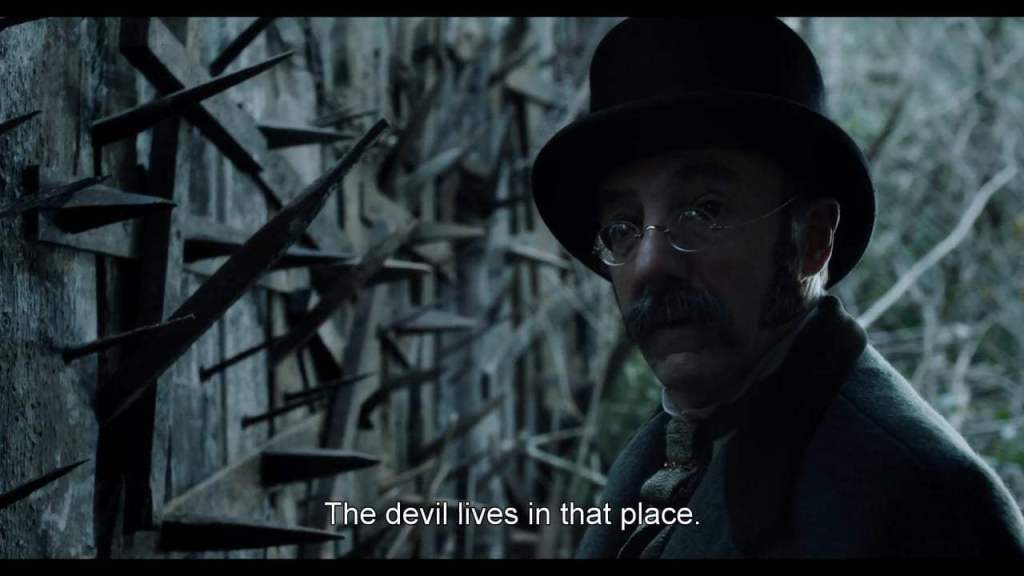
The local kids are constantly taunting Usue and chasing her and, on one occasion, she’s fleeing bullies and goes where they will NOT follow- Paxti’s property. His home and property is riddled with traps, Christian crosses, and other warding. There appears to be a child in a cage that she sets free, but this in fact Sarteal- the demon. Sarteal attacks Paxti, but Paxti gets him back, and then Paxti bonds with Usue by torturing the demon with chickpeas. Yes, Chickpeas. Demons are all OCD if you throw chickpeas on the ground, they have to count them. It comes up repeatedly in the story. It’s a whole thing.

Sarteal is kind of funny actually. He’s a failed soul collector and has been in Paxti’s makeshift prison for at least 20 years. In town, a Tax Collector comes and convinces the townsfolk to enter Paxti’s property because there is supposedly gold there. The Tax Collector, however, is not who he seems (except to Libertarians!)- he’s a demon -Alastor – sent to collect both the Blacksmith’s soul as well as Sarteal who is in poor standing in Hell for being a screw up.

The townsfolk try to enter Paxti’s property, but get caught in Paxti’s many traps he set up to imprison Sarteal if he escaped. The Tax Collector convinces the townsfolk to believe that Paxti is holding or killed Usue on his property. They form a mob with torches…very 3rd Act Frankenstein. Usue wants to see her mom again; therefore, she makes a deal with Alastor to see her mom in Hell in exchange for her soul. Alastor takes her to Hell and Paxti’s sets out to rescue her. He goes to Hell with a Golden Bell because the chimes do things to demons….it’s weird.

The depiction of Hell on their budget was not bad. Paxti does manage to redeem himself. He sends Usue back to Earth and he stays in hell with his bell and to find Usue’s mom…it’s weird. I enjoyed this film A LOT, but mostly because of the live tweeting. So, my advice is to try to watch it in some way with friends!

Horror Film Review: Burnt Offerings (dir by Dan Curtis)


This 1976 film is about a family so obnoxious that their own house tries to kill them!

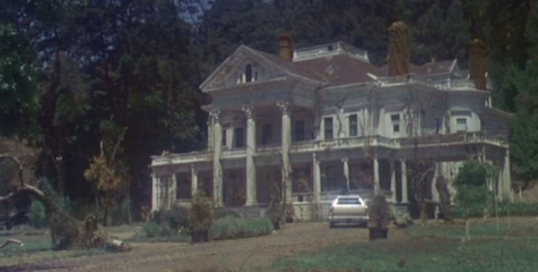
Well, maybe it’s not entirely the family’s fault. The film suggests that the house would have tried to kill anyone who lived there because the house itself is possessed by ghosts or Satan or something of that nature. Still, you can’t help but feel that the house took some extra joy out of destroying the Rolf family.  I know that I got some extra joy out of watching them get destroyed.

Ben (Oliver Reed) is a writer. Ben’s wife, Marian (Karen Black), is a flake who becomes obsessed with the house as soon as she sees it. Their son 12 year-old son, Davey (Lee Montgomery), is …. well, there’s no nice way to say this. He’s a brat. He’s the type of kid who you would be terrified of your kid befriending at school because then he’d want to come hang out at your house all the time. The movie doesn’t seem to realize that he’s a brat but the audience does. And finally, Aunt Elizabeth (Bette Davis) is Bette Davis, which means that she spends most of the movie delivering her lines in the most overdramatic and arch way possible.

The Rolfs are renting the house for the summer. The owners of the house are the Allardyces (Burgess Meredith and Eileen Heckart) and you would think that people would know better than to rent a house from Burgess Meredith. I mean, how many horror films in the 70s specifically featured Meredith as some sort of emissary of the devil? The Rolfs are asked to do two things: look after the house and look after Mrs. Allardyce, who lives on the top floor and never wants to be disturbed. The Rolfs are assured that they’ll never see Mrs Allardyce and the Rolfs are like, “Sure! That makes sense!”

Anyway, as soon as the Rolfs move in, the house starts to make weird noises and shingles start flying off the roof and, at one point, Ben nearly drowns his son in the pool.  And while it’s kind of understandable, considering how annoying his son is, it’s still not a good look.

Yep, it’s pretty obvious that the house is evil but Marian loves it, almost as if she’s becoming …. possessed! Meanwhile, Ben keeps having visions of a sinister looking chauffeur (Anthony James, whose creepy smile is the only memorable thing about this film) and Davey keeps standing too close to the outside chimney. You don’t want to do that when a house hates your guts.

It all leads to the inevitable ending, which involves people getting tossed out of windows and *ahem* crushed by chimneys. The family’s so obnoxious that you can’t help but cheer when that chimney comes down.  In fact, to be honest, as little as I think of this movie, I always specifically watch it just to see that chimney come down on one certain character.  Things might not work out well for the Rolfs or anyone else watching this rather slow and predictable movie but at least the house survives.

Fly, baby, fly!

Now, I will admit that I do own this film on DVD, simply because I love the commentary track.  Director Dan Curtis, star Karen Black, and the film’s screenwriter, William F. Nolan, watch and discuss the film and it quickly becomes obvious that none of them remember much about making it.  While Karen Black tries to keep the peace, Curtis and Nolan bicker over who is most responsible for the parts of the film that don’t work.  When Anthony James shows up as the creepy chauffeur, Dan Curtis says that he doesn’t remember his name and then gets visibly annoyed when Karen Black spends the next few minutes talking about what a good actor Anthony James is.  It’s all enjoyably awkward and, as someone who has hosted her share of live tweets, I couldn’t help but sympathize with everyone’s efforts to find something positive to say about Burnt Offerings.

Horror on The Lens: Where Have All The People Gone? (dir by John Llewellyn Moxey)


For today’s horror on the lens, we have a 1974 made-for-TV movie about what happens when a family comes down from the mountains and discovers that everyone’s disappeared.

“Where have all the people gone!?” is the obvious question and it’s also the title of this film.  Our own Jedadiah Leland reviewed this movie back in March and he described it as being “effectively creepy.”  I watched it with my friends in the Late Night Movie Gang a few months later and we described as being perhaps the best Peter Graves film we had seen since we watched that one where everyone was a clone.

So, after those recommendations, how can you not watch Where Have All The People Gone?

Enjoy!

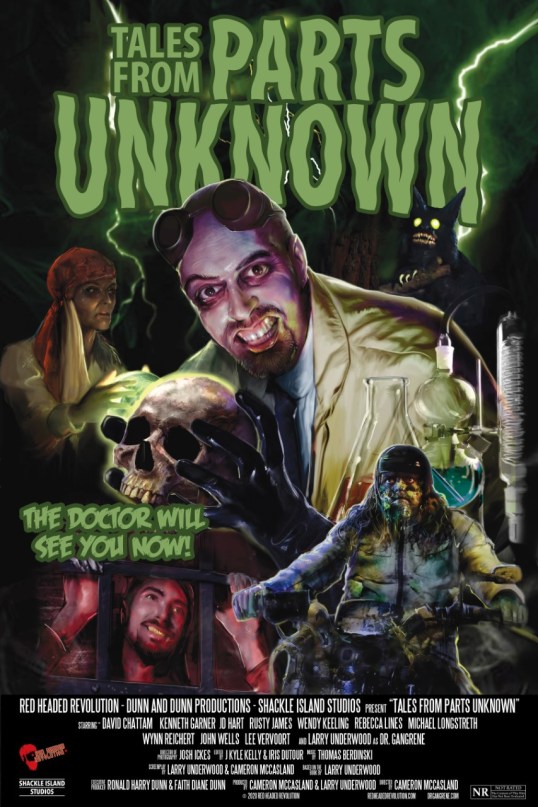
Horror Film Review: Tales From Parts Unknown (dir by Cameron McCasland)


On Shackle Island, there’s a somewhat dilapidated-looking mansion.  And inside that mansion, there’s a friendly and talkative scientist by the name of Dr. Gangrene (played by Larry Underwood).  If you need shelter from the rain, Dr. Gangrene will be more than happy to accommodate you.  Of course, if you do accept Dr. Gangrene’s hospitality, you’ll have to visit the lab and take a look at the doctor’s truly impressive collection of brains.  For every brain, there’s a different story.  In the new horror anthology film, Tales From Parts Unknown, Dr. Gangrene introduces four of those stories.

The first brain, Tailypo, tells the story of a hunter and his dog and what happens when their prey escapes from them but loses its tail in the process.  Let’s just say that some creatures don’t take well to losing their tails and that, if you ever do happen to come across a tail out in the middle of the wilderness, it’s probably best to just leave it where you found it.  I originally reviewed Tailypo back in 2015 and it was interesting to get a chance to rewatch it.  (From my review: Tailypo is the first in a series of short films that McCasland is planning to put together for an anthology film that I hope I will someday get a chance to review.)  Tailypo holds up well to a second viewing.  Not only does David Chattam give a good and sympathetic performance as the Hunter but Tailypo really does capture the feel of being the type of story that someone would tell while sitting in front of a campfire.

The second story was Retrieval Service, which told the tale of two gravediggers who eventually make the mistake of trying to rob the dead.  Retrieval Service had a nice Southern gothic feel to it.  It was set (and filmed) in Tennessee and it really captured the unique feel of the region.  The two grave diggers (played by Kenneth Garner and J.D. Hart) got some good lines and had some enjoyably surreal nightmares on their way to digging up graves in search of treasure.  Don’t disturb the dead, the story tells us, no matter how much jewelry they’re wearing.

For The Prisoner of Perdition, we take a trip back to the old west.  In the small town of Perdition, an outlaw named Thorne (John Wells) waits in jail.  An angry mob wants to play jury and executioner but Marshal Tom Clanton (Rusty James) is determined to keep him safe.  However, Thorne has plans of his own and, as becomes apparent throughout the night, he’s also very good at manipulating people.  In fact, he’s a little too good at it.  It’s almost as if he’s not quite human….

The Prisoner of Perdition may not be the most historically accurate western ever made but that’s actually accounts for a good deal of the segment’s charm.  It’s not taking place in the real old west as much as it’s take place in the public’s popular imagination of what the old west was like.  As a result, you’ve got panicky townspeople, women posing on the saloon’s balcony, a tough-talking marshal, and a coldly manipulative prisoner.  The Prisoner of Perdition looks like it was an enjoyable segment to film, which makes it an enjoyable segment to watch.  John Wells does a good job as the charming but evil Thorne.

The Prisoner of Perdition is followed by my favorite story, The Rider.  The Rider is about a greedy writer (Wendy Keeling), her henpecked husband (Wynn Reichert), and the Biker (Lee Vervoort) that the writer accidentally runs over while she’s trying to drive and yell at her husband at the same time.  In its way, The Rider provides a nice tail-end to Tailypo, though the greedy writer is a far less sympathetic character than the unfortunate hunter.  Like Tailypo, The Rider has a lot of atmosphere and an appropriately dark conclusion.

Tales From Parts Unknown is a horror anthology that has an enjoyably retro feel to it.  Larry Underwood (a.k.a. Dr Gangrene) is a veteran horror host and he’s a lot of fun to watch as he holds up each brain to the camera and as he explains why the viewer can’t leave the laboratory just yet.  Tales From Parts Unknown is an entertaining film, perfect for the Halloween season.

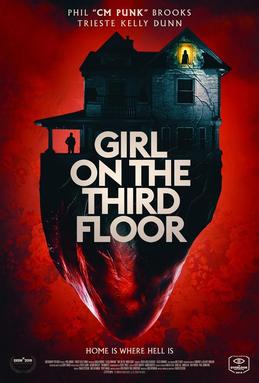
The TSL’s Horror Grindhouse: Girl on the Third Floor (dir by Travis Stevens)


The 2019 film, Girl on the Third Floor, tells the story of Dan Koch (Phil Brooks), a former criminal who says that he’s trying to turn his life around.  Phil is married to Liz (Trieste Kelly Dunn) and they’ve not only got a baby on the way, they’ve also got a new house!  It’s a surprisingly big house and you have to kind of wonder why no one else has bought it.  Maybe it’s because there’s an Episcopalian church right across the street.  That definitely would have kept me from moving in.

Still, despite the presence of Anglicans in the neighborhood, Phil moves into the house.  He wants to get the house ready before his pregnant wife comes out to join him.  Helping Phil out are his dog Cooper and his best friend, Milo (Travis Delgado).  Ellie (Karen Woditsch), the rather judgmental pastor who lives in the church, also comes by and visits.

Of course, any old house is going to have its issues.  There’s the mysterious sludge that pours out of the walls.  There’s the mysterious marbles that keep rolling through the house.  There’s the mysterious bumps in the nights and the fact that Cooper seems to be weary of the new home.  Dogs can always pick up on evil.  Of course, along with being a bit of an idiot, Don is too busy banging his new neighbor, Sarah (Sarah Brooks), to notice.

Don, if you haven’t guessed, is a bit of a jerk.  Even though he swears that he feels guilty for cheating on his wife, he still does it.  When his friends mysteriously disappear while helping out around the house, Don doesn’t make much of an effort to find them.  When Don thinks that there’s a chance his wife might find out what’s been going on at the house, he goes to extreme methods to try to cover everything up.  Don thinks that he can control every situation but Sarah and the House both appear to be intent to prove him wrong.

Girl on the Third Floor is a deliberately-paced …. well, I guess you’d call it a haunted house story.  I was tempted to call it a ghost story but the film is frequently ambiguous as to whether or not the house is haunted by ghosts or by something far worse.  Eventually, we do learn a bit about the house’s past but Girl on the Third Floor is at its best when it leaves you wondering what exactly is going on.  Not all questions have to be answered, especially not in a horror movie.  In fact, the key to most successful horror tales is the knowledge that some questions will never be answered, no matter how effort we put in to  searching for a solution.

Phil Brooks, who wrestled under the name CM Punk, is well-cast as the frequently brutish Don.  Brooks convinces us that he does want to be a better person while also showing that he doesn’t really have the inner strength necessary to do so.  Trieste Kelly Dunn also does a good job as Don’s wife, who seems like she really does deserve better.  Not surprisingly, the film is stolen by Sarah Brooks as the mysterious neighbor.  Not only does she get to wear all the best clothes but she also gets all of the best lines and her confidence that Don will fail whatever test she puts before him is both chilling and understandable.

Despite being a little bit slow-paced (especially early on in the film), Girl on the Third Floor has enough atmosphere to hold one’s attention and the final third of the film is enjoyably surreal.  Girl on the Third Floor is currently on Netflix.  Watch it the next time you’re wondering whether or not to start a home improvement project.


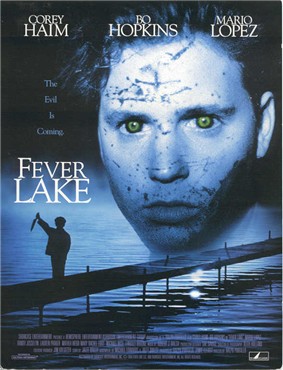
Cinemax Friday: Fever Lake (1997, directed by Ralph Portillo)


I’ve seen my share of bad slasher films but Fever Lake is definitely one of the worst.

The plot is a familiar one.  Six college students (including Corey Haim, Mario Lopez, and Lauren Parker) head to the lake for the weekend.  The lake has a bad reputation and they’ll be staying at a house where a terrible murderer occurred ten years earlier.  The sheriff (Bo Hopkins) doesn’t want any foolishness.  The local Native American medicine man (stiffly played by Michael Wise) says that there is a demon in the lake and that it’s about to reawaken.  The students go to the lakehouse anyway.  Can you guess what happens?  It’s a 93 minute film where the killer doesn’t show up for 70 minutes. There’s not much gore and zero nudity and it has a twist that anyone will be able to see from a mile away.  Haim alternates between sleepwalking his way through the film and screeching unintelligibly and Mario Lopez comes across like he’s playing A.C. Slater on speed.  It’s thoroughly inept in almost every way that a film can be and, even worse, it’s boring.

Fever Lake is the type of film that, in the 90s, you always hated coming across on late night Cinemax.  Because you were watching 2 in the morning, you would expect something extreme and instead you ended up with an hour of Corey Haim and Mario Lopez driving up to the lake.   Late night connoisseurs held films like this in a special kind of contempt.  For the most part, we never asked much from more late night Cinemax offerings and when a movie like this couldn’t even deliver what little we did ask for, it was hard not to take it personally.  (To be honest, the PG-13 rating should have given the game away.  I’m not sure what the film did to rate the addition of that 13, though.  This film is a solid PG, all the way through.)

Today, of course, we can enjoy Fever Lake because of RiffTrax.  Mike, Kevin, and Jim ripped Fever Lake apart in 2015.  The film, with their commentary, is available on Prime.  It’s the best way to watch Fever Lake.


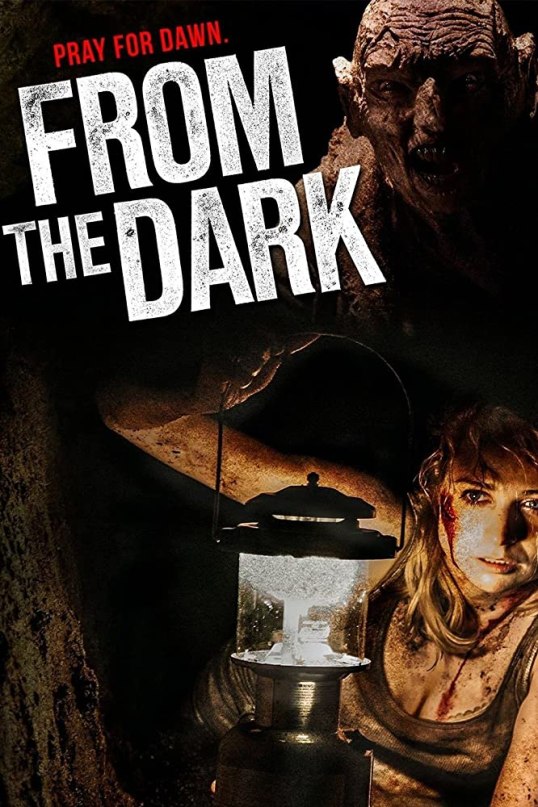
International Horror Film Review: From the Dark (dir by Conor McMahon)


It’s an Irish horror film!

As a reviewer, I think it’s important for me to be open about my biases.  Especially in October, I think it’s important for you to know that I love horror movies in general and that I especially tend to like low-budget horror films.  You should also know that I tend to value positivity over negativity and, as a result, I’m always going to spend more time on what I like about a movie than on what I don’t like.  I have no interest in joining in with the parade of bitterness that’s consumed so many otherwise intelligent people.

You should also know that I take a lot of pride in my Irish heritage.  Whenever I get stressed out here in America, I remember visiting Argdlass two years ago.  It calms me down.  It makes me happy.  I hope to be able to visit again soon.  As a result, I’m naturally biased towards Irish films.  That’s particularly true now, when I find myself often thinking about what life was like before the start of this year.

Needless to say, with those biases in mind, I was probably the ideal audience from From The Dark.

From The Dark open with a man named Mark (Stephen Cromwell) and a woman named Sarah (Niamh Algar) in a car.  As I watched them drive across Ireland, I shouted, “I’ve done that!”  When Mark and Sarah got lost while trying to navigate the Irish roads, I said, “I’ve done that.”  When the car ends up getting stuck in mud, I said, “Yep, I’ve done that.”  Finally, when Mark and Sarah approached a scary-looking farmhouse in the middle of the night while looking for help, I said, “Oh, Hell no!”

Once you’ve seen enough horror movies, you know that it’s always a mistake to approach a farmhouse in the middle of the night.  Farmhouses are always full of either zombies or inbred rednecks or blood farmers.  Stay away from the farmhouses!  That’s what Sarah and Mark should have done because they soon find themselves being chased and attacked by a monster who seems to thrive on the darkness of the night….

Albeit uneven, From The Dark has its moments.  The low-budget is obvious in almost every shot but the film makes good use of that farmhouse location and, even more importantly, it keeps us guessing about the monster that’s living there.  Wisely, the film keeps the monster off-camera for as much as possible, leaving both the audience and Mark and Sarah to wonder where in the darkness it could be hiding.  I’ve always felt that horror is more effective on a low-budget than a big budget and From The Dark shows why.  The more expensive a monster is, the more obligated the filmmaker is going to be to show it off.  Low-budget monsters, though, are usually kept off-camera for the majority of the film and therefore, they’re much more intimidating.  There’s nothing scarier than what the human imagination can come up with and nothing sparks one’s imagination quicker than trying to figure out what might be hiding in the dark.

From the Dark does have some pacing issues.  As much as I enjoyed the footage of the Irish countryside, the scenes of Sarah and Mark driving dragged a bit.  As well, Sarah and Mark aren’t always the most sympathetic of protagonists.  Usually, I don’t mind it when characters in horror films do stupid things because, quite frankly, we all do stupid things.  But when there’s only two humans in the entire film, it’s a lot easier to dwell on the dumb things that they did that led to them getting in their dire situation in the first place.

Taking all of that into consideration, From the Dark may be imperfect but, when it works, it’s effectively creepy.  Plus, it’s Irish!