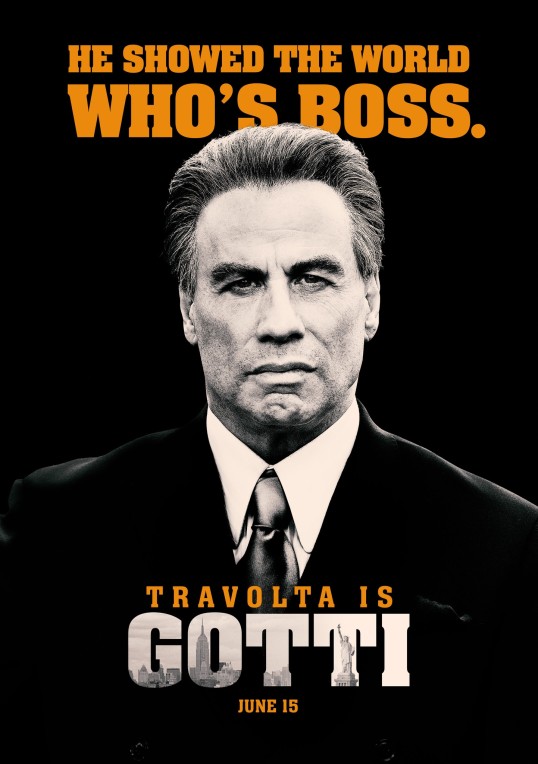
An Offer You Can’t Refuse #23: Gotti (dir by Kevin Connolly)


Few recent films have been as misunderstood as Gotti.

When this film was first released in 2018, it was slammed by critics and it flopped at the box office.  On Rotten Tomatoes, it managed a score of 0% from the critics.  At the same time, the opening day audience score was 80%.  (Over subsequent days, the audience score would drop to 46%.)  This disparity was blamed on studio employees inflating the audience score, though I think it’s more likely that, after months of negative press about the film’s troubled productions, critics were already looking forward to slamming the film before they even had a chance to see it.  At the same time, the buzz on Gotti was so bad that the opening day audience was made up of a combination of John Travolta die-hards (whoever they may be) and people who were expecting such a trainwreck that all Gotti had to do to surpass their expectations was to occasionally be in focus.

Then again, it could be that some members of the audience understood what I instinctively understood when I first watched GottiGotti is not really a film about John Gotti, the flamboyant New York mob boss who ruled the streets with an iron fist and who eventually ended up dying of cancer in prison.  Instead, whether it was the filmmaker’s actual intention or not, Gotti is a film about the audience’s fascination with not only gangsters but also the movies that have been made about them.

It’s true that John Travolta may be playing someone namned John Gotti but the film goes out of its way to remind you that he’s not the real John Gotti.  The film is full of archival news footage of the real John Gotti, either laughing it up with reporters or smirking while sitting in a courtroom.  Every time that we’re shown footage of the real John Gotti, we’re reminded of the fact that, at not point during the film, does Travolta look anything like John Gotti.  Add to that, the real Gotti is always smirking whereas Travolta always looks somewhat grim.  At the time this film came out, many claimed that this was evidence of lazy filmmaking but I viewed it as being a Brechtian distancing device.  Whenever the real Gotti makes an appearance, we’re reminded that we’re just watching a movie and then we’re encouraged to ask ourselves why we would want to watch a movie about such a disreputable figure.

The movie opens with John Travolta standing next to the Brooklyn Bridge and speaking directly to the camera.  Though Travolta is meant to be speaking to us as John Gotti, the sight of him standing near a bridge in New York will automatically remind some viewers of a previous Travolta film, Saturday Night Fever.  The character that Travolta played in Saturday Night Fever, Tony Manero, has come to epitomize New York in the 70s.  The film suggests that, in much the same way, Gotti epitomized New York in the 80s and 90s.  Gotti, the film is saying, is as much of an icon of the popular imagination as Tony Manero dancing in a white suit.

Why is Gotti speaking directly to us in that scene?  It may seem like a framing device until, a few minutes later, we see a bald and sickly Gotti in a prison meeting room, telling his life story to his son, John, Jr. (Spencer LoFranco).  Gotti talking in prison is then established as the narrative’s other framing device.  So, why was Gotti speaking to us on the bridge and why did he look so healthy and have a full of head of hair when the film has made it clear that the newly bald Gotti is going to die in prison?  When I first saw the film, my initial thought was that the Gotti who speaks directly to the audience was meant to be a ghost.  But then it occurred to me that he’s actually not meant to be John Gotti at all.  Instead, the Gotti who talks to us on the bridge is meant to be our popular conception of what gangsters like John Gotti as like.  He’s what we imagine gangsters to be — i.e., tough-talking, well-dressed, and played by an iconic actor.  As such, the film’s narration is not being provided by John Gotti.  Instead, it’s being provided by the person that we imagine someone like Gotti to have been.

Is the imprisoned Gotti meant to be the real Gotti?  Perhaps.  However, it’s hard not to notice that, over the course of the film, Gotti’s son never ages.  Though several decades pass, Gotti’s son always looks like he’s in his mid-twenties.  When he visits his father in prison and talks about having teenage children of his own, it feels odd because he barely looks old enough to be out of high school.  That may seem like lazy filmmaking but again, I would argue that this is a distancing device.  It’s a reminder that we’re not watching reality.  Instead, we’re choosing to watch actors pretending to be gangsters.

Once you accept that Gotti is a film not about John Gotti but instead about those of us in the audience who are watching, the film makes a lot more sense.  The film’s cliches about life in the Mafia are revealed to be not so much the result of an uninspired script as they’re an homage to American folklore.  Of course, there’s going to be a scene where Gotti tells his children never to rat on their friends.  Of course, there’s going to be random shootings and burly men demanding respect.  This is a gangster movie, after all.  By populating the cast with people who you normally wouldn’t expect to see playing members of the Mafia — Stacy Keach, Chris Mulkey, Pruitt Taylor Vince — Gotti continually reminds you that you’re watching a movie.  The real mafia isn’t like this, Gotti is saying, but the mafia of the popular imagination is.  Why are we horrified by real-life crime and yet we flock to movies that claim to recreate it for our entertainment?  This is the issue at the heart of Gotti.

Gotti’s flaws are there to remind us that we’re just watching a movie.  They’re also there to make us wonder why we’re watching that particular movie.  Gotti asks us why audience idolize killers like John Gotti.  Why do we turn them into folk heroes?  Is it because we imagine them to be characters in films as opposed to actual human beings?  Whether or not one feels that the film succeeded in its goal, this is an offer that you cannot refuse.
Previous Offers You Can’t (or Can) Refuse:

  1. The Public Enemy
  2. Scarface (1932)
  3. The Purple Gang
  4. The Gang That Could’t Shoot Straight
  5. The Happening
  6. King of the Roaring Twenties: The Story of Arnold Rothstein 
  7. The Roaring Twenties
  8. Force of Evil
  9. Rob the Mob
  10. Gambling House
  11. Race Street
  12. Racket Girls
  13. Hoffa
  14. Contraband
  15. Bugsy Malone
  16. Love Me or Leave Me
  17. Murder, Inc.
  18. The St. Valentine’s Day Massacre
  19. Scarface (1983)
  20. The Untouchables
  21. Carlito’s Way
  22. Carlito’s Way: Rise To Power

The Love War (1970, directed by George McCowan)


Two warring alien races are settling their conflict in California.  Two teams of three have been sent down to Earth.  Though they may appear to be human, their true form is revealed whenever anyone looks at them while wearing a special pair of glasses.  (Yes, just like in They Live.)  Kyle (Lloyd Bridges) is the last surviving member of his team but, even if his side has lost two battles, Kyle is still determined to win the war.

After killing one of his opponents in Los Angeles, Kyle hops on a bus and heads to a small town.  While he’s on the bus, he’s approached by Sandy (Angie Dickinson).  Though Kyle tries to avoid talking to her, Sandy manages to break down his defenses because she’s Angie Dickinson.  If 70s era Angie Dickinson started talking to you on a bus, would you be able to ignore her?  When Kyle reaches his destination and gets off the bus, Sandy decides to follow him.  Even after Kyle explains that he’s an alien and allows her to see his true form, Sandy says that she’s in love with him.  Kyle starts to fall in love with her too but what will he do when the other aliens show up in the town, looking to kill him?

Even though this made-for-TV movie’s 70 minute runtime makes it feel more like an extended episode of The Outer Limits than an actual movie, The Love War makes good use of both its intriguing premise and its two lead actors.  Lloyd Bridges and Angie Dickinson might not be the first two actors who come to mind you think about who could credibly play an alien and the woman in love with him but they both pull it off.  The Love War works because it takes its premise seriously.  I can only imagine how audiences in 1970 reacted the film’s ending, which is hardly typical of the type of feel-good stuff that we usually associate with 70s television.

The Love War has never officially been released on DVD but it can be viewed on YouTube.

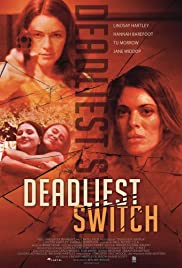
Lifetime Film Review: Deadly Daughter Switch (dir by Ben Meyerson)


Does it never occur to anyone in a Lifetime movie to not let a stranger move into their house?

That was my main thought as, earlier today, I watched Deadly Daughter Switch.  Deadly Daughter Switch, which I DVR’d off of the Lifetime Movie Network back in April, tells the story of two families.  One family is rich and lives in a really nice house and sends their daughter to a really nice school.  The other family is not rich, which means that they live in a slightly smaller house and the mother has to work at a coffee shop.

When Brooke (Lindsay Hartley) and Carter Jenkins (Matthew Pohlkamp) discover that their teenage daughter, Hailey (Tu Morrow), is not actually their daughter, they take their story to the media.  They ask that anyone who was born on the same night and at the same hospital as Hailey take a DNA test.  It turns out that Hailey is actually the daughter of Alexis (Hannah Barefoot) and that Alexis has been raising Brooke’s biological daughter, Breanne (Jane Widdop)!

If that’s not complicated enough, a counselor at the hospital comes up with the bright idea that Hailey should spend time with Alexis while Breanne should spend time with Brooke and then the girls can decide by whom they ultimately want to be raised.  Alexis points out, quite reasonably in my honest opinion, that Brooke obviously has more money than her and that she probably lives in a better school district and that the end result of this experiment will probably be Brooke having two daughters and Alexis having no one.  Still, they all agree to take the counselor’s advice because I guess the counselor is the voice of God or something and you have to do what she says even if it doesn’t make any sense.

Anyway, it turns out that Alexis was right about Breanne wanting to get away from her.  However, it’s not just that Alexis has less money than Brooke and Carter.  It’s also that Alexis is a little bit insane.  Alexis loses her job at the coffee shop after she kills her boss.  Then Alexis kills the volleyball coach who she claims is Breanne’s biological father.  Then Alexis kills her alcoholic, white trash boyfriend.  Alexis, of course, manages to make all of these deaths look like accidents because Alexis may be poor-ish and she may be dangerously unstable but she’s not stupid.

Anyway, seeing as how everyone in her life is dead, the Carters invite Alexis to come stay with them.  “Do you think we trust Alexis too much?” Brooke asks Carter.  Gee, Brooke, why would you ask that?  Is it because Alexis is obviously plotting to murder you?

Anyway, if it sounds like I’m being critical of Deadly Daughter Switch, I’m not.  I actually rather enjoyed it.  A part of loving Lifetime films is that you come to accept all of the strange premises and the melodramatic plot twists.  You don’t ask why.  You don’t question logic.  You just accept it and follow it to its conclusion.  These films are meant to be the cinematic equivalent of a paperback novel that read over the course of an afternoon.  Hence, the more melodramatic the better.  Hannah Barefoot was an energetic killer and the Carter house was really big and nice and it looked like it would be a fun place to live.  And really, isn’t that all you need?

Seriously, though, don’t invite just anyone to come live with you.  You never know what they might be secretly plotting.

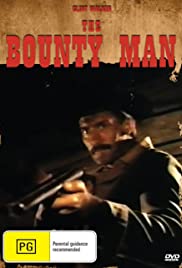
The Bounty Man (1972, directed by John Llewellyn Moxey)


Kinkaid (Clint Walker) is a bounty hunter in the old west who doesn’t have time for sentiment or friendship.  All he cares about is the money that his next bounty is going to bring in.  When he captures outlaw Billy Riddle (John Ericson), it should be a cool $5,000 payday.  The only problem is that Billy’s girlfriend, a prostitute named Mae (Margot Kidder), insists on accompanying Kinkaid while he takes Billy to jail.  Though she initially conspires to help Billy escape, Mae soon starts to fall for the outwardly unemotional Kinkaid, especially when she discovers the details of his tragic backstory.  (Every bounty hunter has one!)

However, the three of them soon run into another problem.  Angus Keogh (Richard Basehart) and his gang have decided that they want to collect the bounty for themselves.  Kinkaid, Billy, and Mae find themselves trapped in a canyon, under siege and with no food or water.  The three of them will have to work together to survive but can they trust one another?

The Bounty Man was a made-for-TV western and it feels like it was originally mean to be a pilot.  There’s not really much to the story, beyond establishing Kinkaid and Mae as characters who could potentially have a new adventure every week.  I did like the performance of Richard Basehart, especially in the scene where he taunts the trapped Kinkaid by demonstrating that he has so much water that he can pour it out of his canteen without having to worry about running out.  Basehart was a good villain and Walker was a believable hero, even if the character wasn’t very interesting.  Margot Kidder, not surprisingly, is the best thing about the film.  Mae is stock role, the prostitute with a heart of gold, but Kidder brings a lot of life to the part.

The Bounty Man was one of many TV movies directed by John Llewelleyn Moxey.  He does a good job moving the action along.  The Bounty Man is a quick, 70-minute diversion for undemanding western fans.

What Lisa Watched Last Night #212: Her Deadly Groom (dir by Jared Cohn)


Last night, I turned over to Lifetime and I watched Her Deadly Groom!

Why Was I Watching It?

How couldn’t I watch it?  It was on Lifetime.

Last night, I realized that it had bee forever since I last watched and live tweeted a Lifetime film.  Some of that was due to some changes in my schedule.  On Saturday night, I now co-host the Scary Social live tweet, which means that I usually have to DVR and watch Saturday’s Lifetime movie at a later date.  And, admittedly, some of my absence from the Lifetime front just had to do with just pure exhaustion at the state of the world.  When you spend 7 days straight hearing about how the world is going to end, you often just want to spend Sunday meditating or sleeping or, at the very least, dancing.

But, regardless of what else may be happening, I love Lifetime movies and I always have.  Last night, I was determined to watch Her Deadly Groom and I’m glad that I did.

What Was It About?

Allison (Kate Watson) is divorced from George (Eric Roberts), an alcoholic and a serial philanderer.  She now lives with her daughter Nicky (Elyse Cantor) and Nicky’s boyfriend, Jake (Jacob Michael) and she has a nice specialty peanut butter business going with her friend Brenna (Kelly Erin Decker).  One thing that Allison says she doesn’t need in her life right now is another man.  Brenna, however, disagrees and creates an account for Allison on a dating site.

Soon, Allison has met Vincent Black (Michael DeVorzon), who is handsome, charming, and psychotic.  Fear not, that’s not a spoiler.  You know that Vincent is dangerous from the minute you first see him because 1) he pushes his previous girlfriend off a cliff and 2) this is a Lifetime movie.  Anyway, Vincent is soon dating Allison and it looks like they’ll soon be married.  What Allison doesn’t know is that Vincent has taken out a huge life insurance policy on her….

What Worked?

Eric Roberts was in this film!  Admittedly, he had a small role but still, he’s Eric Roberts and he’s always a lot of fun to watch.  Plus, in this film, there was a neat little twist involving his character and Roberts did a great job playing it.

One thing I liked about this film is that Vincent may have been charming and lucky but he wasn’t always the most clever con artist around.  He wasn’t one of those super villains who you occasionally come across in a film like this.  Instead, he was just a con man who knew how to manipulate people but who also understood that he would only be able to successfully fool people for a limited amount of time.  As a result, he didn’t waste any time when it came to putting his plans into action and that created some suspense.  We knew he wasn’t going to wait forever to make his move.  Vincent was a wonderfully hissable villain.

The mother-daughter relationship between Nicky and Allison felt real and both Kate Watson and Elyse Cantor did a good job of bringing their characters to life.  I appreciated the fact that, even though Allison may have been naive when it came to Vincent, she wasn’t stupid.  She was just someone who got legitimately conned by a sociopath.

Finally, this was a Lifetime film so all of the house were to die for.  Seriously, never underestimate the importance of a big house in a Lifetime film.

What Did Not Work?

It all worked.  This was a fun Lifetime movie.

“Oh my God! Just Like Me” Moments

I related to Brenna, mostly because we’ve both fallen down a flight of stairs.  Of course, nobody had to push me.  I’m just a klutz when it comes to stairs.

Lessons Learned

If something seems too good to be true, it probably is.  Oh!  And always check to see if your man has taken out a life insurance policy on you.

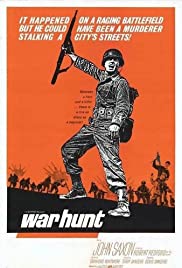
War Hunt (1962, directed by Denis Sanders)


In the last days of the Korean War, Pvt. Roy Loomis (Robert Redford) is assigned to an infantry unit that’s serving on the front lines.  Loomis is an idealist who believes in always doing the right thing and who believes that he’s truly fighting for the American way of life in Korea.  The company’s commander (Charles Aidman) is more cynical.  As he explains it, the job of the soldiers is not to win the war.  Their job is to stall the advance of the enemy long enough to let the politicians and the diplomats get what they want out of a peace settlement.  The soldiers are merely there to be sacrificed.

Loomis soon finds himself in conflict with Pvt. Endore (John Saxon).  Endore spends his night sneaking around behind enemy lines, killing soldiers, and gathering intelligence.  No one goes with Endore on these missions and Endore makes it clear that he doesn’t want to have anything to do with the other solders in the unit.  Because Endore usually returns with valuable intelligence, he’s allowed to do what he wants but it becomes clear that gathering intelligence is not what motivates Endore.  Endore loves war and killing.  In the United States, he would probably be on death row.  In Korea, at the height of the war, he’s a valuable asset.

Charlie (Tommy Matsuda) is an orphan boy who has been adopted as the company’s mascot.  Both Loomis and Endore have a bond with Charlie.  Loomis wants Charlie to go to an orphanage after the war so that he can hopefully be adopted and maybe brought over the United States.  Endore, however, plans to stay in Korea even after the war ends and he wants to keep Charlie with him.  He wants to turn Charlie into as efficient a killing machine as he is.

This low-budget but effective anti-war film may be best known for featuring Robert Redford in his first starring role but the film is stolen by John Saxon, who is frighteningly intense as Endore.  Endore is so in love with war that he continues to fight it even after the Armistice is declared.  Saxon plays him like a cool and calculating predator, a natural born killer.  He’s an introvert who rarely speaks to the other members of the company.  Even though he helps them by killing the enemy before the enemy can kill them, it’s clear that Endore doesn’t really care about the other members of the unit.  He just cares about killing.  He’s close to Charlie because Charlie is too young to realize just how dangerous Endore actually is.

Along with Saxon and Redford, War Hunt also features early performances from Tom Skerritt, Sydney Pollack, and Francis Ford Coppola.  (Coppola, who goes uncredited, plays an ambulance driver.)  Pollack and Redford met while they were both acting in this film and Pollack would go on to direct Redford in several more films.  One of those films, The Electric Horseman, would reunite Redford and Saxon.  Again, they would play adversaries.

Last night, when I heard John Saxon had died, I tried to pick his best performance.  I know that most people know him from his horror work and his role in Enter the Dragon.  Those are all good performances but, for me, Saxon was at his absolute best in War Hunt.


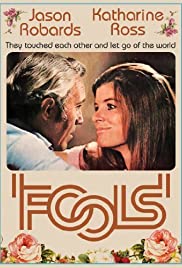
Fools (1970, directed by Tom Gries)


What the Hell, 1970?

In this self-conciously hip and with-it portrait of life in San Francisco at the tail end of the hippie era, Jason Robards plays Matthew South, a veteran B-movie actor who is fed up with everyday life and who is prone to long monologues about how the machines are taking over.  (Just imagine how Matthew would feel about the world today.)  When Matthew gets into an argument with two people in a park, Anais Appleton (Katharine Ross) comes to his rescue and soon, they’re in the middle of a falling in love montage.  Actually, there are several falling in love montages and they’re almost all scored by Kenny Rogers and the First Edition.  It’s easy listening with a hippie tinge.

Fools follows Matthew and Anais as they wander around San Francisco and have several strange encounters, none of which make much sense.  For instance, there’s a scene where two FBI agents suddenly burst into the room and then admit that they’re at the wrong address.  Why is that scene there?  What does it mean?  Later, Matthew and Anais go to a dentist and they listen to a patient try to seduce her psychiatrist (who is played by Mako).  Why is that scene there?  What does any of it mean?  Everywhere that Matthew and Anais go, they see evidence that society is dumb and that the answer to all life’s problems is a love song from Kenny Rogers.  Matthew never stops talking and Anais never stops looking pretty (she’s Katharine Ross after all) but neither ever becomes a strong enough character to ground Fools in any sort of reality.  It’s a movie that preaches nonconformity while so closely imitating A Thousand Clowns and Petulia that the entire thing feels like plagiarism.

Anais has a husband, an emotionally distant lawyer named David (Scott Hylands).  David isn’t prepared to let Anais leave him, no matter how tired she is of their marriage.  He hires a detective to follow Anais around.  It all leads to an act of violence that doesn’t fit the mood of anything that’s happened before.  Cue another falling love montage before the end credits role.

Fools is one of those films that probably would never have been made without the success of Easy Rider.  Everyone wanted a piece of the counterculture in 1970 and Fools tries so hard that it’s painful to watch.  Of course, neither Matthew nor Anais are really hippies.  They do eventually come across some hippies playacting in the street.  One of them is played by future David Lynch mainstay Jack Nance so that’s pretty cool.  Otherwise, Fools deserves to stay in 1970.


Lifetime Film Review: I Was Lorena Bobbitt (dir by Danishka Esterhazy)


In 1993, a woman named Lorena Bobbitt made national news when she used a kitchen knife to chop off her husband’s penis, which she then tossed into a field, where it was later found and reattached.  During Lorena’s trial, both the defense and the prosecution conceded that John Wayne Bobbitt (and what a name, right?) was an abusive and selfish husband who probably deserved a lot worse than just losing his penis for a few hours.  Lorena, meanwhile, was portrayed as being a crazed psycho, with many claiming that she was motivated not by years of abuse but instead by jealousy.  After spending months at the center of a media freakshow, Lorena was eventually found not guilty by reason of temporary insanity.  John Wayne Bobbitt was subsequently acquitted on charges that he had raped Lorena the night that she castrated him.

Subsequently, John Wayne Bobbitt held a number of jobs, was charged with more crimes, and had a brief career as an adult film actor.  Lorena attempted to stay out of the spotlight, reverted to using her birth name of Gallo, and was only briefly in the news in 1997 when she was arrested for striking her mother.

However, this previous Memorial Day, Lorena Gallo returned to the public eye as the host of I Was Lorena Bobbitt.  One of Lifetime’s “ripped from the headlines” features, the film’s format is similar to 2017’s I Am Elizabeth Smart, which featured the real Elizabeth Smart talking about her kidnapping along with dramatized scenes feature Alana Boden in the title role.  I Was Lorena Bobbitt features scenes of Lorena (played by Dani Montalvo) both before and after what the film refers to as being “the incident.”  We watch as she first meets John Wayne Bobbitt (Luke Humphrey) and how she is initially charmed by the handsome marine just to discover, after their marriage, that he’s actually a porn-addicted, abusive monster.  The real Lorena appears on-screen to provide context for what we’ve just seen.  For instance, when the movie’s Lorena gives her statement to the police, the real Lorena appears and explains that the reason why the statement was so awkward was because she was still struggling to learn how to express herself in English.  The film makes the very good and too often overlooked point that Lorena’s statement was subsequently used to paint her as being a psychopath by reporters who should have understood that not only was Lorena in shock but she was also being forced to describe a very personal experience in a language in which she wasn’t fluent.

Unfortunately, despite those few moments that do provide some valuable context to what really happened that night and afterwards, I Was Lorena Bobbitt is still a bit of a mess.  The filmmakers tell the story out of chronological order, mixing in flashbacks with flashforwards and, while I can understand why they made that narrative choice, it doesn’t really add much to the story.  In fact, it gets a bit distracting as we try to keep track of where we are in Lorena’s story.  Luke Humphrey gives a properly loathsome performance as John and Dani Montalvo gives a good performance as the young Lorena but the actual Lorena is not a particularly compelling narrator.  One gets the feeling that the film would have worked better if the real Lorena had stayed off-screen.

In the end, despite its flaws, I Was Lorena Bobbitt deserves credit for examining the real issues underneath a story that feels as if it was tailor-made to appeal to America’s tabloid sensibility.  The film shows how Lorena was gaslighted and brainwashed into believing that the abuse she suffered was her fault.  It shows how an abuser can be charming when he feels that he needs to be and it also show how Lorena was more vilified for her actions than John was for his.  It’s a film with an important message, even if the execution is sometimes lacking.

Lifetime Film Review: Psycho Yoga Instructor (dir by Brian Herzlinger)


Oh hell yeah!

This Lifetime film had me as soon as I saw the title.  Psycho Yoga Instructor?  Seriously, is that not the most brilliant title of all time?  Apparently, this film was originally called The Perfect Pose and that’s an okay title.  I mean, “perfect” is always a good word to use in a title.  But you know what’s an even better word to use?  Psycho!

Plus, the fact that the title promised not just a psycho but a psycho yoga instructor made me even more excited to see the film.  There’s been countless Lifetime film about yoga instructors who ended up getting stalked.  But this film’s title shakes things up.  This time, it’s the yoga instructor who is the stalker!

Anyway, Psycho Yoga Instructor tells the story of Justine (Ashley Wood).  Justine is married to Tom (Brady Smith), who is the type of guy who stays at work late and then, when he gets home, doesn’t even bother to join his wife in bed.  Instead, he collapses on the couch, where she inevitably finds him the next morning.  Justine is eager to adopt a baby.  Tom barely seems to care.  Justine is haunted by nightmares in which she’s drowning in the tub and, instead of trying to save her, Tom takes a call from work.

Justine’s best friend, Ginnie (Lily Rains), thinks that Tom is cheating on Justine.  She also thinks that Justine should come to her yoga class and ogle the hot yoga instructor, Dominic (Panos Vlahos).  Justine is reasonably sure that Tom is not cheating but she still decides that yoga might help her deal with some of her stress.

Dominic, it turns out, is a very good yoga instructor.  He’s got wild hair and he spends a lot of time talking about toxins and the barriers that people set up to their own happiness.  He takes an interest in Justine and soon, he’s even coming to Justine’s house to give her one-and-one lessons.  Justine thinks that Dominic is helping her get in touch with what she really wants out of life.  Dominic, meanwhile, spends most of his time staring down Justine’s shirt.  Like, seriously, Dom — eyes up!

Tom starts to get jealous and with good reason.  Justine is having all sorts of dreams about Dominic and, for the most part, they never end well for Tom.  Still, it’s just yoga, right?  And Dominic’s not any more quirky than the typical yoga guy, right?  Wrong.  It turns out that Dominic is more than just a somewhat spacey hot guy.  He’s also a …. PSYCHO YOGA INSTRUCTOR!

Admittedly, it does take a while to get around to the psycho part of Psycho Yoga Instructor but I still liked the film.  The character of Dominic was so hilariously vapid and Panos Vlahos seemed to be having so much fun smirking and talking about toxins that it was impossible not to enjoy his performance.  Justine’s recurring dreams were also well-shot and genuinely creepy.  The one where Justine was under water while her husband laughed at her especially got to me.  The film was as cheerfully trashy as you would hope that a film with a title like Psycho Yoga Instructor would be.  In the end, that’s what really matters.

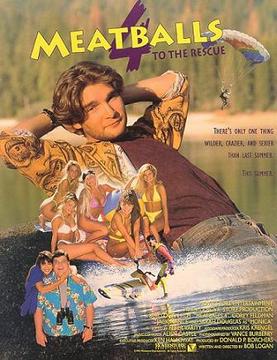
Cinemax Friday: Meatballs IV (1992, directed by Bob Logan)


Neil (Jack Nance … yes, Eraserhead Jack Nance) owns a summer camp where he teaches people how to water ski.  Unfortunately, it’s been a while since Neil’s been a success.  The camp is old and run down and Neil is just too good-hearted to enforce any discipline on his campers or his counselors.  The evil Monica Shavetts (Sarah Douglas) owns the water ski camp on the other side of the lake and she is determined to put Neil out of business.  Fortunately, Neil does have one ace up his sleeve.  One of his former campers, Ricky Wade (Corey Feldman), has gone to become one of the top water skiers in the world and he has returned to help Neil save the camp!

Meatballs IV covers all the usual summer camp hijinks.  The fat kid learns how to believe in himself.  The female counselors all appear in topless.  There’s a shower scene, of course, and there’s also a lot of humor centering around flatulence.  When you’re 11 years old, this movie is pretty cool.  Of course, saving the camp means winning a competition against the evil camp.  At least Sarah Douglas appears to be relishing her evil role.  There is one funny joke where Corey Feldman attempts to hit on a girl by telling her, “I was in Goonies.”  I guess even back then, Feldman knew which one of his movies people would actually remember.

Jack Nance is his usual eccentric self in the role of Neil but he doesn’t get to do much.  Sadly, it was while he was in upstate New York making this film that his then-wife, Kelly Van Dyke, committed suicide in Los Angeles.  Reportedly, Nance had been on the phone consoling her and trying to talk her down.  Unfortunately, a lightning storm knocked out the phones in the middle of Nance’s conversation with Kelly and she hung herself immediately afterwards.  For many of us, Jack Nance would be the main reason we would sit through something like Meatballs IV but knowing that story makes it difficult to watch him in this film.  Both Jack Nance and his wife deserved better.

Meatballs IV started out as a movie called Happy Campers, which was intended to be a low-budget rip-off of the original Meatballs.  Then, someone realized that an even better idea than ripping off a successful film would simply be to change your movie’s title and turn it into a sequel.  Meatballs IV tells the same basic story as the original Meatballs, with a bunch of plucky outsiders proving themselves over the summer.  The main difference is that Meatballs IV has a lot more T&A than the original film and that the first film has Bill Murray as a camp counselor while this one has to settle for Corey Feldman.  It’s not that Feldman’s bad in the role, of course.  Despite what happened to his career in the 90s and beyond, Corey Feldman has always been capable of giving good performances, even if he often didn’t.  (I can’t really blame him.  Would you make much of an effort if you were appearing something like Dream A Little Dream 2?)  It’s just that Corey Feldman is no Bill Murray.  When Ricky first shows up at the camp, he energizes the campers by doing an elaborate dance routine, which he ends by shouting, “Elvis has left the building!”  It has the same energy as that episode of The Simpsons where Homer is hired to voice Poochie on Itchy & Scratchy.  It feels desperate, like the film is trying too hard to convince us that Ricky Wade is as cool as everyone says he is.  If you have to work that hard to convince people that you’re cool, then you’re probably not.